
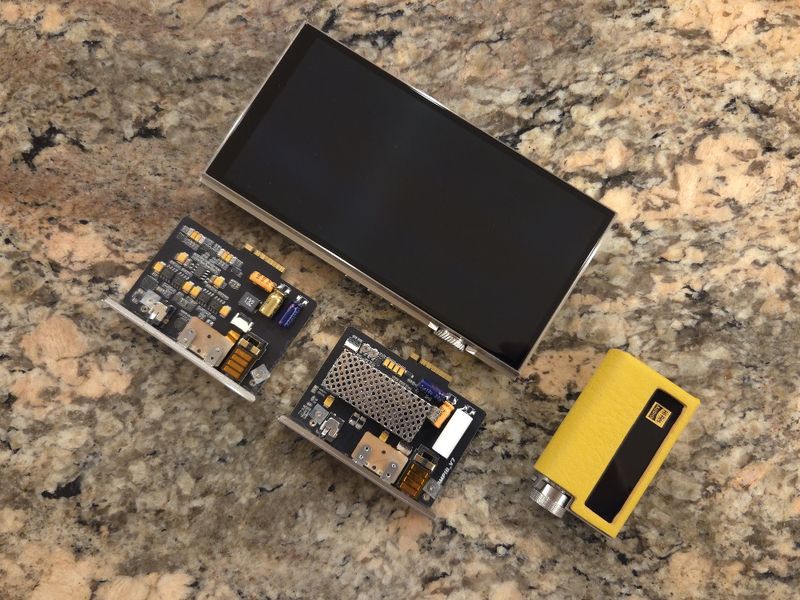
Tubes in your pocket.
PROS: Both offer a hybrid dual amp design with Class AB and Tube options, providing distinct sound tuning variations between Solid State and dual Raytheon JAN6418 vacuum tubes; AMP16 offers a DC-in to boost amp output with Super Gain that doubles the output power, while Nunchaku offers a portable compact alternative to AMP16 to use with your smartphone or laptop.
CONS: A new amp card costs extra, and AMP16 doesn’t offer LO; a small portable dongle is prone to tube ringing when tapped.
The product was provided to me free of charge for review purposes in exchange for my honest opinion.
The manufacturer’s website: iBasso. It can be purchased directly or from authorized retailers like Bloom Audio.
Intro.
As I mentioned in my DX340 review, iBasso’s announcement of three upcoming AMP cards added more excitement to this new flagship DAP release. After all, it allows you to upgrade the sound of your digital audio player at the cost of a new card. This new series of iBasso AMP modules with an external 12V DC input option bypasses the internal analog battery and powers the amp card at a higher voltage, bringing it closer to a desktop performance, which got the attention of many portable audiophiles.
Another thing that attracts the attention of portable audiophiles is any mention of Tubes, which until recently was covered mainly by Korg NuTube modules, the ones iBasso implemented in their AMP13 and AMP14 cards. Today, more audio manufacturers are starting to feature Raytheon JAN6418 directly heated vacuum miniature tubes in their portable devices. Thus, many iBasso fans looked forward to upgrading their DX340 with the AMP16 featuring dual Raytheon JAN6418 tubes and an internal 22.5V Anode high-voltage power supply.
And if that wasn’t enough, iBasso decided to spoil us with another surprise by releasing a portable USB-DAC dongle, Nunchaku, with similar to AMP16 dual amp output modes, featuring solid-state Class AB and the same dual Raytheon JAN6418 config with a 22.5V Anode power supply. Of course, AMP16 and Nunchaku are two separate products, but there is so much overlap in the design that it made sense to me to cover both in this review I prepared to share with my readers today.
Unboxing and Accessories.
Regarding the unboxing experience, the AMP16 has fewer frills here. You get a tin box with an AMP card, a screwdriver and extra screws, and a warranty card.
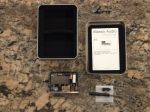
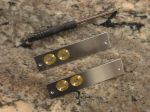
You can order extra DX340 dual 4.4mm or dual 3.5mm amp card faceplates as additional accessories. iBasso’s AMP12 (2x 4.4mm ports), AMP13 (2x 3.5mm ports), and AMP14 (2x 4.4mm port) cards could be used with DX340, but due to a difference in the chassis shape between DX320 and DX340, these amp cards require the updated faceplates to fit DX340.
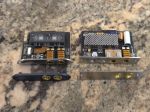
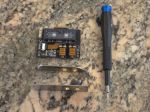
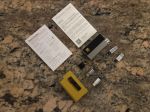
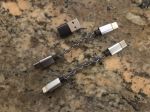
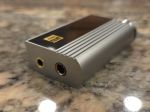
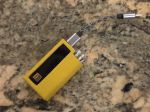
Nunchaku is a standalone product with a corresponding packaging and a more traditional unboxing experience. In addition to a portable Nunchaku DAC/amp, you will also get a cool protective leather case, USB-C to USB-C cable, USB-C to Lightning cable for your older iPhones, USB-A adapter to use with USB-C cable for your laptop, and a user manual.

Design.
I will describe each product’s design separately. Still, you will notice a heavy overlap in the dual amp output modes with Class AB and dual Raytheon tube implementation and circuits around it.
AMP16
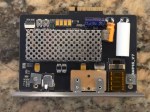
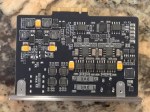
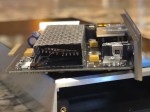
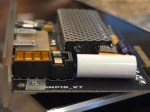
This amp card’s design is based on hybrid dual output modes featuring solid-state Class AB and dual Raytheon JAN6418 directly heated vacuum tubes, 4x Ti dual OpAmps, and 4x Ti BUF634A high-performance output buffers. The card is equipped with a specialized 22.5V anode power supply specifically for the JAN6418 tubes, ensuring the operation at their full potential. Furthermore, the JRC 100-step volume control was implemented, which helps reduce vacuum tube noise. Also, iBasso implemented PORON material to suspend the tubes within the chassis as part of shock absorption and reduction of microphonic effect.
AMP16 has only headphone outputs, 3.5mm SE and 4.4mm BAL, and no Line Out. It has an external 12V DC input option that bypasses the internal analog battery and powers the amp card at a higher voltage. With DC-In, DX340 enables a Super Gain option for either 4.4mm or 3.5mm outputs. The output levels of 4.4mm vs 3.5mm, Class AB vs Tube, and from internal DAP’s battery vs 12V DC-in will vary. Here is a summary of it:
- 4.4mm Balanced Output (Class AB Mode)
- Output Level: Super Gain 8.3Vrms, High Gain 6.0Vrms
- Output Power: 2000mW @32Ω (12V DC-IN), 1000mW @32Ω (Battery)
- 3.5mm Single-End Output (Class AB Mode)
- Output Level: Super Gain 4.1Vrms, High Gain 3.0Vrms
- Output Power: 500mW @32Ω (12V DC-IN), 260mW @32Ω (Battery)
- 4.4mm Balanced Output (Tube Mode)
- Output Level: Super Gain 7.5Vrms, High Gain 4.6Vrms
- Output Power: 1500mW @32Ω (12V DC-IN), 660mW @32Ω (Battery)
- 3.5mm Single-End Output (Tube Mode)
- Output Level: Super Gain 3.75Vrms, High Gain 2.3Vrms
- Output Power: 400mW @32Ω (12V DC-IN), 150mW @32Ω (Battery)
Nunchaku
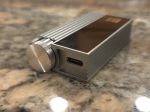
This USB-DAC dongle design is based on hybrid dual output modes featuring solid-state Class AB and dual Raytheon JAN6418 directly heated vacuum tubes, 4x Ti dual OpAmps, and 4x Ti BUF634A high-performance output buffers, just like in AMP16. It is also equipped with a specialized 22.5V anode power supply specifically for the JAN6418 tubes, ensuring the operation at their full potential. Furthermore, the JRC 100-step volume control was implemented, which helps reduce vacuum tube noise. The volume control is implemented through easy to access rotary knob. Also, iBasso implemented PORON material to suspend the tubes within the chassis as part of shock absorption and reduction of microphonic effect.
You need to remember one important thing: AMP16 is housed inside a solid stainless-steel chassis of DX340 with better shock absorption, reduced interference (due to better shielding), and reduced tube ringing (when chassis are tapped). Nunchaku is a small, lightweight dongle that doesn’t have the same luxury of big, solid housing and is more exposed to interference while being used next to a smartphone and tube ringing when you tap it.
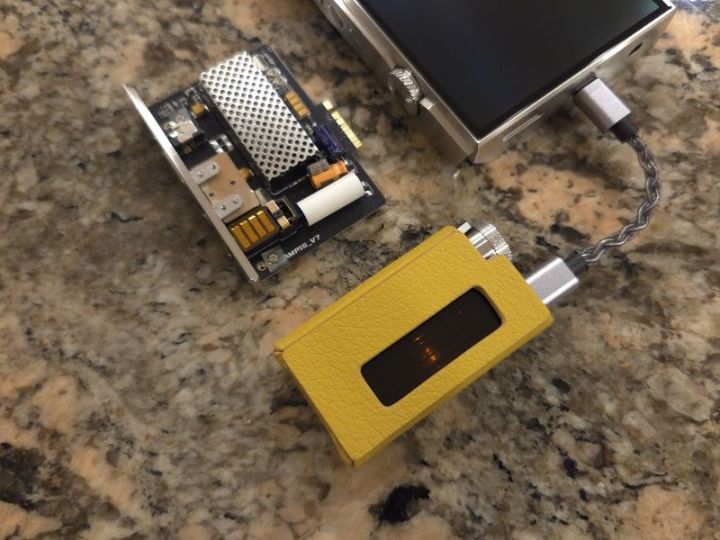
The main difference is that Nunchaku is a standalone product, 2.6”x1.4”x0.6” and 1.70z, and you can use it as a USB-DAC with your smartphone or laptop. It has an internal DAC, a dual Cirrus Logic CS43198 flagship chip capable of supporting PCM up to 32-bit/768kHz, and Native DSD up to 512x. Plus, it has a small display where you can see the playback format and enter the settings menu to make adjustments. The rotary volume knob has double functionality of push-button to allow you to navigate and adjust settings.
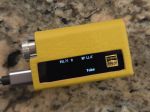
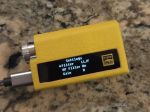
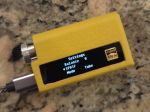
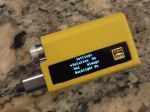
You can also download the iBasso UAC app (directly from the iBasso website) to adjust Nunchaku settings on your Android smartphone, making navigation much easier.
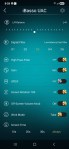
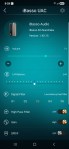
Considering Nunchaku is a standalone product without a battery, drawing its power from the smartphone or laptop host, its output voltage and corresponding power are scaled down relative to the AMP16 spec. Here is the Nunchaku output spec:
- 4.4mm BAL Output (Class AB Mode)
- Output Voltage: 2.8Vrms (Low Gain), 4.1Vrms (High Gain)
- Output Power: 450mW @32Ω
- 3.5mm SE Output (Class AB Mode)
- Output Voltage: 1.4Vrms (Low Gain), 2Vrms (High Gain)
- Output Power: 125mW @32Ω
- 4.4mm BAL Output (Tube Mode)
- Output Voltage: 2.3Vrms (Low Gain), 4.5Vrms (High Gain)
- Output Power: 525mW @32Ω
- 3.5mm SE Output (Tube Mode)
- Output Voltage: 1.15Vrms (Low Gain), 2.25Vrms (High Gain)
- Output Power: 150mW @32Ω

Page 2 – Sound analysis, and AMP16 vs Nunchaku.
Page 3 – Comparisons.
Page 4 – Pair-ups, iBasso KLEE, and Conclusion.

 Twister6 Reviews