
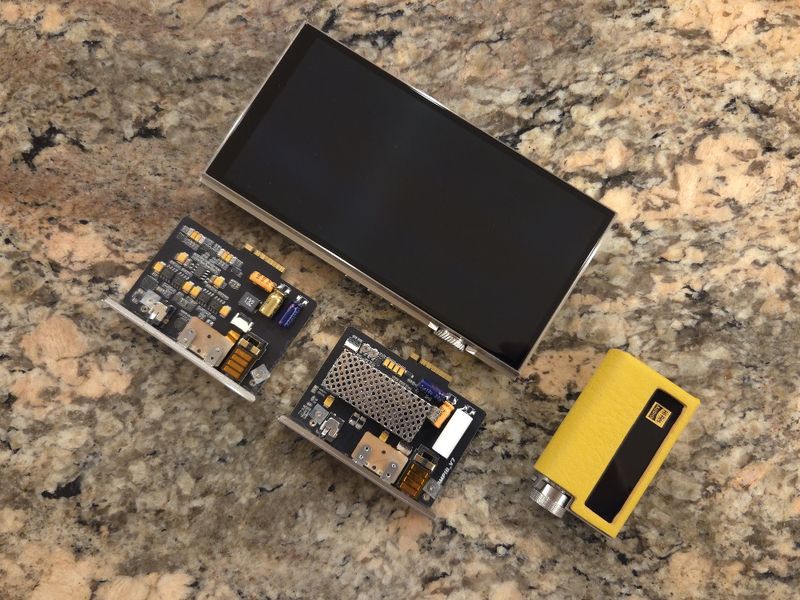
Comparisons.
I used Aroma Jewel in every comparison, ensuring volume was matched while listening to the same test tracks across DAPs. Additionally, I’m primarily focusing on the differences in sound as I perceive them. These are my quick analysis notes.
iBasso DX340/AMP16 vs M8T – I started with the M8T in ultra-linear tube mode and the DX340 in tube mode. It took several switches back and forth to notice the differences. Both DAPs offer a similar soundstage expansion with nearly holographic imaging of sounds positioned in space. Both provide a natural, textured, smoother tonality, deeper bass, warmer mids, and detailed natural treble. The bass was similar, exhibiting a textured sub-bass rumble and decent mid-bass punch. The mids had a similar tonality and presentation. The treble is where I noticed some differences. With the M8T in ultra-linear tube mode, the treble is a bit smoother, while the 340’s treble has a bit more sparkle and air, lending the overall sound presentation of the 340 a little more speed. Then, when I switched the M8T to triode-tube mode, it also gained some speed, becoming less laid-back than its ultra-linear mode, possibly even a bit faster than the 340. Overall, I found the 340’s tube mode somewhat between the M8T’s triode and ultra-linear modes regarding speed (from faster to more laid-back) and the amount of treble sparkle (from more forward to slightly more relaxed). Finally, switching the M8T to transistor and the 340 to AB (solid-state class AB) modes with the tubes off also provided a very close performance with faster, punchier, and less colored tonality. Both DAPs demonstrated a clear difference in sound between having the tubes on and off, with the M8T being just a touch smoother and the DX340/AMP16 being a bit more resolving, but overall, it was not too far off. For some, it will come down to having a non-modular vs modular design to have an option for further sound upgrade.
iBasso DX340/AMP16 vs A&K SP3000T – I spent considerable time listening to and comparing these two DAPs: the DX340/AMP16 in tube mode and the SP3000T in high-current tube mode. Both provide a nicely expanded soundstage; however, SP3kT expands even wider in tube mode. Both offer natural, textured tonality with a relaxed, laid-back presentation of the sound. They feature deeper bass, warmer mids, and good treble extension. After several comparisons, I noticed a few subtle differences. 340 mids have more analog texture and a little more treble sparkle, which adds more clarity to the sound. SP3kT mids are smooth and textured, but I hear more smoothness than texture. Also, 340 mid-bass has a little more speed. When you switch SP3kT to OP/tube hybrid mode, its bass also gains more speed, but you lose some organic smoothness in the mids. When I switch 340 to AB solid-state mode and SP3kT to OP solid-state mode, the gap in sound difference is bigger. SP3kT’s sound does change, but not as drastically as with 340, which sounds more dynamic, punchier, faster, and more resolving in tonality. In comparison, the SP3kT tonality was still more colored, and the sound was slightly more relaxed.
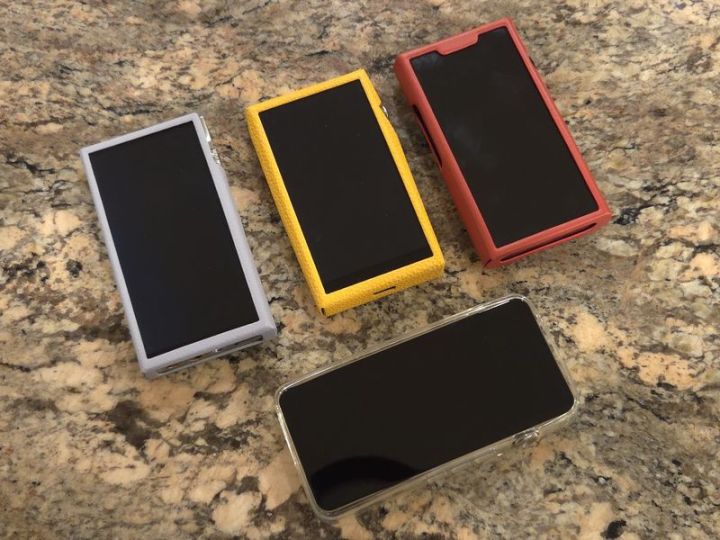
DX340 w/AMP16 (AB) vs DX340 w/AMP15 – Without DC-in, AMP16 has a faster and tighter mid-bass punch than AMP15, which offers more sub-bass rumble and a softer mid-bass punch (AMP15). The sound of AMP16 is quicker and punchier, and has fuller body mids with a bit more coloring than AMP15, which is a bit more laid-back in sound presentation and less colored in mids (AMP15). Regarding soundstage expansion, AMP15 has a slightly wider left/right expansion, whereas AMP16 has more depth and height.
DX340 w/AMP16 (tube) vs DX320 SS w/AMP14 – The 320/14 soundstage perception is wider, especially in mids/vocals that stretch slightly more. The tuning varies as well. The only thing they have more in common is mid-range, smooth, textured, and natural tonality. Starting with the bass, the sub-bass extension is similar, but mid-bass punch is tighter, faster, and has more control in 340/16, while 320/14 mid-bass is slower and more relaxed. 340/16 treble has more sparkle and air than a smoother 320/14 treble presentation. Overall, the 340/16 sound is tighter, faster, more energetic, and has a blacker background, while 320/14 sounds more relaxed, smoother, and analog with a laid-back sound presentation. Please remember that here you are not just comparing amps, but a combo of a corresponding DAC with an amp card.
DX340 w/AMP16 (tube) vs DX340 w/AMP14 – The 340/14 soundstage perception is a touch wider, similar to the 320/14 comparison, with mids/vocals stretching slightly more to the left/right. As a reminder, during this comparison, I had to power down the DX340 when switching amps, as I didn’t want to risk swapping cards on the fly. This results in a slight delay when comparing the sounds, as it is no longer a fast A/B comparison. I noticed that 340/14, relative to 320/14, gains a blacker background and more sparkle in the treble, bringing it closer to 340/16 in that perspective. The mids are not too far off, similar to my previous comparison. The bass extension is also similar, and the 340/14 mid-bass gains a bit more punch, more than the 320/14, but not as much or as fast as in the 340/16. I also hear more sparkle in 340/14 vs 320/14, approaching a similar level to 340/16, but not the same, which makes 340/14 still sound smoother than 340/16. Overall, the sound difference between 340/14 and 340/16 is not that big; it is smaller than the gap between 320/14 and 340/16.
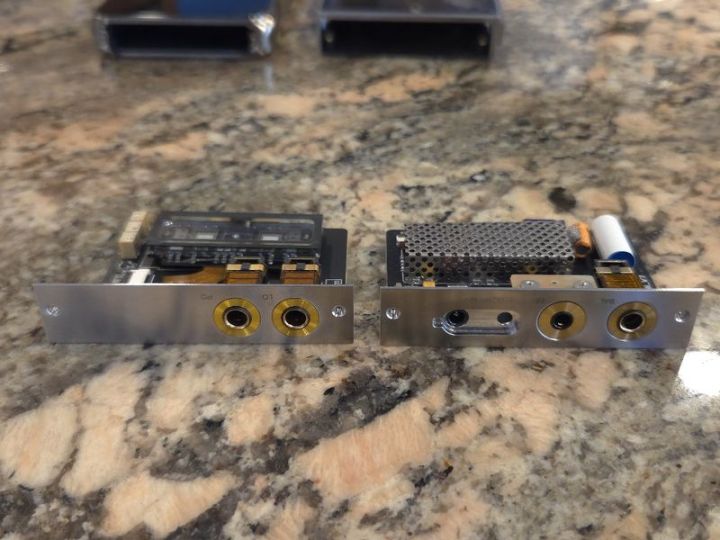
Some of my readers have asked if they already have AMP14, so should they get AMP16? Here is what it will come down to, with a lot of being the functionality. AMP14 offers 4.4mm PO and LO, in Tube mode only, while AMP16 offers 4.4mm PO and 3.5mm PO, with no LO, but you get both Tube and Class AB solid-state options, as well as the option for external DC-in power boost of the amp section. If you only use 4.4mm, need LO (for PB5), and don’t care about Class AB solid-state mode, keep your AMP14 and get a conversion faceplate kit. Otherwise, if you want more flexibility without switching between separate Tube and Solid-State amp cards and enjoy the DC-in power boost, the AMP16 is an excellent choice. I think both are great to have with the DX340.
Don’t forget that AMP14 will not fit directly into DX340. You must buy an optional 4.4mm faceplate to convert AMP14 for use with DX340.

 Twister6 Reviews