
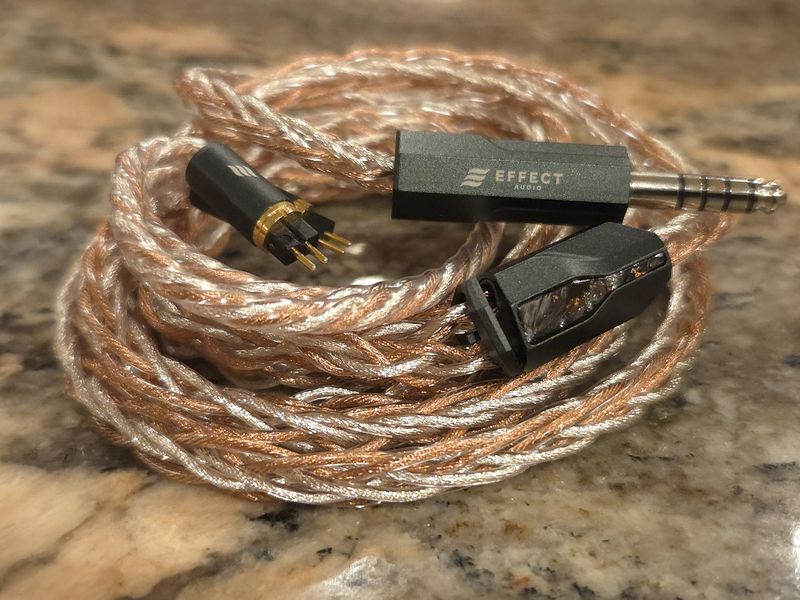
Sound Analysis.
Here is how I hear these Signature Series II cables where for the testing I used EE Odin IEMs and L&P P6 Pro as a neutral reference source while playing the selection of my usual test tracks, such as Agnes Obel’s “The Curse”, Sandro Cavazza’s “So much Better” (Avicii remix), C-Bool’s “Never Go away”, Ed Sheeran “Shape of you”, Counting Crows “Big yellow taxi”, Galantis “Hunter”, Alan Walker “Darkside”, Iggy Azalea “Black widow”, Indila “Boite en argent”, Robin Schultz “Oh child”, Dua Lipa “Love Again”, David Elias “Vision of her”, and Michael Jackson “Dirty Diana”. By force of habit, all the cables had plenty of burn-in time, over 100 hours as recommended by the manufacturer.
Please understand that I’m not talking about the wires’ bass, mids, or treble sound. Instead, I’m describing how I hear EE Odin’s sound change as I switch between the wires and how these wires affect the sound of these IEMs. Furthermore, the sound of AxC is based on the characteristics of Ares S II and Cadmus II wires used in that cable. To understand the effect of the AxC cable on the sound of a particular IEM, I would like to first describe each wire by itself, including its comparison to the Sig Series version and an 8-wire variant of SS.

Ares S II vs Ares S 8w and Ares S – between S II and original S 8w, I hear a few very clear differences, such as an improvement in imaging while the soundstage width remains the same, but the imaging of sound placement has a more holographic perception. I also hear more sub-bass rumble and fuller body mids. The fuller body mids were probably the most noticeable change from S 8w to S II. Relative to the original 4w Ares S, the S II soundstage is noticeably wider, mids gain a bit more texture/coloring, and the treble is more natural, making the original Ares S brighter in treble and with a narrower soundstage/imaging. Ares S II, despite being 8 wires, is also less bulky than Ares S 8w, being somewhere in between Ares S and Ares S 8w.
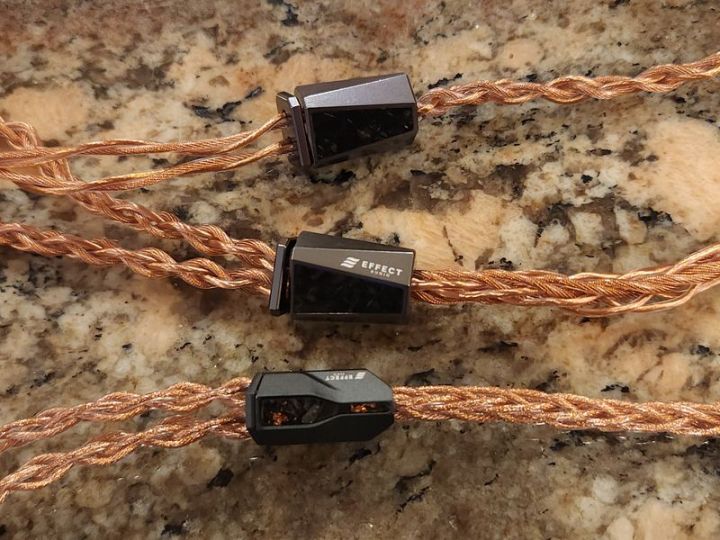
Cadmus II vs Cadmus 8w and Cadmus – between II and the original Cadmus 8w, I hear nearly the same soundstage expansion and imaging, but the tonality varies. OG 8w gives Odin a rather mid-forward, brighter sound, pushing the bass to the back and making the treble brighter and crisper. The II version brings mids forward as well, but gives the vocals and instruments a more natural textured tonality, also making the treble more natural and less brittle. As a result of these changes, I can hear more rumble in the bass using II. II doesn’t make the sound smoother or warmer, but makes it more musical and natural while keeping the same detail retrieval. The sound transformation here is more typical of a pure silver cable than SPC. Regarding the OG 4w version, II imaging is a lot more holographic. Another thing I noticed is that OG 4w was smoother than OG 8w, but going to II from OG 4w improves the retrieval of details while still keeping the sound natural. Similar to Ares S II, Cadmus II, despite being 8 wires, is less bulky than Cadmus 8w, somewhere between Cadmus and Cadmus 8w.
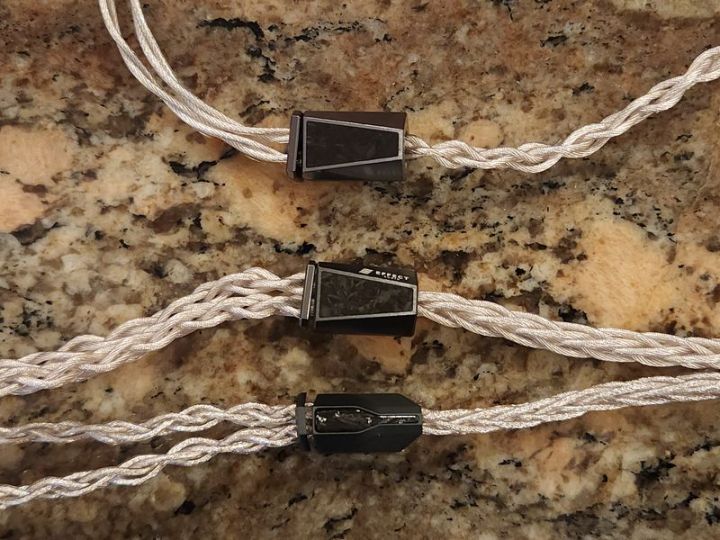
While Eros S II wires are not part of the AxC design, I’m including them to complete this Signature Series II sound analysis.
Eros S II vs Eros S – between II and OG, the soundstage expansion and imaging are nearly the same. The sound changes I hear are more on a refinement level, with some additional sub-bass rumble and a bit more mid-bass punch. Also, I hear a bit smoother treble in II. In terms of ergonomics, they are very similar, maybe with II being just a bit thicker and having tighter braiding. Furthermore, I also like the darker shade of Eros S II grey shielding better than the brighter color of Eros S.

Now, after covering all the wires in the Signature Series II collection, it is time to look closer at the star of this review, comparing AxC vs Ares S II vs Cadmus II.
I switched between Ares S II, Cadmus II, and AxC a dozen times, including a few blind tests with my wife’s help, and the sound changes were consistent. Considering the hybrid nature of AxC, which combines the other two cables, the new cable borrows sound characteristics of both wires, and it is clear to hear when you spend time listening to these three cables.
Relative to EE Odin, the AxC bass has the same deep sub-bass rumble as Ares S II, plus it adds more weight and a stronger mid-bass punch as in Cadmus II. The mids have an analog texture similar to Ares S II and more body similar to Cadmus II. As a result, the mids/vocals tonality is somewhere between Ares S II and Cadmus II, having more body than Ares S II and less coloring than Cadmus II. With treble, the sparkle is more revealing than Cadmus II, sounding similar to Ares S II.
In terms of technical performance while analyzing EE Odin, the soundstage expansion of AxC has the width of Ares S II, maybe even stretching wider, and adds similar depth/height as you would hear with Cadmus II. AxC soundstage has a round shape with an even expansion in all three directions, and the imaging is more holographic based on how sounds are positioned in space. With more air in treble, AxC helps to improve the layering and separation between the sounds, a difference you can hear compared to a warmer/smoother tuning of Cadmus II, where the sound is a bit denser.

If you think AxC will be closer to Eros S II’s performance, there is also a difference between these. AxC has more rumble and texture in bass, its mids have a slightly less forward and more balanced presentation, and its treble has a little more sparkle and airiness. Another noticeable thing was the same soundstage expansion with more holographic imaging of the sound placement in AxC.
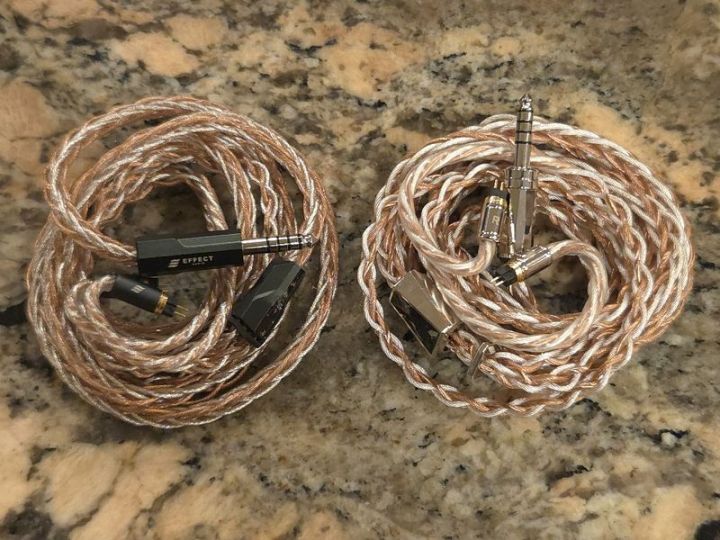
As I wrap up the sound analysis, we can’t forget the OG AxC from the original Signature Series collection. This special Xmas edition was available in limited quantities around Xmas ’23. The new AxC has the same imaging, while its soundstage spreads even wider. Relative to EE Odin, they both have a similar bass and treble tonality and technical performance, only varying in mids, where the new AxC mids/vocals sound a bit smoother and are positioned a few rows farther instead of being closer like in the OG AxC. Furthermore, the new AxC cable is lighter, slimmer, and has updated, sleeker hardware.
Conclusion.
Effect Audio’s Signature Series II is a no-brainer if you are looking for high-quality budget cables, even though I’m having a hard time calling them “entry” level due to their advanced design and sound quality. Aside from being more affordable than other higher-end EA cables, they look great, sound great, and have sexy hardware. If you already have the original Ares S, Cadmus, and Eros S, Ares S II and Cadmus II make upgrading more sense. Both are now 8wire versions, priced less than the 8wire version of the corresponding original Sig Series cables, and they have a more noticeable sound improvement over the OG 4w and OG 8w versions, especially the Cadmus II, which now has sound performance I usually find in pure silver cables. AxC also stands out with a unique crossover sound characteristic, borrowing from Ares S II and Cadmus II.
If you want to upgrade your current stock IEM cable, you must decide between these cables based on their sound characteristics. Ares S II offers a tighter bass with deep sub-bass rumble and a more neutral mid-bass punch, textured mids with plenty of body and less coloring, and well-controlled treble with a natural crunch. Cadmus II adds more rumble to the bass and more weight to the mid-bass, elevating it, has smoother, fuller-body detailed mids, and a more relaxed treble, with the sound being more natural and fuller-bodied. Combination of these wires, a hybrid AxC design, gives you the best of both worlds with the bass that has deep sub-bass rumble and stronger mid-bass punch, mids/vocals having more body than Ares S II and less coloring than Cadmus II, and more revealing treble sparkle that elevates Cadmus II performance to bring it closer to Ares S II upper frequencies.
Each of these reasonably priced Signature Series II cables has its own unique sound-shaping characteristics, which don’t make one better than the other but instead give you more options to fine-tune the sound of your IEMs. What makes AxC unique is that it combines the characteristics of Ares S II and Cadmus II into something different. Ultimately, it’s not always about finding the best overall cable but the best cable for your IEMs, regardless of the cable price. Some audiophiles invest a lot of money into fine-tuning the sound of their IEMs, trying different sources, adding amplifiers, and using more expensive cables, which results in diminishing returns. I have tried some budget cables that were disappointing, while I found EA’s Signature Series, both OG and 2nd gen, to have a performance and build quality above their price tag. So, when you are on a journey to fine-tune the performance of your IEMs, don’t discount these cables just because they have an entry-level price.

 Twister6 Reviews
Hi I have a w80 gen1 with mojo 1 which cable do you recommend I like the vocals to be more forward and present I listen to jazz . Vocal jazz
LikeLike
The problem with W80 is its mmcx connector, many cables with a standard mmcx connector don’t work well with those IEMs. I haven’t used W80 in a very long time. Tried it with some EA cables w/ConX in the past, it wasn’t always an easy fit. In theory, AxC or Eros S II should pair up well with W80, to clean up the sound, give the bass a better definition, bring mids/vocals more forward and improve the resolution of the sound. The bigger concern will be the fit. But then, if you are not going to plug/unplug the cable as often, maybe it should be OK.
LikeLike