
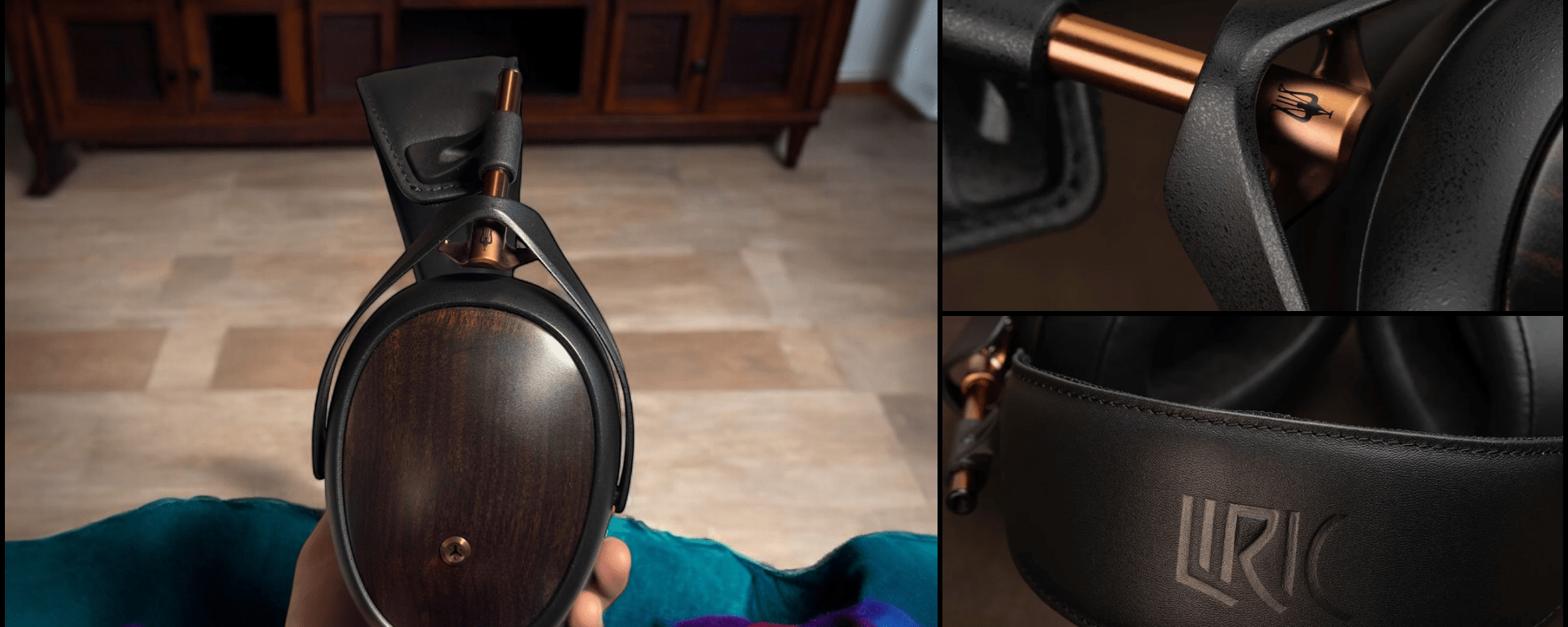
The closed back king?
PROS: Better refined treble reducing sibilance and artificial air, natural, organic midrange, great for vocals and instruments, good bass shelf and control, slightly more warmth than the original, impressive soundstage for a closed-back, comfortable tuning for long listening sessions
CONS: Sub-bass is clean but not deep-impacting, still a closed-back experience – very spacious that can fool a lot for an open-back but still not TOTL open-back wide
The product was provided to me free of charge in exchange for my honest opinion.
Introduction.
The Meze Audio Liric 2nd Generation aims to refine its predecessor’s legacy in the realm of closed-back planar magnetic headphones. Let’s delve into its design, comfort, technical enhancements, and sonic performance to assess its standing in today’s competitive market.

Technical Enhancements.
Continuing its collaboration with Rinaro Isodynamics, Meze incorporates the MZ4 Isodynamic Hybrid Array driver, now featuring the Quarter Wavelength Resonator Mask (QWRM). This precision-crafted component strategically covers select openings in the driver frame, effectively attenuating frequencies above 7kHz. The result is a smoother treble response, addressing some of the brightness noted in the original Liric.
If you want to go deep into all the details and the behind the scenes of Liric 2’s tech and development – click here.
Unboxing and Build Quality
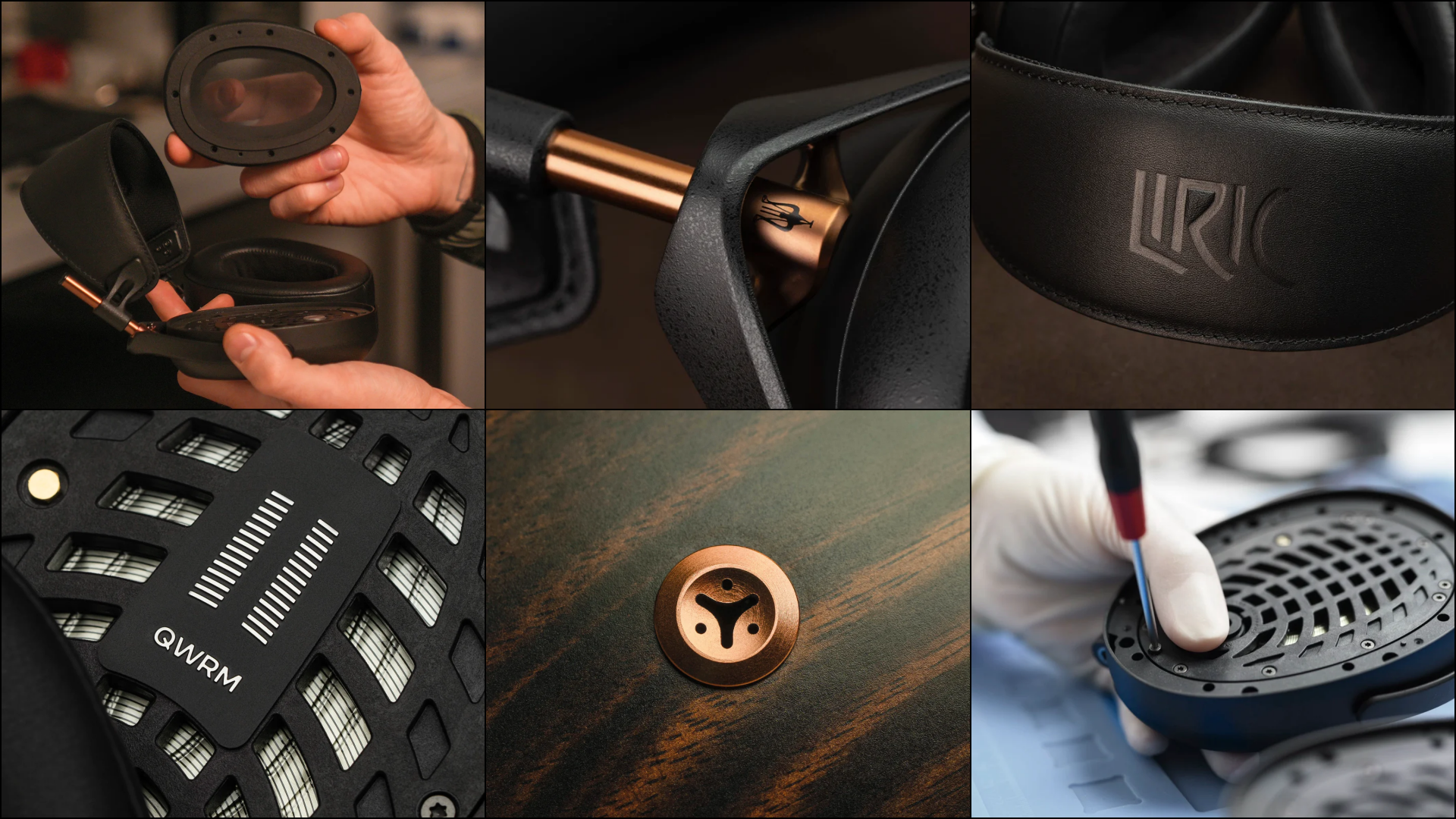
Meze Audio maintains its reputation for premium presentation with the Liric 2nd Generation. The headphones arrive in a leather-like box and in it a leather clad hard case, exuding premium sophistication. Inside, a smaller leather pouch neatly houses the accompanying cables, emphasising attention to detail.Visually, the Liric 2nd Generation retains the aesthetic charm of its predecessor but introduces subtle enhancements:The integration of Macassar ebony wood panels on the ear cups adds a touch of organic elegance, setting it apart from the original’s all-metal design.A significant upgrade is the introduction of magnetically attached earpads, facilitating effortless replacement and potential for future customisation.
Comfort & Fit: Weighing in at 427g, the Liric 2nd Generation might seem hefty on paper. However, the well-engineered headband and plush earpads ensure prolonged listening sessions without discomfort.
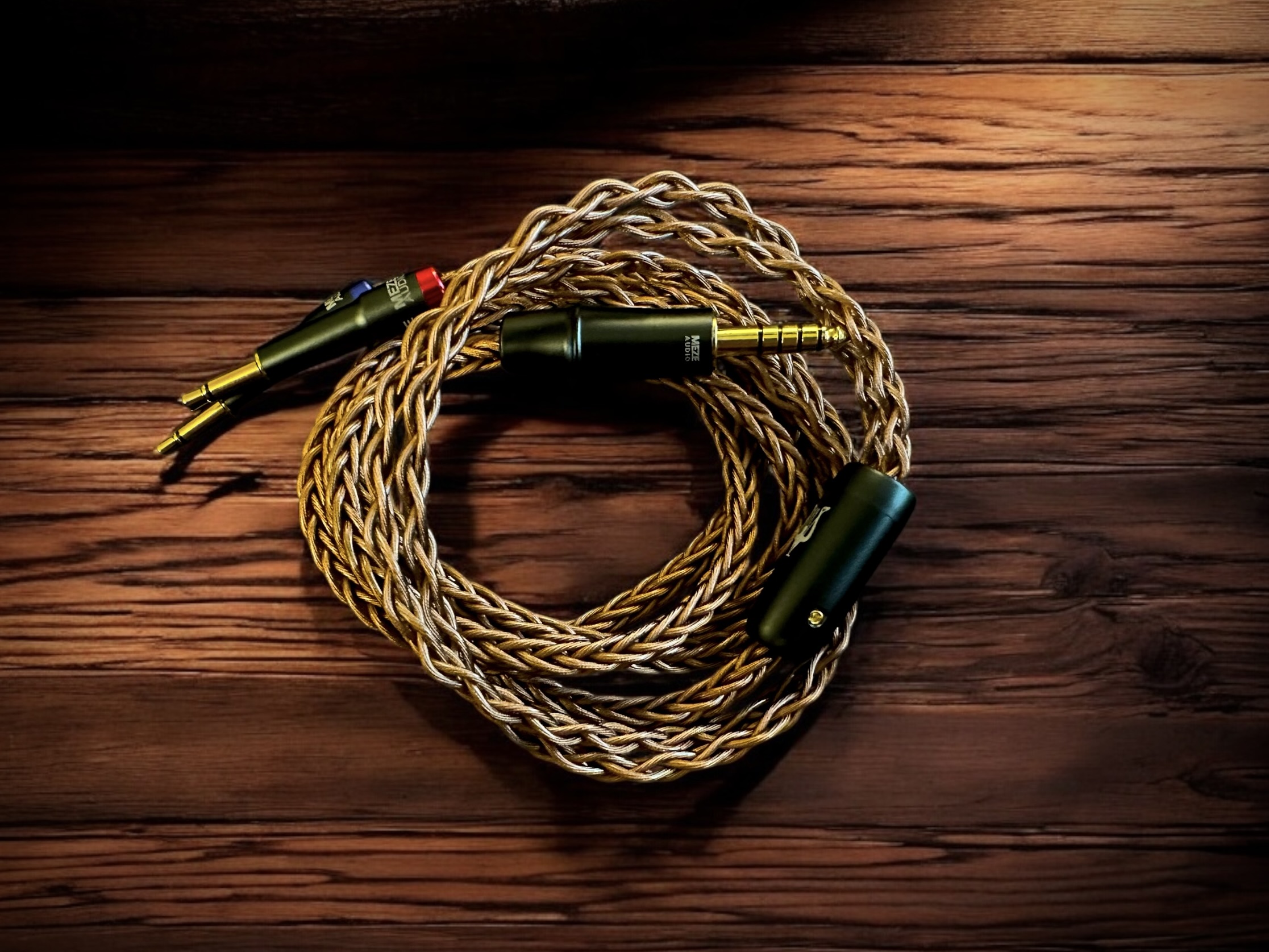
Cables & Connectivity: Meze includes high-quality Furukawa PCUHD copper cables, terminated with both 3.5mm TRS and 4.4mm balanced connectors. This ensures versatility across various audio setups, allowing listeners to choose their preferred connection without compromising on sound quality.
Sound Performance.
The Meze Liric 2nd Generation builds upon its predecessor’s closed-back planar magnetic design, refining its tuning to address key feedback points. The result is a sound that goes for a W-shaped signature with enhanced technicalities – it has a 8dB bass shelf that boosts both the sub-bass as well as a bit of mid-bass, very slightly fuller lower-midrange in the 250-500Hz, slight dip around 1.5kHz, a fairly good ear gain of 9dB and a neutral bright treble presentation which goes for an airier than neutral extension – greatly enhancing the sense of space and technical performance. Liric 2 also has exceptional technical performance for a closed back, which we shall discuss in detail in the article.
Let’s dig in deeper…

Bass: Bass performance is tight and well-textured rather than exaggerated. The mid-bass around 150Hz sees a small emphasis, adding a bit of warmth and body to the sound. Compared to the original Liric, which some found overly controlled in the low end, the 2nd Gen brings a slightly more engaging bass presence. While the sub-bass is present fairly well, it doesn’t rumble as deeply as some dynamic driver headphones, especially like the Focal Clear and Elex. Liric 2’s presentation is more about clarity than sheer impact. EDM and hip-hop enthusiasts may find it slightly restrained compared to V-shaped tunings. The warmth introduced due to the mid-bass boost here gives weight to drums and bass guitars without sounding bloated. There’s no excessive bloom into the mids, which keeps the overall tonality balanced. Kick drums sound snappy rather than thumpy, and acoustic bass lines retain a natural tonality with good texture. While the bass is clean and precise, listeners looking for a deep, visceral punch may feel it leans toward neutrality rather than impact.
Midrange: Mezes have generally had good midrange tonality based on the headphones I’ve had the pleasure of testing, and the Liric 2nd Gen continues that tradition. Instruments like pianos, acoustic guitars, and cellos sound clear and natural, rarely dry or analytical. Male vocals benefit from the slight mid-bass and lower-midrange warmth, making them feel rich but not congested. When it comes upper-midrange, there’s a bit more clarity and forwardness compared to the original Liric due to more neutral ear gain. Female vocals feel more open and expressive without excessive brightness. The Liric 2nd Gen strikes a fine balance between smoothness and detail – never shouty, never harsh, but also not the most aggressively resolving midrange on the market. This makes it great for long listening sessions but may lack the hyper-analytical clarity some detail-oriented listeners seek.
Treble: One of the most significant improvements in the Liric 2nd Gen comes in the treble tuning. The original Liric had a peak in the 7-8kHz range that could sometimes introduce sibilance or an artificial sense of air. The 2nd Gen smooths out this region, thanks to the Quarter Wavelength Resonator Mask (QWRM), which controls high-frequency resonances. High hats, cymbals, and string overtones feel well-defined but less aggressive than before. There’s less harshness, making the treble easier on the ears while still retaining detail. Upper treble air and extension are slightly exaggerated leading to an exciting, brighter W-shaped signature. There’s great shimmer to keep the sound from feeling dull, but it thankfully doesn’t go to the extreme “sparkle” of some open-back planar designs, particularly HifiMans. This results in a smoother, more balanced treble presentation but one with plenty of detail, without the artificial brightness. For treble-sensitive listeners, this is a welcome improvement.
Soundstage & Imaging: Liric 2’s soundstage is wider than most closed-back headphones, but not as wide as some of the TOTL open-backs. It feels like sitting in a well-treated studio rather than a concert hall. Depth perception too has improved from the original Liric, giving a better sense of layering. When it comes to imaging & separation, instrument placement is precise, making it easy to pick out individual elements in a mix. It works well for orchestral, jazz, and live recordings, where spacing matters while not being artificially holographic—the presentation remains natural and cohesive. For a closed-back planar, the Liric 2nd Gen does a great job avoiding congestion – it doesn’t feel boxed-in, making it a great option for those who want privacy without sacrificing spatiality.
Dynamics: Macrodynamics (Big Swings in Volume and Impact) – The Liric 2nd Gen handles dynamic shifts well, capturing the energy of classical music crescendos or sudden drops in intensity. However, it doesn’t hit as hard as some dynamic driver competitors. Microdynamics (Subtle Volume Changes & Nuance) – Small details, like the decay of a piano note or the texture of a vocal breath, come through naturally. The planar speed helps with articulation, but it’s not hyper-detailed in the way some ultra-resolving headphones are.
This makes the Liric 2nd Gen feel refined rather than aggressively energetic, which can be a pro or con depending on personal preference.
Pairing & Synergy
The Liric 2 has an impedance of 61Ω and a sensitivity of 130dB, making it an easy-to-drive headphone. It pairs well with portable devices, though it scales nicely with higher-quality sources. When tested with the iBasso DX300, DX260 and HiBy R6 Pro 2, the Liric 2 over the dongles like Tanchjim Space and iBasso DC06 Pro, Liric 2 benefited from improved soundstage depth, enhancing its already detailed character. Pairing with a neutral amp like the DROP THX AAA 789 Linear Amp as well as the Topping A90 drove it even better with the stage sounding a little expanded, increasing perception of stronger imaging and detail retrieval – something I particularly like.
Using the 3.5mm Copper PCUHD Premium Cable.
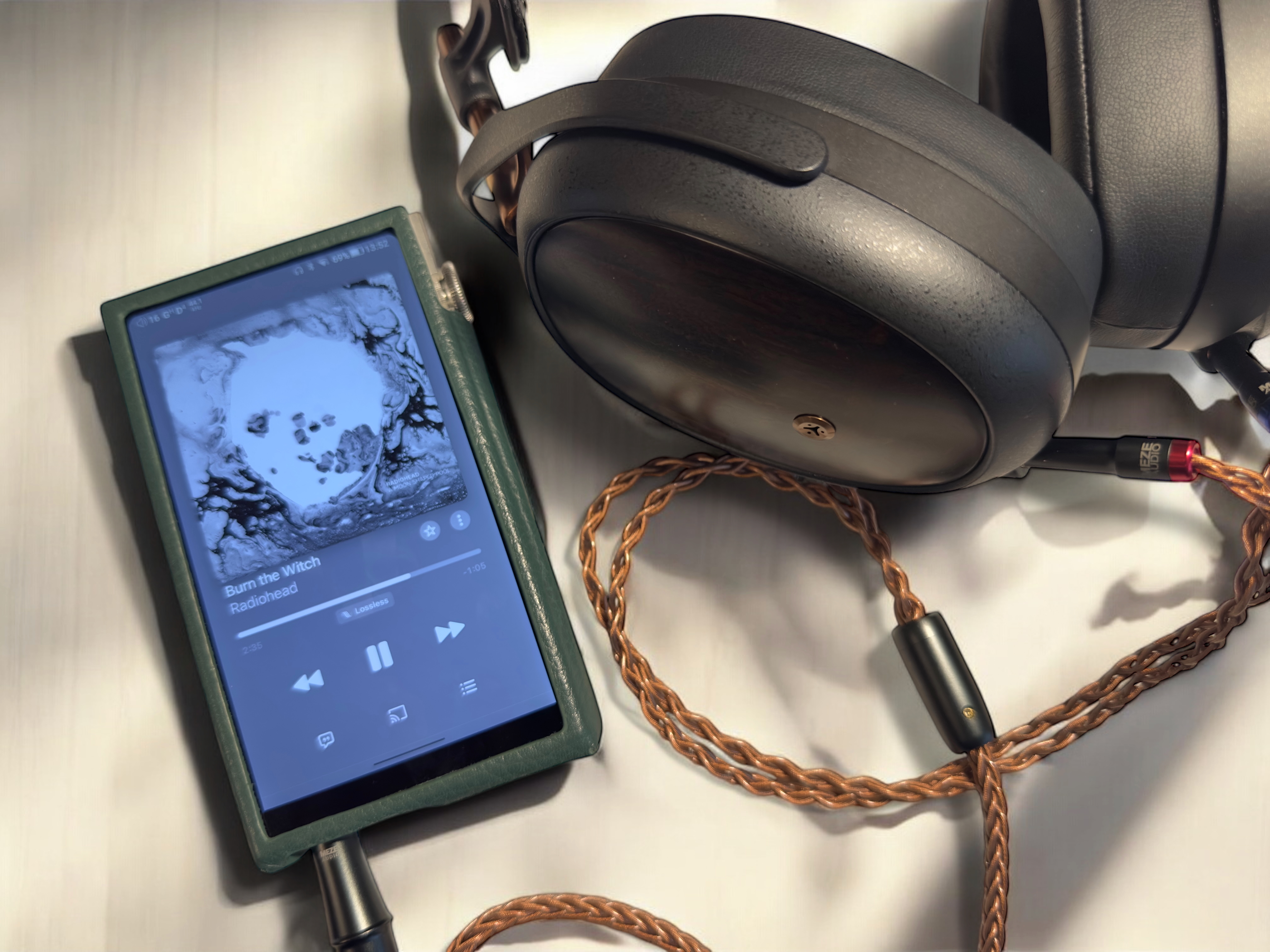
When swapping the stock cable of the Meze Liric 2nd Generation for Meze’s Copper PCUHD Premium Balanced Cable, the sonic differences are subtle but discernible. The stock cable, while competent and low in microphonics, presents the Liric’s tuning with a slightly leaner tone and a modestly more reserved soundstage. With the PCUHD (Pure Copper Ultra High Drawability) cable, the presentation shifts toward a slightly fuller, richer, and more effortless tonality, especially noticeable in the lower midrange and sub-bass. There’s a subtle increase in bass texture and weight, giving drums and low strings a more physical presence. The midrange becomes slightly more saturated and smoother, with vocals sounding more natural and less nasal. Treble retains its smooth and non-fatiguing character, but gains a touch of extra air and clarity, making cymbals and ambient details more vivid. Imaging also appears a bit more precise, and the soundstage feels marginally more open, especially when used with a balanced source. While the difference is not night-and-day, the premium cable rounds off the Liric 2’s performance with a touch more organic richness and spatial depth, particularly appreciated in acoustic, jazz, or orchestral genres. For discerning listeners looking to extract that final layer of refinement, it’s a worthy upgrade.
Comparisons.
Audeze LCD-XC 2021.
When comparing the Meze Liric 2nd Generation to the Audeze LCD-XC 2021, the biggest difference comes down to bass, weight, and overall energy. The Liric 2 is undeniably the more powerful-sounding of the two, with a deep, authoritative low end that extends further into the sub-bass region. It has a stronger slam and more visceral impact, making it a great choice for those who love a bold, engaging listening experience. In contrast, the XC takes a leaner approach, with a tighter, more controlled mid-bass focus, making it less overwhelming but still textured and dynamic.
The midrange presentation also differs. The LCD-XC has a more neutral and highly resolving midrange, though it can occasionally feel a bit dry compared to the warmer, more organic mids of the Liric. Vocals on the Meze feel richer and more natural, whereas the Audeze presents them with razor-sharp clarity but with a slight analytical edge. Treble-wise, the LCD-XC comes off brighter, primarily due to Liric 2 having a bit more bass. This helps provide XC with excellent detail retrieval but can be more fatiguing relatively over long sessions. The Liric 2, in contrast, has more even lower-treble, is airier up top and has better extension while still retaining an easier listenability.
Comfort is another major factor. The LCD-XC is significantly heavier (677g vs. 427g), which can become fatiguing over time. While its headband is well-designed, it’s still not an all-day listening headphone for many users. The Meze Liric 2nd Gen is far lighter and more ergonomic, making it better suited for extended sessions. If you want powerful bass and extreme detail, the LCD-XC is the better pick. But if you prefer a more natural, balanced sound with superior comfort, the Liric 2nd Gen has the edge.
Focal Stellia.
The Focal Stellia and Meze Liric 2nd Gen share some similarities and yet sound very different. The Stellia is all about dynamics, energy, and engagement, while the Liric 2nd Gen prioritizes balance, smoothness, and spaciousness. The Stellia’s bass is tighter and more impactful, giving music an immediate sense of punch and rhythm. It has a slight boost in the mid-bass, making it more energetic than the Liric but still well-controlled. The Meze, on the other hand, has a more neutral bass response in comparison, focusing on clarity rather than impact. While both have good speed and control, the Stellia’s more dynamic presentation makes it more exciting for genres like rock, pop, and EDM.
In the midrange, the Stellia brings vocals and instruments forward due to more neutral ear gain from 800-2kHz, making them feel more present and intimate while with a slightly wonky timbre due to its 3.5-6kHz dip. The Liric, by comparison, has a slightly more laid-back midrange with a warmer timbre due it’s 1.5kHz dip but one which is more even after that point. It’s less aggressive but smoother and more natural, which some may prefer for long listening sessions. Treble is where the biggest contrast appears. The Liric 2 is the brighter of the two, with crisp highs and that airy sparkle. The Stellia softens the treble, making it less fatiguing and more forgiving.
Soundstage and imaging also differ. The Liric 2nd Gen has a wider and more spacious soundstage, making it feel less closed-in than the Stellia. However, the Stellia has very slightly sharper imaging. In terms of comfort, both are great, but the Liric is slightly lighter and has a softer fit, making it better for all-day use. If you want the more natural and detailed closed-back, the Liric 2 is an easy recommendation. If you prefer a punchier sound with warmth mixed in, the Stellia is the better choice.
Dan Clark Audio E3.
The Dan Clark Audio E3 and Meze Liric 2nd Gen are two of the most comfortable closed-back planar headphones on the market. Both aim for a balanced and refined tuning, but they do so in slightly different ways, with E3 trying to follow the Harman Target as well as it can. The E3 leans more neutral, whereas the Liric has a slightly airier tilt. Bass on the E3 is deep and well-extended. It has excellent articulation and layering, making it a great choice for those who want clean, well-textured bass without excessive weight. The Liric, in contrast, has a bit more mid-bass focus, making it slightly fuller in tone but not as deep-reaching as the E3.
Midrange is where the biggest difference lies. The E3 has an extremely clean, neutral, and resolving midrange, which some may find more neutral than engaging. It presents every detail with a natural timbre and excellent clarity, but some listeners may find the slightly coloured mids of the Liric a little more exciting. Vocals on the E3 feel richer and more organic, making it the better pick for vocal-heavy music. Treble on the E3 is smooth but resolving, similar to the Liric but with more neutral air and extension following the Harman Target to the T. Neither headphone is overly bright or fatiguing, making both great options for long-term listening.
Where the E3 clearly wins is in soundstage. It has the most open and spacious presentation of the group, feeling almost like an open-back headphone. The Liric, while also spacious, doesn’t quite reach the same level of openness and depth. Imaging on both is precise, but the E3’s larger stage makes instrument separation feel even more natural.
In terms of comfort, both are excellent, but the E3 is slightly heavier. However, its self-adjusting headband design distributes weight well, making it feel light on the head. The Liric is more traditional in design but equally comfortable, especially for long sessions. If you want a neutral, highly resolving, and open-sounding closed-back, the E3 is the better choice. If you prefer a slightly more W-shaped headphone with an exciting character, the Liric 2nd Gen takes the win.
Conclusion.
The Meze Audio Liric 2nd Generation stands as a testament to Meze’s commitment to continuous improvement. By addressing feedback from the original model and integrating thoughtful enhancements, they’ve crafted a headphone that appeals to audiophiles seeking a harmonious blend of form and function. It is a really good headphone for listeners who want an exciting, refined, immersive, and fatigue-free experience in a closed-back planar headphone. But if you want hyper-resolving detail or an extreme open soundstage, you may find better alternatives in open-back planar models. While the Liric 2nd Generation offers an exceptional package and build quality with a refined and engaging listening experience, potential buyers should consider personal preferences and audition the headphones to ensure they align with individual sonic tastes. I personally recommend it for people whose preferences align with mine.
Gear used for testing and review.
- Desktop setup – Universal Audio Apollo X4 + DROP THX AAA 789 Amp
- DAPs – iBasso DX300 | DX260
- Phone – Apple iPhone 14PM + Kinera Celest CD-20 and Tanchjim Space
Artists I like and listen to.
- Rock – Foo Fighters, Linkin Park, Switchfoot, Imagine Dragons, Daughtry, Green Day, MuteMath, X Ambassadors, Dave Matthews Band, Vertical Horizon, Our Lady Peace, Lifehouse, Fall Out Boy, Breaking Benjamin, Muse, Radiohead, Incubus, ACDC, Audioslave, Rage Against the Machine, Biffy Clyro, I Am Giant, Normandie, Paramore, Slash & Guns N Roses, 3 Doors Down.
- Pop Rock – John Mayer, Coldplay, Paul McCartney, James Bay, Hunter Hayes, Niall Horan, Keith Urban, The Bros Landreth, Bryan Adams.
- Progressive Rock/Metal – Porcupine Tree/Steven Wilson, Karnivool, Tool, Dead Letter Circus, Periphery, Lamb of God.
- Pop/Soft Rock – Ed Sheeran, Adele, Taylor Swift, OneRepublic, The Script, Gavin James, Magic Man, Maroon 5, Bruno Mars, Charlie Puth, Dua Lipa, The Weeknd, Oasis, Panic! At the Disco, TwentyOne Pilots.
- EDM – Chainsmokers, Zedd.

 Twister6 Reviews