
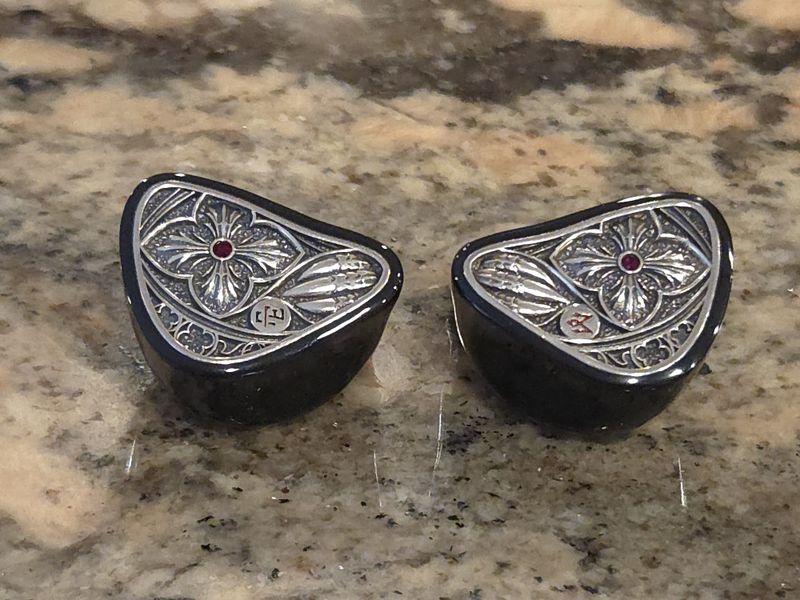
IEM Comparison.
The comparison was conducted using Mefisto with a stock Eletech cable, Baroque XL eartips, and a P6 Pro source against other IEMs, all of which were volume-matched in every comparison. Since I have already covered Mefisto vs. MB in my sound analysis, I will not repeat it here.
Mefisto vs EE Raven – Mefisto soundstage stretches a little bit wider while Raven imaging pushes/places mids a bit further out of your head. This comparison reminded me of Mefisto vs MB because Raven has a fuller body lower mids with a smoother overall mids that creates more contrast with its sparkly treble. Mefisto has a more neutral lower body and less colored mids, which generate more transparency and improve the retrieval of details in the mids with a more forward presentation. Mefisto treble has more crunch, which adds a little more energy to the upper frequencies. With bass, they both exhibit an unmistakable DD performance, but Raven has more sub-bass rumble while Mefisto has more speed and shorter decay, which gives notes more control.
Mefisto vs VE EXT – When it comes to the soundstage, Mefisto has an upper hand, both in terms of soundstage expansion and imaging. Although it’s not a night-and-day difference, it’s wider and more holographic in comparison. With tonality, there are many similarities due to the clear resolving tonality of each pair. Starting with the bass, both have a very similar dynamic driver bloom, with EXT having a slightly more pronounced sub-bass presence. Mefisto does have a faster attack and snappier decay of notes, making its bass tighter and more controlled. Both have close to neutral lower mids and more revealing micro-detailed upper mids. With treble, I was also surprised to find a similar performance, despite Mefisto having PMD, while EXT had a quad-EST. However, despite both having an energetic, crisp treble, the EXT upper frequencies sound a little more brittle and aggressive, while Mefisto’s treble has more control.
Mefisto vs Elysian Anni’23 – Another comparison I was looking forward to. Their soundstage expansion and imaging are very close, perhaps with a slight difference in imaging, where Anni’s mids are placed slightly more forward. Both have a similar bass weight, with a deep bass rumble and an identical quantity of mid-bass punch; however, the mid-bass punch itself is quite different. Anni’s bass is slower, more relaxed, and less articulate, while Mefisto’s bass is faster, snappier, and more layered, with shorter note decay and better articulation of the notes. Mids are very similar, with Anni having a smudge more towards the lower mid-body, although both have a neutral lower mid and a clear, detailed upper mid. Treble is where I hear the most difference. Anni has more forward lower- and mid-treble, while Mefisto has more emphasis in mid-treble, which creates a perception of more energetic treble crunch. Their mid-treble is very similar in quantity, but with a greater focus on lower treble. Anni’s treble is more linear while Mefisto’s is more accentuated.
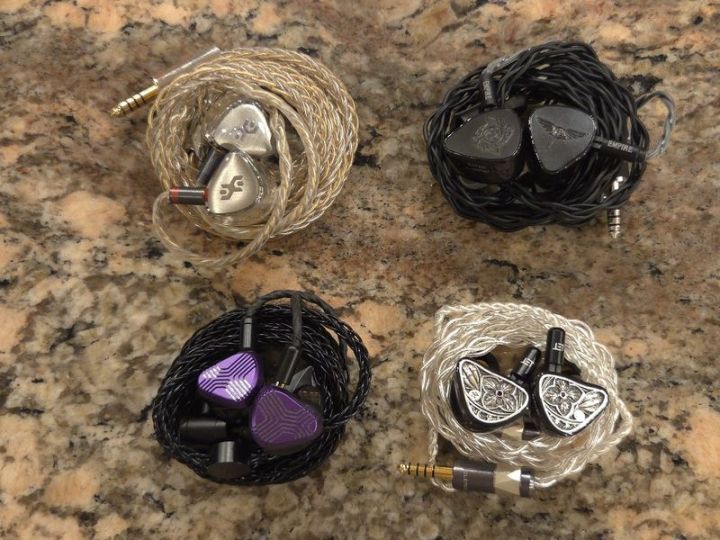
Source Pair up.
In each of these source pair-ups, I was using a stock Eletech cable and Baroque eartips. With a 5.6-ohm impedance and 105 dB sensitivity, the Mefisto is easily driven. I found that the source selection here, similar to the cable selection, has a noticeable effect on the revealing nature of the treble sound.
L&P P6 Pro – baseline sound with balanced W-shaped tuning, clear revealing tonality, fast punchy bass, transparent, layered, detailed mids, and crystal-clear non-fatigue treble.
A&K S3kM – The imaging is a little more holographic in this pair-up. Additionally, the mids seem to have pulled back slightly, and I can hear more emphasis on bass (with increased rumble) and treble. The bass impact is a little more noticeable and elevated here.
A&K S3kT (either tube or hybrid with high current) – I hear more body and texture in mids and a little more treble sparkle.
Shanling M8T (tube) – similar to S3kT, I hear more body and texture in mids and more energetic treble sparkle. When I switched to solid-state, the treble became even more zingy, so I preferred to keep it on tube with ultra-linear mode.
iBasso DX340/amp16 – Similar to the S3kM pair-up, the imaging is slightly more holographic, and the mids sound as though they’ve been pulled back slightly, with a bit of added body. I can also hear a slight increase in emphasis on bass and treble. Bass goes deeper with more rumble, while treble becomes airier.
Cayin N6iii/E203 – In hyper mode, I still hear a W-shaped tuning with more elevated mid-bass impact and crisper treble. I preferred to turn the hyper mode off and switch to Class A, which adds more texture in mids and takes the edge off the treble.
Hiby R6 Pro Max – The imaging is more holographic, and the overall sound is more resolving in the mids and treble, with added sub-bass rumble.

Conclusion.
As I mentioned in my Macbeth review, it always surprises me when I discover a new brand with its first product featuring a very mature level of design and tuning. Then, once the brand catches my attention, it becomes even more exciting to wait for their next release and see if they can top it with something new. In today’s competitive and saturated IEM market, it’s impressive to have two back-to-back releases, each generating an overwhelmingly positive buzz, as both Macbeth and Mefisto have done so far. To my ears, Mefisto features a balanced W-shaped tuning, with a clear and revealing tonality, fast and punchy bass, transparent and layered mids, and crystal-clear, non-fatiguing, energetic treble. In a relative comparison, MB tonality is smoother, fuller bodied, and slightly more laid-back and relaxed in presentation.
Is one better than the other? Or would anybody consider Mefisto, while being cheaper than Macbeth, to be inferior? Based on their tuning, I find these IEMs to share Forte Ears’ flagship crown. Of course, as I always say, everything still comes down to a personal sound preference. And, based on feedback from their customers and crowd-tuning of a few iterations of prototypes, as I later learned, the Forte Ears catalog now offers two fine IEMs with complementary, refined tuning, a unique faceplate design, and high-quality Eletech cable. I have no idea which sound tuning direction Riccardo and his team will take after Macbeth and Mefisto releases, or from which opera it will draw its inspiration, but I will continue to keep a close watch and wait for what comes next!

 Twister6 Reviews