

Pair up.
Here is how the RU9 pairs with various IEMs and headphones. All were connected to the 4.4mm BAL output and tested in high gain unless otherwise noted, while comparing sound performance between Solid-State (SS) and Tube (Classic/Modern) modes.
Headphones
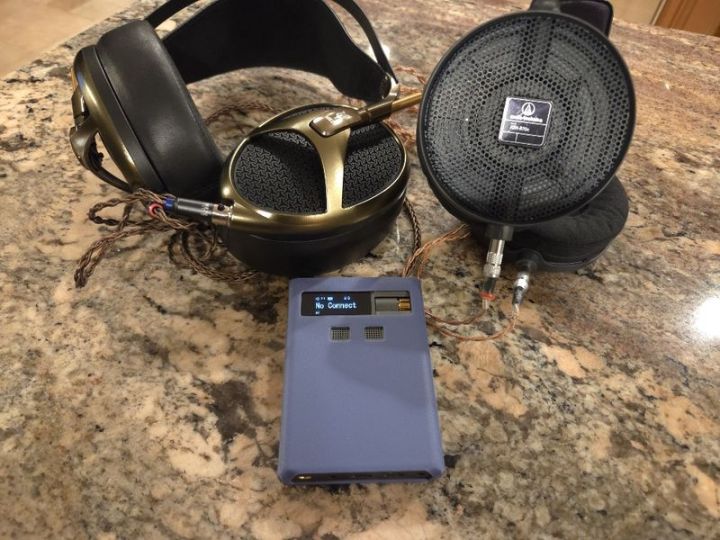
Audio-Technica ATH-R70x – These 470-ohm open-back headphones are generally not easy to drive, but I had no issues with RU9 at 47/100 and 42/100 (DC in) modes with plenty of overhead volume margin. I preferred the DC boost in driving R70x, so I kept it connected while switching between SS and Tube modes. The soundstage perception was expansive and wide in both modes, actually wider compared to several other sources, and the imaging remained holographic. The sound signature is balanced with either mode, and the tonality is natural, organic, and still very detailed. The bass performance is quite good, emphasizing a textured sub-bass rumble and punchy mid-bass. In SS, the bass has more emphasis on sub-bass, while mid-bass is softer and more relaxed. Switching to Tubes gave the bass a stronger and faster mid-bass. In Tubes, mids are also more textured, a little fuller, still very detailed. In Classic mode, mids were a little thicker in tonality, while in Modern mode, I can still hear the texture of the tubes, but with slightly less coloring and improved detail retrieval. Treble remained airy and detailed across all the modes. I preferred Modern Tube mode with DC hyper boost when listening to the R70x, a very impressive pair-up synergy.
MEZE Audio Empyrean – Here, I also preferred DC in hyper boost, which gave the Empyrean headphones more authority and improvement in the dynamics of the sound. I was going back and forth with DC in connection while adjusting the output to match the volume between both settings, and the hyper boost made the sound tighter and more dynamic. I heard an average-width soundstage with more depth and height than width in this pair-up. The imaging was quite good, not exactly holographic, but it was approaching that level of quality. The sound signature leans towards a balanced tone in either mode, featuring natural, smooth, and detailed tonality, with a slightly brighter upper range. The bass has a deeper sub-bass rumble and a rounded, softer mid-bass punch in Solid State mode. The punch feels stronger and faster in Tube mode. Despite the tonality being detailed up top, the vocals of Empyrean had a bit more thickness in the lower mids in SS mode and Classic Tube mode, making them sound more organic. However, once I switched to Modern Tube, the mids gained more transparency, improved detail retrieval, and increased clarity. Treble seems to remain the same across all modes. The improvement in bass presentation when switching to Tubes was essential, and then switching to Modern mode added more clarity to the mids by reducing the analog sweetness. I preferred Modern Tube mode with DC hyper boost when pairing the Empyrean with the RU9, which also yielded a very impressive pairing.
IEMs
The original sound analysis above was based on testing the Aroma Jewel with RU9. Here is how other IEMs pair up with RU9 in different modes.
FirAudio RN6 – I hear a big soundstage expansion, with more depth and height than width, and nearly holographic imaging. The sound signature of the RN6 in either mode is L-shaped, emphasizing more power and weight in the RN6 kinetic driver, producing a bass reminiscent of powerful floor-standing speakers. In SS mode, the bass is slightly softer due to a greater emphasis on sub-bass, resulting in a slower attack. In Tube mode, mid-bass punch is stronger, and the attack and decay of the notes are shorter, resulting in bass notes that are tighter and more precise. I didn’t notice a significant difference between Classic and Modern Tube modes in this regard. Overall, I heard a tighter and more resolving sound in Tube mode, which was the opposite of what I experienced with RN6 when testing other Tube-based DAPs. With mids, I also heard the sound to be more resolving, tighter, and having improved layering and separation, especially when switching to DC hyper mode. The treble was similar between the SS and Tube modes. In this pair-up, I preferred RN6 with RU9 in tube mode. There was no waterfall hissing with RN6 and RU9.
Elysian Acoustic Annihilator 23 – I noticed an expanded soundstage, spherically spaced and spreading in all three directions, with a slightly wider soundstage in Tube modes. The imaging was also approaching a holographic level. The Anni sounds mildly U-shaped with RU9, having greater emphasis on sub-bass and upper mids/treble. In SS mode, the sound was slightly more balanced, while switching to Tubes made it more U-shaped, due to a more substantial bass impact and a lift in treble. In SS, the bass had more weight in the sub-bass, while switching to tubes also enhanced the mid-bass impact. I was surprised by the change in treble, and wonder if this is due to changes in mids. With mids being a bit smoother and more textured in tube mode, it created more contrast with treble, making it stand out more. The treble was still crystal, clear, extended, and non-fatigued. But I preferred Anni with RU9 in Solid State mode, where the treble sounded a bit more relaxed. Anni is harder to drive, and I did have to raise the volume of RU9, but there was plenty of headroom left. As expected, no waterfall hissing here, and the background was pitched black.
Forte Ears Macbeth – big expanded holographic soundstage in either of the modes. The sound remains balanced, natural, and detailed in either Solid State or Tubes modes, but the bass and the mid-tonality do change. In solid state, the bass is more relaxed, balanced between sub-bass and mid-bass, tilting more toward the sub-bass rumble. Mids are neutral, natural, smooth, and detailed. Once you switch to Classic Tube, the mid-bass impact scales up, giving the bass more emphasis, faster speed, and tighter performance, while the mids gain more body and texture. Switching to Modern Tube maintains the same bass emphasis. Still, the mids have a bit less coloring, retaining the same texture and resolution, albeit with slightly less body, which enhances clarity and improves the layering and separation of the sounds. Treble didn’t change much in either of the mods. Here, I preferred Modern Tube mode. Additionally, the background was pitched back, with no waterfall hissing, and the noise floor was nearly nonexistent.

Wired/Wireless Connection.
In addition to functioning as a USB DAC “dongle” supporting UAC 2.0 and driverless UAC 1.0 (for game console compatibility), you can use RU9 to drive an external AMP through LO, use it as a digital source output or input (S/PDIF), connect it wirelessly through Bluetooth, and more. This is the first time I’m using the Wired/Wireless Connection section in my “dongle” review.
Wireless
Wireless connection is enabled in the settings, where you select the Bluetooth option, and then easily pair with your smartphone. You must ensure that the LDAC codec is enabled in the device connection settings on your phone, if it supports it. The connection remained stable for approximately 20-22 feet in open space until it began to become a bit choppy. It’s not exactly stellar if this were TWS or other wireless earphones or headphones. But for a wireless dongle operation, this is more than enough. I also confirmed that I can use the hardware playback buttons on RU9 to control playback remotely without any issues.
Furthermore, I didn’t notice any audio and video lag while playing movies on Netflix; everything was in sync.
Line Out
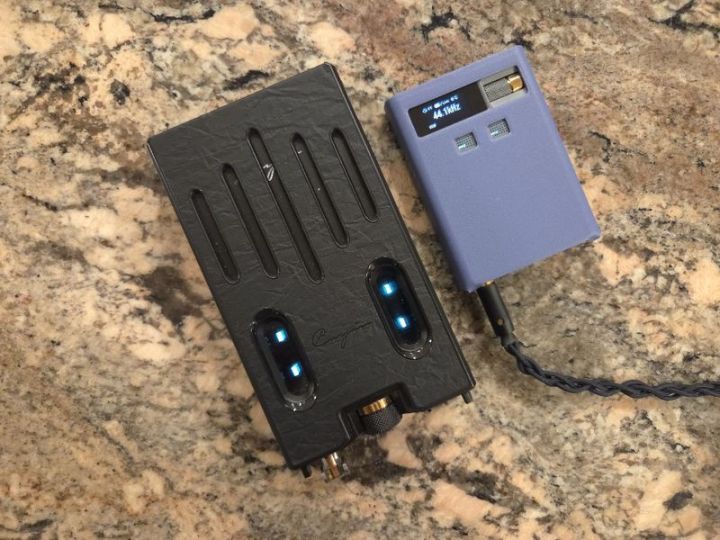
A Line Out test was conducted using C9ii, with the RU9 output directly compared to RU9 + C9ii under various timbre settings.
Solid State – mids in RU9 are a bit smoother, while the C9ii bass is a little stronger, and the soundstage stretches a bit wider.
Classic Tube – very close tonality with RU9 having a bit more sparkle in treble, while C9ii bass is a bit stronger and soundstage stretches a bit wider.
Modern Tube – very close tonality with RU9 having just a bit more sparkle in treble, while C9ii bass is a bit stronger and soundstage stretches a bit wider.
You should also note that C9ii offers Class A, AB, and Hyper amp modes, as well as a more powerful amp output.
S/PDIF Coax
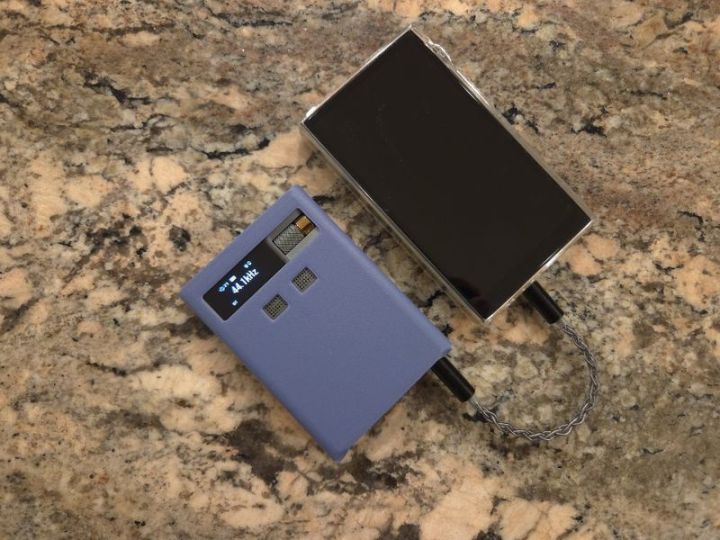
The SPDIF test was performed using the iBasso DX180 with its 3.5mm coaxial interconnect cable.
Coax vs USB-C vs Bluetooth Wireless – Using the DX180 for all three connections, the sound quality of the coax connection (SPDIF input) was very similar to that of Bluetooth. In contrast, the USB-C/wired connection showed a slight improvement in layering and sound separation. The SPDIF input connection was seamless.
SPDIF output will enable you to use RU9 as a digital converter, allowing you to connect your smartphone or laptop’s output to the external DAC/amp.
USB DAC
With USB selected as the source, I connected RU9 to my aging ThinkPad T480S and encountered no issues; Windows 10 Pro easily recognized it as a Cayin USB DAC in my audio settings. I was able to control the volume from my laptop and RU9.
The same applies to my Galaxy S25; I have no issues using it when connected via a USB cable. One thing I was very pleased with was that there was no noticeable audio and video lag, and everything was in sync.
I was also pleased to be able to control the playback directly from the RU9 with hardware buttons.
Source pair-up
I used the Galaxy S25, Cayin N7, and Hiby R6 Pro Max as sources to drive the RU9, comparing wired and wireless options, using the Jewel IEMs and HibyMusic app.
Wireless test (LDAC) – no noticeable difference in sound between these three sources.
Wired test (USB-C) – no noticeable difference in sound between these three sources.
I was splitting hairs, going back and forth dozens of times between these sources, trying to convince myself that I’m hearing some subtle difference. Perhaps there is a very slight, subtle difference, but overall, the sound is nearly the same in both wired and wireless settings between these selected sources.
However, there is a noticeable difference in sound quality between wireless and wired connections. In a wired connection, I do hear an improvement in layering and separation of the sound, as if there is more air between the layers and a bit more sparkle or air up top. In wireless, the sound is not compressed, still expansive and dynamic, but it feels like there’s a bit less air between the layers, resulting in an overall smoother tonality.

Conclusion.
In my reviews of DAPs and amps with multi-timbre options, I often emphasize the importance of having access to all these sound-shaping tools when trying to fine-tune the synergy between your source and IEMs and headphones. While using RU9, in addition to being able to switch between Solid State, Classic Tube, and Modern Tube modes, all of which help fine-tune the sound, you also have different ways of connecting to the source and powering up the device, which have a direct impact on sound quality. You can connect it wirelessly or via a wired connection, power it up directly like a dongle, or use the internal battery. Additionally, you can switch to a hyper mode while using an external DC input connection to boost the performance of the internal op-amps. Plus, control the playback of the source remotely with dedicated buttons. All this functionality was very impressive for such a small portable DAC/amp device, which also includes the NuTube.
But it was not just its functionality, but also the sound quality that made the RU9 stand out. There was a distinct sound difference when switching from Solid State to Classic Tube, which gave the mids and vocals more body and texture. The Modern Tube mode sounded somewhere between the SS and Classic modes. However, unlike other devices I tested in the past where I favored Classic, here I preferred Modern, which offers the benefits of Tube mode, with deeper and tighter bass, and more textured mids, without compromising on speed or making the sound too laid-back. Another interesting observation is that Tube mode added a stronger impact to the mid-bass punch compared to Solid State mode, which is the opposite of what I have found in other tube-based DAPs. Additionally, both Tube modes didn’t compromise on making the top end of the sound too smooth, while still maintaining the natural resolving tonality of the upper mids and treble.
I found RU9 to be not just another dongle or a portable DAC/amp. As I mentioned earlier in the introduction of the review, this latest release from Cayin takes the concept of a “dongle” to a whole new level, making it a hybrid dongle. It is not only compact and MagSafe-ready to carry attached to your smartphone via a wired or wireless connection, but also adds NuTube into the equation with three different timbre settings to fine-tune the sound of RU9.

 Twister6 Reviews
Very nice review.
It would be also interesting, to compare it with the N30LE instead of the N8ii. 🙂
LikeLike
Yes, I agree. Can you please send me N30LE so I can compare it? 😉
LikeLike