
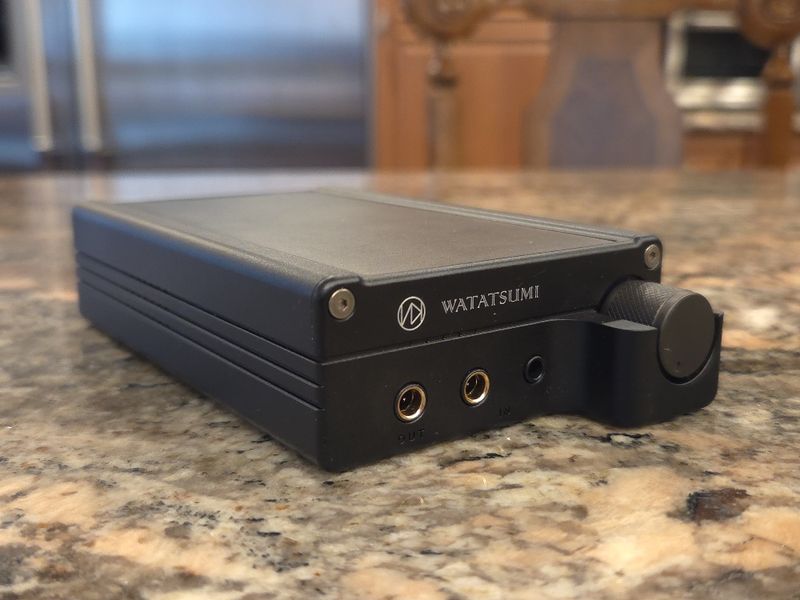
AMP Comparison.
Let me first start by doing a brief comparison of the original Tsu to its v2 version. Then, we can move on to a comparison of Tsu with Wata. To wrap this up, I used two of my demanding headphones and analyzed their sound using Wata vs Tsu to determine which one pairs better with the corresponding pair of cans.
Tsu vs Tsu v2 – with a 6dB reduction in voltage gain from the original to v2, making it friendlier with more sensitive IEMs, the volume change is quite noticeable, where you have to crank up the v2 volume output higher. In terms of tonality, the only thing I noticed was just a little crisper treble. And when it comes to technical performance, v2 sounds tighter, with a slightly blacker background.
Tsu and Tsu v2 look identical except for the printed logo; my v2 sample still had the old logo:


Wata vs Tsu – the soundstage expansion is very similar, though I felt like Tsu’s soundstage width was spreading a bit wider. When it comes to the tonality, that’s where you hear more difference. Tsu is more transparent, with minimal coloring, offering a clean and clear neutral detailed tonality in the mids and a bit more sparkle and air in the treble, which creates a more revealing presentation of the sound. In contrast, Wata features a neutral tuning with added warmth, resulting in a smoother midrange and a less intense treble. Despite its coloring, Wata remains very detailed, layered, and dynamic, and every sound feels multi-dimensional. Especially when it comes to layering and sound separation, despite Tsu having more revealing and transparent mids and airy treble, Wata has just as much precision in layering and sound separation. The coloring in Wata’s mids added a very delicate analog layer of smoothness without any veil, texture, or distortion. And even with that extra warmth and smoothness, I still felt like Wata had a blacker background in comparison to Tsu. It is difficult to judge the exact level of background ‘blackness’ by ear. Still, based on my previous experience with more naturally tuned sources, the contrast between notes on and off is usually less sharp compared to more revealing sources. With Wata, it wasn’t the same case, and in my multiple A/B comparisons, the notes felt like they had a sharper edge during the transition, thanks to a blacker background that made them stand out.


Wata vs Tsu Pair-up
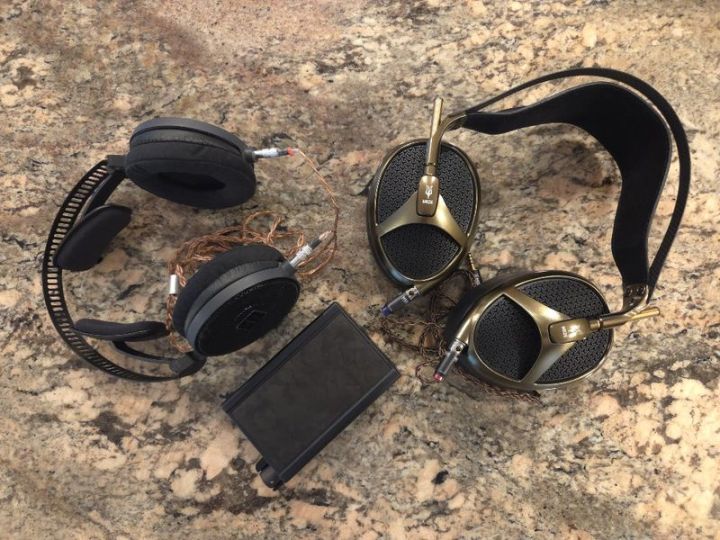
Audio-Technica ATH-R70x – Both amps yield an extensive and tall soundstage, with a depth that expands even further, while maintaining nearly 3D holographic imaging. The sound signature was a bit different. With Tsu, R70x has more emphasis on mids and treble, which takes away from the bass, making it more neutral in quantity. Wata maintains the sound signature of the R70x balanced, with a more natural, organic tonality that remains detailed, layered, and dynamic. However, unlike with Jewel, the difference in mid-tonality between these amps with the R70x is more pronounced. The bass performance of the power-hungry, 470-ohm, lower-sensitivity R70x benefited from Wata, while gaining more weight and a deeper sub-bass rumble. Both amps pushed the R70x to exhibit excellent technical performance. Still, the pair-up synergy of Wata with these (R70x) demanding headphones was closer to my personal sound preference, which is a more natural tonality.
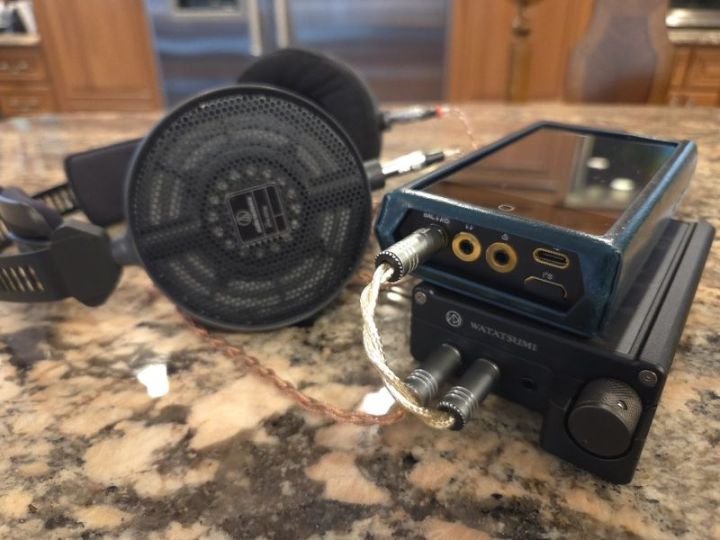
Meze Audio Empyrean – Typically, with many other sources, I find the Empyrean to have an average-width soundstage, with more depth and height than width. Here, with both Wata and Tsu, the soundstage width expanded slightly; it wasn’t fully spherical, but the perception of the soundstage shape felt rounder. The technical performance is very similar, with a dynamic, layered sound and excellent detail retrieval, without any extra thickness in the lower mids, which I have found Empyrean to have with many other underpowered sources. The detailed tonality didn’t come at the expense of brighter upper mids or treble, though Tsu did yield a bit more sparkle in treble. The primary difference lies in the rendition of mid-tonality. The transparency of Tsu makes Empyrean mids sound a little more revealing, which creates more contrast with the bass. Wata made Empyrean mids sound smoother, with a bit more warmth. As a result, the Empyrean bass had more control, tighter sound, and better articulation with Tsu, compared to being a little softer and slightly laid-back with Wata. This will be up to an individual’s preference, but I enjoyed Empyrean more with Tsu over Wata.
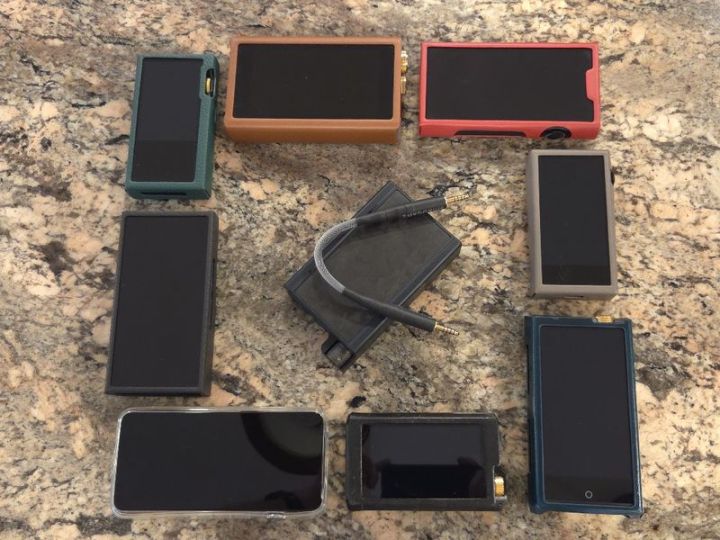
Source pair-up.
Just like FUGAKU, WATATSUMI requires a source, specifically the LO output of the DAC, to drive it. Brise Audio amps are not intended to color your sound like tube or some other amps. They enhance the technical performance of the DAC’s baseline sound signature, and in the case of Wata, add a touch of natural coloring to the sound. I have conducted extensive sound analysis using the SP3000M as my baseline source, and please keep in mind its (AK4499EX/AK4191EQ) DAC.
Lotoo LPGT (AK4497) – Relative to SP3000M with both LO set to 2V BAL output, LPGT has a little smoother sound, while, in comparison, SP3000M has less coloring and more transparency in mids. The soundstage width is slightly wider in 3kM.
L&P P6 Pro (R2R) – Compared to the SP3000M, both have a large soundstage, a black background, and a quite resolving sound. I just heard a slightly smoother midrange and treble when pairing with the P6 Pro.
Cayin N8ii (ROHM) – with other sources, using AKM or discrete DACs, the sound difference wasn’t as drastic. Here, with the ROHM DAC, I can hear a more holographic soundstage expansion, as well as improvements in layering and sound separation, with more air between layers of sound, and the sound itself being a bit more revealing, less colored, with a blacker background. This was a jaw-dropping experience because I had never heard Jewel’s sound so good, so holographic, with such powerful bass and layered sound.
iBasso DX320Max Ti and DX320 w/AMP14 (ROHM) – I was expecting to hear the same performance from 320 and 320Max as with N8ii, since they use the same ROHM DAC chip. Here, I hear the DX320 having slightly warmer, denser mids, a big soundstage expansion, but not as expansive as with the N8ii, and a bit less airiness, especially in the air between the layers of the sound. The DX320Max steps it up, matching the N8ii LO almost exactly, perhaps, with the 320Max having a bit more revealing and transparent mids.
Hiby R6 Pro Max (ES9039MS) – the sound here was warmer and smoother, with reduced soundstage expansion, which was noticeable. Not my favorite pair-up.
Shanling M8T (AK4499EX/AK4191EQ) – very similar sound performance as with SP3000M, big open soundstage, smoother mids, deep impactful bass, clear airy treble.
Conclusion.
As I mentioned in the introduction to this review, Wata was created by Brise Audio as a portable reference amplifier for evaluating their cables during the development. As a reference amplifier, its intention was not to color the sound or drastically alter the tonality. The idea here was to focus on technical performance enhancements of your DAC output, improving dynamics, layering, and sound separation, while expanding it, reducing the noise floor to a minimum, and making the output even more powerful.
And speaking of which, going from 10.5dB (Tsu) down to 4.5dB (Tsu v2) and back up to 6dB (Wata) was the right move, providing a happy medium for regular and lower-sensitivity IEMs, as well as average and more demanding headphones. And if you find the output to be too powerful for your sensitive IEMs, and considering there is no gain switch, you can reduce the LO voltage of your source, as I have done with the SP3000M, by lowering the LO voltage from 4V to 2V to gain a broader range of volume adjustment.
Regarding the tonality, they continued to fine-tune and perfect their neutral sound signature, which was also enhanced with a bit of warmer coloring, perhaps due to some contribution from the internal use of SHIROGANE pure silver wires and, most importantly, the adaptation of circuits from the infamous FUGAKU amplifier design which brings me to the most essential point of WATATSUMI design.
While the idea behind the FUGAKU design was quite innovative from a portable IEMs perspective, it didn’t allow for easy cable rolling or trying the amp with different IEMs. With three premium components, it also increased the product’s price tag. It’s an all-in-one system where Brise Audio has already done the homework for you by putting together all the essential components. On the other hand, WATATSUMI gives you the freedom to do your homework by picking and choosing your cable and using any IEM you prefer. If you were a fan of FUGAKU during its auditioning at CanJam shows or through the Musicteck demo, or if you already own FUGAKU and are itching to hear the performance of its brilliant amplifier, now you can unleash the Dragon and experience how it sounds with the different cables and IEMs from your audiophile collection.

 Twister6 Reviews
hello can you please compare this to mass kobo 475 is it worth the upgrade.
LikeLike
Only heard 475 for a few days when I borrowed it for review 2 years ago. No way I can do any meaningful comparison. But from my review and notes of 475 vs Tsu, I preferred Tsu. Here, I also prefer Wata over Tsu and Tsu v2. So, you can draw your conclusion 😉
LikeLike