
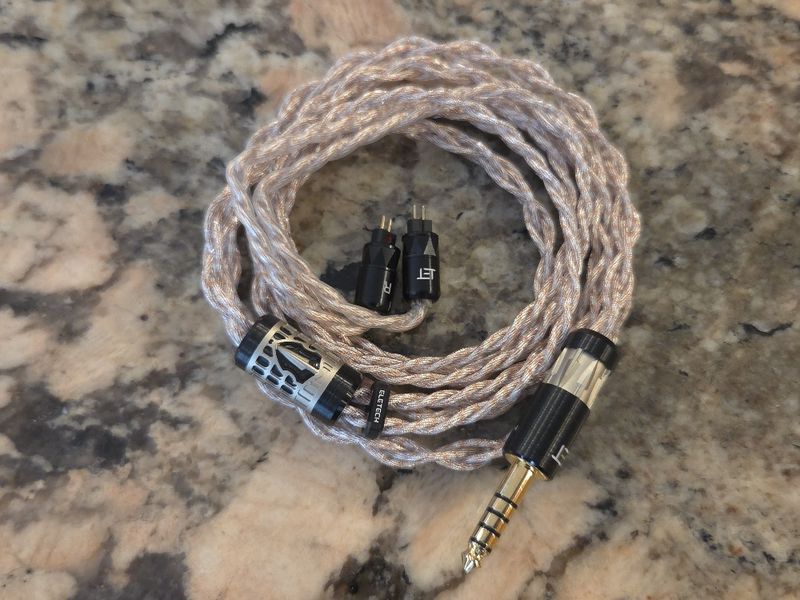
Pair-ups.
Here is how I hear Odyssey cable contributes to a sound in pair-ups with various IEMs and in comparison to their stock cables, using L&P P6 Pro and A&K SP3000M as my neutral, natural reference sources while playing the selection of my usual test tracks, such as Agnes Obel’s “The Curse”, Sandro Cavazza’s “So much Better” (Avicii remix), C-Bool’s “Never Go away”, Ed Sheeran “Shape of you”, Counting Crows “Big yellow taxi”, Galantis “Hunter”, Alan Walker “Darkside”, Iggy Azalea “Black widow”, Indila “Boite en argent”, Robin Schultz “Oh child”, Dua Lipa “Love Again”, David Elias “Vision of her”, and Michael Jackson “Dirty Diana”.
Please understand that I’m not referring to the bass, mids, or treble sound of the wires. Instead, I’m describing how I perceive the sound change of particular IEMs as I switch between their stock cable and Odyssey. Furthermore, a handful of these IEMs already come with various Eletech stock cables, making it more interesting to try Odyssey and see if it will upgrade the sound performance.
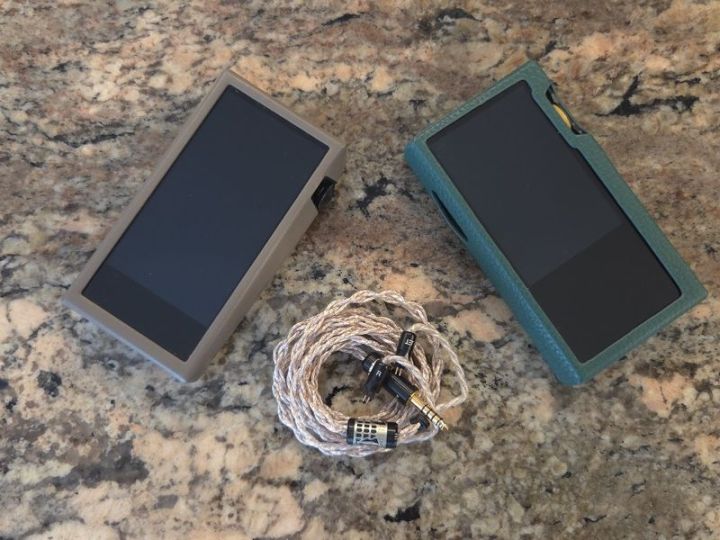
Forte Ears MacBeth (Eletech Copper Litz stock vs Odyssey) – The main improvement I hear is in the upper mids, where it is more resolving, revealing, with a more layered sound (more air between the layers of the sound), and the treble has more airy sparkle. I feel like treble is a bit more energetic now, which I’m still undecided about whether I like it or not. I also noticed that the bass sounds tighter and better controlled, with a shorter note decay. The soundstage expansion remains the same, but due to changes in upper mids/treble, the imaging now has a more holographic perception.
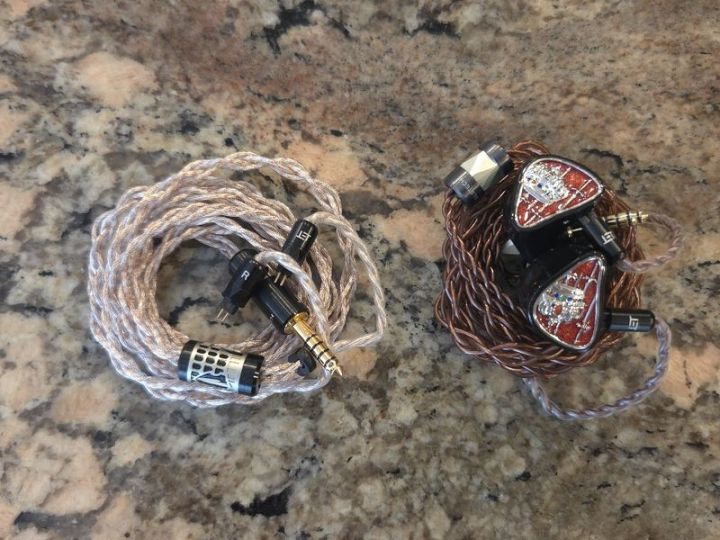
Forte Ears Mefisto (Eletech blend of Silver, Silver-Plated Copper, and Copper stock vs Odyssey) – the soundstage is still expanded, and imaging is holographic; bass is powerful, dynamic, with deep rumble and punchy mid-bass, and bass is tighter due to a shorter decay of notes. Mids sound slightly more forward, very detailed, and still natural. However, the biggest surprise here was in the treble, which sounds more natural, less peaky, and still very detailed, airy, and sparkly, but with a scaled-down intensity of presentation. The rendition of treble, along with the fine-tuning of bass notes and mid-range resolution, transformed Mefisto to a whole new level, making Odyssey the new “permanent” cable I plan to use with these IEMs.
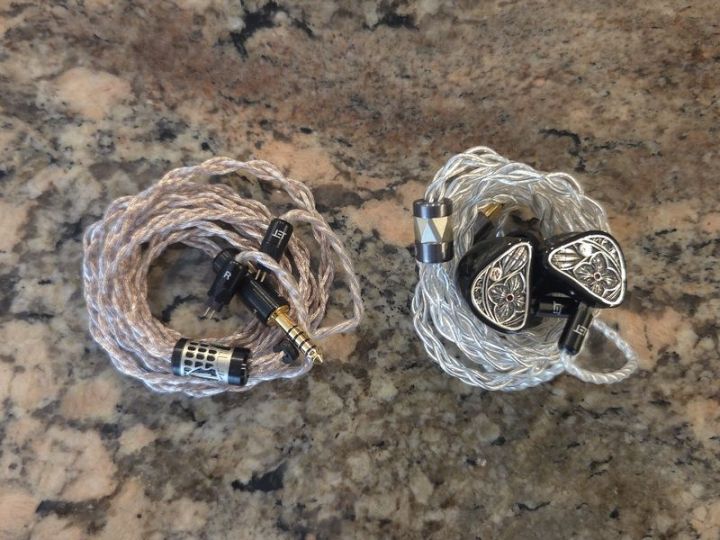
Canpur CP622B (Eletech Socrates stock vs Odyssey) – I hear a more expanded holographic imaging. The sound change here is very similar to what I hear with Macbeth; most of the changes are centered around the midrange being less colored, more detailed, better layered, and slightly more forward. The treble also gains a bit more air and sparkle, and I notice that the decay of bass notes is shorter and snappier, giving the bass more control. The improvement in mids with more clarity and better detail retrieval is spot on. The change here is less drastic than with Mefisto, tastefully done to fine-tune the mids.

EE Raven (stock PWA copper vs Odyssey) – Here, I hear a noticeable expansion in soundstage width, spreading wider left/right in comparison to a stock cable, with imaging remaining 3D holographic. The first and most noticeable change is in the balance between the bass and the mids, which creates a more W-shaped frequency response. Bass is still very deep and powerful, with mid-bass decay of notes being shorter and snappier, similar to changes with other IEMs. Mids are also more resolving, more detailed, still natural, but more forward, creating a more linear balance between lows and mids. Similar to Mefisto, the treble also sounds more natural without losing its sparkle and airiness. This was another excellent example of pair-up synergy that worked its magic.
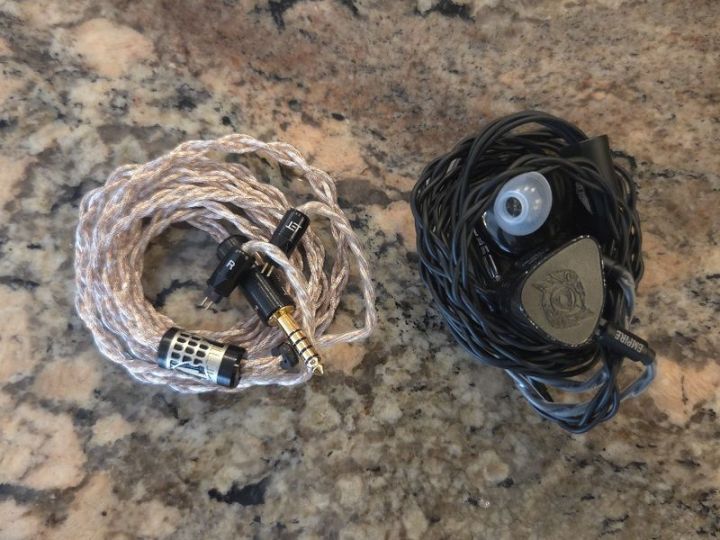
FirAudio RN6 (stock Copper plated silver vs Odyssey) – the soundstage remains very expanded and holographic. The signature is more W-shaped balanced rather than L-shaped. The bass remains very powerful, deep, and layered, but the mid-bass has gained more control, resulting in improved separation from the mids. Mids are clear, detailed, natural, slightly more forward, with improved clarity, resolution, and layering. Treble remains clear, airy, with natural crunch, and zero harshness. It still puzzles me how Odyssey enhances the definition of the treble in many pair-ups without making it bright or harsh. This was a great pair-up example as well.
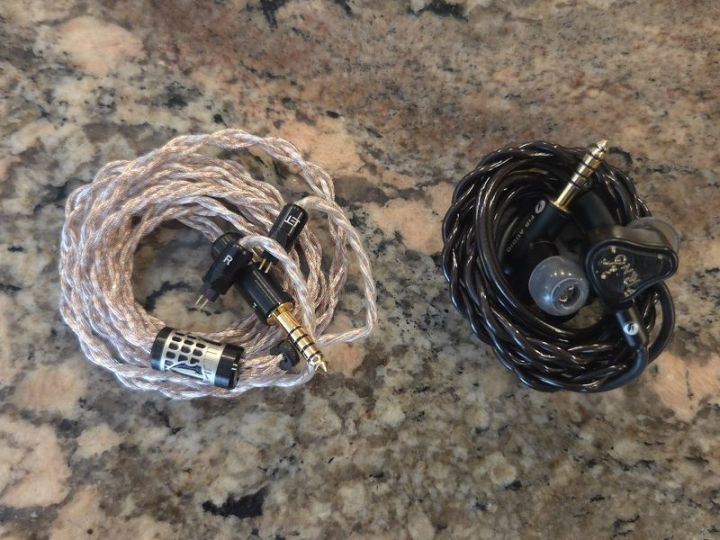
CFA Astrolith (stock SPC to Odyssey) – Here, I was able to exercise the Versa modular connectors, switching from 2-pin to MMCX. The soundstage remains large and open, with imaging that is holographic in nature. The sound is fast and snappy, with the bass having more control due to shorter decay of notes. The big difference here is that the mids have a bit more body, and the treble is a little less peaky. It’s the kind of fine-tuning I was looking for by switching between the ear tips, but I was able to nail it down in this cable pair-up, giving the mids a bit more body and making the treble more natural. The change is not very drastic, but tasteful and noticeable.
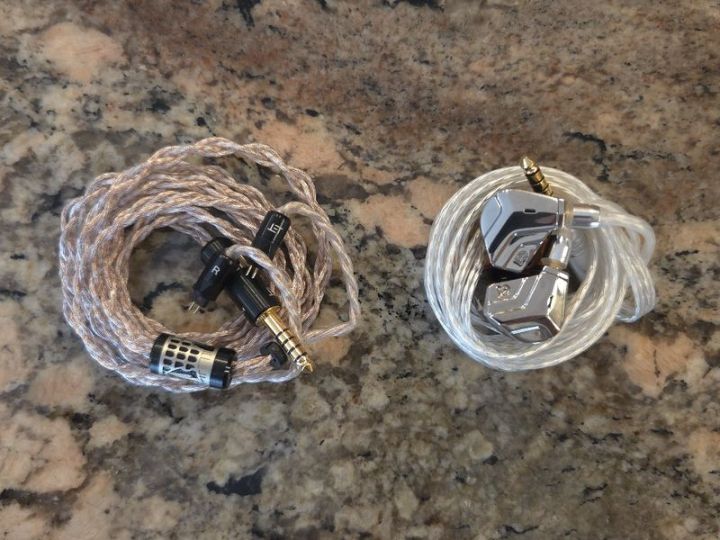
Comparisons.
With the Odyssey cable’s journey evolving from previous Eletech releases, a comparison with their other cable family members made sense to me. I used the Jewel with PWA First Times and P6 Pro as my baseline for comparison, describing Jewel’s sound relative to the cable pair-up changes.
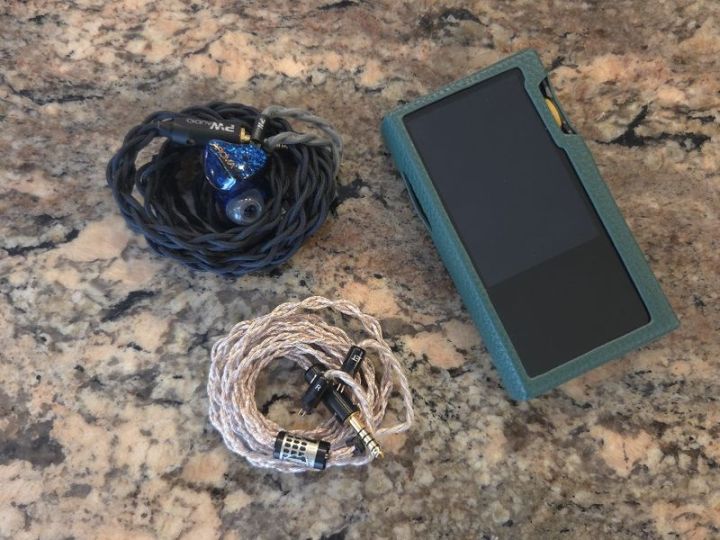
w/Odyssey – I hear a lot wider soundstage with a noticeably more holographic imaging (relative to FT); bass sounds tighter, punchier, and a bit faster, still has a good deep extension (more bass presence than SoA, for example); mids are still natural, retaining its original musical sweetness, but with less coloring, more transparency, noticeable improvement in retrieval of details with enhanced resolution, and even a bit more forward presentation (but not as forward as mids in SoA); treble has improved extension with a bit more air, and a touch more crunch which helps with the improvement in layering and resolution.
w/Iliad – I hear a wide, holographic soundstage expansion, less colored and more transparent sound (relative to FT), natural, detailed mids, resolving treble, a bit smoother in comparison to Odyssey. I can hear Odyssey to be more micro-detailed and a bit more resolving, and having a deeper sub-bass rumble in comparison to Iliad. Additionally, the imaging/positioning of sounds with Odyssey has a more 3D-like effect.
w/Aeneid – I hear a wider soundstage expansion (relative to FT), but the imaging is not as holographic as with Odyssey; I hear more rumble in sub-bass and more body in mids relative to Odyssey, which is still detailed and resolving, however, just a bit smoother.
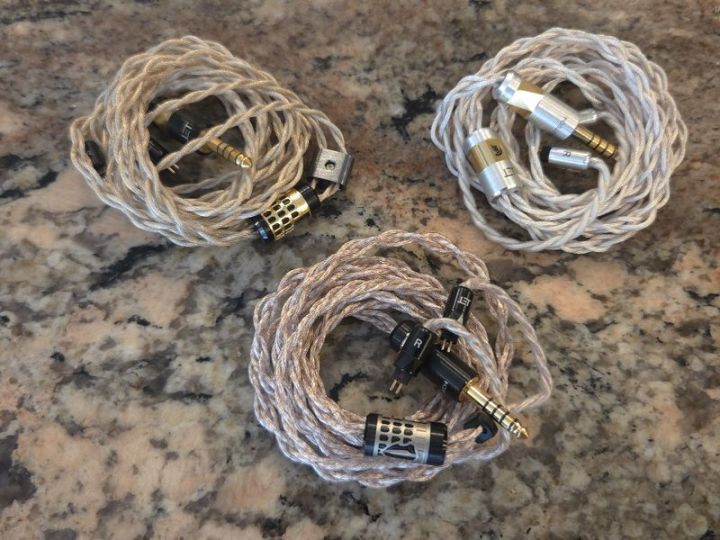
w/Sonnet of Adam – I hear a natural, revealing fine-tuning of the sound, a bit more mid-forward, with an extra crunch and air in the treble, which improves the resolution and retrieval of details in the mids. In my opinion, SoA is more of a mid-forward specialist, whereas Odyssey is more balanced.
w/OTL – I hear a warmer, fuller body tonality, with more rumble and punchier bass, including smoother mids and treble. OTL is one of my go-to cables for achieving a warmer, smoother, richer tonality with more weight in the bass when fine-tuning IEM sound.
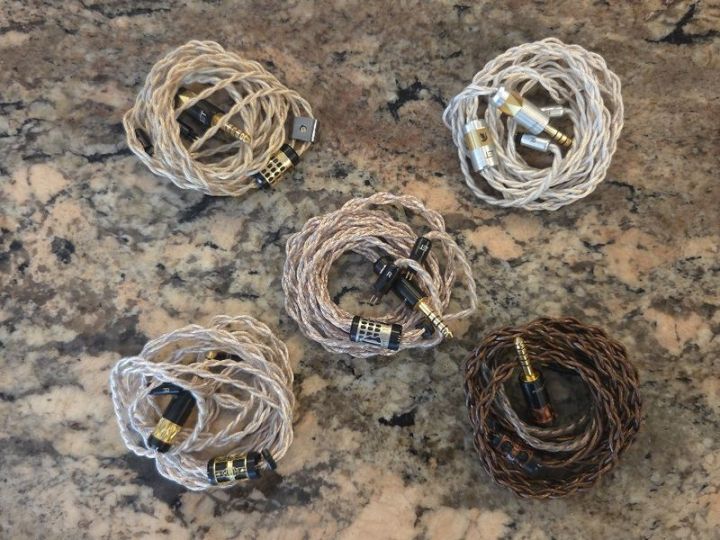
Conclusion w/Sound Analysis.
Based on my testing with several IEMs and comparisons to other cables, I found that Odyssey introduces common sound changes associated with an improvement in soundstage width, extending wider to the left/right. It was also very common to hear an improvement in bass definition, with a deeper rumble, tighter mid-bass punch, and shorter, snappier note decay, resulting in the low end having more control. With mids, it pushed them slightly more forward, making them more resolving and detailed, without making them brighter or thinner.
Treble is something I’m still trying to wrap my head around because it adds airiness and natural crunch, improves the definition of upper frequencies, but at the same time reduces peaks and any spiciness. When I heard Odyssey at the CanJam NYC, I couldn’t put my finger on why the sound was more natural with a few IEMs I tried. I thought maybe the mids were warmer, making the sound smoother. But the sound remained very resolving, detailed, and layered. The treble fine-tuning is what made the sound more natural without losing details.
Since all my cable reviews begin with a Preamble and end with a Disclaimer, I would like to mention in the Conclusion that everything ultimately depends on the pair-up synergy, as the essence of the cable lies in fine-tuning the baseline signature of your IEMs. As I always say, there is no magic “EQ” silver bullet or fairy dust behind the cable. If you’re not satisfied with the sound of your IEMs, consider getting a pair of monitors with a different sound signature instead of thinking that a cable will drastically change the tuning.
For me, Odyssey has found a permanent pairing home with Mefisto, which perfectly nailed its upper frequency rendition. In my honest opinion, Odyssey could turn any cable hater into a believer once they try, for example, the Forte Ears Mefisto with its stock cable and then switch to Odyssey. Overall, it’s a premium, very well-built cable, featuring high-quality materials, an eye-catching design and packaging, a versatile modular connector system, and a unique sound tuning that works very well with many of my IEMs.

 Twister6 Reviews