

Cable pair up.
I’m aware that some people are skeptical about the contribution of cable to the audio chain. It’s not my intent to start an argument here. Instead, I would like to share what I hear during my testing. What makes sense to me is that a metal wire is a material with physical properties of resistivity, conductivity, and purity, all of which act as a filter between your source and earphones. Variations in these physical properties can affect the conductivity of an analog signal, resulting in a change in sound that ranges from subtle to more noticeable levels. If discussing cables bothers you, please skip this section. Otherwise, enjoy these brief impressions relative to the KVASIR stock cable.
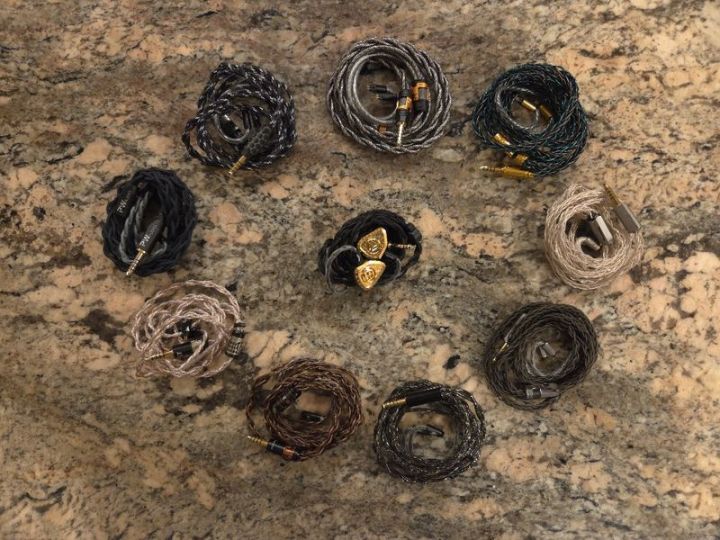
w/Eletech Ode to Laura (OTL) – a bit smoother tonality, same technical performance, however, a touch narrower soundstage.
w/Eletech Odyssey – similar tonality to stock cable with a little more depth/height in soundstage expansion.
w/PWA FT – mids are a bit more forward and have a touch more clarity, and the imaging becomes more holographic.
w/EA Chiron – this pair-up adds more rumble to sub-bass.
w/EA Centurion – this pair-up adds more rumble to sub-bass, brings mids a bit more forward, and expands the imaging, making it more holographic.
w/LL Venom – this pair-up adds more rumble to sub-bass, makes mid-bass punch tighter and stronger, brings mids a bit more forward, improves retrieval of details, and also expands the soundstage and imaging.
w/HanSound Kunpeng – sound performance similar to stock cable.
w/HanSound Quentin – I hear a deeper sub-bass rumble.
w/Beat Audio Orbit Saga – I hear mids being noticeably more forward, and the overall sound tuning is more neutral.
I usually encourage my readers to experiment with cable rolling, especially by utilizing the collection of wires they already have on hand. Now, when it comes to recommending investing in extra cables for a specific IEM, I always encourage being realistic. Cable rolling will help you fine-tune the sound, but it won’t drastically alter the core sound tuning. As I always say, if you are not happy with the baseline signature of your IEMs, consider getting another IEM instead of investing thousands of dollars to modify your current one. Keep in mind that Dean tuned the Odin MKII using the KVASIR stock cable to achieve the desired sound for these IEMs. In my cable rolling above, I enjoyed the pairing of MKII with Venom, FT, and Centurion.
Source Pair up.
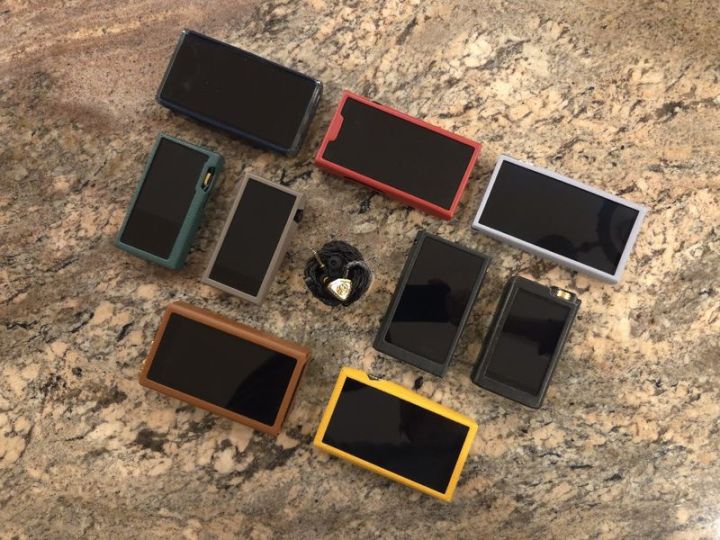
In each of these source pair-ups, I was using a stock KVASIR cable and Baroque XL eartips. With a 2.7-ohm impedance and 105 dB sensitivity, the MKII can be easily driven without any issues or hissing, considering most of my DAPs have very low output impedance. I found that the source selection here, similar to the cable and ear tip selection, affects sound shaping.
L&P P6 Pro (baseline) – balanced sound signature with a neutral, natural tonality. The bass is deep and articulate, the mids are natural and resolving, and the treble is clear, natural, and relaxed.
iBasso DX320 Max – more punch in mid-bass, mids have less coloring, sound more revealing, treble has a little more crunch; soundstage slightly more expanded.
iBasso DX340 w/amp16 – In solid (class AB) mode, the sound is faster, more revealing, and mid-bass has more punch. When switching to tubes, the sound becomes more laid-back, smoother, and more organic, with less punch, but the soundstage perception is slightly wider (in tube mode). With amp16, I preferred a tube mode.
Lotoo LPGT – surprisingly, a very similar pair-up synergy as I hear with P6 Pro.
Cayin N6iii w/R202 – R2R DAC kept the mids smooth and organic, bringing them slightly more forward. Switching to 1-bit made the soundstage a bit narrower, and the sound a little tighter, less organic, and more revealing in comparison to R2R. R2R also added a bit more sub-bass rumble. As you can guess, the R2R mode of R202 was my favorite in pair-up with MKII.
Hiby R8ii – I hear a smoother sound presentation with deeper sub-bass rumble, while the rest was similar to baseline performance.
Shanling M8T – The tube performance was closer to the baseline, smoother, more organic, and slightly more laid-back. Solid-state made the sound more revealing and added more punch to the mid-bass, taking away the analog sweetness in tonality. I preferred a tube pair-up here.
A&K SP3000M – I hear a very close sound performance to the baseline tuning, with a deep, articulate bass, natural resolving mids, and transparent, natural treble.
A&K SP3000T – Similar to other dual-tonality DAPs, solid-state mode removes some of the analog sweetness in tuning, making the sound more revealing and faster. The tube added more texture to the mids and additional rumble to the sub-bass. I preferred the tube mode in this pair-up.
I wouldn’t say I found a lot of drastic variation between different sources, unless we are switching between dual tonality (solid-state vs tube) outputs. I think in general, MKII tuning is more forgiving and pairs well with many different sources.
Conclusion.
During my review, the primary question I sought to answer while listening to the Odin MKII was whether it would completely replace the Odin OG, allowing me to set it aside in favor of the MKII. After hours of listening and comparing Odin OG, Odin MKII, and Raven, I found these three to remain as a holy trinity of the Empire Ears catalog, where it would have been a hard choice to make between which Odin I would keep, since both of them had a unique fine-tuning.
MKII still focuses on mids/vocals, but in a way that allows you to kick back and relax while listening to and enjoying the music, rather than staying alert and focusing on sound tuning while analyzing the music. The MKII bass is not flat or neutral; it still has plenty of presence and noticeable weight without drawing too much attention to itself. And, its treble is well-defined and naturally extended, but in a more controlled way without any extra crunch or exaggerated sparkle.
Everything still comes down to a personal sound preference, and due to their complementary tuning, I’m sure some would go for one or the other IEMs to cover different genres of music or use one over the other depending on their mood. In my opinion, MKII doesn’t replace OG, and I equally enjoy the tuning of both, which will continue to stay in my active listening and review rotation. However, I can see myself reaching for the MKII more often, as I tend to gravitate towards its addictive, natural, resolving sound, which carries a signature O’Dean tuning!

 Twister6 Reviews