
Sound Analysis.
The sound analysis of the SP4k was done using various IEMs and headphones listed in the pair-up section of the review. However, I mainly focused on Jewel and ATH-R70x, while playing a selection of test tracks such as Agnes Obel’s “The Curse,” Sandro Cavazza’s “So Much Better” (Avicii remix), C-Bool’s “Never Go Away,” Ed Sheeran’s “Shape of You,” Alan Walker’s “Darkside,” Ariana Grande’s “Break Up With Your Girlfriend,” Galantis’s “Hunter,” Iggy Azalea’s “Black Widow,” Indila’s “Boite en Argent,” Dua Lipa’s “Love Again,” Counting Crows’ “Big Yellow Taxi,” David Elias’s “Vision of Her,” Michael Jackson’s “Dirty Diana,” and SaberZ “Without your love.” I had at least 100 hours of burn-in time before I began my analysis.
I prefer to describe the DAP sound by comparing it to other DAPs and its pairing with different IEMs/headphones, since the DAP itself doesn’t have a distinct sound. What we perceive is how it sounds through connected IEMs/headphones or the differences in sound relative to source comparisons using the same pair of IEMs/headphones. This is my subjective opinion, detailing how I hear it while analyzing the sound of the SP4k, and you will gain a broader understanding of this DAP’s sound in the following sections on Comparison and Pair-ups with specific headphones and IEMs.
The DAR remastering processing is something I would like to address first before starting with a sound description of SP4k. With it being disabled, SP4k has a smoother sound with a more intimate soundstage expansion and more center-focused imaging. As soon as you enable it, the sound transforms, becoming more expansive, noticeably wider, and more holographic, multi-dimensional (on a 3D level), layered, with a deeper, blacker background, and even some improvement in resolution. I wouldn’t say the SP4k sound is flat with DAR off, but switching back and forth makes it hard to convince me to listen to SP4k without DAR, despite its battery life extension benefit. Switching the DAR on feels like more air is being added between the layers of the sound. Also, the placement of the sounds in space becomes more 3D holographic, with this transformation being natural and not artificial. This is an essential point because some DSP effects sound artificial, whereas here it sounds natural.
SP4k has a relatively balanced tuning with a more natural, detailed tonality. It has a resolving sound with a rich timbre of instruments, adding weight in every note while still being able to have a very impressive retrieval of details, just in a more natural and non-analytical way. I dare to say that SP4k almost sounds like a crossover between the technicality of a Delta-Sigma DAC and the musicality of a discrete DAC. The sound feels analog, with a laidback presentation, natural expansion of dynamics, and noticeable variation of tone between different instruments to distinguish the details, despite the sound not being as layered. That was one of the interesting observations I noticed, while usually layering and separation go hand in hand, here, sounds were well separated but not precisely layered with extra air in between.
The background is black, even with sensitive IEMs and in High Driving Mode (HDM). I tried hard to detect any waterfall hiss with some of my super-sensitive IEMs, but it was almost unnoticeable. Now, another interesting observation. Usually, with a black background, you could expect a fast transient response of notes with details popping out of the blackness. Here, the more natural tuning and laidback presentation of the sound took a slight edge off the fast transition of the notes. There is still a clean on/off note transition into the black background, but it is less sharp, with a bit of a slower attack, which gives the sound its live presentation. I tried a few of my fast-paced synthesized EDM test tracks, and while there was still plenty of energy, the sharp edges of the attack from some high-pitched sounds were gone.
Now, when it comes to a soundstage and imaging, as I have already mentioned above, I found SP4k to have a significant dependency on the DAR. With it off, the soundstage was more intimate, with more depth and height in comparison to the width and imaging being more center-focused. But as soon as you enable the DAR (PCM mode in my case), the soundstage expanded, becoming more rounded, and imaging became more holographic, with a more 3D positioning of the sounds, the reason I liked calling their DAR remastering filter a 3D’AR 🙂
High Driving Mode (HDM)
Switching to HDM mode had a different effect on IEMs vs some of the headphones I have. The changes with IEMs had a more subtle effect. For those without a DD driver, the change was more noticeable in the midrange, gaining a bit more body and texture. Other IEMs with DD bass drivers had a change with bass gaining a bit more weight, becoming deeper and tighter, along with midrange changes where I heard added body and texture. With IEMs, this effect was not universal, more subtle, and depended on the driver config. But once I started testing HDM with a few of my more demanding headphones, to my surprise, I found the change to be similar to what I had discovered when enabling the DAR with IEMs. With R70x and Empyrean headphones, enabling HDM expanded the soundstage and imaging and improved the retrieval of details, all of which I will cover in more detail in my Pair-up section of the review. The HDM-related improvements with more demanding headphones align with my theory that HDM enables the additional opamps (in parallel) configuration to increase the driving current.
Line Out
I will talk more about this in the Wired/Wireless section of my review toward the end. But I’m still dumbfounded by the quality of SP4k LO and its clean, 3D expanded, tight, layered, dynamic output with the blackest background I have heard from any DAP or portable DAC I have tested to date. This is my subjective opinion, based only on what I have tested, rather than everything available out there.
3.5mm vs 4.4mm
The difference in power output is noticeable when you switch from BAL to SE, requiring you to raise the volume to compensate for the volume drop. Tonality remained the same. While testing with DAR enabled, I still felt like the soundstage width became a bit narrower from single-ended output, but the imaging remained 3D.
Comparison.
In every comparison, I used Aroma Jewel, ensuring volume matched while listening to the same test tracks across DAPs. Additionally, I’m primarily focusing on the differences in sound as I perceive them. These are merely quick analysis notes.
SP4000 vs SP3000 – With DAR disabled, the SP3k sound is slightly less colored than the SP4k, more transparent, and features a slightly expanded soundstage, with a bit more air in the treble. With DAR enabled, the sound of SP4k becomes more dynamic, with improved layering and separation, and a slightly more expanded soundstage and 3D imaging. Compared to SP3k, I hear SP4k to have more weight and a more solid body in notes, while remaining very detailed and natural, whereas SP3k has a lighter, airier presentation of the sound. While the general sound tuning is not drastically different from SP3k, the technical performance has improved, resulting in a fuller, tighter sound with a blacker background and more holographic imaging, all under the consideration of DAR being enabled.
SP4000 vs SP3000M – As I mentioned in my SP3kM review, the 3k and 3kM models didn’t have identical sound and technical performance, making them a worthy comparison. While testing both (SP4k and SP3kM) with DAR enabled, you can hear that they both have a similar holographic level of imaging and how sounds are placed/spread in space. The soundstage width is decent with 3kM, but 4k spreads it wider, giving you a more rounded expansion. With the tonality, again, there is no night-and-day difference, but the weight of SP4k notes and the richness of its timbre make these DAPs easily distinguishable in a blind A/B comparison. It was the same case with 3k vs 4k; 4k adds more weight and body to every note, making the previous gen SP sound a bit more transparent and “lighter”. Also, the 4k background is blacker, with notes going deeper into the blackness.
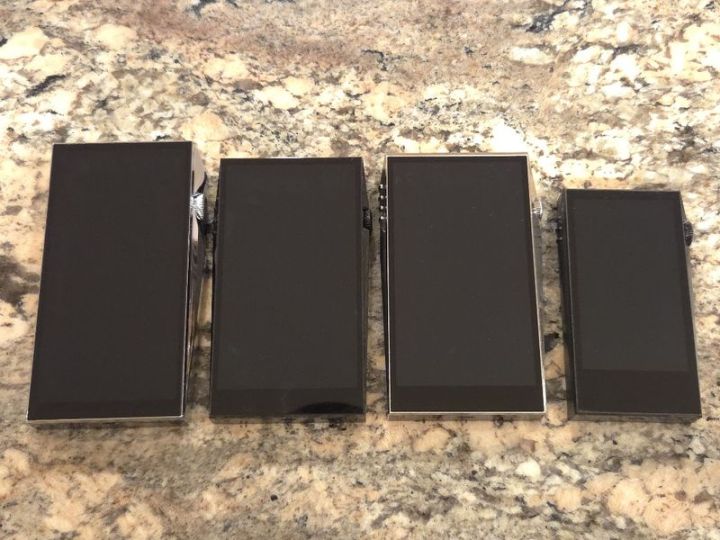
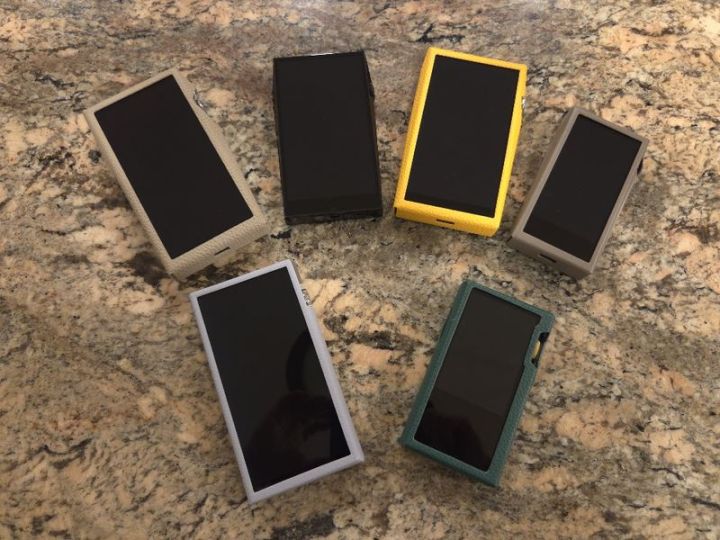
SP4000 vs SP3000 vs SP3000T vs SP3000M
SP4000 vs L&P P6 Pro – Why am I bringing up this comparison? As I listened to SP4k, I was impressed by its rich timbre and how it delivered every note with a fuller body weight, reminding me of the R2R performance of P6 Pro. That is where I find a similarity in both of these DAPs, in the way they deliver the sound, naturally, smoother, effortlessly, with richer tonality, and more controlled presentation of the treble. I do want to mention that SP4k soundstage does expand wider, creating more rounded space. And, SP4k background is blacker, deeper, which does have the effect of slightly more expanded dynamics. But, overall, they both have a similar presentation of the sound, where it just flows in a natural, richer tonality. Of course, all this is based on the tonality comparison, while you still have to keep in mind that P6 Pro, just like other L&P DAPs, is a non-Android playback-only device, which can only “stream” by being paired up wired/wireless with your smartphone.
SP4000 vs iBasso DX340/amp15 – I got a lot of questions about this comparison. Both are big boys with a 6″ display and a hefty weight, and of course, a different design since DX340 is a modular DAP, which you can upgrade with other amp modules. However, focusing on the sound performance reveals some differences depending on the settings. With SP4k having DAR enabled, they are on par when it comes to the soundstage expansion, being big, expanded, and rounded. However, to achieve a more holographic imaging effect under the DAR filter, you will need to switch the DX340 from the H2 harmonic filter to the H1, as H2 provides a more center-focused imaging effect. Suppose you want to get closer to a more natural tonality of SP4k. In that case, you have to go into the opposite direction and switch from the H1 harmonic filter, which has a more transparent tonality (similar to SP3k), to the H2 harmonic filter with a smoother tonality. Also, while SP4k has a little more authority in bass impact, you can level that field with the DX340 DC input to boost its amplifier voltage, though adding an external DC supply to the DX340 ties it closer to the desktop. Of course, nothing is going to be 100% exact, and it is hard to point a finger, saying one is better than the other when it all comes down to personal preference and pair-up synergy with your IEMs and headphones. Plus, SP4k now allows unlimited app installation, while DX340 is a more traditional open Android DAP that lets you further optimize its Android performance.
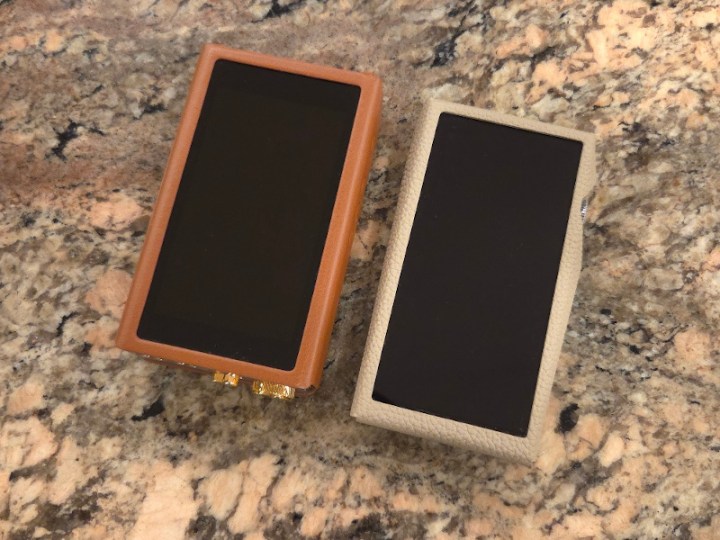
SP4000 vs iBasso DX320Max Ti – I’m not sure how I didn’t think about it, but as soon as my review was published, I received feedback from people requesting a comparison of these two flagship DAPs, also, big boys with a similar weight. DX320Max is an iBasso TOTL DAP, so it makes perfect sense to compare it to A&K’s latest flagship. When it comes to the soundstage, both have a big, round expansion in width, depth, and height. But with some IEMs, it sounded like DX320Max staging stretches a bit wider, wrapping around and behind you, while both have a 3D holographic imaging relative to how sounds are placed in space. Just need to keep the DAR on to get there with SP4k. When it comes to tonality, as some would probably expect, the DX320Max has less midrange coloring, more transparency, and more airy sparkle in the treble relative to IEMs, such as Jewel, I used in this comparison. SP4k has more body, more weight, and more texture in mids, making its sound richer and smoother in comparison to DX320Max, which is more revealing and leaning toward more analytical retrieval of details. Both have a very resolving sound, with a notable difference in tonality that stands out in this comparison due to DX320Max being a more revealing source. Another thing to note is that while both DAPs have great separation of sounds without any congestion, with DX320Max having more air in treble, its layering had more precision with extra air in between the layers of sound. Also, both have a similar deep, black background.
Page 4 – Pair up, Wired/wireless connections, and Conclusion.

 Twister6 Reviews
Hey! Would you say that AK’s top‑of‑the‑line SP#K series offers the most detailed sound with IEMs available now and in the near future?
LikeLike
SP models are part of their flagship series, so they are putting all the best tech and their top tuning into that model. Relative to their other DAPs, I think it does offers the most natural and detailed sound.
LikeLike
Thanks for the great review.
Regardirg the Macbeth. Did you hear major changes with/without using the HDM.
many thanks!
LikeLike
If I understand correctly, HDM in SP4k enables extra set of opamps in parallel config. That will increase the current drive of the amp output. Usually, higher current will have a greater effect on demanding headphones, including planar magnetic ones. With IEMs, not so much, though it will depend. Personally, I didn’t hear major changes with Macbeth IEMs here. But, there is a noticeable change with and without DAR.
LikeLike
Your review was exceptionally thorough and detailed. I have a question that has been on my mind, and I would greatly appreciate your expert opinion.
I’m very curious whether you could provide a comparison between this DAP and the N8II purely in terms of sound quality.
Tnx
LikeLike
SP4k background is darker and LO is superior (so far, the best LO output I heard from any dap I tested). In terms of tonality, N8ii uses a “brighter” tonality ROHM DAC so when you add NuTube texture to it, surprisingly it brings it closer to SP4k sound. N8ii is discontinued, for a while now, but in general it is a more revealing, micro-detailed, sparkly up-top source, while SP4k is smoother and more “analog” in a natural kind of way.
LikeLike
Hello,
I’m not specifically looking for a DAP, so is there any laptop setup (transportable or not) you have heard that you can recommend that sounds similar as the SP4000 and is equal/better in sound quality? (I mainly use IEMs although I do have headphones).
I saw some options but I don’t know if they are on the same level of sound quality as SP4000 (e.g., Chord Hugo 2, iBasso D16 Taipan, Questyle Sigma Pro/Sigma, etc.)
Thanks!
LikeLike
SP4000 is one of the top portable sources available at the moment. There are many dongles and usb dacs out there, and if you can get a used D16 at a good price, considering some are upgrading to D17 now, go for it.
LikeLike
Thanks. I forgot to mention that if SP4000 edges out D16 or D17, I do not mind getting SP4000 even for laptop use. Do you prefer the sound of SP4000 or D16 more?
LikeLike