
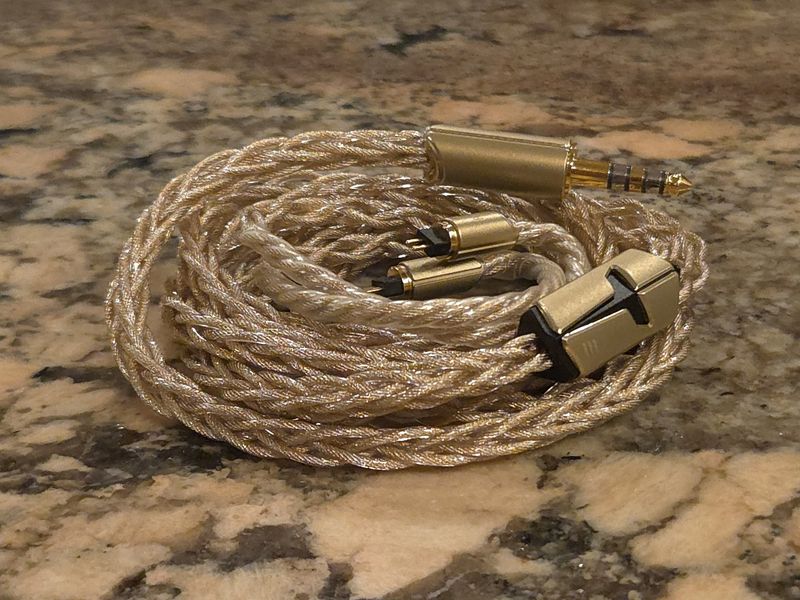
Pair-ups.
Here is how I hear CII cable contributes to a sound in pair-ups with various IEMs and in comparison to their stock cables, using L&P P6 Pro and A&K SP4000 as my neutral, natural reference sources while playing the selection of my usual test tracks, such as Agnes Obel’s “The Curse”, Sandro Cavazza’s “So much Better” (Avicii remix), C-Bool’s “Never Go away”, Ed Sheeran “Shape of you”, Counting Crows “Big yellow taxi”, Galantis “Hunter”, Alan Walker “Darkside”, Iggy Azalea “Black widow”, Indila “Boite en argent”, Robin Schultz “Oh child”, Dua Lipa “Love Again”, David Elias “Vision of her”, Michael Jackson “Dirty Diana”, and SaberZ “Without your love”.
Please understand that I’m not referring to the bass, mids, or treble sound of the wires. Instead, I’m describing how I perceive the sound change of particular IEMs as I switch between their stock cable and CII. Another thing to note is that it made sense to me to use high-end IEMs that cost as much or more than the cable itself in my pair-up analysis.
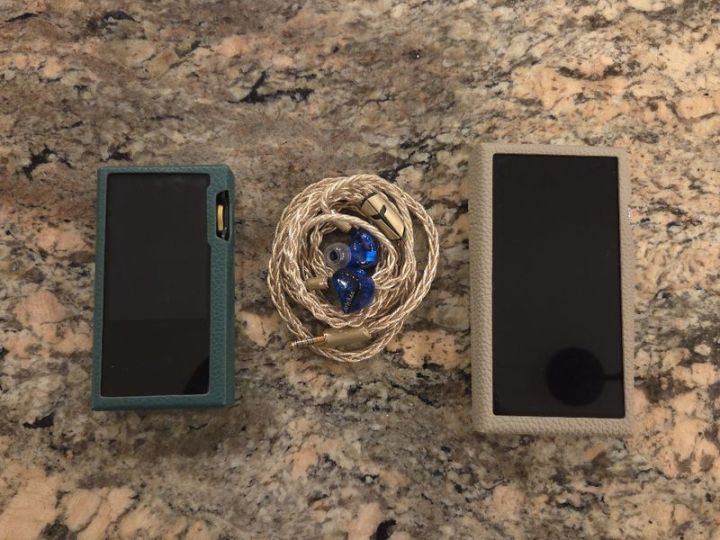
UM Amber Pearl (PWA Copper shielding stock cable) – The limited-edition ultra-flagship AP was tuned using a specific, custom high-end PWA shielding cable, and I have yet to find a replacement that improves or fine-tunes its sound enough to convince me to switch to a different one. The soundstage expansion switching from stock to CII didn’t change significantly, with imaging remaining 3D holographic, although the left-right spread was wider. The background was as deep black, but the tonality change was more noticeable. The weight and impact of the bass remained the same, which I was pleased with, especially with the added sub-bass texture. The bigger change was in the mids and treble, making it smoother while remaining very resolving and detailed. The sound was more organic and natural, but not warmer or congested. It was a very interesting natural fine-tuning, making the sound less dry, more textured, making the vocals sweeter, and taking the edge off the treble. But at the same time, the sound remained very resolving and detailed. I’m seriously considering switching to CII as a permanent cable for AP.
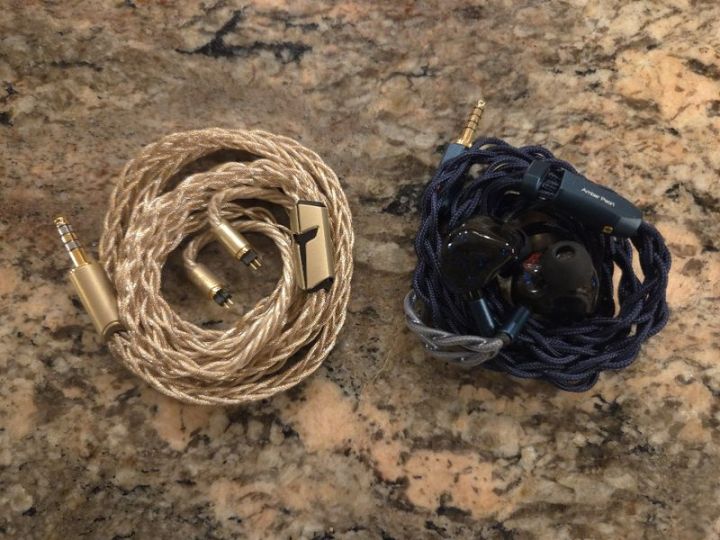
UM Mentor Multiverse (PWA Ocean of the Sea Copper shielding stock cable) – I was curious about this pair-up, recalling how trying MM with Orbit Saga didn’t yield a noticeable improvement. Here, switching to CII maintained the holographic imaging, but the soundstage expansion was even wider. Right away, I noticed a difference in the mids, where more body and texture were added, giving the vocals a sweet, natural tonality. In contrast, the mids remained layered, detailed, and highly resolving. Bass gained some weight with added sub-bass rumble, and the treble was a touch smoother, yet still retained its natural crunch and decent extension. However, it was the transformation in the mids that made this sound change special.
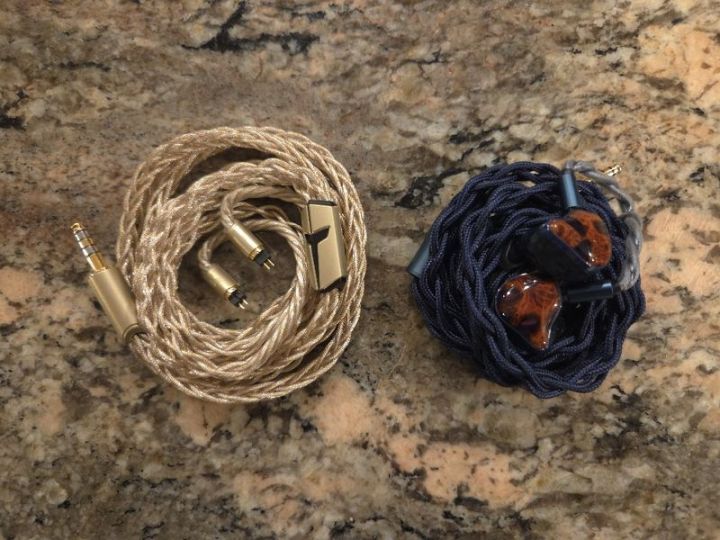
Aroma Jewel (SPC stock cable) – The transformation here is quite noticeable, as many Jewel owners typically upgrade their stock microphonic cable as the first step once they receive these IEMs. As expected, the soundstage expansion and imaging are a significant step up, offering a more holographic and expansive sound in every direction. With CII, Jewel DD bass gains more sub-bass rumble, and the quantity of the bass impact scales up a bit as well. Mids are smoother, not warmer, but softer and still very resolving, natural, layered. Treble also has a natural sparkle, great extension, and plenty of airiness, but it is less intense than it was with a stock cable. I usually use Jewel with FT, but FT takes Jewel’s tuning in a smoother direction, with a more laid-back presentation of the sound. CII also makes the sound more natural while improving resolution simultaneously. Jewel and CII have a great pair-up synergy.
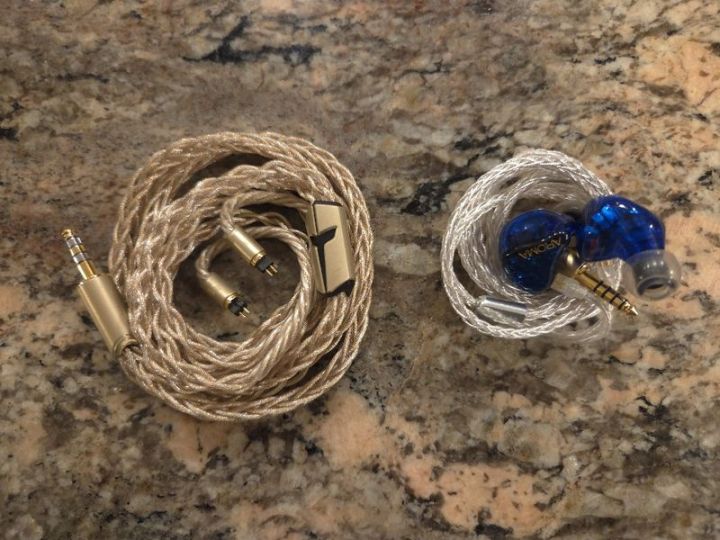
VE Phoenix (Silver-Gold alloy and pure Copper stock cable) – Those familiar with Phoenix know that its soundstage and imaging are relatively intimate, rather than expansive. And that remains about the same regardless of the cables I’ve tried in the past, because it is a tuning limitation inherent to the design of these IEMs. Yet, CII managed to widen the left-right spread slightly and made the imaging more holographic. The added sub-bass rumble is also noticeable when compared to a stock cable. Bass also sounds tighter and a little faster. Mids are where VE usually stands out in tuning, and with CII, they remain natural, textured, and very soulful. However, there is also an improvement in the retrieval of details, with mids being more resolving and sounds having better separation. Treble was a touch smoother. Improvement in imaging and retrieval of details in mids/vocals is what stood out to me in this pair-up.
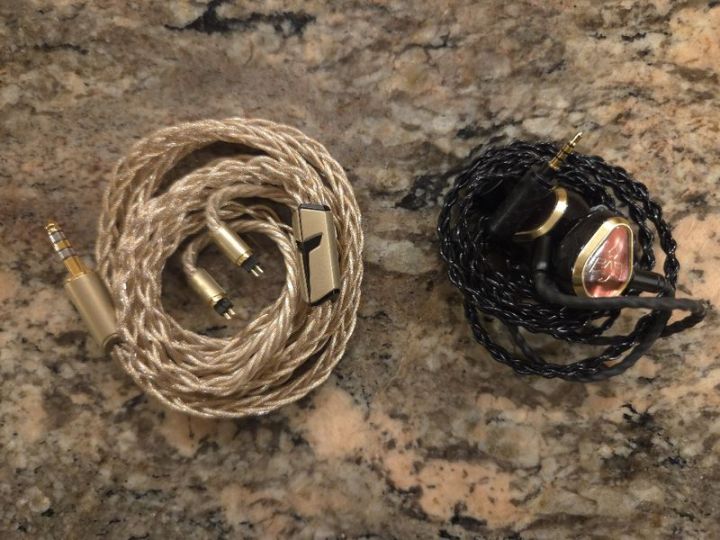
Oriolus Traillii (PWA 1960 4-wire Copper stock cable) – CII transforms the Bird’s soundstage with a more holographic 3D sound placement, including a broader, deeper, and taller sound spread relative to its stock cable. It’s not a drastic change, but it is noticeable, particularly in terms of width. I didn’t notice much change in mid-bass impact, but the sub-bass notes sounded deeper, with more rumble. Treble remained as airy, sparkly, and extended, but it has more control, being a bit tighter. And that is something I never say about the treble, but it just felt tighter, perhaps because with CII, the background was blacker, resulting in faster transients of notes, which creates a tighter sound. Mids is where I found the most satisfying change, feeling like the layer of veil was lifted, with the sound remaining natural yet being more resolving, more layered, and with improved retrieval of details. Again, that is one of the traits of CII, maintaining a mid-range natural sound while resolving at the same time.
Comparisons.
I used the Aroma Jewel IEMs and P6 Pro and SP4000 DAPs in my comparison analysis, describing Jewel’s sound relative to the cable pair-up changes.
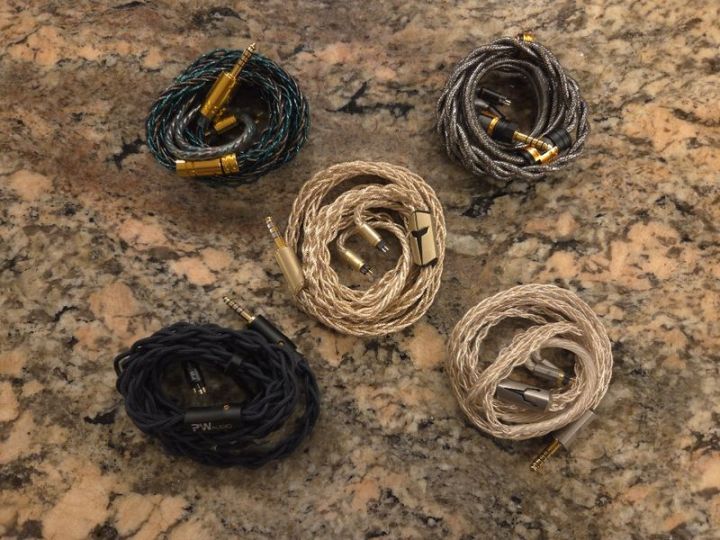
Centurion II vs Centurion (Gold-plated Silver-Gold alloy) – both can be characterized by their holographic imaging capabilities, which help place sounds more precisely in space. Still, CII stretches and expands the soundstage itself even wider and taller. Tonality-wise, CII adds a bit more warmth to the mids and tames down treble sparkle. I also noticed a boost across the low end, scaling up both the sub-bass and mid-bass, which added more rumble and made the mid-bass punch tighter and more precise. In comparison, I find the original Centurion to be more revealing and slightly dryer, while CII adds a bit more musicality and natural warmth to the sound. In several IEM pair-up comparisons, I noticed that the CII scaled up both sub-bass and mid-bass, while taming the treble. In contrast, the OG focused more on mid-bass and added a bit more sparkle to the treble, a very consistent change.
Centurion II vs Beat Audio Orbit Saga (Silver/Copper/Gold) – The soundstage expansion and imaging between these two cables are nearly identical, with both featuring a spherically expanded, wide/deep soundstage with holographic imaging. However, when it comes to tonality, they differ. In a relative comparison, Orbit Saga accentuates the mid-bass more, while with the same IEMs, I hear CII scale up both sub-bass and mid-bass. While both give mids a more natural tonality, Orbit Saga is more neutral, while CII adds more body with slight coloring. With treble, they are on par, keeping it resolving, detailed, extended, and taming down any harsh peaks. If you want a more neutral coloring, Orbit Saga should work better. If you want more oomph in your bass and added natural texture in the mids, go with CII.
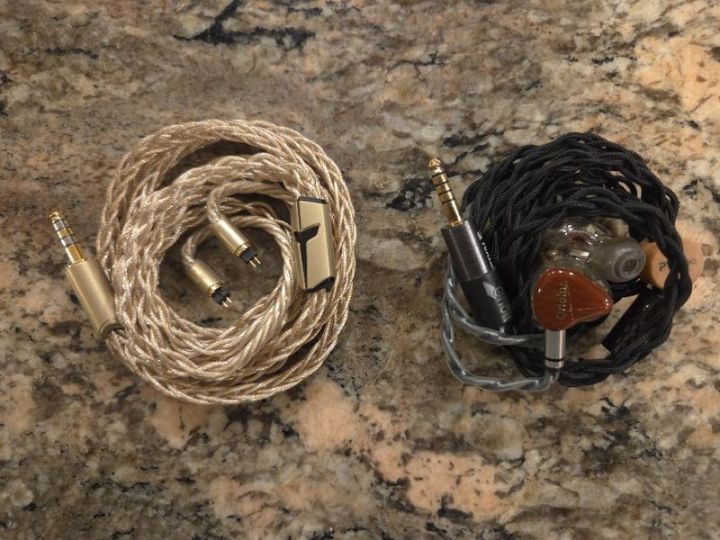
Centurion II vs PWA First Time (Copper) – The first thing I noticed in this comparison was a wider soundstage spread. While their imaging remained the same, CII stretched the soundstage more to the left/right. FT adds warmth, texture, and a more laid-back presentation to the sound. In comparison, CII made the sound tighter and more precise, with sharper edges in the transient response of notes, also helping to bring out more details and improve resolution. It will come down to how you would like to fine-tune your IEMs, as some people prefer a more relaxed sound presentation, while others prefer to analyze it. However, what sets CII apart is that it enables you to analyze the sound more naturally. It’s worth mentioning that my FT is non-shielded, and you can hear CII with a blacker background. This means you will need to step up to FTS with shielding to achieve the same level of background blackness.
Centurion II vs HanSound Kunpeng (Silver, Gold-Silver alloy, Palladium-plated Silver) – Kunpeng has a big soundstage expansion as well, but the CII left/right spread is still wider and more expanded. Both make the sound tighter and faster; neither of the cables lacks in that department, nor do they give the sound a more laid-back feeling. Both also enhance the punch of the mid-bass, while CII also adds more sub-bass texture and rumble. With the same pair of IEMs, Kunpeng made the mids a little warmer, while CII had less coloring (in a relative comparison), more transparency, and some improvement in resolution. I went back and forth with these two, comparing the background using various sources, and I think CII has some edge in a blacker background as well.
Conclusion w/Sound Analysis.
I found the latest Effect Audio Centurion II cable to have a unique wire material design and sound characteristics worthy of its Ultra-Flagship status. Yes, it’s a pricey cable, although we must consider the cost of exotic wire materials, including Platinum-Silver Alloy, Gold-Plated Gold-Silver Alloy, and Gold-Plated Silver. We are more eager to accept extravagant jewelry purchases made by our significant others, while some become upset and more critical when they see the price tag for precious metal cables with thicker 24AWG gauge, 8-wire designs. Again, I’m not here to justify the price, just making the point.
In many pair-ups of Centurion II and various high-end IEMs, I hear a significant soundstage expansion with 3D holographic imaging, which in some cases can take a few seconds to adjust your brain when switching from other cables, as you feel like you are surrounded by sound. If your original IEM has a narrow soundstage and intimate imaging, you can’t inflate those aspects, but CII still managed to improve the perception. The base silver material in all three wires lends the sound a typical, natural, analog, and smoother flavor, while the platinum and gold plating likely contribute to scaling up the resolution and extraction of micro-details. That showed an improvement in sound, with fine-tuning in the direction of both musicality and higher resolution. However, it is important to note that it scales up the resolution, but unlike the original Centurion, it doesn’t make the sound more revealing, which is especially noticeable in the vocals.
The sound fine-tuning with CII is very precise, where I can hear the bass scaling up in quantity, resulting in sub-bass with a deeper, velvety rumble and mid-bass with a tighter punch. Except for a smoother and more textured body, mids don’t change in quantity, but they do become more resolving. Some cables have the effect of being mid-forward in how they bring vocals more forward, but not here, at least not with many of the IEMs I’ve tried. Also, treble remains resolving, well-defined, extended, and well-controlled, just taking it a notch down in sparkle and scaling back some of the lower- and mid-treble crunch. As a result, it could even help with some poorly recorded audio, making the tuning of your IEMs more forgiving. Overall, CII is a natural and resolving cable with a massive soundstage expansion and deep black background. The soundstage expansion is what truly sets it apart.
Since all my cable reviews begin with a Preamble and end with a Disclaimer, I would like to mention in the Conclusion that everything ultimately depends on the pair-up synergy, as the essence of the cable lies in fine-tuning the baseline signature of your IEMs. As I always say, there is no magic “EQ” silver bullet or fairy dust behind the cable. If you’re not satisfied with the sound of your IEMs, consider getting a pair of monitors with a different sound signature instead of thinking that a cable will drastically change the tuning. Also, please be realistic, adding an Ultra-Flagship cable to a budget Chi-Fi IEM won’t turn it into a Flagship IEM 🙂 However, the combination of cables and IEMs creates a very satisfying experience, allowing you to fine-tune the sound of your IEMs to perfection, just the way you want it.

 Twister6 Reviews
did you purchase the UM AP?
my collection consists of Oriolus Traillii JP and TI, and UM AP. AP is def fun listening to pop genre. Kpop demon hunter is so much fun with N30 and AP IEM.
LikeLike