

Top level experience at a mid-tier price.
PROS: Exciting W-shaped tuning that balances musicality with reference-level precision, Punchy, tight bass with excellent control and layering, Studio reference-like mids with clear, natural vocals and instrument separation, Sparkly, extended treble that adds air and shimmer without harshness, Expansive, holographic soundstage with excellent depth perception and imaging accuracy, aims for top-level technical performance (resolution, separation, transients) at a mid-tier price point, Luxurious packaging and accessories that elevate the unboxing experience, Ergonomic build with a premium finish, Highly versatile across genres – works equally well with acoustic, electronic, and orchestral music.
CONS: Treble energy may be a touch lively for those sensitive to upper frequencies, Midrange leans more reference than lush – not ideal if you prefer a warmer romantic presentation, Bass impact is tight and precise, but may feel restrained compared to IEMs tuned for heavier slam, Expansive stage can sometimes make intimate vocals feel slightly less forward.
The product was provided to me for the review for my honest opinion.
Introduction.
BGVP has been steadily climbing the ranks of the audiophile world, and with the Solomon, they’ve put forward an IEM that aims straight at the summit. Priced at $1299, this hybrid flagship comes dressed in lavish packaging and backed by technical performance that rivals far more expensive offerings. The Solomon is not just another entry into the high-end market – it’s BGVP’s statement piece, showing what the brand is capable of when pushing for TOTL refinement at a price no one expects possible.
You can buy BGVP Solomon ($1299) here – Official AliExpress Store | Official Website | MusicTeck (North American dealer)
Technical Specifications.
- Driver Configuration: 2 x 8mm PU+LCP dynamic drivers for the bass, 3 x Sonion balanced armature drivers for the mids, 2 x Sonion EST (Electrostatic) drivers for the treble and 2 x Sonion bone conduction drivers to reinforce the low-end for physical presence.
- Frequency Response: 20 Hz – 70 kHz
- Impedance: 7.3 Ω
- Sensitivity: 110.8 dB SPL/mW
- Shell Material: 3D-printed medical-grade resin
- Connector: Recessed 0.78 mm 2-pin
- Cable: Temple and Speciality premium cables with 4.4mm balanced jacks.
- Price: $1299 USD
Unboxing & Accessories.
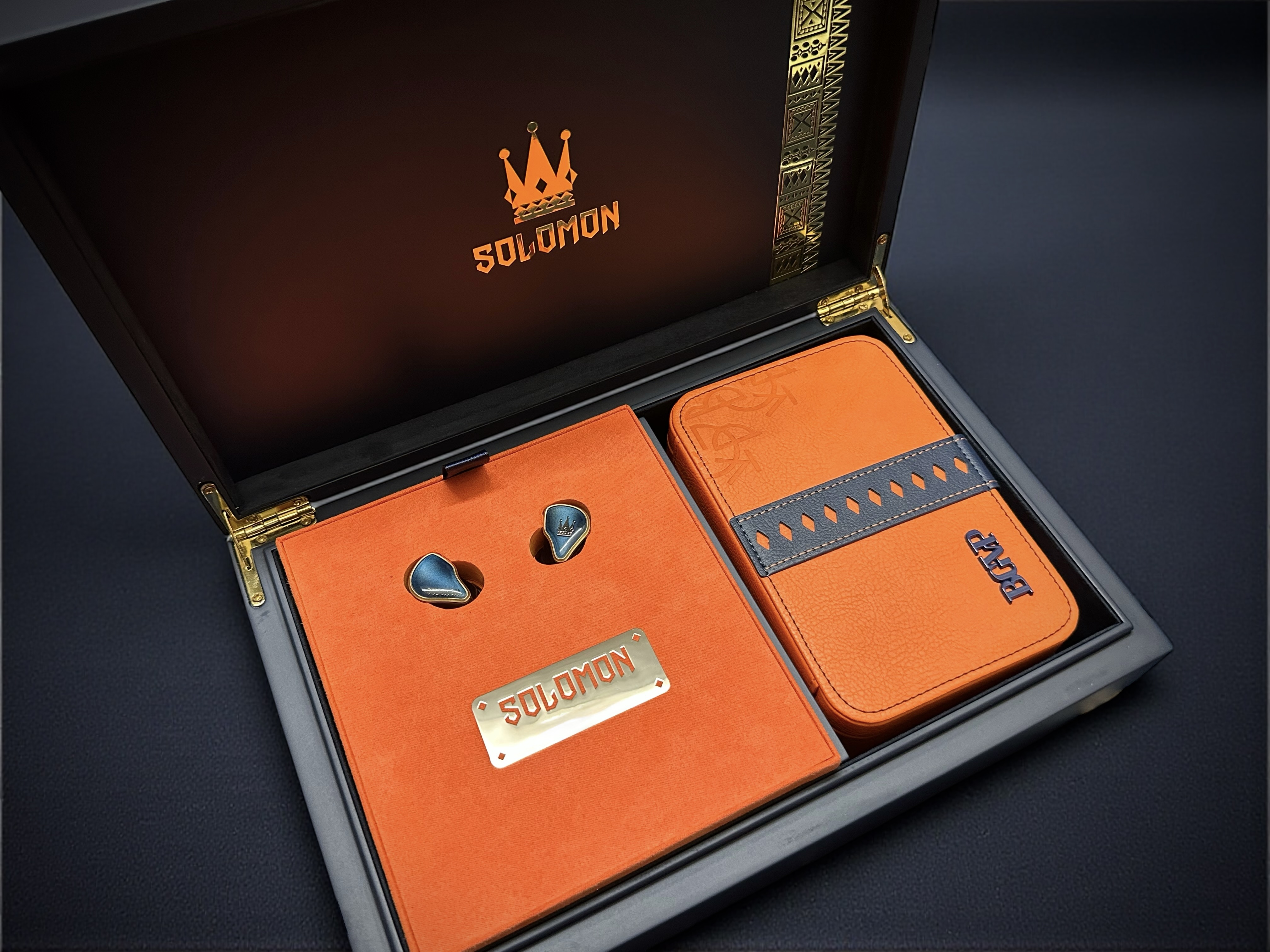
BGVP didn’t hold back with the Solomon’s presentation. The unboxing experience is luxurious and immersive, setting the stage for what’s inside. The box is large and lavish, more akin to what you’d expect from multi-thousand-dollar flagships than a $1299 release. Inside, you’re greeted by a premium storage case, an assortment of high-quality tips for tuning flexibility, and 2 braided stock cables that feel every bit as refined as the earphones themselves, one which sells separately for $699.
The attention to detail is impressive — from the embossed branding on the box to the snug foam cutouts, everything communicates care and craftsmanship. It’s the kind of presentation that makes you pause and appreciate before you even plug them in.
For the asking price, BGVP delivers a package that not only matches expectations but exceeds them by a wide margin.

Design & Build.
The BGVP Solomon shells are crafted from 3D-printed medical-grade resin and the quality is immediately apparent. The surface is flawlessly smooth with no visible print lines, giving the earpieces a clean, high-end finish that belies their price. The sparkly galaxy faceplate design is not only attractive but has 3D depth that I haven’t seen in any IEM till now. I stared at it for a few minutes to see how they’d done it and walked away amazed. Even the metallic logos are very well executed. The shell feels more like bespoke artwork than a mass-produced unit.
The ergonomic, semi-custom shape hugs the ear comfortably while maintaining a stable and secure fit, making long listening sessions fatigue-free despite the complex driver array within. The metal nozzles feature a proper lip for secure tip placement, and the flush 2-pin connectors are neatly integrated, lending both a clean aesthetic and added durability. Insertion is moderately deep, offering very good passive isolation that effectively seals out ambient noise without feeling intrusive. Lightweight yet solid, the Solomon shells strike a fine balance between luxury presentation and practical everyday usability – a clear signal that BGVP approached this as a true flagship.

The Bright Orange Carry Case.
The carry case included with the BGVP Solomon immediately stands out with its bold, vibrant orange colour, a striking contrast to the more subdued blue and gold of the IEMs and cables. It’s a rigid design, providing reassuring protection against knocks and drops, while the textured leather exterior adds grip and a tactile sense of quality. Inside, the case is lined with soft, velvety cloth that cradles the Solomon shells and cables securely, preventing rattling or scratches during transport. Thoughtful touches like dedicated compartments for cables and accessories, plus a snap lock closure that moves smoothly without catching, elevate it well above typical stock cases. It’s not just functional, it feels purposefully premium.
Cables – Temple and Speciality Cables.
When BGVP launched the Solomon they didn’t skimp on the accessories – tucked into that lavish package are two cables that deserve almost as much attention as the IEM itself: the Temple (the heavy, premium cable) and the more workaday – yet surprisingly refined – Speciality stock cable.
Temple Cable.
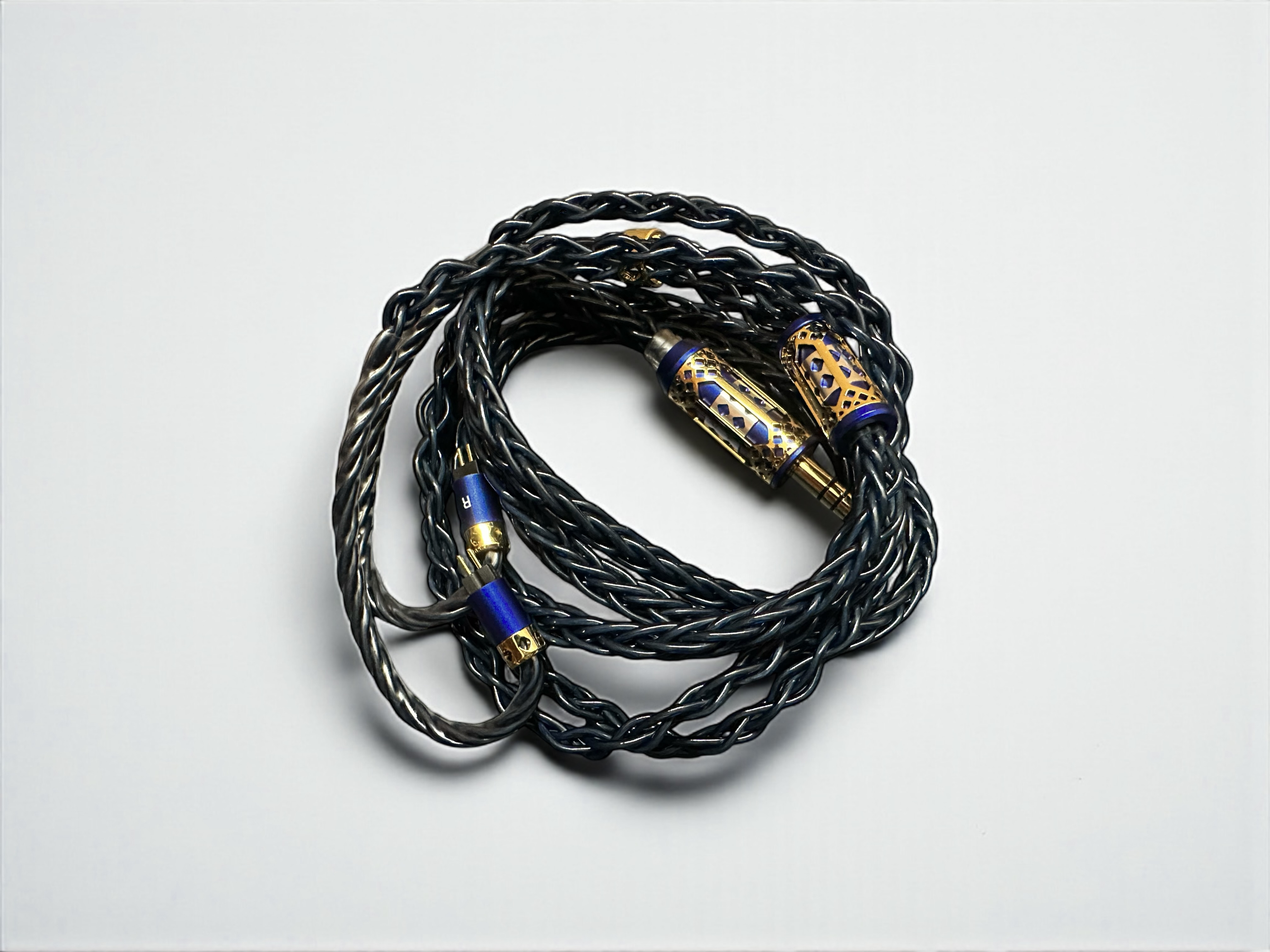
The Temple cable is clearly designed to be more than just an accessory; it’s an integral, premium element of the Solomon’s flagship identity. From first touch, the materials and craftsmanship announce their pedigree. Materials & Conductor Mix: The Temple cable is an 8-strand hybrid using Furukawa single-crystal copper plus single-crystal silver, totalling around 184 cores. Braiding / Structure: It uses a Litz Type-4 cross-braiding method, tight and uniform, to minimise gaps and control stiffness. Despite the high core count, the cable manages to stay supple and manageable rather than being overly rigid.
Hardware & Aesthetic Finish:
- 0.78mm 2-pin connectors, matching the Solomon IEM’s socket style.
- Termination is 4.4mm balanced plug, with hardware plated or finished in anodised metal; connectors, Y-split, plug all carry the royal blue + gold colour scheme, with rotating outer golden metal covers / cut-out design elements.
- Cable sheath / insulation: specially adjusted PVC, giving resilience, knock-resistance, yet flexibility. There is also a leather tie (blue) with snap-button for organisation.
Physical Feel / Usability: Even though the cable is thick (due to high core count, heavy hybrid elements), its braid, insulation, and craftsmanship allow it to drape well, avoid major memory/tangling issues, and handle well in-hand. It shows a hair more microphonics than the thinner Speciality cable (not terrible, but perceptible if you fidget a lot). The connectors are firm, the overall look and feel matches that of a high-end upgrade cable – meant to be seen and appreciated.
Speciality Cable.
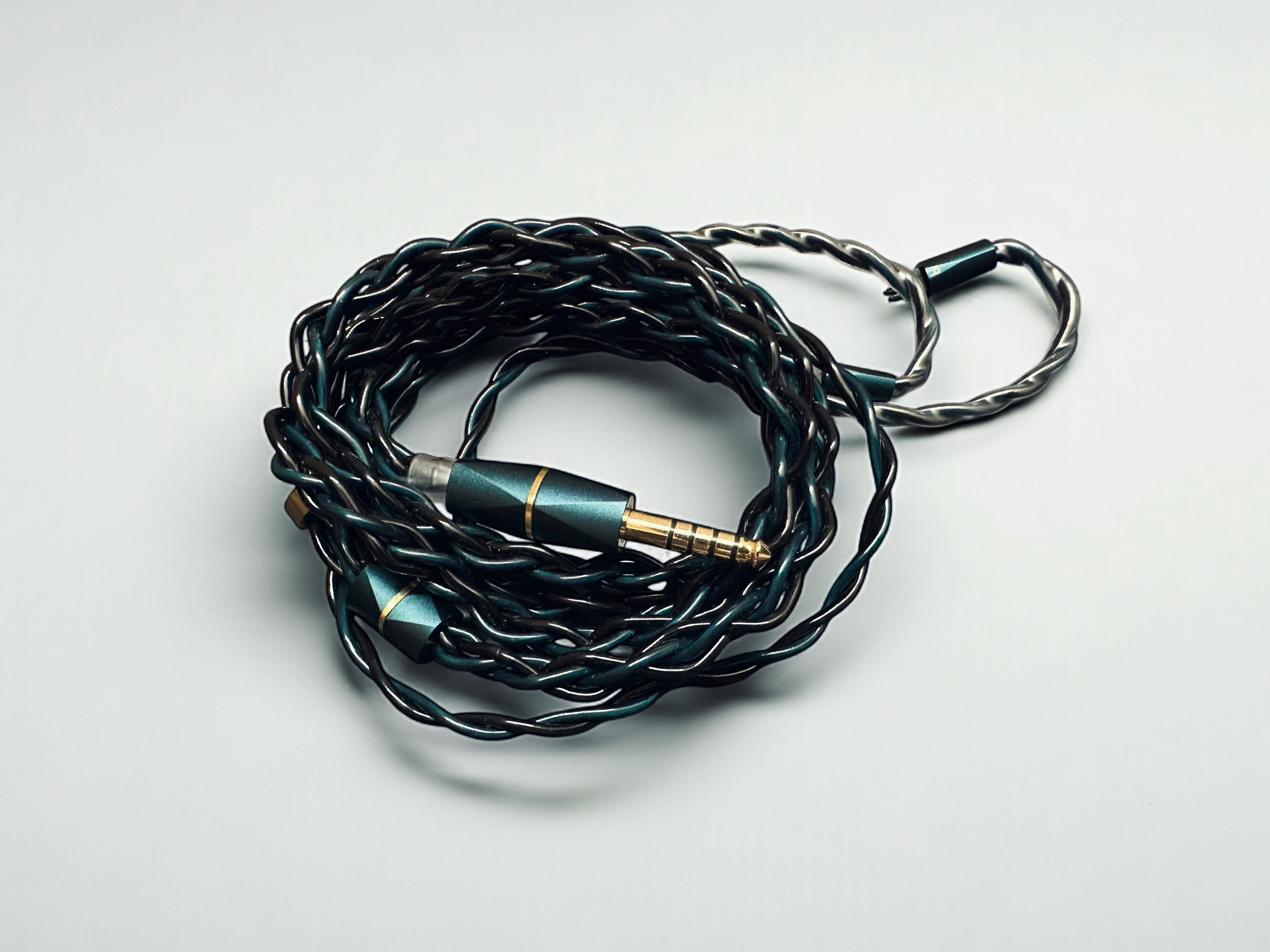
This is the other cable that comes in the Solomon package (alongside the Temple). It is lower spec than Temple but still far above typical stock cables in many other IEMs. Materials & Construction: It uses Furukawa single-crystal copper in all four wires. Each of the four wires is a braid / mix of coaxial and single-core strands: each wire includes ~30 strands of 0.08mm coaxial wire + ~20 strands of 0.08mm single-core. These four wires are braided together (tightly).
Hardware & Aesthetic:
- 4.4mm balanced plug termination; metal housing with matched blue & gold hardware. The Y-split and chin cinch also follow the blue/gold design.
- The sleeves on the cable are coloured: two wires deep blue sleeves, two wires black, giving visual contrast. Leather strap/snap-tie included for neat storage.
Physical Feel / Usability: Softer and lighter than the Temple cable. Has enough firmness so it doesn’t feel flimsy, but much less bulk. Less stiff, less complex. It is intended to be functional and good quality for stock use; not quite an upgrade, but very capable.
Sound Impressions.
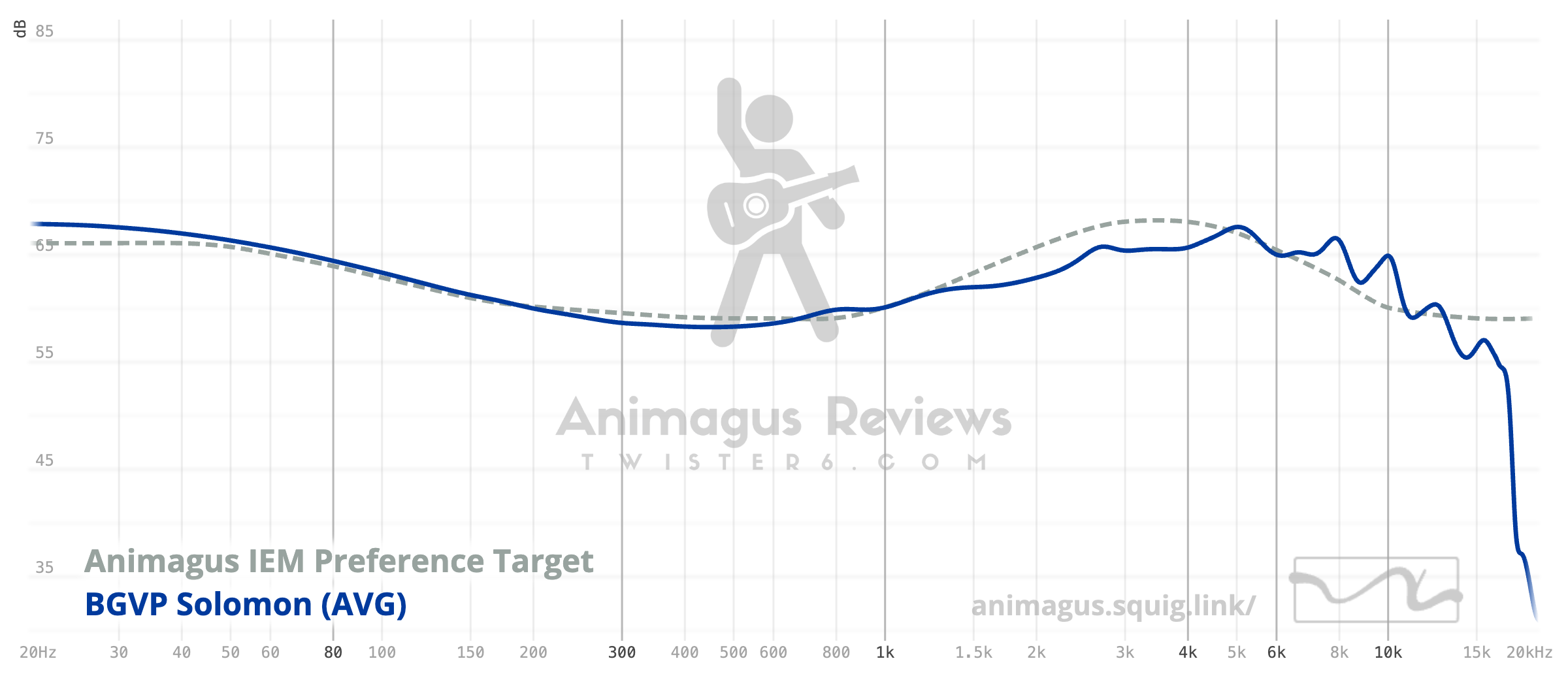
The Solomon greets you with a signature that immediately commands attention — an exciting W-shaped tuning executed with finesse. BGVP clearly set out to strike a balance between reference midrange as well as engagement and precision, and they’ve managed to walk that line remarkably well. This IEM combines punchy low-end authority, a midrange that leans towards a studio reference tonality, and a treble response that extends gracefully with sparkle and air. The stage is another standout: wide, open, and holographic, with excellent depth layering and a highly convincing sense of imaging. What’s most striking is how the Solomon delivers TOTL-level performance — both technically and musically — at a price point of just $1299, a figure that feels modest given its refinement and the luxurious presentation it comes in.
Let’s dig in deeper…
Bass – The bass is executed with authority and definition. Sub-bass reaches deep, offering a tactile rumble that grounds the presentation, while mid-bass is tight and punchy, never straying into bloat. There’s an addictive physicality to percussive hits, yet decay remains controlled, ensuring that layering is clean even in dense passages. The bass here isn’t just about quantity, even though there’s a very nice amount of it, but even more about precision and agility. It has the impact to engage, but it always returns quickly, leaving the stage uncluttered and open.
Mids – BGVP’s tuning choices become especially clear in the midrange. The Solomon delivers a presentation that recalls the neutrality and transparency of reference monitors, yet without sterility. Instruments are rendered with realistic body, and vocals — both male and female — have excellent articulation and separation. The positioning feels natural, slightly forward but not overly intimate, allowing the mids to anchor the mix while giving space for lows and highs to breathe. This “studio reference” character makes the Solomon incredibly versatile across genres, handling acoustic detail as effortlessly as complex electronic layering.
Treble – The treble is a highlight of the Solomon’s presentation. Sparkly and airy, it extends with confidence, adding openness and shimmer to the overall sound. What impresses most is how well it avoids harshness or sibilance despite its energy. Cymbals have a crisp metallic sheen, strings shimmer with lifelike resonance, and micro-details shine through with clarity. The treble lifts the signature into that W-shaped character, adding excitement and balancing the impactful bass and grounded mids.
Technical Performance – This is where the Solomon tries to hit firmly aiming for TOTL territory. Resolution is excellent, pulling fine nuances out of recordings without sounding analytical. Separation is striking — left-to-right cues are distinct, with clear centre image focus. Complex passages never collapse; instead, the Solomon maintains composure, revealing multiple layers without congestion. Speed and transient response are particularly noteworthy, contributing to the overall sense of refinement and accuracy.
The Solomon’s stage presentation is wide and open, with a holographic quality that goes beyond width to incorporate depth and height. Instruments feel precisely placed around the listener, not just panned left or right but distributed in a three-dimensional field. The sense of centre image is strong and well-defined, making vocals and lead instruments lock into place naturally. Depth layering enhances immersion, giving the impression of a performance space rather than a flat canvas. It’s mostly the holographic imaging and physicality of sound that falls just shy of top tier IEMs like PMG Audio APX and APX SE. It’s almost there and if you’d never heard an IEM like APX, you might’ve never cared for it.

Cable differences – Temple vs Speciality Cable.
A critical point for readers: neither cable completely rewrites the Solomon’s voicing. NO cable can. The IEM’s complex hybrid tuning is the baseline and the cables act as refinements rather than transformations. That said, each cable nudges the tonal balance and technical performance in ways you should be able to hear even on modest sources.
Speciality Cable – clean, competent and honest.
Put the Speciality cable on and the Solomon sounds exactly like a flagship that’s been well paired. The bass is punchy and tight — the cable retains low-end weight without artificially bloating it. Sub-bass extension remains there, and the mid-bass impact has quick decay so notes don’t smeared into the mids. Mids are transparent and forward enough to keep vocals intimate and articulate; there’s a naturalness to timbre that’s very satisfying on guitars and voice.
Treble is airy and detailed but slightly more forgiving than with the Temple cable; cymbal transients are resolved without becoming brittle. Soundstage is wide and holographic, with good left/right separation and solid center imaging. If you’re after a neutral-leaning, user-friendly pairing that preserves the Solomon’s strengths but doesn’t demand perfect source gear or tip choices, the Speciality cable is the sensible, everyday pick.
Temple – more picture, more punch and more air.
Switch to the Temple cable and most things sharpen in a way that’s musically exciting. Bass gains a touch more body and palpable sub-bass depth; it’s not a bass-boost gimmick – instead, the low end acquires more texture and apparent weight. Mid-bass attacks feel marginally fuller, making drums and bass lines feel a hair more visceral without blurring.
The midband benefits most: vocals bloom with a slightly richer harmonic body and stringed instruments gain extra micro-dynamics. Micro-detail that was present before becomes a little more obvious – breath noises, finger slides and harmonic overtones pop more readily. Treble opens up: decay tails linger a touch longer, reverbs are airier, and cymbal shimmer gets that crystal quality. Importantly, Temple manages this without introducing obvious sibilance.
Staging and imaging also step up perceivably. The soundstage widens, especially in the front-back axis, and layering becomes clearer – things that were previously a little congested in dense mixes separate more easily. The overall impression is one of a higher-resolution, more three-dimensional sound. But this comes with expectations: the Temple reveals source noise and poor recordings more readily, and on bright sources it can accentuate upper-mid/treble energy. Also, portability trade-offs remain — the cable’s size and heft make it less convenient as a pocketable daily.
Which to choose?
If you want a no-fuss, excellent cable that preserves the Solomon’s house signature and works well across devices, the Speciality cable is perfectly serviceable and cleverly engineered for daily use. If you want to wring the maximum resolution, staging and low-end palpability out of the Solomon – and you own a quiet, high-quality source to feed it – the Temple cable is worth the extra convenience compromises.
Both cables reflect BGVP’s design intent for the Solomon: thoughtfully made, tuned to preserve musicality, and built to pair visually and sonically with the IEM rather than act as a marketing afterthought. I’ll say this plainly — the Temple cable is one of the most satisfying stock-included cable upgrades I’ve felt at this price range, and the Speciality cable makes no apologies for being a very competent daily worker.
Comparisons with competing IEMs.
BGVP Phantom SE
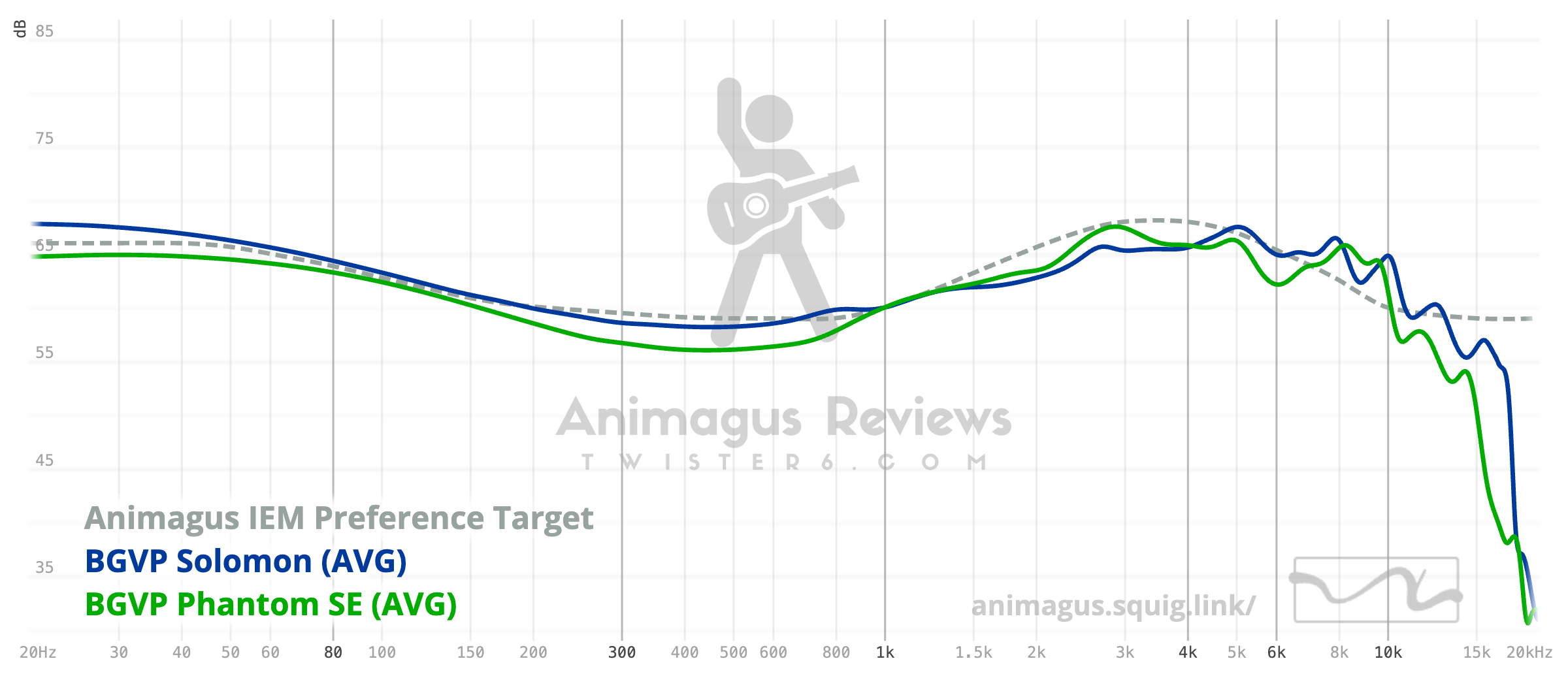
The Phantom SE is BGVP’s other big flagship, and while both share the brand’s house DNA, they take slightly different directions. Solomon has excellent bass with strong sub-bass rumble and mid-bass punch, delivered with authority from its dual dynamic drivers. Compared to Phantom SE, Solomon’s bass is a touch warmer and fuller, while Phantom SE keeps things tighter and faster. The mids on Phantom SE are a bit recessed in the lower registers, with vocals placed slightly deeper in the stage, whereas Solomon pushes them forward with a cleaner, more reference-style tonality. Treble is smooth and extended on Phantom SE, with good air but less sparkle than Solomon, which feels brighter and more energetic up top. Both have expansive staging, but Solomon’s imaging comes across sharper and more holographic, with greater separation in complex passages. Phantom SE too is an exciting and immersive listen but Solomon pushes technical boundaries further, with a livelier treble and more forward mids for a reference-meets-fun signature.
Custom Art FIBAE 7 Unlimited.
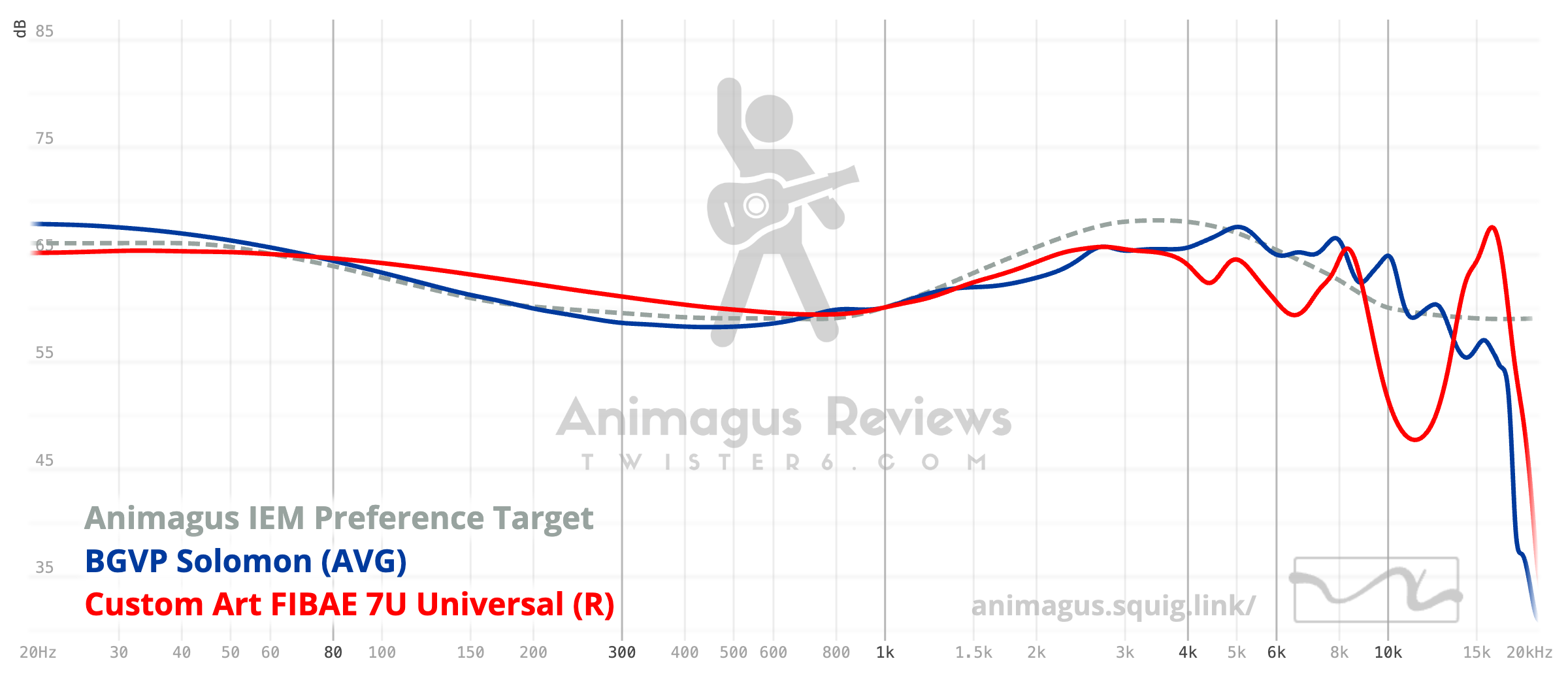
The FIBAE 7 Unlimited takes a more romantic approach compared to the Solomon. Its bass shelf is fuller, with a stronger mid-bass punch and greater sub-bass weight, giving it more warmth and impact. Solomon’s low end is punchy and authoritative, but it’s tighter and more controlled, keeping the stage cleaner and less coloured. The midrange shows the biggest difference – F7U leans slightly warm and relaxed, while Solomon’s mids are more reference-like, with clarity and articulation that resemble studio monitors. Vocals and instruments have a cleaner edge on the Solomon, while the F7U feels more lush and organic. Up top, both have sparkle and air, but F7U can be more forward in its treble peaks depending on tips, while Solomon extends with more restraint and refinement. In staging, both deliver impressive width and holography, but Solomon edges ahead with a more solid centre image and sharper separation. If you enjoy F7U’s lush richness and musical warmth, it remains a great choice, but Solomon takes a more precise, reference-oriented path while still keeping the excitement of a W-shaped tuning.
Custom Art FIBAE 5.
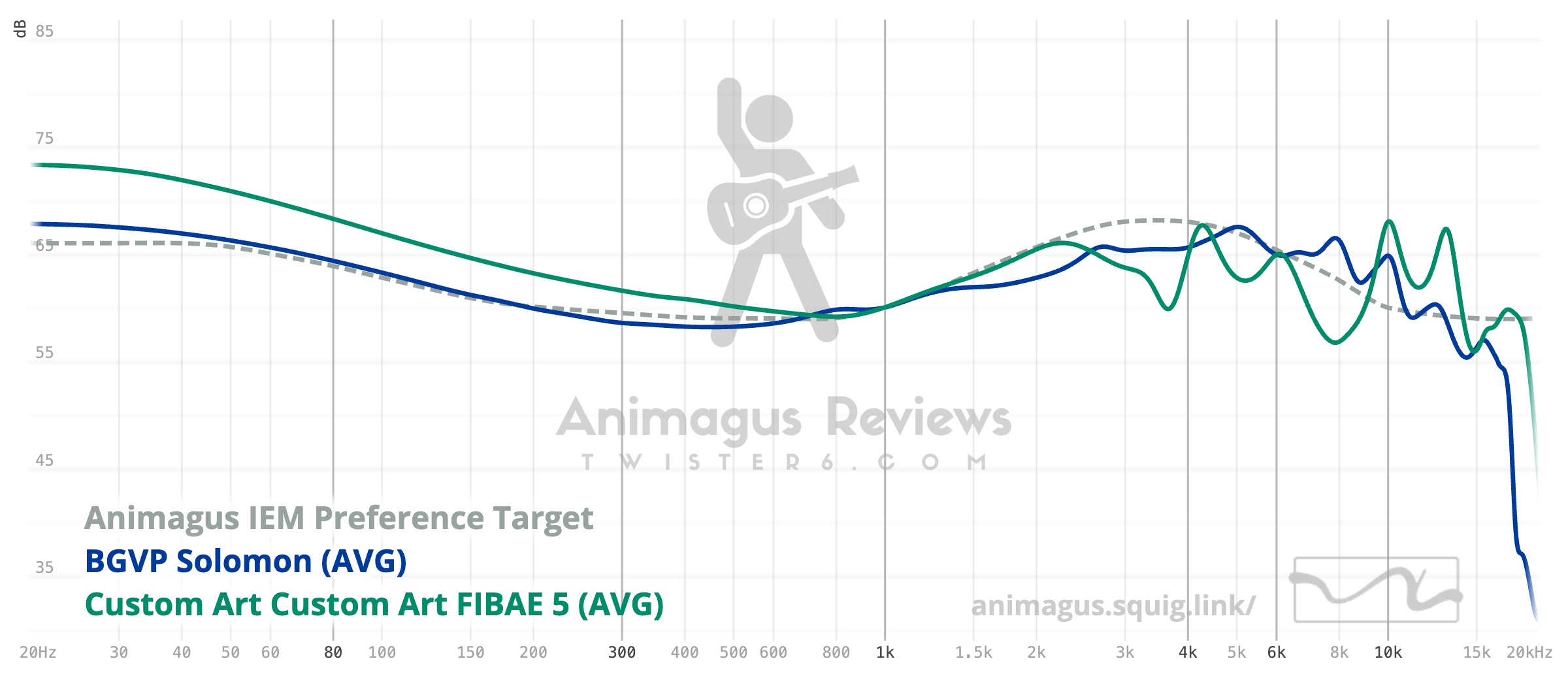
FIBAE 5 goes all-in on fun, with an unapologetically bold low end and extra treble sizzle, creating more of a V-shaped character than Solomon’s balanced W-shape. The bass hits harder on the F5, with greater rumble and mid-bass slam, but it can occasionally overshadow the mids. Solomon’s bass is punchy too, yet faster and more disciplined, giving more room for mids and treble to shine. Vocals sit further back on the FIBAE 5 due to its recessed upper mids, while Solomon’s midrange stays more forward and articulate, letting vocals and instruments cut through the mix naturally. Treble is also a point of contrast — FIBAE 5 has a more aggressive sparkle that can sometimes border on sharpness, whereas Solomon offers sparkle and extension in a more refined, smoother way. Staging is decent on both, but Solomon’s holography and imaging depth feel more immersive, keeping busy mixes tidier. If you want visceral bass and treble fireworks, FIBAE 5 is the more thrilling listen; if you prefer a more balanced, technically refined presentation, Solomon is the better choice.
Elysian Acoustics GAEA.
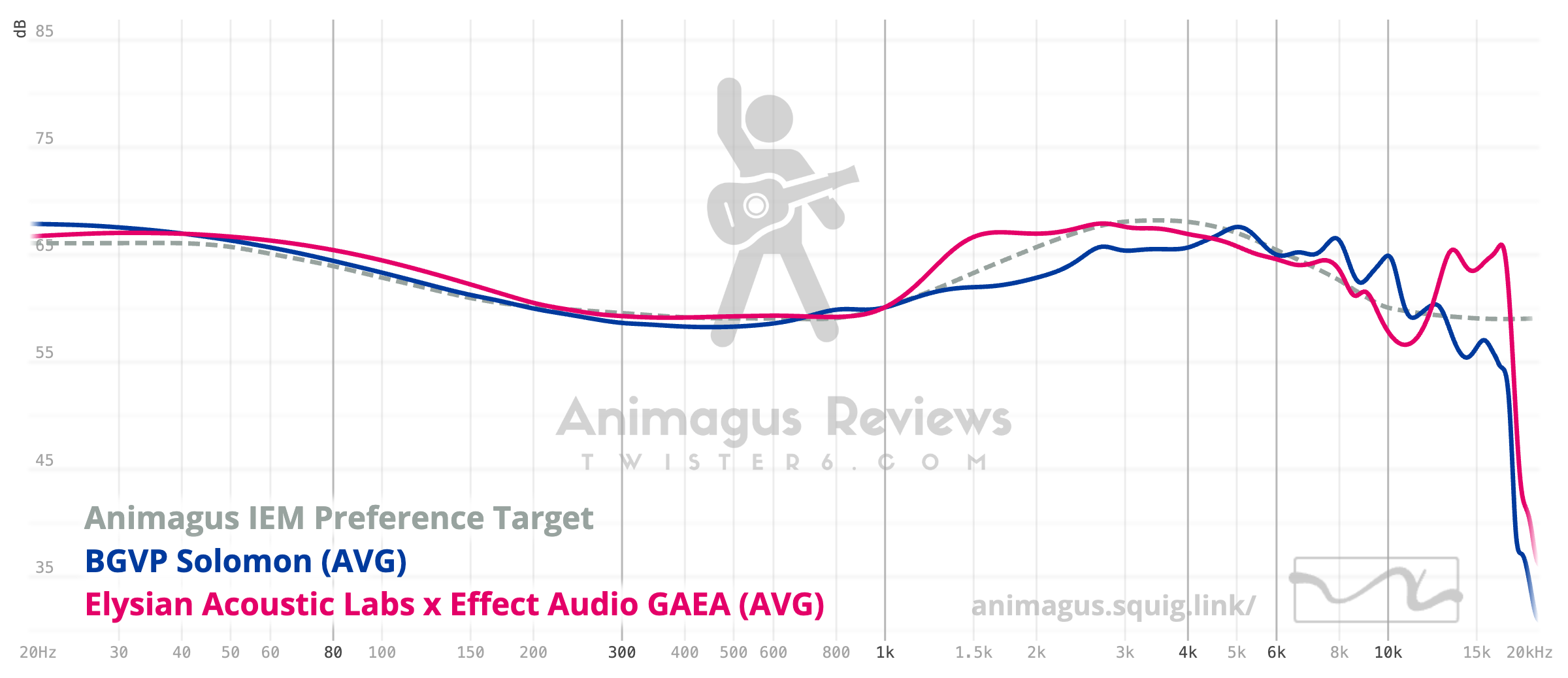
Elysian’s GAEA shares some DNA with the Solomon in terms of resolution and sparkle but skews more towards a U-shape. Its sub-bass presence is weightier, adding more warmth in the lows, while Solomon opts for a punchier and slightly drier low end that prioritises control. Both have very similar lower-midrange in the lower registers but Solomon’s midrange feels cleaner; more consistently anchored and reference-like, with better articulation and presence. Both extend beautifully in the treble, but GAEA can come across a bit more aggressive in the upper frequencies, while Solomon achieves a lively yet smoother balance. The stage on both is wide and airy, though Solomon has an edge in centre image precision and depth layering, giving it a more holographic feel. GAEA is energetic and bold, with a fun tilt towards bass and treble, while Solomon counters with a more balanced W-shape and stronger imaging finesse.
Elysian Acoustics Diva 2023.
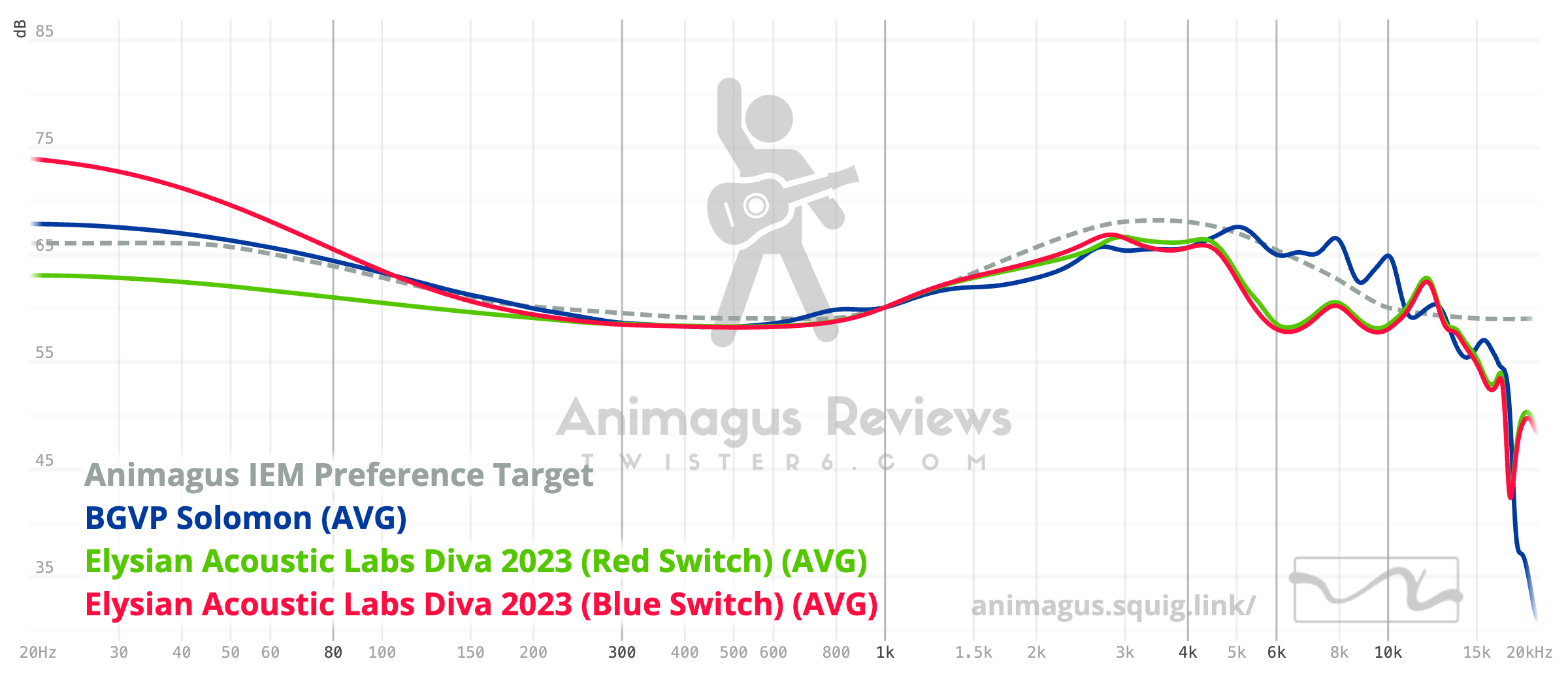
The Diva 2023 takes a warmer, richer approach, especially with its bass switch engaged. Its low end digs deep and carries more weight than Solomon, lending more warmth to the presentation. Solomon’s bass feels quicker and cleaner, with less bloom into the mids. The midrange of Diva is lush and organic, with a smoother, more forgiving presentation, while Solomon leans more neutral, pulling out more detail and transparency. Treble is another big differentiator – Diva goes for a smoother, relaxed treble that’s easy on the ears, while Solomon adds more sparkle and extension, creating a livelier, more energetic top end. Staging on Diva is much more intimate compared to Solomon’s wide, holographic field, which allows instruments to breathe more freely. Diva is a great choice for those who want warmth, smoothness, and fatigue-free listening, while Solomon caters to listeners who value precision, clarity, and a more energetic tuning.
Kinera Verdandi.
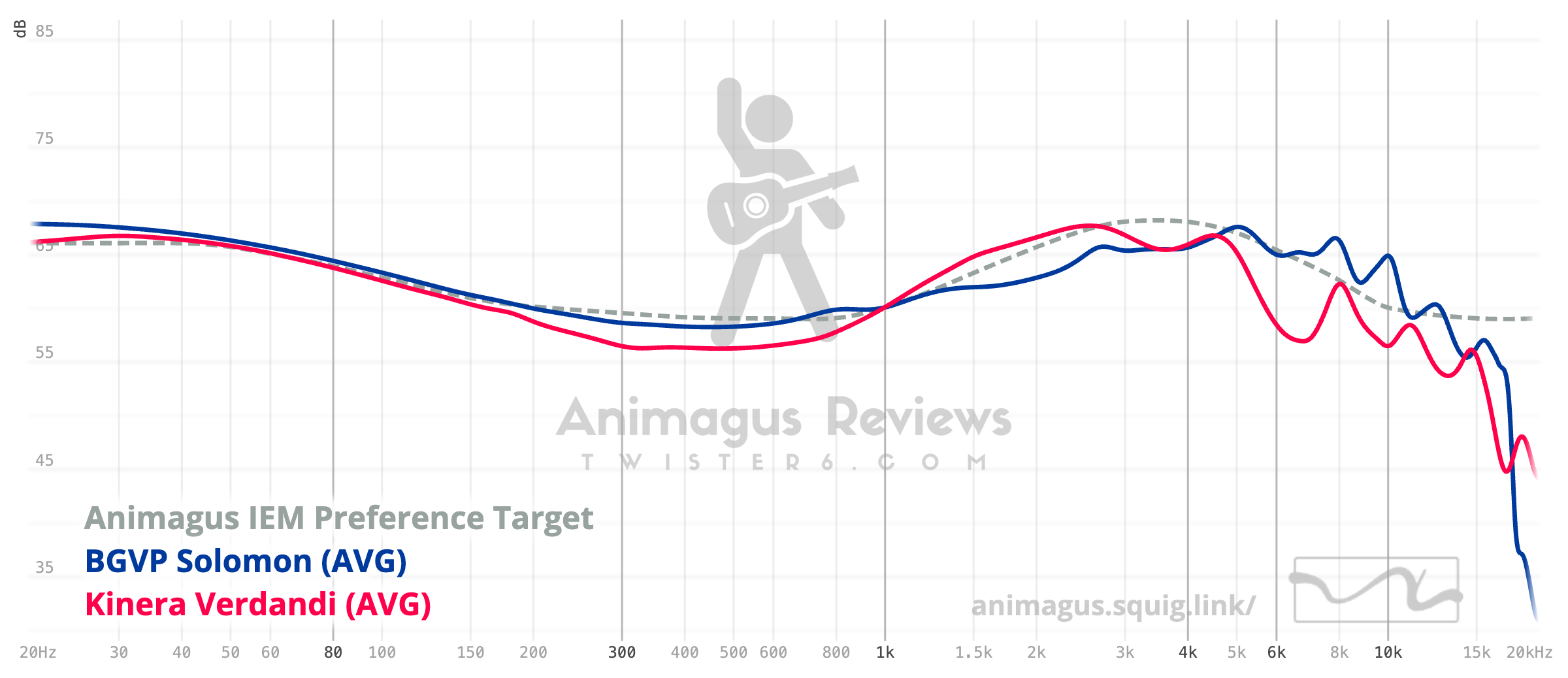
Kinera’s Verdandi is all about visceral engagement, with a prominent low end enhanced by their proprietary BCD which is a different design from Solomon’s dual Sonion BCDs. Compared to Solomon, Verdandi is warmer and hence its bass is weightier and more physical, with a sense of rumble you can feel as much as hear. Solomon is no slouch in the bass department, but its tuning is cleaner and more disciplined, trading Verdandi’s body for articulation and layering and the Sonion BCDs adding 3D depth and texture. The midrange on Verdandi is smooth and natural, though slightly dipped in the lower mids, while Solomon presents a more forward and reference-like midrange with greater clarity and separation. Treble on Verdandi is much warmer, while Solomon feels brighter – more refined and exciting. Both are wide and spacious, but Solomon’s imaging and staging has an edge in centre focus, width and layering precision. Verdandi appeals to listeners who crave bass physicality and a lush presentation, while Solomon caters to those who want a balanced but exciting W-shape with higher technical refinement.
Symphonium Helios & Europa.
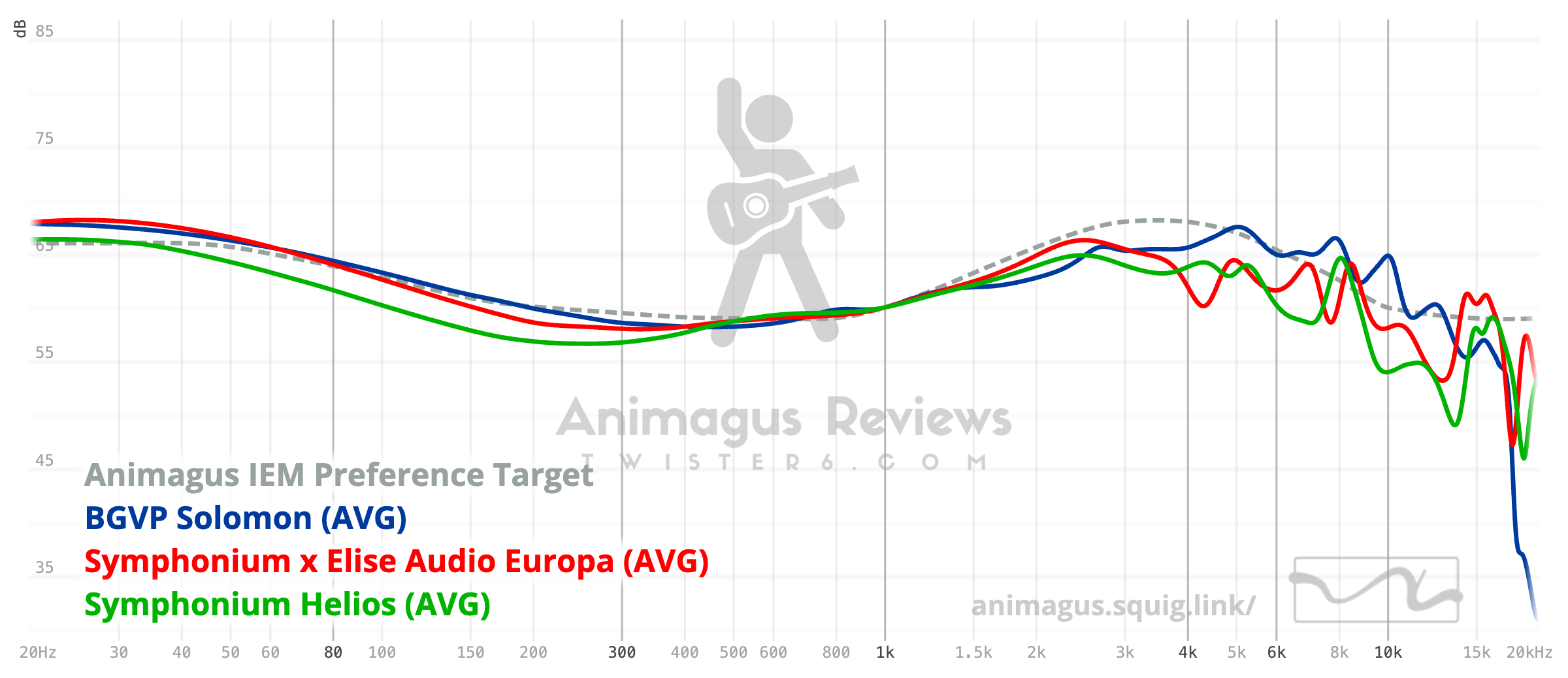
Symphonium’s Helios and Europa lean more towards controlled and neutral tunings compared to Solomon’s more energetic W-shape. Their bass is tighter and more restrained, lacking the punch and slam of the Solomon, but offering a cleaner foundation for the mids. The midrange on both Helios and Europa tends to be easy and honest, with a slightly warmer tonality compared to Solomon’s studio-reference neutrality. Treble on these Symphoniums is well-extended but smoother, focusing more on refinement than on sparkle. Solomon, on the other hand, injects more energy and air into the highs, giving it a livelier top end. In staging, Helios and Europa are well-structured but not as wide or holographic as Solomon, which excels in creating an expansive, three-dimensional field with sharper imaging. In technicalities, Solomon again has the advantage, with faster transients and better separation in dense tracks. Symphonium’s offerings will appeal to those who prefer a smoother, more natural presentation, while Solomon aims at those who want excitement and technical brilliance in equal measure.
Conclusion.
The BGVP Solomon is one of those rare IEMs that checks almost every box: tuning, technical performance, build and presentation. Its W-shaped signature is energetic yet balanced, delivering a listening experience that’s engaging without fatigue. Its technical ability rivals far pricier offerings, and its soundstage and imaging add that final touch of top level magic. Factor in the lavish packaging and meticulous attention to detail, and the Solomon feels like an IEM positioned to redefine expectations in the $1k–$1.5k bracket. BGVP has crafted a flagship that doesn’t just aim for refinement – it achieves it with confidence. For $1299, the Solomon stands tall as not just BGVP’s true top-level performer but a proper top performer in general, at a price that makes it feel like one of the best values in today’s high-end market. It falls just shy when it comes to technical performance of top IEMs like APX and APX SE (they cost about $6000 btw, two of my favourite IEMs till today), but if I was a consumer and had to spend my own money for a top IEM, I’d be very happy with the Solomon. I’ve never been this impressed with the value for money proposition and pricing of an IEM so much, which is why I’ll give it my rare top recommendation.

 Twister6 Reviews