
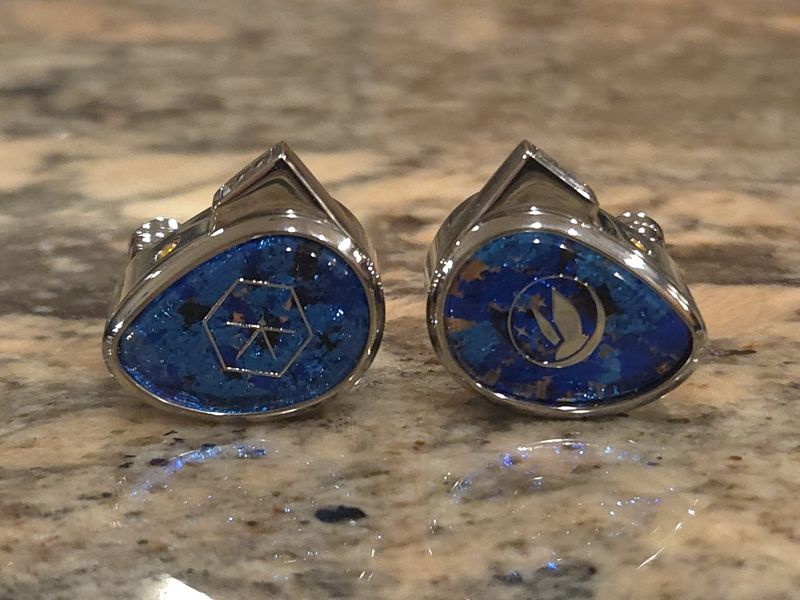
Sound Analysis.
I analyzed PK sound performance paired up with SP4000 while playing a variety of test tracks, such as Agnes Obel’s “The Curse”, Sandro Cavazza’s “So much Better” (Avicii remix), C-Bool’s “Never Go away”, Ed Sheeran “Shape of you”, Alan Walker “Darkside”, Galantis “Hunter”, Iggy Azalea “Black widow”, Indila “Boite en argent”, Dua Lipa “Love Again”, Counting Crows “Big yellow taxi”, Bob Marley “Jamming”, David Elias “Vision of her”, Michael Jackson “Dirty Diana”, and SaberZ “Without your love”. PK was on burn-in for 150 hours before I began collecting my impressions. I was using a stock cable, Azla Crystal eartips, and a stock gold atom xs module.
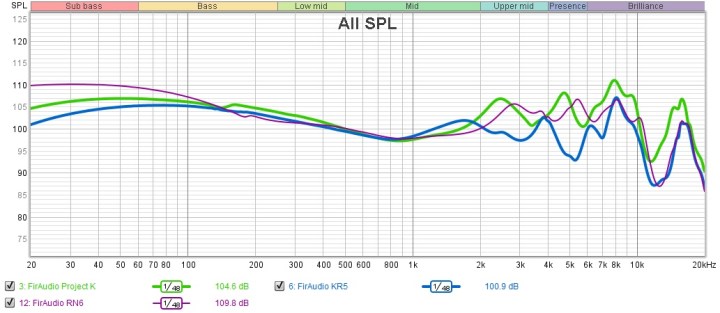
I hear PK as having a balanced, W-shaped sound signature with a natural and clear tonality. Its hybrid tuning is quite coherent, where all five drivers work together in unison, balancing the tonality between the deep, textured bass, natural and detailed mids, and clear, crisp, non-fatiguing treble. Because I’m so accustomed to listening to RN6, switching to PK initially felt like I was missing their signature tuning with a more pronounced bass impact. I regard RN6 as a fine-tuned version of XE6, with the carved-out lower mids designed to please audiophiles who prefer L-shaped sound signatures. When I started listening to PK, I wrongly assumed that it would be the next step in tuning evolution from RN6, while in reality, I found it to be the finessed version of KR5. And it wasn’t just because of the similarity in driver type and config, or the reference to “K”, which is a part of the KR5 model name. PK does sound like the evolution of KR5 with a more forward clarity and greater resolution.
The bass of PK goes deep, with an extended, textured sub-bass rumble and a rounded, blooming mid-bass punch. With a proper eartips selection, you get the same quality of DD driver bass performance, reminiscent of the RN6, but at a scaled-down quantity. This results in a tuning that is no longer L-shaped, but rather W-shaped, with a more linear transition from lows to mids. However, the quality of the bass remains consistent, with the same velvety texture of sub-bass rumble and a slower attack, accompanied by slightly longer decay of mid-bass notes. These notes blend into the lower mids while still retaining control, without bleeding into or muddying the midrange and vocals. As you switch to atom xs modules with less isolation, the bass quantity scales down to a more neutral level while the quality remains similar.
The mids have a fuller body tonality, with lower mids tuned north of neutral, similar to RN6 and KR5, and a noticeably less thick sound compared to XE6. The lower mid tuning of PK provides a natural, organic tonality to the mids, which is balanced by a more forward pinna gain in the upper mids, resulting in a natural, detailed clarity to the vocals and instruments. The balance of the scaled-down bass (relative to RN6) and a more forward and detailed midrange (relative to KR5) brings more attention to the vocals, giving them a soulful tonality, natural retrieval of details, and enhanced resolution courtesy of the treble tuning. With different atom xs modules, going down the line of less isolation, the perception of mids does change, becoming even more forward.
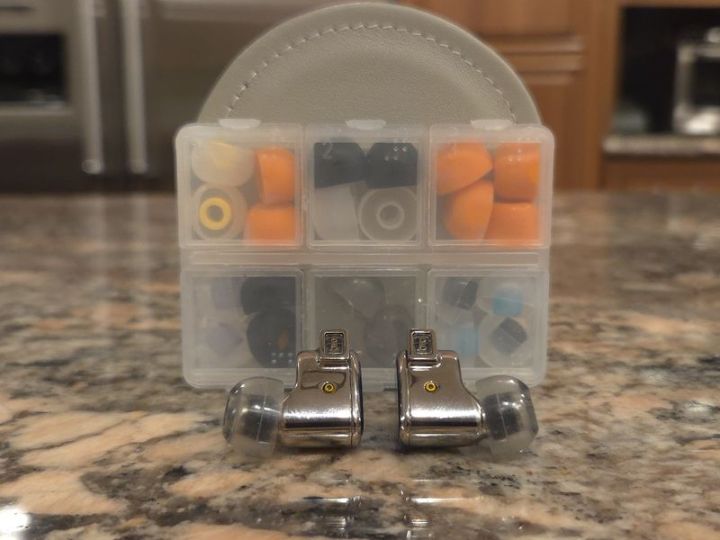
The rendition of treble sound was a bit tricky here. The included silicone and foam eartips didn’t work for me, and I had to go through a stash of all my eartips, narrowing it down to Azla Crystal as the only one taming down the mid-treble peak. I realize that this is very subjective and depends on your ear canal anatomy. However, I found the eartips selection here to be essential in fine-tuning the sound of PK. The lower treble peak of PK gives the mids their definition and natural clarity. But its mid-treble peak, if over-emphasized, can give the sound a bit of a harsh shimmer. In my case, Crystal eartips made a significant difference in erasing the shimmer and its associated harshness, leaving only a natural, crisp clarity that complemented the tuning of the mids. There is a bit of a trade-off here, because taming down the mid-treble peak resulted in more reserved airiness and extension. However, you can recover it if you are willing to step down in isolation and use other atom xs modules. Between eartips rolling and selection of different atom xs modules, you have plenty of tools to fine-tune the sound of these IEMs.
From a technical perspective, PK has a large, expanded, and rounded soundstage that spreads in all three directions, with a non-exaggerated 3D level of imaging and a very distinct placement of instruments and vocals. Also, I wouldn’t say that PK has a very precise layering and separation of the sounds. Everything does sound clear, detailed, with zero congestion, muddiness, and absolutely no veil. The sound will become crisper and airier as you move down the line of isolation with atom xs modules. However, there is still not a lot of air between the layers of the sound, creating a more laid-back, smoother presentation that allows for enjoying the music rather than a dynamic, expanded sound with more precise definition for those who prefer to analyze it.
To my ears, PK is an all-rounder that works well with any genre of music; however, you do need to invest a bit of time to find the correct set of eartips to fine-tune its treble performance. Overall, the tuning of PK is like a jack of all trades that doesn’t stand out with anything in particular, yet, it just does everything right to draw you into the music, to connect you with a performer, to gives you a natural, detailed sound without compromising on clarity or retrieval of details, and to lets you sit back, relax, and enjoy whatever you are pumping through these IEMs. And again, repeating myself for the hundredth time, the right eartips selection is very crucial here.
Atom XS sound analysis.
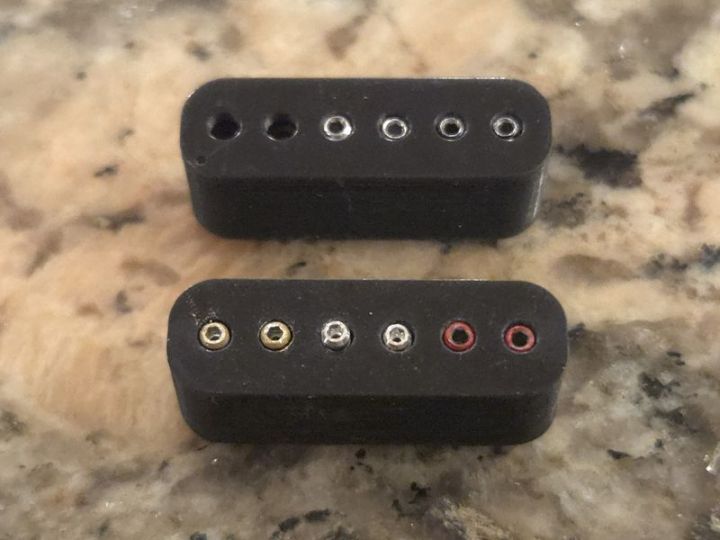
The sound description/analysis of PK above was based on using the default gold atom xs module. Here is how it sounds with other atom xs modules, which you can buy either separately or in a set:
silver – sub-bass rumble is a bit scaled down, mids are slightly more forward, and treble is a bit crisper.
black – bass sounds more neutral, while mids are more forward and slightly more revealing. The soundstage opens up, and there is also more air in the treble.
red – bass sounds more neutral, similar to the black module, while mids are more forward, revealing, with some improvement in layering and separation, and treble is crisper and airier. The soundstage is more holographic.
Surprisingly, I also enjoyed the red module, which deviates from the sound of the gold module. However, I eventually returned to the gold module because I was craving the missing bass impact. It’s a trade-off, but with red atom xs and the proper set of eartips to control mid-treble peak, PK transforms into a more analytically-tuned IEM. While fiddling around with tiny atom xs modules may not be exactly fun, it still gives you control over sound shaping to fine-tune the PK to your exact liking.
Comparison.
The comparison was conducted using PK with a stock cable, a gold atom xs module, Azla Crystal eartips, and a SP4000 source, all of which were volume-matched in every comparison.
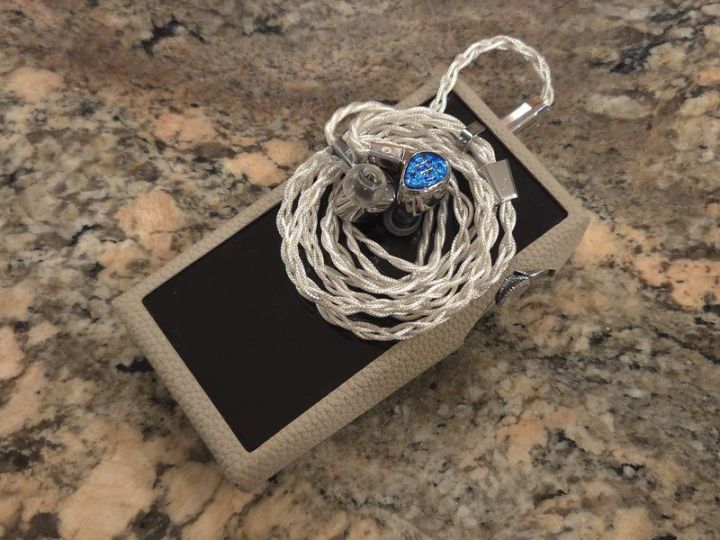
PK (gold xs) vs KR5 (gold xs) – they both have a very similar three-dimensional soundstage expansion. Still, when it comes to imaging, I noticed that vocal placement is a bit different, with KR5 pushing it further out of your head, like you are a few more rows away from the center of the stage. At the same time, PK brings you closer to the performer, creating a more intimate connection. With bass, despite what I have seen in a measurement comparison, it all comes down to perception. With smoother tuning of KR5’s upper frequencies, its bass creates a perception of more emphasis in mid-bass compared to PK, while PK has a more pronounced sub-bass texture. Their mid-bass is also slightly different, with PK having a somewhat longer attack and more DD-like performance. In contrast, KR5 has a faster, snappier attack and shorter decay, which is more typical of BA-like performance. KR5 is specified as having a 10mm DD, while PK is 9mm; thus, the drivers are not the same, which could explain their bass technical performance difference. However, the perception of a stronger mid-bass in the KR5 is most likely due to its upper mids and treble being scaled back. Mids between these two IEMs are very similar, having fuller body and natural, detailed tonality. However, due to a difference in PK pinna gain being more forward, there is greater clarity and better retrieval of details in PK compared to the smoother and less resolving upper frequencies of KR5. To me, PK is a noticeable step up from KR5 tuning, a worthy upgrade.
PK (gold xs) vs RN6 (black xs) – as I was listening and comparing these IEMs, I found it interesting how with RN6, I had to step down in atom xs modules to black to relax the isolation and lower the bass impact. In contrast, with PK, I had to do the opposite, stepping up in higher isolation to raise the bass impact. By doing this, from opposite directions, it still doesn’t make these IEMs sound the same, and there are some noticeable differences. With soundstage expansion, both offer a large, open, three-dimensional soundstage and imaging, with RN6 pushing sound even further out of your head. With bass, as expected, RN6 L-shaped tuning is achieved by scaling up sub-bass weight and mid-bass impact, which is higher in quantity when compared to PK. Their bass quality, as already mentioned, is actually very similar; however, the quantity is scaled up in RN6. Mids have a very similar natural, organic, and detailed tonality, though, due to the bass quantity difference, PK has mids with a more forward presentation, which gives its tuning a more balanced W-shaped signature and a more resolving tonality with improved clarity and detail retrieval. With treble, I found PK to have a crisper sound, still natural, but it is scaled up and more revealing. In comparison, RN6 treble sounds smoother, which could be due to the perception that RN6 bass is tipping the scale.
Conclusion.
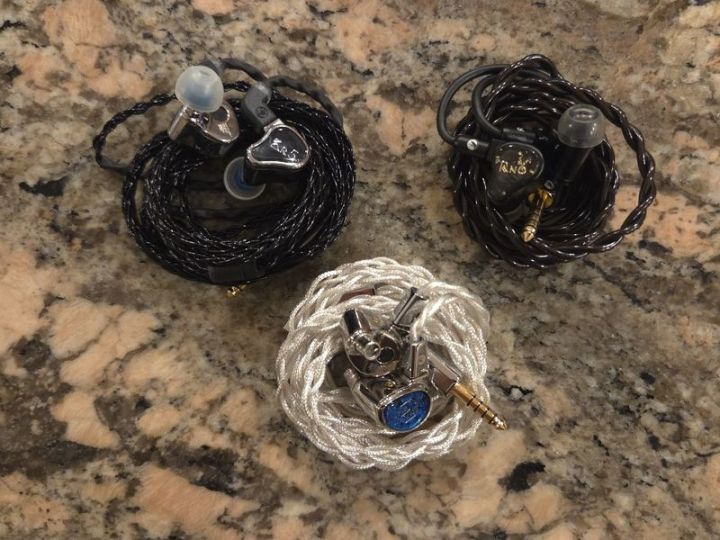
After reading this review, I’m sure many will sense my opinion that Project K feels like it belongs in the Frontier Series family, being an upgrade of KR5, and joining RN6 with its complementary tuning. In my previous Fir Audio Frontier Series reviews, I discussed how manufacturers are trying to stand out in today’s competitive market, attempting to differentiate themselves, which is no easy task. These Fir Audio releases did accomplish that, as I still don’t recall seeing any other similar open-back bass driver design, replaceable venting modules, tubeless drivers, rigid technology elements, etc., all in one shell. And their Kinetic Bass drivers are not just a marketing gimmick; they actually work as advertised, allowing you to hear and feel the bass, which varies between different models in this series.
Project K is not a rehashed or watered-down version of RN6. Don’t worry, if you prefer more weight in the bass and aren’t chasing a more resolving sound, your RN6 is not going anywhere. However, if you enjoy the rumble, the texture, and the bloom, but prefer to scale down the weight of the bass so you can focus more on the natural, detailed quality of the instruments and vocals, and extra clarity in treble, PK will hit a sweet spot for you with its complementary tuning to RN6. And please keep in mind not to jump to any conclusion when you start listening to PK until you go through a serious tip-rolling to hear the effect of a proper pair of eartips on the sound of these IEMs. With an appropriate selection of eartips, both in terms of size (to ensure a good seal) and shape/material (for optimal insertion depth), Project K shines through!

 Twister6 Reviews