
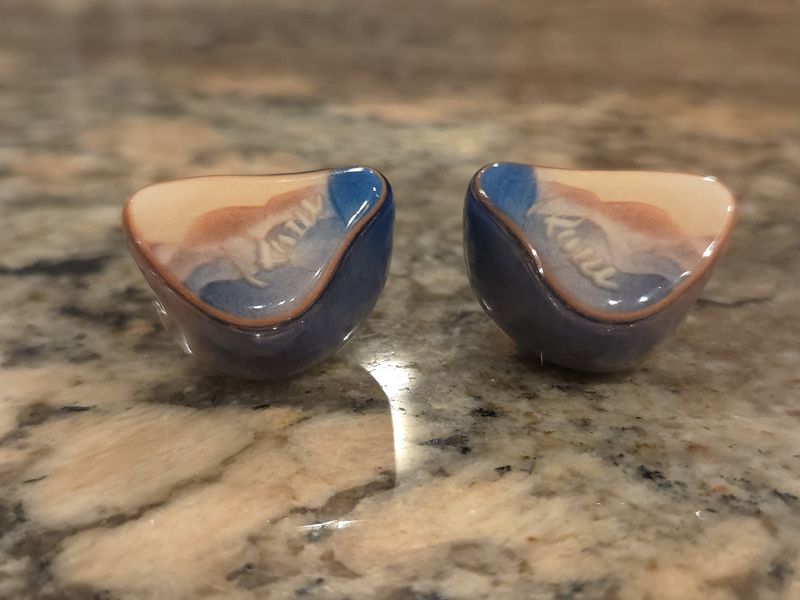
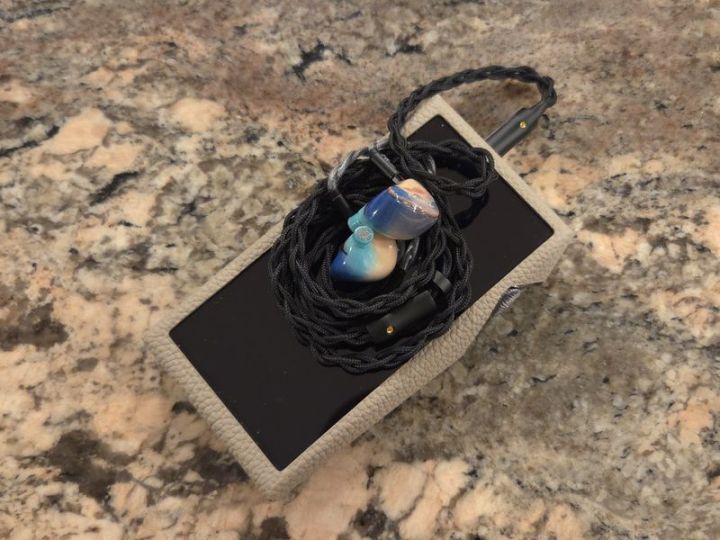
A pair of Quill Acoustics Satin IEMs was borrowed from Musicteck for a few days and tested with the SP4000 (DAR enabled).
Intro.
Quill Acoustics is a newcomer that I discovered at CanJam NYC earlier this year. It’s a boutique brand founded in 2023 by acoustic engineer and music producer, John Guo. Their debut release was actually a collaboration with Musicteck. From what I understand, both companies were heavily involved in every step of the design and tuning. Musicteck’s product page contains a wealth of interesting information about the company, its vision, details of this collaboration, and every intimate element of the design. Apparently, the development process went through eight different versions, including three complete overhauls, before the tuning was finalized. I have a feeling that the feedback they received after the NYC show probably triggered one of these overhauls, because I recall that the upper frequencies were more energetic back then.
I sensed a great deal of pride in this collaboration when I spoke with Leo and Andrew during the CanJam show, and I stayed in touch with Leo as he provided me with updates and measurements as the tuning was being finalized. I didn’t get a chance to review it when the official release happened, since Musicteck had to fulfill customer orders first. Additionally, their demos were in constant rotation, with people auditioning them. Still, finally, after the SoCal show, I was able to borrow a pair to check them out before they were returned in time for the Dallas show, compare my notes to the version I had heard early this year, and put together this review after spending about a week with the Quill Acoustics Satin IEMs. Here is what I found.
Design.
I can’t discuss the unboxing experience for Satin, since I only received the IEMs and the cable, and nothing else.
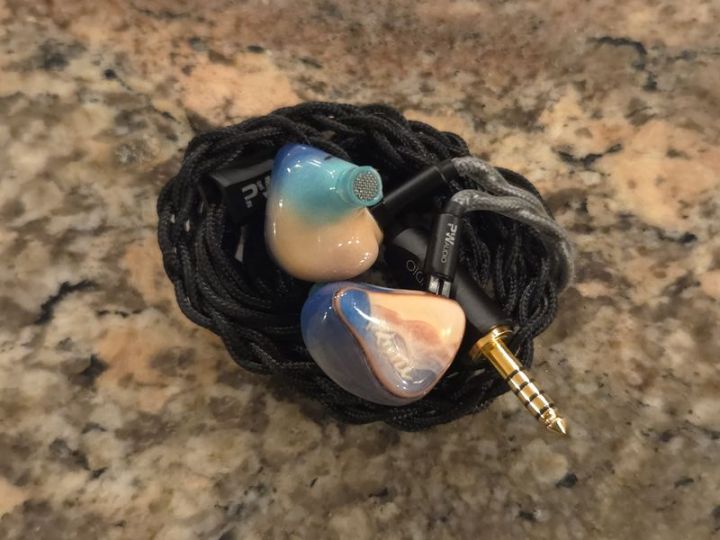
Satin shells do look like eye-candies wrapped in calming, relaxing colors. With a silky matte, textured finish and full-color 3D printing, the shell appears to be almost like one solid piece, feels very smooth to the touch, and offers a comfortable fit to my ears, even with them sticking out a bit. The colors are very earthy, transitioning and blending, and Quill even mentioned that the theme of the shell design is to capture “Echoes of the Earth,” balancing the blues of the ocean with the browns and beiges of the earth and the dunes. The Quill logo name is on each faceplate. Looking closer at the shell, there are non-recessed 2pin sockets, a DD pinhole port, and a mesh cover over the nozzle.
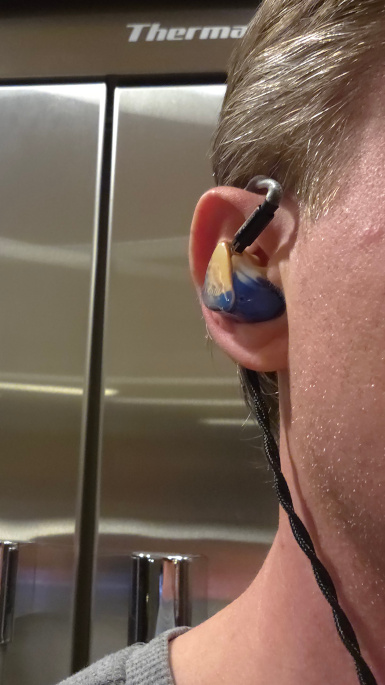
Under the hood, Satin packs a 10-driver quadbrid design with 10mm custom titanium-PU Q.Force DD for lows, 7xBAs from Sonion and Knowles to cover lows, mids, and highs, a 7.2mm “Silken” Planar Magnetic Driver to enhance highs, and a full-range PZT BCD bone conduction driver. Drivers are partitioned and integrated using a 7-way passive crossover. As already mentioned, Musicteck’s Satin product page provides a wealth of detailed technical information about each driver and the technology behind it, which I personally found to be quite educational.


A few things that stood out to me were Q.A.D. – Quill Acoustic Duct, a patented technology in collaboration with Fudan University in Shanghai, where they optimized the length and inner diameter of a duct attached to the Q.Force DD driver to control low frequencies and minimize distortion. Additionally, a nested duct trio-phase system is used for further sound shaping to produce a more natural timbre. Indeed, all this looks impressive on paper, but what’s truly important is how it translates into sound. Nevertheless, I think it was interesting to see a newcomer trying something different instead of simply combining commonly used drivers. They paid attention to every detail, even using top-grade inner wiring and soldering imported from Japan.
Sound Analysis.
I analyzed Satin sound performance paired up with SP4000, using stock cable while playing a variety of test tracks, such as Agnes Obel’s “The Curse”, Sandro Cavazza’s “So much Better” (Avicii remix), C-Bool’s “Never Go away”, Ed Sheeran “Shape of you”, Alan Walker “Darkside”, Galantis “Hunter”, Iggy Azalea “Black widow”, Indila “Boite en argent”, Dua Lipa “Love Again”, Counting Crows “Big yellow taxi”, Bob Marley “Jamming”, David Elias “Vision of her”, Michael Jackson “Dirty Diana”, and SaberZ “Without your love”. This pair of Satins has been through the CanJam SoCal show and many other auditions, accumulating numerous burn-in hours. I was told they need at least 100 hours for the sound to settle in. Also, I was using Crystal eartips, and didn’t notice too drastic changes in sound while tip rolling.
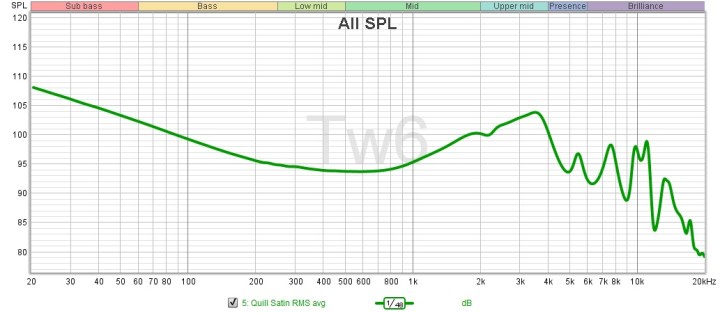
I hear Satin having a W-shaped balanced tuning with a natural, clear tonality. As I started listening to these IEMs, their deep, textured, yet still well-balanced bass response stood out to my ears, like a separate subwoofer pumping beneath a clean, clear, and detailed midrange, with an extended, natural, and resolving treble. The tuning of this IEM doesn’t necessarily blend all its drivers into a unison of a single driver, like in some other multi-driver hybrid IEMs. There is a clear separation between the bass, mids, and treble, done quite tastefully. The bass has more bloom and weight without overwhelming the clarity and definition of the upper frequencies, and the treble enhances the mids without harshness or sibilance. There is definitely a coherence in the overall tuning, but you can still easily separate and shift your focus between different parts of the tuning spectrum.
The bass has a very deep, textured, multi-layered sub-bass response which unmistakably carries DD quality. Its mid-bass has a surprisingly fast punch and well-executed decay, giving bass notes plenty of control and articulation, which I usually associate with a BA-type performance. As already mentioned, Satin’s bass rendering stands up on its own, but at the same time, it doesn’t feel disconnected, but more like you are listening to a speaker setup with a separate subwoofer pumping underneath the rest of the sound.
Mids are smooth, clear, and still resolving, with lower mids at or above neutral quantity, adding body to the sound with a natural texture and moderate warmth. Upper mids are also clear, natural, and detailed, with an adequate and slightly sloped pinna gain, which doesn’t push them too forward, creating a perception of mids being slightly out of your head. Yet, they still maintain a perfect balance, positioned between the bass and the treble. There is plenty of body in the sound, yet it is not thick. And mids are quite resolving, but they don’t approach analytical quality. Additionally, the layering of mids doesn’t have a laser-sharp separation, yet the sound remains clear and not congested or muddy. What you will find here is a great deal of natural clarity, wrapped in a soulful texture that draws you in and connects you with the music and vocals.
Treble is something I had to spend a little more time analyzing. As soon as I hear mention of PMD drivers, based on my experience with other IEMs, I immediately start with ear tip rolling to tone down some of the mid-treble peaks. When I first listened to the Satin prototype at CanJam NYC, it had a pre-production tuning with a more energetic treble that I wasn’t too fond of. The final production tuning of Satin features a more natural and detailed treble. It still retains planar magnetic sound characteristics, with a fast speed, transparency, resolution, and extension, but it doesn’t sound harsh or metallic. It has a decent extension without being too airy, a well-tuned definition without sibilance or harshness, and, overall, the treble sounds natural without being rolled off or taking away from the mids’ resolution. Similar to the bass, it also stands out on its own while simultaneously connecting well with mids/vocals to enhance their resolution.
From a technical perspective, I hear an expanded soundstage with holographic imaging of sound placement. In contrast, the soundstage expansion itself pushes the sound further out of your head, creating more depth/height than width. The sound is quite dynamic, yet moderately layered. That was another interesting observation. When there is less air between the layers of sound, the overall tuning can be a bit compressed and less dynamic. Yet here, it was expanded and dynamic.
Source pair-up.
With its 102dB lower sensitivity and 36ohm impedance, I noticed that Satin is a bit power-hungry and scales up with more powerful sources. With SP4000, the sound was smoother and had a little more laid-back presentation. With the DX340 w/amp17, the pace of the sound increased, becoming faster and more revealing in the mids, while still maintaining natural tonality in the treble. However, there was less texture in the mids, and a noticeable waterfall hiss was present. However, to my surprise, a more revealing source like the DX320Max, as expected, made the sound more resolving and tighter, and even expanded the width of the soundstage; yet, it also maintained the natural texture. Pairing with the P6 Pro yielded a natural, resolving tonality and even some improvement in coherency and transition between lows, mids, and highs. Using the N6iii w/R202 card, R2R mode produced a deeper, slightly more elevated sub-bass texture and more bite in the treble, while 1bit mode yielded a more balanced tuning. When I tried the SP4000 with C9ii in Classic Tube mode, the tonality reminded me a lot of the DX320Max, with the tuning being more resolving, tighter, and faster. The soundstage was more expansive, and the sound still had a nicely textured quality. I also enjoyed it a lot with the Nipo A100 dongle, which had a slightly more neutral, revealing tuning but made the sound more dynamic, expanded, and improved layering and separation, giving Satin’s mid-bass a stronger punch.
Cable pair-up.
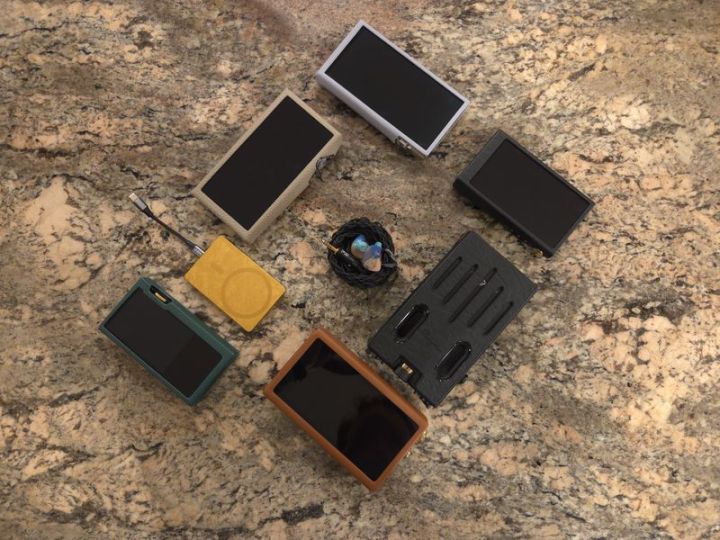
I’m aware that some people are skeptical about the contribution of cable to the audio chain. It’s not my intent to start an argument here. Instead, I would like to share what I hear during my testing. What makes sense to me is that a metal wire is a material with physical properties of resistivity, conductivity, and purity, all of which act as a filter between your source and earphones. Variations in these physical properties can affect the conductivity of an analog signal, resulting in a change in sound ranging from subtle to noticeable. If discussing cables bothers you, please skip this section. Otherwise, enjoy these short impressions.
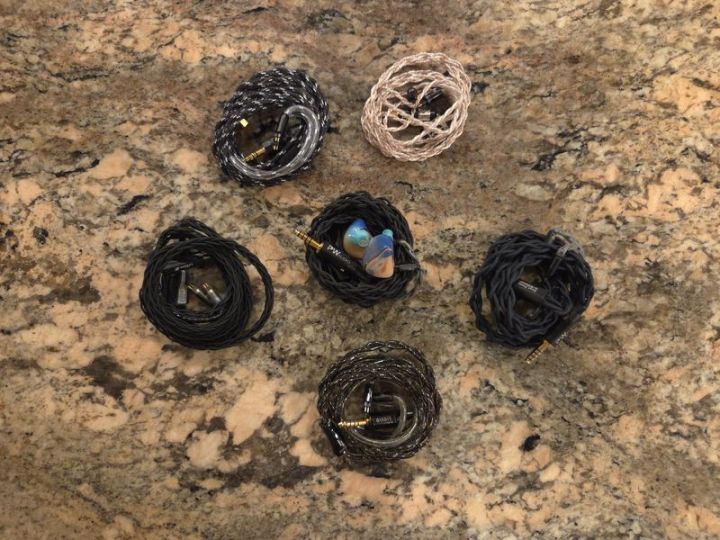
vs PWA FirstTimes – FT added a little more body to the mids of Satin, but also shrunk the soundstage width a little bit.
vs Eletech Odyssey – I notice a noticeable expansion in soundstage width, and the imaging is more holographic. Additionally, the retrieval of details has improved, including the upper mid-range being more resolving.
vs EA Dionysus – The soundstage width is slightly expanded, mids have a bit more clarity with improved resolution, and treble sounds a little more natural. Really liked this cable pair-up.
vs LL Venom – Here, the soundstage expansion is similar, but the imaging has a more holographic quality, reflecting how sound spreads in space. Mids also have a little more transparency and less coloring.
vs HanSound Quentin – Here, the sound performance was very similar to a stock PWA cable, just with a touch more body in lower mids.
Satin stock cable InQ was designed exclusively by PWAudio, a custom-tuned Premium OCC copper cable with 28awg wires and typical PWA hardware. It is lightweight and flexible, thanks to a soft PVC material and tightly braided nylon sleeving. It has a pretty good pair-up synergy, although I also enjoyed how Satin sounded with the latest Dionysus cable from EA’s Signature Series II.


Comparison.
The comparison was conducted using Satin with a stock PWA InQ cable, Crystal eartips, and a SP4000 source versus other IEMs, volume-matched in every comparison.
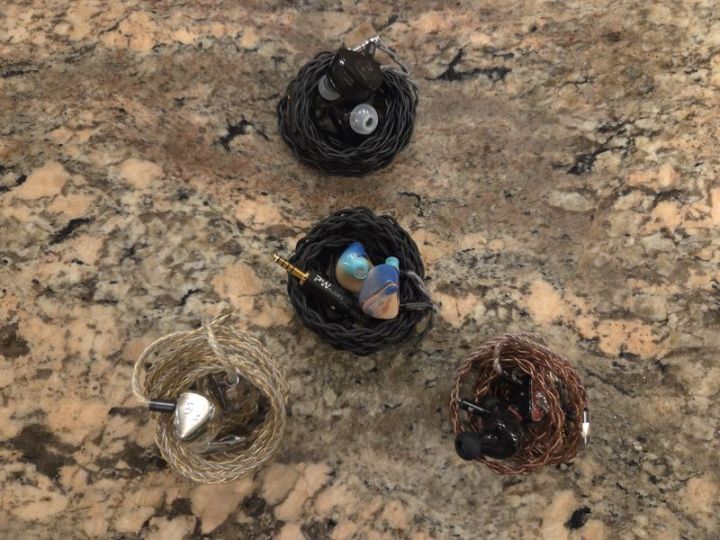
Satin vs EE Raven – Both IEMs have a similar soundstage expansion with more depth/height in comparison to the width. When it comes to imaging, Satin sounds a little more holographic. Both have a deep, powerful bass; however, Satin places more emphasis on sub-bass, while Raven features an even sub-bass and mid-bass elevation, which lends its low-end performance more weight. Their lower mids are actually similar, neutral, and smooth, while upper mids and treble do vary. Raven’s upper mids are a bit more forward, along with its mid-treble, while Satin’s upper mids are a bit more reserved, and its treble is more pulled back. As a result, Raven’s upper frequencies are more revealing and crisper, while Satin’s upper frequencies are more resolving and transparent.
Satin vs Forte Ears MacBeth – Macbeth has a more rounded holographic soundstage expansion (courtesy of dual Sonion BCD). In contrast, Satin has more depth/height in its soundstage expansion compared to the width. Their bass quantity is somewhat similar, but Satin, with its DD driver, has more bloom, typical of a dynamic driver, while MacBeth’s bass is “cleaner” in comparison. Their mids are not too far off; perhaps Macbeth has a bit more body in the lower mids, and the upper mids are clear, detailed, and resolving. The most significant difference here is in treble, where Macbeth’s treble is more forward, brighter, crisper, and airier.
Satin vs Elysian Anni’23 – First of all, both of these IEMs need more power, so they were on par where I had to raise the volume higher for each one, maybe even more for Anni. They also have a similar soundstage expansion, having more depth/height versus width, although I felt like Satin was a touch wider. Both have a deep textured bass, but Satin has more weight and tighter, faster mid-bass. Anni’23 lower mids have more body, giving its mid-range a smoother tonality, while Satin is a bit neutral in a relative comparison. And again, the most significant difference I hear is in treble, with Anni’s treble being more forward and having an airier extension. In contrast, Satin has a similar neutral clarity, but its treble is slightly pulled back in its presentation.
Conclusion.
Quill Acoustics’ Satin IEMs release is a good example of a newcomer entering a heavily saturated market and offering a release with a mature design and tuning. It’s not exactly cheap, but relative to many other flagship releases, it is rather competitive, offering something different aside from the cookie-cutter formula of other DD/BA/EST/BCD releases. Lately, I have noticed a trend with some other brands, even those known for chi-fi budget releases, throwing together under one shell a bunch of popular types of drivers without offering anything different besides flashy eye-candy design and a jacked-up price. I think Quill did their homework, and I’m sure guidance from Musicteck played a role in it. But as I usually say, at the end of the day, it’s always about the sound, no matter how “pretty” the earphones might look in your ears.
I found Satin’s W-shaped balanced tuning and its natural, clear tonality to be well executed, especially the bass, which stood out to my ears as a separate subwoofer pumping lows under the clean, clear, and detailed mids, and extended, fast, precise, and natural treble. The treble rendition was also nicely done, with its Planar Magnetic drive being referred to as “Silken,” a fitting description for its silkier, more natural tonality. However, what I found interesting is the clear separation between the bass, mids, and treble, where the tuning doesn’t necessarily blend them all into a unison of a single driver. Yet, the overall tuning still sounds quite coherent and balanced. Really curious to see what they are going to come up with next.

 Twister6 Reviews