
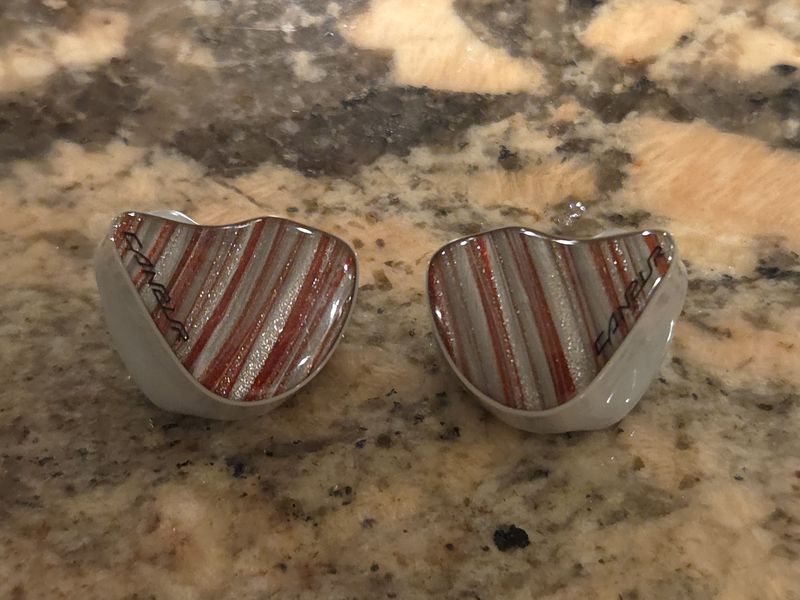
A pair of Canpur CP752B IEMs was borrowed from Musicteck for a few days and tested with the SP4000 (DAR enabled).
Intro.
I discovered the Canpur brand two years ago when their full catalog appeared on Musicteck’s website just before the SoCal 2023 CanJam show, where MT introduced their IEMs to the visitors. These monitors generated quite a buzz back then, especially their flagship CP622B and the recent CP622B Ti follow-up, and continue to be in the spotlight of many shows and reviews. They also had a recent collaboration with none other than Eletech, which makes cables for them; this time, however, it was an IEM release, the Mona Lisa. I also suspect they may be involved in other brands’ releases, but nothing has ever been made public; thus, consider this as my speculation. Bottom line, since their introduction, Canpur has been staying very busy, which always raises the question of what they will come up with next.
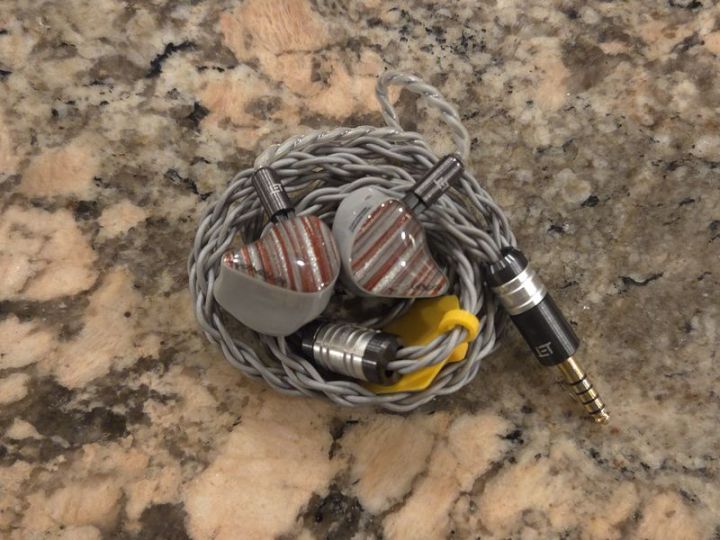
This question was answered a few months ago when their new CP752B flagship was unveiled at the HK High-end AV show in August, and then made its appearance at the SoCal CanJam last month. I read through most of the show impressions shared on Head-Fi, and don’t recall any negative or even neutral ones; it seems like the majority were praising this latest release. I patiently waited after the show to get a sound glimpse, and finally was able to borrow a pair for a few days from Musicteck before it headed back in preparation for the Dallas show. The demo unit I received still had a yellow plastic tag, which I kept intact, attached to the cable. Although I spent only a short time with it, the reason it’s under my “first look” category, I still invested hours of my time analyzing this latest Canpur release, so that you can expect a detailed review. Now, let’s proceed.
Design.
I can’t discuss the unboxing experience for CP752B, since I only received the IEMs and the cable, and nothing else.
As many are probably aware, the naming of Canpur IEMs is based on the number and the type of drivers used in each monitor. Here, the CP stands for Canpur Performance series, and in CP752B, the numbers/suffix refer to 7BA drivers, 4EST + 1PMD drivers, and 2BCD drivers. I think there is a little bit of confusion about the ‘5’ since I assume Canpur didn’t want to use the 4-digit model number, and this is the first time they are using the PMD driver. Furthermore, Canpur and Sonion work closely together, and in this design, Canpur was the first manufacturer to use one of their new drivers. There is also a Knowles bass driver, and I’m not sure who makes the PMD driver, but the rest are all from Sonion, with the following breakdown of this 14-driver quadbrid:
- Sonion 38D2XJ007Mi-8c – dual BA bass sub-/woofer driver (the same as in 622B)
- Knowles 32873 – BA bass driver
- Sonion G90DA016/9 – new dual BA mids/highs driver, CP752B is the first IEM to use it
- Sonion E50DT0005/D – dual BA tweeters (the same as in 622B)
- Sonion EST65DB02 – quad EST tweeters (dual in 622B)
- CP-PM-01S – Planar Magnetic (PMD) driver
- Sonion 37AAX007 – dual Bone Conduction (BCD) vibrators (the same as in 622B)
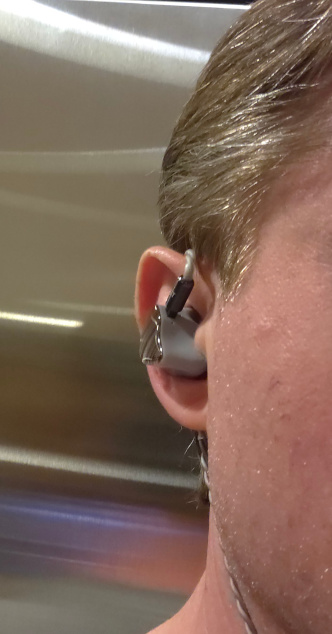
The shells are larger in size, designed to fit all 14 drivers. However, the expansion in depth of the shell allows it to stick out a bit further, yet still fit comfortably without any pressure in the concha area of my average-size ears. The nozzle is short, has a mesh cover, and a 2pin connector socket is not recessed. Additionally, you will find three pinhole ports as you look closely around the shell, which is made from a medical-grade, skin-friendly resin material and features a gray finish. It also includes a faceplate with red sparkly accents and the “Canpur” logo. It’s a modest design, nothing flashy.


Sound Analysis.
I analyzed CP752B sound performance paired up with SP4000, using stock cable while playing a variety of test tracks, such as Agnes Obel’s “The Curse”, Sandro Cavazza’s “So much Better” (Avicii remix), C-Bool’s “Never Go away”, Ed Sheeran “Shape of you”, Alan Walker “Darkside”, Galantis “Hunter”, Iggy Azalea “Black widow”, Indila “Boite en argent”, Dua Lipa “Love Again”, Counting Crows “Big yellow taxi”, Bob Marley “Jamming”, David Elias “Vision of her”, Michael Jackson “Dirty Diana”, and SaberZ “Without your love”. This pair of CP752B has been through the CanJam SoCal show and many other auditions, accumulating numerous burn-in hours. Additionally, I was using Crystal eartips and didn’t notice too drastic changes in sound while tip-rolling, except for narrow-bore opening eartips, which slightly reduced the soundstage’s width.
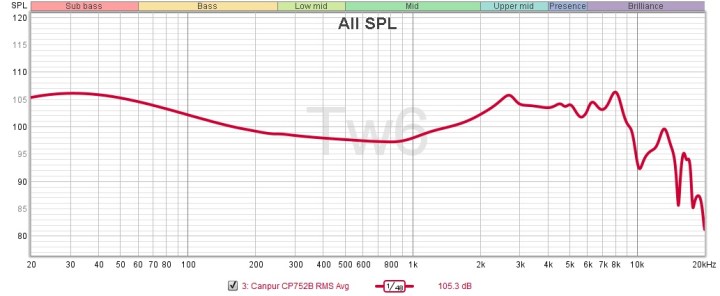
To my ears, CP752B has a relatively balanced, neutral tuning with a moderate amount of natural warmth. Despite having a quadbrid design, I find its tuning to be quite coherent, where all drivers blend in together, working in unison as one large driver with a huge 3D-expanded soundstage and a holographic-level imaging. As I always say, these dual Sonion BCD drivers do magic to soundstage expansion.
Additionally, these IEMs exhibit strong technical performance, with excellent layering and separation of sounds, providing plenty of air between the layers. You will also find a notable vertical dynamic expansion of the sound, especially evident in the enhancement of micro-dynamics, with subtle changes in volume fluctuations that add realism to the sound performance. The tuning works with anything you throw at it, especially fast-paced music, as it helps keep up with dynamic changes. And overall, I hear CP752B to have a very non-fatiguing, resolving sound you can listen to for hours.
In more detail, I hear a deep textured sub-bass and fast, punchy mid-bass. Despite BA drivers, the sub-bass rumble exhibits some DD characteristics (texture, rumble), while the speed/attack/decay of mid-bass is of BA quality. The bass is very articulate, precise, and fast, with shorter attack and decay (control) of notes. The bass is above neutral, with just enough weight without being too exaggerated or boosted.
The lower mids are slightly north of neutral, adding just a little bit of body without too much extra weight. The upper mids are very clear, detailed, and forward, with proper attention to the pinna gain region. The mids are very resolving and detailed, with a natural warmth that adds texture without too much coloring. The treble has a great definition and lots of natural clarity. It is crisp, yet naturally so, with a great extension and just the right amount of airiness to enhance the layering and separation of sounds.
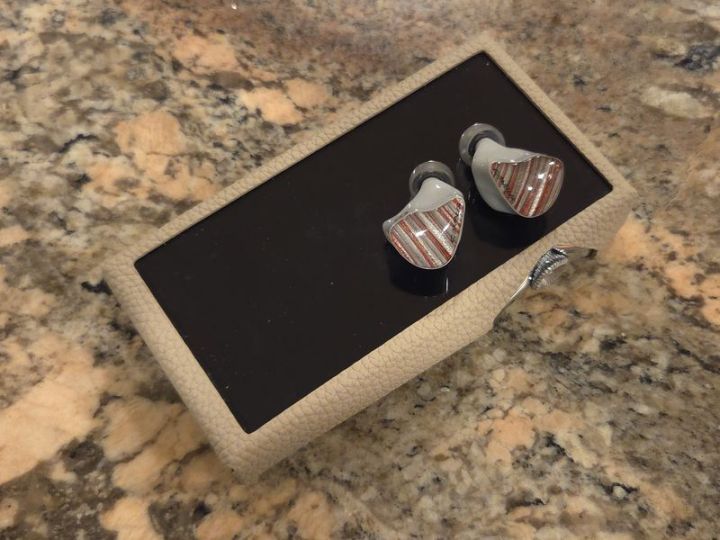
Source pair-up.
Despite its lower sensitivity of 103.2 dB and impedance of 6.3 ohms, the CP752B is easily driven.
The baseline sound sig I described above was based on testing with the SP4000, which features a balanced signature, detailed sound, and a neutral, yet warmish tuning with a natural tonality.
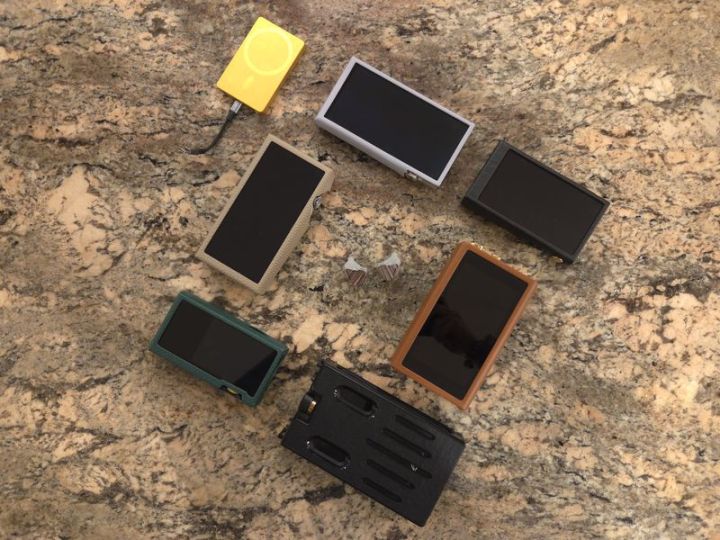
L&P P6 Pro – sounds very similar to SP4000 pair-up with a little more texture in mids/vocals.
iBasso DX340 w/amp17 – in this pair-up, I hear the mid-bass punch to be stronger, and the mids are a little more revealing. Here, the sound of CP752B scales more toward a W-shaped signature. For DX340 users, ensure that the DAC gain is set to high while the AMP gain is set lower, to avoid waterfall hiss in this pairing.
iBasso DX320Max – it felt like the soundstage expanded even wider, wrapping around and behind my head. Also, mid-bass punch is faster and tighter. But, at the same time, treble got a bit crisper, closer to the threshold of my tolerance.
Cayin N6iii w/R202 – very punchy, resolving sound, and I really like the added texture in lower mids when switched to R2R dac mode. 1bit mode made the treble a bit crisper, so I went back to R2R, which gives CP752B a more natural tonality.
A&K SP4000 w/Cayin C9ii (classic, NuTube) – with this amp, I hear a big, rounded soundstage expansion, a more textured and analog rendition of the mids, pushing mids/vocals a bit more out of your head, and crisp, detailed treble extension.
Nipo A100 dongle – I hear a deeper sub-bass rumble with a crisper treble; treble was a bit crisper than I would like.
Cable pair-up.
I’m aware that some people are skeptical about the contribution of cable to the audio chain. It’s not my intent to start an argument here. Instead, I would like to share what I hear during my testing. What makes sense to me is that a metal wire is a material with physical properties of resistivity, conductivity, and purity, all of which act as a filter between your source and earphones. Variations in these physical properties can affect the conductivity of an analog signal, resulting in a change in sound ranging from subtle to noticeable. If discussing cables bothers you, please skip this section. Otherwise, enjoy these short impressions.
vs Eletech OTL – gives a little more transparency to the mids/vocals.
vs Eletech Odyssey – provides more transparency to the mids/vocals, making them a little colder.
vs EA Dionysus – reduces soundstage width a tiny bit, but improves the mid-bass punch, improves the resolution of the mids while keeping the texture, and gives treble a little more control. Good pair-up.
vs HanSound Kunpeng – improves the retrieval of details in the mids, giving the treble a little more air.
vs LL Venom – similar minor change as other cables, improvement in detail retrieval in mids, and making treble a touch crisper and airier.
vs PWA FT – very similar to a stock cable
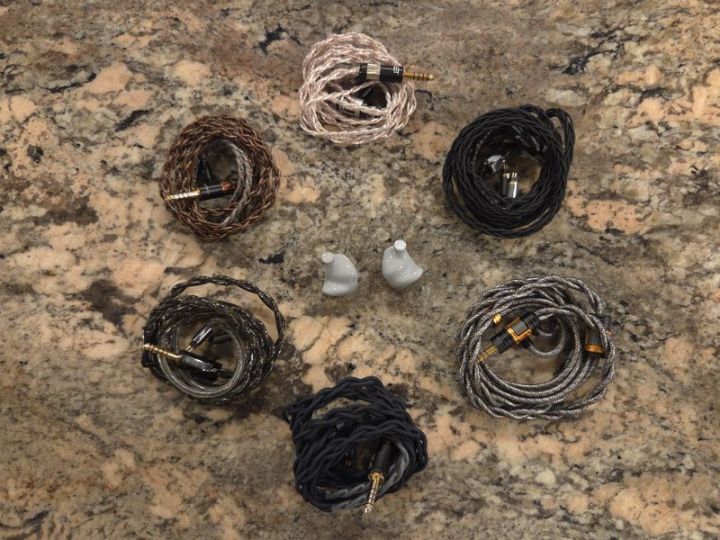
CP752B stock cable was designed exclusively by Eletech, using a premium blend of OCC Copper, Gold Copper alloy, and Silver Copper alloy wires. The stock cable is a bit stiff; however, it matches the color theme of the IEMs perfectly and has a great pair-up synergy.


Comparison.
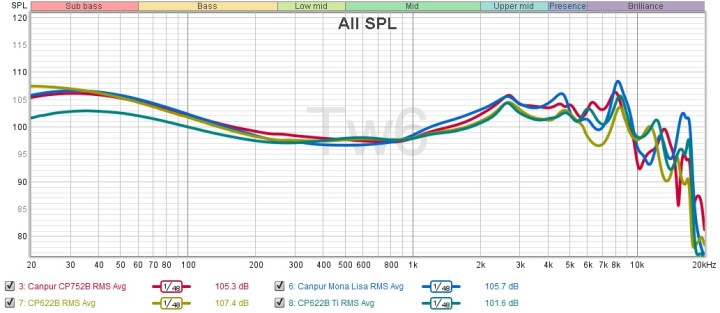
The comparison was conducted using CP752B with a stock Eletech cable, Crystal eartips, and a SP4000 source versus other IEMs, volume-matched in every comparison. Since I currently don’t have access to the CP622B Ti and Mona Lisa (CP & Eletech collaboration project), this comparison was conducted based on my notes and FR measurements. I prefer to stay away from “by memory” comparisons, but I did receive a handful of requests about these.
vs CP622B – despite both having dual Sonion BCD drives, CP752B has a more expanded, more rounded soundstage, while both have a holographic imaging. CP752B soundstage expansion feels more 3D, more open, with more air between the layers of sounds. When it comes to the bass, the quality of their bass is not too far off, having a textured sub-bass rumble typical of DD performance and fast, punchy mid-bass. However, CP622B sub-bass is more elevated in quantity, while CP752B bass has more punch and better articulation. Mids are not too far off, perhaps with a touch more body in CP752B, and I also noticed CP752B upper mids being a little forward, slightly more elevated to give its instruments and vocals higher resolution. I think the most significant change here is in treble, with the CP752B having a better definition due to a more forward and still natural presentation, as well as more airiness in its extension. Due to CP622B having a higher sub-bass quantity and smoother presentation of the treble, in comparison to punchier bass and more forward presentation of treble in CP752B, 622B sounds smoother, a little more colored, and less resolving in contrast to 752B, which has more natural transparency, higher resolution, and improvement in retrieval of details. Additionally, despite its larger shell to fit more drivers, the CP752B fit my ears a little more comfortably due to a slightly different and shorter angle of the nozzle.


vs CP622B Ti (by FR/memory) – from my notes and FR measurements, the Ti version has scaled-down bass quantity, is more neutral in comparison, has a bit less forward upper mids, but a similar definition of treble between the Ti and CP752B. In a way, CP752B is like the crossover between CP622B and CP622B Ti.
vs Mona Lisa (by FR/memory) – also, going by my notes/memory and FR measurements, Mona Lisa had a similar bass response as CP752B, but its lower mids were noticeably leaner than CP752B. Their upper mids/vocals were on par, but then again, Mona Lisa’s treble was brighter and airier. Both IEMs have a balanced sound signature, but the Mona Lisa is more W-shaped, revealing sound, with its tuning placing more emphasis on bass, mids, and treble. In contrast, the CP752B features a more linear and balanced tuning.
vs Forte Ears MacBeth – both iems have a holographic level imaging, but CP752B soundstage width spreads wider. Their bass is not too far off, having a DD-like performance using their BA bass drivers, but MacBeth sub-bass rumble and mid-bass punch are slightly scaled up, with a higher quantity that hits a little harder. I also hear a bit more coloring in MacBeth’s mids while CP752B offers more transparency, improved layering and separation, and higher resolution in upper mids. Both IEMs have a good treble extension, while MacBeth has a more revealing treble presence. In contrast, CP752B has a more resolving and better-controlled treble presence rather than being more revealing and brighter.
vs Aroma Jewel w/FT – as expected, CP752B soundstage expansion is noticeably wider and more holographic when it comes to imaging. With bass, their quality is not too far off, although I do hear more rumble in the CP752B sub-bass. The significant difference in bass presentation here lies in the quantity, where the CP752B scales up noticeably, while Jewel’s bass is relatively more neutral. The presentation of the mids, both lower mids and upper mids, is not too far off, with less coloring, more transparency, and natural retrieval of details. However, CP752B has improved layering and separation of the sounds, with more air between the layers. That last change is due to a noticeable difference in the lower treble between these two IEMs, where Jewel drops its presence in favor of mid-treble definition. At the same time, the CP752B linearly extends its treble presence to provide noticeably higher resolution and clarity.
vs UM MM – both iems have a big expanded soundstage with a holographic level imaging. The MM bass has noticeably more neutral quantity compared to the CP752B, which has a deeper rumble and faster, punchier mid-bass. When it comes to mids, MM has a fuller body in the lower mids. Both IEMs have a clear, detailed upper mids and resolving, forward, well-controlled treble. However, due to a difference in the bass presentation, the MM signature becomes more mid-forward, while the CP752B is more balanced. If you are a fan of MM tuning and crave more bass presence with deeper, textured rumble and faster mid-bass punch, consider the CP752B as an upgrade to your MM setup.
Conclusion.
It’s hard to believe Canpur only made its debut two years ago, and it has already elevated itself to reach the level of other highly regarded IEM brands. From all the show comments and Watercooler discussions, their latest CP752B flagship was among the most talked-about IEMs releases at the recent CanJam SoCal. I had to wait until the last week before CanJam Dallas to get a chance to hear it since Musicteck had a long queue of customers waiting to audition this pair after the SoCal show. Even so, I only spent a very short time with these IEMs, but it was enough to get a full and clear picture of what this whole buzz was about.
Thanks to their close working relationship with Sonion, their CP622B debut showcased a performance of BA bass that could rival some DD drivers, and they were one of the first to introduce new dual BCD drivers from Sonion, which many are following in their footsteps to boost the soundstage and imaging expansion. The CP752B release does have the baseline DNA of CP622B tuning. Still, it stepped it up, expanding further, with the introduction of yet another new Sonion mids/high dual driver to add more natural clarity, definition, and resolution to its highs. To my ears, CP752B stands as a refinement of CP622B with a punchier bass, more resolving mids, higher definition treble, and an improvement in technical performance. I can’t wait to spend more time with these IEMs.

 Twister6 Reviews