
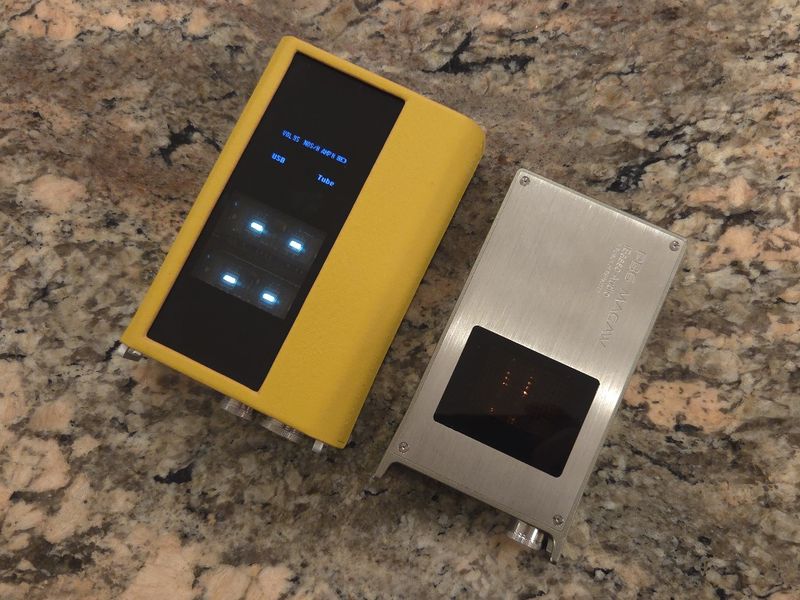
The Enhanced Dynamic Duo!
PROs: D17 – natural analog tonality, expanded soundstage and dynamics, deep bass impact, dark background, dual discrete R2R and 1bit DAC architecture, three (NOS, OS, SD) DAC modes, dual NuTube amp coloring, FPGA-Master 3.0, high power output, USB-C/OPT/Coax inputs and PO/LO outputs (BAL and SE), and user-accessible battery replacement.
PB6 – adds a warmer analog texture with a smooth, natural tonality, expanded soundstage and dynamics, dual output mode with either quad JAN6418 tubes coloring or Solid-State Class AB, selectable low/high BW filter, 4.4mm/3.5mm inputs and outputs, high power output, 12V DC input option, and user-accessible battery replacement.
CONs: price (D17), charging (PB6, 5V only), small toggle switches (both), no clearly marked volume knob (both), PB6 comes without a case.
These products were provided to me free of charge for review purposes in exchange for my honest opinion.
Manufacturer website: iBasso. Available for sale directly or through authorized retailers like Bloom Audio, D17 and PB6.
Intro.
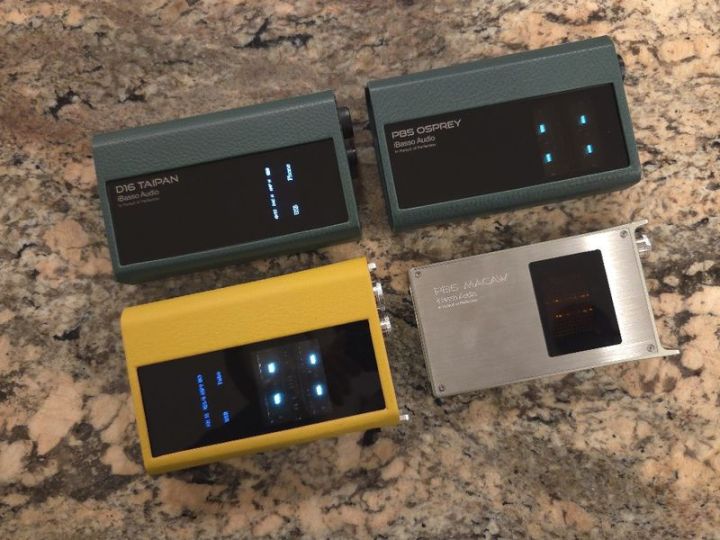
In the last year, iBasso showered the audiophile community and its dedicated fans with a ton of new releases. All of it was impressive and even a bit overwhelming to keep up with as iBasso approached its 19th anniversary in September, making my imagination run wild about what they will come up with next year for their 20th celebration. As part of the flood of new releases, a D16 DAC/Amp and a PB5 Amp stood out in my book, where I referred to them as an ultimate dynamic duo in my combined review.
But I didn’t realize that a year later they would step it up to the next level, as D17 and PB6, with more enhancements. iBasso nearly combined D16 and PB5 into D17, revamped the architecture with two discrete DACs, R2R and 1bit, used upgraded FPGA-Master v3.0, and only raised the price by $200. In the case of PB6, they redesigned it with a dual-mode output that can use either quad-JAN6418 vacuum tubes for coloring or bypass it straight into Solid-State Class AB, added other enhancements, including a 12V DC input, and priced it at less than 1/3 the price of PB5.
Given their functionality and the synergy of their combined use, it still made sense to me to review these two devices together. After spending over a month testing, comparing, and pairing the iBasso D17 Atheris DAC/Amp and the PB6 Macaw Amp with different IEMs and Headphones, and taking a ton of notes, I’m ready to share what I found. So, here we go!
Unboxing and Accessories.
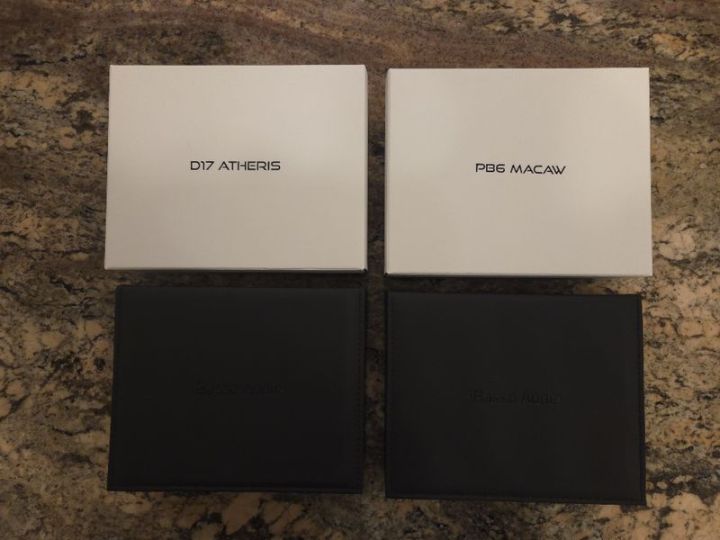
Similar to their predecessors, the unboxing experiences of D17 and PB6 are nearly identical. They both arrived in the same medium-size, premium-quality black pleather gift boxes (similar to D16 and PB5), with each box inside another white, plain cardboard box with a printed model name. Each one houses corresponding devices in a soft drawstring pouch (D17 had a leather pouch, while PB6 had a velour one), and accessories in other velour drawstring pouches. D17 came with a mustard-yellow wraparound leather case with a perforated metal back, while PB6 didn’t have a case. The case fits like a glove and provides a full view of the D17 display; it is secured with a velcro flap on the side and offers full access to the headphone ports, the volume control on the front, charging ports, toggle switches, and the usb-c and coax ports on the back.
Along with the PB6, you will get 2x shorter interconnect cables, 3.5mm to 3.5mm and 4.4mm to 4.4mm, each with eight braided wires, probably copper and spc material, and gold-plated plug connectors with carbon-fibre insert housing that resemble Oyaide-brand plugs. You will also get a high-quality USB-A to USB-C charging cable, a warranty card, a quick start guide, and a 12V/1.5A wall charger that bypasses the PB6’s internal battery to use external power.


In addition to a quality USB-A to USB-C charging cable, D17 comes with one 3.5mm to 3.5mm interconnect braided copper/spc cable (not sure what for?), USB-C to USB-C OTG cable, USB-C to Lightning OTG cable, and 2 Coax cables. The OTG cables are braided to separate power and data signals, minimizing interference, and use high-purity silver-plated copper wires. Also, one included Coax cable had braided silver-plated copper wires, and another Coax cable had a thicker, stiffer shielded wire, similar to the ones iBasso includes with its upper-end DAPs. A warranty card and a quick start guide were provided. Not sure why a 3.5mm-to-3.5 mm IC cable was included; it would have made more sense to include an Optical 3.5mm cable instead.


Page 2 – Design and Under the Hood.
Page 3 – Sound Analysis and Pair-ups.
Page 4 – Comparisons, Source pair-ups, and Conclusion.

 Twister6 Reviews
Just wondering if you could compare the D17 vs the A&K SE300 since they’re both R2R?
LikeLike
SE300 is oldie but goodie. Unfortunately, I covered that one years ago and it was on loan. Sorry.
LikeLike