
Sound Analysis.
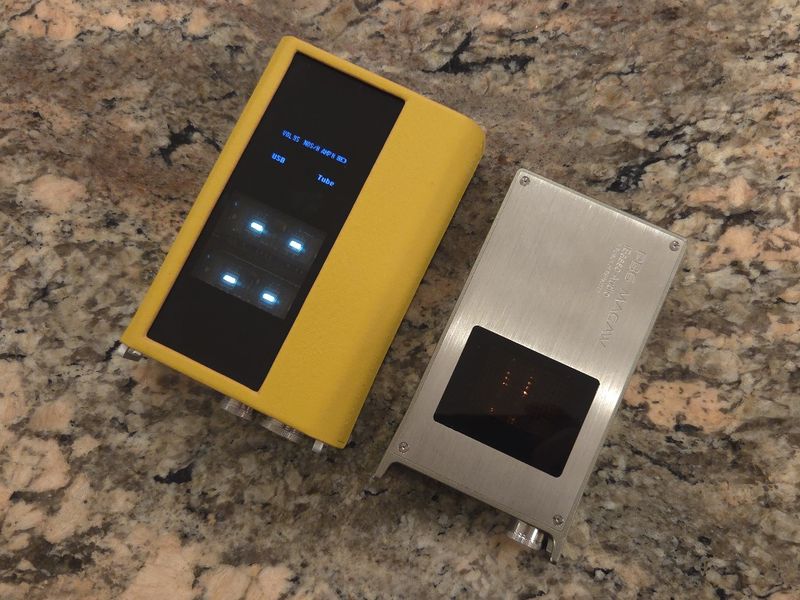
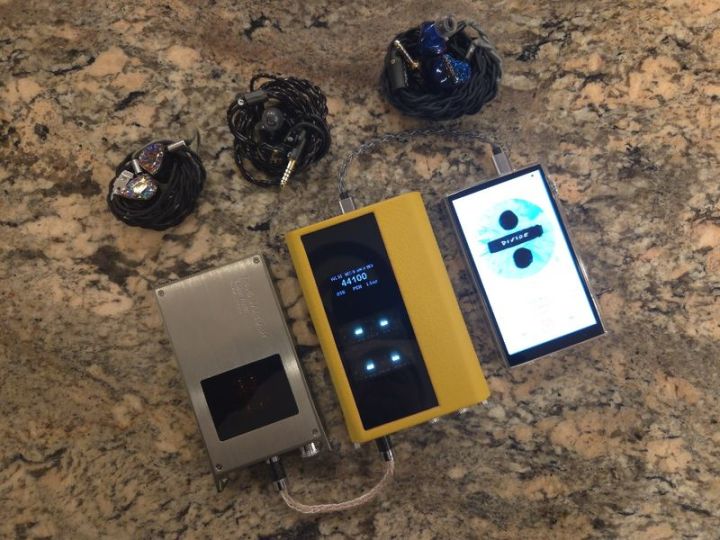
I analyzed D17 and PB6 sound using Aroma Jewel and FirAudio RN6 IEMs while playing a variety of my usual test tracks, such as Agnes Obel’s “The Curse”, Sandro Cavazza’s “So much Better” (Avicii remix), C-Bool’s “Never Go away”, Ed Sheeran “Shape of you”, Counting Crows “Big yellow taxi”, Galantis “Hunter”, Alan Walker “Darkside”, Iggy Azalea “Black widow”, Indila “Boite en argent”, Robin Schultz “Oh child”, Dua Lipa “Love Again”, David Elias “Vision of her”, Michael Jackson “Dirty Diana”, and SaberZ “Without your love”. As recommended by the manufacturer, I kept both devices on burn-in for at least 100 hours using iBasso’s own balanced burn-in cable before I started sound analysis.
I prefer to describe the DAP/DAC/amp sound based on the comparison to other sources and pair-ups with different IEMs/headphones, since the “source” by itself doesn’t have a “sound”. What we hear is how it sounds through connected IEMs/headphones or the difference in sound relative to other sources using the same pair of IEMs/headphones. As a result, this section of the review usually has a shorter summary of what I find in the follow-up sections. Also, I’m focusing only on 4.4mm balanced output. This is my subjective opinion, describing how and what I hear.
I hear the D17 DAC/Amp as having a smoother, warmer sound, with a natural analog tonality. For sure, tubes do contribute to this natural, textured sound. Still, I also found the three DAC modes to have a noticeable effect on the sound, helping you fine-tune the output for better synergy with whatever IEMs/headphones you are using. The tuning is so effortless, rich, and natural, with a smooth flow, and even the added coloring doesn’t muddy the sound, keeping it resolving with a more natural analog undertone. Another thing to note is the deep, physical impact of the bass, which is noticeable with IEMs that have DD drivers or full-size headphones.
The background is relatively dark and very quiet, with hardly any detectable waterfall hiss, even with sensitive IEMs, like VE10. This makes details pop out of the blackness with natural clarity, giving a very clean on/off transition of the notes, and I do want to point out – clean, rather than sharp transition. Also, the macro- and micro-dynamics of the recording are well preserved, with D17 accurately reproducing transient changes between sound peaks without compressing them.
The soundstage expansion is pretty broad, deep, and tall, being naturally proportional in all three directions without exaggeration. Of course, it will depend on the limitations of earphone and headphone tuning and how it spreads by their design. But it definitely will not hinder the original technical performance, will not reduce holographic expansion or imaging, and, in some cases, actually enhances them by spreading the sound wider and wrapping it around you.
As I said, the three DAC modes of D17, NOS (No Oversampling with automatic selection of R2R for PCM and 1bit for DSD), OS (all to PCM w/R2R), and SD (all to DSD w/1bit) do affect the tuning of D17. While playing PCM files that I use for testing:
- NOS (R2R w/PCM files, no oversampling): I hear a faster, tighter sound, with a deeper sub-bass rumble, resolving natural mids, natural, well-defined treble, and a big expanded soundstage.
- OS (R2R to PCM): I hear a more laid-back presentation of the sound, a bit more midrange coloring/texture, which could vary depending on the pair-up, and a touch wider soundstage than NOS.
- SD (1bit to DSD): needs about 2 more clicks of analog volume to compensate for lower power output, and has more transparent sound, less colored mids, and a bit more crunch in treble; the same width soundstage as in OS, being a touch wider than NOS.
Imaging remained the same between the three DAC modes. Also, need to be careful when dealing with sensitive IEMs and switching between OS and SD due to a power output difference, especially when going from SD to OS or NOS.
NOS dac mode, while playing PCM files, has the energy, the speed, and the resolution of 1bit DAC mode, but it has an analog texture of the R2R DAC, having the most versatile sound tuning, and probably being my favorite DAC mode in D17. Differences between D17 DAC modes are not exactly night-and-day, except for the power drop when switching to 1bit/SD mode. These differences are more on a fine-tuning level. Overall, and considering I don’t play any DSD files, only PCM files, I enjoyed either NOS or OS, where in either case it was using R2R dac without and with oversampling.

After adding the PB6 Amp (in Tube mode) to the Line Out output of D17, I can still hear a vast soundstage with enhanced width/height and decent depth, including nearly holographic-level imaging, of course, depending on the technical performance of IEMs/headphones under the test. In many pair-ups, the soundstage expanded when adding PB6 relative to other sources. PB6 has a softer, warmer tonality than PB5, giving you a different flavor of tube “distortion” in comparison to D17 native NuTube output. The technical performance of PB6 is as impressive as the sound coming directly from the D17 as a source, with well-controlled layering and separation of the sounds without any congestion, and excellent vertical dynamics expansion, though with slightly slower transients at the peaks, since PB6 adds a bit more softness to the sound.
Adding PB6 to a clean output of the source Line Out doesn’t distort the sound or kill the resolution. It will add body, texture, and analog warmth to the sound, without compromising the resolution. But again, it will all depend on the pair-up synergy: in some cases, I preferred D17 with its own NuTube output, and in others it sounded better when I bypassed it and added PB6 (in Tube mode) to the audio chain. It is not easy to describe the exact tonality of the device with many sound-shaping options, but overall, PB6 definitely colors the sound with a smoother, more musical tonality.
While D17 offers three DAC modes, PB6 gives you even more sound-shaping options, with either Tube or Solid-State only Class AB output modes, and either Low BW or High BW filters.
When analyzing PB6 tonality between Tube and Solid-State Class AB, switching to AB makes the sound cleaner, less colored in mids, more transparent, a little faster, and tighter. In comparison, its Tube mode is smoother in the mids, with a slightly slower attack, giving it a more laid-back presentation.
The Low and High BW also had an interesting effect on PB6 tuning. The High BW expanded the soundstage, increased the bass impact, and increased the sound’s speed. Low BW makes bass a little slower, with a longer note attack, creating a more laid-back sound presentation.
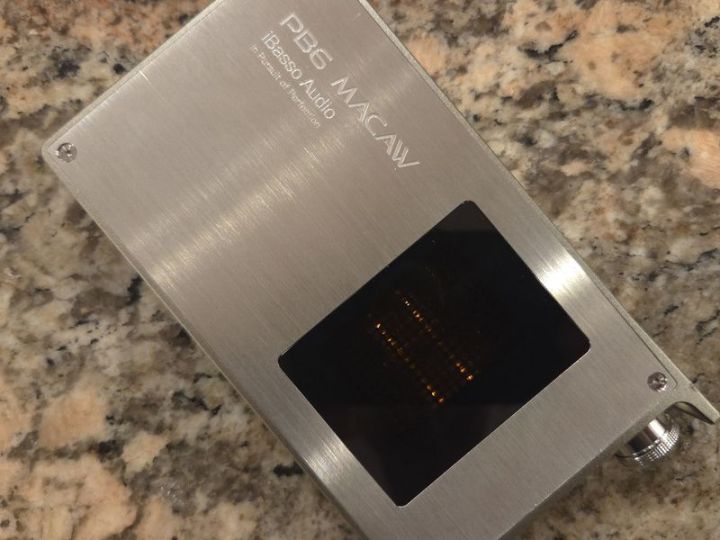
4.4mm BAL vs 3.5mm SE – I did try 3.5mm as well, and with D17, when switching from 4.4mm to 3.5mm, tonality remains the same; the only difference I hear is having less power, and a slightly narrower soundstage. And I found similar changes when using PB6, balanced output had more power and somewhat more expansive soundstage, while the tonality was identical between balanced and unbalanced outputs. This is a common change across many of the sources I have tested.
With PB6 and DC input, adding the 12V external power supply made the background blacker and the sound tighter, and I can even hear some improvement in dynamics. I didn’t notice a big difference in output volume, maybe just a touch louder, but in theory, adding 12V should give a higher output power. I mostly use IEMs, where I hear the change as less drastic than what headphone users are going to find, especially with more demanding cans.

Pair-ups.
In this section of my review, I will go over how various earphones and headphones pair up and sound with D17 and PB6. Analog stepped attenuator volume has a max of 23 clicks (24-step design), so keep that in mind as I noted its setting in every test. These are short analysis notes to give you the basic idea of what to expect.
In my setup, I used DX180 as a source with D17 (DAC: HG, vol 95, AMP: HG for IEMs and Headphones) and PB6 (LG for IEMs and Headphones).
In every test, I started with D17 directly, first in NOS mode, and then compared to OS and SD modes. Afterwards, I went back to NOS mode, switched D17 to Line Out, and added PB6, testing two output modes, Tube with Low BW setting, and Solid-State Class-AB with High BW setting.


with Headphones
Audio-Technica ATH-R70x (vol 12 clicks NOS/OS, 14 clicks SD)
w/D17 (PO, tube) – R70x are open-back 470 ohm headphones, and they do need to be pushed harder to reach their full potential, which D17 did without a problem, with plenty of headroom. Starting with NOS mode, the soundstage is wide open, though having more depth/height than width. Imaging was good, but I noticed it being more mid-centered, similar to D16 or DX320Max. Overall, tonality is very natural, detailed, and smoother; not as reference-grade as with the DX320Max, but a bit smoother and more textured than D16. Sub-bass is deep and textured; mid-bass is slightly laidback compared to the punchier D16, but still well controlled. Mids/vocals are smooth, organic, detailed, with more coloring than D16, giving them a more textured, deeper tonality. Treble also has a nice, soft, natural sparkle, resolving but a little less revealing than in the D16 pair-up. Switching to OS mode made the sound a little more laidback, including treble being a touch smoother. In SD mode, the sound became cleaner, losing a bit of the analog texture, but gaining more resolution. Overall, I hear a very effortless, natural pair-up with D17, but with R70x, I preferred NOS mode.
w/D17 (LO, NOS) + PB6 (tube/Low BW vs solid/High BW) – soundstage now sounds more spherical and holographic, with width, depth, and height more proportional. And the same goes for imaging, with more 3D positioning of the sounds. The tonality change is more noticeable with the amp in solid-state, especially HBW, which made the sound cleaner and more resolving, and also brought the upper mids/vocals forward. With D17 by itself, the sound of R70x was the smoothest; with PB6/tube, it was still textured and soft, with improved mid-resolution, even cleaner and more detailed as you switch to the amp’s class AB output. In pair up with R70x, I preferred PB6 in tube mode.
MEZE Audio Empyrean (vol 9 clicks NOS/OS, 11 clicks SD)
D17 (PO, tube) – these planar magnetic open-back headphones sound very open and expansive, with nearly 3D holographic imaging, projecting the sound more out of my head when driven directly by D17. Didn’t like low gain, had to switch D17 to high gain, which added a bit more body to the mids. Starting with NOS mode, the sound sig is balanced, fast, smooth, clean, natural, and detailed. I hear a deeper sub-bass rumble with a bit of extra weight, and mid-bass punch being fast and articulate; overall, the bass is just north of neutral, not too elevated. Mids/vocals have a natural, detailed, smoother, textured tonality, with moderate thickness in the lower mids to give them extra soulful texture, especially noticeable when I switched the amp section to high gain. Treble is naturally crisp and airy, not harsh or bright. Overall, I hear a clean, detailed sound; the overall tonality is natural, with some textured warmth in the mids. In OS mode, the sound was slightly slower, but the difference was minimal and hardly noticeable. In SD mode, mids were less colored, more revealing. Directly from D17, with Empyrean, I was split between NOS and SD modes, leaning toward SD.
w/D17 (LO, NOS) + PB6 (tube/Low BW vs solid/High BW) – soundstage is as wide open and holographic with 3D-like imaging as it was directly from D17, though I noticed the sound being a touch more out of my head. The tonal difference when adding PB6 in tube mode is less noticeable here, almost like you are just adding a different flavor of texture and smoothness. Perhaps, with PB6/tube, the sound is a bit more laidback, relaxed. The mids have the same amount of body and warmth, but the sound is more relaxed. Also, I hear a bit less rumble in sub-bass with the PB6 “tube” vs the D17 “tube”. When I switched PB6 to solid, some of the analog texture was lost, but the sound remained smoother and cleaner, with greater resolution. Using PB6, I preferred Empyrean in the amp’s class-AB solid-state mode.

with IEMs
Aroma Jewel w/FT (vol 4 clicks NOS/OS, 6 clicks SD)
D17 (PO, tube) – The soundstage has a wide, rounded expansion and holographic-level imaging. The sound signature is very balanced (W-shaped), with a natural, detailed tonality and a well-balanced presentation. Bass has a deep, textured sub-bass rumble and punchy mid-bass; it’s tight and articulate. Lower mids are a bit north of neutral, adding extra body to the sound. Upper mids are natural, detailed, textured, have a bit of natural coloring, yet remain resolving, with plenty of clarity and excellent detail retrieval. Treble is well-defined, clear, detailed, and natural. When switching from NOS to OS, the sound gains more body, becoming a bit slower and more laidback. In SD mode, I heard less texture in mids. With Jewel directly from D17, I preferred NOS mode.
w/D17 (LO, NOS) + PB6 (tube/Low BW vs solid/High BW) – the soundstage has a very similar rounded expansion with holographic imaging. In PB6 tube mode, the sound has a slightly different texture and a bit less coloring. Mids have greater transparency, resulting in less coloring than when connected directly to D17 PO. When switching to solid-state, the sound became cleaner, lost a bit of dynamics, and became a bit flatter and less exciting. Here, I preferred Jewel with tube mode.
Empire Ears Odin (vol 4 clicks NOS/OS, 6 clicks SD)
D17 (PO, tube) – First things first, I can confirm a black background with no hissing. The soundstage here is vast, and the imaging is on a holographic level. Bass extends deep with a deep, textured rumble and a tight, snappy, fast mid-bass punch. Lower mids are close to neutral, not as lean as they were with D16, while upper mids are more resolving, very detailed, and a bit more forward in presentation. Treble is crisp, clear, detailed, a bit more revealing, but not splashy. Despite the tube output, the sound tuning here has a bit more analytical presentation in NOS mode. Switching to OS mode, added more body and texture to the mids, making them sound more natural. Then, switching to SD mode also added body and texture, but the treble was snappier and crisper. Directly from D17, I preferred Odin in OS mode.
w/D17 (LO, NOS) + PB6 (tube/Low BW vs solid/High BW) – still no hissing, and the background was even blacker than directly from D17. The soundstage and imaging were the same, big, expanded, holographic. In tube mode, the sound was very natural, resolving, and textured; the bass had more depth and rumble, and the treble was as resolving and well-defined, but with less crunch, sounding more natural. When switching to solid-state mode, the sound lost some of its analog texture, and the treble became crisper. Odin sounded the best with PB6 in tube mode, and I even preferred it over D17/tube direct connection.
FirAudio Radon 6 (vol 4 clicks NOS/OS, 5 clicks SD)
D17 (PO, tube) – I hear a big holographic soundstage expansion, actually quite wide with the sound almost wrapping around my head. Here, the sound signature is L-shaped, with a deep, powerful, speaker-like bass impact that hits pretty hard. Natural, detailed mids and organic vocals feel slightly pushed back by the powerful bass. Treble sounds crisp, snappy, and still natural. I’m always on the fence about describing RN6’s sound signature because of its powerful bass, but in NOS mode, it was clearly L-shaped. To my surprise, when switching to OS, the sound became more balanced, W-shaped. Then, in SD mode, it went back to L-shaped. Directly from D17, I really enjoyed RN6 in OS mode.
w/D17 (LO, NOS) + PB6 (tube/Low BW vs solid/High BW) – the soundstage now sounds more extended out of my head, with a bit less width and more depth. Bass is still as powerful, but a bit less articulate, even slightly mushy in Tube mode. Vocals also sound very organic, thick, less resolving, and the treble was smoother. When switching to solid-state, the bass had better definition and stronger mid-bass punch, mids were a bit more forward and more resolving, while treble remained the same. With RN6 using PB6, I preferred a solid-state mode, but ultimately still preferred a direct connection to D17 in OS mode.

 Twister6 Reviews
Just wondering if you could compare the D17 vs the A&K SE300 since they’re both R2R?
LikeLike
SE300 is oldie but goodie. Unfortunately, I covered that one years ago and it was on loan. Sorry.
LikeLike