
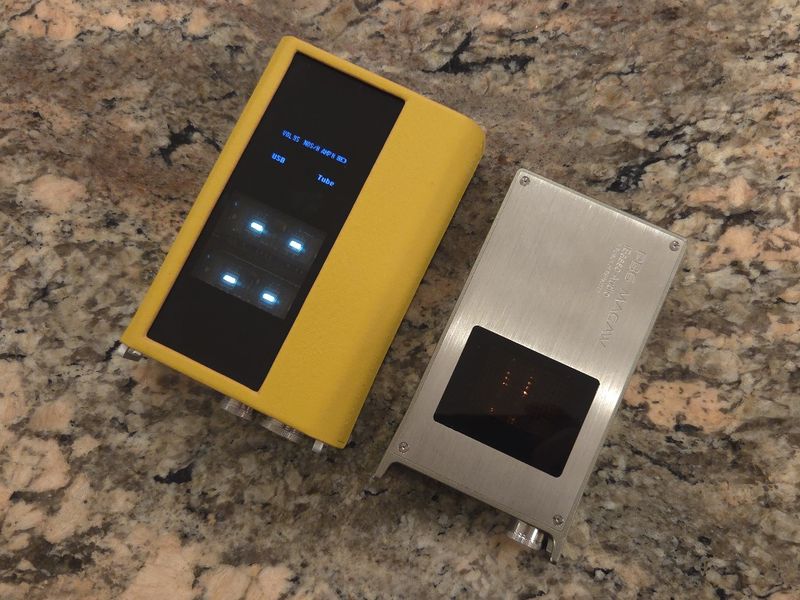
Comparisons (D17).
In the following comparison, I used D17 with the following DAC settings: HG, vol 95, and AMP: HG, and used DX180 as the source, along with Jewel and RN6 for monitoring, volume matched in every comparison.
D17 vs D16 comparison
D17 (NOS, R2R/PCM) vs D16 – similar resolving tonality, with more energy, and excellent retrieval of details, but in a relative comparison, D17 still has more analog textured sweetness in the mids. At the same time, D16 sounds cleaner and a bit colder.
D17 (OS, R2R/PCM) vs D16 – D17 sounds a little smoother, with more texture in the mids, a touch less air in the treble, and an overall more laid-back, analog presentation. In comparison, D16 has a bit less midrange coloring and a slightly snappier treble with a touch more crunch.
D17 (SD, 1bit/PCM) vs D16 – the sound of D17 is a little more energetic, with a touch less texture than D17/R2R, but still a little more texture than D16, and treble has more crunch, on par with D16. D17 1bit/SD mode feels like it’s between D16 and D17 R2R/OS.
Other comparisons
D17 (NOS, PO) vs D17 (NOS, LO) w/PB5 – I figured some would be interested in the comparison of D17 NuTubes vs PB5 NuTubes. With PB5, there is slightly more midrange coloration, a little more weight in sub-bass rumble, and a slightly wider soundstage. It’s a subtle change, noticeable, but not a very big difference. I actually preferred D17 with its Tube output over D17+PB5 because D17 gives you a slight edge in resolution while keeping the analog texture.
D17 (NOS) vs Hiby RS8 – in this R2R comparison, both have a relatively holographic imaging and a big expanded soundstage, though with some IEMs, I noticed D17 expanding a bit wider even after I set the RS8 harmonic controller to the max. Both offer a natural, resolving tonality, but differ in the sound’s coloring. RS8 is more neutrally revealing, with less coloring and texture in mids and brighter treble, while D17 has smoother, more textured mids and smoother treble. D17’s NuTube output gives it a coloring advantage if that is what you are looking for.
D17 (NOS) vs L&P P6 Pro – another R2R comparison, and I found more differences here. P6 Pro offers a more intimate soundstage, with greater depth/height than width, while D17’s is more rounded, wider, and more holographic. Their tonality is not too far off: both have a natural, textured sound, perhaps with a bit more texture in D17, but P6 Pro’s smoother treble gives it its own natural, smoother tonality. One thing that really stood out to me in this comparison was D17’s blacker background, tighter sound, and punchier bass, while P6 Pro’s sound was a bit more laidback with a softer bass. When you switch D17 to OS, its sound becomes more laidback, but the bass is still punchier than on the P6 Pro.
D17 (NOS) vs Cayin N6iii w/R202 – Relative to R202 (R2R), D17 has a little stronger bass impact, more weight in sub-bass, and a little smoother and more colored mids. When switching to R202 (1bit), D17 (in SD, 1bit mode) has a slightly stronger bass impact and more midrange coloration. The D17 tubes keep that analog, textured coloring on.
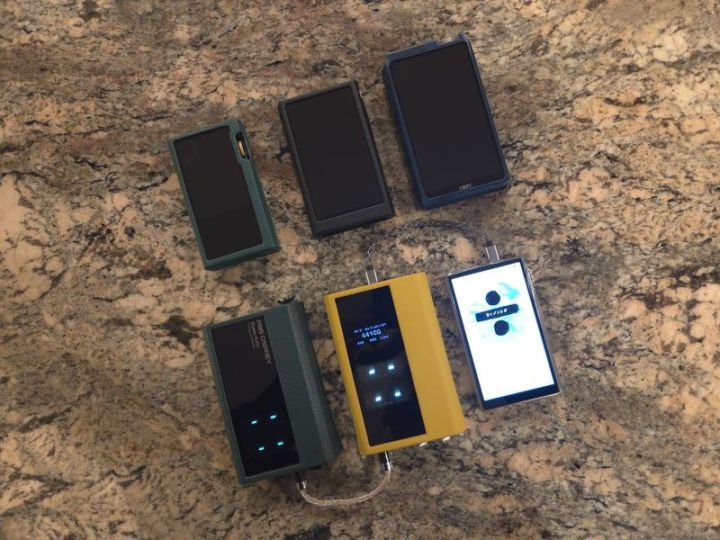
Comparisons (PB6).
Obviously, it makes sense to compare PB6 vs PB5 and the NuTube output of D17 vs D17 LO w/PB6. And we can’t forget iBasso’s own amp16, with similar Raytheon tubes and Class AB solid-state output, as well as A&K’s SP3000T with the same tubes. In every comparison, I used Jewel and RN6 IEMs, volume-matched.
D17 (NOS, PO) w/PB5 vs D17 (NOS, PO) w/PB6 (Tube, Low BW) – Under those specific settings, PB6 has a softer, smoother tonality and a slightly more laid-back sound presentation. In comparison, PB5 has a touch less coloring, faster transients, and somewhat more sparkle in treble. w/High BW setting, the sound of PB6 is still a little softer but not as laidback, approaching the technical performance of PB5, just having a little softer, smoother tonality.
D17 (NOS, PO) vs D17 (NOS, LO) w/PB6 (Low BW) – PB6 has a softer sound, a little more coloring, and will have less sparkle in treble. In terms of tube coloring/texture, it goes from D17 to PB5 and PB6. w/High BW setting, the sound of PB6 is closer to D17/Tube.
D17 (LO) w/PB6 (tube vs solid-state) vs DX340 w/amp16 (tube vs solid-state) – while their soundstage expansion is not too far off, DX340’s imaging is more holographic in terms of sound placement in space. Both have a black background, but the DX340 background goes even deeper. In corresponding tube modes, D17/PB6 bass impact has more weight (even in Low BW), its mids have fuller body and smoother tonality, and treble has a bit more natural sparkle. DX340 with the same “tubes” has softer bass impact, less coloring in the mids, and more revealing upper mids/lower treble. When switching both sources to a solid-state Class AB output, the tonal gap is smaller, but I can still hear D17/PB6 as a bit smoother in the mids with stronger bass impact, while DX340 is a bit more revealing.
D17 (LO) w/PB6 (tube) vs A&K SP3000T (tube, high current) – both have a holographic soundstage expansion and expanded soundstage, but D17/PB6 does spread the sound wider. SP3kT sounds less colored, more transparent, with more sparkle in the treble, while D17/PB6 is smoother, with more body and smoother treble. Another noticeable thing was the softer bass punch in SP3kT, while the bass was faster and more articulate in D17/PB6. SP3kT tube tonality was between that of the PB6 tube and solid-state performance, except that SP3kT bass impact remained softer.
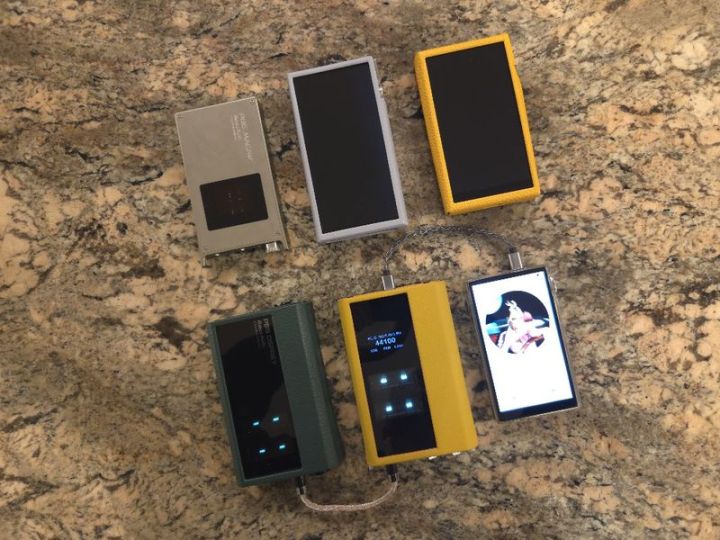
Source Pair-ups.
In this test, I tried D17 with different digital sources, using D17 (DAC: HG, vol 95, AMP: HG) with Jewel and RN6.
When using different DAPs and my smartphone (S25) via USB-C with D17, the sound difference wasn’t as drastically noticeable. The only thing that surprised me a bit was DX340, which made the sound a bit more laidback. But many other DAPs, including the DX180, were on par with my Galaxy S25. That was another surprise, because I recall that during my D16 testing, back when I had the Galaxy S22 as a digital source, my older smartphone caused a slight downgrade in sound quality.
When using the Coax input to D17 from DX180, the sound quality was on par with the USB-C connection, not a huge difference, as I recall back when I tested D16, where Coax sounded better in comparison to usb-c. But again, once I switched to a Coax connection from the DX340, the sound became a little more laidback, slower. Yes, I preferred the DX180 over the DX340 as a digital source feeding D17.
With Optical input to D17, using the SP4000 as a digital source, I hear a slight downgrade in sound quality compared to Coax and USB-C connections, with the sound becoming smoother, a little less resolving, and the soundstage a bit narrower. This was expected since Optical input supports only PCM 192kHz / DoP128, while Coax goes up to PCM 768kHz / DoP256, and USB-C up to PCM 768kHz / DoP512. Since I’m mainly using PCM format files, USB-C and Coax have the advantage over Optical here.
The bottom line: unless you plan to use your smartphone as a digital source, I think something like a cheaper DX180 makes a perfect source to drive D17 via USB-C or Coax, which can be used interchangeably without sound degradation. On the go, usb-c connection is usually more efficient, while at home, I use Coax more often to free up the USB-C port of the DX180 so I can charge the DAP in parallel.
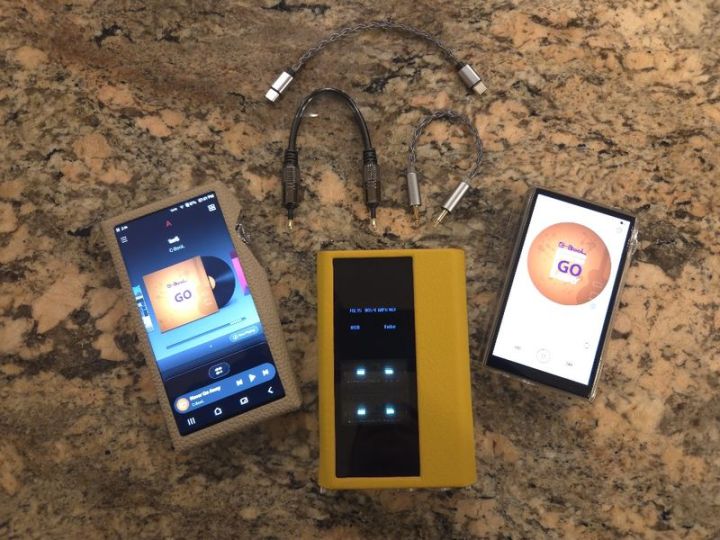
Conclusion.
The majority of my reviews focus on portable audio gear, often using DAPs or dongles for on-the-go use. Last year, after publishing my write-up of the D16 DAC/Amp and the PB5 Amp, I realized that there is plenty of demand for separate components that audiophiles use to mix and match in the audio chain, customizing it beyond just basic sound fine-tuning. Some want to pick their own digital source, decide which DAC architecture suits them better, select the amp based on how much power they need, and figure out whether they do or don’t need extra coloring to enhance the pair-up synergy. Modular DAPs can offer some degree of customization, but it is limited. iBasso recognized the demand and met it with D16 and PB5. The next-gen of these audio devices, D17 and PB6, offer enhanced functionality, more sound-shaping options, updated tech, and even better value, based on their price/performance ratio.
As I started testing D17 DAC/Amp, it felt like iBasso combined D16 discrete DAC with PB5 dual NuTube Amp, except they took it to a whole new level, offering two new DAC options, R2R and 1bit, with three DAC modes (NOS, OS, SD), under the control of their latest updated FPGA-Master 3.0, while still keeping every possible input and output options, with high power, and only raising the D17 price by $200 over the D16. The sound of D17 was also refined, with a natural analog tonality, enhanced soundstage, deep bass impact, and a low noise floor. PB6 was revamped with a dual-output mode, where you can select either quad-JAN6418 vacuum tubes coloring or bypass it, using only Solid-State Class AB, pick the low/high BW filter, use a 3.5mm input in addition to 4.4mm, bypass internal battery with 12V DC external power supply and boost its output power, and enjoy a warmer analog, textured, natural tonality in a slimmer footprint at 1/3 the price of PB5.
I do want to add that those who purchased D16 and PB5 a year ago shouldn’t have buyer’s remorse or feel like they should have waited for the updated releases. There is always a next gen around the corner, and you never know when the next release is going to happen, even with D17/PB6 catching me by surprise. When you find audio gear you like, need, and can afford, get it without regrets and enjoy it, rather than sitting and waiting for something new to be released. Who knows what 2026 will bring, considering iBasso will be celebrating its 20th anniversary and is due for an update to its MAX-series flagship DAP. Also, at the end of the day, whether you go with an all-in-one or separate components solution, it is always great to give audiophiles more choices, precisely what the ultimate dynamic duo of iBasso D16/PB5 or the enhanced dynamic duo of D17/PB6 brings to the table!

 Twister6 Reviews
Just wondering if you could compare the D17 vs the A&K SE300 since they’re both R2R?
LikeLike
SE300 is oldie but goodie. Unfortunately, I covered that one years ago and it was on loan. Sorry.
LikeLike