
Sound Analysis.
I analyzed Pentara sound performance paired up with SP4000, using stock cable while playing a variety of test tracks, such as Agnes Obel’s “The Curse”, Sandro Cavazza’s “So much Better” (Avicii remix), C-Bool’s “Never Go away”, Ed Sheeran “Shape of you”, Alan Walker “Darkside”, Galantis “Hunter”, Iggy Azalea “Black widow”, Indila “Boite en argent”, Dua Lipa “Love Again”, Counting Crows “Big yellow taxi”, Bob Marley “Jamming”, David Elias “Vision of her”, Michael Jackson “Dirty Diana”, and SaberZ “Without your love”. This pair of Pentara has been through the last CanJam Dallas show and many other auditions, accumulating numerous burn-in hours. Additionally, I was using Baroque eartips and noticed changes in sound depending on tip-rolling between narrower- and wider-bore eartips, with the latter giving me a more natural, smoother treble. So, for example, to (with) my ears, Xelastec, Crystal, and W1 eartips made Pentara’s treble a bit more energetic. Later, I learned that Baroque OG and Baroque Stage eartips come standard with this release, which made sense to me.
I hear Pentara as having a balanced sound signature with a very clean, clear, and relatively musical tonality. The tuning is very detailed, resolving, natural, and… with a zing-less treble definition. Many of the UM IEMs have a “signature” mid-treble zing that gives their upper mids extra clarity and more analytical detail retrieval. In contrast, Pentara was tuned to have more natural, resolving treble. There is still plenty of clarity and natural definition, and detail retrieval is rather good. But you will not hear any extra sharpness, shimmering, or splashiness in upper frequencies. The Pentara tuning gives its bass a deeper rumble with a nice, fast punch, gives the mids a bit of extra texture without extra coloring while keeping them clear, natural, and detailed, and finetunes the treble with resolving, natural definition and clarity without any extra zing or splashiness. The overall tonal balance allowed me to raise and lower the volume during my listening sessions, with the sound signature remaining nearly the same, unlike some other IEMs, where the bass weight and treble intensity change at different volume levels (following the well-known Fletcher-Munson curve). But I do want to point out that there is an eartips dependency with wider-bore eartips, like Eletech Baroque, which takes a slight edge off the treble intensity. Those were my preferred eartips used with Pentara.
Another thing to note: despite so many different types of drivers under the hood of Pentara, the tuning is actually quite coherent, with everything playing in perfect harmony and a linear transition from lows to mids and then, highs. From a technical perspective, the soundstage expansion is huge. The soundstage is rounded, expanding in every direction, and the imaging was easily on a 3D holographic level relative to the placement of instruments and vocals in space. Also, I was very impressed with the layering and separation of the sounds, with everything easy to distinguish, even in busy “wall-of-EDM-sound” tracks, without a hint of congestion.
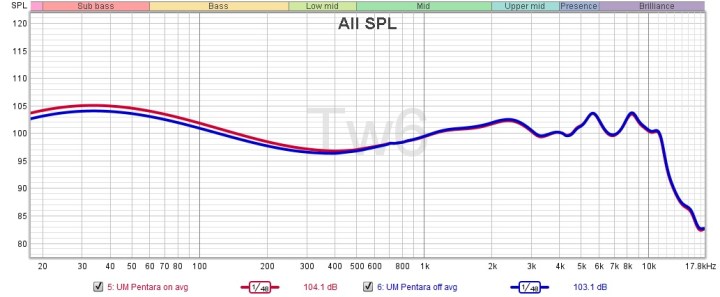
In more detail, the sub-bass has a deep, textured rumble that does elevate as you flip the switch on. Obviously, these are not basshead-tuned IEMs, but the depth and weight of the sub-bass give the bass a nice presence with plenty of fullness. Mid-bass punch is tactile and fast, faster than what I would expect from DD driver performance. Despite a precise, well-controlled punch with a shorter attack impact, the sub-bass is slightly more dominating here, especially when the switch is on. Yes, Pentara has two DD drivers, but don’t expect an overpowering basshead level of low-end performance. I found the bass tuning of Pentara to strike a good balance between quality and quantity.
Mids are clear, detailed, natural, and quite resolving. Lower mids are just a bit north of neutral, not by a lot, but enough to give the sound its layer of body and texture without making vocals and instruments thick or congested, or adding extra coloring “heft” to the sound. With the switch off, mids will have more transparency, less coloring. Upper minds are clear, detailed, layered, and carry plenty of natural resolution. I can hear that this tuning was aimed more toward musicality and natural tonality, but I’m glad it wasn’t pushed toward a more organic warmth or smoothness. The mids are naturally resolving rather than naturally revealing, with a balanced presentation relative to the bass and treble.
The treble has a decent extension without being attenuated, so expect the crash cymbal’s tail to resonate still quite lively, although don’t expect too much airiness either. As I already mentioned, Pentara tuning doesn’t have UM’s traditional treble “zing”. Instead, it fine-tunes the treble with excellent natural definition and clarity, without any extra shimmer or splashiness. The treble is present and resolving, but in a natural way without being too intense. Of course, we all have our own sensitivity threshold to the treble, and I did have to resort to eartips rolling, settling on wider bore-opening to take the edge off mid-treble intensity. But overall, the treble here provides plenty of clarity, but it is not at an analytical “crystal-clear” level. The treble is clear, detailed, effortless, and very natural.

On/off switch
You have to pay close attention as you flip the switch because the change is not very drastic, but still quite noticeable. What I mean is that it is not necessarily a night-and-day change, but rather a very tasteful, fine-tuned one. With the switch on, you get a deeper, slightly meatier sub-bass rumble that adds more weight to the bass notes. This change is more pronounced in the sub-bass rumble, without affecting mid-bass punch as much. But as a result of this change, the perception of mids gets affected with lower mids having a bit more body, texture, and slightly more warmth. With the switch off, you can still hear the sub-bass rumble, but it is closer to a neutral level, which slightly reduces the bass weight and makes the mid-bass punch a little faster. As a result of that change, the perception of mid-tones shifts toward less coloration and greater neutrality. One thing I found interesting was that with the switch on, the treble had a bit more crunch, while it felt a touch smoother with the switch off. As a result of these changes, and based on how I hear the tuning, with the switch on, the sound signature remains balanced, but it felt very mild U-shaped, with extra sub-bass emphasis and a touch more treble crunch. In contrast, with the switch off, it felt a touch mid-forward, with a bit of extra emphasis on the upper mids.
Another change I noticed was more technical, affecting sound layering and soundstage expansion. With the switch off, greater transparency improves layering and sound separation, but vertical dynamics were slightly reduced. With the switch on, the sound has a bit more fun tuning with improved dynamics, but the layering and separation were somewhat reduced, perhaps as a result of a bit more body in lower mids. Regardless of the switch position, Pentara offers a large soundstage and a truly holographic level of imaging. But with the switch on, I hear the soundstage with a little more depth, even getting slightly out of your head. When a switch is off, the soundstage expansion is more rounded, almost wrapping around you. Also, keep in mind that technical performance will be affected by the source you pair your IEMs with, and I am also noticing some variations depending on the songs I play.
Personally, I preferred the switch to the “on” position because I enjoyed a more fun side of Pentara tuning, with extra weight in sub-bass and a touch of extra sweetness and texture in the mids.
Source pair-up.
I didn’t see the sensitivity and impedance spec of Pentara, but found them to be easily driven by any source.
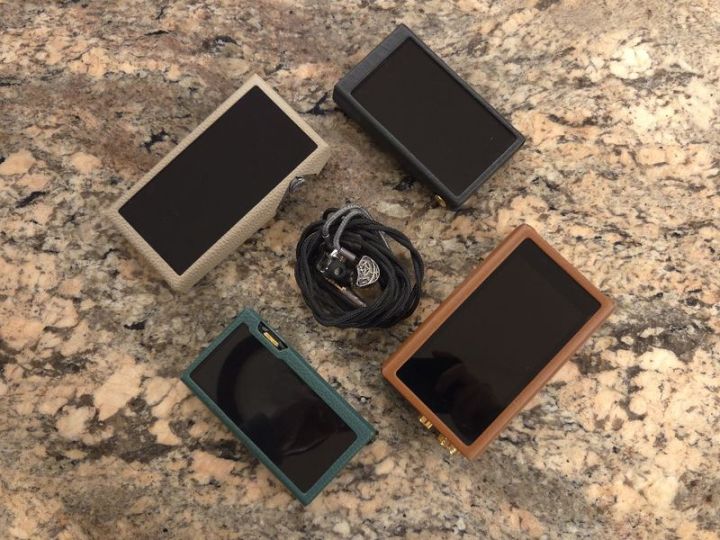
The baseline sound sig I covered above was based on my testing with the A&K SP4000 source, which yields a balanced sound signature with a very clean, clear, and natural musical tonality. The tuning has a deeper sub-bass rumble with nice, fast mid-bass punch, the mids with a bit of extra texture without extra coloring, and the treble with resolving, natural definition and clarity without any extra zing or splashiness. I was using Baroque eartips here. Other quick source takes are below.
Cayin N6iii w/R202 – Switching to 1bit mode names mids and treble a bit smoother, while R2R has a stronger mid-bass impact and a bit more crunch in treble. No pun intended, I enjoyed 1bit “a bit” more in this pair up, but either one sounds great.
iBasso 320Max Ti – I hear a very tight, impactful bass, natural resolving mids, and a little more crunch in treble. Very good pair-up as well, making the sound more layered and dynamic.
L&P P6 Pro – I hear it similar to SP4k with a bit smoother sound tuning and a little more body in lower mids. Great pair up as well.
I went through more DAP and dongle pair-ups, and while there was some variation in tuning between sources, it was not drastic enough for me to point to one as superior to the other. You can certainly finetune the mids with extra body or mid-treble with different degrees of crunch, but I didn’t find anything too extreme to make-or-break Pentara’s tuning.
Cable pair-up.
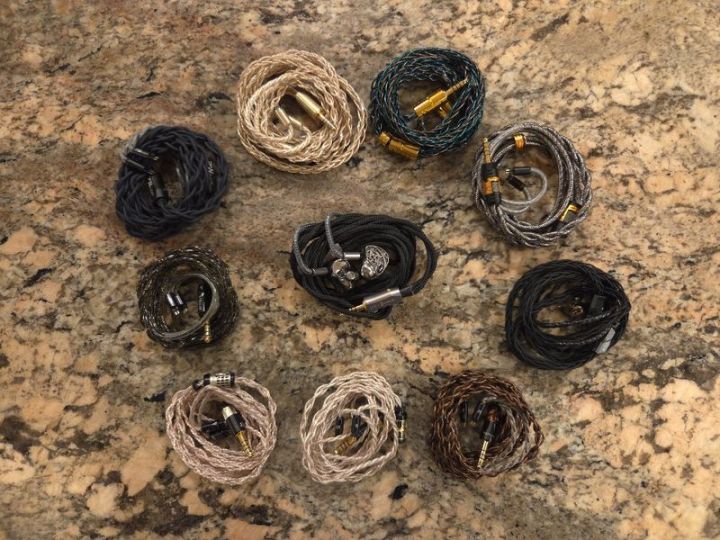
I’m aware that some people are skeptical about the contribution of cable to the audio chain. It’s not my intent to start an argument here. Instead, I would like to share what I hear during my testing. What makes sense to me is that a metal wire is a material with physical properties of resistivity, conductivity, and purity, all of which act as a filter between your source and earphones. Variations in these physical properties can affect the conductivity of an analog signal, resulting in a change in sound ranging from subtle to noticeable. If discussing cables bothers you, please skip this section. Otherwise, enjoy these short impressions.
vs FT (non-shielding) – if IEMs come with a stock PWA cable, I often get asked about the FT comparison. Here, FT adds more body to the lower mids, making Pentara mids smoother and creating a bit more contrast with the treble, which now sounds a bit sharper. The non-shielding version of FT is also more flexible, but the background is not as black.
vs HanSound Kunpeng – I hear mids being a bit smoother, but the rest is similar, including the treble intensity.
vs Beat Audio Orbit Saga – I hear just a touch more body in the mids and some improvement in micro-detail retrieval, with imaging a little more holographic.
LL Venom – In this pair-up, I hear a little more emphasis on sub-bass, elevating its weight, and mid-treble being more pronounced, but not too intense.
EA Centurion II – In this pair-up, I feel like the imaging is a little more holographic, and there is more emphasis on sub- and mid-bass, and even a little more treble sparkle. Also, there is an improvement in the extraction of details, being on a higher level. What really stands out here is how hard the bass was pumping.
EA Dionysus – The most noticeable change in this pair-up was in the sub-bass rumble that got elevated with more weight.
Eletech Ode to Laura – I hear more sub-bass rumble, thicker lower mids body, and some improvement in upper mids clarity. Not a bad pair-up synergy here.
Eletech Odyssey – This pair-up had a very nice micro-tuning effect with deeper sub-bass, tighter mid-bass, naturally resolving mids (higher resolution), and extra sparkle in treble. I liked this pair-up a lot.
Eletech Sonnet of Adam – This pairing lifted the sub-bass rumble and added more treble sparkle than the changes I heard with Odyssey. But I still preferred Odyssey over SoA with Pentara.
I didn’t find a night-and-day difference while cable rolling here. There are micro-adjustments on a fine-tuning level. From a sonic performance perspective, the stock cable is good. But its ergonomics, with a stiffer design due to extra shielding, would probably be the main reason someone would seek an upgrade. Personally, among the handful of cables I tried, I probably liked Odyssey the most here. But I also don’t want to encourage people to blindly invest in kilobuck upgrade cables before trying the other ones they already have, if the stock PWA Aurolite cable’s stiffness bothers them.
Comparison.
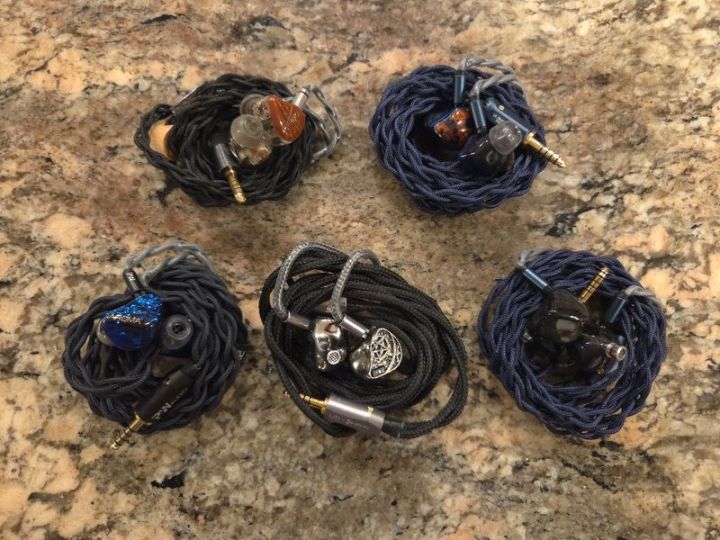
The comparison was conducted using Pentara with a stock PWA cable, Baroque eartips, and an SP4000 source, versus other IEMs, all volume-matched.
Pentara vs UM MM & AP – The soundstage and imaging between these two IEMs are nearly on the same level, with both offering a rather vast expansion and a holographic level of imaging, relative to how sounds are being placed in space. Otherwise, there are a few noticeable complementary differences here. Starting with the bass, MM has more emphasis on mid-bass punch and less on sub-bass weight, while Pentara has a great tactile mid-bass punch with an even more elevated sub-bass rumble, especially when the switch is on. Overall, due to MM’s more forward mids and treble, its perceived bass is attenuated compared to Pentara’s. With mids, MM lower mids are a little leaner and upper mids are more forward, being slightly more elevated. In comparison, Pentara has its mids with a bit more body and texture in the lower mids and a more balanced, marginally smoother upper mids. Without surprises, treble is where you will find another noticeable difference, with MM having a brighter, crisper, and more revealing treble while Pentara scaling it down with more controlled, natural definition, and less intensity, while still keeping its treble very clear and detailed. Relative to AP, where bass is scaled up, and treble is scaled down compared to MM, there is still a noticeable difference in tuning. AP has a fuller body sound with more forward mids and a little more crunch in treble. In comparison, Pentara sub-bass is more pronounced, and mid-bass is more tactile and faster because AP’s mids are presented more forward, which shifts the focus away from the bass. Plus, the BA bass of MM/AP is no match for Pentara’s DD texture.
Pentara vs Aroma Jewel w/FT – in this comparison, keeping the switch off would bring them closer in tuning and technical performance. With the switch on, the sub-bass weight scales up in Pentara, and you get more body in the mids with more sparkle in treble. With the switch off, the bass performance between these IEMs is closer in quality and quantity, although I find Jewel’s lower mids to be even more neutral, its upper mids to be more forward and a little more resolving, and Jewel to have more crunch in the treble. Also, Jewel soundstage is closer in shape to Pentara with the switch off, while Pentara has more holographic imaging. Overall, Jewel is more neutrally tuned, more mid-forward, and with more crunch in treble, and also requires a cable upgrade. Pentara could get closer to Jewel’s tuning when the switch is off, and give its sound more bass impact and smoother mids with the switch on.
Pentara vs Oriolus Traillii – another interesting comparison. Starting with a soundstage expansion, both have similar imaging, while Pentara, with the switch off, does spread wider. They also have a very similar bass impact, relative to a perception of the sub-bass weight and mid-bass punch, but the quality of the bass is quite different. There is more control, better layering, and faster, more tactile speed in Pentara DD mid-bass vs the Bird’s more laid-back, slower, relaxed mid-bass. Mids are also different, with a thicker, fuller body in the lower mids and more forward upper mids in Traillii, versus a scaled-down body in Pentara’s lower mids that gives more clarity to its upper mids. Overall, Traillii tuning has a more organic, fuller body sound. At the same time, Pentara is less colored, more resolving, faster, tighter, with a blacker background, faster transients, and a little more crunch in the treble.
Conclusion.
I always try to keep my personal bias in check when reviewing; thus, I will never hype things up with “the best” and will describe the sound “as I hear it,” because we all hear things differently. But it is tough not to say that Pentara is probably one of my favorite UM releases, especially when it comes to its tuning, including both sound options. I did enjoy the story behind the design, which makes this IEM feel more personal. I also acknowledge that this story wasn’t written as part of afterwards marketing, but as a baseline, driving the inspiration for this design. But no matter how cool it looks or the story that inspired its design, everything still comes down to how it sounds.
Pentara is tuned with a balanced sound signature and a very clean, clear, and natural musical tonality, with a very detailed, resolving tuning. Its dual DD bass tuning has a deeper rumble with nice, fast punch. The dual Sonion BA-BCD drivers help their mid-bass, as well as assisting their more traditional BA drivers, transition into mildly textured, clear, natural, detailed mids. The treble is resolving, clear, and naturally energetic, driven by more BAs, quad ESTs, and FreqShift BCD. The treble is fine-tuned with resolving, natural definition, and clarity without any extra zing or splashiness, but you will need to use wider-bore eartips to get there. All this is wrapped in a big, holographic soundstage expansion with impressive layering and separation of the sounds.
I also have to recognize that this is not a “budget” release, like their successful Mest MK2, which many are familiar with and still have in their collections. When Mest MK2 was released, it set a high bar for price-to-performance in IEM releases, given its driver design, tuning, and collection of premium accessories. Then, UM had other popular follow-ups, including recent Maven II and Mest Jet Black. They also offer premium, summit-fi releases, some with eye-watering prices, targeting more demanding audiophiles looking for a specific tuning. But it always felt like there was a gap in between that needed to be filled. Pentara fills that gap for those who are ready to graduate from the Mest and Maven series and step into higher-end UM flagship releases with more mainstream, engaging tuning.

 Twister6 Reviews