
Sound Analysis.
The RS8ii’s sound analysis was conducted using the IEMs and headphones listed in the pair-up section of the review. However, I mainly focused on Jewel and ATH-R70x, while playing a selection of test tracks such as Agnes Obel’s “The Curse,” Sandro Cavazza’s “So Much Better” (Avicii remix), C-Bool’s “Never Go Away,” Ed Sheeran’s “Shape of You,” Alan Walker’s “Darkside,” Ariana Grande’s “Break Up With Your Girlfriend,” Galantis’s “Hunter,” Iggy Azalea’s “Black Widow,” Indila’s “Boite en Argent,” Dua Lipa’s “Love Again,” Counting Crows’ “Big Yellow Taxi,” David Elias’s “Vision of Her,” Michael Jackson’s “Dirty Diana,” and SaberZ “Without your love.” I had at least 150 hours of burn-in time before I began my analysis.
I prefer to describe the DAP sound by comparing it to other DAPs and its pairing with different IEMs/headphones, since the DAP itself doesn’t have a distinct sound. What we perceive is how it sounds through connected IEMs/headphones, or the differences in sound between source comparisons using the same pair of IEMs/headphones. This is my subjective opinion, detailing how I hear it while analyzing the RS8ii’s sound, and you will gain a broader understanding of this DAP’s sound in the following sections on Comparison and Pair-ups with specific headphones and IEMs.
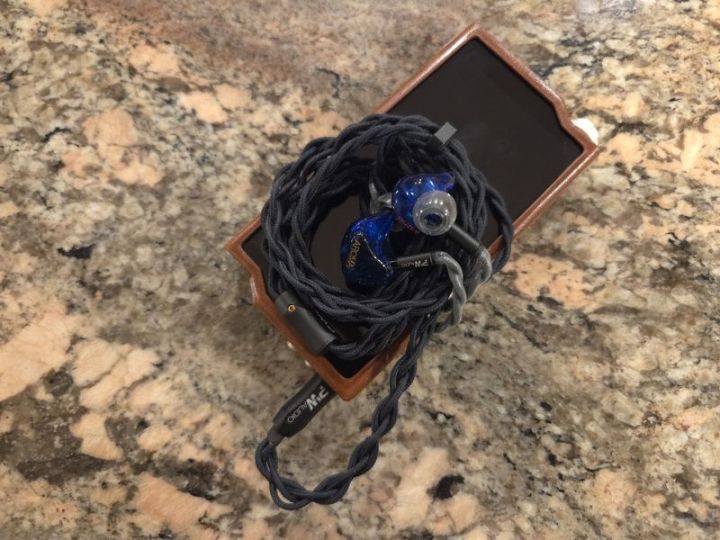
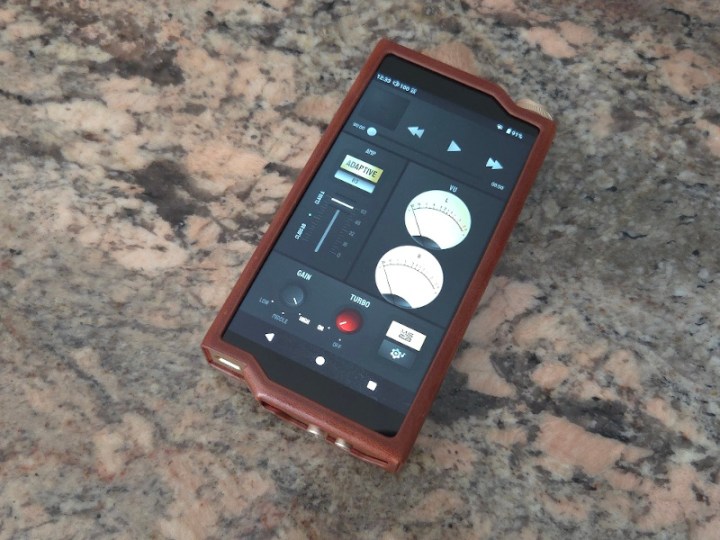
The tuning of RS8ii is relatively balanced, having a natural, resolving, analog-quality tonality. But the RS8ii is not a DAP with a single tuning. As a baseline, yes, the sound is natural and textured, instruments shine with a rich timbre, and notes have fuller body and resolving tonality. But there are other included “tools” that shape and change the sound of this audio player. Darwin filters affect bass speed/punch and treble intensity, allowing you to control the sound’s tightness, mid transparency, and upper-frequency resolution. Darwin Harmonic Controller expands the soundstage and imaging to a nearly holographic level, one of the reasons I preferred to keep it at the max, 255. The amp setting lets you switch between faster, slightly more revealing Class AB and smoother, fuller-bodied, and a little more laid-back Class A, or go with Adaptive mode, which I found to be closer to Class A but with some of the speed of Class AB.
RS8ii has a nicely expanded vertical dynamic range, helping you pick up small micro-dynamic nuances in volume changes. Its layering and separation are also excellent, with precise instrument and vocal layering, even when you switch to the Class A and Darwin Ultra filters, which give the mids fuller body. The background is deep and black, helping details pop out of the blackness with a natural transient response: the transient response of notes-on/off transitions is slightly relaxed, creating a more natural, live presentation of the sound. It doesn’t take away from the energetic pace of the music, just takes an edge off. This transient speed was a bit sharper with the Class AB amp and a little smoother with the Class A/Adaptive. But despite a black background, with some very sensitive IEMs, you can still hear a mild waterfall hiss in quiet passages or between tracks at zero volume.
4.4mm vs 3.5mm – identical tonality and technical performance, 100% exact. The only difference is in the volume setting: 3.5mm needs 4 more clicks of volume. Btw, RS8ii remembered the volume setting as I switched between BAL and SE outputs, setting the volume to the last setting of the corresponding port.
Darwin Controller – Harmonic Controller: between 0 and 255, a noticeable difference in soundstage width and imaging, from average width and more center-focused imaging to wider expansion and more holographic imaging.
Darwin Low-pass Antialiasing Filter – Going from Darwin Default to Darwin Ultra has a noticeable effect in the mids and treble, with Ultra adding more weight to the notes, more texture to the mids, and more control to the treble extension, resulting in a more natural tonality in the upper frequencies. Except for the 0th-order hold NOS, all other filter settings, to my ears, had only very subtle variations in either bass note attack or slightly more/less transparency in the upper mids, but not as much as when I’m hearing between the Default and Ultra filter. The 0th-order hold NOS filter had a similar tonality to Ultra, adding more body and texture to the mids, resulting in a bit smoother perception of the treble. Still, it also negated some of the Harmonic Controller’s soundstage/imaging-expansion effect, giving the sound more intimacy. For me, it’s about sound-shaping options with a more noticeable impact on sound tuning, and using either the Default or Ultra filter presets ended up being my go-to settings.
AMP Modes – As expected, Class AB gave me more speed, punch, and a faster sound attack, while Class A made the sound a bit smoother, more laidback, and, in some cases, even less intense in the upper frequencies. Adaptive mode varied with the songs I played, but in quite a few instances, I noticed a performance similar to Class A, maybe a little faster. Due to a difference in battery drain between Class AB and Class A, I preferred to stay with AB.
Turbo On/Off – this had a greater effect on full-size headphones and some IEMs, mainly affecting dynamic driver performance. I didn’t care much about it with IEMs, except in a few cases where the IEMs had an elevated bass tuning to begin with, causing mid-bass to hit a bit harder. But with a few full-size headphones I tried, Turbo off made mid-bass softer, so I preferred to keep it on in most of my pair-ups.
Line Out – Considering the R2R Darwin DAC architecture, it made sense to compare the RS8ii LO to the RS8 and P6Pro LO outputs. I was using the iBasso PB6 amp in solid-state mode to keep it clean and neutral. Compared to RS8, with the internal amp stage out of the audio chain, RS8ii LO has a sharper transient response to notes on/off, with a blacker, deeper, and more muted background. With P6Pro, LO was very close to RS8ii; I would be splitting hairs saying one is better than the other. They are very close, nearly on the same level.
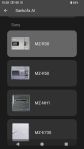
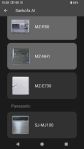
Sankofa Effects
Tested with Jewel, HG, Turbo On, Class AB, 4.4mm BAL output.
Sharp MT831 (MD) – enabling this effect reduces the weight of the bass to a neutral level, takes away the mids’ coloring, making mids more analytical, and adds extra crunch to the treble. To compensate for these changes in tonality and sound signature, you can adjust the effect’s gain and select from 3 levels of bass enhancement, which can really scale up the low-end weight and impact. I stayed at Bass 1, and it literally transformed Jewel to a basshead level IEMs with a fast and deep elevated bass impact, clear, detailed, transparent mids, and clear, natural treble. But even with Bass 1 set, this was an L-shaped tuning.
Sharp DR7 (MD) – enabling this effect on its own made the sound more neutral, clearer, and more detailed, still natural, but anemic in the low end. Adding Bass 1 transformed the sound with a more powerful, bouncier bass and a more textured midrange, while still keeping the mids very detailed and resolving. The sound signature was more balanced than MT831, which turned Jewel into a basshead headbanger, but DR7 also added more energy to the treble, creating a W-shaped signature.
Sony MZ-R30 (MD) – enabling this effect on its own made the sound more neutral, with mids very transparent and treble rather bright with extra crunch, while bass remained relatively flat. Adding Bass 1 effect boosts the sub-bass and mid-bass, quite a noticeable boost, along with adding more body to the lower mids. The treble remained as energetic, but its perception now was smoother and more natural. With Bass 1 transformation, sound tuning was more W-shaped and balanced, and, relative to the DR7 preset, the treble was less intense, making this particular preset work better with Jewel than the other two.
Other available MD presets either boosted bass too much or didn’t offer any bass presets, making the sound too anemic for my taste. While Googling the definition of Sankofa, I learned that it represents “to go back and fetch it,” representing the wisdom of learning from the past to build a better future. That was the main idea behind these DSP presets: going back to old audio gear, “fetching” its sound characteristics, and bringing them into the future with RS8ii. Better or worse, this is subjective. I definitely found it to be interesting, and I’m looking forward to Hiby releasing additional Sankofa AI presets for Reel-to-reel, cassette, CD, and LP.
Comparison.
In every comparison, I used my reference Aroma Jewel, ensuring volume matched while listening to the same test tracks across DAPs. I had RS8ii (FW 1.50) with Sankofa off, Class AB amp, Turbo on, High Gain, Darwin Ultra filter, and Harmonic Controller 255. Here, I’m primarily focusing on the differences in sound as I perceive them. These are merely quick analysis notes.
RS8ii vs RS8 (Turbo on, HG, Class AB, the same 2nd Darwin filter, HC set to 255, no Customized presets) – without customized presets, RS8’s soundstage expansion is wide, but the imaging places sounds closer to the center, making the sound a bit more intimate. In comparison, RS8ii has more holographic sound expansion. Again, want to point out that this is without Darwin’s customized presets on RS8 (VE Erlkonig being my favorite, expanding its soundstage and making it more holographic). Also, from a technical perspective, they do have a similar separation of the sounds, while layering and vertical peak expansion are more dynamic in RS8ii, where you have more air between the layers. The background is noticeably blacker and deeper in RS8ii, but with very sensitive IEMs (like VE10), there is a bit of waterfall hiss with RS8ii, relatively mild, while none with RS8. Tonality also differs between these two DAPs, with RS8 having fuller body, warmer, more organic mids, and a bit smoother treble. In contrast, RS8ii has faster, tighter bass, less colored mids, and more sparkle and air in the treble. RS8ii still adds some coloring to the sound compared to some other, more neutral sources, but relative to RS8, it has less. Another thing to note, aside from much faster performance, is that RS8ii is 175g lighter. Plus, Sankofa sound profiles add a whole new level of “presets” to change the RS8ii’s baseline tuning, making it sound like a different DAP.


RS8ii vs A&K SP4000 (DAR on, HDR off) – I switched back and forth many times between these two DAPs to note the differences. For example, I find their soundstage expansion very similar in width, height, and depth. With imaging, after the RS8ii FW1.30 update, SP4k imaging was still a bit more holographic, but after the FW1.50 update, their imaging is on par, just like the soundstage expansion. The only slight difference is that with SP4k and Advanced DAR enabled, the soundstage wraps more around and behind you, while with RS8ii, it’s more in front of you. SP4k soundstage/imaging is enhanced by the advanced DAR function, which shrinks and makes it more intimate when DAR is off, but it comes at a serious battery-drain cost. RS8ii soundstage expansions/imaging enhancement comes from the Darwin Harmonic Controller function. Looking at other aspects of their technical performance, I find the sound separation to be on par, while layering was a little more precise with RS8ii (I mentioned this in the SP4k review as well). Both have a natural dynamic expansion, with very similar levels of micro-dynamics to capture subtle volume changes. After the 1.30 update, the RS8ii sound became a little tighter and faster around the bass notes, while SP4k has bass notes with a softer attack. Both have a deep black background, although SP4k is dead quiet with very sensitive IEMs, while RS8ii has a bit of a waterfall hiss (very mild, relative to sensitive IEMs like VE10). Now, in terms of tonality and overall tuning, once I switched the RS8ii Darwin filter to Ultra and the AMP to Class A, they were very close. The only giveaway in my blind-test comparison was technical performance: RS8ii had a tighter, faster bass sound, while SP4k’s sound presentation was a bit more laidback. When you switch the RS8ii amp to Class AB, SP4k sounds a bit smoother, making them easier to tell apart, but with Class A, they were very close. Other than that, RS8ii is 240g lighter, offers better battery performance (RS8ii w/Class AB 18hrs vs SP4k w/DAR 7hrs), delivers fully open, super-fast Android performance, and has more sound-tuning tricks up its sleeve.
RS8ii vs iBasso DX320Max Ti – since we are on a topic of flagship DAPs, I can’t miss this comparison. As I always start by analyzing soundstage and imaging, I find both DAPs to have very similar holographic-level imaging, given how sounds spread in space. Still, Max’s soundstage width extends a little further to the L/R. After the 1.30 upgrade (and later 1.50), the RS8ii soundstage expanded further, but the width of Max’s L/R spread is still a bit wider. In other aspects of technical performance, they both have expanded dynamics. Before fw 1.30, Max had a bit of an edge, but after the RS8ii fw update, I found them both to have similar precision in tracking micro-dynamic volume changes. Both have excellent layering and sound separation, with plenty of air between the layers, though I do have to admit that I found the Darwin Ultra filter to play an important role here, adding extra air in the treble. With a tonality, Max is a more reference tuned source, and although it has a stronger bass punch (vs RS8ii having slightly deeper rumble), its (Max) mids are more neutral, more revealing, and treble has a bit more sparkle in comparison to RS8ii having more body and more analog textured coloring in its mids which adds more weight to the notes while still having an impressive natural retrieval of details. Again, both are Android DAPs, while the RS8ii is much faster and more responsive, about 220g lighter than the Max, has longer battery life, and does not require two separate chargers.


RS8ii vs L&P P6 Pro – P6 Pro’s soundstage is average, not the widest, but naturally expanded. In contrast, RS8ii expands wider, deeper, and taller, with a noticeably more holographic imaging compared to P6 Pro’s more intimate imaging, with sounds placed closer to the center. Both have excellent vertical sound dynamics, but the layering and separation of the sounds are more pronounced in RS8ii than in P6 Pro, since there is more air between the layers of sound in RS8ii. Overall, the RS8ii sounds faster, tighter, and more precise, with a blacker background, while the P6 Pro offers a sweeter, smoother, more laid-back presentation from a technical perspective. Their tonality also differs: the RS8ii sound is more revealing, more micro-detailed, still natural, but the retrieval of details is on a higher level than the more analog, smoother tonality of the P6 Pro, with a fuller-body sound. In terms of features, it’s a night-and-day comparison between the RS8ii, an advanced Android DAP, and the P6 Pro, a playback-only device with a more primitive interface. Overall, they do have a rather complementary sound.


Page 4 – Pair up, Wired/wireless connections, and Conclusion.

 Twister6 Reviews
The comparision with SP4k is bit off imho. It was very obvious for me that SP4k is much higher res dap with better imaging and staging in direct A/B with Storm, HEX and APX OG. I am not sure if its about higher res transducers that can show that difference, but the RS8ii lacked that special sauce factor for me that some daps got.. it was good though, just not 3.5-4k good.
LikeLike
Are you talking about RS8ii with fw1.50, burned in for 150hrs or something else? RS8ii with the latest fw1.50 is night and day in comparison to what people heard at CanJam shows a few months ago with a beta fw. I literally had to redo the sound analysis of RS8ii twice, first time when they updated to fw1.30, and then to fw1.50. Fw1.50 raise the resolution and retrieval of details, making RS8ii treble response more revealing, to the point where you need to switch back from Class AB to A if you want to match SP4k. Also, you need to make sure Harmonic Controller is set to 255, just like DAR has to be on. Ultra Filter completely changed from beta to 1.3 to 1.5, totally different sound. Thus, make sure we are comparing the same thing. And of course, there is pair-up synergy dependency with your particular IEMs.
LikeLike
I’m on the fence between the SP4000 and the RS8ii. Based on everything I’m reading, it sounds like the RS8ii may be the better option given the recent firmware updates.
How is the Line Out on the RS8ii compared to the SP4000?
LikeLike