
Sound Analysis.
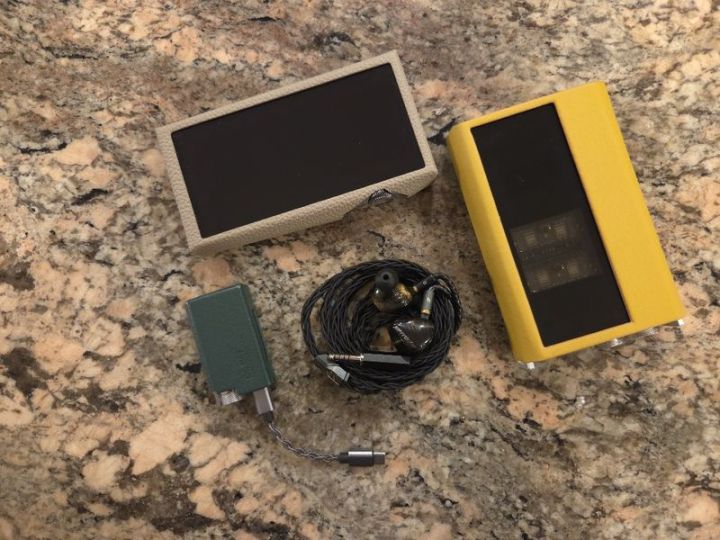
I analyzed Epitome sound performance using Elite and SP4000, with type-E eartips, and Dionysus cable while playing a variety of test tracks, such as Agnes Obel’s “The Curse”, Sandro Cavazza’s “So much Better” (Avicii remix), C-Bool’s “Never Go away”, Ed Sheeran “Shape of you”, Alan Walker “Darkside”, Galantis “Hunter”, Iggy Azalea “Black widow”, Indila “Boite en argent”, Dua Lipa “Love Again”, Counting Crows “Big yellow taxi”, Bob Marley “Jamming”, David Elias “Vision of her”, Michael Jackson “Dirty Diana”, and SaberZ “Without your love”. This pair of IEMs had a proper burn-in for over 100 hours. I usually feature the Sound Analysis section early in my review, but this was part of my “rearrangement” to derive the sound analysis summary after eartips, cable, and source selection.
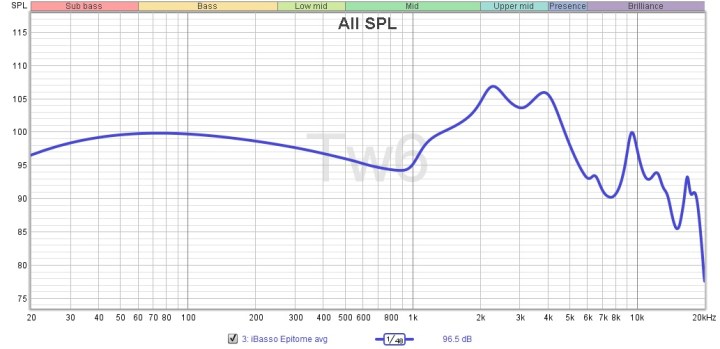
Epitome has a more mid-forward sound presentation due to its neutral bass tuning and distinct pinna gain (ear gain) in the upper mids. The tonality is neutral, natural, and relaxed, with a clean, clear, less colored, more transparent, and more resolving sound tuning, and a natural, non-analytical retrieval of details. The sound is very clean, without any added weight from a fuller body or boosted treble resolution. I found its 12BA/8EST multi-driver design to have great coherence, with all 20 drivers working together in harmony, creating a unison of one large driver without any extreme peaks or boosted frequencies, despite the mid-range taking the front-row focus of the sound presentation.
The bass has a neutral quantity, with a linear transition from sub-bass to mid-bass. It has a nice sub-bass texture without adding extra weight to the low end, and the mid-bass punch is rather polite, with an average note speed and attack/decay, blending into the lower mids without any extra bloat or muddiness. The bass doesn’t lack in quality and actually has a nice extension. Still, it is rather neutral in quantity; you might consider scaling up with an EQ if you want more, as Epitome responds nicely to EQ. This is up to personal preference, of course, and I would even go so far as to say that bass tuning here doesn’t sound like a typical tactile, leaner BA bass, but more like a mix of BA/DD, just scaled down to a more neutral level.
Mids have a more forward presentation, and I would consider them to be the star of the tuning. The lower mids are neutral as well; they add just a little to the body of the sound while staying close to neutral, without adding any thickness or coloring, helping to bring more attention to the upper mids. There is a distinct pinna gain in the tuning of the upper mids, the boost around the 2k-4kHz region, with a clean, clear, natural, detailed tonality of the vocals and instruments. I would say the coloring here is neutrally natural, with an effortless retrieval of details, nothing too analytical, or too organic. Just effortless natural flow without any exaggeration, with a great presence, up front, without hiding behind the boosted bass or bright treble, just a natural resolution.
Treble has a greater presence in the mid-treble region, boosting the resolution of the upper mids without making the sound bright or too revealing. Don’t expect analytical clarity or much airiness. The treble is well-controlled, with natural clarity and definition. It’s not rolled off, but it’s not as extended or airy, giving the sound a more natural, smoother tuning. You will not find any sharpness, or harshness, or sibilance in Epitome’s treble tuning. The treble is clear and detailed, and it scales up with different sources. But it is non-fatiguing, and makes the tuning of Epitome quite forgiving with some poorly recorded tracks.
From a technical perspective, Epitome has a rather unique soundstage. It doesn’t have the widest L/R expansion and has more depth/height than width. The width varied across sources, with some getting narrower and others expanding to above-average and wider levels. But despite an average (or above-average, while paired up with some sources) soundstage width, the imaging reaches a holographic level thanks to how the sounds are placed in space. Regardless of the variation in L/R separation across sources, imaging remained at a 3D holographic level. The layering and separation of the sounds is pretty good. In general, there is not as much air between the layers of the sound since the treble is more natural and not as airy. But every instrument and vocals are still very easy to distinguish, nothing is congested or veiled, and that is part of the clear, clean, transparent nature of Epitome’s tuning. I did find some waterfall hiss from a few sources, but that is not the nature of the IEM tuning; rather, it comes from the source and the IEM’s response to its output.
Overall, Epitome is great for anyone who craves a naturally resolving, transparent, clear, and detailed tuning, with textured, neutral bass, forward, detailed mids/vocals, and well-controlled, natural, detailed treble. In theory, it could work with any genre of music, as long as you are not after more elevated bass response, or higher-resolution, more revealing upper frequencies. The natural, detailed, resolving nature of its mids is what makes these IEMs stand out. Plus, consider investing time in eartips, cables, and source pair-up, as all of them play a crucial role in shaping the sound of these IEMs to bring out the best of their tuning.
Comparison.
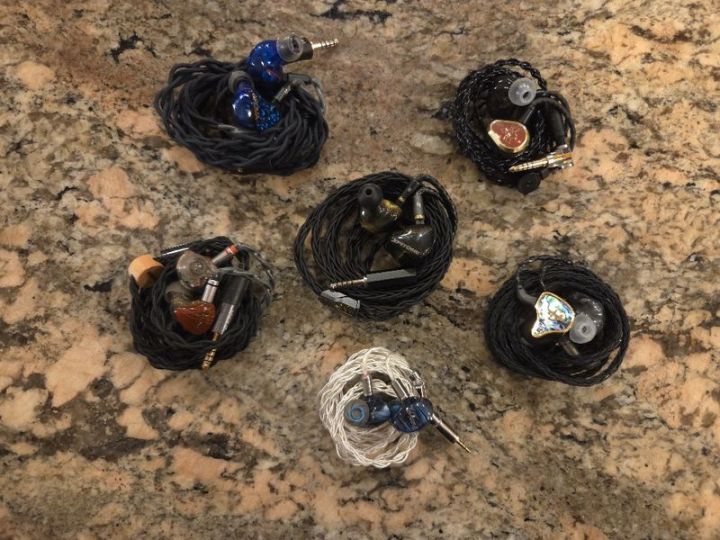
The comparison was conducted using Epitome with type-E eartips, Dionysus cable, and an SP4000 and DC Elite sources, versus other IEMs, all volume-matched.
Epitome vs iBasso IT07 (DD/6BA) – Even though IT07 is in the sub-$1k price category and was released 5 years ago, I still consider it one of the underrated W-shaped-tuned basshead IEMs in that price range. It was iBasso’s flagship release, where they came up with a very interesting, actually unique, W-shaped balanced sound signature with a basshead-level shelf boost below 100Hz, pinna gain boost, and a mid-treble peak to compensate for that bass boost. Epitome tuning is very different, except for a similar pinna gain, while the bass is much more neutrally tuned, and the treble extension is more linear and natural. IT07 soundstage is a little wider, but imaging is not as holographic/separated as in Epitome. And even in mids, while both have natural, clear upper mids, Epitome steps it up with better layering, separation, and resolution, despite a more natural treble. If anything, IT07 had a fun tuning, while Epitome is more audiophile tuned.
Epitome vs Oriolus Traillii (8BA/4EST) – even before I heard Epitome, after seeing its BA/EST hybrid driver spec, the first thing that crossed my mind was the Bird with its BA/EST driver config; so, I was looking forward to this comparison, despite the double-the-price difference. Traillii has a slightly wider soundstage and more L/R separation, but both offer very similar holographic imaging. In this A/B comparison, given the level of imaging, I even forgot about the soundstage width as I went back and forth. The Bird has about 6dB more bass, giving it a more balanced tuning compared to Epitome, which is more neutral in quantity but has a very similar bass quality, just scaled down. The mids are where I find many similarities between these two IEMs: a clear, detailed, natural presentation of the upper mids, with non-analytical retrieval of details and plenty of natural clarity. As you step into the upper frequencies, Traillii treble is brighter and crisper, although it has a similar extension as Epitome. But what I found interesting was that, despite Traillii’s treble being crisper and airier, both of these IEMs’ mids had a similar level of layering and sound separation. So, in reality, the biggest difference here was a scaled-down bass and smoother treble in Epitome.
Epitome vs qdc Emperor (DD/10BA/4EST) – if you are talking about a neutral bass tuning with a more mid-forward presentation, the first thing that pops into my head is qdc Emperor IEMs. And I gotta say, these two have a lot of similarities, and I mean, A LOT of them. First of all, the soundstage width is nearly identical, with less width and more height/depth, though I find Epitome to have more holographic imaging. Then, they have an identical signature, with a neutral bass tuning and a mid-forward sound presentation. The quantity of the bass is nearly spot-on, but the quality is slightly different: Emperor is flatter, while Epitome bass has slightly more rumble. Emperor has a bit thinner lower mids with nearly identical forward pinna gain of the upper mids, and that slight difference in lower mids gives Emperor mid-range more texture and a thin layer of warmth. Both IEMs have a very similar treble extension, but Emperor has a little boost in mid-treble, giving it slightly brighter tonality. These are all small differences that give Epitome a slightly smoother tonality, while making Emperor more neutrally revealing. Still, I find it very interesting how close these are in overall tuning, despite a difference in the driver config. If you enjoyed Emperor’s tuning but felt it was too neutral and lacked analog texture, Epitome would be a definite upgrade.
Epitome vs Aroma Jewel w/FT (DD/6BA/6EST) – I thought this comparison might be relevant as well, considering Jewel has a more balanced and less aggressive natural tuning. They both have a similar imaging, while Jewel spreads a little wider in the L/R direction, creating a more rounded soundstage, while Epitome has more depth/height here. With the bass, neither one has elevated bass impact, but Jewel has a more elevated sub-bass rumble that adds more weight to its bass. In the lower mids, I found a similar comparison to Emperor: Jewel has a bit south of neutral quantity, while Epitome has a little more weight in the lower mids. The upper mids are very similar, natural, clear, and detailed, but due to the lower mids’ difference, Epitome mids sound smoother and a bit warmer, while Jewel’s upper mids/vocals sound more revealing. Their mid-resolution is on the same level, just with Epitome’s upper mid-tonality being warmer. And, on top of that, Jewel’s treble is a little brighter and airier, while Epitome’s treble is smoother and a touch warmer in comparison, which adds to Epitome’s overall smoother tonality with more forward presentation of mids, in comparison to Jewel having a little more emphasis on sub-bass and mid-treble, and less coloring in mids.
Epitome vs VE Phoenix (13BA) – this was another comparison that came to mind, triggered by the smoothness of Epitome’s mids. PHX and Epitome soundstage expansion are very similar, with more depth than width and just above-average L/R separation. Epitome imaging is more holographic, while PHX is more center-focused/intimate. With the sound tuning, PHX has probably 3dB more bass and a bit thicker lower mids, creating a warmer, smoother mid-range presentation compared to more neutrally tuned, more forward Epitome mids, which have more clarity and slightly higher resolution. PHX has more treble presence, but it doesn’t make the sound more revealing because it balances out the mids’ warmer, thicker presentation. While their tonality is not the same, especially with PHX being warmer and smoother, the characteristics of their natural upper mid-range tuning have some similarity for those who value the natural clarity of vocals and instruments without too much treble energy or overwhelming bass slam.
Conclusion.
It’s clear to me that iBasso put a lot of thought into the design and tuning of their latest Epitome flagship IEMs. This release features unique tuning and a distinct 20-driver configuration, without trying to sound like another IEM or to use trendy new driver types to look good on paper. And that is exactly what I enjoyed about these IEMs, which set them apart from other mainstream releases. While some manufacturers are lately focusing on boosting bass, Epitome’s low-end focus is on quality, with a scaled-down, neutral level quantity. While other releases aim to add more body, boosting the organic musicality, Epitome delivers a clean, clear, natural midrange tuning with a forward presentation of a relaxed, neutral tonality. And while some raise the lower and mid-treble peaks to make the sound more revealing and micro-detailed, Epitome goes for a more natural, smoother, and detailed treble tuning. Even its soundstage, with just above-average width and greater depth/height, still offers holographic-level imaging.
Epitome’s hybrid twenty-driver-per-shell design (12BA/8EST) is quite coherent in tuning and unique in its own way. It’s not a cheap IEM, which surprised me a bit, given that iBasso is well-known for delivering products with some of the best price-to-performance ratios, with a focus on lower prices. Perhaps that is where the value comes from: producing something different, with so many drivers, elevated above the chi-fi level, to please more picky audiophiles who are willing to invest extra for a specific sound tuning that complements their collection of other multi-kilobuck IEMs. When you step up to this level of specialized tuning, as I usually say, it’s not about what is the best, but rather, what is the best for you, per your personal sound preference. To me, Epitome offers something different and complementary to many other IEMs I have access to, and that is what makes it stand out and worth considering.

 Twister6 Reviews