
Sound Analysis.
I analyzed Volta SE and Sonora SE sound performance paired up with SP4000 while playing a variety of test tracks, such as Agnes Obel’s “The Curse”, Sandro Cavazza’s “So much Better” (Avicii remix), C-Bool’s “Never Go away”, Ed Sheeran “Shape of you”, Alan Walker “Darkside”, Galantis “Hunter”, Iggy Azalea “Black widow”, Indila “Boite en argent”, Dua Lipa “Love Again”, Counting Crows “Big yellow taxi”, Bob Marley “Jamming”, David Elias “Vision of her”, Michael Jackson “Dirty Diana”, and SaberZ “Without your love”. Both IEMs were on burn-in for 150 hours before I began collecting my impressions. I was using a stock SPC XL cable and stock silicone eartips.
Volta SE
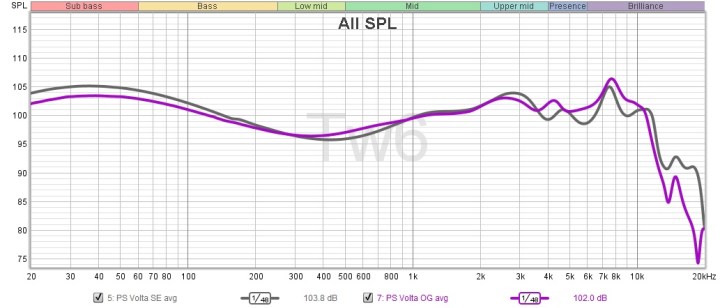
Volta SE still has a balanced sound tuning, updated from the OG’s neutral tonality to a natural tonality that approaches W-shaped tuning in SE. The boost in sub-bass, neutral lower mids, and a slight accentuation of upper mids pushed the sound toward a more engaging, dynamic “fun” tuning. The sound is very natural, faster, and tighter (not as laidback as OG), and still quite detailed, but in a naturally resolving way. The extra weight in sub-bass further enhances the bass presence; smooth, detailed mids give vocals a natural tonality; and relaxed lower treble, with more emphasis on mid-treble, enhances midrange resolution. Volta SE tuning is still quite coherent despite its tribrid design, with all 6 drivers working in perfect unison. Relative to OG, the SE retuning gives the lows, mids, and highs a clearer separation, rather than blending them as in OG.
In more detail, the bass emphasizes sub-bass, extending deep with a textured rumble and a slightly rounded, faster mid-bass punch. The bass has a tighter presentation, average speed attack, and pretty good control, with a shorter mid-bass decay to prevent it from spilling into the lower mids. The bass fullness comes from the sub-bass presence, linearly transitioning into mid-bass to create a tasteful impact. This is not basshead-level bass, but it is also not as neutral; it is more energetic and multi-dimensional than OG.
Mids have neutral lower mids, on par with OG, still with some extra body, giving the sound its clean musicality without sounding full or veiled. Upper mids have a moderate pinna gain to bring the vocals more forward, keeping them smooth and still naturally resolving. Mids are neutrally colored in tonality with plenty of presence and musicality.
The treble underwent a refinement as well, remaining natural and relaxed, with a bit of extra sparkle to enhance its natural clarity, which helps bring out higher resolution in the upper mids. The crunch and airiness are still moderate, but with a slight dip in the lower treble, the mid-treble now has more focus. Here, the emphasis is more on the mid-treble, which enhances the resolution of the mids/vocals.
The soundstage is wide open, with wider L/R expansion than OG, and a more rounded shape that expands in every direction. It is not exaggerated, but it does sound more holographic than OG. The Volta OG has a more central-focused imaging, with sounds being closer to the center, while SE expands it wider. Also, I hear above-average layering and separation of the sounds, with more air between the layers, and everything is still very easy to distinguish in the mix, with nothing congested or muddy. Don’t expect much air between the layers, but everything is still quite detailed and easy to differentiate. This enhancement in technical performance was another step up from the OG version.
Sonora SE
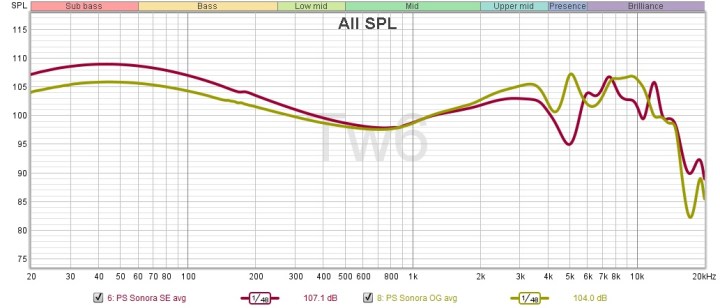
Sonora SE tuning took a drastic turn from OG, with its W-shaped sound signature and more revealing, energetic presentation, to a U-shaped signature with a scaled-up, deeper, more elevated sub- and mid-bass, fuller body lower mids, scaled-back upper mids, and scooped out lower treble. The sound of Sonora SE has more weight in the low end, is slower and more relaxed, has a fuller body, organic mids, and very precise mid-treble crunch. Its tuning is not only complementary to Volta SE, but to Sonora OG. Along with these sound changes, it will also affect genres of music it will be better suited for, like Sonora OG being great for J/K-pop and anything where you would like to extract more micro-details, while Sonora SE being great for EDM, classical, instrumental, where you want more emphasis at the opposite sides of the spectrum, with more blooming bass, organic mids, and extra treble crunch.
In more detail, the bass has a deep, elevated sub-bass rumble and a rounded, laidback, slower mid-bass punch. The low-end tuning has an elevated presence, being fuller and thicker, with a slower attack and longer decay of notes, the complete opposite of fast, articulate bass in the OG model, which had a faster attack/shorter decay and more precise articulation. The bass of SE sounds like it’s coming from a floor-standing speaker with a big subwoofer, creating a smooth transition blending the bass and the lower mids.
With mids, the lower mids have a rather thick, full body, north of neutral. Plus, with a longer bass-note decay, its lower mids feel even thicker. While there is no precise separation between the bass and the lower mids, it actually works out quite well because upper mids were also slightly attenuated down from the OG model, reducing their intensity, bringing them back to create a smooth, organic, warmer tonality, instrument texture, and add fuller body to the vocals. The bass-to-mids transition creates a well-tuned coherence in that part of the spectrum.
And then, to separate the treble from the lows and mids, the lower treble is scooped out to create an even greater contrast with the mid-treble, balancing the warmer, smoother, fuller body tuning with a very precise mid-treble crunch. Don’t expect analytical clarity, but this carefully carved-out lower-treble creates more mid-treble emphasis, giving the mids their natural clarity and enough resolution to prevent vocals from drowning behind the bass. The treble completely stands out on its own and even has a nice sense of delicate airiness.
When it comes to the soundstage expansion, I hear more depth than width, while surprisingly, the imaging is nicely expanded within the confines of L/R spread. The change in Sonora SE tuning makes its soundstage less 3D holographic than in the OG model, which is expected. Also, the layering and separation of the sounds is below average. That’s just the nature of U-shaped tuning with fuller body mids. While Sonora SE sounds thicker, I didn’t find it muddy or veiled, thanks to the precise treble tuning. Don’t expect well-separated layers of sound while analyzing instruments and vocals. Sonora SE now has a rather specialized tuning.
Eartips Selection.
The selection of eartips is always crucial for any universal in-ear monitor and will significantly affect the sound, particularly the bass impact and treble energy, depending on the seal. Due to a large opening in my ear canals, I usually opt for the largest eartips to achieve a better seal. Also, please keep in mind that eartips impressions are subjective and will be based on the anatomy of your ears. My suggestion is to build up your eartips collection and try each one with every new IEM you get to find the pair that yields a perfect sound for your ears.
Volta SE
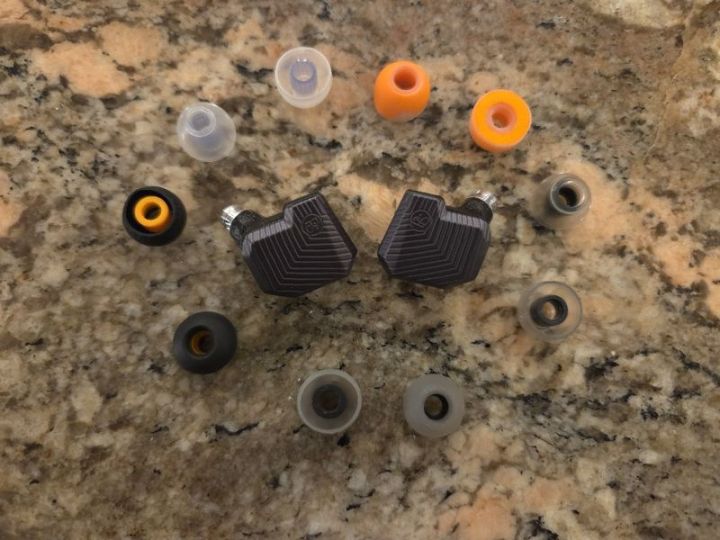
stock Comply – no go since the nozzle is too big for the core of the Comply eartips.
stock Hybrid (foam core/sticky silicone cap) – slight enhancement in sub-bass rumble, but for my ears, the comfort of sticky silicone material wasn’t as good as with stock silicone tips.
Eletech Baroque – the sound is close to stock silicone, but due to the softness of their caps, the shell was closer to my concha area, rubbing a bit, making it less comfortable to wear.
SpinFit W1 – lost some bass using these eartips, and it felt a bit less secure in my ears.
Azla Crystal – the sound tuning and technical performance are close to stock silicone.
Symbio W – these hybrid eartips have a similar sound performance as stock Hybrid, but for some reason, they were slipping out of my ears.
Sonora SE
stock Comply – no go since the nozzle is too big for the core of the Comply eartips.
stock Hybrid (foam core/sticky silicone cap) – similar to my Volta SE observation, I hear a slight enhancement in sub-bass rumble. Still, for my ears, the comfort of sticky silicone material wasn’t as good as with stock silicone tips.
Eletech Baroque – also, similar to my Volta SE observation, the sound is close to stock silicone. Still, due to the softness of their caps, the shell was closer to my concha, rubbing a bit and making it less comfortable to wear.
SpinFit W1 – soundstage width narrowed down, mids became a bit warmer, and treble lost some air. Plus, it felt a bit less secure in my ears.
Azla Crystal – the sound tuning and technical performance are close to stock silicone, with just a slight reduction in L/R separation, whereas stock silicone tips made the sound a bit wider.
Symbio W – these hybrid eartips have a similar sound performance as stock Hybrid, but for some reason, they were slipping out of my ear canal.
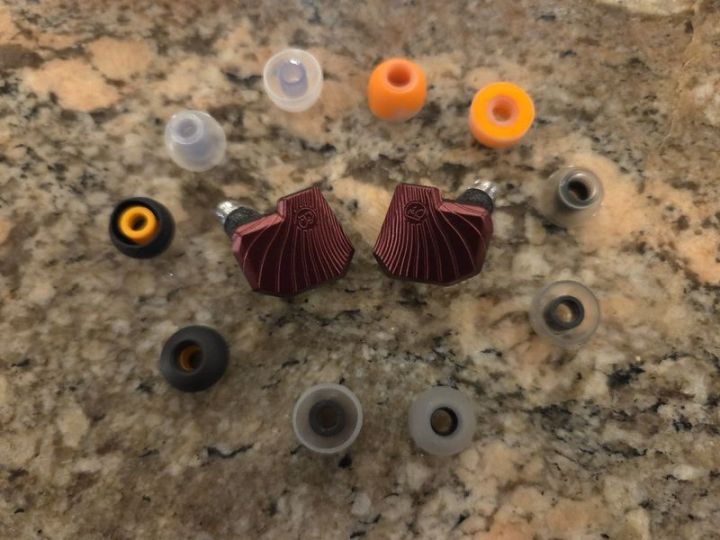
To my ears, while using Volta SE and Sonora SE, I’m probably going to stick here with stock silicone eartips, which I found to be my favorite with every PlusSound IEM I reviewed so far.
Cable pair up.
I’m aware that some people are skeptical about the contribution of cable to the audio chain. It’s not my intent to start an argument here. Instead, I would like to share what I hear during my testing. What makes sense to me is that a metal wire is a material with physical properties of resistivity, conductivity, and purity, all of which act as a filter between your source and earphones. Variations in these physical properties can affect the conductivity of an analog signal, resulting in a change in sound ranging from subtle to noticeable. If discussing cables bothers you, feel free to skip this section.
Volta SE
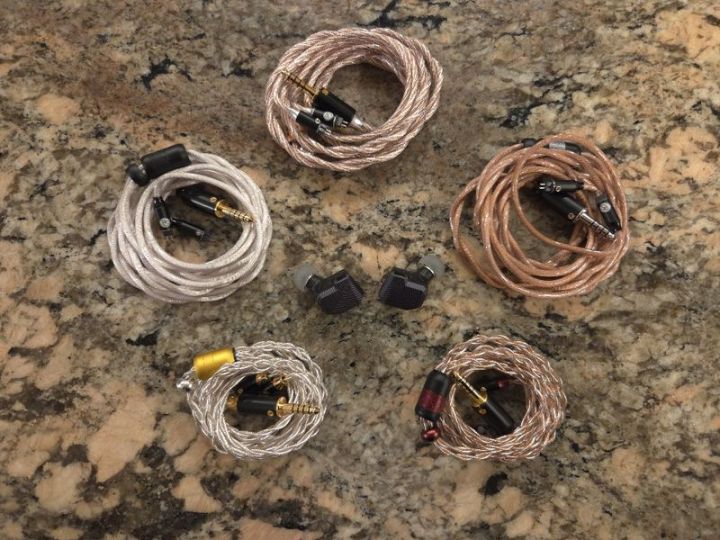
I started by trying Volta SE with OG’s PS Copper XL cable, and that only made the sound a bit thicker in the low end, especially the lower mids, and slightly narrowed L/R separation. So, the SPC XL cable was definitely a good move for this SE edition. Interestingly enough, using SPC XL with Volta OG improved clarity and detail retrieval. It even widened the soundstage, but it didn’t improve the bass, which remained at a neutral level.
With the PS Hybrid (Copper/SPC) XL cable, I hear that the soundstage expansion and imaging remained similar to those of the stock SPC XL cable. The sub-bass weight got enhanced a little more, a very tasteful improvement. Mids got a bit leaner and more revealing, while with SPC XL, they sound smoother and a bit more organic. This will be up to personal preference, but I actually enjoyed SPC XL more.
With the PS Silver+Gold Tri-layer cable, I hear an interesting effect: bass scales down to a more neutral level, with a slightly laid-back presentation and mids pushed a little more forward. It was an interesting transformation of the Volta SE sound.
With the PS PFH (Palladium Fusion Hybrid) cable, I hear a very noticeable soundstage enhancement, with 3D holographic imaging and sounds wrapping around and behind you. The overall sound signature doesn’t change drastically, but the bass gets a little tighter, faster, with a more tactile response; mids have improvement in retrieval of details without being too revealing, losing a bit of the original musically in favor of enhanced resolution; treble also gains a little more airiness, becoming “lighter” and a touch crisper.
Overall, I went back to the stock SPC XL cable, which struck a perfect balance between enhanced sub-bass weight, midrange musicality, and natural treble resolution. Regardless of whether I’m trying $400 or $2k cables, price doesn’t matter; it only reflects the cost of the different materials, with exotic wires and their more complex design driving it exponentially higher. It all comes down to a pair-up synergy, and to my ears, PlusSound made the right choice going with SPC XL here.
Sonora SE
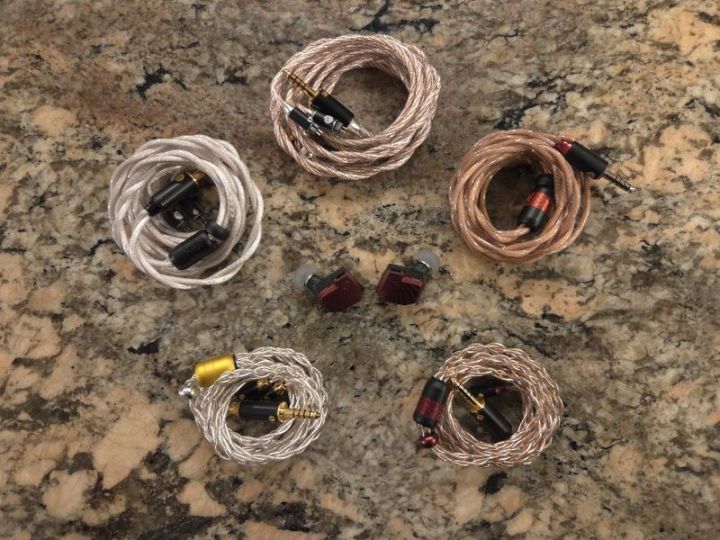
I started by trying Sonora SE with OG’s PS Copper XL cable, and that actually showed some improvements, bringing the mids a little more forward and slightly reducing the weight of the bass. As a result, Sonora SE with Copper XL sounded more balanced and less U-shaped. The perception of the soundstage also became wider and more rounded. Using Sonora OG with SPC XL improved the sound, with sub-bass gaining more rumble, mids gaining more body, and treble sounding more natural. As I mentioned in the original Sonora review, SPC XL would have been a great stock cable with those IEMs. For Sonora SE, due to tuning changes, Copper XL is a better cable, but I still wanted to try a few other PS cables.
With the PS Hybrid (Copper/SPC) XL cable, Sonora SE achieves a “hybrid” performance between Copper XL and SPC XL. The bass remains big, bold, bloomy; more relaxed, not as fast. Treble stayed the same, but the mids are now a little more forward, creating a more balanced sound signature. It’s not W-shaped, but more evenly balanced, more coherent tuning. Even the stage expanded a bit. While I enjoyed Copper XL with the SE model here, I think Hybrid XL sounds even better.
With the PS Silver+Gold Tri-layer cable, the bass remains the same, while the mids are more revealing and slightly more forward. The treble was tamed down a bit, losing some airiness.
With the PS PFH (Palladium Fusion Hybrid) cable, besides a perfect hardware color match, it felt like this cable was made for Sonora SE. The soundstage expanded wider and taller, creating a nearly holographic effect with sounds spread throughout space. Bass still has extra weight, but it gained more control, especially in note decay, creating a more precise separation of bass from lower mids. Bass still sounds like it’s coming from a floor-standing speaker, but with much better control. Mids are more forward, still natural and organic, but with improved definition and detail retrieval. Interestingly enough, the vocals are placed slightly more out of your head, in front of you. The treble has a very well-controlled sparkle and definition, and great airy extension. I’m well aware it’s a pricey cable, but it has the best pair-up synergy with Sonora SE.
While SPC XL was the better choice with Sonora OG, given the difference in Sonora SE tuning, Copper XL or even Hybrid XL would have been a better choice here. But if you want the best, PFH is both sonically and aesthetically (based on the hardware of my review unit) a match made in heaven. I’m not planning to remove PFH from Sonora SE any time soon.

 Twister6 Reviews