
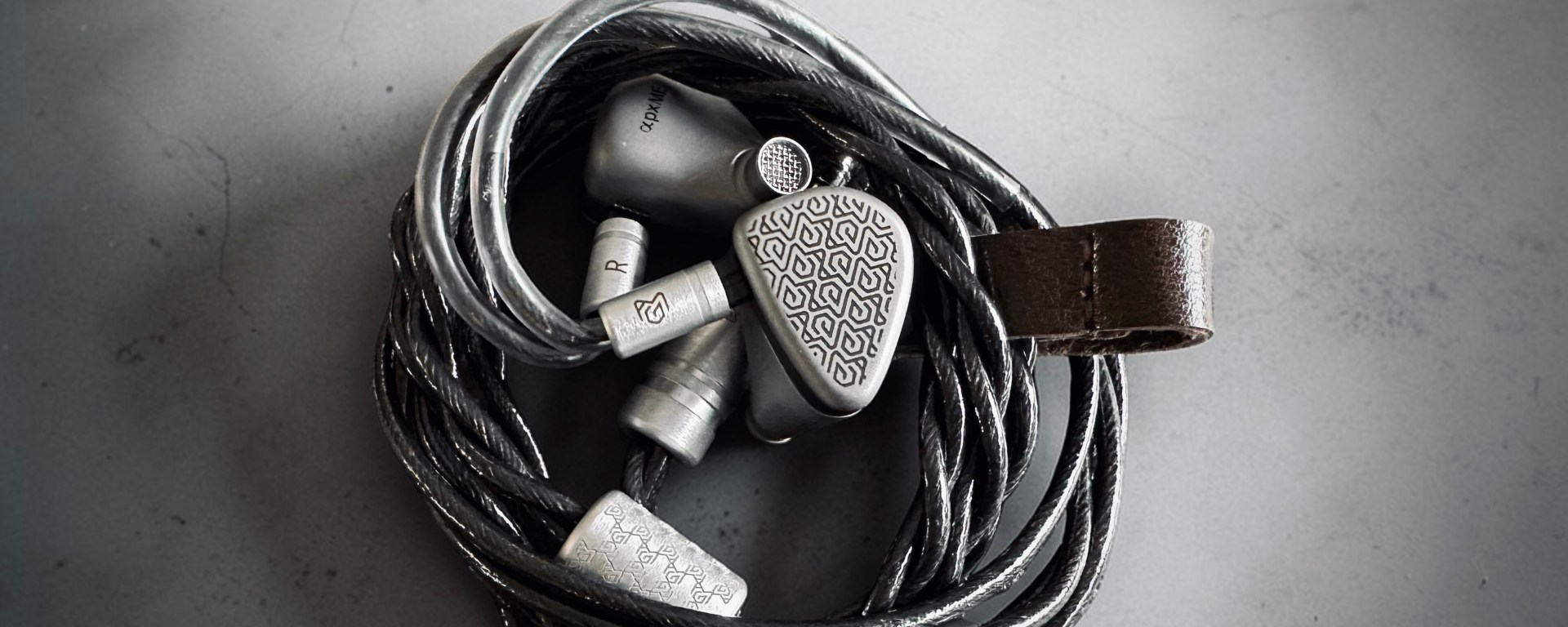
Trading fireworks for effortless listening.
PROS: Deep, authoritative sub-bass extension with excellent control and texture | Smooth, fatigue-free tuning suitable for long listening sessions | Rich, tonally dense midrange with natural timbre | Excellent build quality with CNC-machined titanium shells | High-end accessory package and premium 6N OCC silver cable | Flat impedance design ensures consistent performance across sources.
CONS: Reduced ear gain and lower-treble energy soften presence and immediacy | Less holographic scale than APX and APX SE | Lower perceived detail retrieval compared to APX, APX SE and other brighter flagships | Subdued top end limits air and sparkle | Less engaging for listeners who prefer energetic, high-contrast tuning.
The product was provided free of charge in exchange for my honest opinion.
Introduction.
PMG Audio has never struck me as a brand interested in chasing linear progress. There is a very deliberate sense, across their flagship releases, that each new model exists to explore a different sonic idea rather than to supersede what came before. The APX line, in particular, has evolved more like a set of parallel interpretations than a simple upgrade path, with each version retaining its own relevance depending on what the listener values most.
The original APX was unapologetically bold. It was fast, vivid, and expansive, with a tuning that leaned into clarity and projection. Strong mid-bass punch, assertive ear gain, and an energetic treble gave it a sense of scale and immediacy that was hard to ignore. It was an IEM that made its intentions clear within seconds, presenting music with width, depth, and a sense of excitement that bordered on theatrical at times. Technical performance was front and centre, and the soundstage it produced was among the most holographic I had heard from a hybrid at the time.
The APX SE did not attempt to rewrite that identity so much as temper it. Where the original APX could occasionally feel extra exciting depending on the song, the SE softened the edges. Bass gained weight, treble peaks were smoothed, and the overall tonal balance shifted toward warmth without collapsing the stage or sacrificing resolution. It felt more controlled, more mature, and more forgiving, while still retaining much of what made the APX distinctive in the first place. For many listeners, the SE struck a more sustainable balance between technical fireworks and musical comfort even though I greatly adored the original.
The APX ME, however, is not simply another step along that same line. It feels like PMG intentionally stepping sideways and asking a different question altogether. Rather than further refining the SE’s balance, the ME introduces substantial changes both in engineering and in tuning philosophy. Internally, the platform is reworked around a far more ambitious 12-driver array, combining two planar drivers, a PEEK-diaphragm dynamic driver, a VCD unit, and 8 custom balanced armatures, all tied together through an 8-way passive crossover. Externally, the move to a fully CNC-machined titanium shell replaces the resin enclosures of earlier APX models, bringing greater rigidity and a different acoustic behaviour to the table.
What matters more than the parts list, though, is what those changes are trying to achieve. From my talks with Piotr, he tells me they have been clear in steering the APX ME towards a sound that prioritises weight, smoothness, and ease over immediacy and contrast. The intent here was not to impress on first listen, but to create a presentation that settles in, surrounds the listener, and remains comfortable over long sessions. He suggested that the APX ME was best approached not as a definitive upgrade over the APX or APX SE, but as a third, more introspective take on the same underlying concept. It reflects PMG Audio’s broader approach to progression: moving laterally through different sonic ideals rather than pushing relentlessly towards more brightness, more detail, or more spectacle.
Now whether that shift represents refinement or compromise will depend entirely on what you valued most about the earlier APX models—and that question sits at the heart of this review.
Websites – PMG Audio APX ME (Official Website) | MusicTeck (USA Seller)
Technical Specifications.
- 12 drivers: 1x Rectangular Planar, 1x 10mm DD, 1x VCD, 8x BA, 1x Round Planar (all drivers are custom built to PMG Audio’s spec)
- True 8-way passive crossover
- Flat Impedance technology
- Impedance: 10.8 Ohm ±1.5 Ohm
- SPL: 117dB @1kHz
- Frequency response: 2Hz-22kHz
- Titanium shell body
- Custom 6N OCC pure Silver cable 4.4mm
- Leather multi-function suitcase
- Leather portable case
- 5 pairs of PMG-selected ear tips
- Certificate of authenticity
- 3-year warranty
Unboxing.
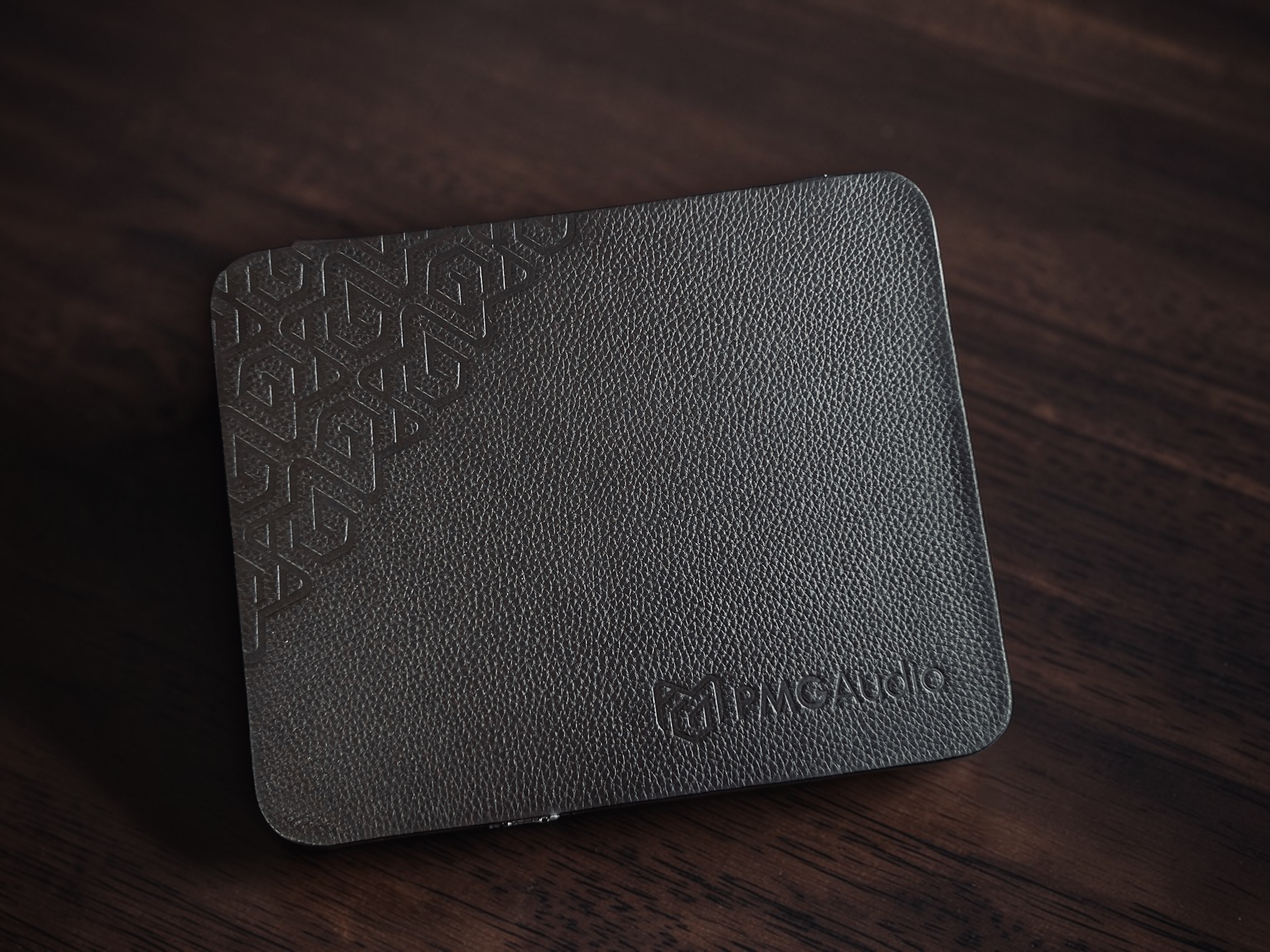
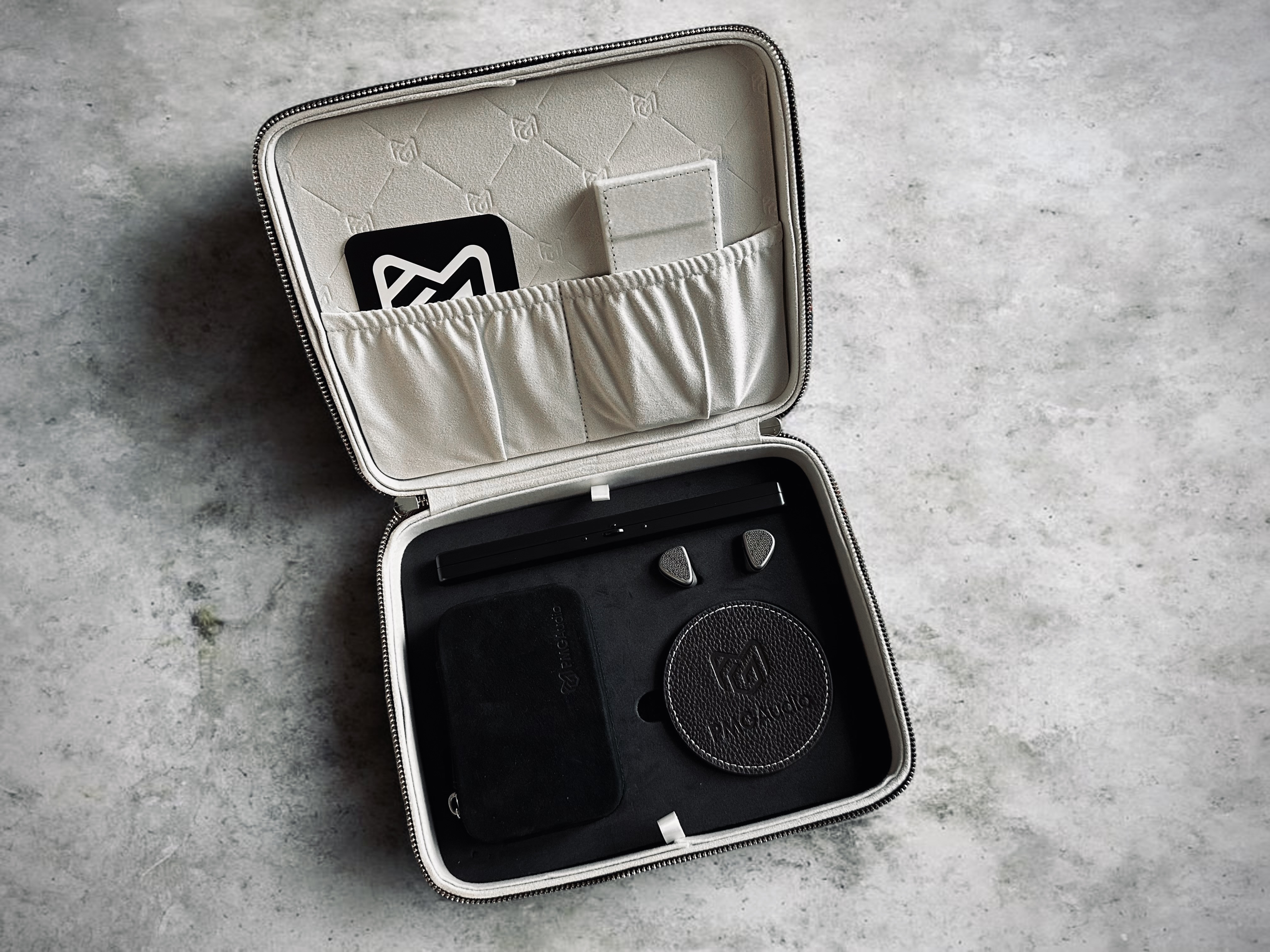
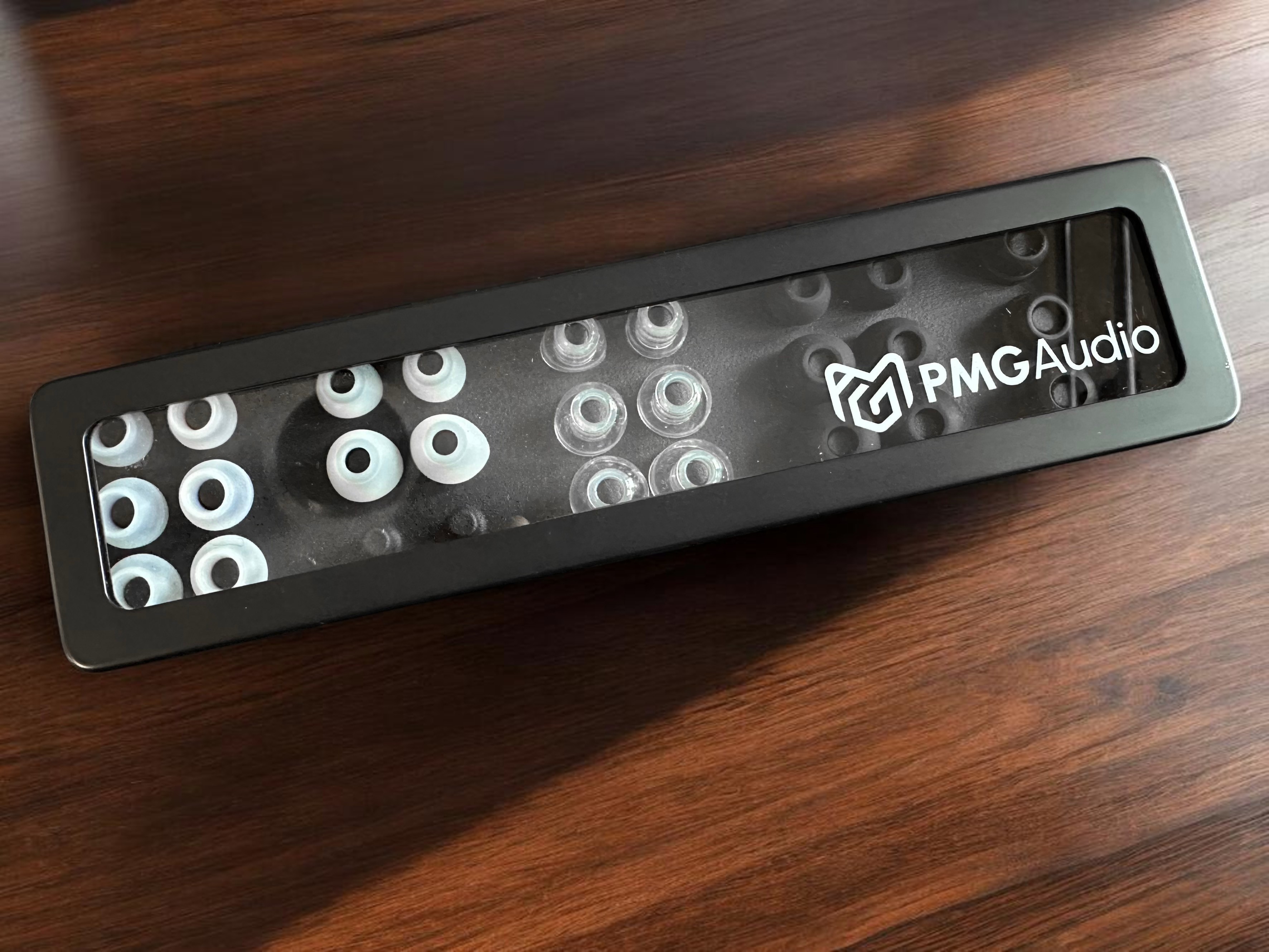
The APX ME ships in a lavish, leather-bound kit befitting its flagship status. PMG includes a top-grain cowhide leather “multi-function” case (more upscale than the “crazy horse” leather on the SE) and a smaller suede-lined carry case, both custom-tailored for APX ME use. Inside the main case you’ll find the IEMs, a premium 6N OCC 4.4 mm silver cable, a metal/glass tip holder loaded with five pairs of silicon and foam tips, plus the expected PMG authenticity certificate and three-year warranty. In short, PMG went all-out: real leather lining, sturdy metal hardware, a dedicated tip organiser – touches you can feel and see. The presentation rivals high-end fashion accessories, clearly intended to impress even before you hear a note.
Build Quality & Design.
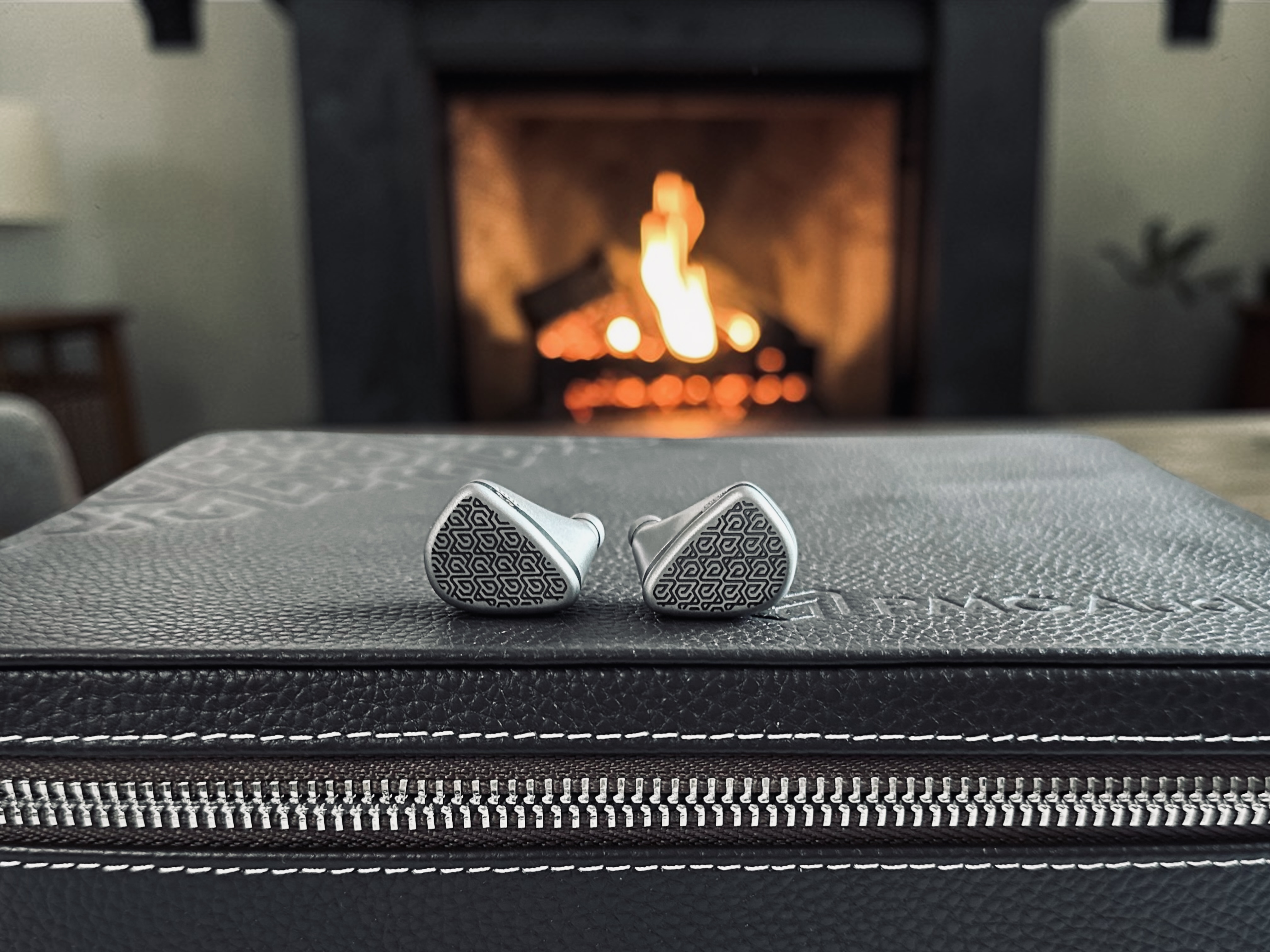
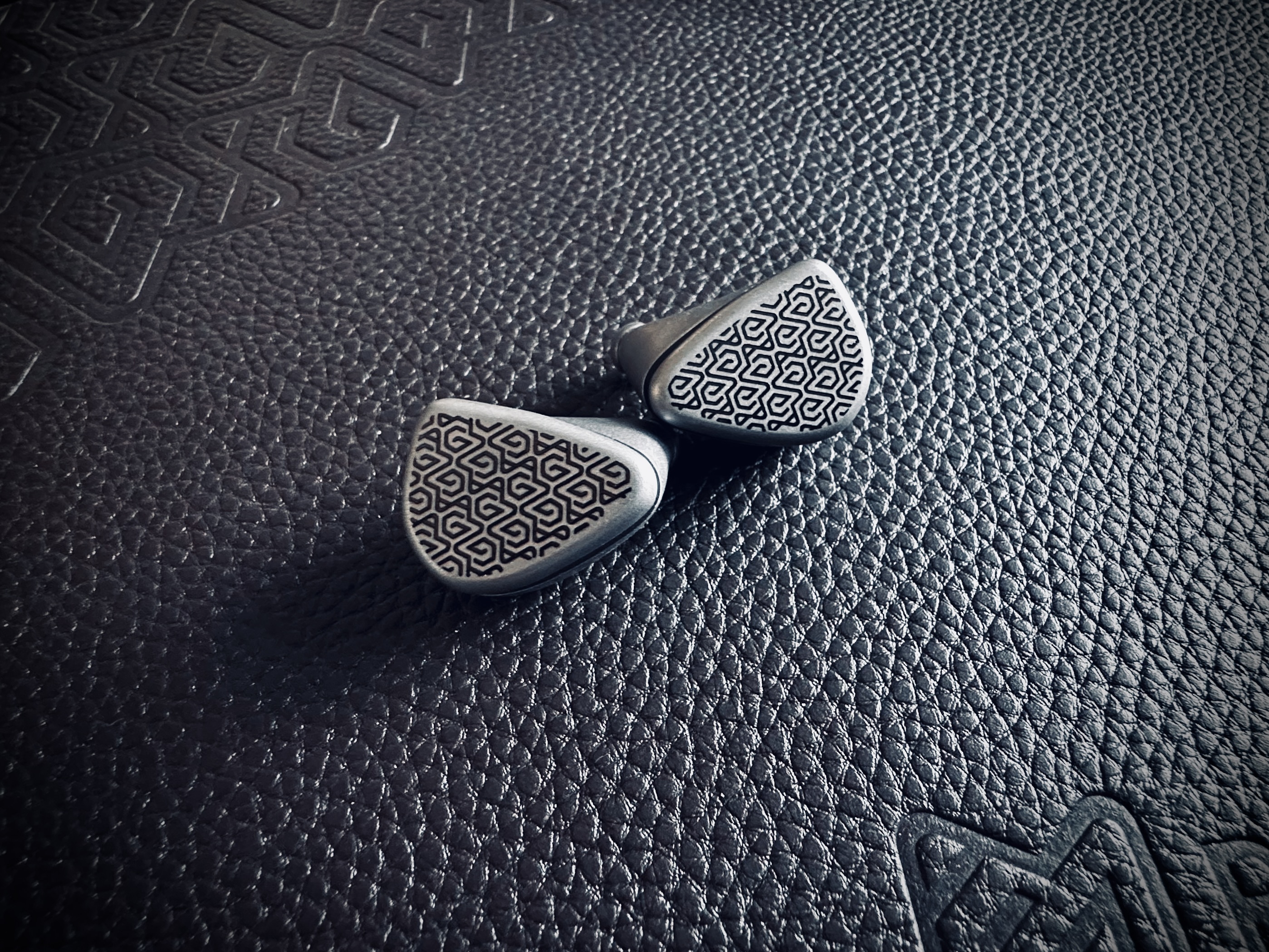
The APX ME’s build is a radical step up from the resin APX and SE. Both shells are now milled from solid titanium (Matte finish). Each teardrop-shaped earpiece has a CNC-precision body with no excess trim – only a serial number and model name – and a matte titanium faceplate engraved with the repeating “PMG” logo pattern, set off by a thin black separator band. Early metal prototypes even had a gold layer, but PMG wisely chose a minimalist steel-gray look. The new shells are very slightly larger than the old resin APX/SE designs (to make room for the extra drivers), but PMG kept the curves smooth and organic. Unlike the resin APX/SE (which had exotic stone faceplates – Amber on APX, Lapis Lazuli on SE), the ME’s finish is monochrome titanium for a sleek, timeless appearance. Internally, the driver layout and crossover are completely new – a “ground up” redesign – so the extra space and metal housing yield improved component fit and rigidity.
The VCD (Vibration Conducting Driver) – PMG Audio’s terminology for what is essentially a bone conduction driver – behaves similarly to Kinera’s implementations of the technology. When lightly tapping the shell or biting down, a faint “ting” resonance can be perceived, much like the in-house BCD used in some Kinera’s Loki and Verdandi. I checked with Piotr if it was indeed the same driver from Kinera but he was not aware of it being so. PMG explain that during their internal research into conventional bone-conduction speakers, they found that many implementations did not produce meaningful acoustic benefits, so they opted for a driver tuned with a low resonance peak of 250 Hz, intended to enhance the perception of physicality and add additional weight and tactility to bass notes rather than acting as a traditional midrange-transmitting bone conductor.
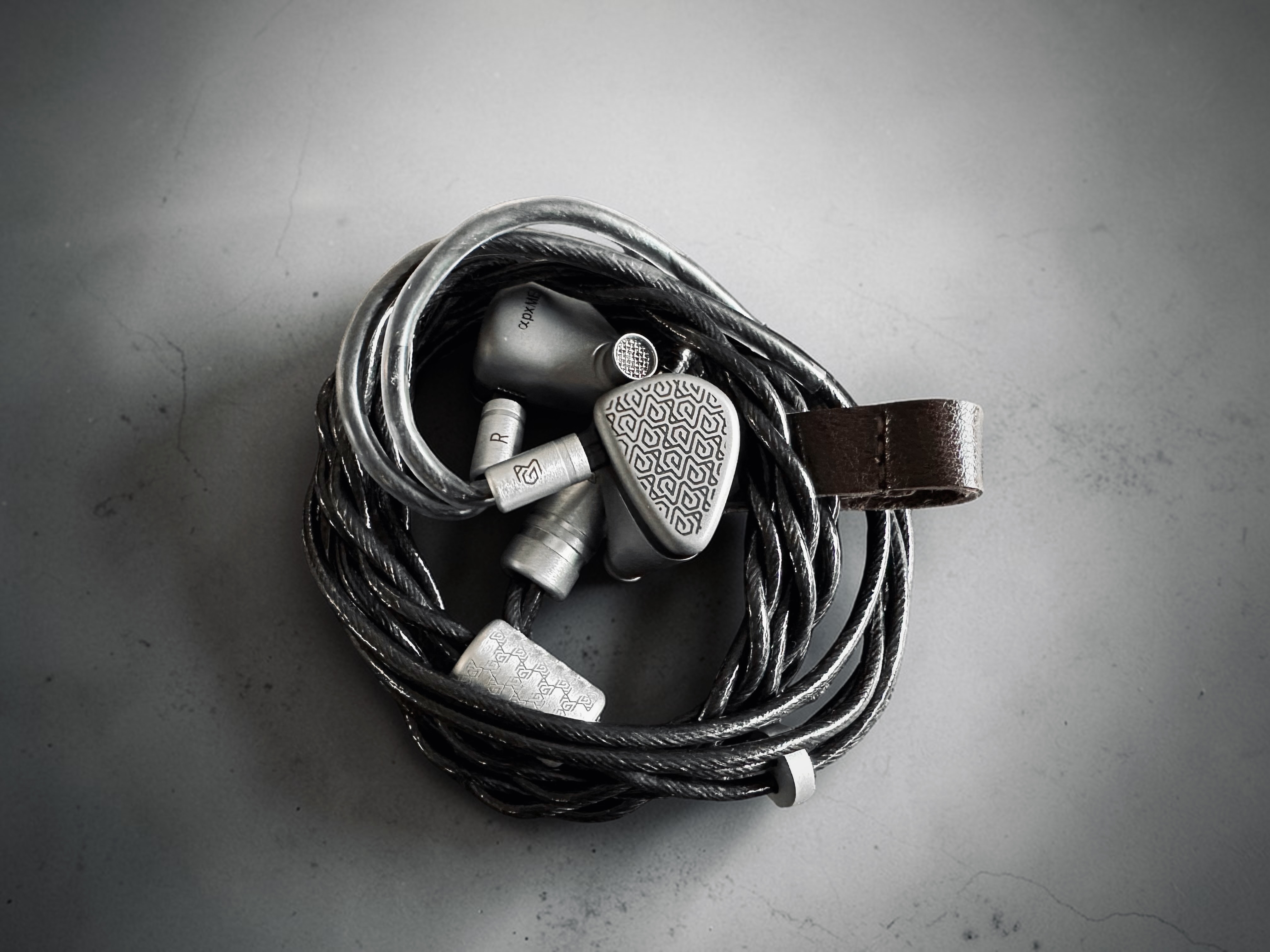
The included cable reflects the upgraded build: it’s a 6N-OCC pure silver coaxial design with metal hardware and matching gray coloring hardware. PMG notes that the all-silver coax design adds a dash of uniqueness without the edginess of copper wires. In practice the cable feels silky and soft, with a smooth, low-profile braid and no microphonics or memory. Hardware (splitter and termination) is stainless and tone-matched to the shells. This 4.4 mm-terminated cable mates seamlessly with the IEMs and stays out of the way – a far cry from the kitschy stock cable on the original APX. The nozzles are PMG’s familiar geometrically-optimized design (parallel wall “GSO” structure) and feel flush-smooth; they easily accept most tips. Overall the metal ME feels rock-solid and cool to the touch. In summary, the ME looks and feels like a precision instrument: CNC-milled titanium, laser engraving, fine leathers and suedes – everything about its design screams “ultimate flagship”.
Fit & Comfort.
Despite the heavy-duty metal shells, the APX ME retains the APX family’s famously ergonomic shape. Like the APX and SE, the ME’s teardrops are long and taper gently, with a nozzle angle that seats securely and a body that sits nearly flush with the ear. Amber APX as well as the SE’s nozzles were the perfect size and the fit was very snug for me without pressure. I find the ME similarly easy to insert and seal: it hugs the concha well, and even after hours of wear the fit remains comfortable. The shells are a hair larger than the resin units, but still ergonomic enough for long sessions. With the supplied medium silicone tips, I get a deep, vented insertion that blocks outside noise very effectively – isolation is excellent (just as APX and SE isolate “really well”). In my testing, there were no microphonic or fit issues. The memory effect on the tips stays put, and the lightweight titanium (Grade 5) is not overly heavy on the ears. In short, expect the ME to feel familiar if you liked earlier APX models: secure, flush, and fatigue-free, carrying on PMG’s tradition of one of the most comfortable IEM fits I’ve used.
Sound Analysis.
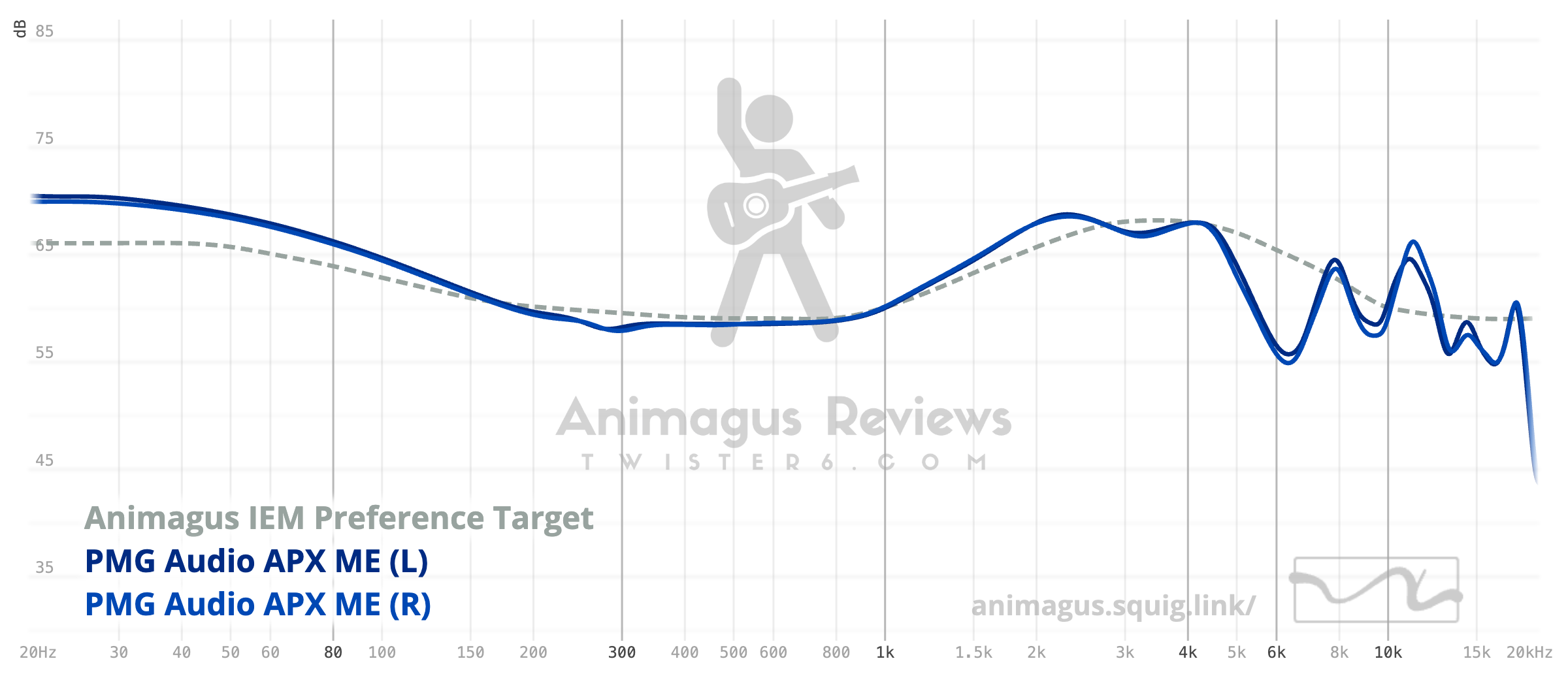
The APX ME’s tuning is a distinct evolution from its predecessors, but also one that comes with clear trade-offs. The original APX plotted a neutral-bright W-shape with strong mid-bass punch and pronounced treble energy, while APX SE shifted toward a warmer, more U-shaped curve with added bass weight and a gentler top-end. The ME departs even further from that trajectory. Per PMG’s design intent, the ME pushes bass emphasis decisively downward—boosting sub-bass while trimming mid-bass—which results in a deeper, heavier low-end foundation but a noticeably softer sense of physical punch. At the same time, both the midrange and treble are dialled back relative to APX and APX SE as the characteristic treble in the 5-10kHz is smoothed and lowered. While the planar tweeter is still capable of extension, it is deliberately restrained rather than used to inject presence or sparkle. In practical terms, the ME is warmer, darker, and less contrast-driven than either of its predecessors while having wonderful, visceral sub-bass oriented bass response.
Compared to my Animagus Preference Target, the APX ME leans clearly toward warmth and smoothness: it retains the familiar ~9-10dB sub-bass shelf but shifts that emphasis lower in frequency, prioritising rumble and weight over punch and immediacy. Vocals and instruments sit further back in the mix, sounding relaxed and rounded rather than sharply outlined. Treble energy is present, but neither forward nor airy, and this has consequences. While the ME sounds rich, smooth, and enveloping, it also gives up some of the openness, depth, and sense of scale that made the APX and APX SE feel more expansive and exciting. The ME creates its own world, but it is a denser, more inward-looking one.
Let’s dig in deeper…
Bass – APX ME’s bass is impressive – it is visceral, deep, and controlled, but it is also more specialised in character. Thanks to its hybrid driver topology, the ME delivers impressive sub-bass weight, texture, and elasticity. It has about 9–10 dB of a bass shelf, slightly more than APX and APX SE, but the fine tuning is very different. Where the SE carried more energy into the mid-bass, the ME deliberately pulls that region back, favouring depth over punch. In practice, this means bass lines have more rumble and sustain, but the physical impact in the upper bass is more rounded. The VCD is what adds in the physicality and dimensionality which makes APX ME’s bass sound very excitingly three dimensional; it sounds holographic and timbrally accurate. Kick drums hit lower but softer and bass guitars feel rumbly while not being in your face all the time. Dynamics are clean and very well presented, and there is no sense of bloom or sluggishness, but listeners accustomed to the APX or SE’s more tactile slam may find the ME less immediately engaging in a back to back comparison. It’s only when you get accustomed to the more neutral mid-bass tuning, do you start hearing the strengths. Compared to something like Subtonic Storm, which also emphasises sub-bass and mid-bass but with greater macrodynamic aggression, the ME goes for more holographic physicality than immediate, forward punch. The bass is authoritative and refined – which are its main strengths.
Midrange & Treble – The midrange of the APX ME is smooth and almost reference neutral while the treble is warmer – and this is one of its most divisive traits. Vocals and instruments carry good body as well as tonal timbre and density projected forward enough but the reduced/dipped ear gain in upper end of upper-mids and lower-treble in the 4.5-8kHz region pushes the presentation a little towards the back, which removes glare and shout but also reduces immediacy and emotional bite. Male and female vocals sound natural and unforced, but they lack the presence and articulation heard on the APX and, to a lesser extent, the APX SE. Instrument timbre is pleasing and organic, yet note edges are softer, and micro-dynamic inflections are less apparent. Detail is still present, but it is no longer spotlighted; instead, it is embedded within a smoother presentation. As a result, midrange clarity and engagement take a mild but noticeable hit, particularly on acoustic recordings and vocal-centric tracks where the earlier APX models felt more alive.
Lower-treble is where the APX ME makes its biggest compromise; it is significantly dipped compared to both APX and APX SE, and upper-treble air is also reduced a bit. While this tuning choice successfully eliminates fatigue, sharpness, and sibilance, it also removes a fair amount of perceived openness and spatial lift. Cymbals and upper harmonics are smooth and well behaved, but they lack bite and shimmer. Fine transient detail is still resolved, yet it does not project outward into the soundstage the way it does on the APX or SE. The upper-treble though is still airy and well extending objectively, which enables it to have holographic staging, just not the sense of openness the original APX or APX SE had. The overall impression is quite refined if you look at it from an isolated perception frame of mind but slightly muted objectively. Compared to the flagship Elysian Annihilator, which sounds brighter and more energetic up top, or even the APX SE, the ME feels noticeably darker and less lively. Treble details, especially micro-detail retrieval is very present, but excitement and sparkle are undeniably reduced.
Where it still makes for top level performance in feel and enjoyment is the excellent holography and staging even with a warmer tuning, something that is not easy to do. So let’s get into that in detail.
Technical Performance – From a purely technical standpoint, the APX ME remains a very capable flagship, but it is no longer the standout in its own lineage because the APX and APX SE are still the king due to their brighter signatures. Resolution in APX ME is still high, and separation as well as layering remains clean, but the reduced treble energy blunts perceived detail retrieval a bit compared to the other APXs. Micro-detail is harder to pick out and transient edges are less sharply defined than on the original APX and APX SE.
Soundstage still remains very holographic, but it is not as deep or expansive as before due to less airiness. We can never know how much of that performance can be credited to the BCD driver unless there is an on-off switch to see its performance clearly but it’s impressive how well APX ME stages and layers with a warmer tuning. Width is respectable, but depth layering is flatter, and the sense of vertical space is diminished. The APX and APX SE both projected a more three-dimensional, out-of-head presentation, whereas the ME feels denser and more compact by comparison. Imaging accuracy is still very strong, but the reduced contrast means positional cues are less striking and more dispersed. In short, the ME is still very technically proficient, but it sacrifices some of the openness, depth, and excitement that previously set the APX line apart and goes for a more intimate feeling presentation, one that still projects very strongly but a more in the jam room kind of a vibe.
Comparisons.
PMG Audio APX Original.
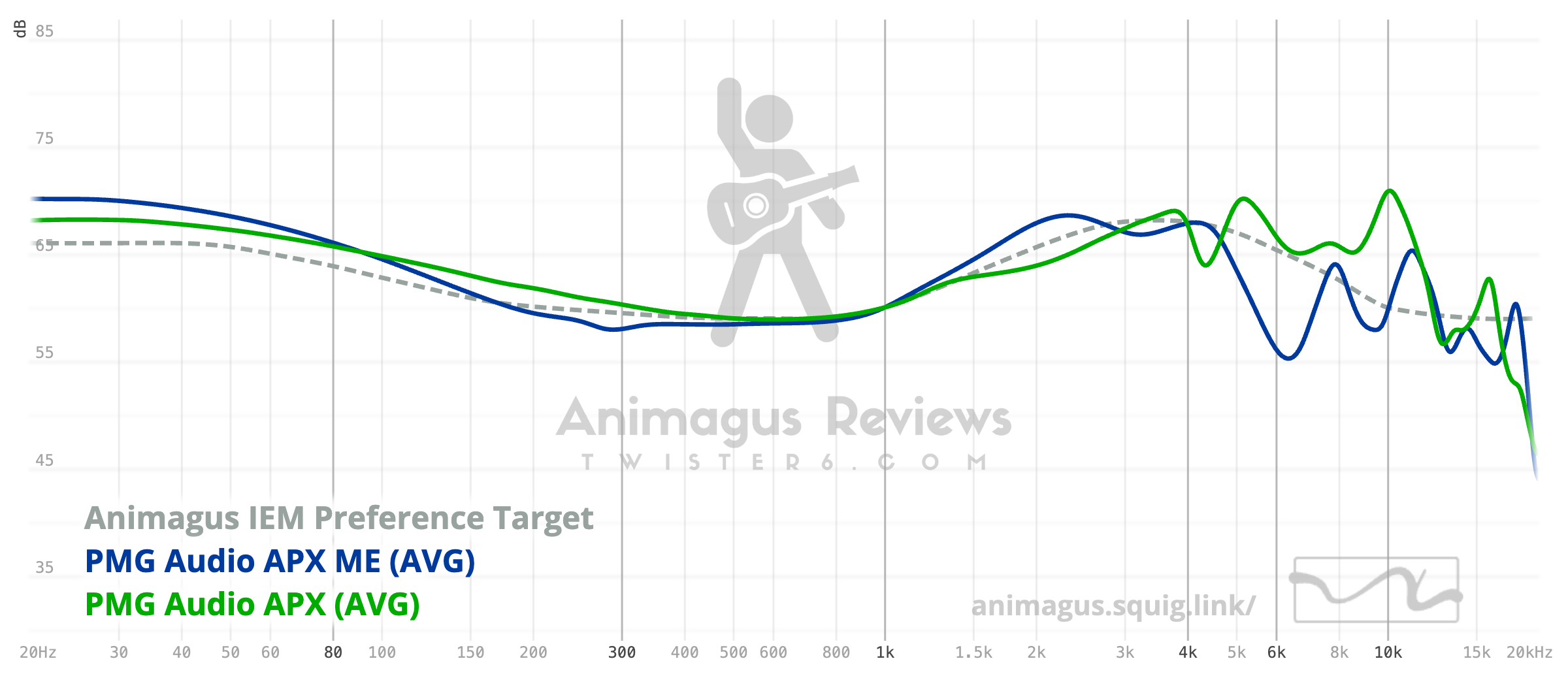
Listening back-to-back, the difference between the APX ME and the original APX is less about outright capability and more about intent. The original APX carries more mid-bass energy and noticeably stronger upper-mid and lower-treble presence, particularly through the 2–5 kHz region and again around 8–10 kHz. This extra presence energy gives the APX its more vivid and expressive character, pushing vocal articulation, transients, and spatial cues forward. As a result, the original APX projects sound outward with greater immediacy and front-to-back depth, creating a more holographic presentation. The APX ME, by contrast, shifts bass emphasis slightly lower while trimming mid-bass and smoothing the presence and lower-treble regions. The deeper dip around 5–7 kHz and the more restrained treble contour reduce transient bite and perceived edge definition. In practice, this makes the ME sound fuller and smoother, but also less incisive. Instruments feel denser and more rounded, yet the stage no longer pushes forward with the same authority. Microdetail remains present, but it sits deeper in the mix rather than jumping out.
Where the original APX feels energetic, open, and technically demonstrative, the APX ME feels calmer and more controlled. It sacrifices some immediacy, perceived detail retrieval, and holographic depth in exchange for tonal weight and long-session comfort, making it easier to listen to—particularly for those sensitive to upper-mid or lower-treble energy.
PMG Audio APX SE.
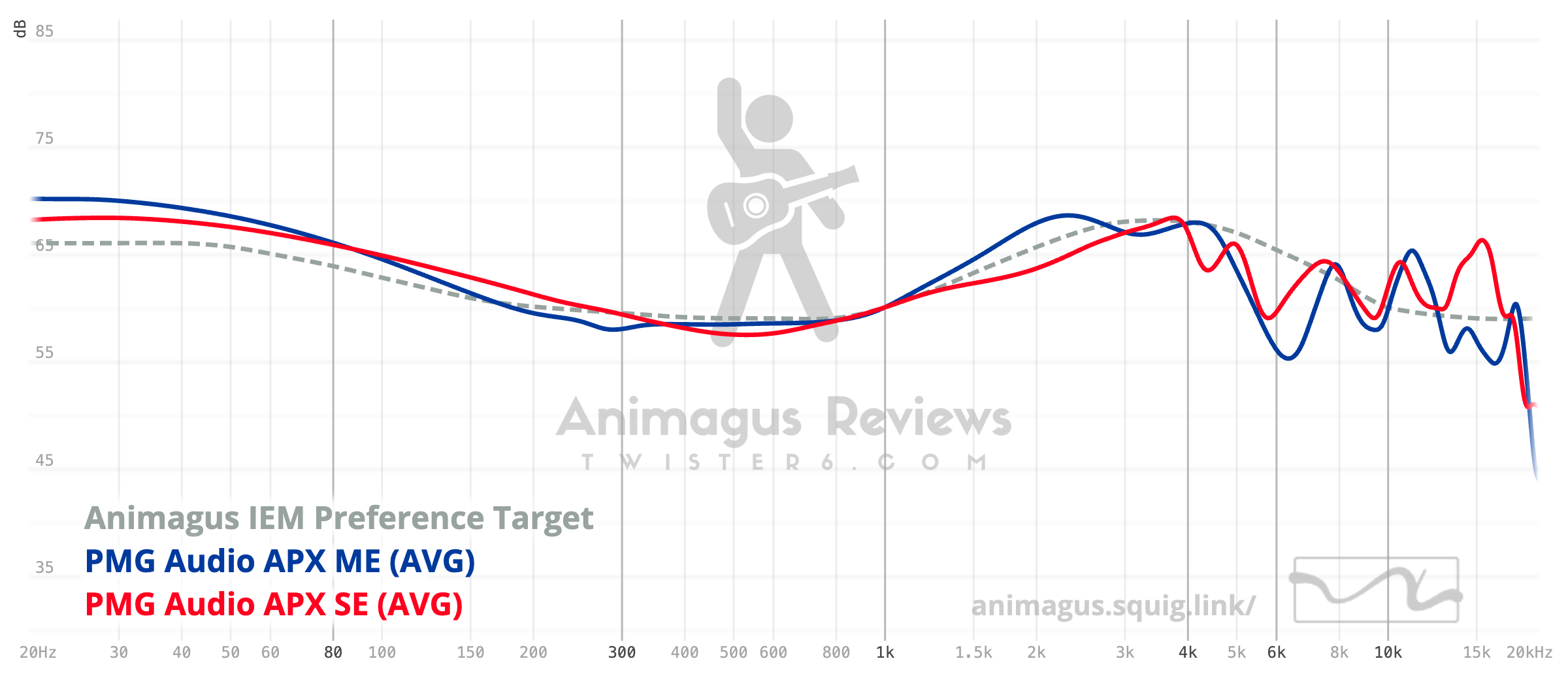
The APX SE sits in a more balanced middle ground between the original APX and the ME, and this is reflected clearly in the graph too. Compared to the ME, the SE retains more mid-bass warmth and a slightly stronger rise through the upper mids and lower treble. This gives the SE a clearer sense of articulation and presence, particularly around vocals and upper midrange instruments. The APX ME, meanwhile, pushes bass emphasis further into sub-bass while smoothing the upper-mid and lower-treble regions, especially around the 4.5–8kHz dip. This tuning shift makes the ME sound thicker and more relaxed, but it also softens transient definition and reduces perceived air. The SE therefore maintains better perceived detail retrieval and stage depth, largely because the extra presence energy helps illuminate spatial cues and harmonic overtones. In listening terms, the SE feels more open and layered, particularly in the front-to-back dimension. The ME, while still technically competent, sounds denser and more centre-focused. Its tonal weight and smoothness are appealing, but they come at the expense of excitement and sparkle. Where the SE balances warmth with technical clarity, the ME leans further toward comfort and immersion.
Oriolus Traillii.
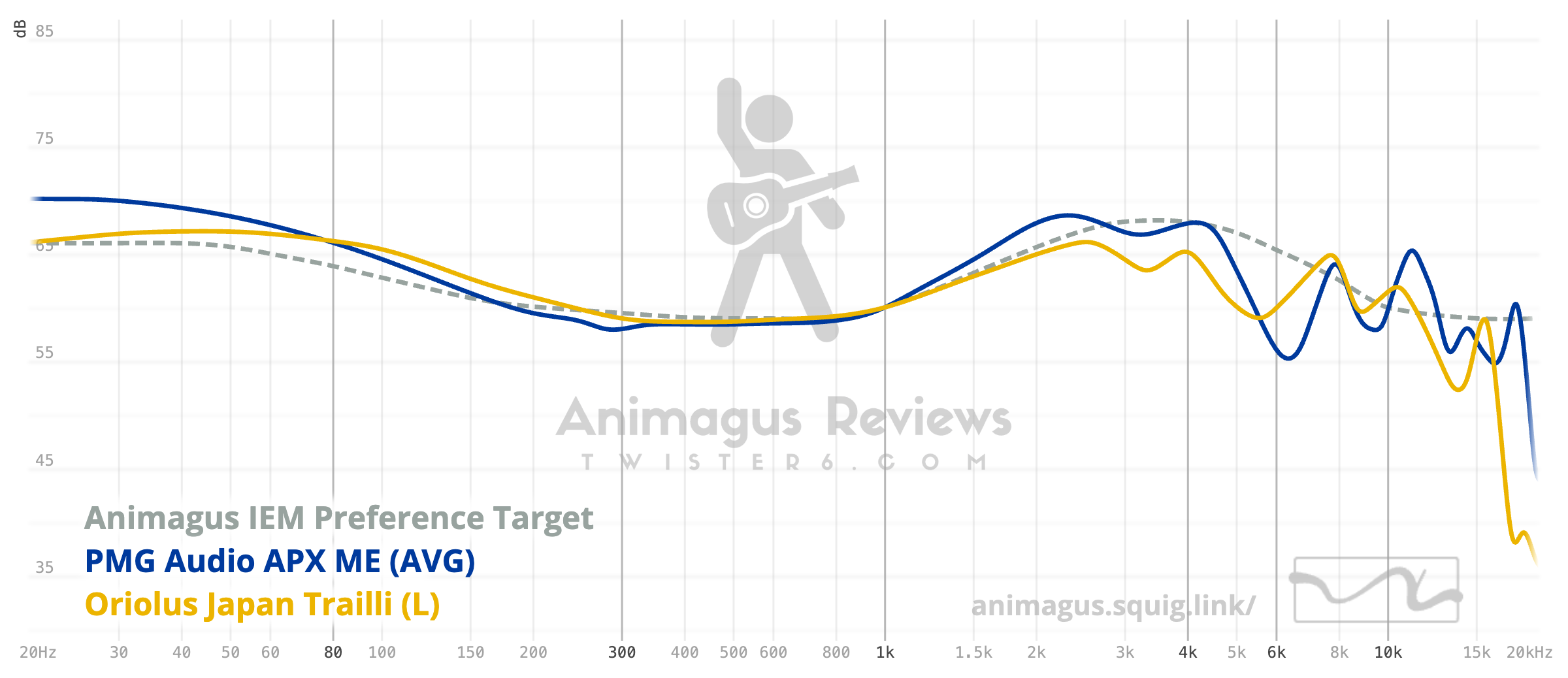
The PMG APX ME carries slightly stronger sub-bass extension than the Oriolus Traillii, with a higher shelf below roughly 60 Hz. This gives the ME a deeper and more grounded foundation with greater rumble and physical presence. The Traillii’s bass is comparatively flatter and lighter, favouring articulation and balance rather than sheer weight. In practice, the ME’s stronger low-end anchor can make instruments feel fuller and more tactile, while the Traillii’s leaner bass helps maintain clarity and separation across the stage. In the ear gain region, the APX ME rises earlier around 2–3 kHz, whereas the Traillii peaks slightly later around ~4 kHz. This difference subtly changes how vocals and midrange instruments are presented. The ME tends to give vocals a little more body and solidity in the lower vocal band, while the Traillii’s later rise emphasises upper vocal harmonics and articulation. As a result, the Traillii can sound slightly clearer and more delineated in the midrange, whereas the ME leans toward a smoother and more rounded vocal presentation.
The most significant divergence appears in the lower treble around 5–7 kHz, where the APX ME shows a deeper dip than the Traillii. This softens transient attack and reduces sharpness in cymbals, strings, and upper harmonics, making the ME smoother and less fatiguing over long sessions. However, this also reduces the sense of edge definition and perceived microdetail. The Traillii maintains more energy in this region and slightly more upper-treble air, which tends to enhance perceived resolution, spatial separation, and the sense of openness.
These differences translate clearly into technical perception. The Traillii’s stronger lower-treble and air help reinforce soundstage openness, layering, and apparent detail retrieval, allowing instruments to occupy space with more air between them. The APX ME, while still technically competent, presents instruments with greater tonal density and physical weight, but in a slightly more compact and relaxed stage. In short, the ME leans toward immersion and smoothness, while the Traillii emphasises spatial clarity, articulation, and technical transparency.
Elysian Annihilator.
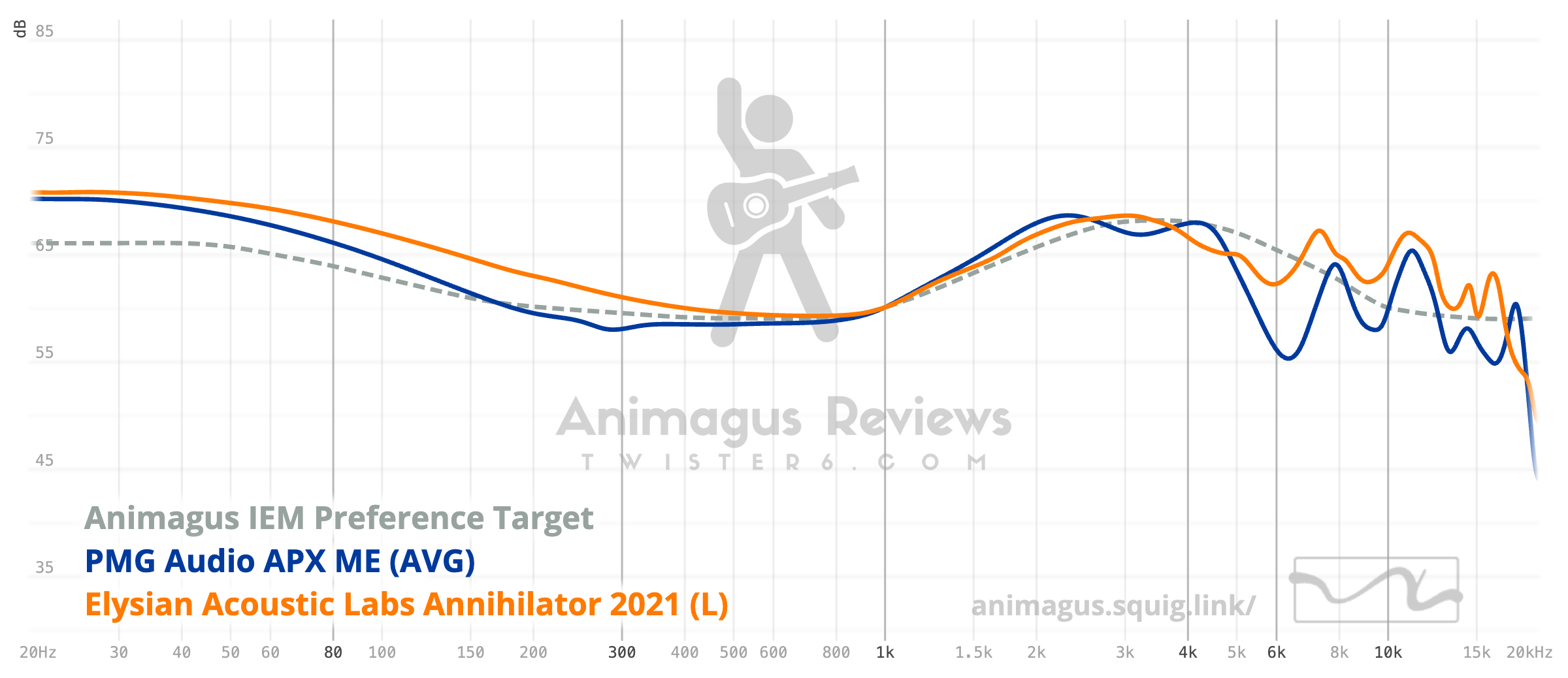
Elysian Annihilator and PMG Audio APX ME show two fundamentally different tuning philosophies. The Annihilator maintains stronger bass elevation and significantly stronger upper-mid and treble energy, particularly through the 3–5 kHz and upper-treble regions. This rise gives it a much sharper transient profile and contributes heavily to its reputation for explosive detail retrieval and immediacy. The APX ME, on the other hand, carries more sub-bass presence but noticeably reduced energy through the presence and lower-treble bands. The deeper 5–7 kHz dip smooths cymbals and transient edges, which reduces fatigue but also removes some of the sparkle and bite that make the Annihilator sound so fast and exciting. Technically, this translates into different strengths. The Annihilator feels quicker, more revealing, and more expansive, with micro-detail and spatial information presented prominently. The APX ME counters with greater tonal density and low-end authority, but its softer treble contour means detail emerges more subtly. The Annihilator energises the listener immediately; the ME takes a more relaxed approach, favouring smooth immersion over technical spectacle.
Subtonic Storm.
This comparison doesn’t have a graph as I got to try the Subtonic Storm through a friend when I sadly didn’t have my coupler to measure it.
The Subtonic Storm is widely known for its powerful sub-bass foundation paired with a relatively neutral midrange and highly resolving treble extension. Both the Storm and APX ME deliver serious low-frequency capability, but they approach the rest of the spectrum differently. The Storm maintains cleaner presence and treble energy, which allows transient information and spatial cues to remain highly visible. This gives the Storm its characteristic sense of scale, separation, and macrodynamic impact. Instruments appear sharply carved into space and the stage expands outward with strong layering. The APX ME, in contrast, deliberately softens the presence and lower-treble regions, resulting in a presentation that feels smoother and more cohesive but slightly less dramatic. Bass remains deep and authoritative, yet the softer transient edges make the ME sound more relaxed overall. Where the Storm emphasises impact, speed, and technical fireworks, the APX ME leans toward immersion, tonal richness, and long-session comfort.
Conclusion.
The PMG APX ME is not a straightforward upgrade over the APX or APX SE, but a deliberate tonal re-interpretation of the platform. By shifting emphasis toward deeper sub-bass, dipping ear gain in the 4.5-8kHz region and smoothing the lower-treble and air regions, PMG has created its warmest, smoothest, and most fatigue-free APX to date. The trade-off is equally clear: soundstage depth, perceived openness, excitement, and immediate detail retrieval take a step back compared to both earlier APX models. Technically, the APX ME remains firmly in flagship territory, with strong staging for a warmer sound, very solid imaging and layering, and a cohesive, weighty presentation. However, its strengths lie less in spectacle and more in immersion. It favours tonal density and long-session listenability over spatial drama and transient bite, making it a more introspective and relaxed listen than its predecessors and many competing flagships. The luxurious presentation, premium accessory package, and solid metal construction further elevate the overall ownership experience.
Ultimately, the APX ME will appeal most to listeners who found the original APX too forward or the APX SE still a little energetic. It is a comfort-first flagship with a clear sonic identity, and while it may not deliver the same “wow” factor as earlier APX iterations, it offers a distinctive, mature alternative within PMG’s lineup rather than a replacement for what came before.
Gear used for testing and review.
- Desktop setup – Universal Audio Apollo X4 + DROP THX AAA 789 Amp
- DAPs – iBasso DX320 | HiBy R8
- Phone – Apple iPhone 14PM + Tanchjim Space
Artists I like and listen to.
- Rock – Foo Fighters, Linkin Park, Switchfoot, Imagine Dragons, Daughtry, Green Day, MuteMath, X Ambassadors, Dave Matthews Band, Vertical Horizon, Our Lady Peace, Lifehouse, Fall Out Boy, Breaking Benjamin, Muse, Radiohead, Incubus, ACDC, Audioslave, Rage Against the Machine, Biffy Clyro, I Am Giant, Normandie, Paramore, Slash & Guns N Roses, 3 Doors Down.
- Pop Rock – John Mayer, Coldplay, Paul McCartney, James Bay, Hunter Hayes, Niall Horan, Keith Urban, The Bros Landreth, Bryan Adams.
- Progressive Rock/Metal – Porcupine Tree/Steven Wilson, Karnivool, Tool, Dead Letter Circus, Periphery, Lamb of God.
- Pop/Soft Rock – Ed Sheeran, Adele, Taylor Swift, OneRepublic, The Script, Gavin James, Magic Man, Maroon 5, Bruno Mars, Charlie Puth, Dua Lipa, The Weeknd, Oasis, Panic! At the Disco, TwentyOne Pilots.
- EDM – Chainsmokers, Zedd.

 Twister6 Reviews