
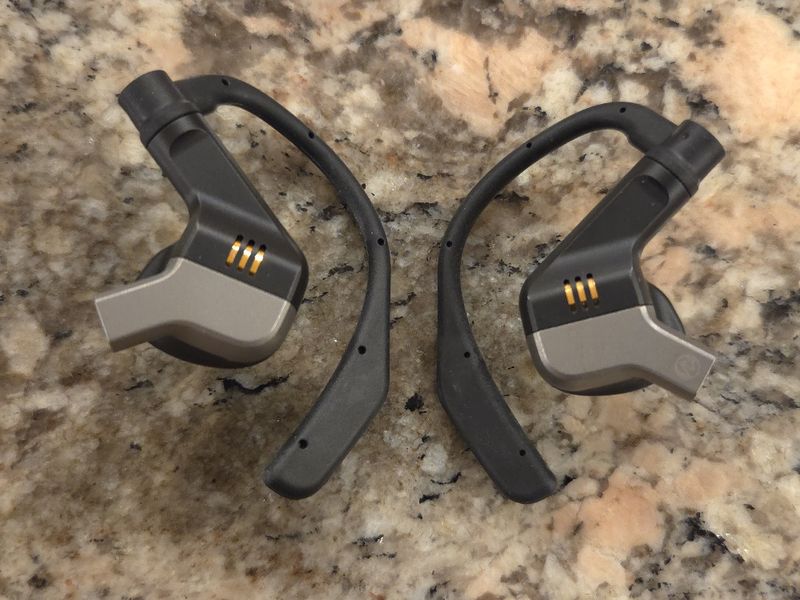
Another glorious peak of Mount Fuji.
PROs: modified IEMs design from Fugaku with a detachable cable and freedom to use any source, holographic imaging, deep, visceral bass, natural, detailed mids, and a resolving, clear treble.
CONs: price, pair-up source dependency, detachable cable attachment at the bottom.
Brise Audio BEP-001, along with Watatsumi and Fugaku, were borrowed from Musicteck for testing and analysis.
Manufacturer website: Brise Audio. Once finalized, it will be available for sale through authorized retailers, including Musicteck.
Intro.
To follow Brise Audio’s new product announcements, you need to be familiar with their design evolution. Well-known for high-quality, original premium wires, they first decided to build a portable reference amplifier as an evaluation testbed for cable development. That is how the original Tsuranagi (Tsu) was born, later evolving into Tsu v2 with a more IEM-friendly volume-curve adjustment. Then, Brise Audio surprised everyone with the announcement of Fugaku, an all-in-one, transportable, compact audio system — a fine-tuned, custom-designed audio chain featuring an amplifier, a cable, and earphones. Its eye-watering price shocked everybody because some assumed it was a pair of earphones, until they realized it’s a whole system that can’t be separated to use with another amp or cable, requiring you to add just a source to drive it. And if you think about how much money high-end audiophiles spend on flagship IEMs, upgrade cables, and portable sources and amps to complete and optimize the audio chain, Fugaku’s price tag was not that shocking.
So, what would be the next step to go from there? Last year (2025), which marked their 10th anniversary, Brise Audio went back to the amp design, starting with the basic structure of the Tsu amp, where every block was redesigned, then adding their latest pure-silver Shirogane wire conductors with a large cross-sectional area of Orochi, and implementing amp circuit design technology from Fugaku, to give birth to Watatsumi (Wata). It almost felt like Brise Audio wanted to give us a taste of Fugaku’s amp, to use with other IEMs. Since you can already get a wide variety of their cables with universal connectors, what else is left? The only thing that remained was the standalone IEM itself. At the end of last year, while promoting some of their cables, a familiar Fugaku IEM shell appeared with a ‘regular’ cable and no other info, sparking a hype. This clever marketing caught many audiophiles’ attention, whetting their appetites for what was to come: Brise Audio’s upcoming flagship IEM with detachable cable and universal connectors.
Code-named “BEP-001”, which is just a placeholder name until the official release, the prototype of these IEMs made its debut at Musicteck tables during the recent CanJam NYC ’26 show. It was referred to as a prototype because the final version will have an updated shell material and a different connector, but as far as I was told, the tuning of BEP-001 was finalized. During the CanJam, Musicteck tables and access to BEP-001 required a lot of patience while waiting in line, and, while attending the show for only one day, I ran out of both. Thus, I was glad for a unique opportunity offered to me by Musicteck to borrow BEP-001, Watatsumi, and Fugaku for a couple of days, to test and compare them in the quiet comfort of my home. I would also like to emphasize that the BEP-001 tuning by Brise Audio was done using the Wata amp, an optional addition that I consider essential to hear these IEM at their full potential. So, without further ado, let’s read about my findings.
Unboxing/Accessories.
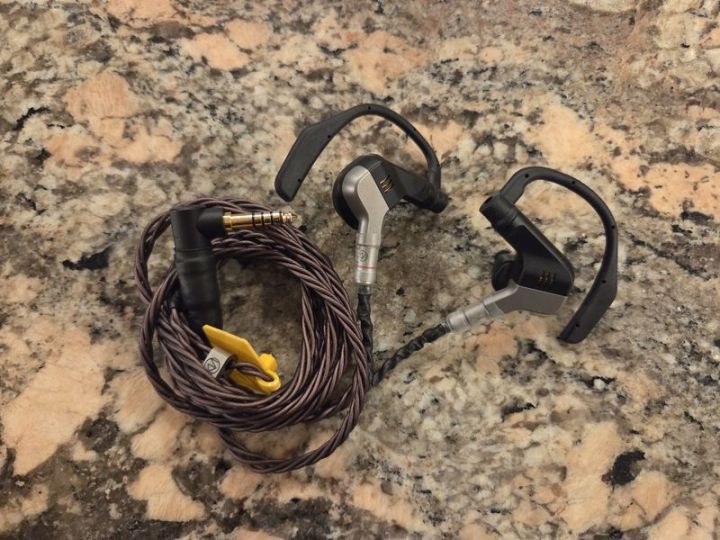
I can’t discuss the unboxing experience for BEP-001 yet, as the packaging and accessories aren’t finalized, and we don’t even know the product’s official name. But it shouldn’t be too long before it becomes available. Since I’m planning to revisit this review after the official release, I will make sure to update this section. The only thing to mention here is that BEP-001 shells were provided to me in the same storage box as Fugaku.


Design.
Despite their exterior appearance suggesting a similar design, Fugaku (Fu) and BEP-001 IEMs are not identical. So, let’s first revisit the Fu, which has an 8-driver tribrid design with 2DDs, 5BAs, and MEMS drivers. Their multichannel active crossover and power amplification were done inside the external compact amp module, where BA and MEMS are driven single-ended, while DDs are driven balanced. The L/R earpieces were attached separately to the amp module via 7-pin connectors. Fu’s pure silver 16-conductor soft cable is serviceable, though not easy to disconnect. You can use any eartips with it; it’s not proprietary, and I found the sound isolation to be pretty good. These PVD black-coated pure titanium housing earpieces don’t look like your traditional IEM shells; they’re very compact because they only house drivers inside, with no crossover, filters, or sockets, and they have adjustable ear hooks to make sure they stay secure in your ears under the weight of the cable.
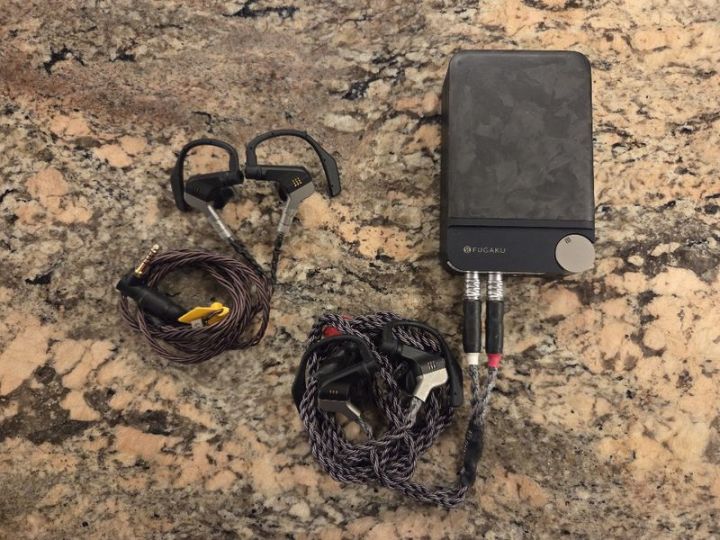
Now, when you talk about BEP-001, they are no longer relying on an external amplifier with an active crossover. Here, high-precision thin-film resistor attenuators are used to adjust sound pressure levels across each frequency band, including an internal (to the shell) passive crossover circuit featuring optimized filters. The design was updated to a 9-driver 5-way partitioning with:
- Low: 2x 8mm LCP DD
- Low-Mid: 1x Sonion BA
- Mid: 2x Knowles BA
- Tweeter: 2x Knowles BA
- Super Tweeter: 2x EST
The biggest change under the hood was replacing the MEMS driver with two ESTs. Then, two liquid crystal polymer (LCP) diaphragm dynamic drivers are mounted in an opposing configuration (isobaric) within a gold-plated OFC ring chamber with carefully selected damping properties. Brise Audio refers to its 2DD config as ver2, assuming it’s an update over the one featured in Fu. Every BA driver was also carefully selected and optimized for each frequency band.
With all these changes, I was quite surprised that the shells’ design is similar to Fu’s. They even used the same acoustic tuning technology, with 3D-printed parts designed during Fugaku’s development, and utilized sound-absorbing and vibration-damping material treatments to improve internal and external isolation. There was also mention of using Carbon Nanotube materials on the internal driver surface and wiring, which I’m not sure if was implemented in Fu IEMs.
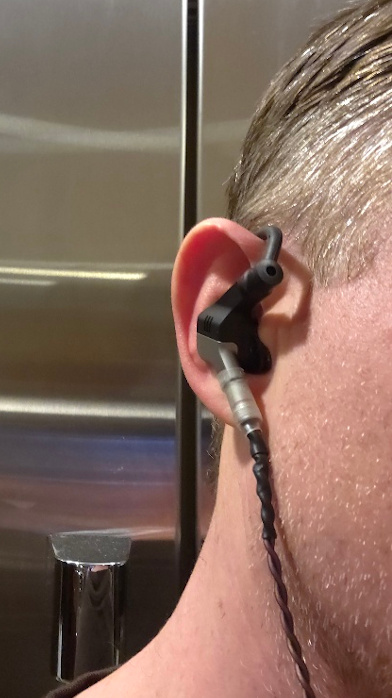
As already mentioned, the BEP-001 shell design is nearly identical to that of Fugaku IEMs, including the same over-the-ear adjustable earhook and the wire attachment at the bottom. But while the Fugaku cable was “permanently” attached, the BEP-001 cable is detachable. At the same time, it can create a bit of a challenge when dealing with aftermarket cables that typically come with a pre-shaped heat-shrink earhook and the expectation that the cable will be attached at the top of the shell. Furthermore, while the BEP-001 prototype uses the same pure Titanium shells as Fugaku IEMs, and features an mmcx connector, the final version of these standalone flagship IEMs from Brise Audio will use Titanium 6-4 and OFC Pentaconn Ear connectors. I had to Google it myself: Titanium 6-4 refers to a Grade 5 alloy containing 6% Aluminum and 4% Vanadium, providing significantly higher strength, superior fatigue resistance, and greater rigidity than regular commercially pure Titanium.


Page 2: Sound Analysis with Comparison, Source pair-up, and Conclusion.

 Twister6 Reviews