
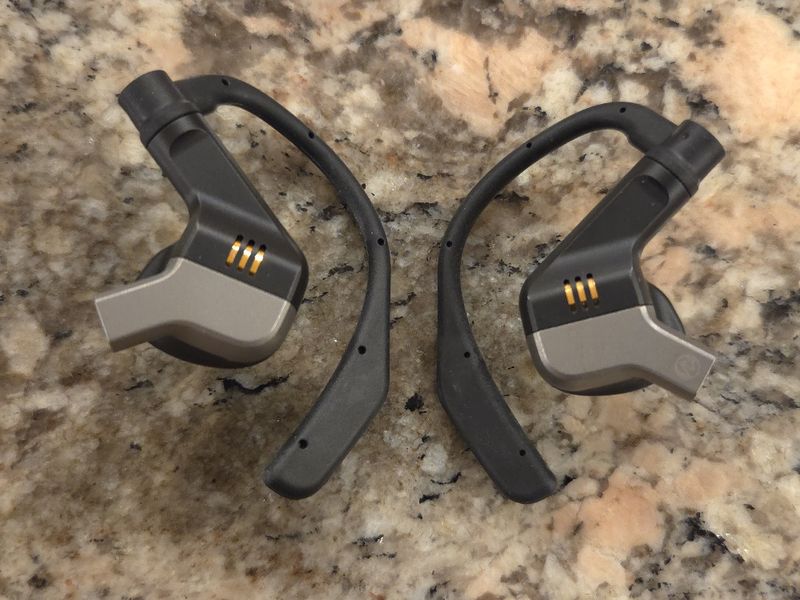
Sound Analysis and Comparison.
I analyzed BEP-01 sound performance using SP4000 LO with Brise Audio Watatsumi amp and Orochi Mini IC, while playing a variety of test tracks, such as Agnes Obel’s “The Curse”, Sandro Cavazza’s “So much Better” (Avicii remix), C-Bool’s “Never Go away”, Ed Sheeran “Shape of you”, Alan Walker “Darkside”, Galantis “Hunter”, Iggy Azalea “Black widow”, Indila “Boite en argent”, Dua Lipa “Love Again”, Counting Crows “Big yellow taxi”, Bob Marley “Jamming”, David Elias “Vision of her”, Michael Jackson “Dirty Diana”, and SaberZ “Without your love”. The IEMs I received had already undergone proper burn-in for many hours before, during, and after the recent CanJam NYC. In all my sound analysis of BEP-001, I used Azla Crystal eartips because, given my ear anatomy, they provided the best tonal balance and secure, comfortable fit, relative to this particular pair-up.
Also, since my sound analysis includes many comparisons with the Fugaku, I would like to title this section of the review “Sound Analysis and Comparison”. Furthermore, I will refer to Fugaku as “Fu” and to BEP-001 with Wata as “BW”.
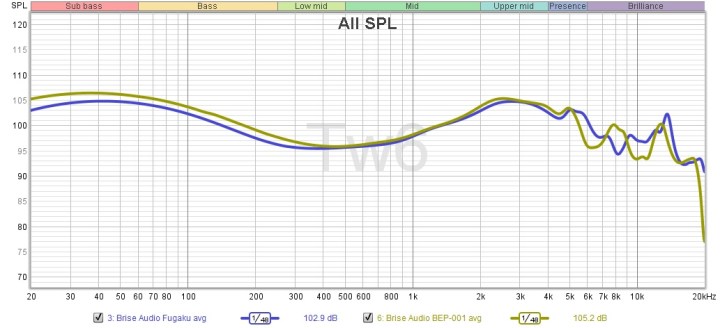
BW bass is scaled up compared to Fu, both in the weight of sub-bass rumble and in the stronger mid-bass impact, especially noticeable in the mid-bass’s more authoritative presence. Both have the bass with a powerful physical presence of a deep, elevated sub-bass rumble you can feel and the hard-hitting, visceral mid-bass impact, which has plenty of fullness and bloom without overwhelming the rest of the sound. But BW scales it up by a few dBs, very tastefully, while still keeping the balanced W-shaped sound signature. Another thing in common with Fu/BW bass is how multidimensional, dynamic, and layered it sounds, making some other IEMs sound flatter.
The mids are where I hear the biggest difference between these two, with Fu sounding more transparent, less colored, with a more neutral body (in the lower mids) and more revealing tonality (in the upper mids). In contrast, BW mids have a fuller body with a smoother, more organic, and more musical tonality; they are as resolving as Fu mids but less revealing due to greater coloring that adds a layer of warmth to the sound, especially vocals. What I find interesting is that, despite this more musical, natural direction in the tuning of the mids, BW still maintains good layering and separation of the sound.
Both have excellent treble extension, noticeable in the long tails of cymbal crashes, with longer sound decay without being chopped off, even though I wouldn’t call either Fu or BW particularly airy. Perhaps I can describe this treble extension as having well-controlled airiness, which still contributes to very good layering and separation of the sounds. From a tonality perspective, Fu treble is more revealing, with greater lower-treble presence and a little more energetic crunch. In contrast, BW treble has a similar extension but with more natural definition and a more relaxed sparkle. In other words, I hear the Fu treble to have a bit more analytical clarity, while the BW treble has more natural clarity.
From a technical perspective, both have a holographic spread of sounds and a similarly expanded height/depth of the soundstage, but the BW soundstage spreads just a bit wider. Overall, both have a rounded soundstage shape, but BW has a slightly wider L/R spread. They also have similar expanded vertical dynamics and, as already mentioned, great layering and separation of the sounds. I do hear Fu as having slightly more air between the layers of the sound, while BW has a bit more note weight and density, and each sound is still easy to distinguish in the mix with absolutely zero congestion or veil. Furthermore, both have a super-black, deep background, making details pop out of the darkness with a clean transition of notes between on/off states.
Interconnect Cables
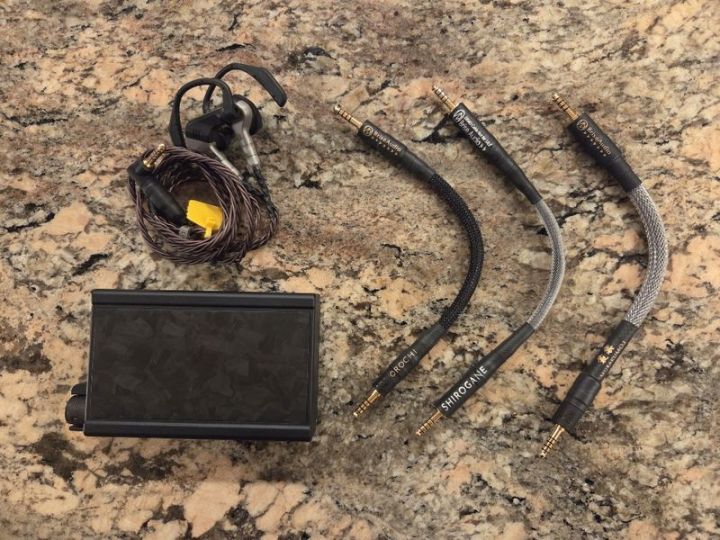
Along with the Orochi (copper) Mini IC, I also received the Shirogane (silver) Mini and Murakumo3 (copper) Mini ICs for testing, since I was curious how they affect sound when using the Wata amp. Despite being a short interconnect cable, there are actually some noticeable changes in sound you can spot even in a blind test. Worth mentioning, Brise Audio places a lot of emphasis on the need for a proper 4.4mm BAL IC cable with an interconnected ground, since some manufacturers connect only the balanced signal pairs, not the ground between the connectors.
Of these 3 IC cables, Orochi had the most natural tonality, with excellent bass extension and impact, slightly smoother mids, and a slightly relaxed treble intensity. Shirogane changes the tuning to make it more revealing, especially in mids, with less coloring, giving the sound more transparency and a little more sparkle in treble. Murakumo3’s tonality is somewhere between Orochi and Shirogane, with similar bass impact, a naturally revealing tonality (in the upper mids), and similar treble sparkle as with Shirogane. Murakumo3 also slightly expands the soundstage and has the blackest background of the 3 IC cables.
Source pair-up.
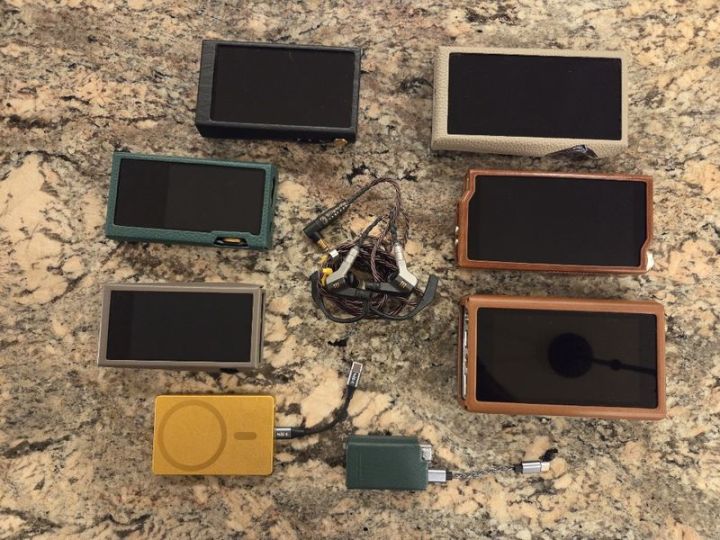
BEP-001 driven/paired-up directly from DAPs yields slightly different results compared to pairing up through Wata. The Wata extracts higher-resolution, max-detail retrieval, and gives the mids more transparency. Most of the DAPs yielded a bit smoother tonality with BEP-001 in mids, but it varied. Keep in mind that BEP-001 is not easy to drive; it requires more power to reach its full potential. The following impressions were collected while comparing the BEP-001 sound tuning between SP4k/Wata and a direct connection to the PO of the following DAPs.
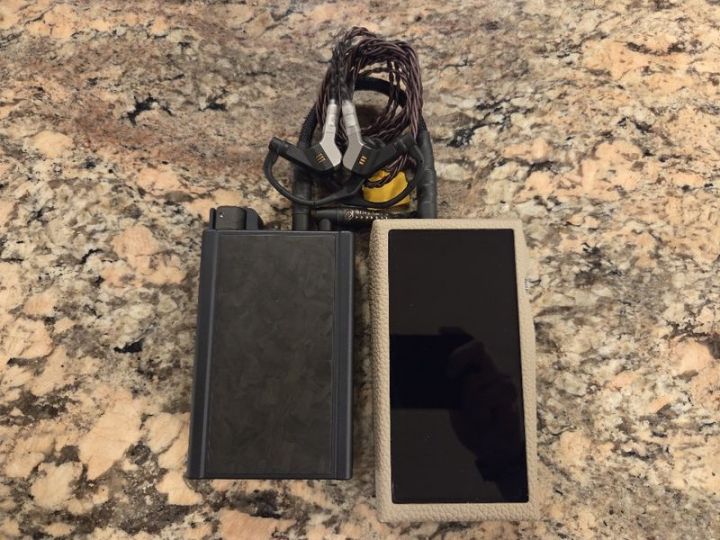
A&K SP4000 – relative to Wata, and with Advanced DAR enabled, the soundstage expansion and imaging are very similar, perhaps with Wata being just a touch wider. With bass, BEP-001 absolutely needs HDM (high-driving mode) enabled to tighten up the bass, give notes better control and articulation, especially, a noticeable change in mid-bass. With HDM off, bass notes were softer and more laid-back, with longer attack and decay, shifting the focus to sub-bass. The mids with SP4k are smoother, fuller-bodied, and with more note weight. Here, HDM also helps bring mids forward and improves resolution and detail retrieval. But with treble, the effect was the opposite: with HDM off, the energy of the treble crunch was very similar to the Wata pair-up, but once you turn HDM on, the treble became a bit smoother. Personally, I preferred HDM on, a must in pairing up with BEP-001.
A&K SP3000M – relative to Wata, with DAR enabled, the soundstage expansion is nearly identical, and imaging is also close. However, due to a note density, I felt that with 3kM, the imaging was a bit less holographic. To my surprise, the bass weight and impact are very similar, even without any HDM “help” like in SP4k. The mids are thicker, with fuller body, greater note density, and, overall, more organic with 3kM compared to Wata. But once I focused on treble, it was very similar to Wata, helping with resolution and detail retrieval. Unless you want more transparency and less coloring in mids, where pairing up with Wata excels, 3kM makes a great little portable streaming source connected directly to BEP-001. Just keep in mind, a bit more coloring and note weight in mids.
iBasso DX320Max Ti – relative to Wata, the soundstage expansion and imaging here are nearly identical. Also, I hear an excellent tight, articulate definition of the bass, from sub-bass to mid-bass, similar to pairing up with Wata, except with 320Max, I hear even more rumble in sub-bass. The presentation of mids here is pushed back, has fuller body, smother tonality, doesn’t “shine” as much, but is very organic and musical. The treble seems similar to Wata, but the fuller-bodied mids make the upper-end presentation sound more relaxed, with a bit less crunch. Loved the bass here, but up top it was a bit too smooth, not rolled off, just smoother.
Hiby RS8ii – relative to Wata, the soundstage expansion is slightly wider in this pair-up, by a small margin, but the L/R spread does stretch a bit more. The bass has a similar sub-bass texture and weight, but mid-bass is a bit laidback, not as tight or fast. I had RS8ii in high gain, turbo on, and the mid-bass speed went from the slowest in Class A to tighter control in Class AB, and became a bit more multi-dimensional in Adaptive amp mode (which ended up being my preference in this pairing). The mids have a fuller body and smoother, more textured tonality, but the treble does gain a bit of extra crunch, while still being close to what I hear with Wata up top.
L&P P6 Pro – relative to Wata, the soundstage expansion of BEP-001 here reminded me more of Fugaku, maybe with a bit more depth than width, although P6Pro yielded even a touch narrower L/R spread. Bass is still tight, articulate, well-controlled, multi-dimensional, but just a little more rounded and a bit bouncier; mids are natural, resolving, and balanced relative to the bass; treble has a perfect balance of crunch and resolution, though a bit smoother. Compared to Wata, the mids here are smoother and warmer, and the treble is a little more relaxed as well. Overall, this pair-up has a little more laid-back presentation.
Cayin N6iii w/T201 – by default, I had Solid-state on and, relative to Wata, heard a similar soundstage and imaging, with just a slightly narrower L/R spread. The bass hit hard, with more weight in the sub-bass rumble; the mids were thicker and fuller, while the treble had a similar natural sparkle. When I switch to Tube-Classic timbre, the soundstage opens up more, becoming even wider and more holographic than with Wata; the bass hits as hard, the mids shed a layer of smoothness, becoming more revealing, and the treble gains more sparkle. Tube-Modern lost a bit of texture in the mids, so I preferred going back to Tube-Classic. Tube-Classic mids were still a bit smoother than when paired with Wata, but T201/Tube made a great alternative to Wata as a portable streaming source, and even a touch more revealing in the mids compared to 3kM.
NiPO A100 – this was a big surprise. Relative to Wata, the soundstage expansion of BEP-001 in this pair-up is bigger and even more holographic. The bass hits as hard and sounds as multi-layered as before, with the same deep sub-bass rumble and tight, tactile punch. Mids do have a bit more body than in Wata, but they do come close, with just a little more density and a thin layer of textured musicality. The treble was very close as well, with a similar level of extension and natural resolving crunch. I absolutely loved this pair-up, but A100 had to be in high gain to achieve this level of synergy.
iBasso DC Elite – this was another surprise, because it paired better with BEP-001 than the 320Max. Relative to Wata, the soundstage expansion and imaging here are very close, perhaps with Elite being a touch narrower in L/R spread. Also, I hear an excellent tight, articulate definition of the bass, from sub-bass to mid-bass, similar to pairing up with Wata, even with the same added rumble as I heard from 320Max. But unlike Max, the presentation of mids here is more forward, with better resolution and more transparency. It still sounds warmer and smoother compared to Wata, but I liked it better than with Max. The treble seems similar to Wata, with a touch more relaxed crunch. This portable pair-up was also great.
Overall, pairing with Wata had the best synergy, especially for mid-resolution and detail retrieval. Still, unlike my testing of Fugaku, where the LO of some sources made the treble a bit too spicy and the upper mids a bit more revealing, here with BEP-001, most sources paired up really well, either connected directly to IEMs or through LO to Wata.
Conclusion.
While attending the CanJam NYC show, many were eager to hear the BEP-001 prototype, even calling it an “amp-less” Fugaku. Of course, the intent of this prototype was not to be an amp-less Fugaku, but rather a new high-end earphone from Brise Audio that doesn’t require a dedicated amp, and allows for a universal detachable cable replacement. But you can’t help but notice its connection to Fugaku. The idea behind the Fugaku design was quite innovative, as an all-in-one, transportable, compact audio system. Still, it didn’t allow for easy cable rolling, trying the amp with different IEMs, or listening to the IEM on its own. With Fugaku, Brise Audio fine-tuned the system by mixing and matching their carefully designed and selected components. The release of Watatsumi unleashed the Dragon and gave audiophiles the taste of Fugaku’s amp tech. Their new high-end IEM, currently known as BEP-001, should also give audiophiles a taste of Fugaku’s tuning. Furthermore, BEP-001, with its stock cable and Watatsumi amp, will be cheaper than Fugaku. The final assessment of their performance will come when the product is officially released, but the taste this prototype left in my “ears” impressed me a lot.
I tested BEP-001 with Watatsumi (BW) to have a more meaningful comparison with Fugaku (Fu), and I can definitely hear them sharing the same DNA, with slightly different tuning flavors. Both Fu and BW have a balanced sound signature with a relatively coherent tuning, where I found BW to be more W-shaped, emphasizing deep, visceral bass, natural, detailed mids, and a resolving, clear treble. Fu mids are less colored and slightly more revealing, with more energetic treble, while BW mids sound more natural, add note weight, and have a more relaxed treble laced with natural clarity. What still amazes me about either of these IEMs is how effortlessly and realistically they make everything sound, regardless of music genre or whether the instruments are natural or synthesized. Based on my personal sound preference, I have to give the edge to BEP-001 for how it makes everything sound more natural, and still resolving. For great synergy with many DAPs and dongles I use directly with these IEMs, making the setup more portable on the go. Even using other DAPs’ LO with BEP-001 and Wata wasn’t as picky as I found it with Fu, where, with some, it made the sound more revealing up top.
I think that making the BEP-001 prototype available for general listening ahead of the official release was a great idea. In theory, the sound of the final version shouldn’t be affected by changing pure Titanium to a more durable Titanium 6-4 alloy, since it’s a similar acoustic chamber material. A change of the connector from mmcx to P-ears can have a minor contributing factor, and I assume the cable material has been finalized, but you never know. Either way, Brise Audio is on the right track, with a solid record of well-recognized releases, and I can’t wait to hear the final version of these upcoming Brise Audio flagship IEMs.

 Twister6 Reviews