
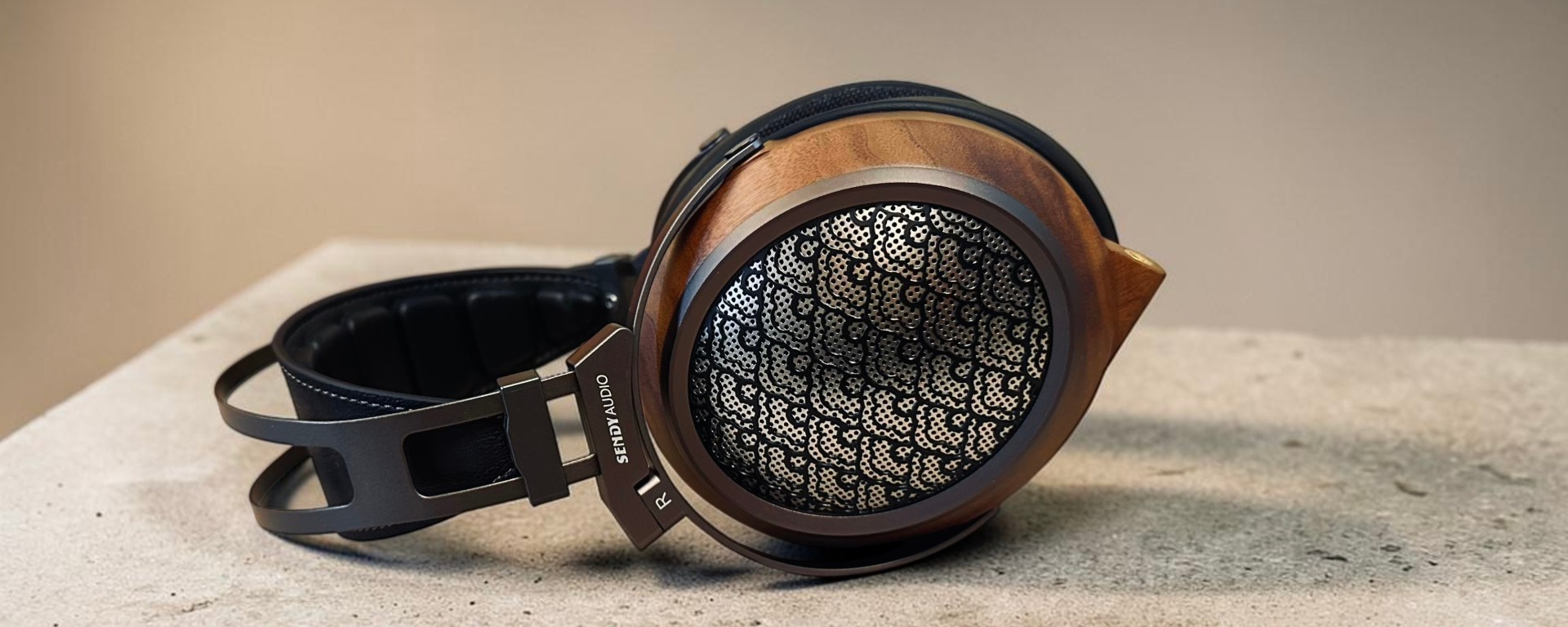
A cozy boutique headphone for the long sessions!
PROS: Premium build & craftsmanship | Easy warm tuning | Engaging, dense midrange – strong vocal presence and note weight | Very nice bass texture | Strong dynamics (for a planar) – noticeable punch and macrodynamic contrast | Smooth, fatigue-free treble – easy long listening without harshness | Very high-quality stock cable & accessories – genuinely flagship-level inclusion | Scales well with better sources – benefits from cleaner amplification without being hard to drive.
CONS: Warm midrange and slightly recessed ear gain tuning | Not a neutral/reference signature – clear tonal bias toward warmth and presence | A more intimate soundstage compared to some other planars | Micro-detail not class-leading – prioritises cohesion over resolution | Bass lacks physical slam – more about texture than impact | Timbral coloration – especially in upper mids depending on recording.
The product was provided free of charge in exchange for my honest opinion.
Introduction.
Sendy Audio is one of those brands that has quietly carved out a distinct identity in a space that is otherwise saturated with either aggressively technical players or overtly lifestyle-driven offerings. As a subsidiary of Sivga, Sendy occupies a more premium, design-conscious tier within the same ecosystem, but crucially, it has never relied purely on aesthetics to carry its products. Instead, it has consistently positioned itself at the intersection of craftsmanship and engineering—leaning heavily into natural materials like real wood, while pairing them with planar magnetic driver technology that signals serious intent.
From the early days of the Aiva, it was clear that Sendy was not interested in following established design language. The brand built its reputation on headphones that looked and felt artisanal, yet were underpinned by modern driver architectures. That duality – organic design meets technical foundation – has remained central to its identity. However, with each subsequent release, there has been a visible effort to refine not just build and finish, but also product positioning within an increasingly competitive mid-to-high-end planar market.
The Egret represents Sendy’s most deliberate step forward in that progression. It is not positioned as an experimental offshoot or a stylistic variation—it is framed as a flagship in both intent and execution. Everything about it, from the enlarged planar driver platform to the more mature industrial design language, suggests a product that is meant to consolidate what Sendy has been working toward over the years.
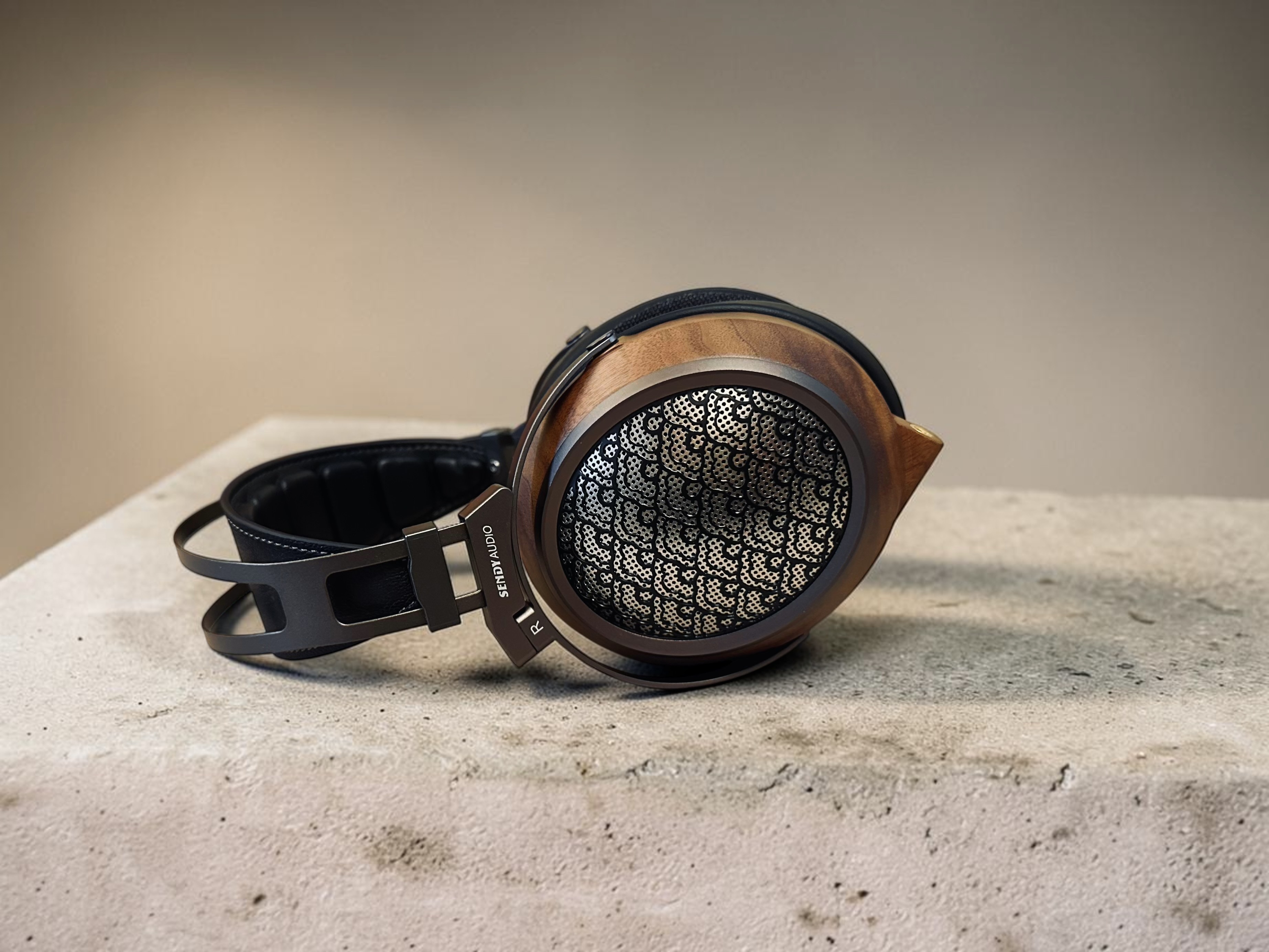
Visually, the Egret retains the brand’s hallmark use of wood, but integrates it into a more cohesive and structurally confident form factor. The grille design, inspired by the wings of an egret, is intricate without appearing ornamental for its own sake, and the overall construction reflects a clear emphasis on durability and finish quality. At a strategic level, the Egret enters a segment that is no longer forgiving. The “affordable flagship” category has become densely populated with technically competent planar headphones, many of which prioritise measurable performance and aggressive value propositions.
Sendy’s approach, however, appears to be less about undercutting competitors and more about offering a differentiated product – one that leans into its strengths in material design, driver scaling, and overall presentation.What makes the Egret particularly interesting, before even considering how it sounds, is that it reflects a brand that has moved past establishing identity and is now focused on refining it. It is a product that carries expectations – not just because of its price point, but because it represents the most complete expression yet of what Sendy Audio is trying to be. So let’s see how it performs and whether it is able to deliver on its promises.
Official links – Sendy Audio Egret ($759, Official AliExpress Store)

Design & Build.
Sendy has always leaned into aesthetic identity, and the Egret refines that approach without losing its character. The use of black walnut cups is not merely decorative—it introduces a tactile warmth that contrasts effectively with the otherwise industrial precision of the CNC-machined aluminum frame. The open grille design, inspired by the wings of an egret, is intricate without feeling excessive, striking a balance between visual complexity and structural purpose. In hand, the headphone feels dense and purposeful rather than bulky, with no obvious compromises in material quality or assembly.
The suspension headband system is well executed, distributing weight evenly and avoiding pressure hotspots during extended listening sessions. Clamp force is moderate to relaxed, which contributes to comfort but may slightly affect stability depending on head shape. The earpads are plush and sufficiently deep, allowing for proper ear clearance without creating excessive distance from the driver, which is critical for maintaining the intended tuning. This is a headphone designed for long-form listening, and it largely succeeds in that regard.
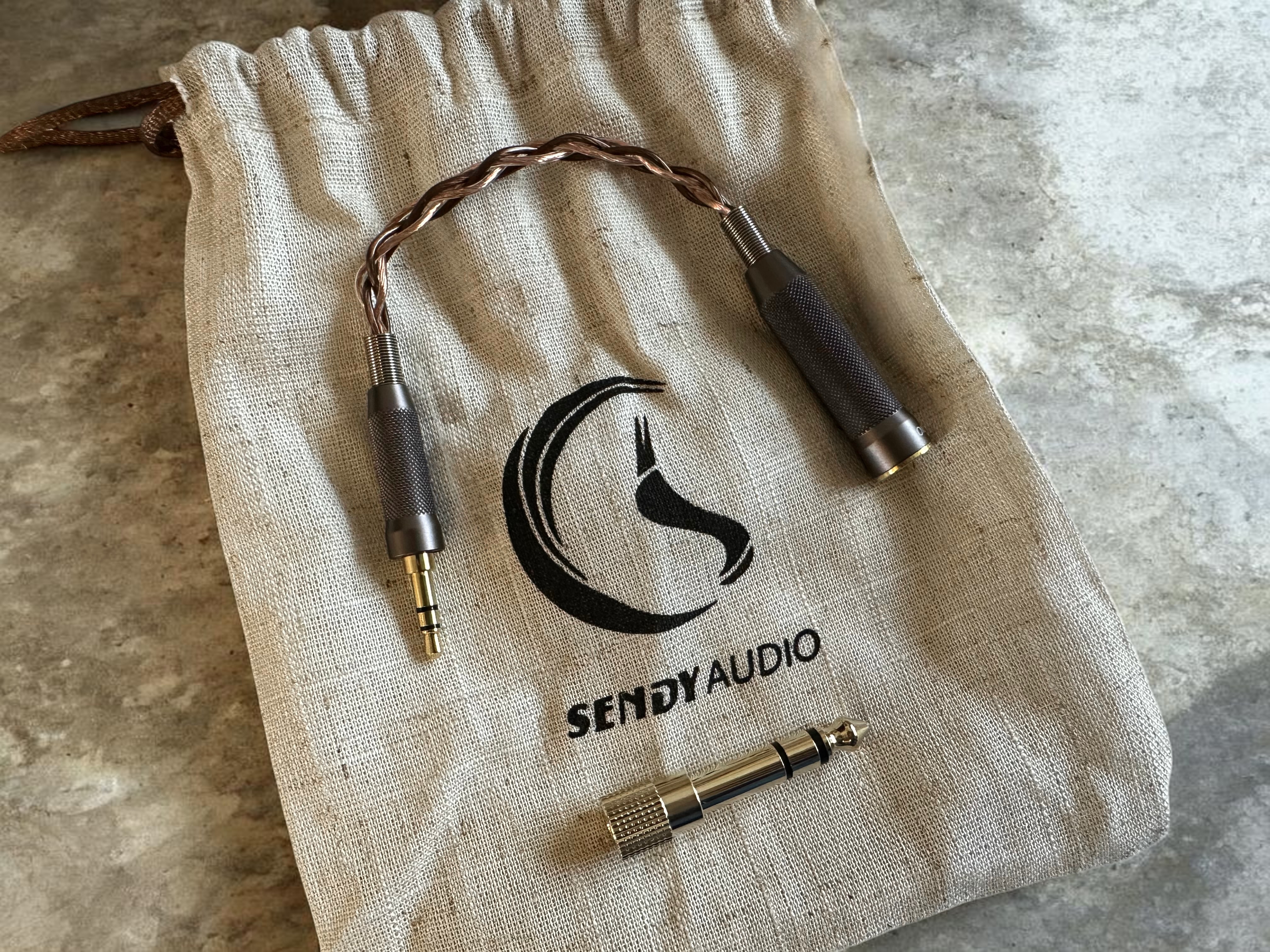
The included cable deserves specific mention. It is not an afterthought—it is a statement piece. Thick, braided, and constructed using a multi-metal composition, it reflects the same design philosophy as the headphone itself: deliberate, slightly extravagant, and unapologetically premium. Whether that translates into audible improvement is debatable, but in terms of build and ergonomics, it is unquestionably high-end.

Technical Specifications.
- Driver Type: Planar Magnetic
- Driver Size: 98 × 84 mm
- Diaphragm: Nano-scale composite (<800nm thickness)
- Acoustic Design: Open-back, full-size
- Frequency Response: 20 Hz – 40 kHz (some early listings quote 8 Hz – 40 kHz)
- Impedance: 24 Ω
- Sensitivity: ~95 dB/mW
- Weight: ~420 – 443 g
- Cable Type: Detachable multi-metal composite (OFC + silver-plated + gold-enamelled strands)
- Cable Length: ~1.8 m
- Termination: 4.4mm balanced
- Headphone Connectors: Dual 3.5mm at earcups
- Materials:
- Handcrafted North American black walnut earcups
- CNC-machined aluminum frame
- Leather suspension headband
- Plush angled earpads
What’s in the Box.
Sendy doesn’t treat packaging as an afterthought – it’s very much part of the “flagship experience,” and it shows the moment you open the box.
Inside, you get:
- Sendy Egret Headphone
- Premium hard carry case (leather finish)
- Rigid, display-worthy, and frankly overbuilt in a good way
- High-end detachable cable
- Triple-composite design (OFC + silver-plated + gold-enamelled strands)
- Thick, braided, and genuinely flagship-grade
- Adapters:
- 4.4mm → 3.5mm
- 3.5mm → 6.35mm (quarter-inch)
- Cable pouch / storage bag
This is one of those rare cases where the unboxing doesn’t feel like a formality. Like previous Sendy/Sivga headphones, the case alone sets the tone – it’s large, unapologetically premium, and clearly designed to be part of the ownership experience rather than something you throw in a cupboard. The cable follows the same philosophy. It’s not just “good enough”—it’s the kind of cable people usually spend extra money on. It’s minimalistic and yet nothing here feels cost-cut. It’s a complete, well-thought out package and more importantly, it actually matches the positioning of the product.

Driver & Technical Foundation.
At the core of the Egret is a large-format planar magnetic driver measuring approximately 98 x 84mm. This is not merely a specification to inflate perceived value—it has direct implications on how the headphone behaves. Larger diaphragms, when properly controlled, can move air more effortlessly, resulting in improved low-frequency extension and a more natural sense of scale.
The diaphragm itself is extremely thin, reportedly under 800 nanometers, and utilizes an electron beam deposition process for the conductive traces. In practical terms, this allows for faster transient response and lower distortion, particularly in complex passages where lesser drivers begin to smear or compress.
However, what is immediately noticeable is that Sendy has not tuned the Egret to showcase these capabilities in an overtly analytical manner. The technical foundation is there, but it is being used in service of a more cohesive and musically grounded presentation rather than as a tool for hyper-resolution. This is a critical distinction, because it defines how the Egret positions itself against other planars in its class.
Build Quality.
Build quality is where the Egret separates itself from a large portion of the competition – not incrementally, but decisively. The combination of real walnut wood and precision-machined aluminum is executed at a level that feels intentional rather than decorative. It feels more solid and substantial – a step or two above the Sendy Aiva which I tested a few years back. The wood isn’t just there for visual appeal; it’s finished and integrated in a way that gives the headphone a sense of craftsmanship that most planars at this price simply don’t attempt. Each unit carries its own wood grain pattern, which adds a subtle layer of individuality without turning into a gimmick.
The metal components reinforce that impression. The frame, yokes, and adjustment mechanisms all feel solid, with no unwanted play or creaking. Tolerances are tight, and the overall construction inspires confidence in long-term durability. This is not a fragile, “handle with care” planar. It feels robust enough for regular use without constant caution. The grille design deserves mention as well. It’s intricate, a design inspired from the wings of an Egret. But more importantly, it’s structurally clean. There’s no sense of excess or unnecessary layering – it looks complex, but is executed with restraint.


Then there’s the cable and what a cable it is! Constructed with a hybrid complex of 30 strands of 0.05mm Furukawa OFC, 10 strands of 0.05m silver plated copper and 10 strands of 0.05 enamelled gold plated copper – it is very thick, very well braided and unapologetically premium. It matches the headphone in both aesthetics and build, and in fact takes the premium-ness to a level above. Connectors are solid, terminations are clean, and there’s no immediate pressure to replace it – which is rare at this level. This is a solid premium cable that aftermarket manufacturers charge several hundred dollars for.
Overall, the Egret doesn’t just meet expectations for build – it comfortably exceeds them. In a category where many competitors lean heavily on plastics or utilitarian finishes, this feels like a product that was designed to be owned, not just used.

Fit & Comfort.
Fit and comfort on the Egret are, quite simply, very well dialled in. This is one area where Sendy has clearly iterated and matured, because it avoids the usual planar pitfalls – uneven weight distribution, hotspot-prone headbands, or overly stiff clamp.
The suspension headband does the heavy lifting here. It spreads the weight evenly across the head without creating pressure points, and more importantly, it doesn’t feel like it’s doing so as a workaround. The Egret sits naturally – no constant micro-adjustments and no awareness of “weight management” while listening. You just put it on and it stays out of the way.
Clamp force is on the relaxed side, but not loose. It strikes a well-judged balance between stability and comfort. There’s enough grip to keep the headphone planted, but never enough to create fatigue over longer sessions. This also contributes to its slightly more “open” wearing feel compared to tighter clamping designs.
The earpads are equally well executed. They’re plush, properly contoured, and crucially, deep enough to avoid ear contact with the driver housing. That depth matters not just for comfort, but also for maintaining the intended acoustic spacing. Material choice leans toward soft and breathable rather than overly dense, which helps during extended listening.
The net result is a headphone that feels lighter than it actually is. You can run it for hours without that creeping sense of discomfort that often accompanies larger planars. It doesn’t just pass the comfort test, it clears it convincingly.
Sound Analysis.
The Egret presents as a warm-neutral headphone with a distinctly warm lower-midrange and easy recessed ear gain. It does not adhere strictly to reference neutrality, nor does it lean fully into warmth. Instead, it occupies a space where tonal density, immediacy and keeping it easy for long listening session are prioritized over linearity. The result is a presentation that feels intimate and engaging, often placing the listener closer to the performance than many of its competitors – like they’re standing in the jam room rather than a large studio room or arena.
This sense of intimacy is not incidental – it is a defining characteristic. The Egret does not attempt to simulate a distant, expansive listening environment. Instead, it brings elements forward, creating a more direct and, at times, confrontational listening experience. This can be highly engaging with the right material, but it also means that the headphone is less forgiving of aggressive or poorly mastered recordings.
Bass – The bass response on the Egret is measured and controlled rather than dominant. Sub-bass extension is present, as expected from a planar driver of this size, but it is not emphasized. There is no attempt to create artificial rumble or exaggerated depth. Instead, the focus is on maintaining a clean and coherent low-end that integrates seamlessly with the rest of the frequency range. The mid-bass carries a slight elevation, which introduces a sense of warmth and body without crossing into bloat. This contributes to the overall tonal richness of the headphone, particularly in how it supports the lower midrange. Impact is present but not forceful, and while the driver is clearly capable of delivering more slam, Sendy has opted for restraint. Where the bass truly distinguishes itself is in its texture. There is a level of granularity and articulation that allows individual bass notes to be perceived with clarity, rather than blending into a homogeneous mass. This is particularly evident in acoustic and jazz recordings, where the nuances of bass instruments are preserved. However, listeners seeking a more visceral or impactful low-end may find the Egret somewhat reserved.
Midrange – The midrange is unequivocally the focal point of the Egret’s tuning. It is forward, dense, and highly textured, bringing vocals and instruments into immediate focus. There is a tangible sense of presence, as if the sound is being projected directly toward the listener rather than diffused across a wider stage. Vocals, in particular, benefit from this approach. They are rendered with a level of intimacy that can be compelling, especially in well-recorded material. There is a weight and solidity to the midrange that gives instruments a physical quality, avoiding the thinness that can sometimes plague planar designs. However, this forwardness is not without consequence. On tracks with elevated upper midrange energy, the Egret can verge on intensity, occasionally pushing vocals or certain instruments slightly too far forward. This is not a consistent issue, but it is present enough to be a defining characteristic of the headphone. It demands careful pairing with source material and, to some extent, amplification. There is also a subtle warmth extending from the lower mids, which adds to the overall richness of the presentation. This warmth is generally well-controlled, but it does contribute to the Egret’s departure from strict neutrality.
Treble – The treble response is smooth, controlled, and deliberately restrained. There are no pronounced peaks or sharp edges, and the overall presentation avoids the kind of artificial brightness often used to create a false sense of detail. Extension is adequate, providing enough air to prevent the sound from feeling closed-in, but it does not extend aggressively into the upper registers. Instead, the Egret relies on its transient response and underlying resolution to convey detail without resorting to emphasis. This results in a treble that is easy to listen to over long periods. Fatigue is minimal, even at higher volumes, which aligns with the headphone’s overall design philosophy. However, this approach also means that listeners accustomed to brighter, more analytical signatures may perceive the treble as slightly subdued.
Technical Performance.
From a technical standpoint, the Egret is competent but not class-leading in every aspect. Detail retrieval is solid, particularly in the macro sense, where larger dynamic shifts and structural elements of the music are clearly conveyed. Micro-detail, however, is not pushed to the forefront, and some finer nuances may be less immediately apparent compared to more analytical competitors.
Imaging is precise within the context of its presentation. Instrument placement is clear and stable, particularly in the midrange, where the forward tuning enhances positional cues. However, the soundstage itself is not expansive. It offers a sense of openness, but not significant width or depth. The presentation remains relatively intimate, reinforcing the headphone’s overall character.
Dynamics are a notable strength. The Egret handles both macro and micro-dynamic shifts with confidence, contributing to a sense of liveliness and engagement. This is one area where the headphone leverages its planar driver effectively, delivering impact and contrast without distortion.
Layering and separation are competent, though slightly influenced by the cohesive nature of the tuning. The Egret prioritizes musical flow over analytical dissection, which can result in a more blended presentation compared to highly technical headphones.
Synergy & Drivability.
The Egret is relatively easy to drive for a planar headphone, but this should not be interpreted as meaning it performs optimally from all sources. While it can reach adequate volume levels from portable devices, it benefits noticeably from higher-quality amplification. I could easily notice differences going from my Macbook Pro to the iBasso DX320 to the DROP + SMSL and THX AAA 789 Amp. Instruments, staging and imaging particularly sounded more defined and refined with cleaner amplification. Clean, well-controlled amplification really complements Egret’s tuning, enhancing its dynamics and improving overall clarity. It does not require excessive power, but it does respond to improvements in source quality. This makes it a headphone that scales with your setup, even if it does not demand it.
Comparisons.
Sendy Aiva.
The Aiva is where Sendy first made noise, and in many ways, the Egret feels like a direct response to the criticisms of that headphone. The Aiva leaned heavily into a mildly V-shaped presentation—elevated treble energy, a lighter midrange body, and a presentation that felt more “hi-fi impressive” than tonally grounded. It had sparkle, air, and an immediate sense of technicality, but it could also come across as slightly disjointed, especially in the upper mids and treble where peaks could introduce fatigue. The Egret, in contrast, is clearly a course correction. The tuning is more cohesive, the midrange is brought forward significantly, and the treble is smoothed out to the point where it no longer draws attention to itself. Where the Aiva tries to impress you in the first five minutes, the Egret is designed to hold you over long sessions. Technically, the Egret also feels more mature. The Aiva’s detail retrieval is often perceived through its treble emphasis, whereas the Egret relies more on actual resolution and driver control. The Egret’s bass is fuller and more textured, while the Aiva’s is quicker but comparatively leaner.
In simple terms:
- Aiva = more “wow”, more sparkle, less coherence
- Egret = more grounded, more mid-centric, more refined
If you ever felt the Aiva was trying too hard, the Egret is the version that finally relaxes it.
Sivga P2 Pro.
The Sivga P2 Pro is essentially the alternate-universe sibling to the Aiva—same ecosystem, similar design philosophy, but tuned slightly differently. Where the Aiva leaned bright, the P2 Pro leaned warmer and smoother, though still retaining a slightly recessed midrange compared to true mid-forward tunings. The Egret again moves the goalposts. Compared to the P2 Pro, the Egret sounds more intentional and focused. The P2 Pro can feel a bit diffuse in its presentation, with a softer attack and less defined note edges. It’s a pleasant listen, but it lacks the sense of structure and immediacy that the Egret brings. The Egret’s midrange is significantly more forward and engaging, while the P2 Pro sits more laid-back, almost relaxed to a fault. Bass on the P2 Pro is slightly rounder and softer, whereas the Egret introduces better textural definition and control. Treble is where they diverge subtly. The P2 Pro is safe—almost too safe at times—while the Egret manages to be smooth without feeling rolled-off, maintaining better clarity and articulation.
This is less of a generational gap and more of a philosophical one:
- P2 Pro = relaxed, easygoing, slightly diffuse
- Egret = focused, engaging, structurally tighter
If the P2 Pro was background listening, the Egret is active listening.
Focal Elex.
Elex is the dynamic driver wildcard. While not the exact same driver topology, the Focal Elex (represented here via Focal’s tuning philosophy) is important because it represents a completely different approach to engagement – one rooted in dynamics, punch, and macrodynamic contrast rather than planar smoothness. Compared to a Focal-style presentation, the Egret immediately feels more dense and mid-centric, whereas Focal tends to feel more energetic and contrast-driven.
The Elex-style tuning delivers faster perceived attack, harder slam and more dynamic punch. But it also tends to come with a more aggressive upper-mid and lower-treble region, which can occasionally feel shouty or metallic depending on the chain. The Egret trades that aggression for cohesion and tonal weight. Its dynamics are still strong (for a planar), but they’re not as explosive as a Focal. Instead, it leans into a more continuous, flowing presentation. Soundstage is another key difference: Focal is more intimate but with sharper imaging edges while Egret is similarly intimate, but with softer outlines and more body.
If you’re coming from Focal, the Egret will feel less punchy but more organic. If you’re coming from Egret, the Focal will feel more visceral but less tonally dense.
HifiMan Headphones.
This is the comparison that matters most commercially. HiFiMAN has essentially defined the planar baseline in this price range, and their house sound is immediately recognisable as neutral to slightly bright tuning, large and airy soundstage, and strong emphasis on clarity and separation. The Egret on the other hand takes a very different route.
Against Sundara – The Sundara is leaner, brighter, and more neutral. It offers better perceived clarity and a more open presentation, but it lacks the tonal density and midrange presence of the Egret. The Egret sounds fuller, more intimate, and more emotionally engaging, while the Sundara feels more analytical and reference-oriented.
Against Edition XS – The Edition XS widens the gap in technicalities. It has a significantly larger soundstage, better separation, and more apparent micro-detail. It feels expansive and airy in a way the Egret simply does not attempt. However, the Egret counters with midrange weight and cohesion. The XS can sometimes feel slightly hollow or thin in the mids, whereas the Egret fills that space with authority. Vocals, in particular, sound more grounded and immediate on the Egret.
Against Ananda – The Ananda sits somewhere between the Sundara and XS but with improved refinement. It maintains that open, airy HiFiMAN presentation while adding better control and smoothness. Even here, the Egret doesn’t try to compete on staging or openness. Instead, it offers a more intimate, centre-focused presentation with stronger note density. The Ananda feels like a wide-angle lens; the Egret feels like a close-up.
Final Take.
The Sendy Egret doesn’t try to out-resolve HiFiMAN or out-punch Focal and that’s precisely why it works.
- Against previous Sendy/Sivga → it’s the most mature and cohesive evolution
- Against Focal → it trades slam for density and tonal realism
- Against HiFiMAN → it sacrifices stage and air for intimacy and presence
This is not a “benchmark” headphone. It’s a perspective headphone and depending on what you value – stage vs intimacy, analysis vs engagement, it will either feel like a limitation or a deliberate upgrade.

Conclusion.
The Sendy Egret is a headphone that feels deliberately voiced and deliberately built – two things that don’t always go hand in hand in this segment. It doesn’t attempt to dominate on raw technicalities, nor does it try to mask its intent behind a safe, universally agreeable tuning. Instead, it presents a clear, cohesive identity centred around midrange presence, tonal density, and an intimate listening experience.
That approach comes with both strengths and trade-offs. On one hand, the Egret delivers a presentation that is engaging, textured, and emotionally direct, with a level of coherence that many competitors chasing resolution or stage width often sacrifice. On the other, it gives up some ground in areas that are typically prioritised at this price – namely soundstage scale, ultimate micro-detail retrieval, and low-end physicality. The forward lower-midrange, while a defining strength, can also become a point of contention depending on the material.
Importantly, the Egret responds very well to EQ. Its underlying driver capability and technical foundation allow it to take calibration cleanly, and most of its tonal shortcomings – particularly the lower-midrange forwardness and recessed ear gain – can be effectively addressed when aligned to a reference target curve. Once properly dialed in, it scales into a significantly more balanced and versatile performer without losing its core strengths, making it far more adaptable than its stock tuning might initially suggest.
What is far less debatable is the execution on the physical side. The Egret stands out as one of the most convincingly built headphones in its class. The use of real walnut, the precision of the metalwork, and the overall fit and finish place it firmly in boutique territory. This is not just good build quality for the price – it’s exceptional, period. It feels crafted rather than manufactured, and that distinction carries through the entire ownership experience, from the headphone itself to the accessories it ships with.
Ultimately, the Egret is not a benchmark headphone – it’s a perspective. It prioritises presence over scale, cohesion over clinical precision, and craftsmanship over utilitarian design. For listeners who align with that philosophy, it offers a distinctive and well-executed alternative in a category that often leans toward sameness. For those who prioritise neutrality, staging, or outright technical performance, there are more suitable options. But regardless of where one lands on its tuning, the Egret succeeds in doing something increasingly rare – it feels intentional, both in how it sounds and in how it’s made.

 Twister6 Reviews