
Effect Audio
Long-gone days when Effect Audio tables used to cover only the cable products. Today, Suyang Zou (SY) and his company, after celebrating their 17th anniversary, are involved in so many collabs that I can’t keep up anymore. And many of these collabs are not only based on the contribution of one of their cables by bundling it with IEMs, but also on designing custom cables and cable hardware to match specific IEM tuning. And when it comes to Elysian Acoustics IEMs, EA’s involvement extends beyond cables, manufacturing, and marketing, now including driver selection and actual IEM tuning, continuing to carry the torch even though Lee is no longer involved.
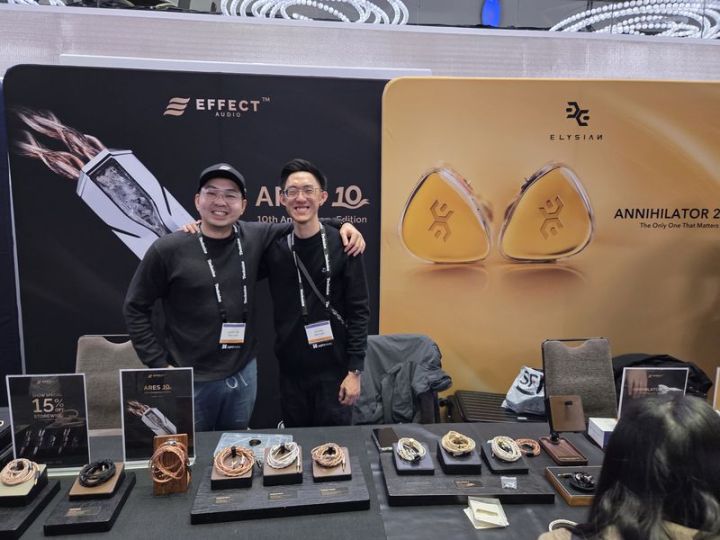
Jordon and Rui greeted me at the table, and it was a pleasure talking to them face-to-face since we usually communicate via email or messenger. I was also impressed by how they handled most of the visitors at the table, without pushing the product, and instead asking each person about their budget, IEMs they are using, type of music they are listening to, and then providing a suggestion of which cable will fit their needs, even offering show discounts on the spot. I’m still hoping SY will return to the NYC show one day, but it was great to see his team holding the fort.
The big highlight on their cable side of the tables was the introduction of EA Ares 10, marking the 10th anniversary of their Ares copper cable with a newly updated design featuring 10 wires, and expected pricing of $699. What surprised me the most was that it felt and handled almost like an 8-wire cable despite having more wires. The new cable was upgraded, using a 26AWG 10-wire design, with pure copper and the addition of gold-copper alloy. In my testing, I heard the cable deliver pure copper performance with typical, weighted, textured bass, complemented by more natural mids and smoother treble. The latter part is not as typical for copper wires, which could add more top-end brightness. Here, the sound with IEMs I tried remained quite natural.
Another cable that caught my attention was from their newly introduced Chronicles of Legends series, EA Leonidaz Z. Actually, before even trying the cable, its Y-split wrapped in calfskin leather was what caught my eye. The wires are a blend of exotic materials, including Pure Silver with a central solid core, Palladium-Silver alloy, and Gold-Plated Silver, priced at $1.7k, which, by today’s flagship cable standards, is not that exotic. In my quick testing, comparing my “reference” Jewel with the FT cable, Leo-Z exhibited a larger, more expansive soundstage, widening it and improving 3D imaging. The tonality was a typical pure-silver, smooth sound, but the resolution and detail retrieval were enhanced. Overall, I got the impression that it was a very natural-sounding and, at the same time, quite resolving cable.


Now, from the IEM side of the EA booth, I also had a chance to hear two newer collab releases that I was actually looking forward to.
FatFreq GM Anniversary Founders Edition is a limited-edition release with only 200 pieces. I’m sure many are familiar with the FatFreq GM release, its sound-shaping modules, and its vocal switch. The anniversary founder’s edition added another DD driver, doubling it from regular GM, while having both in isobaric config, in addition to 8BAs and 4ESTs. Plus, it included a high-end premium cable, a custom EA Ascendium with pure Silver core, Palladium-Plated Silver, Gold-Plated Silver, Palladium-Silver alloy, and Gold-Plated Gold-Silver alloy, a very high-end cable on par with their Centurion II, which explains the price tag of this anniversary edition release going up to $8.6k. With the stage module and vocal switch on, I heard a very balanced, full-bodied sound, a big, open soundstage, deep, elevated bass, smooth, organic mids, and natural treble. Despite the elevated bass, the sound was very coherent. Toggling the vocal switch off, the mids sounded more recessed, and the treble became a bit more emphasized. With the neutral module, the bass was still elevated, but not as much as with the stage module. The mids were slightly more forward and more resolving, and the treble gained more sparkle. It comes with many modules that noticeably affect the sound, and I just ran out of time to try them all.


For many, the highlight of the table was the Elysian Annihilator 2026 release. Quite a few people stop by the tables to hear Anni 26, with a tribrid config of DD, 4BA, and 2EST, and the newly engineered 9.2mm LSR dynamic driver, expected to be priced at $3.3k. It also comes with a new EA Wrath cable, 26AWG 8-wire design, Gold-plated Silver, Silver + Copper alloy, Pure Silver litz + Pure Copper litz. I found it to have a nicely open soundstage, not the widest, but naturally expanded, with decent-sized imaging. I hear it with a deep sub-bass rumble and a more rounded mid-bass punch. By memory, the bass has better control than in Anni 23, especially in note decay, sounding tighter and more articulate. Mids are more neutral and more resolving, and slightly more forward than in Anni 23. Treble is extended and crisp. Elysian Anni is known as the king of non-fatigued treble extension and resolution, but it was hard to recall the exact changes between the ’23 and ’26 models.


Melodic Artification
I’m quite familiar with MA’s Alter Ego release, which I reviewed two years ago. Expecting Melodic Artification to be represented by Musicteck at their tables, I was surprised to see them with their own booth. Still, I quickly realized they wanted to stand out by revealing two new products: Eternitum and Infinitum, each one with a dedicated portable amp unit (3.5mm input, 4.4mm output, and dedicated bass boost and gain switches). Not sure about the pricing for each, but the amp will be included with both, which I think is a great idea and improves the product’s value. I just wasn’t sure why they chose a 3.5mm input, but as long as it has a balanced output, I’m OK with it.


MA Eternitum (pure beryllium composite diaphragm, planar magnetic driver IEMs), without the included portable amp, sounded thinner and less dynamic straight from my P6 Pro. I was reassured that the tuning was done with the amp, so it’s important to use one for the sound evaluation here. Adding their amp into the equation, with bass switch off, I hear a balanced, dynamic, punchy sound; a huge, holographic soundstage; deep, punchy bass; tight, precise, more neutral, natural mids (slightly pulled-back presentation); and crisp, detailed, extended, airy treble. The bass switch added a healthy and well-controlled EQ bass shelf, my preferred sound with these IEMs. I was also told that amp design is being finalized, with gain optimization to accommodate both IEMs and headphones. The power was too high for IEMs, so I could only use the amp at low gain, with the volume set a few clicks up when testing Eternitum.


MA Infinitum (full-size version of Eternitum) – the sound is big, expanded, and fast, also, with a deep, textured bass, natural, smooth mids, and crisp, very crisp but not fatiguing treble. With amp, bass gains more weight and mids gain more body; treble remains crystal clear and airy. With bass boost, bass pops out more, but it doesn’t overpower the mids or the treble. But the treble perception becomes a bit more natural, taking the edge off its intensity. Based on visitors’ feedback, I was told that the Infinitum headband will be optimized for better comfort.


Mysticraft
Finally, I got a chance to meet the legendary Lee. And it’s not an exaggeration, since he built quite a reputation with his previous releases, culminating in his new company, Mysticraft Acoustic Research. Yes, his IEMs under the Mysticraft name are quite expensive, but that doesn’t stop people from pre-ordering and waiting for many months to get the HEX-bird. Even their recent TET release was limited and sold out in no time, with people on the waiting list willing to wait. There is also a more affordable Myth version of IEMs, a lot more affordable and easier to obtain. However, despite its lower price, no corners were cut, and it has a similarly solid build and an impressive faceplate design to the other two flagships. Plus, Lee collaborates on and contributes to other projects, which are often discussed in the Watercooler thread on Head-Fi. While at the show, I was finally able to hear all three of these IEMs, although both TET and HEX were someone else’s units, since all TET were already spoken for, and there was a waiting line to hear the HEX demo. At least, I was able to hear these IEMs, because last year I gave up waiting in line to hear his DIO. Btw, later in the day, I ran into Lee again, when he received the Watercooler award during the end-of-day ceremony on Saturday.
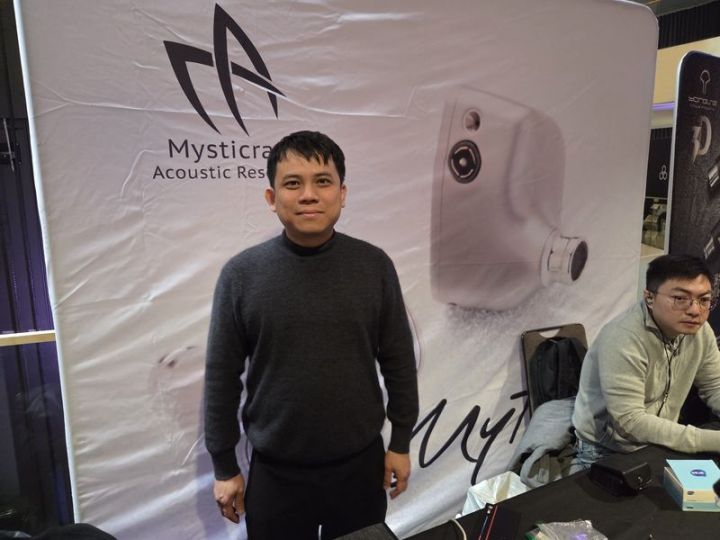
The Mysticraft TET I tried at Lee’s table came with a stock-premium SPC cable. Straight from P6 Pro, it has a very dynamic, punchy sound, W-shaped balanced tuning, and punchy, deep bass that makes the air vibrate in your ears without pressure. Very detailed natural mids, yet you can extract every micro detail. Treble is crisp, extended, detailed, and non-fatigued. Also, I hear a huge holographic soundstage expansion. When I switched to an upgraded Gold-Plated Silver cable, the sound became brighter and a bit less textured. With TET, I preferred a stock cable.


The Mysticraft HEX wasn’t even available at the table, and I found it later by borrowing it from another Watercooler/HF member. It also has a huge soundstage with holographic imaging, a very dynamic, punchy, W-shaped, balanced sound-sig, warmer tonality, elevated, strong, multi-layered bass, deep, fuller-bodied mids with a very natural, organic, detailed tonality, and crisp, natural treble. HEX stood out with a warmer resolving sound. To my ears, relative to TET, the HEX bass was a bit boomier. Per my personal sound preference, I actually preferred TET tuning.


The Mysticraft Myth costs a fraction of the HEX price, literally 1/10 of it, considering close to the $10k price tag of HEX. But its performance does NOT scale down by the same factor. It still offers a huge soundstage and holographic imaging. It has Lee’s tuning DNA for sure. W-shaped punchy sound tuning, with a punchy, deep, extended bass, more neutral, clear, detailed mids that have a more revealing tonality. The treble is crisp, airy, and extended.


DITA
After a long break from CanJam NYC, DITA was back at the Big Apple show, attending last year and again this year. They occupied only one table, with a very focused product presentation that put the spotlight solely on their flagship Ventura and budget Prelude IEMs. I was a bit surprised since they usually make a bigger splash at CanJam SGP shows, with many more products under their Project Perfection distribution umbrella. Nevertheless, they still gathered a lot of people, keeping their table busy every time I walked by.
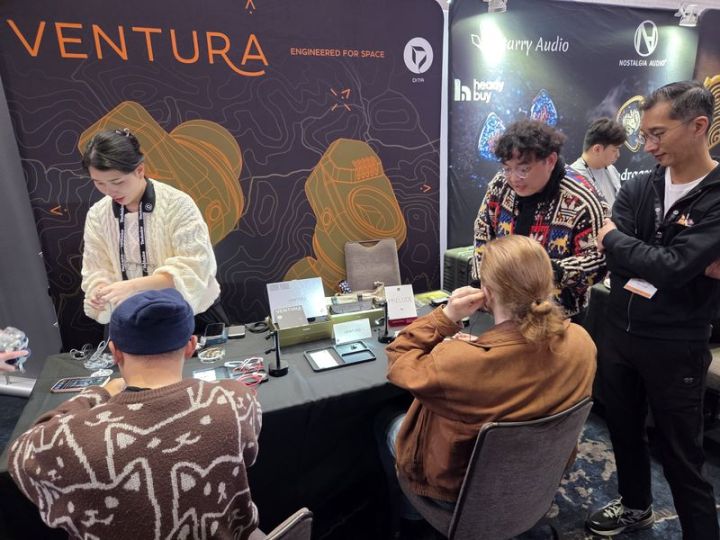
I have read many impressions about their Dita Ventura flagship, and was looking forward to finally hearing it. Priced at $4.8k, these IEMs feature Dita’s signature single DD design and a 12mm custom single driver with a vapor-deposited gold-on-titanium-ceramic diaphragm. In my testing, I hear these to have a rounded soundstage with more center-focused imaging. They have a relatively balanced tuning and a natural, neutral tonality. Punchy mid bass with less sub bass weight, but still offering a good textured depth, and more elevated tight mid-bass punch. Neutral mids with very clear, detailed tuning and a slightly colder tonality; also, a crisp, detailed, non-fatiguing treble.


Right next to it was their budget release, single DD design Dita Prelude, priced at only $159, which also included an ANTE usb-c dongle, scaling up the performance of these IEMs. Here, I hear a big soundstage opening, V/U shaped tuning, neutral, tight bass with deeper sub-bass rumble/ extension, slightly pulled back, neutral, natural mids, and crisp, airy treble. I found the tuning to be quite energetic, especially up top.


Page 1 – Intro and Overview of the Showroom.
Page 2 – Effect Audio, Melodic Artification, Mysticraft, Dita.
Page 3 – Bloom Audio, Final Audio, Letshuoer, Lunch Break.
Page 4 – Eletech, Forte Ears, Volk Audio, Hidizs, oBravo.
Page 5 – A&K, Moondrop, Faith Audio, Audio-Technica.
Page 6 – Musicteck.
Page 7 – Final thoughts.

 Twister6 Reviews