
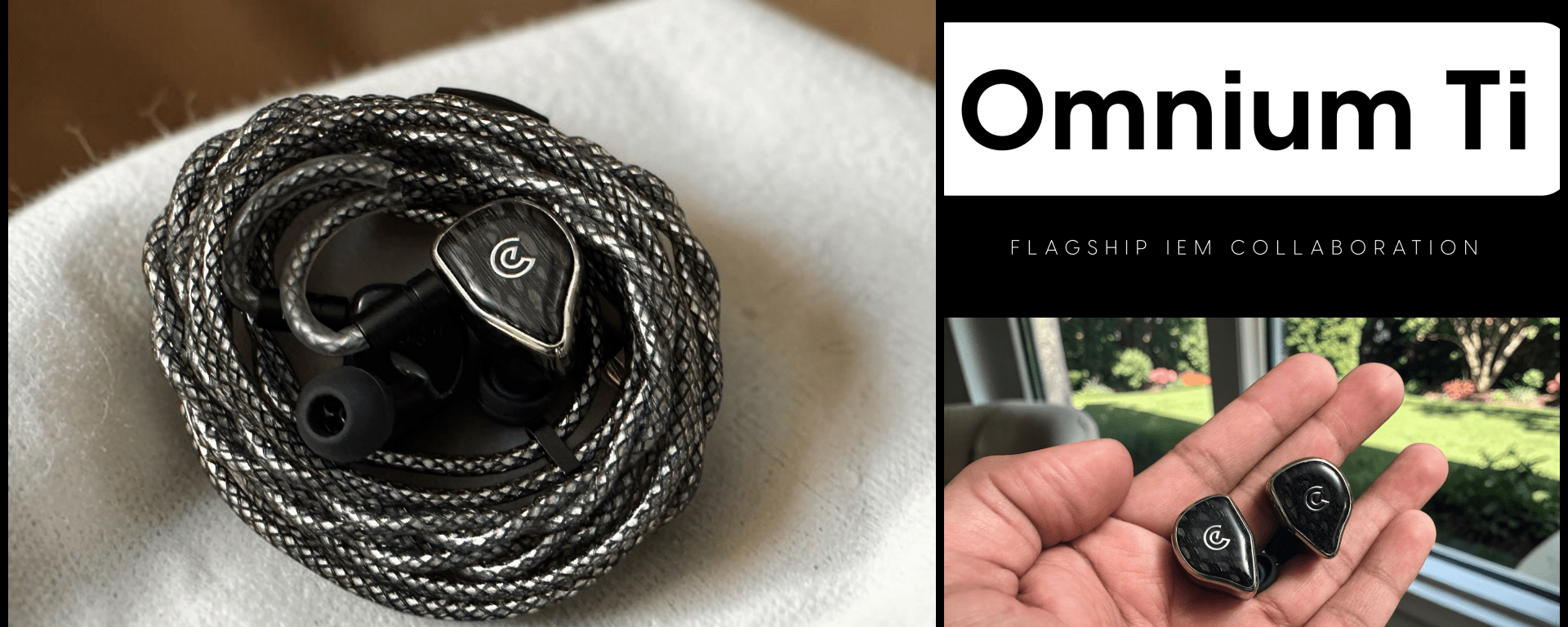
PROS: Refined W-shaped tuning | Tighter, more controlled bass with improved mid-bass transition | Smoother, more natural midrange | Planar mids deliver excellent resolution, layering and separation | Treble is more even, smoother and better controlled | Strong technical performance with holographic staging and precise imaging | More cohesive and mature tuning vs original Omnium | Premium build and high-quality stock cable.
CONS: Stock eartips not the best fit for me personally | Lower-treble can still be mildly energetic at louder volumes.
The product was provided free of charge in exchange for my honest opinion.
Introduction.
Craft Ears – Background and Approach.
Elise Audio and Their Collaboration Track Record.
Elise Audio on the other hand has carved out a different kind of presence. As a UK-based retailer, they’ve positioned themselves not just as a storefront but as an active collaborator within the audiophile space. Over time, they’ve worked with brands to release limited or co-developed models, often bringing a slightly different tuning perspective to an existing platform. One of the more notable examples is their work with Symphonium, where collaboration models weren’t just cosmetic variations but came with meaningful tuning adjustments. That’s generally been the pattern with Elise – they tend to push for subtle but intentional changes rather than surface-level differentiation. It’s less about creating something completely new and more about refining or redirecting an established foundation in a way that feels purposeful as per their liking as well as community feedback.
Omnium Ti – The Elise Audio Collaboration.
The Omnium Ti sits very much within that same philosophy. This isn’t a ground-up redesign and it doesn’t try to position itself as one either. Instead, it feels like a targeted revision of the original Omnium, where both Craft Ears and Elise Audio have focused on addressing specific areas rather than altering the core identity. What you get here is essentially a more polished take on an already established concept. The changes, whether in tuning balance, treble control, or overall coherence, come across as intentional corrections rather than experiments. It’s the kind of collaboration where you can tell both sides understood what worked in the first place and chose not to disrupt that unnecessarily. That restraint is probably what defines the Omnium Ti. It doesn’t exist to replace the original nor does it try to outdo it through sheer contrast. Instead it refines, smoothens and tightens.
Official Website – Craft Ears x Elise Audio Omnium Ti ($2999)
Technical Specifications.
- Driver Configuration: 1 × Dynamic Driver (Low) + 1 × Planar Driver (Low/Mid) + 5 × Balanced Armatures (Mid/High, High, Super-High)
- Crossover: 6-way crossover design
- Frequency Response: 8Hz – 40kHz
- Acoustic Design: Tubeless design with custom acoustic chambers and resonators
- Shell Construction: 3D-printed resin shell with CNC titanium finish
- Cable: Custom “Palantir” cable (2-pin) with silver-based alloy composition
- Connector: 0.78mm 2-pin
Unboxing and Build Quality.
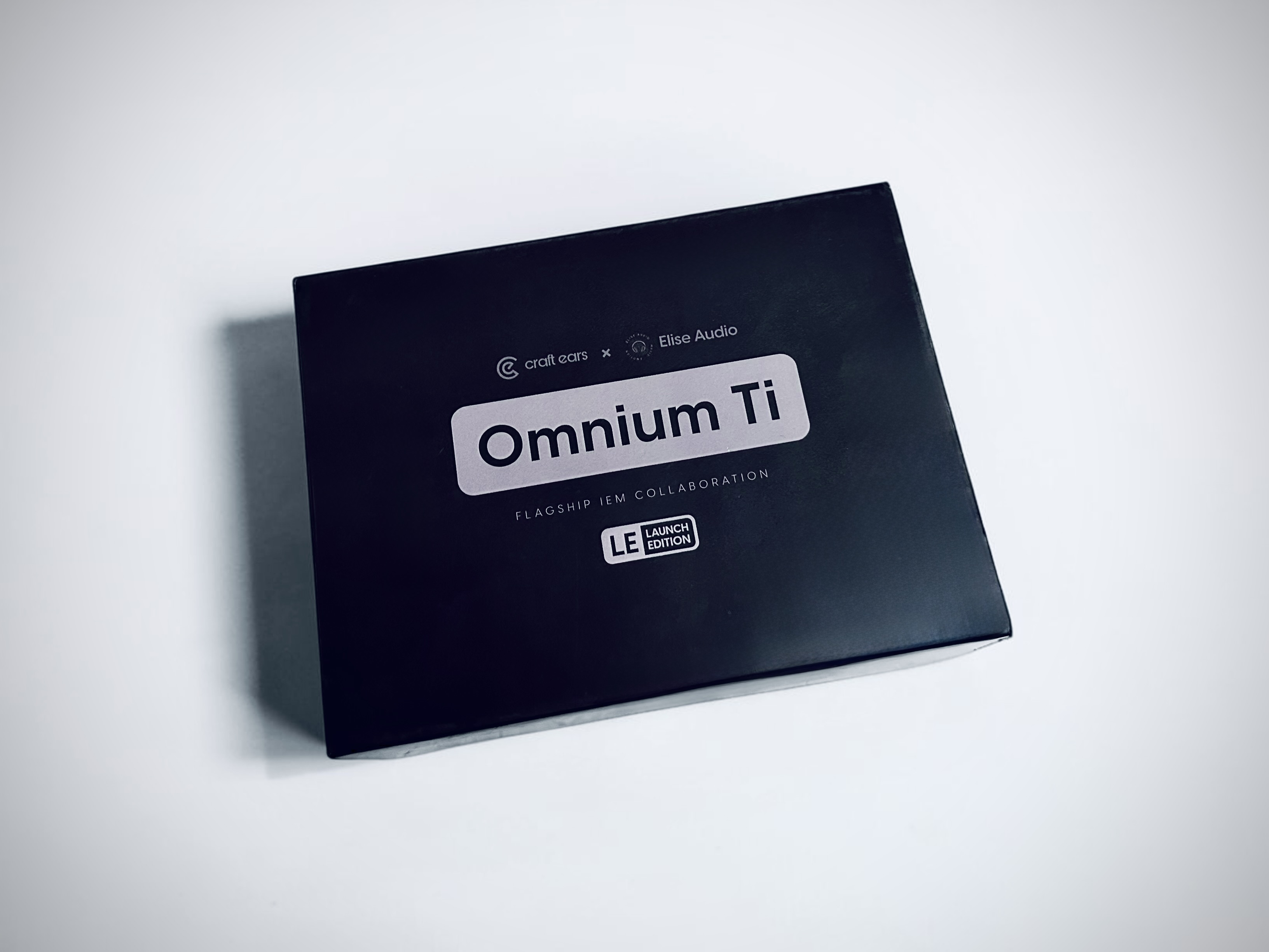
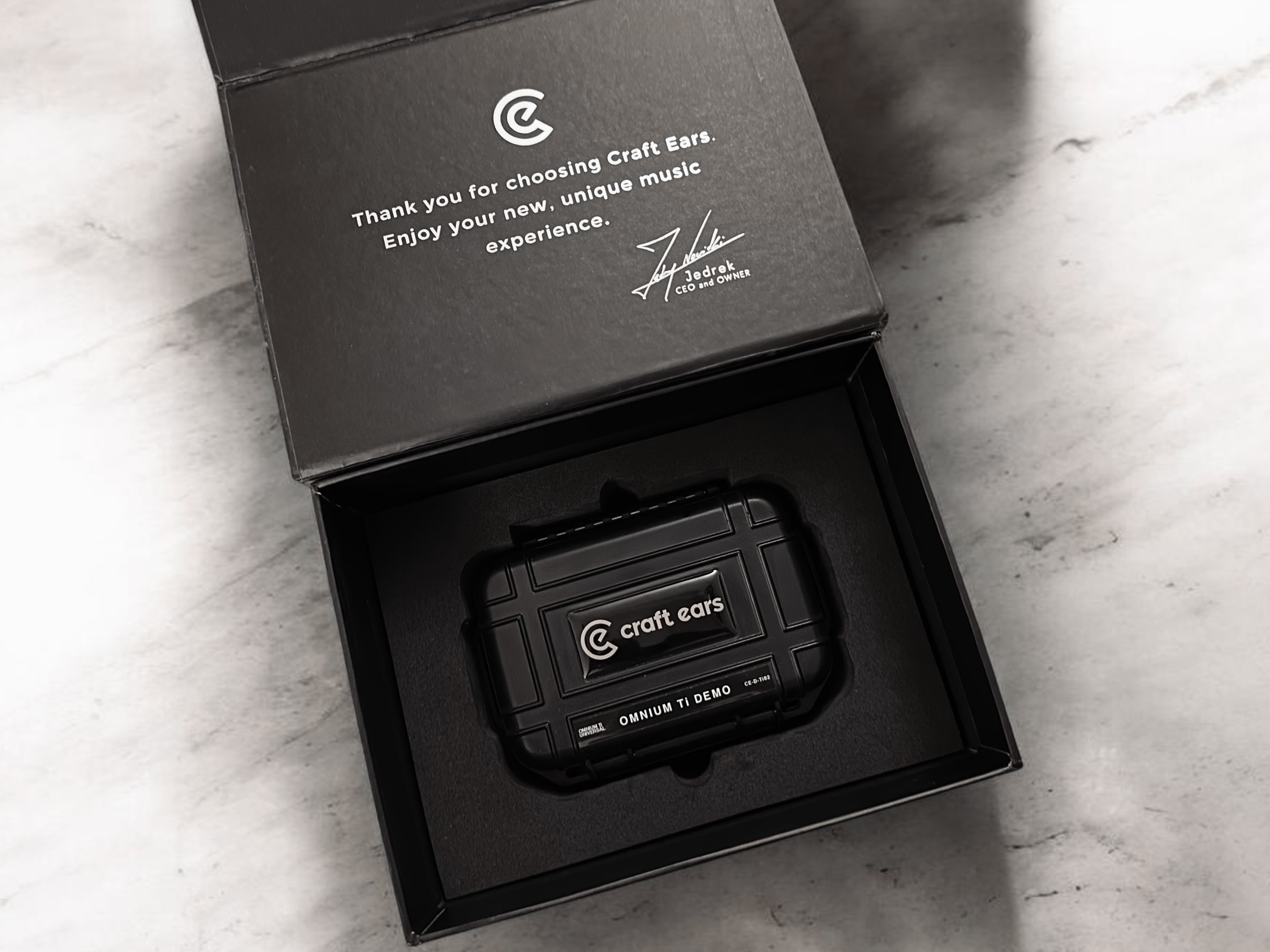
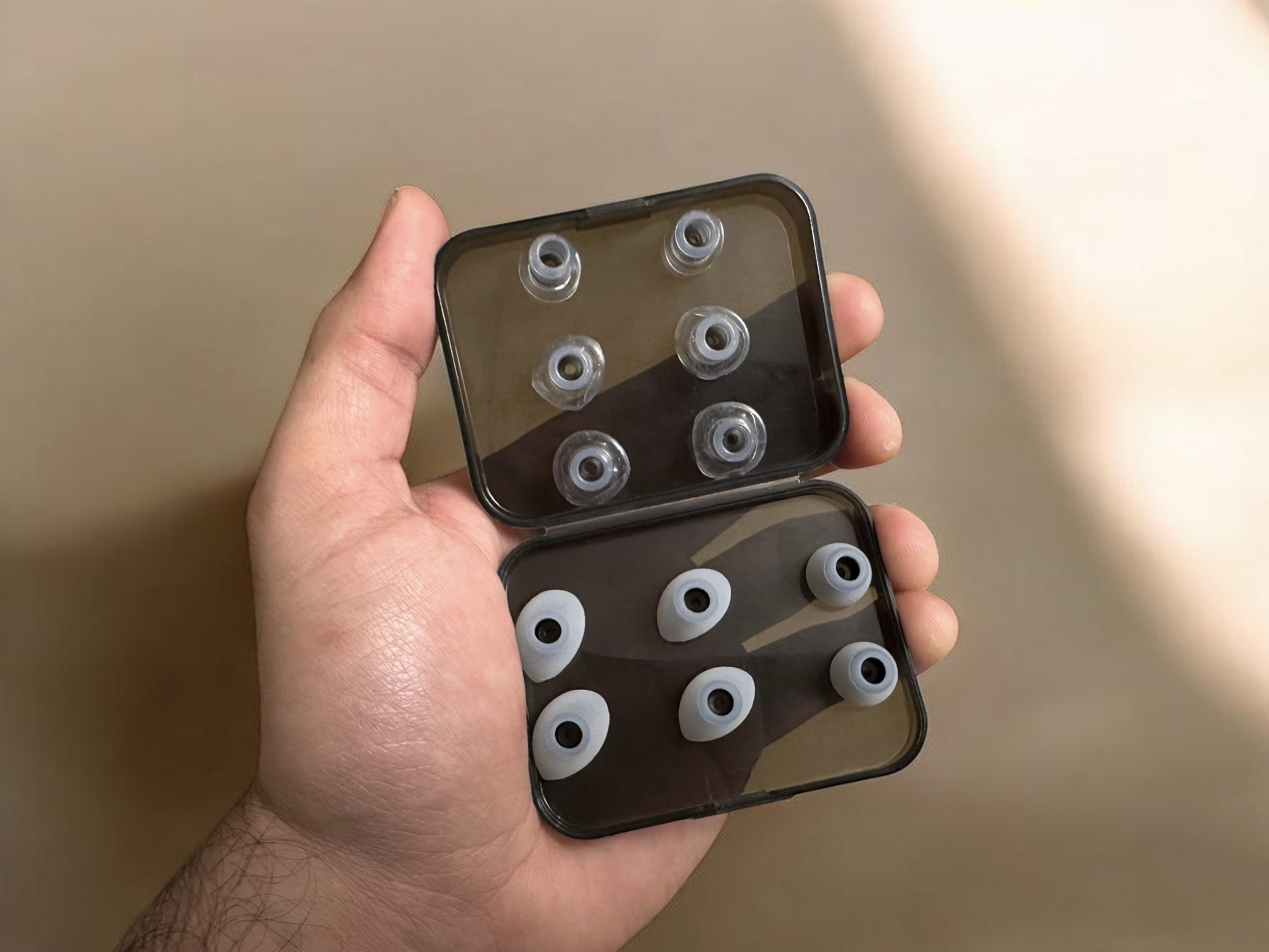
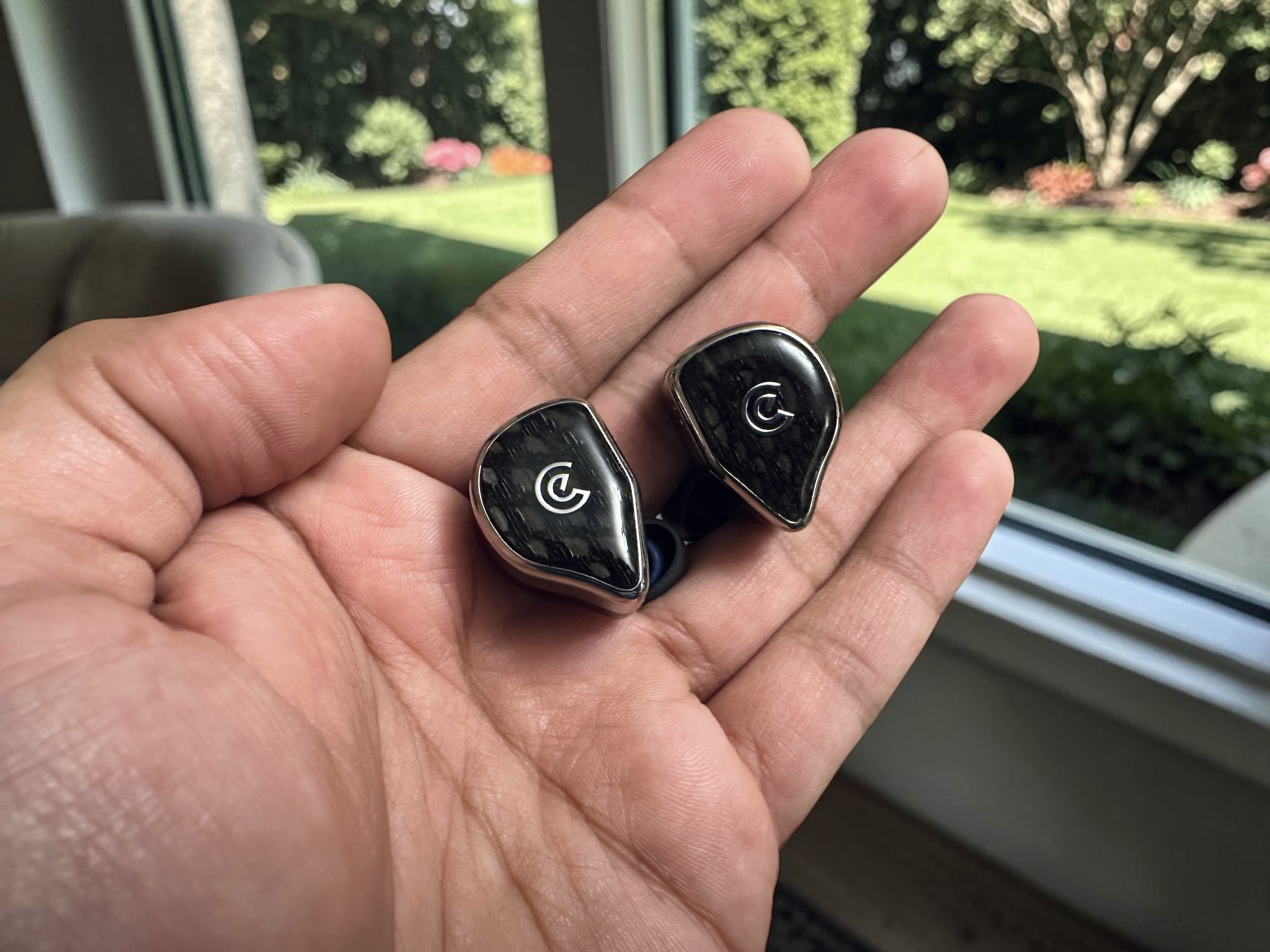
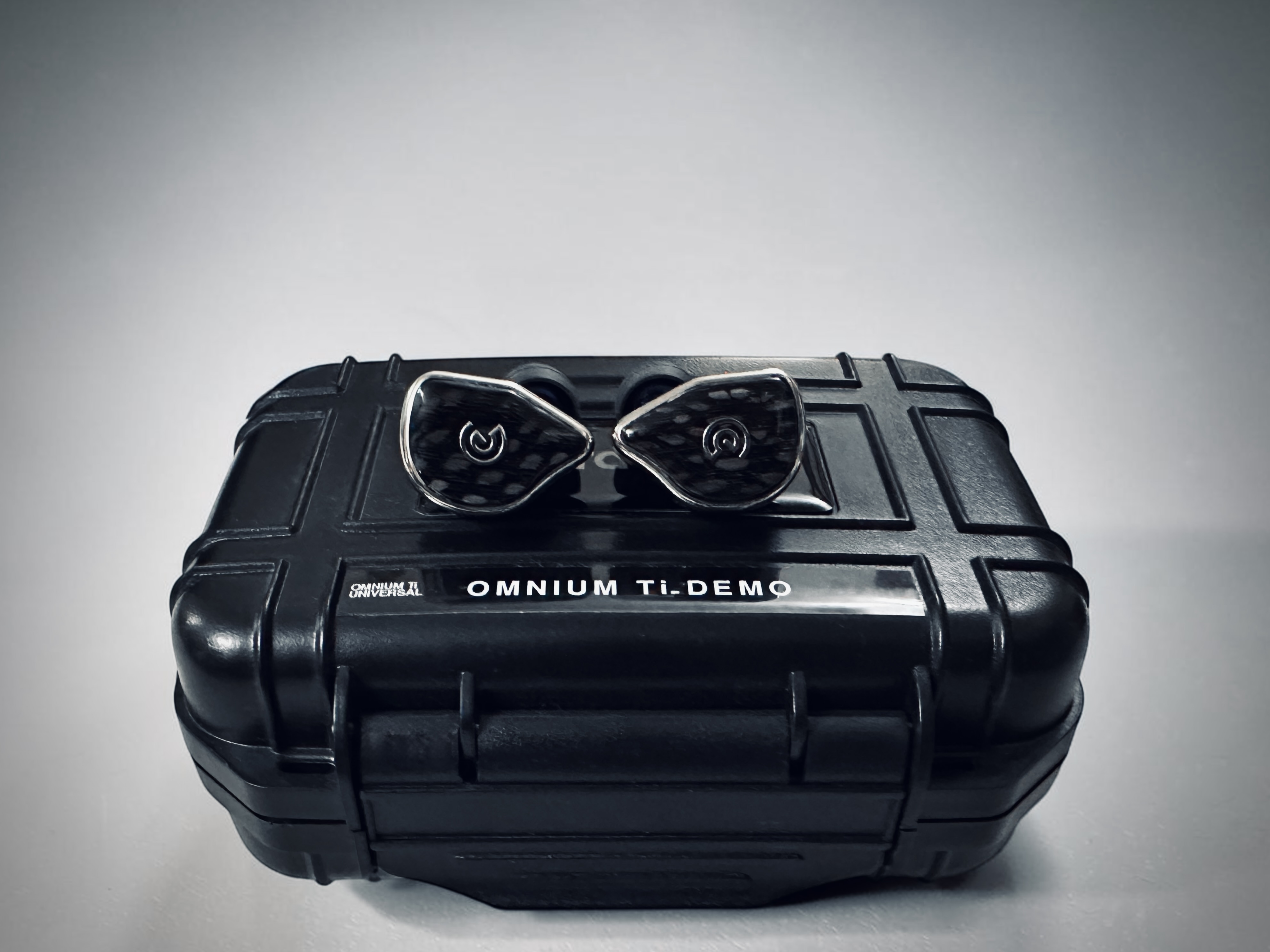
Craft Ears as a company comes from a pro-audio background and that can be seen in the unboxing experience – it is utilitarian and minimalistic. Everything inside is laid out cleanly and logically. Nothing feels thrown in just to pad out the contents list and more importantly, nothing feels missing either. The IEMs themselves immediately take centre stage and the Titanium inserts along with Brazilian Lacewood faceplates do most of the heavy lifting here. It has that understated but serious presence rather than one that screams for attention. You get two sets of ear tips – Azla Crystal and standard black bore silicone tips. It’s a bit of a step back from the Azla Sednaearfits and Shorts Craft Ears used to include before. They were a much better pairing for Craft IEMs IMO.
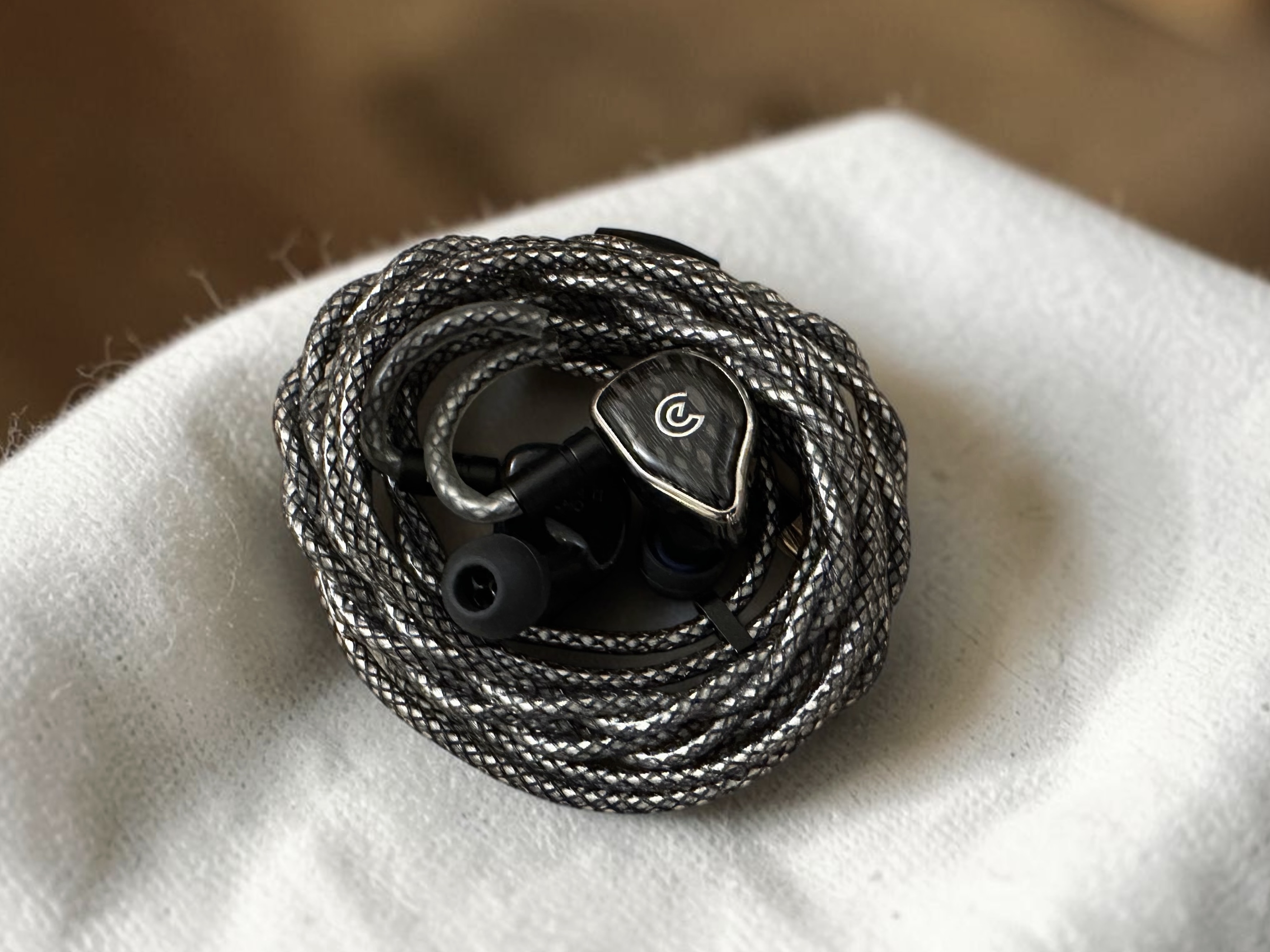
The Palantir cable is worth mentioning because it looks like the exact cable that the PMG Audio APX SE comes with. It is a premium wire of Gold Plated Silver+Silver+Silver Copper Alloy and except for the y-splits and connectors, it looks identical in construction to APX SE cable. It has a reassuring weight and finish to it, and more importantly, feels coherent with the overall design language. It’s just a very solid, well-executed pairing that adds on to the sonics and doesn’t bottleneck the IEM’s capabilities.
Fit, Comfort and Isolation.
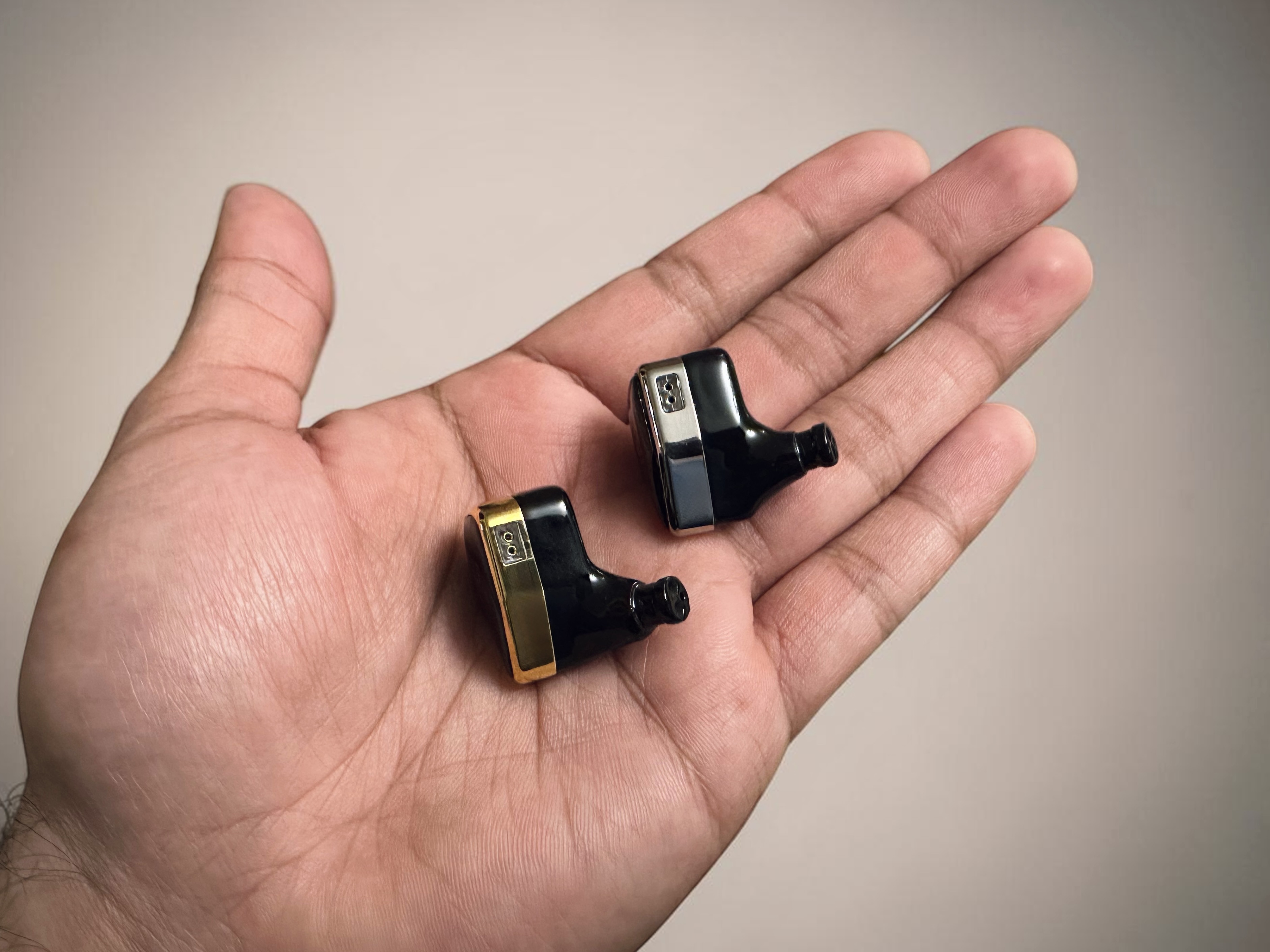
Craft Ears and Elise Audio have clearly put real effort into getting the shell geometry right. While it still uses a 3D-printed resin body, the shell has been redesigned with a more ergonomic shape for better comfort and fit compared to the original Omnium. The CNC-machined titanium faceplate now extends slightly over the edge, subtly altering the outer profile and weight distribution. The internal tubeless acoustic design remains the same, but externally the shell is refined to sit more securely and comfortably, especially for longer listening sessions or stage use.The weight distribution is dialled in well, so you’re not dealing with pressure points creeping in after an hour or two, which is usually where larger multi-driver sets start to fall apart.
Where things didn’t quite line up for me were with the stock ear tips and the cable weight. Both the Azla Crystal and the included silicone set just didn’t give me a properly locked-in fit. The flange on both feels a bit too loosey and relaxed, so the seal never fully locked in. Switching over to my favourite Azla SednaEarfit and the Short variants made a pretty noticeable difference. The fit became much more secure, almost bordering on CIEM-like in how snugly it couples with the ear canal. That improved seal doesn’t just help with comfort – it also opens things up perceptually, especially in terms of stage width and left-to-right separation, which come across more clearly once the fit is properly sorted. The nozzle angle and shell contour do a lot of the heavy lifting here. Insertion feels natural, and more importantly, consistently snug. You’re not constantly readjusting or second-guessing the seal, which makes a big difference both for long-term comfort and for how reliably the IEM performs. Isolation lands exactly where it should for something like this. It’s strong enough to block out most external noise without feeling artificially sealed off and you don’t need to push volume just to compensate for leakage.
The cable, on the other hand, is a bit of a mixed bag. It looks the part and sounds really good (no complaints there), but it does lean slightly on the heavier side. There’s a mild tug to it, just enough to remind you that the IEMs are in your ears at all times instead of letting them fully disappear over time. That said, it’s not a dealbreaker. The pairing works really well and it actually contributes to a deeper, more expansive sense of stage, which makes the trade-off easier to accept. It’s one of those cases where the ergonomics aren’t ideal, but the sonic upside is enough that you end up using it without too much of a fuss.
Sound Analysis.
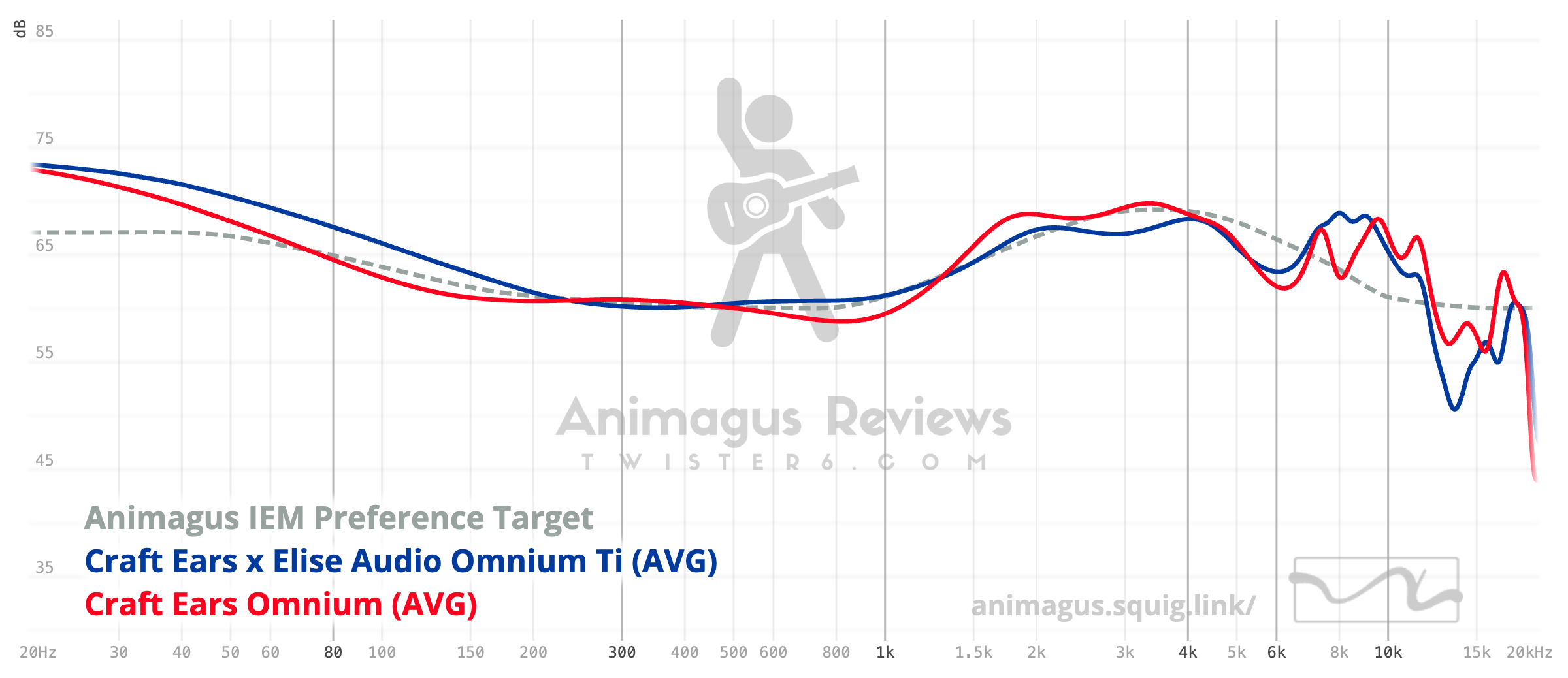
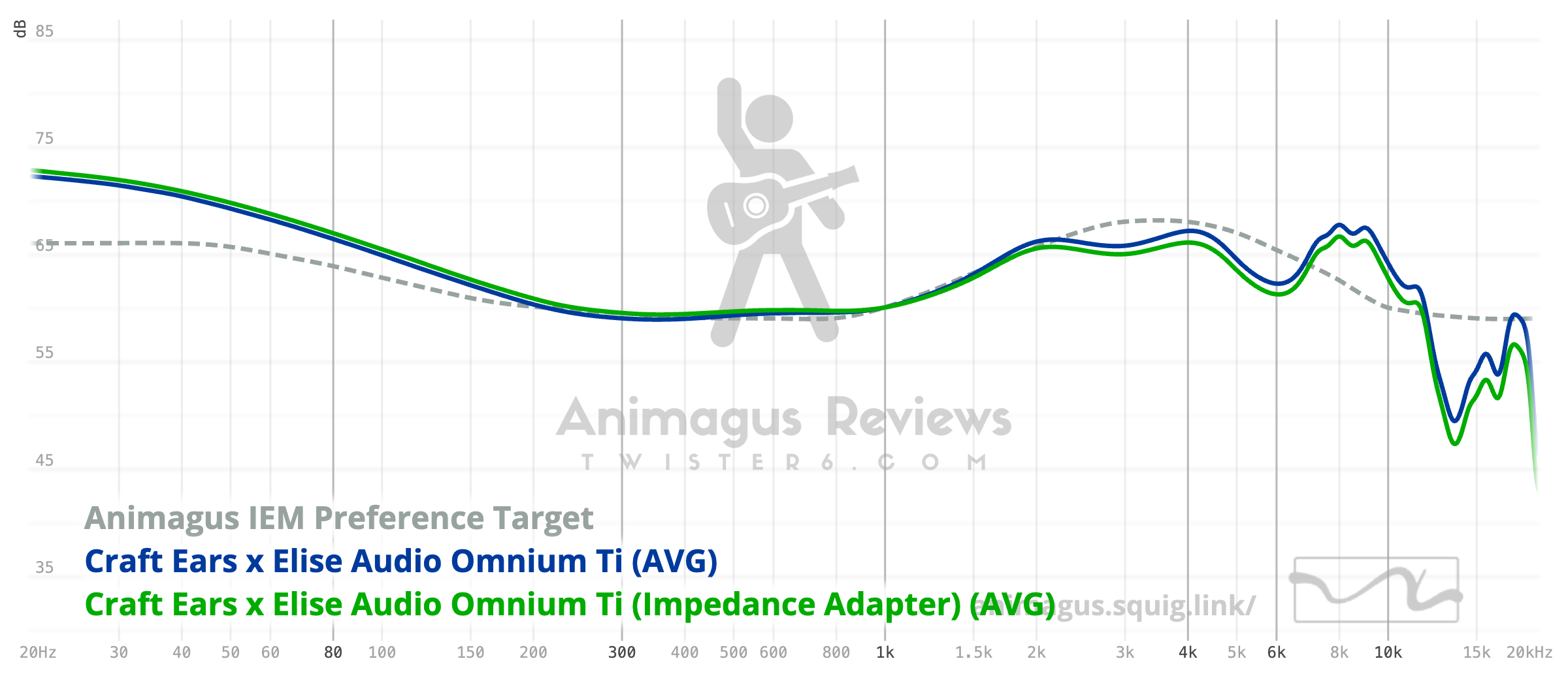
Graphs are measured using an IEC60318-4 (IEC711) setup. You can compare all the graphs on my IEM Graph Database here – Animagus Squiglink.
The Omnium Ti refines the original Omnium’s W-shaped tuning into something more linear and controlled without losing its core identity. The tuning philosophy isn’t about reinventing the wheel, but about tightening the transitions between frequency bands and smoothing out excess energy, particularly through the upper mids and treble. The sub-bass lift is cleaner, the midrange is more linear with a better ear gain rise and the treble too is more even and smoother. In practice, it comes across as a more composed and mature tuning. Where the original impressed through contrast, the Ti holds its ground through better balance and integration. Overall, the Omnium Ti evolves the original from a contrast-driven W-shape into a more linear and coherent interpretation, retaining sub-bass authority and upper-mid presence while significantly improving treble behaviour and midrange presentation. The result is a product that feels more mature, balanced and technically consistent across the spectrum.
Let’s dig in deeper…
Bass – The Omnium Ti continues to emphasise sub-bass as the foundation of its low-end presentation, but it does so with a level of control and linearity that feels more deliberate than before. The extension reaches deep, delivering a satisfying sense of rumble and physical presence, yet it avoids the kind of excess that can blur the overall picture. What stands out most is the refinement in how the bass integrates with the rest of the spectrum. The transition from sub-bass into mid-bass feels more even, resulting in a presentation that carries weight without sounding overbearing. The mid-bass itself is not elevated for impact in the traditional sense, but it is more defined and articulate, giving percussion and rhythm sections a clearer sense of structure. This approach results in a bass response that feels grounded and textured rather than dominant. It supports the music rather than driving it forward artificially, allowing the rest of the frequency range to breathe while still providing a solid foundation.
Midrange – The midrange remains the defining characteristic of the Omnium Ti, retaining the planar-driven clarity and separation that made the original so distinctive. However, there is a noticeable shift toward improved tonal density and cohesion. Lower mids carry a touch more body which adds weight to instruments and brings male vocals into a more natural position. This subtle increase in fullness does not come at the cost of clarity; instead, it enhances the sense of realism by giving notes a more tangible presence.
Upper mids maintain their forward positioning, ensuring that vocals remain a focal point, but they are now better integrated into the overall mix. While the ear gain is a touch lower than my personal preference of ~9 dB at 3 kHz, it comes across as natural and more cohesive than the original Omnium, which had a noticeable dip around 800–1.2 kHz followed by a sharper rise. The planar influence is still evident in the speed and articulation – transients are crisp, decay is controlled and layering is very good. What changes in the Ti is the sense of cohesion – a midrange that feels both technically proficient and musically engaging – making the instruments sound more natural and accurate tonally.
Treble – The treble response is the next most significant refinement in the Omnium Ti. Where the original could occasionally exhibit unevenness or draw attention to specific regions, the Ti adopts a smoother and more controlled approach. There is a clear sense of balance across the treble range. Energy is present but is distributed in a way that avoids sharp peaks or sudden emphasis. This results in a presentation that remains detailed and extended without becoming fatiguing. Cymbals and high-frequency instruments are rendered with a more natural decay, avoiding the splashiness or glare that can sometimes accompany highly resolving tunings. At the same time, the sense of air and openness is preserved, ensuring that the overall presentation does not feel closed or subdued. The refinement here is not about reducing detail, but about presenting it more cohesively. The treble no longer competes for attention – it complements the rest of the spectrum.
Technical Performance.
Original Omnium had excellent technical ability and that carries forward here. What changes is how consistently those technicalities show up. Stage is still expansive, but more importantly, it’s better organised. Depth layering is a standout – you can place elements not just left and right, but front to back with more precision. Imaging locks in more confidently because the frequency response isn’t fighting itself anymore. Separation benefits directly from the cleaner bass and smoother treble. There’s less masking, less artificial contrast. Everything has its own space, but it doesn’t feel forced. Detail retrieval is interesting here. The Ti doesn’t sound more detailed in the traditional sense—it’s not throwing microdetail at you. Instead, it becomes easier to pick things out because the presentation is more stable. It’s a shift from highlighted detail to resolved detail. Dynamics also feel more controlled. The original had a bit more contrast, which could come across as exciting, but the Ti trades some of that for consistency. It doesn’t hit harder—it hits cleaner.
Used as a Studio and Live IEM.
The Omnium Ti sits in an interesting spot for monitoring. It isn’t neutral in the textbook sense, but its W-shaped, almost reference-leaning tuning, combined with excellent staging, left–right separation, and very precise imaging, makes it surprisingly effective as both a studio and live monitor. The sub-bass lift gives you enough low-end information to judge weight and extension without bleeding into the mids, while the midrange stays clean and well-defined for accurate vocal and instrument placement. The treble has enough energy and control to reveal detail and issues in the mix without turning fatiguing over longer sessions.
In a studio setting, that balance becomes genuinely useful. The Omnium Ti doesn’t try to be ruler-flat, but it’s as tasteful take on a reference tuning – and that consistency is what matters when you’re making mix decisions. The strong sense of space and depth makes panning and spatial placement easier to judge, letting you understand where elements sit in the mix beyond just left and right.
For live monitoring, it makes even more sense. The sub-bass presence and forward upper-mid region help cut through stage noise, while the clean midrange keeps vocals and key instruments clear even in busy arrangements. The imaging is stable and precise, so it’s easy to lock onto specific elements without the presentation feeling crowded or smeared. What you get isn’t a sterile, overly clinical monitor, but a practical one – something that gives you the information you need without being dull or fatiguing. That mix of clarity, imaging precision, expansive staging and balanced almost reference tuning is exactly why the Omnium Ti works so well as both a studio and live reference. Which is why it’s great to see Elise and Craft Ears offering this as a CIEM. Honestly, it works so well for me personally that I wish I could convert my UIEM into a custom. Being able to use it on stage without worrying about eartips, seal or the fit shifting while jumping around or head-banging on stage would be a huge plus.
Included Impedance Adapter.
Comparisons.
Omnium Ti vs Original Omnium.
As I said before, the relationship between the Omnium Ti and the original Omnium is best understood as one of refinement rather than reinvention. The core identity remains intact, but the execution is elevated. In the low end, the Ti introduces a more balanced and controlled approach. While the original emphasised sub-bass with a slightly more relaxed mid-bass, the Ti evens out this relationship, resulting in a bass response that feels more complete and versatile. The midrange sees a shift toward greater tonal density. The original’s presentation could at times feel slightly lean, particularly in the lower mids, whereas the Ti introduces a subtle fullness that enhances realism without sacrificing clarity. Vocals and instruments feel more grounded, contributing to a more cohesive overall presentation. The treble is where the most noticeable change occurs. The original carried a level of brightness that could occasionally verge on unevenness, depending on the pairing and material. The Ti smooths this out significantly, delivering a more consistent and controlled high-frequency response that improves long-term listenability. Technically, both models operate at a high level, but the Ti benefits from its improved tuning. The original often impressed through contrast and immediacy, while the Ti achieves a similar level of resolution through balance and coherence. It feels less like it is emphasising detail and more like it is naturally resolving it.
Symphonium x Elise Audio Europa.
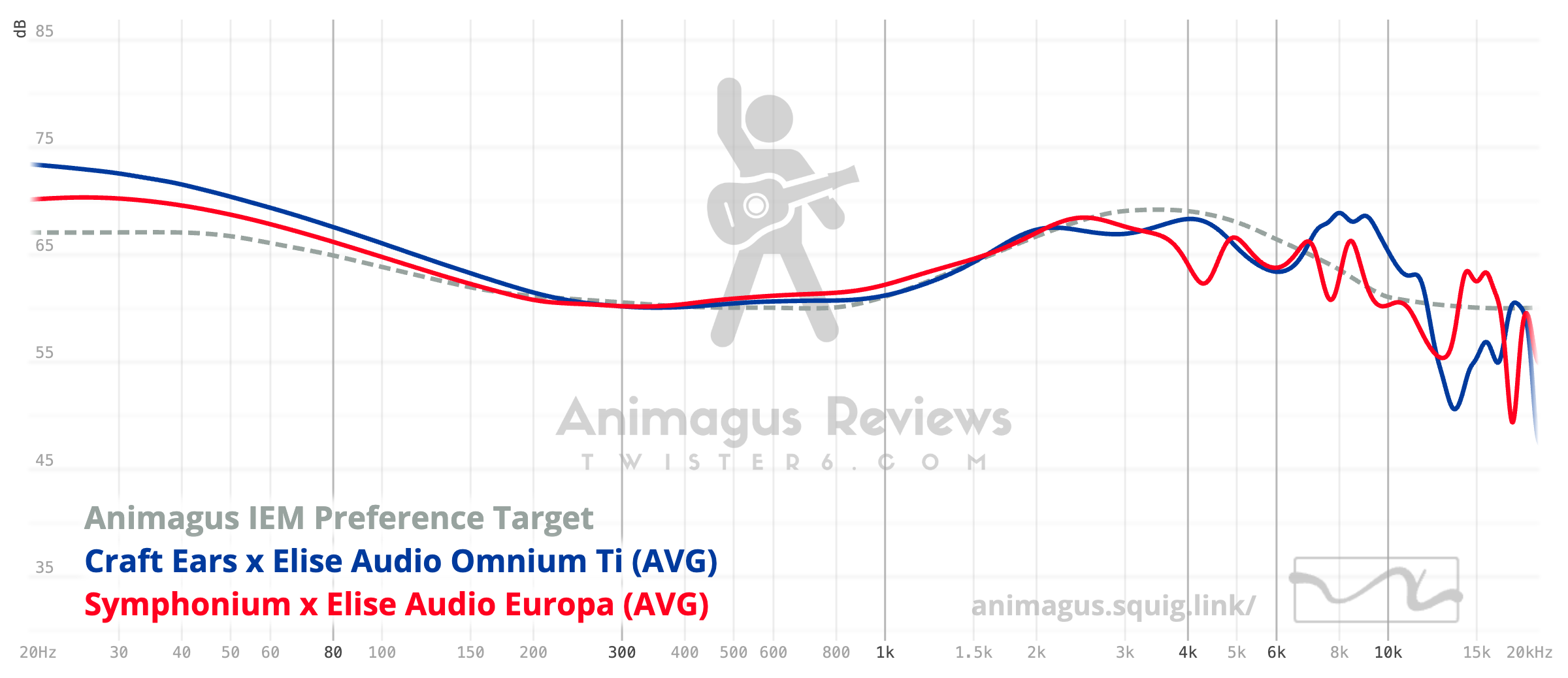
The Omnium Ti and Europa take two very different approaches despite sharing the same collaboration origin. The Ti follows a refined W-shaped tuning with a sub-bass lift, while the Europa leans more mid-centric and warm-neutral. In the bass, the Omnium Ti extends deeper with more sub-bass authority and layering, giving it a stronger foundation. The Europa sounds tighter and cleaner, but noticeably lighter and less physical. The midrange is where they diverge the most. The Europa is more forward, smooth and cohesive, with vocals sitting closer and more intimate. The Omnium Ti, in contrast, is more structured and resolving, with better separation and planar-driven articulation. Treble on the Europa is more relaxed and forgiving, while the Ti carries more extension and presence, though still controlled. The Ti sounds more open, the Europa more natural. Technically, the Omnium Ti pulls ahead with better staging depth, imaging precision and layering, whereas the Europa focuses more on coherence and musical flow. In simple terms, the Europa is about tone and ease, while the Omnium Ti is about structure and resolution.
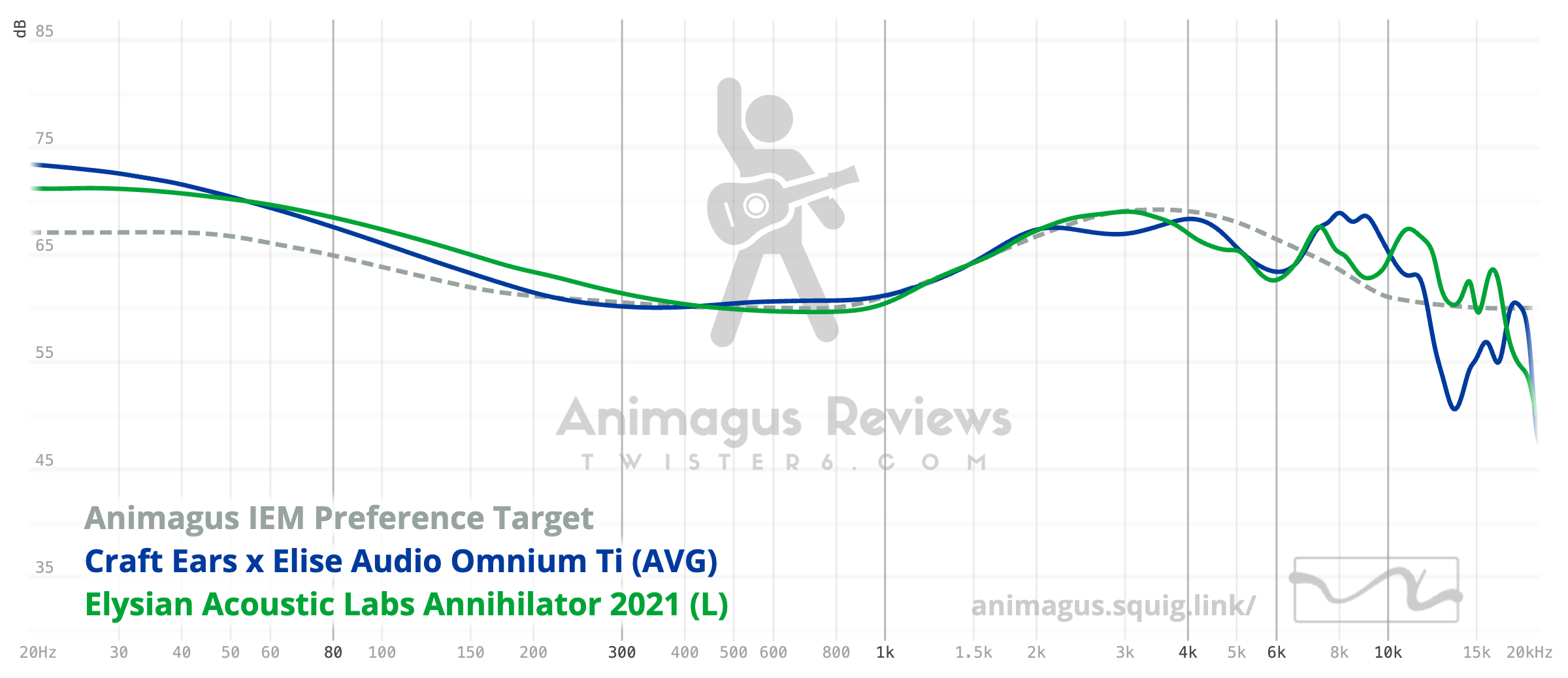
Elysian Acoustics Annihilator.
Lime Ears Maris.
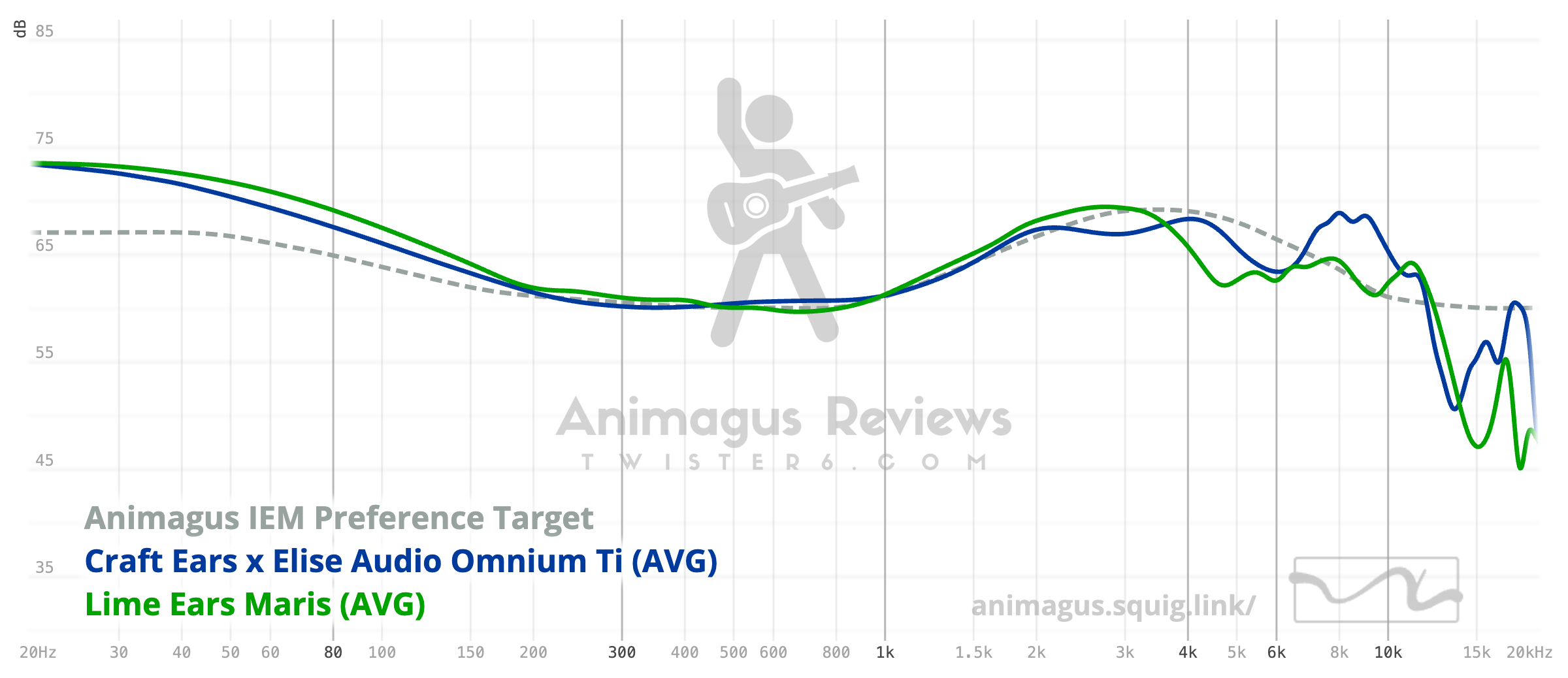
The Omnium Ti and Maris both sit in that flagship space but they go about it very differently. The Omnium Ti sticks to a clean W-shaped tuning with a sub-bass lift, while the Maris leans more fun, slightly V-shaped with stronger low-end weight and relaxed upper mids. In the bass, the Maris clearly hits harder. Its dual DD + bone conduction setup gives it a more physical, tactile low-end, whereas the Omnium Ti is tighter and more controlled, focusing more on sub-bass extension than outright slam. The midrange is where the Ti pulls ahead. It sounds more linear, open and better separated, while the Maris softens the upper mids slightly, making vocals smoother but less defined and less forward. Treble follows the same pattern. The Maris is tuned to be safe and non-fatiguing with smoother energy around lower treble, while the Omnium Ti offers more extension, clarity and air without the unevenness of the original Omnium. Technically, both are strong, but the presentation differs. The Maris gives you a big, impactful, slightly “fun” stage, while the Omnium Ti is more about precision – better imaging, cleaner layering and more depth-focused staging. In short, the Maris leans toward impact and musicality, while the Omnium Ti leans more references towards control, structure and resolution.
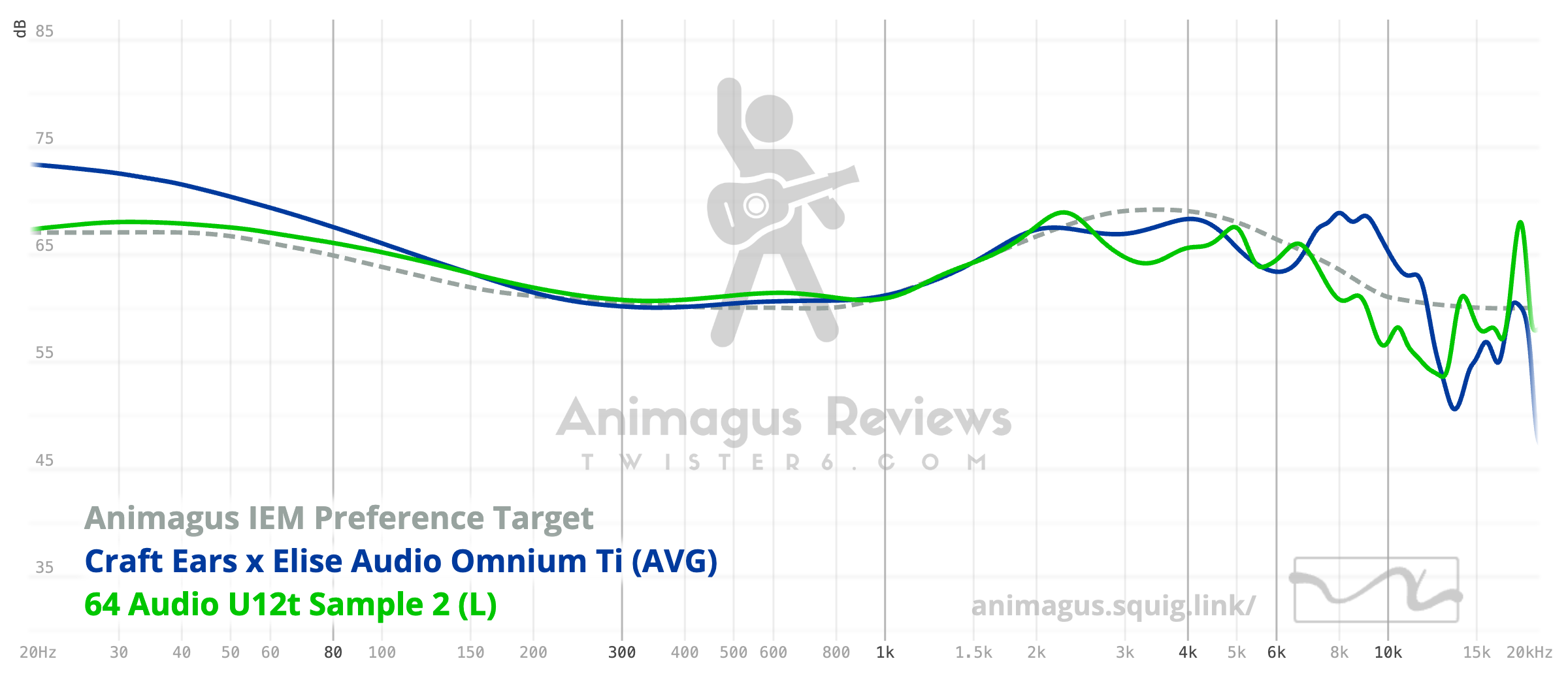
64 Audio U12t.
64 Audio Tia Trio.
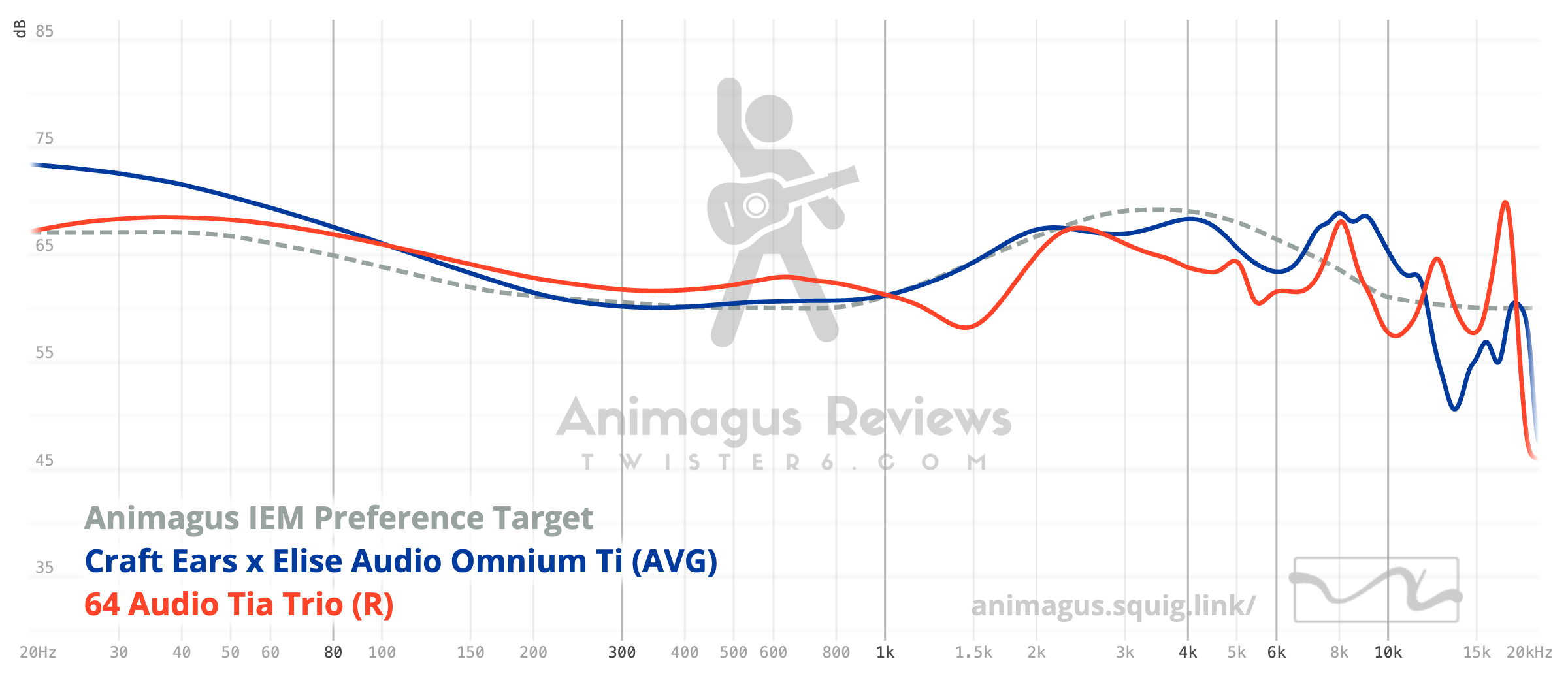
The Tia Trio goes for a more fun U-shaped tuning, while the Omnium Ti sticks to a more controlled W-shape with a sub-bass lift. In the bass, the Trio leans more into mid-bass punch and warmth, giving it a thicker and more immediate slam. The Omnium Ti focuses more on sub-bass depth and control, sounding cleaner and better layered rather than punchy. The midrange on the Trio is slightly recessed and softer, whereas the Ti keeps vocals more forward, cleaner and better separated, with a more structured presentation overall. Treble is more uneven and energetic on the Trio, with noticeable peaks that add excitement but can get edgy. The Omnium Ti is smoother and more linear, while still maintaining extension and air. Technically, the Trio is about impact and energy, while the Omnium Ti is clearly ahead in imaging precision, layering and stage depth. In short, the Trio is fun, punchy and coloured, while the Omnium Ti is cleaner, more balanced and technically stronger.
Empire Ears Odin.
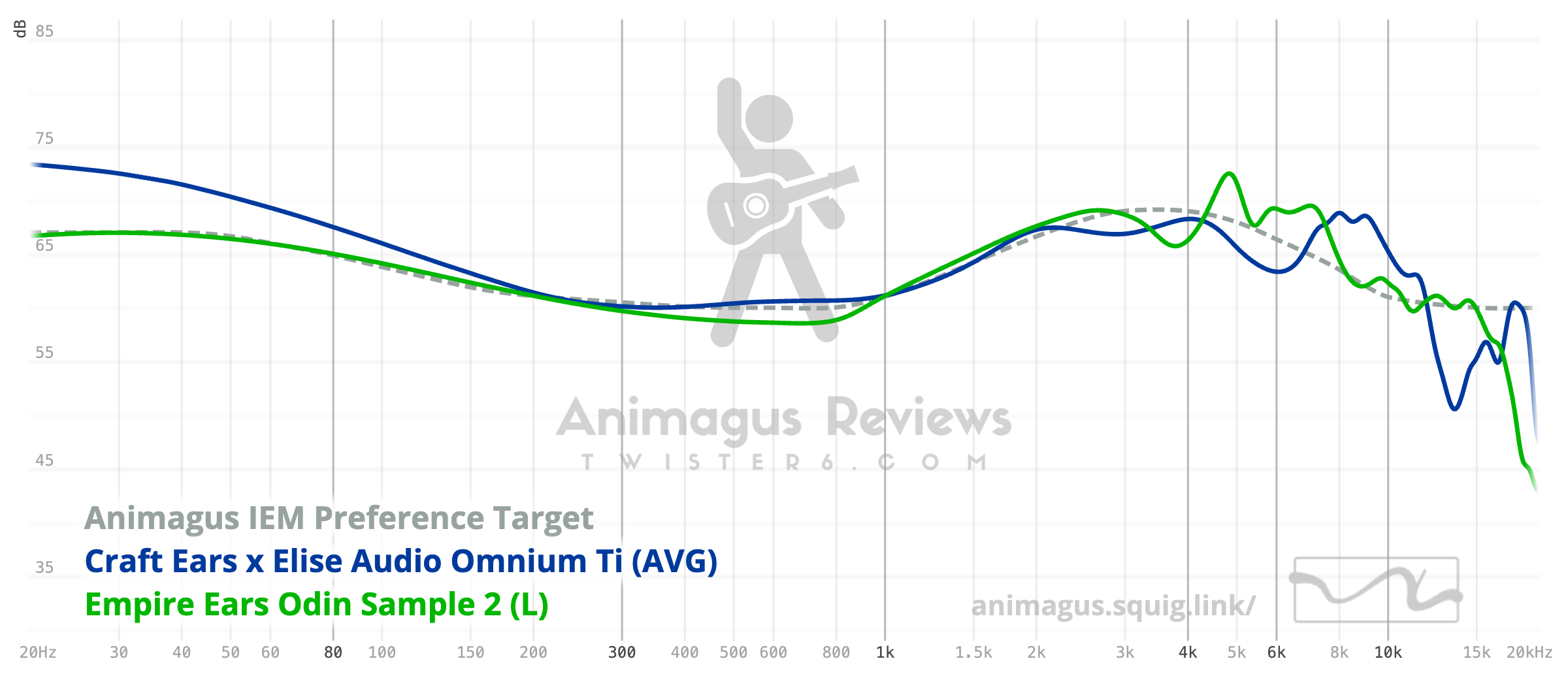
The Omnium Ti and Odin are both W-shaped at a glance, but they execute it very differently. The Ti is more controlled and linear, while the Odin leans more energetic and contrast-driven, especially through the upper mids and treble. In the bass, the Omnium Ti has a stronger sub-bass lift and more weight down low, giving it a deeper, more grounded foundation. The Odin is still impactful, but comes across as tighter and more balanced, with less emphasis on sheer sub-bass quantity and more on articulation . The midrange is where Odin pushes harder. Its upper mids are more forward and revealing, giving vocals a sharper, more immediate presence . The Omnium Ti sounds more even and better integrated, with smoother transitions and less aggressiveness. Treble on the Odin is more energetic and expressive, with more peaks that bring out detail and air. The Omnium Ti pulls this back into a smoother, more controlled presentation, trading a bit of bite for consistency. Technically, both are high-end, but they present differently. The Odin leans into contrast, micro-detail and a wider, more expansive stage, while the Omnium Ti focuses on depth, layering and overall coherence. In short, the Odin is more vivid and revealing, while the Omnium Ti is cleaner, more balanced and easier to listen to long term.
Fir Audio XE6.
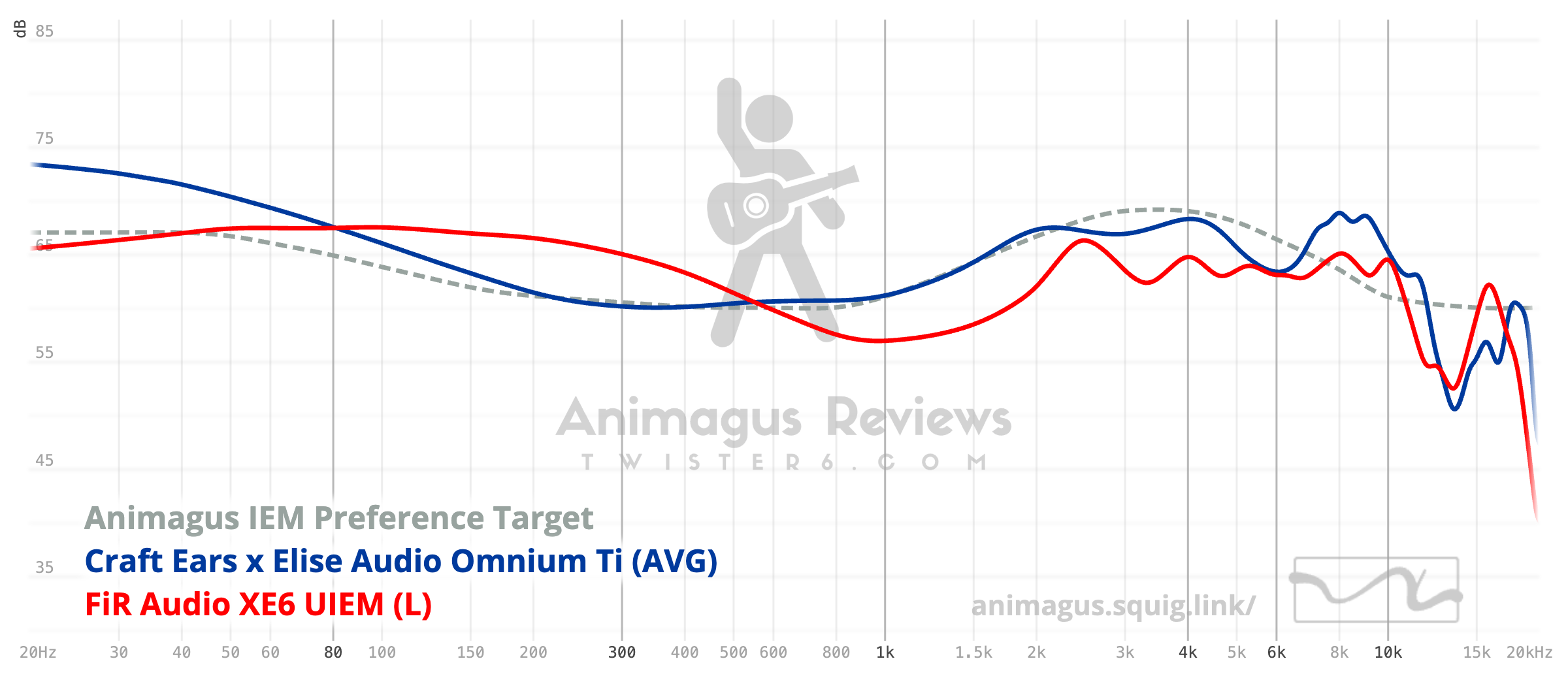
The contrast here is pretty straightforward—the Omnium Ti is a controlled W-shape, while the XE6 leans heavily into an L-shaped, bass-dominant tuning. XE6 is on another level in terms of quantity and physicality. It carries more mid-bass and overall weight, giving it that thick, immersive low-end. The Omnium Ti, in comparison, is cleaner and more sub-bass focused, with better control and less bleed into the mids. That difference shapes the midrange. The XE6 sounds warmer, thicker and more coloured, while the Omnium Ti keeps things cleaner, more separated and more neutral through the mids. Vocals on the Ti are clearer and better defined, whereas the XE6 trades precision for body. Treble follows the same direction. The XE6 is more relaxed and rolled-off, keeping things smooth but less airy. The Omnium Ti extends further, with more presence, clarity and better overall balance. Technically, they prioritise different things. The XE6 is about macrodynamics and immersion, giving you that “wall of sound” feel. The Omnium Ti is clearly ahead in imaging, layering and stage structure, especially in depth. In short, the XE6 is bass-heavy, warm and immersive, while the Omnium Ti is cleaner, more balanced and technically more precise.
Custom Art F7U.

The contrast here is quite clear—the Omnium Ti follows a W-shaped tuning with a sub-bass lift, while the F7U leans more neutral-warm and mid-focused. The Omnium Ti has more sub-bass extension and authority in the bass, which gives it a deeper and more layered low-end. The F7U is flatter and more controlled, with less impact and more focus on control. The F7U’s midrange is more forward, smooth and cohesive and it has a warmer tone. The Omnium Ti is cleaner and more separated, with a better structure and a little more energy in the upper midrange to make it stand out. The F7U has a more relaxed treble that rolls off earlier, making the sound softer and more forgiving. The Omnium Ti extends further with more air, clarity and definition, while still staying controlled. Technically, the F7U is about coherence and natural tonality, whereas the Omnium Ti pulls ahead in imaging, layering and stage depth. In short, the F7U is smooth, mid-centric and easy, while the Omnium Ti is more dynamic, extended and technically capable.
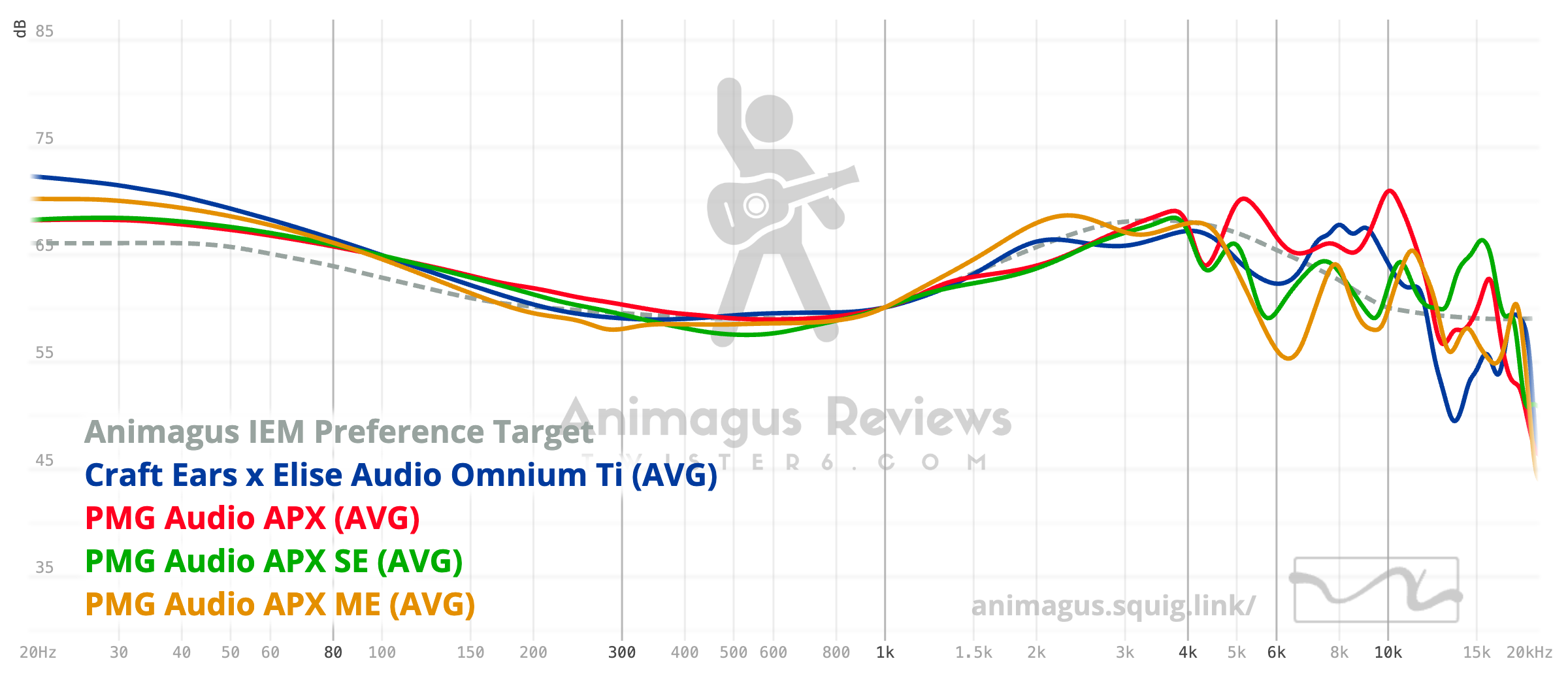
Is it to the level of the $6000 PMG Audio APX and APX SE – 2 of the the top performing IEMs?
Final Thoughts.
The Craft Ears x Elise Audio Omnium Ti is a clear step forward from an already strong foundation. Rather than trying to reinvent the Omnium, the Ti takes what worked and sharpens it in all the right places. The result is a more cohesive and mature tuning—smoother treble, a more natural and better-integrated midrange, and tighter, more controlled bass. It keeps the technical strengths that made the original stand out, but presents them with better balance and greater long-term listenability.
It’s also a seriously good-looking IEM. The understated titanium aesthetic is right up my alley, and the inclusion of the Palantir cable is a welcome bonus. It’s essentially the same cable you get with the PMG Audio APX SE (hardware differences aside), and while it is on the heavier side for my liking, it’s a high-quality pairing that feels appropriate at this level. I would’ve loved to see a second, lighter cable included for stage and travel use, but that’s a minor gripe considering how easy it is to swap in an aftermarket option.
For anyone who liked the original Omnium, the Ti is a no-brainer IEM – more refined, more balanced and more versatile. And for those coming in fresh, it’s a flagship that delivers technical precision without sacrificing musicality. It doesn’t try to impress with extremes; it wins you over with how consistently well it does everything. The Omnium Ti earns an easy and confident recommendation from me!

 Twister6 Reviews