

Sound analysis.
Due to a nature of premium components internal to the design, especially electrolytic capacitor and solder joints with litz wires, I left P-R on a burn in for 150hrs before starting my sound analysis.
I found P-R to have a reference quality highly resolving transparent non-fatigue sound with a flat neutral tonality that has a light hint of brightness. In general, I don’t hear it emphasizing any particular part of the frequency spectrum, and it reaches its reference quality without a need for bright harshness. The signature and tonality is very effortless, just a coherent flow of the high resolution sound with an accurate natural tonality.
Low end is not exaggerated, starting with a deep extension of sub-bass where you can hear a textured rumble without feeling any extra weight or bulk. Mid-bass is fast, punchy, with a natural decay speed, and overall tight and articulate low end performance, under control and without any spillage into mids. Lower mids are not too thick or too thin, just an average natural tonality that adds to the body of the sound without any artificial coloring. Upper mids also oozing with a natural tonality, very clear and detailed, never harsh or bright. I don’t hear too much warmth, but vocals are very smooth, organic, and detailed. Treble is bright, detailed, well defined, and with a realistic and natural level of airiness.
Soundstage has a nearly holographic expansion in all 3 directions, with a non-artificial natural spacing. These monitors have a great imaging and positioning with an excellent placement of instruments and vocals where I can accurate pin-point position of every sound in space. This goes along with an excellent layering and separation with air between the layers – a natural transparency of the sound.
The sound of these IEMs is perfect for those who want a reference quality performance without harsh revealing sound. Though I consider the tonality to be neutral, the sound is still very exciting and full of energy. The clarity level is high, you can pick up all the little nuances in sound, and at the same time the sound is smooth and natural. Everything is in moderation without any over-emphasis, just a non-fatigue detailed sound which is great during extended listening sessions.
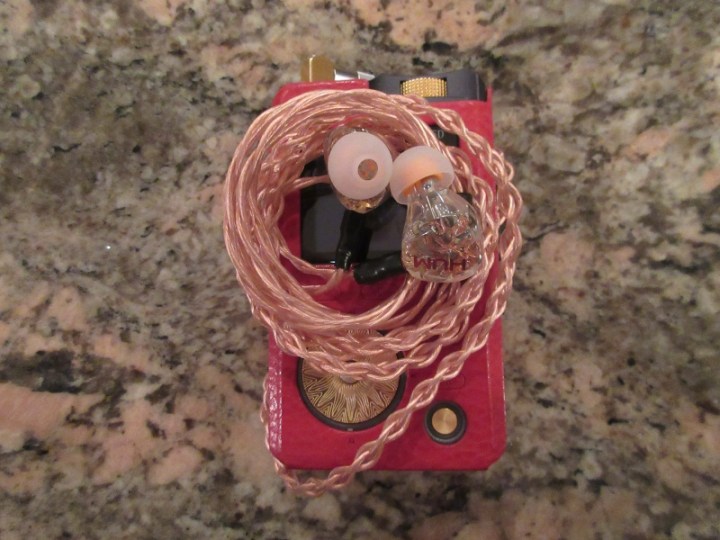
Sound comparison.
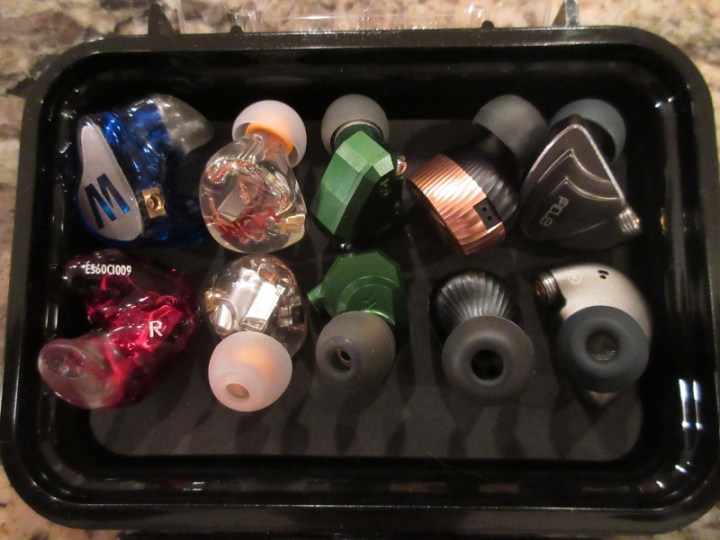
Pristine vs ES60 – ES staging is a bit narrower and deeper, a little more sub-bass while overall low end is a little slower, not as tight or articulate in comparison to Pristine. ES lower mids have a little more body which adds more warmth and smoothness to the sound, especially in upper mids were ES sounds more organic, while Pristine is more detailed, more revealing, and more transparent. Pristine treble is also crispier and has more airiness. In comparison Pristine sound is more neutral and brighter.
Pristine vs Andromeda – Similar staging though Andromeda has a little more depth. Pristine low end is more neutral in comparison to Andromeda having more sub-bass and a little more mid-bass impact. Andro lower mids are warmer and have more body, and upper mids are smoother and more organic, not as revealing or detailed as Pristine. Pristine treble is also brighter, crispier, and with more airiness. One noticeable difference is that Pristine has a better layering/separation with more air between layers which gives sound more transparency, while Andromeda has a more fun tuned sound which is a bit congested in comparison.
Pristine vs Sirius – Soundstage depth/height/width are similar. Sirius has deeper, meatier sub-bass, while Pristine has faster mid-bass. Pristine lower mids are leaner and a little thinner in comparison, while Sirius has more body, and upper mids in Pristine are brighter and a little more revealing; Sirius upper mids sound smoother and warmer in comparison. Pristine treble is more crisp and brighter, but otherwise have a similar extension and level of airiness. While Sirius is more balanced with a smoother tonality, Pristine is more reference quality with a more neutral sound and revealing tonality.
Pristine vs K10UA – similar height/depth, but Pristine has more width. K10UA has more sub-bass and stronger mid-bass impact, while Pristine is more neutral in comparison. K10UA lower mids are a little thicker in comparison, and upper mids are not as revealing, but equality detailed and with a great clarity. Treble is very similar, both having a crisp, well defined treble with decent amount of airiness. In comparison K10UA sound is more balanced while Pristine is more neutral and reference with a better transparency.
Pair-up.
Micro iDSD – dead quiet, neutral detailed sound, good sub-bass extension (not much quantity), punchy fast mid-bass, lean detailed revealing mids, bright crisp airy treble.
LPG – noticeable white noise background hissing, flat sub-bass (quality vs quantity), punchy neutral mid-bass, flat detailed revealing mids, bright crisp treble. Great soundstage expansion.
N5 – rather noticeable hissing, wider soundstage, slightly better sub-bass but still with quality over quantity, fast punchy mid-bass, mids a little brighter and not as natural, and a bit pushed back. Treble is crisp and airy. Not too crazy about this pair up due to hissing.
X5ii – noticeable hissing, average soundstage, neutral flat presentation, sub-bass extension is not as noticeable, mostly mid-bass punch. Mids are on a thinner side, bright revealing, but lacking some body. Treble is bright and crisp. Not the best pair up.
DX80 – with a stock CX1 cable I hear lots of hissing, while with ALO Litz it was more under control. The sound was actually more balanced (using ALO cable). I hear more sub-bass, faster punchier mid-bass, overall tighter and more articulate bass, clear detailed smooth mids, bright, crisp, airy treble. Excellent pair up once you switch the cable. Great soundstage.
L3 – above average soundstage expansion, excellent balanced sound; I hear more sub-bass now with a tight punchy mid-bass and overall articulate low end. Clear detailed mids with natural smooth tonality, bright crisp airy treble. Excellent pair up. No hissing.
L5Pro – some hissing; excellent balanced sound; sub-bass has more quantity, though not as much as in L3, nice mid-bass punch; though overall low end is not as articulate as L3. Mids are clear and detailed, a little brighter than L3; treble is bright and crisp with nice airiness (a bit less than L3). Good pair up.
X7 w/AM2 – some hissing; above average soundstage; tight articulate bass with neutral sub-bass and punchy mid-bass (not as fast). Mids are clear and detailed, but more reference quality, not as organic, and treble is bright crisp and with plenty of airiness. This pair up did sound flatter.
Opus#1 – some hissing; above average soundstage; tight articulate bass with neutral sub-bass and punchy mid-bass. Mids are lean, bright, detailed, lacking some warmth, a bit harsh; treble is bright and crisp and airy. I was just OK this pair up. It’s a bit more on a bright neutral side.
For those who crave a flat reference sound, pair up with neutral and brighter tuned DAPs is more suitable, while warmer sig DAPs add more sub-bass and improve mids tonality, making them smoother and more organic.
Conclusion.
Not every product generating a buzz is actually buzz-worthy, but in my personal opinion HUM Pristine-R definitely deserves a praise. This is not just another multi-BA driver IEM trying to make its mark in already over-crowded TOTL market. P-R actually brings something refreshing to the table by thinking outside of the box with their crossover component selection, premium wiring inside and outside of the shell, and scaling up their sound quality by scaling down to a dual driver config. Every element of this design was well thought of and carefully selected to deliver a reference quality highly resolving non-fatigue sound. Plus, you get a premium beautiful cable, excellent isolation, a very comfortable fit, and a mesmerizing view inside of the shell with neatly arranged two BA drivers, shockingly big electrolytic cap, and all these pure copper wires. Can’t wait to see and to hear what HUM is going to come up with next and how they are going to top Pristine-R release.

 Twister6 Reviews
I often read about the difference in the bass between dynamic drivers and balance driver. How is the bass of P-R regarding that point?
LikeLike
In case of Pristine-R, I would say that bass is a happy medium between typical dynamic and BA driver performance. It definitely has a speed and control of BA driver, and a natural decay and texture of dynamic driver.
LikeLike
sorry, overloaded with way too many reviews now. Plus, I think D900s will be too big for my ears. Besides, Gearbest already running promotion on Head-fi with D900s review tour. So you should be ok 😉 Btw, a few year ago I reviewed your G700 on XDA-Dev: http://forum.xda-developers.com/general/accessories/review-syllable-g700-bluetooth-wireless-t2989716 😉
LikeLike
Just a general suggestion. It is slightly difficult to make out from your reviews which IEM is better. For example Andro vs Sirius…. it’s a bit tricky to decide. Maybe if you could give your preference that would be perfect.
LikeLike
There is a good reason for that. Better or worse is one person’s subjective opinion. I don’t even believe in star or point rating. The intent of my review is to describe the sound and than compare to another iem by breaking down to lows, mids, highs, and sound stage expansion. This way you can decide if per my description the reviewed iem is your cup of tea, or if you have other iems listed in comparison and finding reviewed iem to be an upgrade or a sidegrade. If you would like my opinion which one i personally prefer better, ping me on FB 😉
LikeLike
You should look at your reviews (the comparo section#2) from a layman’s perspective. If i read the reviews on Head fi I get a very good idea in which direction I should be heading. I think headphonic’s website and a couple or more do this very well. The idea of the website is to help the visitor make a decision, which I couldn’t see happening here. But would love to see it. So giving my suggestions.
LikeLike
It’s a two edge sword. As one of the head fi Contributors with close to 200 published reviews in there, I got into way too many arguments about why one iem or a dap received a higher or the same star rating as the other. Or people not agreeing why i like one better than the other, etc. Thus i made a conscious decision to stay neutral and describe what i hear and how i hear it. Don’t think it even makes sense to say, for example, “oh, this one is bad because it has a neutral bass”, while in reality it’s just a matter of my personal taste where someone would actually be looking for a neutral bass and will hate balanced sig with a low end lift… That’s why it’s great to have different review websites where you can read a different perspective 😉 Also, take every review with a grain of salt 😀
LikeLike