
Sound analysis.
I put PM2 through 100hrs of burn in before starting my sound analysis, and used Zeus-R as reference monitors for my testing.
I found PM2 to have a smooth natural musical laid back signature with a decent retrieval of details. The tonality is close to neutral, leaning a little more toward the warmer presentation. A soundstage is wide and has a convincing imaging and not bad separation (an average). The timbre of instruments is very natural and organic. Background is not super black, there is a hint of a very faint noise floor, but it adds to the analog texture of the sound. The dynamics of the sound is pretty good as well, doesn’t feel being too compressed or congested. Also, even though the sound is not super resolving or micro-detailed due to a smoother laid back signature, I still hear an excellent retrieval of details.
But once you apply JetEffect 7, especially my favorite BBE or BBE MP presets – all of a sudden the sound transforms into a very dynamic, high resolution, expanded presentation with a fast transient response of the notes. Tonality becomes brighter, and the sound signature becomes more neutral and with better transparency. Timbre of instruments is still rich and natural, but now it feels like a faint veil was lifted off. The notes have a faster on/off transition, which translates into a faster attack and the most important a noticeable improvement in PRAT. This change might not be as apparent with some warmer sig headphones, but while using a very resolving Zeus-R the refinement was quite noticeable.
This is the first time I’m hearing DSP effects that don’t just add sparkle and resolution to the sound, but also keep the natural tonality of it. I’m quite familiar with BBE effect emulations back from my music production hobby days (using as VST plugin), and this Exciter effect could be easily over-done to push the sound toward a cold analytical brightness. But JetEffect 7 is able to refine the sound quality without ruining the tonality. These effects are addictive, and can make even average sound quality headphones to sound their best.
Pair up.
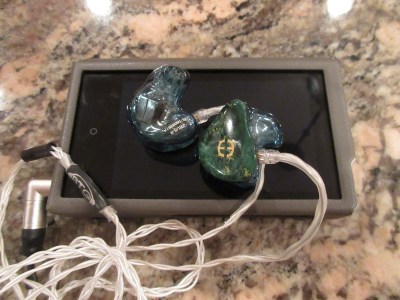
For this pair up test, I switched PM2 to IEM gain setting and noted the volume level used in every case. I do trust my ears when it comes to volume matching, and used the same test track with all DSP effects disabled. The max volume level PM2 can reach is 140 steps, in 0.5dB increments per step, and in all but one case I was able to test it without switching to a higher Headphone gain. In addition to “v” volume level, with some of the earphones I also noted special attributes, like impedance and sensitivity.
Zen2 (320ohm) v117 – warm full body sound, soft bass punch, more focus on mids (vocals), polite treble extension. I hear more depth than width (soundstage). No hissing.
Zen (320ohm) v117 – warm full body sound, more sub-bass, tighter punch, more articulate bass, clear detailed vocals, excellent treble definition. I hear the same staging as Zen2 but a touch more width. No hissing.
Zeus-R (21ohm/119dB) v68 – very detailed high resolution sound, balanced signature, great sub-bass rumble, tight punchy mid-bass, clear detailed mids, and snappy crisp airy treble. I hear an expanded soundstage with an excellent width/ depth. Very faint background hissing.
W80 (5ohm/111dB) v83 – smooth detailed organic sound, deep low end extension with a nice sub-bass rumble, punchy mid-bass, natural detailed mids, well defined crisp treble but not as airy. I hear a wide/deep soundstage. No hissing.
Andromeda (12ohm/115dB) v70 – detailed balanced sound, nice sub-bass extension, good sub-bass punch but the bass is not very tight and a little slower (attack). Smooth detailed mids, excellent retrieval of details, vocals have natural organic texture. Crisp well defined treble with a nice level of airiness. Soundstage has a great depth and a nice width (more depth than width). Very faint hissing.
DN2kJ (8ohm/102db) v93 – bright analytical sound, quality bass with a reduced quantity, nice low end extension and punch but bass is flat, mids are on a thinner, colder, more analytical revealing side, treble is crisp, well defined, extended, and airy. I hear a wide/deep soundstage. No hissing.
Momentum Wireless (470ohm, wired) v108 – v-shaped signature with a deep booming bass (nice sub-bass rumble and elevated mid-bass punch), clear detailed mids (pushed slightly back), nice crisp treble. I hear soundstage with above average width and depth. Bass was a bit overwhelming, but it’s part of the signature. No hissing.
EL8C (planar magnetic) v124 – detailed revealing sound with a more mid-forward signature, nice sub-bass extension with a textured rumble and a polite mid-bass punch, clear detailed mids, more toward colder analytical performance with a slight metallic sheen, very crisp well defined airy treble. I hear an average width staging with a nice depth. Overall sound was smoother than with some other sources. No hissing.
PM-3 (planar magnetic) v114 – a slightly v-shaped sound signature with a nice warm bass, not as aggressive but well rounded and controlled with above neutral quantity, mids are warm, full bodied, and pretty clear with a nice retrieval of details, treble is well defined and actually has a nice snap to it though not as airy. I hear a nice above the average width and depth. PM-3 is very picky about the source, often resulting in a bit veiled/congested performance, but PM2 made PM-3 shine. No hissing.
R70x (470ohm open back) v133 – a very natural detailed balanced sound presentation with a great low end extension (excellent sub-bass rumble and nice punchy mid-bass), smooth detailed mids with excellent retrieval of details, and crisp extended treble with plenty of airiness. One of the best R70x pair-ups I heard to date. When switching to headphone gain (high gain) I was able to drop volume to v110, leaving more headroom for adjustment. Soundstage is open and spacious. No hissing.
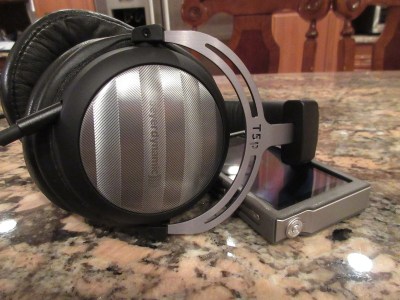
T5p 2nd gen (Tesla driver) v110 – a very smooth detailed balanced sound signature, powerful bass with an excellent textured sub-bass rumble (deep bass) and a punchy mid-bass impact, very detailed organic mids, crisp extend treble with plenty of airiness. I hear a wide/deep soundstage. The only problem, Beyers original headphone connector was a bit too wide for a leather case.
Comparison.
For this test I was using Zeus-R with a stock BTG SPC cable as my reference pair of monitors, every comparison was volume matched by ear, I played the same track, and all DSP effects were off.
PM2 vs AK120ii – very similar tonality, with PM2 being a little bit smoother. AK has a blacker background and almost no hissing in comparison to a slight hissing with PM2. As a result, AK feels like it has a sharper transient of notes, while PM2 is smoother and more musical. Soundstage expansion is very similar as well.
PM2 vs LPG – PM2 has a smoother tonality while LPG is more revealing, more resolving, and with better transparency. As a result, LPG sound is more analytical while PM is more musical, laid back (without DSP effects enabled). Both are detailed. LPG has a lot more hissing in comparison. Also, I hear PM2 as having more sub-bass while LPG has a tighter mid-bass punch. LPG has a little wider soundstage expansion.
PM2 vs L5Pro – similar smooth musical tonality, but PM2 is more revealing and detailed. PM2 has a little better sub-bass extension with a more textured sub-bass, and more detailed revealing mids. Also, PM2 has a little more airiness in treble, and overall a better treble extension. Both have a similar soundstage expansion. I find a touch more hissing in L5Pro.
PM2 vs X7 w/AM2 – X7 has a more revealing sound with a better transparency. X7 bass is faster and tighter, mids have a better retrieval of details, and treble is crispier. Soundstage expansion is similar. Overall, PM2 is smoother and more natural while X7 is colder and more analytical. X7 has a little more hissing in comparison.
PM2 vs Opus#1 – nearly identical sound signature with a similar tonality. The only difference I hear is that Opus#1 has a slightly more hissing from SE while PM2 has a slightly wider soundstage in comparison to Opus#1 SE.


USB DAC and Optical out.
I personally prefer not to use a dedicated DAP as USB DAC because I consider a DAP to be a self-contained portable standalone source. If you are not happy with an audio output of your laptop, there are plenty of alternative USB DAC choices. But sometime when you are traveling and don’t want to bring with you multiple pieces of equipment, using DAP as USB DAC is very convenient.
Here I found PM2 to pair up flawlessly with my laptop, and significantly improve a sound quality of my aging T430s Thinkpad. The drivers were installed automatically, no need for a manual install of any 3rd party files. Furthermore, I tried pairing up PM2 with my Note 4 smartphone using micro-USB otg adapter cable. As expected, it only worked using Hiby music app which utilizes its own drivers to bypass Android. Don’t expect to be able to use PM2 as USB OTG DAC for your smartphone with every app (it didn’t work with YT or Spotify), but if you’re ok with Hiby – it could be one of the options to boost sound quality of your phone.
One very useful feature is when you connect PM2 to your computer, as soon as the connection is detected it will offer you a choice from the touch screen to either select USB DAC or USB MSC (for a file transfer). Once you select USB DAC, my laptop volume was set to the max and the actual volume control was done externally from PM2. The only negative here, DSP effects are disabled when in USB DAC mode.


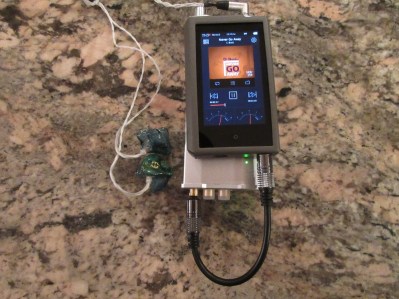
Since PM2 doesn’t have LO, you can’t bypass its built-in amplifier to use external amp, but you do have an option to use PM2 as a digital touch screen transport to drive external DAC/amp supporting optical input because its 3.5mm HO port is shared with optical digital output. I have tested it with Micro iDSD and found this pair up combo to work flawless. In my previous tests, I always found optical link to be superior in sound quality to electrical coax cable.
Conclusion.
I don’t remember how many times I mentioned JetEffect 7 in this review, but I’m going to say it again – I consider JE7 to be one of the best features of PM2. No, it’s not the only great thing about it. Everything from a quality design to ergonomics of the controls, fantastic touch swipe display and external hw playback controls, optional leather case (which is a must in my opinion) and very logical and responsive GUI – all are a top class. The level of Settings and Skin customization is another huge plus, plus many will be happy with Gapless support. You also get plenty of storage with 128GB of internal memory and microSD card expansion (up to 200GB as advertised, though probably supporting the latest 256GB as well), and the headphone output which also doubles as optical s/pdif output. The sound quality is very good and puts it right into the upper level of mid-fi performance. But with JetEffect 7 dsp effects it can truly scale up to a summit-fi performance without sounding artificial. The only thing missing was Bluetooth for wireless headphones and wifi for streaming. For sure they could have included everything and the kitchen sink, but I hope that maybe Cowon is saving a few bonus features for another TOTL flagship. Can’t wait to see what they are going to release next!

 Twister6 Reviews
Hello
Thank you for this great review.
I have a question regarding using this equipment with a my hIfi amp (Marantz PM6005). I would like to plug the Cowon into my HIFI amp and use it as an external source of Music. If i do it, will the DAC of the cowon will be bypass ? My amp have a built-in DAC, but il would like to use the DAC of the Cowon which is better
Thank you!
Sam
LikeLike
The external amp can only be connected to Line Out which bypasses internal amp. PM2 doesn’t have a true LO. There is a mode where you raise the volume to the max to use as LO, but I’m afraid there is still a double-amping when you connect it to external amp. To use PM2 as a digital playback source connected to external DAC/amp, you need to connect its optical output (from 3.5mm) to your external DAC/amp, but you can only use optical and it will bypass internal DAC.
LikeLike
Thank you for your detailed and fast answer!
LikeLike