

Sound analysis.
Many manufacturers talk about necessity of burn in before you start analyzing the sound, while iBasso actually encourages its customers by providing a burn in cable with a suggestion to use it for 200 hrs in order to condition the electric components. That’s what I typically do by setting the DAP to play in a loop for days and periodically checking the sound progress. This way I don’t have to worry about brain burn in, and can just focus on incremental changes, if any observed.
After 200hrs of burn in, I hear DX200 as having a neutral revealing signature with a natural musical tonality which balances out a typical analytical performance of ESS DACs with a more organic polish. It feels like the best of both worlds, staying closer to a neutral signature while bringing up details of analytical performance along with smoothness and body of organic tonality.
It has an articulate layered bass, a little leaner in sub-bass but with a nice fast non-aggressive punch. Mids are resolving, layered, detailed, maybe slightly on a dryer side due to its leaning toward a more analytical performance, though never crossing the harshness threshold sometimes associated with ESS DACs. Treble has plenty of sparkle and airiness, and a great extension.
The sound is very dynamic, expanded, never feels compressed or congested which leads to an excellent layering and separation between instruments and vocals. Also, the transient response of notes is fast, where the sound pops out from the black background, a very clean transition. Of course, a lot of it dependents on a technical ability of your headphones. Despite a more revealing nature of dx200, I still find timbre of the sounds to be natural, convincing, with instruments sounding rich in tonality.
Soundstage stands out with an expansion in all 3 dimensions. The sound is very spacious, even more from balanced output, and the imaging is very precise, pushing headphones performance to their full potential.
After a close listening and comparison of 3.5mm SE vs 2.5mm BAL, the first obvious observation is higher output power from BAL HO. Soundstage width expansion is also noticeable going from SE to BAL. And depending on how resolving your monitors are, I’m also hearing BAL output to have a darker background with a sharper transient response of the notes when comparing to SE output.
Furthermore, I went back’n’forth between Mango app and Mango OS, and I constantly arrive to the same conclusion that native OS is a touch smoother in comparison to Mango app. I know that iBasso is working on more optimization and additional features, so I will continue monitoring these changes.

Comparison.
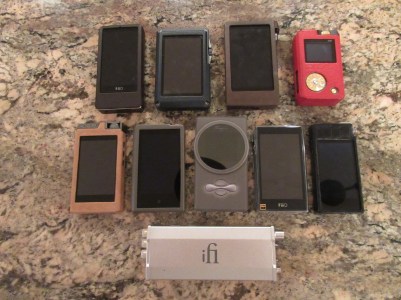
All the DAP comparisons were done using W900, Zeus XRA, and UERR iems while volume-matching between sources and using 2.5mm to 3.5mm adapter wherever it was necessary. For hissing, I always use Zeus as my “reference” due to a sensitive nature of this IEM. Majority of people who use full size headphones or other IEMs might not even hear any hissing with DX200 at all.
DX200 vs LPG – a touch more hissing with LPG. Soundstage is a little wider with DX200. In terms of a sound sig, these are very close, having a similar transparent revealing sound signature with a neutral tonality. The only noticeable difference I hear is LPG having a little more aggressive mid-bass punch while DX is more neutral in comparison.
DX200 vs Opus#2 – a touch more hissing with dx200. Soundstage is very similar, though I would still say that DX200 is a touch wider. Very similar sound sig as well, maybe with Opus#2 being a little smoother, musical, and a touch less transparent versus DX200 having an edge in transparency. Also, DX200 having a little better separation in sound due to its more analytical sound nature.
DX200 vs X7 w/AM3 – a touch more hissing with X7. DX200 soundstage is wider. Here you can hear a more noticeable difference in tonality with X7 being brighter, thinner, and even more analytical, including X7 bass being a little more neutral. In comparison, DX200 sound has more body, sounds a little more organic and smoother, low end has more impact and upper frequencies are a little smoother too. In terms of a technical performance, they both have an excellent level of transparency, separation, and layering. Just overall, X7 sounds even more analytical and brighter in comparison to DX200.
DX200 vs AK120ii – ak has zero hissing, while in dx it’s more noticeable. Soundstage is wider in DX200. Sound quality difference is quite noticeable where DX200 is more neutral, revealing, transparent, detailed, while ak120ii is a lot smoother, warmer, more laid back, not as layered and even a little congested in comparison to DX200. The difference is definitely noticeable.
DX200 vs X5iii – x5iii hissing is stronger. Both have a very similar soundstage expansion. In terms of a sound, X5iii is smoother, warmer, more organic, with a little stronger mid-bass punch. DX200 is brighter, more revealing, more resolving, and also with better layering and separation of sound. Except for a strong hissing, x5iii actually sounds like an upgrade to ak120ii, but still can’t match the technical performance of dx200.
DX200 vs L5Pro – L5Pro has a touch stronger level of hissing. DX200 has a wider soundstage. L5Pro sound is warmer, smoother, more organic, a little less revealing, and with a little stronger mid-bass impact. DX200 sound is more revealing, more neutral, with higher resolution and retrieval of details, and better layering and separation of sounds. The difference is not exactly night’n’day, but still noticeable.
DX200 vs N6 – N6 has a stronger hissing. N6 staging width is a touch narrower. N6 sound is a little thinner and slightly more analytical, while DX200 sound has a little more body and a touch smoother in comparison. The sound in both is resolving and transparent, but I hear DX200 having better layering and separation of the sounds. Another noticeable difference is N6 having a slightly better mid-bass punch in comparison to DX being more neutral.
DX200 vs PM2 – PM2 has a touch less hissing. DX has a noticeably wider soundstage. DX sound is more neutral, revealing, transparent, while PM2 is warmer, smoother, a little more congested and flatter in comparison, and not with the same level of layering and separation. With JetEffects PM2 really transform, but with dsp effects disabled DX200 definitely has an upper hand.
DX200 vs Micro iDSD – with iEMatch on Micro the hissing could be completely eliminated, but when it’s disabled – the hissing level is on par with DX200. Very similar soundstage expansion. Micro sounds a little brighter while DX is a touch smoother in comparison. In terms of detail retrieval, resolution, transparency, and sound layering they are very similar.
Pair up.
In this round of pair up testing, I went through a large collection of different C/IEMs and full size headphones.
Zeus XRA (14BA) – a very expanded soundstage (in all 3 dimensions). The sound is neutral, revealing, transparent, leaning more toward analytical quality and yet still having some degree of musical smoothness. Even so bass is close to neutral, it still packs a nice punch and a quality sub-bass rumble. Neutral revealing mids, and well controlled treble sparkle. Noticeable hissing.
W900 (9way hybrid) – holographic soundstage (spreads very wide left to right). The sound is very balanced with a hard hitting elevated mid-bass punch and a great sub-bass extension with a nice textured rumble (sub-bass is not overwhelming). Lower mids have a nice body and a little north of neutral, upper mids are clear, detailed, with a very natural revealing tonality. Treble with great definition. Dead quiet.
W80 (8BA) – a wide/deep expanded soundstage. The sound signature is very balanced and smooth, yet still with great retrieval of details. The bass has a perfect balance of sub-bass rumble and mid-bass punch, well controlled, not spilling into lower mids. Lower mids have slightly above neutral body, but under control without muddying the sound. Upper mids are smooth and detailed, very organic but not veiled or dull. Treble has a great definition, moderate sparkle and airiness. Overall sound is not as layered or separated due to its smooth signature, but it never gets congested or veiled. No hissing.
oBravo ERIB1C (hybrid planar magnetic) – a very expanded sound with an excellent width/depth. The signature is mid-forward with a super revealing and layered sound and excellent level of transparency. The bass has a great quality but flat and neutral since mids dominating the spectrum, being very revealing, transparent, analytical, and still without a single offending peak. Treble is very extended, crisp, airy. No hissing.
UERR (3BA) – a nicely expanded soundstage with a great width and depth. The sound signature is very neutral with an incredible natural and detailed retrieval of details. Bass is neutral, but not flat, goes deep with a very polite sub-bass and a nice tight mid-bass punch which is slightly above neutral in this pair up. Lower mids are neutral, upper mids are very detailed natural, transparent. Treble has a good sparkle and airiness. The sound is not super layered/separated, but oozing with natural revealing details. No hiss.
VEGA (dd) – excellent soundstage expansion (in all 3 dimensions). The sound is leaning more toward V-shaped signature due to a bass impact and upper mids/treble lift. The bass is full and rounded with a powerful sub-bass rumble and analog smooth mid-bass punch. Lower mids have a nice full body while upper mids are smooth, clear, detailed, organic. Treble is nice and clear but not as extended. Overall sound is a little congested and bass is rather boomy in this pair up. No hissing.
ZEN (dd, 320 ohm) – wide expanded soundstage. Neutral full body smooth detailed sound. Excellent bass extension with a nice sub-bass rumble (depending on the seal), nice mid-bass punch (slower in speed, with a longer decay), above neutral lower mids, clear, smooth detailed upper mids, nice well defined sparkle, not super extended. No hissing.
K10UA (10BA) – wide expanded soundstage. Overall balanced sound with emphasis on all frequencies. You get deep extended sub-bass with a nice healthy quantity, fast BA-quality mid-bass punch (sub-bass adds a nice warm layer under the mid-bass), a neutral lower mids, and a bright revealing upper mids (not harsh), including a very crisp, sparkly, airy, extended treble. No hissing.
S-EM9 (9BA) – wide holographic soundstage. Overall balanced sound with a little mid-forward signature. Bass has a great extension, but surprisingly sub-bass sounds a bit lean with a great quality rumble and a more neutral quantity. Mid-bass has a strong fast punch, lower mids are neutral, and upper mids are clear, detailed, a little more forward. Treble is well defined, crisp, with a moderate airiness. The sound is balanced, leaning more toward the smoother side, not too transparent or highly resolving. No hissing.
U12 w/M15 (12BA) – soundstage is wide and deep. The sound is leaning a little more toward L-shaped signature with an enhanced bass quantity. Sub-bass goes deep with a nice textured rumble. Mid-bass punch is strong, but the bass itself is more analog with a longer decay and slower attack. Lower mids have a full body while upper mids pushed slightly back, sound warm, organic, and detailed, but not very resolving or transparent. This is a smooth detailed signature. No hissing.
Andromeda (5BA) – nice wide staging, but not as much depth (more intimate stage). The sound is very balanced. Bass goes deep with a nicely textured enhanced rumble, and a fast punchy mid-bass. Lower mids are neutral, upper mids are detailed, resolving, layered, not harsh or grainy but very detailed. Treble is crisp, airy, with a nice sparkle and great extension. Almost zero hissing.
IT03 w/CB12 (3way hybrid) – a very expanded soundstage (in all 3 directions). The sound signature is very balanced. Deep sub-bass extension, going deep with a nice enhanced rumble, and punchy fast mid-bass. Bass is very articulate and well controlled. Lower mids are neutral, while upper mids are slightly pushed back, but still very detailed, resolving, layered. Treble has a very nice sparkle, lots of airiness and great extension. No hissing.
R70x (470 ohm open back) – a very expanded open back soundstage performance (in all 3 directions). The sound signature is very balanced and natural. Bass goes down deep with a smooth textured rumble, mid-bass punch is rather fast and very well controlled. Lower mids are neutral and smooth while upper mids are very detailed, organic, smooth and revealing at the same time. Treble is well defined, crisp, not as sparkly but with plenty of open back airiness.
PM3 (planar magnetic) – above average width soundstage, but not super expanded. The sound signature is balanced smooth, and overall sound a little congested. Bass has a good extension, warm, rounded, a little on a slower side, not very articulate. Lower mids are above neutral, have a full body, upper mids are smooth and clear, but not super detailed or very resolving. Treble has a good definition, but not very crisp or airy. The overall sound was very smooth, laid back, organic.
EL8C (planar magnetic) – a very expanded soundstage (in all 3 directions). The sound signature is neutral-balanced. Bass is closer to neutral in quantity, but still has a nice deep quality sub-bass extension and a fast articulate mid-bass punch a little north of neutral. Lower mids are lean and neutral, while upper mids are very resolving, detailed, layered, closer to analytical quality but not harsh or grainy. Treble is crisp, airy, with a nice sparkle, and great extension. Absolutely no metallic sheen.
T5p2 (tesla drivers) – excellent expansion of sound with a holographic soundstage. A very balanced revealing sound signature. Bass has a great extension with a perfect balanced between textured sub-bass rumble and analog quality mid-bass punch (faster attack, slower decay). Lower mids are neutral-lean, while upper mids are very resolving, detailed, layered, and at the same time natural and non-harsh. Treble has a great definition, great sparkle, plenty of airiness and excellent extension.


External and wireless connections.
With DX200 I didn’t find the need for any external Amp or DAC/amp use since it was driving everything from sensitive IEMs to my demanding cans with authority, but regardless of that DX200 still has plenty of connection options to either use LO with your own external amp (bypassing the internal amp), or SPDIF (either coax or optical) to drive external DAC/amp while using DX200 as a transport.
While testing with Micro iDSD, I found DX200 LO to be adjustable (not fixed). Right away DX200 recognized Line Out connection and showed it when I was adjusting the volume on the DAP. And speaking of Volume adjustment, I wish iBasso will add on-screen slider because it takes awhile turning the volume knob when going between headphones with different sensitivity. I found the sound to be very clean and transparent where the output of ES9028Pro DACs paired up well with a warmer amp section of Micro (vs more reference DX200 sound). Using DX200 as a transport for Micro iDSD (from SPDIF), output is fixed and you can either use coax or optical cable where everything worked as expected as soon as I connected it. Personally, I always find optical digital connection to be cleaner and more transparent in comparison to a warmer smoother sound when using coax cable.
I tested wireless connection with B&W P7 Wireless, and found it to work in open space up to 60ft away from DX200. I was able to control volume up/down and skip tracks forward/back (double/triple click), but surprisingly couldn’t use Play/Pause with a single click. Also tried LG HB730 Bluetooth headset where the volume range was a bit limited making it too sensitive, and in there I also found track skip working OK, but not Play/Pause. Hopefully, it will be fixed in the next fw update.
I really wanted to test USB DAC functionality and well aware from others that it’s working without a problem, but unfortunately my aging Windows laptops at home have issues with Thesycon USB drivers. So, I wasn’t able to test USB DAC.

Conclusion.
Sometimes we focus so much on the sound of headphones, that we forget about the signature of the source and how much it contributes to the final sound. For me, as a reviewer, the neutral sound sig is very important because I’m always in search of a reference quality source to evaluate headphones without coloring the sound. DX200 fits the bill perfectly with its neutral revealing signature which still has a natural musical tonality, though don’t expect a full body organic sound. The same goes for those audio enthusiasts who want more impact and weight in the low end – DX200 will have an accurate reproduction of the bass without coloring or enhancement. To my ears DX200 is a true reference quality DAP intended for music purist who want to push the performance of in-ear monitors and full size headphones to their full potential in soundstage expansion, retrieval of details, and sound transparency.
As a bonus, you are also getting a full Android 6.0 DAP with a capability to do streaming and to run other apps – side-loaded at the moment of writing this review, while Google Play store is promised to be added soon. Plus, you can use wireless connection to pair up with your Bluetooth headphones, and use coax or optical connection to turn DX200 into a transport to drive external DAC/amp. Add to that a solid aluminum body with analog volume wheel and hardware playback controls, single ended and balanced headphone output connection, and interchangeable amp module (with more to be available soon), and you got yourself one fully loaded portable DAP.

 Twister6 Reviews
nice review, if only you equipped and compared with ak380 + wm1z then it would be perfect.
LikeLike
I don’t have either AK380 or WM1z, only auditioned them at CanJam NYC, so prefer not to include in comparison based on a short listening time. But I found 1Z and 380SS to be in Opus#2 territory, smoother and with more body. DX200 with its default amp is more analytical, closer to LPG.
LikeLike
Another great review! I need to stop reading your reviews because it’s draining my moolah!
Kidding aside, question, Since it’s also running on android (side loaded needed on playstore) can I assume that spotify and or apple music will run smoothly?
LikeLike
just replied to you on HF in PM. I’m not familiar with this app, but if you can’t side load it and need google play store, either wait for iBasso to add it or use the free rom per link on head-fi.
LikeLike
Got it! Thanks for your input mate!
LikeLike
Thanks for your very detail review >If one consider all the option and adds on in this player and the price it is the best valued Player on the market . My next Player for sure .
LikeLike
Excellent review! I am new to daps so the eq intrigues me, how well does this dap work with modifying eq?
LikeLike
it’s a standard paragraphic EQ, like in any other DAP, works ok. BUT, iBasso promised that in one of the upcoming FW updates they will include Parametric EQ (where you can adjust the frequency and the bandwidth of every band).
LikeLike
thank you for your review. i´m moving from a desktop rig to a definitive dap. i read about ibasso, fiio, etc..for review and specs seems to me that the ibasso dx200is a good choice. you confirm’
thank you
LikeLike
informative review, as always, Twister…kudos….have you since had a chance to compare it to the newly released opus #3?
LikeLike
if you read my Opus#3 review, in there I focused mostly on mid-tier rather than flagship DAP comparison. Opus#3 is great, but it’s somewhere between their lower level Opus#1 and higher end Opus#2. But I heard they just recently updated #3 fw with a noticeable improvement of tonality, more balanced. But in terms of technical performance, DX200 will have a more layered, more resolving sound with a higher output power. With a default amp1, DX200 is actually more analytical (though, again, the latest dx200 fw update added more “body” to the sound), but amp2 (if you read my review of amp2 as well) adds more body to the sound, and ibasso releasing now amp3 and amp4. So, DX200 is still quite fantastic for a flagship dap under $1k. and so does their IT03 hybrid, and apparently 4way IT04 upcoming hybrid going to be another killer!
LikeLike
Apologies no I didn’t see that review…I’ll have a look now…thank you
LikeLike
Mango lists album tracks alphabetically, not by track number. A horrible oversight by the dev! Nice player tho’. Using with Forrest Audio FLC8S.
LikeLike
You have to post this feedback on Head-fi in DX200 thread so that Paul can collect it for iBasso sw team 😉
LikeLike
Great review – thanks! Two quick questions: Is the battery user-replaceable? Currently have a DX80 and DX90. I like the DX90 for the slightly sharper sound and the removable battery. But I like the display on the DX80. Neither display is bright enough to use outdoors, where I do much of my listening. I’m hoping the DX200 is a bit brighter and has a replaceable battery.
LikeLike
Every 3 months there is a new dap, and there hasnt been one with a removable battery like the original old dx90. In dx200 battery is replaceable but not removable. Nobody in the last few years released a dap with removable battery, there is no consumer interest in it, i guess. Besides, i heard dx90 batteries were lasting 3-4hrs, so made sense to remove and replace it. All the new daps have 9-10hr batteries… Display is as good as a smartphone.
LikeLike
Thanks much! I put an aftermarket higher-capacity battery in my DX90 and get about 8 hours. My DX80 battery, just after the warranty expired, now only plays an hour so I have to figure out how I can get it replaced. First thing I ever couldn’t find a YouTube video for! Display on both the 80 and 90 are acceptable quality, but nowhere near bright enough to read outside. Keep up the good work – much appreciated.
LikeLike
Thank you for the review. Would you say that DX200 is a step up comparing to DX90, which I use currently? What the most noticeable differences in sound are (if you happen to listen to DX90)?
LikeLike
didn’t hear DX90, but it was ibasso mid-fi level DAP. iBasso true flagship was DX100. DX200 is an upgrade and a step up to their previous flagship (dx100). It’s not even in the same comparison category as dx90. DX200 goes head-to-head with other flagship daps that cost twice as much.
LikeLike
might be swapping out my mojo for this unit…i hear it steps things up SQ once you go balanced with this unit, esp the amp mod 2 or other.
LikeLike
yeah, balanced doubles the power and improves sound. amp2 doesn’t have balanced output, only single ended. Upcoming amp3 should be like amp2 with balanced.
LikeLike
Can you set me straight on balanced output? Conceptually sounds a lot like XLR microphones to me. But are there any headphones? Worthwhile to use a 2.5×3.5 adapter? Or is this primarily a replacement IEM cable tactic? I like the idea of double the output power, especially when sending output to a small amp or pre-amp, and I see there are plenty of 2.5mm to RCA cables available. Any guidance or background much appreciated.
LikeLike
Single ended (3.5mm TRS) has your Left and Right channels referenced to the same common ground, while balanced (2.5mm TRRS) has L/R channels separated, referencing “hot” signal to it’s “negative”. Without referencing to a noisy ground, you have a better SNR, blacker background, and truly differential opamp output which should double the voltage swing. I mean, that’s in theory, and unfortunately not many DAPs follow this theory in their design, implementing 2.5mm TRRS as a sale gimmick. iBasso does follow it to the core, a true differential balanced architecture which doubles the voltage, gives you better L/R channel separation, and improves SNR. Some of these changes could be perceived as subtle to our ears, depending on our own hearing sensitivity, but that’s a whole different story 😉
LikeLike
Great explanation on the 2.5 connection – thanks. The answer to the second part of my question is no, it doesn’t make sense to use a 2.5×3.5 adapter as that just gets you back into the same tied-to-noisy-common-ground boat.
But I’m not quite there yet on the third part of my question: What can plug into a 2.5? The only headphones a search brings up are office type with built-in microphones, and of course tons of PlayStation2 gear.
Seems to me if you have a good quality pre-amp with truly isolated l/r inputs, the 2.5xRCA adapter is well suited. The concept completely clicks with me, but where are the headphones? IEMs?
LikeLike
As long as your headphones have a removable cable going to L/R earpiece or cup, all you need is a balanced terminated cable with 4 separate conductors, 2 wires per each side.
LikeLike
FYI – found this tutorial on balanced cables: https://robrobinette.com/BalancedCable.htm
He offers a great explanation with schematics on balanced vs. unbalanced, in addition to the balanced cable guide.
Think the DX200 will has enough power to drive any of these?
HE400 or 500; HD580, HD600, or HD650?
Not too tough to make a balanced cable for them…
LikeLike
Don’t have those full size cans, but dx200 balanced output has over a watt of output power. So you should be good.
LikeLike
what are your favorite common-man-price IEMs that would pair nice with the DX200 and be easy to convert to balanced?
LikeLike
Most iems I’m listening to are in $2k price bracket. Common man price iems, iBasso own it03 hybrid which comes with mmcx removable cable and they have their own high end cb12 8 conductor balanced cable (extra purchase).
LikeLike
Hey twist, have you heard of sony nw-wm1a? If yes, How is this compared to dx200? I got the chance to demo the nw-wm1z and it was awesome but still can’t compare since there was no demo unit of dx200 nor nw-wm1a but was told that both by sony that nw-wm1a and nw-wm1z have the same sound signature.
I was impressed with the walkman’s built and sound signature. I just want to know if dx200 is still better than the walkman.
LikeLike
Sorry, didn’t try wm1a, and only tried wm1z briefly 6 months ago, don’t even remember how it sounds. Heard from a few people whose opinion I trust that 1z sound improvement is quite noticeable when compared to 1a.
LikeLike
Same…but 1z’s price is a huge price jump compared to dx200 and no way I’ll purchase it anyways… have you heard of kann by ak?
Thanks twister!
LikeLike
Not familiar with KANN either. Heard it’s powerfull but only mid fi sound quality. If i go by a distant memory, dx200 with amp2 kind of reminds me of 1z sound. Full, rich, and yet still resolving.
LikeLike
So up to date, do you think dx200 is still “up there” with all the new releases? Is this still one of your favorite? If this comes close to z1 then I’m sold 🙂 though, i need to get amp2 for upgrade.
LikeLike
Dx200, Plenue 2, and LPG are my favorites now.
LikeLike
Hi
Thanks for your review. I’m really enjoying my DX200 (Amp2), IT03 (Stock cable) combination. If I wanted to get an IEM for around £1000, that had a similar signature to the IT03, what would you shortlist?
Also, is there any good reason to change to the Plenue 2?
Thanks in advance.
Regards
Darren
LikeLike
No need to switch to P2. Hmm, similar to it03, lately i have been playing with 64audio limited edition U4SE, see if you can find it. Very impressive!
LikeLike
Thanks for your answer. I think I will wait until the IT04 is out and reviewed with the DX200 before I make a decision. I could also get an AMP3 and CB13 cable for my IT03’s.
LikeLike
Can you please provide comparison between dx200, Plenue R and Fiio X7II for SQ, battery life and power?
LikeLike
PR gonna win in battery, hands down, dx200 and x7ii will be similar in battery, and can’t match PR. Power – PR is the weakest, designed more for IEMs, X7ii with its AM3A module is good, but DX200 with its AMP3/AMP4/AMP5 high power amps wins! Sound quality, DX200 is above X7ii (I compared it already, look up that review on my blog). PR is a step below in quality when compared to dx200/x7ii.
LikeLike
Crees que cómo facilitador amplificador es mejor que el chord mojo en cuanto a calidad de sonido
Me sería de gran ayuda ya que no sé si comprar el chord o ibasso
LikeLike
in English, please 🙂
LikeLike
He’s trying to figure out whether to buy an amp module or the Chord Mojo and would like to know if you have a comparison or opinion…
LikeLike
Oh, thanks 🙂 Was looking from my laptop, no translator here 🙂 Don’t have experience with Mojo, but heard it’s on a smoother side. So, default AMP1 with DX200 which is very revealing and analytical will be far from Mojo sound sig. And, then, you can get AMP5 which is warmer and smoother, maybe closer to Mojo? So, it will be a better $200 upgrade than buying a new DAC/amp (Mojo). The flexibility of DX200 modular design is a BIG Plus!
LikeLike
Hi,
Thanks for excellent review. I am planning to invest on DX 200 or Opus 2 . As IEM I have three candidates: earphonics SEM 9 or U12T or Tia trio. I am coming from D90 and velvet v1. I prefer a neutral analytical sound with a broad sound stage. Having reviewed all which combination would you recommend? Unfortunately I do not have chance to try them in my county.
LikeLike
DX200 with a default amp1 and U12t with M15 apex module would be the most neutral revealing combo above.
LikeLike
My good man… Can I pick your brain?
I’m wreaking my head, looking for a device to drive my active monitors.
* Runs locally stored files
* Streams SoundCloud
* Controlled remotely via an Android device
” Outputs either SPDIF coax or AES.
The DX150 and DX200 meet all those requirements. Still, is there any other alternative? SQ is top on my mind.
Many thanks!
LikeLike
Hiby R6 is your other option, great DAP, the only Cons is 10 ohm output impedance which is “fixed” with iFi iEMatch impedance adapter.
LikeLike
The HiBy seems to meet requirements with aplomb.
Thanks for the useful tip.
If you have the patience and knowledge, answer me this: Will sending the SPDIF signal for re-clocking improve the sound? (e.g., to Mutec MC+3 and from there AES into my monitors).
LikeLike
Sound improvement is very subjective because in this case you are comparing dac/amp internal to R6 vs dac/amp of your external desktop setup or whatever you are using. In theory desktop setup should be better due to better power filtering, less noise, more output power, but then it also becomes subjective depending on pair up synergy with your headphones. I’m personally happy with my portable DAP setups 😉
LikeLike
I recently picked up a DX200 and wondered which of the following amp modules in your opinion would pair best with the Andros: Amp 1, Amp 4s or Amp 8? Thanks!
LikeLike
amp1 is bright, 4s looses resolution due to warmth, so go with amp8
LikeLike