

Sound Analysis.
I know that some DAP reviews go into details of describing the sound like it’s a pair of IEMs, which ends up being just a description of headphones or earphones used for evaluation. I prefer to go more in-depth during DAP comparison and pair up sections of the review. While here, I wanted to note a general sound signature and a technical performance of M2s.
To my ears across multiple IEMs, I hear M2s as having a relatively neutral signature with a tonality that going to vary. This variation will depend on IEM pair up where 4.8 ohm output impedance of M2s comes into play. With lower impedance more sensitive multi-BA IEMs, I hear the mid-bass being slightly attenuated in quantity and lower treble being lifted – giving the sound a brighter tonality, more revealing in nature. With higher impedance IEMs, especially those with dynamic drivers, the sound is more neutral and smoother, having a little fuller body and more musical tonality. Some might find this pair up effect to be quite useful in fine-tuning of the sound, similar to how people use EQ or tip-rolling. The effect will vary between IEMs and not necessary night’n’day, but it’s there.
In terms of dynamics of the sound, it feels rather expanded, without any compression or sound congestion. It doesn’t have the fastest transient response of the notes or the blackest background, but this is not something I would expect from an entry level DAP, especially with a spec of 108dB SNR. But regardless of that, I still consider the sound to be quite dynamic with a nice layering and separation, including a spacious soundstage expansion.
Lately, I have been reviewing a lot of higher end DAPs, so it’s easy to lose focus and to become biased against entry level DAPs next to flagships. You have to realize there are different expectations at different price brackets. And of course, the question of higher output impedance will come up. Is it going to make M2s sound bad? Of course, NOT. It will affect some low impedance high sensitivity multi-BA IEMs, where depending on their baseline tuning, the sound can change when paired up with M2s, and some people can either like or dislike this effect. To get into more details, let’s take a closer look at Comparison and Pair-up sections.
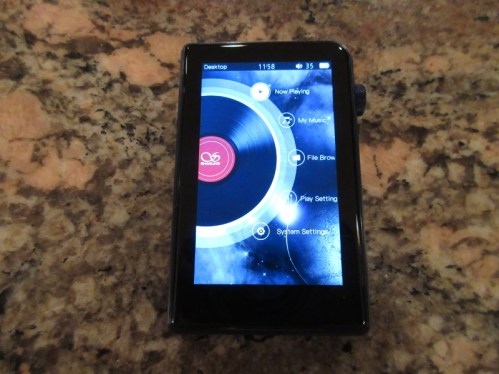
Comparison.
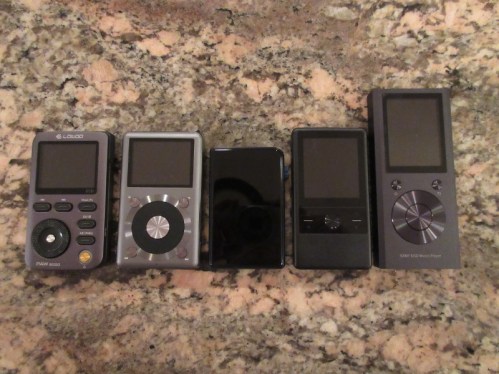
Due to so many similarities in functionality, the first detailed comparison, which I have been asked by a lot of my readers, will be with Cayin N3. Other comparisons will be a little shorter, but I made sure to mention in every case the pair up using both the high and the low impedance IEMs.
M2s vs Cayin N3 – with higher impedance IEMs, these sound very close to each other. Very similar soundstage expansion, and similar neutral-warmish fuller body sound with plenty of details, decent dynamics. Not very transparent or super layered, but with plenty of natural musical neutral tonality. For example, 80 ohm Westone ES80 sounded relatively close in tonality and overall performance when using M2s vs N3.
With low impedance iems, the story is completely different. While the soundstage expansion remains relatively the same, the bass and the treble have a noticeable change, due to higher impedance output of M2s. M2s sub-bass still has the same extension, but the quantity is reduced in comparison to N3. The same with mid-bass, the impact is not the same as N3. When it comes to treble, relative to N3, M2s treble gets lifted, which also gives sound a little more airiness. This change was consistent across multiple low impedance IEMs, and in some cases, it worked toward the advantage of pair up, while in other cases not as much. For example, I used 8 ohm iBasso IT03 and 5 ohm Westone W80, and due to a warmer, smoother nature of W80, I found pair up with M2s to be an improvement where bass became more balanced with a reduced amplitude while upper mids/lower treble opened with more details due to a brighter presentation. But on contrary, IT03 sounded better with N3 where the upper frequencies were smoother and more natural, while with M2s the bass got reduced and the treble became rather harsh and grainy.
M2s vs FiiO X3ii – with higher impedance IEMs, I can hear a similar soundstage expansion and neutral-warmish tonality, though M2s has more sparkle in treble. But when it comes to a technical performance, M2s has an edge where the sound is more dynamic (vs X3ii being a little flatter), more layered, and more transparent. It’s not a night’n’day difference, but noticeable enough.
With low impedance iems, the marginal technical advantage of M2s is still there, but the tonality changes due to reduced bass and more treble – a preference here will depend on pair up synergy with specific IEMs. Also, worth mentioning that M2s has a blacker background while X3ii had some hissing.
M2s vs Lotoo PAW 5k – with higher impedance IEMs, I hear M2s having a little wider soundstage, but the tonality is very similar, a neutral-warmish sound. In terms of performance, M2s has a bit of an advantage with better dynamics and a little more transparency in a sound.
With low impedance, the technical performance difference remains the same, and it’s the same tonality difference where the bass gets slightly reduced relative to PAW5k and the treble is lifted. So again, it will depend on this finetuning effect and how it pairs up with different iems.
M2s vs Aune M1S – with higher impedance IEMs, soundstage is very similar in SE (BAL of M1S is wider), tonality is similar except M1S is a little smoother and with slightly better layering between sounds. Otherwise, very similar dynamics and transparency.
With low impedance, very similar performance, just a difference in tonality due to slightly lower bass and more forward treble. M1S balanced output enhances the soundstage, but I focused on 3.5mm SE port comparison since M2s doesn’t have balanced HO.
M2s vs Shanling M1 – Finally, I wanted to bring up a comparison between M2s and it’s little brother, M1. M2s has a little wider soundstage. The overall tonality is similar, but M2s sound in more revealing, more transparent, more layered, and it has a noticeably better dynamics expansions while M1 sound feels flatter and more compressed in comparison. Basically, M2s has a better technical performance.
Pair-up.
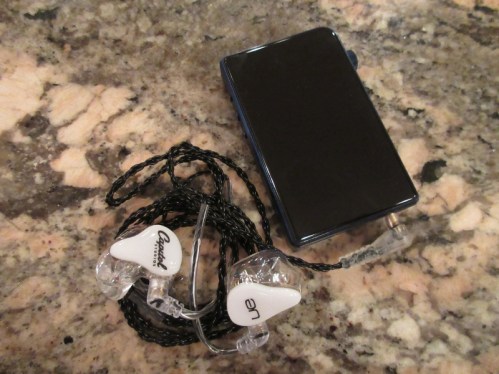
I think this is the most important “sound” section of the review, since you can see the effect of output impedance with different headphones/earphones where I also mentioned their spec.
Audio-Technica R70x (470 ohms, open back) – 3D expanded soundstage, excellent bass impact with a deep sub-bass rumble, a little elevated low end, but very tastefully. The sound is more balanced rather than a typical “neutral” signature I’m used to with R70x. I hear more transparency and sparkle, but also the sound is a little leaner.
Audeze EL8C (closed back planar magnetic) – nicely expanded soundstage, punchy tight mid-bass, lean mids, and very crisp treble. In this pair-up the sound was a bit too crisp and metallic for my taste.
VE Zen earbuds (320 ohm) – wide expanded soundstage, tight articulate bass, neutral transparent mids, crisp airy treble. The overall sound is tighter, crisper, more transparent, rather than smoother warmer more natural tonality I’m used to with Zens.
MEE Audio Pinnacle 1 (50 ohm, single dynamic) – wide expanded soundstage, v-shaped sound signature with more emphasis on low end and treble. Treble is more forward in this pair up, very crisp and airy. Overall, keeps the revealing nature of these headphones, without being too harsh.
In-Ear SD4 (multi-BA, 22 ohms, 120dB sensitivity) – wide expanded soundstage, v-shaped signature with a nice balance between bass and treble. A nice mid-bass punch, fast and articulate, good sub-bass extension, lean lower mids smooth upper mids, crisp well defined airy treble, not sibilant or harsh, just crisp and revealing. A pretty good pair up considering SD4 can sound harsh with many other sources.
UE UERR (multi-BA, 35 ohms, 100dB sens) – wide expanded soundstage, balanced revealing tonality, tight punchy bass, lean transparent mids, crisp and airy treble (non-fatigue). Changes tonality from neutral organic to more balanced revealing, and it sounds a little better than original sound I’m used to.
Westone ES80 (multi-BA, 80 ohms, 111dB sens) – wide expanded soundstage, balanced natural-revealing tonality, tight punchy mid-bass with a nice sub-bass rumble, neutral lower mids and revealing natural upper mids, crisp airy treble. Here, the sound shift is more from neutral to balanced which I also enjoyed quite a lot. It makes ES80 sounds almost like an upgraded ES60.
Noble K10UA (multi-BA, n/a) – wide expanded soundstage, tight punchy mid-bass with a deep sub-bass rumble, lean lower mids, revealing upper mids, crisp airy treble, a little bit of sibilance with upper frequencies leaning more toward the brighter tonality. Not a bad pair up, but not harsh at all, but I can hear a bit of that 6k peak.
64 Audio U18 (multi-BA, 9 ohms, 115dB sens) – wide expanded soundstage, balanced signature with more mid-forward focus, bass is tight and fast, but not as high quantity, lower mids are lean and upper mids are revealing and detailed, but lower treble is a bit too crisp and bright. I wasn’t too crazy about this pair-up, the sound became too revealing and analytical.
CFA Andromeda (multi-BA, 13 ohms, 115dB sens) – wide expanded soundstage, balanced signature with more mid-forward focus, bass is tight and fast, but not as high quantity, lower mids are lean and upper mids are too revealing, on analytical level, treble is very crisp and airy, a bit too harsh for my taste. Didn’t like this pair up at all, the sound was too harsh and grainy.
CFA Vega (dynamic, 18 ohms, 102 dB sens) – wide expanded soundstage, v-shaped sound, powerful bass impact, though sub-bass rumble is not as deep, fast well controlled bass, neutral lower mids, revealing detailed upper mids, crisp airy treble. The overall tonality is a little less organic and more revealing, but not harsh or sibilant.
Conclusion.
Regardless of Shanling M2s being an entry level DAP, it still turned out to be a long review in order for me to cover all the details of the performance and the features packed inside of this slick little audio player. I know it’s shallow to talk about the DAP looks when the sound should have a higher priority, but it’s hard not to be impressed the first time you pick M2s up, either. And as much as I was skeptical about the navigation wheel, I found it to be very ergonomic. The glass front and back are gorgeous and just asking to be swiped, pretending it’s a touch screen. I mean, it’s a great looking little DAP, neutrally tuned to enjoy your music with wired and wireless headphones, as well as being able to use it as a digital transport, or wireless DAC, or usb DAC. Regarding its pair up with headphones, I covered in detail how it will affect the sound due to its higher output impedance. Thus, you will have to make your final decision depending on your selection of IEMs.

 Twister6 Reviews
Hi can you compare it to colorfly c200?
LikeLike
C200 is much brighter in sound and more colder in tonality. But the biggest problem with C200 is lack of fw updates and relatively minimalistic functionality.
LikeLike
How would it match up to beoplay H9’s?
Thanks
LikeLike
I’m not familiar with H9, but I assume you are talking about wireless connection? That should be fine, but wired – M2s is not as high res, M3s scales up in sound quality. Maybe even look into their new tiny M0, that one supports a lot of wireless codecs and sounds damn good!
LikeLike
M2s. The audio quality is on par with iPhone 4/5/6. Low/High Gain modes are equal from SQ perspective. Steep lowpass filter should be preferred. One minor tech. issue spotted. Audio measurements that matter – http://soundexpert.org/articles/-/blogs/audio-quality-of-shanling-m2s
LikeLike
This is quite an old DAP by now ;), there are better options out there, especially with low output impedance so it won’t mess the sound, unless you are using iematch.
LikeLike