
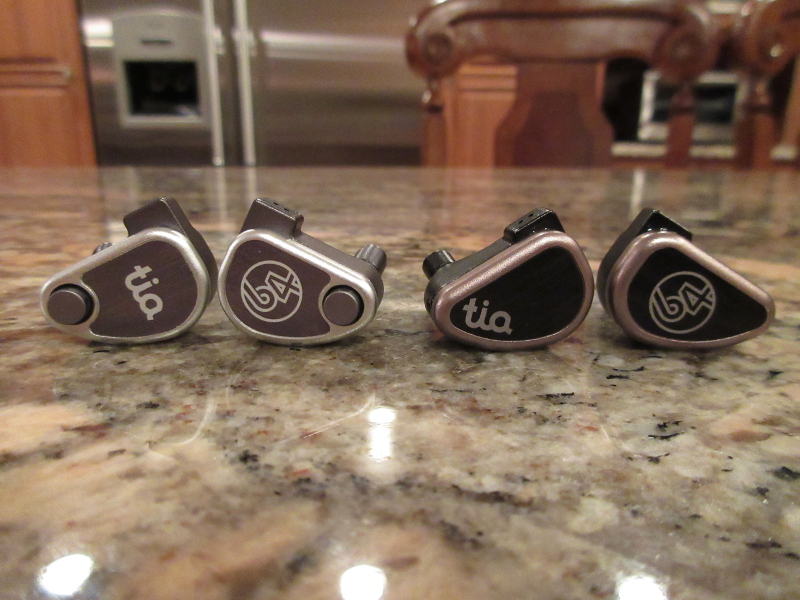
Sound Analysis and Comparison.
While in all my reviews I have a separate Sound Analysis and Comparison sections, I decided to do it differently this time, by combining these sections together. I covered U12, U18, and Fourte before with lots of comparison to other IEMs. Here, I feel the interest will be more in how U12t and Trio compare to U12, U18, and Fourte so people can make a decision which one suites them better. For consistency, I used the original 64 Audio SPC cable.
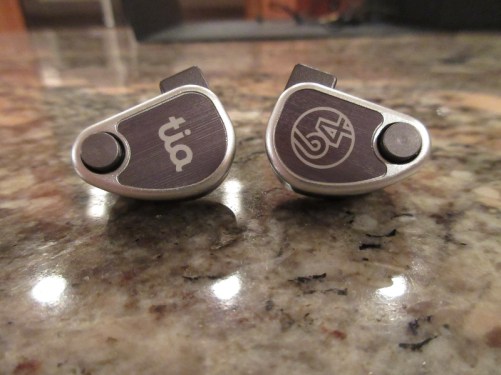
U12t.
U12t (M15) vs U12 (M15).
Both have a relatively balanced signature which could be referred to as W-shaped where every frequency range is well represented and balanced. But there are a few fundamental differences that give each iem its unique sound characteristics.
Both have a wide soundstage, and convincing positioning of sounds. But when it comes to layering and separation, U12t has a better technical performance since u12 is smoother and more laidback while U12t is more revealing and has more air between layers to separate and to expand them.
With bass, I hear U12t having a little more sub-bass rumble, while mid-bass is very similar in quantity between both, maybe with the original u12 having a little more mid-bass impact in comparison.
Mids is where you hear a noticeable difference, specifically lower mids. Here, upper mids are nearly identical, but lower mids in u12 have more body vs a more neutral lower mids of U12t. As a result, u12 sound could be a little bloated in comparison to u12t. Interesting how sometimes things are not as obvious until you start switching and comparing. Upper mids are very similar between both, but the lower mids really influence overall tonality and sound presentation, with U12t being leaner, more neutral, and more revealing vs u12 having a fuller body with a smoother sound.
Treble also has a lot of similarities, being well defined and with just enough crunch, but U12t takes one step further, being a little more vivid and with more sparkle and airiness.
U12t (M15) vs U18 (M20).
Both have a balanced signature where u18 has a little more forward upper mids with more energy in lower treble. While U12t holding it a bit back with a smoother, more organic tonality of mids, u18 steps more into Fourte/Trio territory with more revealing, detailed, brighter upper mids.
U18 soundstage is wider. Similar to Fourte vs Trio where Trio has a wide staging but Fourte just goes beyond that, u18 does the same in comparison to U12t, going beyond already wide soundstage of U12t. And along with that, more revealing, more airy sound of u18 has improved layering and separation.
With bass, both are very similar, I mean to the point of having nearly identical sub-bass and mid- bass. I’m not even picking up any noticeable difference. But keep in mind, I’m using u18 with M20 module which plays an important role in matching with U12t (M15). U18 with M15 loses some of the isolation which affects bass impact.
With mids, here I hear lower mids of u18 being just a little leaner in comparison to a more neutral U12t lower mids. That creates more separation between the bass and the upper mids in a relative comparison of U12t where you have a smoother transition from lows to mids with a more neutral tonality. Upper mids is where u18 shines with more energy, more forward presentation, better retrieval of details, and brighter tonality. U12t is smoother, more organic, still very details and layered, just less revealing which could be plus for some.
With treble, again, lots of similarities with the same level of crunch, definition, but u18 still has an edge with more airiness and more sparkle, extending just a little bit further too.
U12t: M15 vs M20.
Also, I compared U12t with M15 vs M20 modules. The change of going from M15 to M20 affects mostly the bass with an elevated sub-bass rumble which goes deeper and has higher quantity, and stronger mid-bass impact. I don’t hear too much of other changes, maybe a touch more body in lower mids with M20, but upper mids and treble remain the same, just a change in low end.
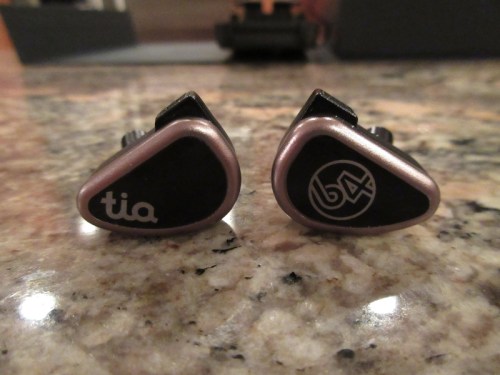
Trio.
Trio vs Fourte.
Both Trio and Fourte have a more revealing brighter tonality with a unique signature where it could appear as u-shaped due to elevated low end and treble, but the mids are not scooped out or recessed. Mids are quite balanced relative to the baseline of bass and treble. The sound is very resolving, but Fourte is more revealing, more micro-detailed, and airier while Trio is a little smoother and more organic, with a little more body in a relative comparison.
With soundstage, I found Fourte to be wider, while the soundstage depth is the same. Trio soundstage is wide no questions about it, but Fourte soundstage goes even further in width.
Bass difference is noticeable where I think 64 Audio decided to unleash the full power of its dynamic driver in Trio, with a deeper and a more elevated sub-bass rumble, and relatively higher mid-bass impact. In comparison, Fourte bass is more balanced and more linear. Also, I hear Fourte bass being a little tighter and more controlled, while Trio has this added layer of analog texture. I think Trio bass, especially the deeper sub-bass, is what some expected from Fourte to begin with, associating dynamic driver with a more aggressive low-end performance.
With mids, I hear a lot of similarities between these two. Lower mids sounds a little more neutral with Trio which could also be part of a perception due to a contrast with boosted lows in comparison to more neutral lows in Fourte. With upper mids, Fourte is more revealing, more analytical and micro-detailed, though it also being a little colder and thinner, while Trio is smoother and even more organic, still very detailed but not quite micro-detailed like Fourte.
Treble, and specifically lower treble region, is where you hear a more noticeable difference. As mentioned before, they both have a revealing brighter tonality at the top with plenty of energy around the treble, specifically more definition around 10k-12k region. But unlike Fourte where I hear a little more boost around 6k, Trio keeps it more natural, giving treble a more organic tonality, taking some edge off, while in comparison Fourte lower treble sounds thinner, more revealing, with more airiness. Treble in both is well defined, with a nice level of crunch, but Trio sounds fuller and more natural, while Fourte is more vivid and more revealing.
Trio vs U12t (M15).
U12t has a more balanced signature with a smoother natural tonality, while Trio is more u-shaped with a more pronounced low-end lift (in particular sub-bass) and a more forward upper mids and extra treble sparkle.
Soundstage width is nearly the same. And overall sound layering and separation is similar.
With bass, U12t has a punchy mid-bass, close to Trio, but with a little faster attack and shorter decay which makes the bass tighter and faster. One noticeable difference here is U12t having less sub-bass in comparison to Trio, making low end a little less boomy. Also, because U12t mids are more balanced, its bass comes more in focus.
When it comes to mids, U12t lower mids have a little more body while Trio lower mids are more neutral in comparison. Ironically, U12t’s bass has a shorter decay, so the extra body is not from the spillage but from the actual tuning. On a contrary, Trio bass is more analog and slower, yet due to a more neutral lower mids and more forward upper mids, there is more noticeable separation between lows and mids in Trio, versus a more coherent transition in U12t. Upper mids in Trio are more revealing, more detailed, brighter in tonality, while U12t is revealing and detailed but smoother and more organic in comparison.
Treble has more similarities here, with both having plenty of definition and crunch, though I think Trio goes a step further with more crunch and more airiness, which also makes it brighter. The perception of treble in Trio also gets influenced by its slightly forward upper mids that infuse it with more energy, while U12t treble is smoother which goes along with its more natural balanced mids.
Pair up.
For clarification, I consider sound to be balanced when there is a relative balance between lows, mids, and highs. When I talk about u-shaped sound in my description below, I don’t mean a scooped out mids, but rather a more balanced mids with elevated bass and treble which creates u-shaped sound sig perception.
U12t pair-up:
Plenue 2 – wide soundstage, balanced signature, revealing detailed sound; punchy, a little slower mid-bass with a nice sub-bass rumble, neutral lower mids, detailed natural upper mids, crisp detailed treble. Good dynamic expansion, and good layering and separation, though a little less air between layers.
LPG – wide soundstage, balanced signature, maybe pushing more toward u-shaped, revealing detailed sound; stronger mid-bass punch, a little more forward upper mids, crisp detailed treble with a little more sparkle and airiness. Great dynamic expansion with excellent layering and separation.
Opus#2 – wide soundstage with a little more depth; more sub-bass rumble and stronger mids-bass punch, neutral lower mids with smooth detailed natural upper mids, crisp detailed treble. Good dynamic expansion with nice layering and separation, just a little less air between layers.
X7ii – wide soundstage, balanced signature; a little more sub-bass rumble, neutral lower mids, detailed natural upper mids which are slightly more forward, crisp detailed treble. Dynamic expansion is good, not the best, which also results in good layering and separation, but not as much air between the layers.
AK120ii – wide soundstage, balanced signature; punchy bass with a nice bouncy mid-bass and moderate sub-bass level, a little more body in lower mids, smooth detailed upper mids, crisp detailed treble. Dynamic expansion in this pair up is OK, not super expanded but with a nice layering and separation.
WM1Z – soundstage is 3D holographic, balanced signature, revealing detailed natural tonality; punchy bass with a nice sub-bass texture, tighter/faster mid-bass, neutral lower mids, detailed natural upper mids, crisp detailed treble. The sound is very natural, with a little fuller body, detailed, good dynamic expansion, and more holographic 3D staging.
DX200 w/amp4 – wide soundstage with a little more depth, balanced signature; revealing detailed natural sound, punchy bass with textured sub-bass rumble, neutral lower mids, detailed natural upper mids, crisp detailed treble. The sound has a good dynamics expansion and above average layering/separation, natural tonality, with a little fuller body.
Trio pair-up:
Plenue 2 – wide soundstage, u-shaped sig with more forward mids; deep sub-bass rumble, slower mid-bass punch, neutral lower mids, more revealing brighter upper mids, crisp airy treble. Dynamic expanded sound, good layering and separation.
LPG – wide soundstage; u-shaped sig with more balanced mids; deep sub-bass rumble with a more elevated mid-bass punch, neutral lower mids, more micro-detailed layered brighter upper mids, crisp snappy airy treble. Excellent dynamic expansion of the sound with good layering and separation of sounds, though sound is brighter due to more treble energy.
Opus#2 – wide soundstage, u-shaped sig with mids slightly pushed back; deep sub-bass rumble with a little higher quantity, slower mid-bass punch, neutral lower mids, more revealing brighter upper mids, very crisp airy treble, actually a bit too much. Good dynamics of the sound, but I find a bit too much treble energy in this pair up.
X7ii – wide soundstage, u-shaped sig with balanced mids; deep sub-bass rumble, faster mid-bass punch, neutral lower mids, more revealing brighter upper mids, crisp airy treble with a little extra crunch. Sound is dynamic, but in this pair up not as much in comparison to some other flagship DAPs, not congested, just not as dynamically expanded with a bit less air between layers.
AK120ii – wide soundstage, the sound is u-shaped with balanced mids; nice sub-bass rumble but not as deep as with some other sources, slower mid-bass punch, fuller lower mids, revealing upper mids but a little smoother in tonality, crisp well-defined treble. Dynamic expansion is good, but not on the same level as some other flagship daps.
WM1Z – soundstage is 3D holographic; more balanced signature, though mids pushed a little bit further; punchy articulate bass with a nice sub-bass rendition, neutral lower mids, detailed warmer more natural upper mids, well-defined smoother extended treble which is not as airy. 1Z has a more natural smoother tonality, especially when it comes to upper frequencies, but without sacrificing dynamics or layering of the sounds.
DX200 w/amp4 – wide soundstage with a little more depth, u-shaped signature with more balanced mids; smooth analog textured sub-bass rumble with a punchy mid-bass; fuller body lower mids and brighter revealing upper mids; crisp airy well-defined treble. Dynamic sound with a good sense of layering and air between the layers.

Conclusion.
As I mentioned in my original reviews, going between U18 and Fourte could be a tough decision for some people. Now, with introduction of U12t and Trio, you have additional and more affordable choices where U12t and A12t expected to be priced at $1,999 and Trio expected to be priced at $2,299. If I would to summarize the differences, U12t fits somewhere between U12 and U18, keeping the smoothness of the original U12 while adding more revealing details of U18 thanks to TIA driver and the tuning optimization with lower output impedance sources. With Trio, you have transformation of Fourte which has a more solid dynamic driver impact while toning down the upper frequencies with smoother and more organic tonality.
It’s good to see 64 Audio making their new TIA tech more affordable, but at the end of the day it’s all about the sound. Without a doubt, U18 and Fourte are still the flagships in 64 Audio product line-up. But the flagship status doesn’t automatically mean it will fit everyone’s sound preference. The final choice should be based on finding the IEM with your ideal sound signature, where I think if you are interested in 64 Audio IEMs and their TIA and APEX tech, now you have a comprehensive choice between U12t, Trio, U18, and Fourte.

 Twister6 Reviews
Hi Twister, great comparisons! I was wondering how the Harmony 8.2 and U12t stack up in terms of resultion and microdetails? Thanks!!!
LikeLike
U12t is ahead of it!
LikeLike
Excellent review Twister, Really enjoyed the read.
Would love to know your thoughts on your absolute favorite for EDM music.
For me in particular, I love progressive trance/deep house with lots of bass presence and vocals.
I’ve been eyeing down the CA vegas but after reading this, seems like the TRIO really fit the bill. I keep reading about how Vegas can be very fatiguing and mids are ‘recessed’, would love to know your thoughts on this as well. Any other suggestions from other brands are welcome.
Cheers!
LikeLike
“favorite” constantly changes. Right now it’s a toss between U18, IE800S, and Trio. Not sure if VEGA is the best for EDM if you want faster sound, and VEGA could sound different depending on pair up, thus references to “fatigue” where 6k peak can go up and down. I think for what you are describing, Trio might be it. I highly recommend you to attend your local CanJam shows where 64 audio always present (upcoming NYC, then later SGP, SoCal, London, Shanghai, RMAF)…
LikeLike
Hi Twister…
I read your review with great interest. Highly enjoyable; the comparison approach is two birds in one stone: revealing and stacking up at the same time.
I’m in the market for CIEM and the 64 is quite appealing, especially the Apex technology, which should on paper relieve fatigue and protect the eardrum. Do you feel those claims have substance?
At that price range, all manufacturers have superb offerings. However, in your opinion, is there any product that pulls ahead? One that is truly stellar givn the price? A loud bang for the buck, excuse the pun.
Best wishes!
LikeLike
I don’t have issues with my ears thus can’t comment on health benefits, but aware those with tinnitus feel relief. I look at apex as sound modifying filter/module which micro adjusts the tonality and soundstage. In terms of the best price performance ratio, you need to be more specific about price range. Plus a lot of it has to do with a sound preference. Usually people talk about best bang for a buck while discussing budget stuff around $100… When you go to higher end iems like 64audio, it’s about finding the sound you like. There are many choices around $2k, and I’m a big fan of their sound signature. U18t is one of my favorite iems.
LikeLike
Much obliged for your response, Twister,
Yes, I misfired with my questions. Let me try again: my current IEM is Shure 846, which I’m pleased with, but custom should be more fitting to my life style-at least on paper. Due to lack of time and opportunities-part and parcel of living in Thailand-I have to take a leap of faith and purchase one “blind” on my next visit to the USA. Thus, I relay on reviews, calling up vendors and my hunch…
I’ve been considering the JH Roxaane, Nobel Kaizer Encore and a few others, but more than one arrow has pointed in the direction of Audio64, not the least the Apex technology.
So, what advice would you give me? And more so, which plunge of faith would you recommend? My budget is 2k to 3k.
Many thanks!
LikeLike
Iem preference is such a subjective thing, my recommendation would be to try to avoid blind purchase, especially when it comes to CIEM which you won’t be able to sell as easily if you are not satisfied. While in US, you can’t just walk into a store and order one on a spot. But there could be one solution, just learned about it today. There is a store in NYC, audio 46 (located on 46th Street), which I heard will start carrying full line up of 64audio iems which you can listen to at their location. Of course, not sure if you are going to visit US on east or west coast, but if in NYC – look them up… Other than that, U18t is a great choice and you can get it in both iem or CIEM. The same with U12t.
LikeLike
Well advised, and thanks for the usual tip
Gratitudes and cheers!
LikeLike
hi Twister,
Do you think it is worth to upgrade from U12 to U12T? so far, I’m in love with U12 especially following your recommendation to pair it with alo ref8.. Or should I go with Trio instead? My music mostly on EDM, hiphop and Top40. Occassionaly, I also listen to Jpop and Audiophile.
Looking forward with your suggestions.
Now I also in dilemma, whether to keep Opus2 or just use HIBY R6 for my daily use. What do you think?
Thanks
LikeLike
Do you have R6 now? I would use that for daily use. R6 pairs up exceptionally well with U12 which was originally tuned for high output impedance sources. So, U12 with ref8 and R6 will be already a big sound upgrade over just U12 with a stock cable and Opus#2. Save yourself money, enjoy that pair up 😉
LikeLike
So do you think it is worthy yo upgrade to U12Tia from U12? Yes I have R6 with me now.
Btw, I have problem connect the ref8 with U12, the pin ref8 little bit loose when i plugged it to U12, while using stock cable is firm. Do you encounter same problem like this?
LikeLike
With 2pin connector, if you slightly spread the pins apart, just tiny bit, it will tighten the fit. Going to U12t is an upgrade, is it worthy? I guess it’s up to you. Are you going to get U12t and compare with U12? Many people who upgrade to u12 are those who find it too bassy and not as detailed up top. In your pair up with R6 and ref8 cable you find it perfect. That’s why I don’t know if you still gonna like brighter sound going to U12t. If you have both side by side, you can decide 😉 Your ears are the final judge!
LikeLike
gosh, I just sold my U12 and only keep the ref8 cable with me.. Is it very bright U12T and no warm signature anymore? I like more U12 compared to U10 because of lack of bass in U10 but find U8 over bass. So U12 was perfect for me and I thought U12T will be an upgrade…
But still good U12T pair with ref8?
LikeLike
No need to panic. You have M20 and M15 apex modules and stock spc vs ref8 cable. Lots of fine tuning options.
LikeLike
How would U12T compare with AAW 900? Currently deciding between this 2 as their prices are similar. Would prefer a laid back treble that is detailed with good separation and extension.
LikeLike
W900 sounds more congested in comparison due to thicker lower mids. Thanks to TIA driver, U12t treble will be crisper, but it’s not harsh, just adds to a better definition. I used to enjoy W900 a loto more but now it sounds more congested in comparison to many other iems.
LikeLike
Hi Twister!
Thank you for providing such a detailed and well organized review!
I am considering to upgrade from Andromeda to U12t or Trio.
May I know how you would compare between those three?
BTW, I might upgrade the cable as well, I used the gold-silver cable with Andro, but I feel gold will make some negative effect in macro-details and treble. Which cable is better if I wanna wider soundstage, forwarded mids and crisp treble between ARES II+ and Lionheart?
Thanks!
Alan
LikeLike
Regarding cables, go with Lionheart and make sure it has Psquare connector. If you like Andro, imho the upgrade will be going to Trio, it will maintain the same signature with improvement in tonality (more analog quality deeper bass and better controlled treble).
LikeLike
Hi Twister, thanks for the wonderful review. I’m currently using an Empire Ears Zeus XRA (which I left it at the XIV switch most of the time) but I will be changing to the 64 Tia Trio very soon. While the Trio has a wonderful bass, its mid is quite laid back compared to the Zeus XIV I’m familiar with. May I asked your opinion on aftermarket cables that would help pushing the mids more forward without changing the characteristic of the bass and the Treble too much? My budget is around 200-300usd.
Thank you in advance
LikeLike
Oh, I knew the answer to this off top of my head 🙂 but still wanted to double check by testing. 100% what you are looking for Trio is EA Ares II 8wire bespoke cable which is $300, actually. It brings mids forward and improves the resolution and retrieval of details.
LikeLike
Thank you very much! I’ll definitely try it when I get my Trio.
Get
LikeLike
Wonderful review Twister, Really enjoyed the read.
I’m currently using a trio and very staisfied with the bass ,
but I feel the vocals of trio is a little bit thick and nasal .
May I asked your opinion on aftermarket cables that would help making the vocals thiner without changing the characteristic of the bass and the Treble too much.
How would Trio compare with EA THOR II ?
Thanks
LikeLike
The best pair up of Trio I heard is with Janus D but we are talking about $1.3k cable… I recommend Ares II 8wire version, only $300 and will do exactly what you need.
LikeLike
Any chance you’ve heard any other good cable pairings with the Trio?
LikeLike
I love Leo II, that cables is something else!
LikeLike
Favorite cable pairing with the U12T?
LikeLike
Tbh, I went back to stock cable, liking it! But Ares II is a nice pair up as well, for only $150, unless you want to upgrade to $2k 1960-4W cable 😀
LikeLike
Damn, that 1960 cable’s bass description sounds really similar to this Hakugei triple alloy cable I tried once that made the A12T’s bass sound uncannily like a DD. I gotta try that when I get back to Singapore. Any other good cables worth mentioning alongside that and the Ares?
LikeLike
If you want something warmer and resolving, try Oslo and Leo II
LikeLike
Hmmm.. Now I am deciding whether I should get the Horus octa or the 1960-4w.
LikeLike
for which one, Trio or U12t? Horus is a bright cable, will make Trio harsh.
LikeLike
Hi!!!
I’m constantly wandering for the best IEM for Rock and Metal music, by now, it’s the Trió IEM + Plussound Tricopper cable…
Do you hear any other IEM pairing that do the things better than this in this style of music?
LikeLike
It’s not exactly my type of music, but I think Mest MKII might be a good one as well. Mest bass is tighter and treble less harsh.
LikeLike