
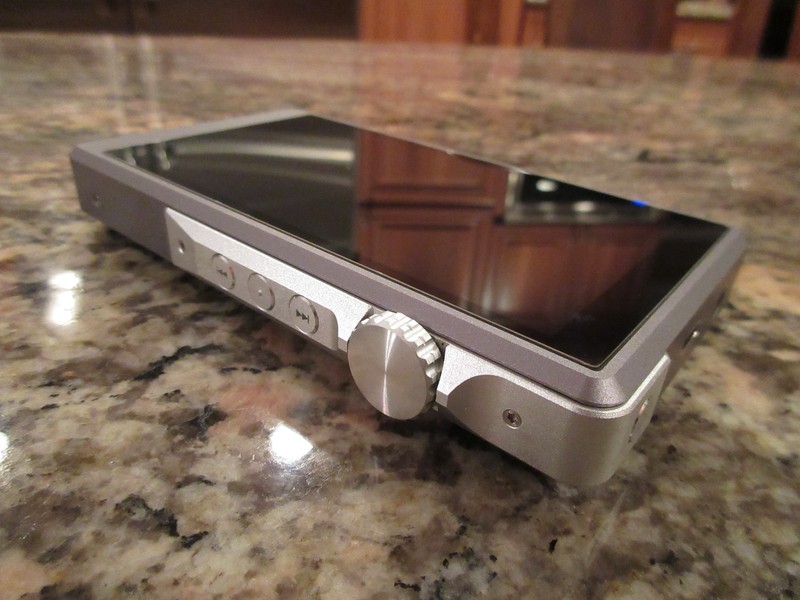
Comparison.
In this comparison section I was using IT04, U18t, and T5p2 during listening and comparison between different sources, all volume matched for a consistency.
DX200 w/amp8 vs DX150 w/amp8: 200 has a blacker background, more transparency (less coloring), better layering and separation of the sound. In comparison, 150 sounds a little smoother and a bit warmer (not as transparent) and with some reduction in dynamics. Soundstage is very close. In terms of design, these have a lot of similarities, from the same display, presence of volume wheel, the same ports (between stock amps), similar storage (internal 32GB vs 64GB) with both supporting a single uSD, same RAM and battery capacity, interchangeable amp modules, Android OS, etc. While DX150 doesn’t have native Mango, when you install the latest Lurker’s ROM you get that enabled as well. The main difference is in DACs which explains the edge in DX200 sound performance. But then, DX150 has quick charge and costs almost $400 less. If you want to squeeze every ounce of performance and get the best, DX200 over DX150 is a logical choice. But if you are on a budget and want the taste of DX200, DX150 definitely worth your consideration.
DX150 vs Hiby R6 – very similar soundstage expansion when comparing balanced HO; in terms of tonality R6 is brighter and a little leaner while DX has a fuller body and a little warmer and smoother (more analog) tonality with a little harder hitting bass. Both have a very similar technical sound performance. In terms of the spec, both have 32GB internal storage with uSD expansion, 3.5mm/2.5mm outputs, touchscreen and android interface. DX has volume wheel vs R6 with +/- buttons, and I know some might have preference for a physical wheel. R6 comes pre-installed with Google Play, out of the box DX150 needs to be side-loaded with apps, unless you install free Lurker’s ROM which adds Google Play (which I recommend). In terms of Android/app performance, R6 with a faster processor and 3GB of RAM has an edge, as expected. With audio performance, R6 has high output impedance and in many cases with IEMs requires iEMatch. Also need to keep in mind DX advantage of interchangeable amp modules. I have been asked about this comparison a lot, and I suggest to figure out your DAP feature priorities and make a list of pros/cons since these have a similar technical performance with a difference in tonality which going to affect pair-up of headphones with different signatures. Plus, keep in mind if you either want a fast smartphone-like Android performance (R6) or the flexibility of replaceable amp modules to enhance audio performance (DX150).
DX150 vs Cayin N5ii – both have a similar soundstage expansion; they also have a similar neutral fuller body tonality, but N5ii has crisper treble which gives it a little brighter sound while DX treble extension is a little smoother in comparison, as I would expect due to ESS vs AKM DACs. I also enjoyed how both pair up well with many headphones and result in nice hard hitting low end response. In comparison, both have a volume wheel, hw playback buttons, 3.5mm/2.5mm HO, touch screen interface (though DX150 is more responsive), both have internal 32GB of storage, while N5ii has dual uSD vs DX with a single one. While N5ii has Google Play already pre-loaded, its Android experience is rather limited in comparison to DX with its open Android 6.0, but remember that DX needs Lurker’s firmware for Google Play or to side-load each app. Due to 2GB of RAM (DX) vs 1GB (N5ii), Android experience with interface and apps is faster on DX. And of course, DX interchangeable amps set it apart.
DX150 vs FiiO X5iii/X7ii – lots of differences here with X5iii. DX soundstage is wider, tonality is a little more neutral, background is a lot quieter in comparison to a strong hiss level of X5iii with its warmer tonality. Also, DX sound is more dynamic, with a better separation and layering. Both have volume wheel and external hardware playback controls, touch screen interface, 32GB internal storage, single uSD for DX and dual for X5iii, and of course big advantage of interchangeable amp module for DX. While X5iii comes pre-loaded with Google play and DX by default needs to be side-loaded, installing Lurker’s fw evens out the field and Android performance and screen response is faster in DX with 2GB of RAM vs 1GB in X5iii. I know some will ask about X7ii comparison since it’s a modular flagship version of FiiO DAPs, and in terms of a performance X7ii has more similarities with DX150 except for tonality where X7ii is more neutral while DX150 has a more natural warmer tonality with a punchier bass impact. In terms of the design, once you install Lurker’s ROM, they are on par with a similar Android experience and full access to Google Play, though X7ii has 64GB of internal storage and dual uSD. Despite X7ii modular design with replaceable amp modules, I still find iBasso amps design to offer higher level of performance.
DX150 vs Cowon Plenue R – DX soundstage is a little bit wider, while both have a very similar signature and tonality, and overall a very similar technical performance. In terms of design, both have 3.5mm/2.5mm, touch screen interface, volume wheel in DX vs volume buttons in PR, both have single uSD, while internal storage is 32GB in DX and 128GB in PR. Both have a very responsive touch interface, but PR doesn’t have Android OS and no access to apps, while DX can run any app and has interchangeable amp modules. The main advantage of PR is JetEffect dsp effects and more compact size, that’s about it.
DX150 vs theBit Opus#3 – DX soundstage is a little wider; the tonality of #3 is a little brighter and leaner in comparison to a fuller body and a little warmer, smoother, and more analog tonality of DX. Both have 3.5mm/2.5mm, touch screen interface, volume wheel, single uSD expansion, with 32GB internal storage in DX and 64GB internal storage in #3. The big difference here is of course replaceable amp modules of DX150 as well as open Android OS, while Opus#3 can only be side-loaded with apps though painful steps due to a closed Android OS.
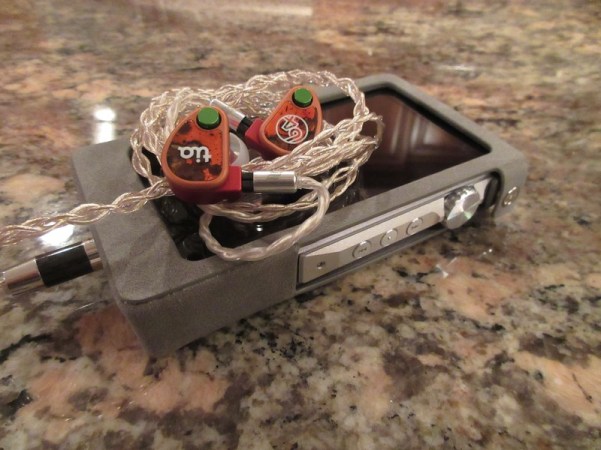
Pair up.
In this pair up testing I was using DX150 with a stock AMP6, and short delay sharp roll off filter setting. I also included comments about my personal pair up preference, referring to various amp modules. Furthermore, I noted High gain (HG) or Low gain (LG), Volume (v) level, and either SE or BAL outputs, depending on the cable termination. As my usual disclaimer, this is how I hear it, so take it as a subjective opinion.
iBasso IT01 (DD), LG, v76, SE – wide soundstage, v-shaped fun signature, bass hits hard (both sub-bass rumble and mids-bass punch), lower mids are lean while upper mids are detailed and natural; treble is very crisp and airy. Stock AMP6 was my favorite pair up since AMP7 pushed mids a little back and AMP8 made bass stronger. Obviously, a matter of a personal sound preference.
iBasso IT04 (3BA+DD hybrid), LG, v68, BAL – wide soundstage expansion, very balanced transparent sound, deep sub-bass rumble (with more rumble in comparison to some other pair ups), fast mid-bass punch, lean lower mids, natural revealing upper mids, very detailed vocals, and crisp airy treble with a good control. AMP7 wasn’t too different but AMP8 did scale it up to a next level without boosting the bass too much, just adding a little more body to the sound, giving it a little more analog flavor, improving layering, resolution, retrieval of details, and making the sound a little more holographic. While I enjoyed AMP6 pair up, AMP8 pair up with IT04 is really good. If you think about it, for $1.2k (DX150+AMP8+IT04) you can have all-in-one hi-res solution for the price which is less then some flagship IEMs.
Beyerdynamic T5p 2nd gen (full size Tesla), HG, v80, BAL – very balanced natural smooth tonality, wide soundstage, nice rumble and good mid-bass impact, smooth natural mids, nice treble sparkle. The sound has more body and not as lean and bright like in some other pair ups. I tried these in both low and high gain, and found high gain to improve mids tonality, making it a little more natural. Also, I prefer AMP7 in this pair up, giving sound a little more transparency.
Audeze EL8C (Planar magnetic), HG, v108, SE – neutral revealing tonality, wide soundstage, bass goes deep but quantity is neutral, mids are neutral and revealing as well, a little intimate, treble is crisp and detailed and without metallic sheen. The sound is lacking some body. Here, since I only have stock SE cable, I can’t try it with AMP8, but AMP5 is a little better match, giving more body to the sound.
VE ZEN 2 Omega (320ohm earbuds), HG, v90, BAL – wide soundstage expansion, very smooth natural organic tonality, deep analog rounded bass with a nice sub-bass rumble, fuller body natural detailed mids, well defined controlled treble. While pair up with a stock AMP6 is pretty good, I liked AMP8 pair up a little better since it made sound more transparent, faster, tighter. The beauty of Omega version of Zen is replaceable cables where now I can switch to balanced and try different sources with different cables.
64 Audio U18t (18BA, 9ohm impedance), HG (v56), LG (v70), BAL – was going back’n’forth between high and low gain setting, the sound is very balanced, expanded, detailed, very nicely layered under both gains, but dynamic expansion is better in high gain, though due to low impedance in HG there is a touch more hissing in comparison to low gain. In LG the sound is a little smoother. The pair up of U18t is great with stock AMP6, as well as AMP7 and AMP8.
UM Mason V3 (16BA, lower sensitivity), LG, v77, BAL – wide soundstage expansion, very neutral revealing tonality, good low-end extension with a moderate impact, lean transparent mids, great retrieval of details, crisp airy treble. If you want more body, AMP8 does scale up the performance here, probably my favorite pair up, especially since it adds more punch in low end.
UE UERR (3BA), LG, v78, BAL – surprisingly a very wide soundstage, a nicely balanced neutral natural tonality, great sub-bass rumble, punchy mid-bass, neutral natural detailed mids, crisp airy well controlled treble. While it can scale up with some other amps, I liked this pair up the most because sound remained very balanced across entire FR, and the tonality was very natural and still detailed. AMP7 was my 2nd favorite pair up after stock AMP6 with UERR.
Westone W80 (8BA, 5ohm impedance), HG, v61, SE – tried between low and high gain, and there is no comparison, high gain brings more details to the mids, with a sound being faster and punchier, while low gain makes mids a little veiled. In high gain, the sound has a very balanced signature with a natural organic tonality. Great sub-bass rumble and a strong mid-bass punch, fuller body natural detailed mids, well controlled detailed treble. AMP7 expanded the staging making it more holographic and made sound a little bit smoother.
Campfire Audio Andromeda (5BA, higher sensitivity, lower impedance), LG, v52, BAL – high gain is no-go here due to hissing, low gain has hissing as well, but attenuated. Soundstage is nicely expanded, very wide. Bass goes deep and has a strong impact, mids have fuller body, sounds more natural, slightly pushed back, treble is very crisp and airy. I tried AMP8, but hissing was too strong, as well as bass hitting a bit too hard. AMP7 pair was excellent, lifting some veil off.

Page 5: External wired/wireless connections, and Conclusion.

 Twister6 Reviews
Thanks for the excellent preview as always. I now find the choice of amp modules confusing. Do you think there is too much choice?
LikeLike
With a current selection, it’s easier to pick. Just figure out what ports you need first, based on your headphones termination. That’s a good start to make life easier.
LikeLike
Is the discrete circuit used in AMP7 & 8, that offers high voltage and high current outputs, anything like the SATRI circuit used in Bakoon amps?
LikeLike
Sorry, I’m not too familiar with those amps. Not much desktop experience.
LikeLike
Do you think that 200 $ are for the AMP are a good invest compared to the AMP6?
cheers FS
LikeLike
Not quite sure about your question. $200 for which amp module? I would stay, don’t buy any new amp modules untill you spend some time with a stock amp6, to get to know its sound better. If you have balanced cables and don’t care about LineOut, you can upgrade to amp8 (4.4mm, which you can use with an adaptor from 2.5mm). It’s not amps but DX150 which is a good investment because you can upgrade its amp module later.
LikeLike
Excellent information and thanks for all the effort that went into it. It may also interest some to know stuff that I hardly see reported – e.g. I chose the DX150 to succeed my trusty Cowon X7 as it’s one of the few DAPS that can do all of the below:
– handle m3u playlists with ease
– display size shows longer file/track names readable by me in a hurry while hunting alphabetically (my eyes are getting older, large clear display is becoming a must!).
– can be set (with Neutron or JetAudio) to play one track and stop… As I use these devices to play backing tracks for choir performances, we need to be able to cue the next track manually, not have the player dictate the timing.
The Cowon is still kicking buut will die one day, the DX150 is waiting. Only negative is it doesn’t have anywhere near the battery life of the Cowon X7, but then again, there’s nothing much on the market – let alone suitable – that does.
LikeLike
not familiar with Cowon X7, but WM1Z can get your 30hrs of battery time. But in general, the average battery life on most of flagship daps is around 10hrs +/- an hour.
LikeLike
Thanks Twister, the WM1Z is way too pricey for my needs… The Cowon “iAudio X7” was released way back around 2010, it was the flasgship before the “Plenue” series, with 100 hrs battery, 120/160Gb HDD, resistive touch screen and less than $700 here in Aus (it was a step up from their X5 which was a fantastic alternative to the iPod released way back when A&K was still iRiver)…. The X7 is still my player of choice for our choir performances through portable PA Gear due to the large display and battery life…
LikeLike
I s there a foolproof way to install lurkers firmware? on windows 10 please I have tried and tried and tried and I failed and failed and failed
LikeLike
will continue with this on HF dx200 thread where you just posted 🙂
LikeLike
I have the DX200 with amp3 and use my Beyerdynamic T5p ii which I feel is a great combo. I am thinking of getting noise canceling headphones. I am more interested it best sound quality as opposed to best noise canceling so I have been looking and Sennheiser HD1 or the wireless HD2. If I got the HD1 I would need the amp7, but then I would not be able to use T5ps. Does the iBasso DX200 use the aptx bluetooth and if yes or no would sound be a big downgrade compared to HD1 and DX200 with amp7?
My objective is to be able to travel with both headphones, the T5p ii for serious listening and the Sennheiser HD1 or 2 for on the plane.
LikeLike
i can never keep up with Senns wireless headphones, wireless HD1 on-ear, in-ear, over-year, Momentum, noise canceling, etc… I have their Momentum Wireless ANC from 2 years ago and really enjoy it, ONLY use it wireless, don’t even bother wired. Why do you need another amp to use them? Even wired they should be fine with the amp you have already, despite their high impedance. DX200 doesn’t have aptX. Btw, don’t think they have HD2, I can’t even find it searching. So, I think you should be fine with the amp you have and both headphones.
LikeLike
Hi,
thanks for the great review.
Just one question. I am about to use DX150 with Andromeda. And you wrote comparing AMP7 -> AMP8: that 8 has blacker background … and then in pair-up section for Andromeda ” I tried AMP8, but hissing was too strong,…AMP7 pair was excellent, lifting some veil off.” So I just wandering which of those two produces less hiss. Thanks
LikeLike
With Andromeda, it will hiss with many daps, no matter what gain or amp section design. It’s a very sensitive iem.
LikeLike
any experience in using 2.5mm to 4,4mm adapter? since the amp8 is 4.4mm and my cable is 2.5mm.
LikeLike
I have a dozen of adapters, from $10 to $100+. The one from iBasso, CA02 for $15 is very good.
LikeLike
Thanks for the info, Will get the Ca02 the.
LikeLike
hello twister6.
I have read a lot of your reviews, I highly appreciate your reviews, I bought many of the devices based on your reviews. Thank you.
i have a question want to get your help, i am using ibasso it04 headset, am looking at dx150, cayin n5iis or dx200. Can you point me to the right path. cayin n5iis, it04 + d150 + amp8 or dx200 + amp1 i up pick which pair.
thank you.
LikeLike
d150/amp8 vs dx200/amp1 – I would go for d150 with amp8 because it’s a great combo, and I like amp8 more than amp1. Ideally, dx200 + amp8 would be the best, but I see you are sticking to a budget 😉 N5iis is great, but brighter and I like a more natural synergy of dx150 with it04 in that pair up. Plus DX gives you flexibility of amp upgrade and you have full open android when install lurker’s ROM. Apps run smoother on DX than N5iiS.
LikeLike
Thanks for your respond. dx150 + amp8 would be my choice.
LikeLike
Hi Twister 6, love your reviews and the passion you transmit!
Question: Opus#2 or DX200 Amp 4, 8? I’m in my final hour choices, and would love your opinion…
LikeLike
DX200 w/amp8 will give you a better sound and a better value and more flexibility. You will need to flash it with lurker’s free rom to get Google play, but it’s much better than opus sideloading solution.
LikeLiked by 1 person
Thanks so much for the fast reply!
While you’re here, one last one:
I’m interested almost exclusively in sound quality and a good looking dap, to drive a CA Atlas while on the move. Was also considering the LP6, still within budget.
Is the DX200 hardware still a winner, considering the flexibility of “modernizing” the sound through amp8, as opposed to the embedded, fixed quality of the others?
LikeLike
You probably meant L6, cause LP6 will have r2r dac and cost 2x. I don’t hace atlas, don’t know how it sounds, assuming probably like Vega. L6 is not the best choice due to high output impedance and cave age interface lol! For under $1.5k you have DX200 and Plenue 2mk2. DX200 is a better value cause you get a lot of features.
LikeLiked by 1 person
L6 it was… and was…
Thanks so much for the help and the hard work, which all of us civilians appreciate so much…
DX200 it is!
LikeLike
Hey Alex,
May I ask which Amp would you recommend for CA Solaris? Is Amp 7 a good upgrade (as with andromeda)?
LikeLike
AMP7 is good, but I love amp8 😉 just have to be balanced. But single ended 3.5mm, AMP7 is good!
LikeLike
Which Amp would pair better with Beyerdynamic DT 1990 Pro?
LikeLike
It all depends on which way you want to go with dt1990 tonality. To my ears these Beyers are a bit too crisp in upper frequencies, and if you want to warm up the sound – amp5 would be the choice. If you want to squeeze out max performance with more transparency and resolution, which can also make things a little crisper, then either amp7 or amp8, depending on your cable termination.
LikeLike
I was thinking about the amp8, will it power the 250 Ohm Beyerdynamic?
LikeLike
It should.
LikeLike
I have a n5ii, and am looking to take the next step. My my earphone is the very good CIEM RSM from Alclair (neutral with a hint of smoothness, decent punch). Looking to increase dynamics, soundstage and detail. I was thinking of just going with the n5iis, but it seems like the Dx200 would be the bigger upgrade, especially with amp8. Would you concur? Thanks!
LikeLike
I concur 🙂 But wait a few more weeks, DX220 is almost here. Let’s see what it brings to the table and how much it will cost. Plus, with a release of a new DX220, you can probably get a really good deal on second hand DX200 😉
LikeLike
and the DX220 is looking interesting. And now Cayin is throwing the N6ii into the ring. I must now engage in the most difficult act in the world of audiophilia… waiting. I look forward to reading your reviews!
LikeLike
Thanks for the heads up. I am now the happy owner of a DX220.
LikeLike
After adding the Lurker firmware will I be able to use this player with qobuz ?
LikeLike
Dx150 is android dap, you can run any app with it. By default you will have to sideload apps or get apps from apkpure, with Lurker fw you will get Google Play so it makes it easier to get apps.
LikeLike
Do you have any link or document on how to install Lurker fw ?Currently I have cowon p1 and I like it’s analogish sound signature. can you please suggest a good player which I can use with Qobuz with similar analog/smooth sound signature? My budget is between $300 to 1k
LikeLike
Have you tried Amp 9 with DX150? I like a neutral/warm signature in my DAPs and got a barely used DX150 for a steal. Curious how the tube amp module might sound.
LikeLike
not a fan of AMP9, under powered and with high level of hissing (high noise floor), so I personally don’t use it. DX150 is a warmer and less resolving DAP to begin with, so I expect the pair up with AMP9 to be not as beneficial.
LikeLike
Hello! I have measured with an oscilloscope and a tone of 1 Khz 0 db the 3.5 mm output of Amp 7 and 4.4 mm of amp 8 in the DX150 and they do not deliver their maximum voltage, in the case of amp 7, which should deliver 3.2 Vrms, it delivers 2.4 Vrms; I suspect that it is limited by the hardware of the dx150. regards!
LikeLike
Did you set the gain to high?
LikeLike
It’s on high gain and I recently tried again with the same results, amp 1 that comes with the dx150 defaults to 2.4Vrms on high gain and 3.5mm unbalanced output; I did the test with my DX200 and amp7 and in this combination it delivers 3.2 Vrms, that’s why I said that it must be a hardware limitation in the dx150… I don’t know… I would like you to try it too, I love your reviews . regards!!
LikeLike
I wanted to put amp 6, which comes by default on the dx150
LikeLike