

Pair up.
In my pair-up comparison I’m using a variety IEMs with their corresponding stock cable vs OSLO (2pin or mmcx). Also, using LPGT as a source, volume matched in every comparison.
64 Audio Fourte

Stock SPC vs OSLO (2pin) – Fourte has a wide soundstage to begin with, so not too much change here. The first noticeable change is in presentation of upper mids/vocals where the stock cable pushes it more forward, making it brighter and a little harsher, while Oslo pulls it slightly back, making it a little smoother in comparison to stock while also changing the sound sig to be more v-shaped. Also, treble is smoother with Oslo.
64 Audio U18t

Stock SPC vs OSLO (2pin) – I hear the soundstage being wider and also the vocals are more out of your head, extending the depth and making the staging more holographic. Interestingly enough, with Fourte the vocals were pulled more in, but here they are extended further with a more forward presentation. With Oslo I hear a deeper sub-bass extension, and overall bass feels tighter and faster. Mids are a little more organic with Oslo, yet they sound more detailed at the same time. Treble is very similar, just a bit more airiness with Oslo.
Empire Ears Legend X

Ares II vs OSLO (2pin) – with LX having a very wide soundstage to begin with, here the difference is not that noticeable, both cables sound similar and give LX a more holographic soundstage expansion. With bass, LX gains a lot more control with Oslo. You still have a deep sub-bass rumble and hard hitting mid-bass punch, but mid-bass here has a lot more control with a faster attack and shorter decay. As a result, there is a better separation between lows and mids and transition to lower mids is cleaner. With Oslo, in upper mids vocals are slightly elevated in quantity and more forward in presentation. As a result, the signature is changed from L-shaped to W-shaped since mids are now more balanced with bass and treble, but the bass is as powerful as with Ares II. Also, treble is a touch smoother here with Oslo. The only comment here, I had a hard time with LX 2pin socket, OSLO pins didn’t go all the way in. This was not an issue with other IEMs.
HiFiMAN RE2000
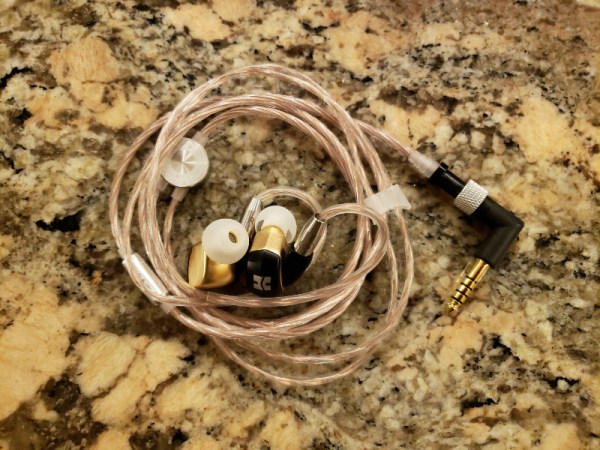
Stock SPC vs OSLO (2pin) – in this cable comparison I hear a little improvement in soundstage width, but overall it’s quite similar. The same with a bass, a very similar sub-bass extension and mids-bass punch, perhaps a touch less aggressive with Oslo. Most of the changes are in mids and treble. With stock cable RE lower mids are leaner and thinner, while with Oslo they are more neutral with a little more body. Upper mids with Oslo sound more natural and smoother, especially noticeable with some of my test tracks where you can hear harsher and more sibilant vocals with a stock cable while with Oslo it’s smoother and more natural. The same with treble, it’s still bright and crisp but more natural with Oslo.
Westone W80

ALO Ref8 vs OSLO (mmcx) – I choose a premium cable in this comparison since W80 comes with Ref8 hybrid cable. With soundstage, the width between these two cables is very similar, but Oslo pushes soundstage further out of your head, giving it extra depth for a more holographic expansion. Bass with both cables is similar in quantity, but with Oslo it sounds more analog in quality, like you are listening to dynamic drivers. Mids have a little less intimate presentation since they are a little more out of your head, but at the same time their tonality is smoother and more musical. They don’t lose any details, just tonality is more organic. Treble is very similar in extension and control. Of course, you don’t have to worry about Ref8 microphonics and Oslo cable is a lot softer.
Westone UM Pro 50 v2
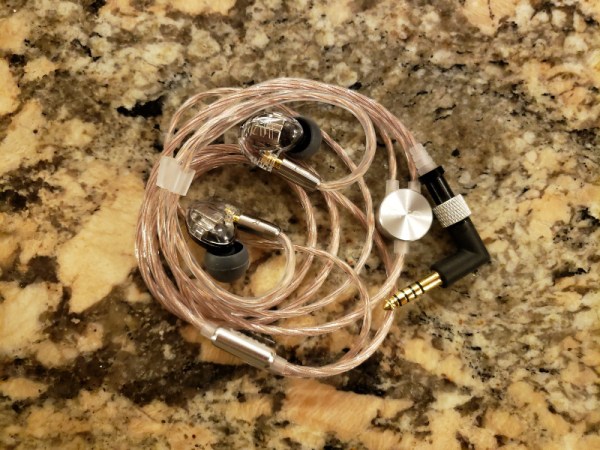
Stock OFC vs OSLO (mmcx) – I hear a noticeable improvement in soundstage width when switching to Oslo cable. Similar to pair up with W80, bass quantity is similar, it has a very interesting transformation with bass sounding more like a dynamic driver, rather than BA. The bass is not as fast, but still very articulate and layered, just sounds more analog. Mids are lifted in quantity, just a little bit, and have a more natural detailed tonality. It’s not drastic, but more on a level of finetuning to perfection, sounding more organic without losing details. Treble has extra sparkle and airiness.
Campfire Audio Andromeda

ALO SPC vs OSLO (mmcx) – right away I noticed a wider soundstage expansion, while depth remained the same. Bass has a similar quality and the balance between sub-bass and mid-bass, but the quantity is a little elevated and sounds more articulate, more layered. Mids have the most noticeable change here where Oslo brings more body to lower mids and makes upper mids to sound more natural and still very detailed and layered. Also, noticeable how in a few of the sibilant test tracks I no longer hear the harshness around 6k-7k peak. Furthermore, with Oslo, treble has a little more airiness. Very good pair up in this case.
Campfire Audio Solaris

ALO Super SPC vs OSLO (mmcx) – Oslo gives soundstage a slightly wider expansion, while depth of the stage presentation is very similar. When it comes to bass, the original ALO cable gives bass a tighter and faster performance with better control, while Oslo takes this away with a more laid back low end rendering, more analog dynamic driver smoother performance. With mids, Oslo pair up gives a little more body to the sound, making mids smoother and more organic without losing details. Treble is crisper with ALO cable. While I really liked what Oslo did to Solaris mids, I still preferred the bass quality of the original ALO cable. So, unlike Andro where I liked Oslo cable better, here I preferred to go back to ALO super spc stock cable.
Conclusion.
First of all, my hats off to DITA for being brave enough to use “oil” in the description of their cable manufacturing. I mean, soaking its ultra-pure copper wires into oil suspension of gold and silver nanoparticles is the actual process, but with so much negative talk about cables from disbelievers who refer to aftermarket wires as “snake oil”, it was truly a ballsy move. Today you can find a lot of aftermarket cables in different price ranges, but only a few companies are putting extra effort trying to come up with something new and original, and DITA is definitely one of them.
Also, without a doubt Awesome plug is very important part of DITA cables, and after you use one – it’s hard to go back to other short and pigtail adaptors. While many DAP manufacturers switching to 4.4mm balanced output, you still have a few like A&K which are sticking to their guns and using only 2.5mm balanced. Plus, the option of 3.5mm SE plug gives you flexibility to use OSLO and other Awesome-plug equipped DITA cables with your smartphones, tablets, or laptops (if they have 3.5mm headphone jack). That’s another very important benefit of DITA cables.
Awesome plug is very convenient, but you need more than just that to make a decision about cable upgrade, even despite its $599 price tag. In many of my tests I found OSLO to widen the soundstage perception to a holographic level. While some other cables try to enhance the retrieval of details and make sound crisper, that might not work with all IEMs. Instead, OSLO gives more body to the mids with a smoother and a more natural tonality while also bringing more analog punch to the bass. OSLO is a unique cable not only because of its manufacturing process, but also based on how it pairs up with and fine-tunes the sound of various IEMs. Great cable!!!

 Twister6 Reviews
Any chance you still have the Trio to do a comparison?
LikeLike
Of course, I still have products manufacturers send me for review (one of the reasons why they send me these products), unless if it’s a short term loaner. With Trio, going from stock SPC to OSLO 2pin the sound is tighter, I can hear a blacker background, faster transient of notes on/off, but the most noticeable difference is wider soundstage and more transparent and slightly brighter upper mids. Especially noticeable in vocals where there is more transparency and less coloring, making it a little more revealing, less warmer.
LikeLike
Thanks!
LikeLike
to add to twister6’s impressions… oslo makes the trio more nuanced, the bass is tighter with less rumble and the upper mids are more present while the lower mids becomes more neutral. Personally, i preferred the Trio with the dita truth spc as it retains the bodied bass and lower mids better than than the oslo whilst improving the soundstage and airiness of the trio.
LikeLike
Good to know, thanks! Is the Truth cable pretty bad for you ergonomically? Seems to be the consensus, but the awesome plug looks great
LikeLike
it’s stiff and microphonic, OK if you are sitting down and listening to music, but might get irritating when you are walking around 🙂
LikeLike
Have you tried the oslo with the Sony z1r?
LikeLike
sorry, I haven’t.
LikeLike
it’s very springy so it doesn’t really “drape” around your body. however, i found it less microphonic than, say, alo’s ref 8. overall, i found it more non ergonomic than microphonic.
LikeLike
Hi, I have a pair of Custom Legend X and want to upgrade the cable to one that tightens the bass, lifts the mids and highs and expands the soundstage (perhaps I might need a different IEM altogether haha), I’m looking at the OSLO vs the EA Leonidas II. Any suggestions on what way to go? perhaps there might be another cable that would help me accomplish that? I’m trying to stay within $1000 USD. Thanks.
LikeLike
Oslo probably will be better, plus it’s cheaper than Cleo and has awesome plug so you get all 3 types of termination 😉 The only problem, Oslo 2pin connector barely fits my Legend X and someone else with Phantom mentioned the same problem 😦
LikeLike
would this be a problem with custom legend x ???
LikeLike
Universal or Custom, they both use the same 2pin socket. I can only speak for universal Legend X where it was a rather tight fit.
LikeLike
yea but is the uni 2pin legend x less recessed than the customs ?and is it a big issue.? currently have dx200 going to upgrade to a ak player so the awesome plug would be perfect
LikeLike
I wouldn’t know since I don’t have custom. Why don’t you post this question on head-fi in LX thread, see if anybody else has this combo?
LikeLike
Which way did u end up going? Leônidas II OR OSLO?
LikeLike
For which iems, LX? I (tw6) still use original stock Aries II with it.
LikeLike
I just got Khan and looking for a cable with clarity and soundstage because most of the time I listen instrumental and classical. Do you guys have any recommendations for me? OSLO is the good one?
LikeLike
I only had a brief listening to Khan at Canjam NYC, and don’t exactly remember its signature. In order for me to recommend you a good pair up with that IEM, I need to test it. With cables, just because it yields a specific result in one pair up, it doesn’t guarantee it will be the same in another one. OSLO is a fantastic cable, but I recall Khan treble was a bit too harsh to my ears (just going by memory). So, while Oslo might enhance its low end and could improve the soundstage, it could also push the treble brighter (but only testing this pair will give you the answer).
LikeLike
Thank you so much. I think I need to have some more research about it.
LikeLike
Hi, first of all, I’ve been reading and loving your reviews for years so thanks for this one and all the others. I have a follow up question about ergonomics. Currently, I’m using U18t + Lionheart (with 4.4mm termination) + WM1A. I do use 3.5mm occasionally and have a Plussound adapter that, frankly, isn’t well constructed and cuts out a lot. The awesome plug sounds, well, awesome, and I might have picked up a truth cable at one point except for what I had read about the ergonomics.
I love the feel of my Lionheart, but with the awesome plug and how you’ve described its sound signature vs. Lionheart, it seems like it might be a nice incremental upgrade for me. How would you compare the ergonomics of the OSLO vs. Lionheart? Would you say they’re comparable? I love the braided look of the Lionheart, but could come around to the single cable of the OSLO as long as it is just as comfortable.
Thank you!
LikeLike
Tbh, the comfort level is not going to be the same, but OSLO is a big step up from their original stiff/microphonic Truth cable. It (OSLO) is still very comfortable and has its own unique look, but Lionheart will be a little softer. But you also have to think about other pros, like Dita’s 2pin connector is very durable and Awesome plug is very convenient. You futureproof your cable to use with any DAP or smartphone/tablet/laptop. Gives you a peace of mind 😉
LikeLike
Thanks for the reply. The Lionheart is so comfortable. I feel no pressure behind my ears and can wear my u18 all day. I’ll think on it a little, but the OSLO is very tempting for the reasons you give. 🙂
LikeLike
Hey Alex, great work, always enjoy and appreciate your reviews. How does Oslo compare with Truth Silver/Copper, sonically? Also, are the awesome plugs interchangeable between the two? I notice Dita still does not offer the 4.4mm plug included with Truth, only purchased separately, which technically makes Oslo only $50 more. I’ve demoed Oslo paired with Campfire Audio Andromeda and really enjoyed it. Unfortunately, the 2-pin seems to be a really tight fit with my IEMs.
LikeLike
Sorry, I don’t have Truth cables. Had it for a short while and sent it to Erik/Wyville for review 😉 The plugs are interchangeable. It was a really long time since I heard those, and by a distant memory those were brighter in tonality. OSLO is a warm/resolving cable. But the biggest problem for me was always their ergonomics and microphonics. It kind of ruined the experience, while OSLO is really a night’n’day in comparison.
LikeLike
Hey any chance you could tell me how this pairs with the mest mk2 ? Im thinking of getting one for mine.
LikeLike
I’m yet to try it. Have so many review samples accumulated over the years, stored in boxes all over the place. Oslo is a rather old cable, but it is on a warmer side so should pair up well with mk2 if you want to tame down the lower treble. Again, going by memory and with some assumptions. One thing I didn’t like about Oslo is its stiffness. Great cable, fine Dita craftsmanship, but not exactly a soft flexible portable cable.
LikeLike