
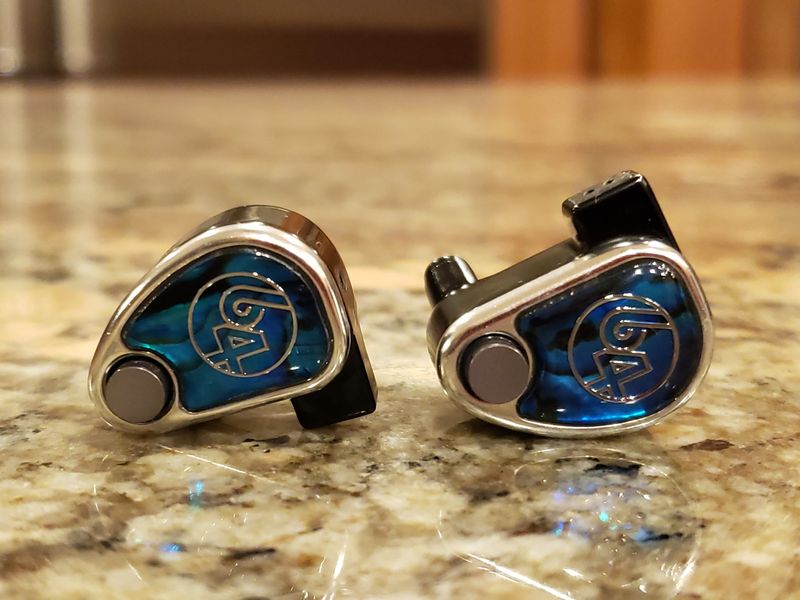
Sound Analysis.
I analyzed Nio sound performance paired up with P6 and LPGT while playing a variety of test tracks, such as Agnes Obel “The curse”, Sandro Cavazza “So much better” (Avicii remix), C-Bool “Never go away”, Ed Sheeran “Shape of you”, Alan Walker “Darkside”, Galantis “Hunter”, Iggy Azalea “Black widow”, Indila “Boite en argent”, Dua Lipa “Love again”, Counting Crows “Big yellow taxi”, David Elias “Vision of her”, and Michael Jackson “Dirty Diana”. Due to a hybrid design with a dynamic driver, I gave Nio plenty of burn in time, and started analyzing the sound after about 100 hrs of standalone playback. I used SpinFit eartips in my analysis.
Similar to the original N8, Nio has a smooth natural fuller body detailed tonality with a more laidback presentation. The sound signature varies depending on which module you are using and can go from L-shaped (M20), to more balanced (M15), and even borderline mid-forward (MX). When going between the modules, the tonality of mids/vocals is consistent, but their presentation will change due to variation in bass impact. Also, different modules with their corresponding isolation characteristics will have the effect on treble sparkle and airiness.
Starting with a technical performance of Nio, a soundstage expansion in particular, I hear it to be wide and deep with a natural sense of spacing, not exactly 3D holographic or too intimate. It has a good balance of a realistic width and slightly more depth, especially placing vocals a little further out of your head. The imaging is good where I find it easy to pin-point instruments and vocals with each having a relatively convincing positioning in space.
I do hear a good level of layering and separation of instruments and vocals, keeping everything clear and not congested, but due to a natural tonality, fuller body, and less airiness, there is not as much sense of “air” between the layers, creating a more laid back natural presentation of the sound with a linear transition between bass and mids, even when selecting a module that will elevate bass impact. There is definitely a sense of tuning coherency where it doesn’t even feel like you are listening to a hybrid.
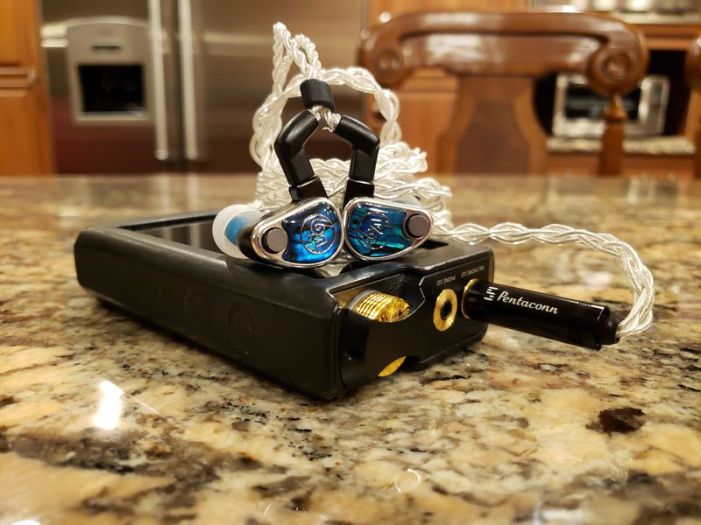
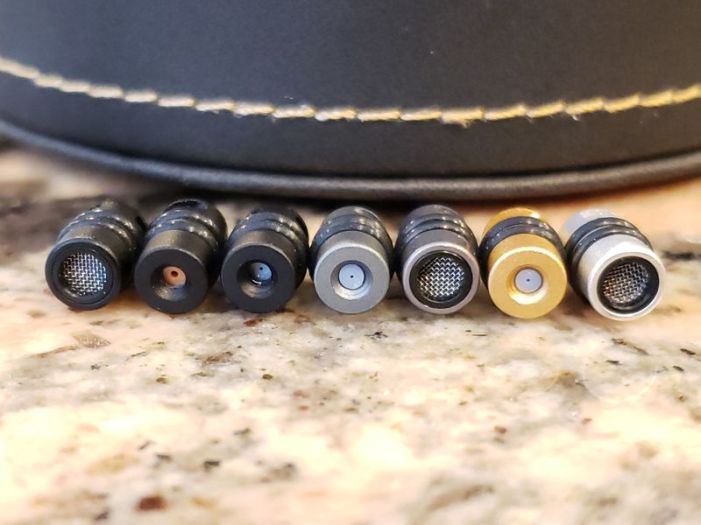
APEX modules, as well as ATOM XL modules (by FirAudio, similar design idea and size), do have a noticeable impact on the sound tuning. While they mostly affect bass response per my measurements, what you see in the graph doesn’t always reflect what you actually hear because the change in bass affects the overall signature and also changes the perception of mids and even the treble, as well as other technical aspects of the tuning. But as I mentioned before, even with these changes, mids/vocals still remain very natural, organic, soulful, musical, and still detailed, while treble has a clear non-fatigue level of sparkle and moderate airiness, especially when using stock cable.
My measurements of all the modules:
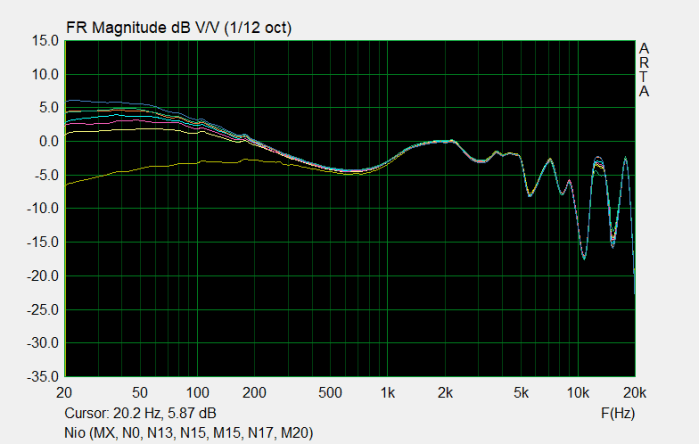
Since there is a noticeable variation in sound signature going between modules, I will break it down how I hear Nio with various APEX and ATOM XL modules. Please, keep in mind, Nio already comes with M20, M15, and MX modules. ATOM XL modules (N17, N15, N13, N0) are fully compatible with APEX and offer their own sound variation which I would like to describe as well in this review.
- Nio (M20) – close to L-shaped sound sig with a natural musical tonality, big bold bass with a lifted sub-bass rumble, rounded punchy mid-bass with a longer decay, fuller body natural mids with above neutral lower mids and more organic yet still detailed upper mids, and very natural yet still well defined treble with a moderate sparkle and airiness.
- Nio (N17) – the sound is more balanced now, still on a warmer more natural side, but with sub-bass attenuated by about 3dB, the bass impact has a more balanced weight which gives mids more room to shine. Mid-bass still has a longer decay which blends in nicely with fuller body lower mids without causing any muddiness, but now upper mids opened up more with a little more forward presentation and some improvement in detail retrieval. I even hear a touch more sparkle/air in treble, but I think it is all due to a more balanced sound sig.
- Nio (M15/N15/N13) – these modules have a similar effect where I hear a slightly less mid-bass impact in comparison to N17 and also a more open/wider soundstage with a little more sparkle in treble. Actually, when it comes to soundstage expansion, N15 width is closer to N17, while M15 and N13 have a similar wider soundstage, even wider than N15. Otherwise, the rest of the performance is similar between these three, having a more balanced signature, more forward presentation of mids without vocals being as laidback as with higher isolation modules, and more airiness in treble which now also helps with layering and separation of the sounds.
- Nio (N0) – this module helps you get the most from mids/vocals while still having a good amount of sub-bass rumble and a little faster mid-bass punch. Bass is above neutral and provides a good low end foundation for the sound, but it is not the focus of the tuning, while upper mids are more revealing now, more layered, and have some improvement in retrieval of details. Treble is similar to M15/N13, with the same amount of sparkle and a little more airiness. Another thing which could be a result of improvements in upper mids, the perception of soundstage is a little wider now.
- Nio (MX) – one might ask why I did not combine and analyze MX and N0 together since they both supposed to have 10dB isolation with a similar sound effect? In my opinion, MX has a much lower isolation since I hear its bass response to be more attenuated in comparison to N0 and the rest of the modules. But I think there is a silver lining to this since this drastic sound change creates a different signature to contrast other modules. With MX bass sounds neutral and very linear. Not exactly flat, there is some punch left in mid-bass, but it is relative attenuated, putting a spotlight directly on the mids. Lower mids are still above neutral and have a little bit of body left in there, but no longer have the extra thickness courtesy of longer mid-bass decay. Mids/vocals are more layered, more revealing, even more micro-detailed, and they are more transparent now, with a lot less coloring. Treble also has more sparkle, not harsh or splashy, but noticeably more present with air and further extension.
Personally, I do like to hear the bass but don’t need to “feel” it like with M20 which brings up sub-bass rumble, thus N0 suites my taste better. With that module I also get benefits of more mids/vocals focus and a little more air in treble, relative to N17/M15/N13. And at the same time, N0 still has more weight in bass and a more natural coloring of mids when compared to MX.
MX, N0, N13, N15, M15, N17, M20
Page 4 – Eartips selection, and Cable pair up.
Page 5 – Comparison, Pair up, and Conclusion.

 Twister6 Reviews
Will you be reviewing the Da Vinci X from Clear Tune Monitors?
LikeLike
sorry, I probably won’t. Those are older IEMs, I remember listening to them year and a half ago at canjam NYC. They were just OK, but it is an old iem, and manufacturers usually send review samples of their new and upcoming stuff since they are not interested to promote old releases. Also, noticed da vinci x/ix got little attention even when it was released.
LikeLike
I know that you’re not trying to go too crazy with the cable rolling, trying not to exceed 1/2 price of the Nio, but how well does it pair up with the *_PlusSound PPH8_* and how does it compare with the *_Premium Silver hybrid_* and *_Socrates_* cable?
LikeLike
Don’t know how to bold and italic a text in WordPress. XD
I just did it like in the YouTube comments hoping that it will work…
Also… it seems like it can’t be deleted.
LikeLike
WOW, I didn’t even think about trying PPH8 with Nio, and I didn’t expect how well these pair up. Relative to Silver Premium, the soundstage is wider/deeper, literally 3D and you feel like you are in middle of it. Also, mids are a little more forward or maybe bass just a little more attenuated, making mids a little more forward. Of course, keep in mind, this is $2k cable with $1.7k IEM.
LikeLiked by 1 person
I wish I knew more about the IPX connector you write about. I have broken 2 two prong attachments, one sleeping and one exercising. I didn’t see an option for an IPX when I bought them. Is there a way to connect one with the NIOs I have?
That said, the NIO is the BEST sounding IEM I’ve tried,open, airy, true to voice and instrument. But I’ve had to resort to using Sony IER Z1Rs because they are bulletproof and they don’t usually detach and the one time one did, it did no damage. The Nio is a much better sound for me, but they are so fragile, I’m limited in when I can use them. Any solutions??
LikeLiked by 1 person
Only custom 64audio iems have the option for IPX, you can’t retrofit Nio with another connector. If you want to read more about IPX, I covered it in details in my UE Live review a few years ago, here https://twister6.com/2018/09/07/ultimate-ears-ue-live/. Not the best tuned iem, but I have lots of info about IPX in that review. Another option is to look into FIR Audio iems, Bogdan (64audio ex-CEO who started fir audio) came up with RCX connector which is a Rigid version of mmcx. I covered it in my M5 review last year, here https://twister6.com/2019/10/10/fir-audio-m5-2/. Maybe contact FIR audio, and ask Bogdan what he can recommend. He is very familiar with 64audio shells and can give you a good customization suggestion.
LikeLike