
Sound Analysis.
RSV stands for Reference Sound Five and it may again come as no surprise that this too is tuned close to Moondrop’s VDSF target curve (which takes inspiration from Harman and Diffuse Field target curves) but has Softears’ own flavour and take on the curve. For a lot of our readers, seeing yet another reference or Harman Target style IEM being reviewed by me might’ve started feeling like a monthly affair, especially since I’ve reviewed a lot of them, a lot of them just from Moondrop (Aria, KXXS, Blessing2 and S8) but well, what do I say, I quite enjoy these different flavours and takes on the curve as this style of reference tuning and tonality are quite in line with my personal preferences, and they all do sound different, even though similar-ish in the larger scheme of things.
Summary – RSV has a warm-neutral reference sound signature with Harman Target style sub-bass bass shelf of around 6-7dB, very neutral and accurate midrange presentation, forward upper-midrange presentation with 10dB pinna gain, clean and accurate lower treble, a dip in mid-treble which is responsible for the warmth in the signature, and fairly neutral upper-treble extension and presence. RSV is very well tuned; it has an excellent, pleasing warm tonality and timbre presentation – which is not just tonally accurate but also very easy to love and enjoy the whole day without any fatigue.
Of course, it shares a lot of similarities with its similarly priced cousin, Moondrop S8, but also quite a few differences, which we shall get into later in this review. But first, let’s break down RSV’s signature and performance in detail.
Bass – RSV has a 6-7dB sub-bass bass shelf which is quite in line with Harman Target’s style of bass shelf boost. As a result, it not only has good low end extension but also good punch, rumble and impact. RSV has very DD like bass tonality and character, so well done that I probably would’ve guessed this as a DD in a blind test. It has softer and more rounded bass transients, which aren’t the sharpest or quickest but have great slam and punch, which makes it extremely fun, exciting and pleasing to listen to. Even though its bass tonal character is very good, sharper transient precision and high-end definition is the only thing stopping it from TOTL levels of performance. Regardless, this is class leading BA bass performance and most might not even care or know what I’m referring to until you listen to something like 64 Audio’s U12t, which I consider a great specimen of TOTL BA bass performance.
Mids – RSV has a very tonally accurate midrange presentation. Lower-midrange is clean and linear; quite neutral with ever so slightly fuller body than Moondrop S8. Upper-midrange has a very nice forward presentation with around 10dBs of pinna gain. RSV has excellent instrument tonal and timbral accuracy. Vocals and instruments have strong definition and presence. Midrange has good resolution, layering and separation between instruments.
Treble – RSV’s treble sounds very natural and has no sibilance or sharp intrusive peaks. It has very accurate and natural sounding lower-treble presentation. Middle treble is my major gripe with RSV’s performance. It has a dip in middle treble which gives a warmer tinge to RSV and takes it away from absolute neutrality. As a result, RSV has a pleasing tubey-warm, analog-ish character but is slightly missing the final shine, crisp sparkle and finesse that acoustic guitars, drum cymbals and vocals need to have for them to sound absolutely accurate and for RSV to have class leading technical performance. It is also responsible for the slightly softer transients that RSV has, which gives RSV its pleasing character but also takes away the absolute neutral crisp precision it could’ve had if it didn’t have this mid-treble dip. Upper-treble has good extension and neutral presence. I personally wouldn’t have minded a bit more upper-treble sparkle and air since I like airy signatures but there is nothing wrong with RSV’s upper-treble presentation and I can see a lot of people actually preferring this character more.
Soundstage and Imaging – Even though RSV’s soundstage is not the biggest I’ve heard in this segment, it has good width and depth to keep everything sounding open, clean and mesmerising – with the latter majorly due to its extremely pleasing tonality. What I dig most in RSV is its very dynamic, musical and involving character that feels like I’m performing the songs with the band in a very nice sounding studio room. Imaging is not the sharpest or class leading, primarily because of the mid-treble dip but is fairly decent for the price.
Technical Performance (Resolution, Separation and Detail Retrieval) – Even though RSV has a slightly warm character than absolute dead-on reference, it has good separation between instrument layers panned left to right and overall resolution for the price. It’s not the best in this price segment, which probably goes to Moondrop S8 or ItsFit Fusion, but RSV no slouch by any means. It has very good macro-detail retrieval quality but micro-detail retrieval is where it loses out against Moondrop S8. A bit more mid-treble in RSV would’ve definitely pushed those micro-details out better. In this price range, Moondrop S8 is probably the jack of all trades but RSV’s tonality and timbre takes the cake over most IEMs under $1000 and then some more, with the technical performance being good enough for me personally to use it as a monitor in concerts or when recording.
Comparisons.
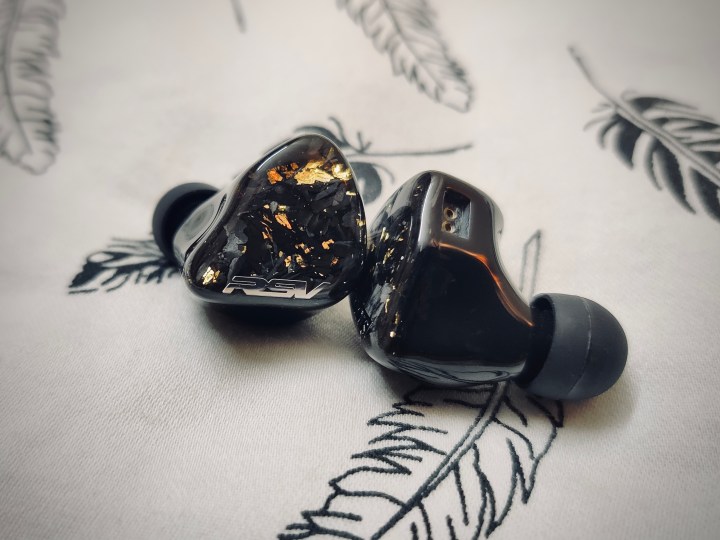
Moondrop S8 ($700) – S8 is RSV’s perfect contender for a comparison, with it being similarly priced at $700 and coming from the same family. S8 has 8 BAs whereas RSV has 5. Build quality is similar, though RSV’s shells are bigger than S8’s. Design choice is subjective but RSV’s design is more my thing since I love black, but S8’s clear shells are no slouch and definitely have high eye candy value. Coming to sound, even though they both take inspiration from Harman Target and are tuned to Moondrop’s VDSF target curve, they are quite different in a lot of areas. RSV is more pleasing tonally with its slightly warmer analog-ish reference character, while S8 is more accurate when it comes to absolute reference, is cleaner sounding with faster and more precise transients and definition. RSV has very slightly more bass presence and takes the cake with its dynamic bass character, slam, punch and rumble, whereas S8 has cleaner, quicker and more precise bass transient presentation, while just a smidgen less quantity. For example, drum kicks have more punch in RSV but quicker attack and decay in S8. RSV has very slightly fuller instrument lower-midrange body whereas S8’s sounds slightly cleaner and leaner in comparison. Both have similar forward upper-midrange presentations but S8 has very slightly more gain and as a result, a bit more instrument definition and presence. On the other hand, RSV comes off a bit more musical tonally, whereas S8 can come off slightly shouty at louder volumes in comparison. S8 has very slightly more lower-treble presence though both are quite neutral in presentation. S8 has slightly more accurate mid-treble whereas RSV has a deeper dip there, which is one of the main reasons for their character difference. S8 is also slightly airier in its upper-treble presentation, which may give perception of better extension, though RSV by itself has good upper-end extension and is very capable of playing information till 20kHz properly. S8’s soundstage is slightly cleaner sounding, though they have similar width and depth boundaries. S8 is a bit more precise and sharper in imaging owing to better overall reference tuning. It has slightly more resolution and smidgen better separation between instruments layers. S8 also has better micro-detail retrieval capabilities too, though the difference is less than what you’d expect out of 3 extra drivers. Overall, S8 does better in technical performance and reference tuning accuracy. Even though S8 is as exciting for me personally, I can see a lot of people preferring RSV for its more pleasing and warm tonal presentation, which isn’t as accurate as S8 when it comes to absolute reference, but is definitely more musical and fun.
Moondrop A8 ($666) – Moondrop A8 has 8BAs and its sound signature is a more fun take on Harman Target. RSV and S8 are more similar than RSV and A8 are. A8 has less sub-bass rumble than RSV but has more mid-bass slam, whereas RSV has a more neutral mid-bass presentation. A8 has slightly cleaner and leaner lower-midrange body compared to RSV as well as S8, whereas RSV is more linear and accurate. Both RSV and A8 have similar forward upper-midrange presentation but A8 has slightly stronger instrument definition whereas RSV is slightly easier sounding in comparison. A8 has a more neutral and accurate treble presentation whereas RSV is warmer in comparison. A8 is also airier in its upper-treble presentation, has a cleaner soundstage with a bit more depth and slightly better technical performance. RSV is more accurate in bass to midrange presentation whereas A8 is more accurate with its treble presentation. Both are equally enjoyable for me personally, where RSV is more musical, warm and pleasing tonally while A8 is cleaner, airier and more exciting.
Craft Ears Four (~ €520 and upwards) – CE4 has 4BAs and is a more fun take on Harman Target. RSV has more sub-bass rumble and punch whereas CE4 has north of neutral mid-bass slam in comparison. RSV is more tonally accurate and linear in lower-midrange presentation whereas CE4 has a dip in the 400-1kHz region. CE4 too has a forward upper-midrange presentation like the RSV but it has more presence in the 1-2kHz region which leads to RSV being more tonally accurate when keeping absolute reference tonality in mind. Post that, CE4 has the signature Craft Ears lower-treble dip in the 5-10kHz region whereas RSV is more a linear, natural and accurate in the region. Post 10kHz, CE4 has more presence in middle and upper treble, especially a significant 16kHz peak which makes it airier whereas RSV has a dip in mid-treble but is more neutral in its upper-treble presentation. CE4’s treble sounds a little uneven compared to RSV’s because of more substantial dip and boosts, which also makes CE4 a more fun IEM and RSV a more accurate reference IEM. CE4 has a slightly wider soundstage while RSV has slightly better resolution and separation between instrument layers.
Craft Ears Six (~ €870 and upwards) – CE6 has 6 BAs. I’d classify CE6 as a neutral-bright reference IEM while RSV as neutral-warm. Even though CE6 and RSV have similar bass tuning and quantity, RSV has more slam and punch owing to its warmer character and tonality, while CE6 has sharper and quicker bass attack. Both have similar neutral and linear lower-midrange presentation and forward upper-midrange presentation but RSV has peak presence at the more tonally accurate 2.75kHz while CE6 has it at around 3.3kHz. Treble is where they both differ significantly and do the opposite cutting and boosting. CE6 has a dip in lower-treble in the 5-7kHz while RSV is more neutral and accurate there. CE6 has a prominent 8kHz peak and is then more linear in mid-treble whereas RSV has a dip from 8kHz to around 14kHz. Then RSV is more neutral in its upper-treble presentation whereas CE6 has a significant upper-treble boost and is significantly sparklier and airier in comparison, which might tickle the sensitivity of the treble sensitive. CE6 has a slightly wider soundstage and slightly better detail retrieval because of its brighter character. RSV is a more pleasant sounding reference IEM whereas CE6 is vivid and energetic.
Custom Art Fibae7 (€1200) – Fibae7 has 7BAs and is CustomArt’s take on reference tuning. It has a bass boosted Diffuse Field style sound signature. Fibae7 has a linear bass shelf of around 5dBs that boosts sub-bass as well as a bit of mid-bass (2dBs or so). Both have very clean and linear sounding lower-midrange, though Fibae7 sounds very slightly leaner around 500Hz. Both have forward midrange presentation but Fibae7 has a bit more forwardness/gain, and comes off shoutier in comparison whereas RSV is more pleasing tonally. Fibae7 has dipped and warmer lower-treble and mid-treble presentation but is airier and sparklier in upper-treble. RSV is more accurate and neutral in lower-treble presentation and a bit more even and linear in overall treble presentation, even though it too has a dip in mid-treble. Fibae7 has a cleaner, leaner and bigger soundstage compared to RSV, which is slightly warmer and more intimate sounding in comparison.
ItsFit Fusion ($950) – Fusion is a tri-brid with 1DD + 2BA+ 1 Magnetostatic driver. Fusion has a fun sound signature. It’s not really a reference IEM. Fusion has ever so slightly more sub-bass rumble but you need to listen to sub-bass specific songs to realise that. Fusion has more, north of neutral mid-bass slam as well as fuller lower-midrange body. RSV is more reference style neutral in both those regions. Fusion upper-midrange doesn’t sound as forward as RSV’s because it has a dipped tuning, where it has peaks at 2.5kHz and 5kHz but dips in between those peaks. RSV is more tonally accurate in its upper-midrange presentation. Fusion has a dip in lower-treble in the 5-7kHz region whereas RSV is more neutral and accurate in the region. Post that Fusion has a prominent 8kHz peak whereas RSV has a mid-treble dip. RSV has slightly better upper-treble extension and presence compared to Fusion. Fusion has a wider soundstage but not as much depth as RSV. RSV is the more accurate sounding IEM with better tonality and timbre presentation as well as better and more consistent instrument definition and separation whereas Fusion isn’t as linear because of dips in midrange as well as lower-treble.
Conclusion.
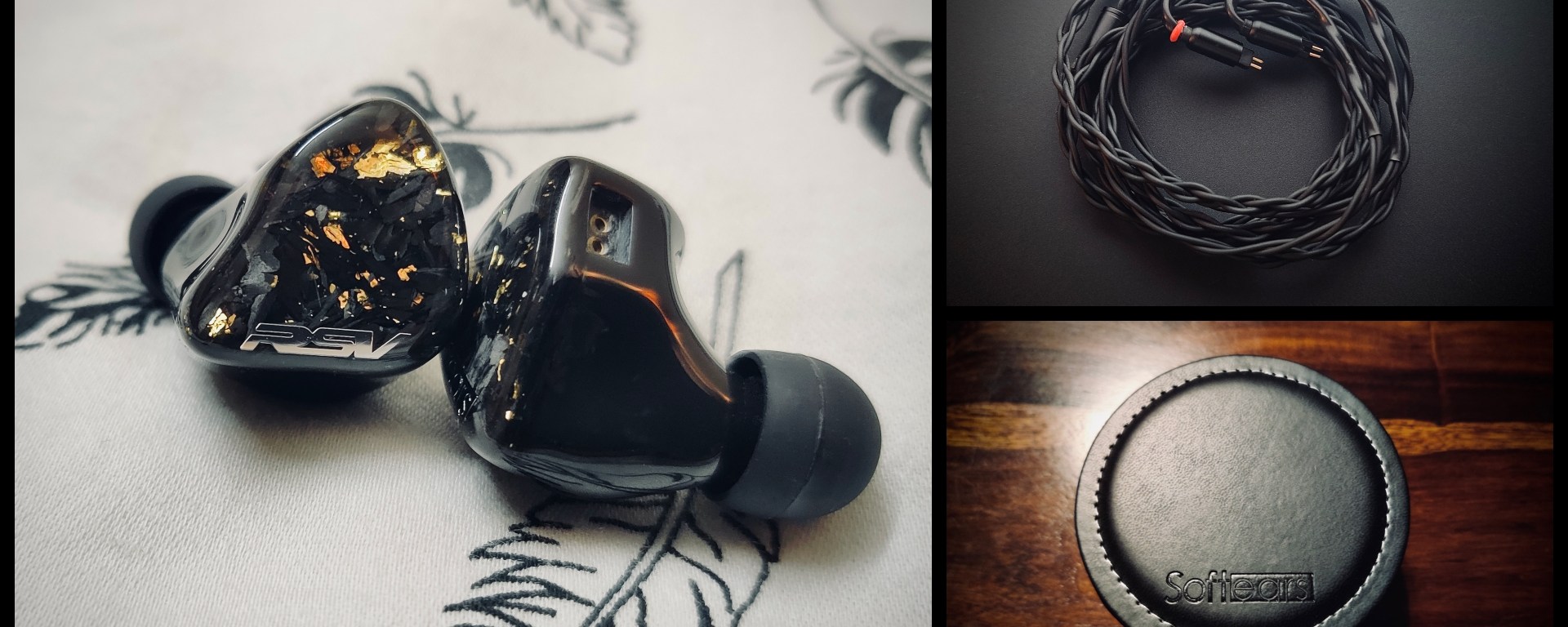
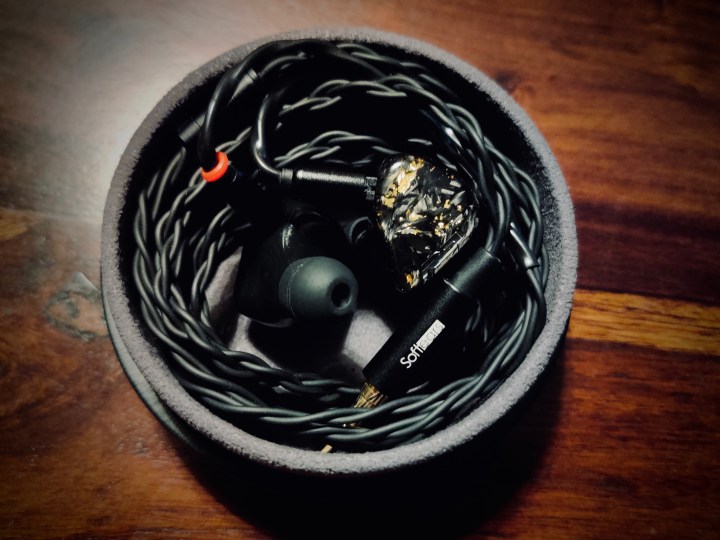
Softears RSV might not be the most accurate reference IEM or the best in technicalities in its price range but definitely has one of the most pleasing tonalities under $1000. Its tonality and timbre are so musical that I can comfortably sit back, relax and listen to music for hours and hours without any complaints, which I can’t say for a lot of IEMs in my collection. If only it didn’t have that mid-treble dip and had a bit more upper-treble (latter is a subjective preference), it would’ve definitely hit the ball out of the park, improving the technical performance too. Still, RSV has impressed me quite a lot to be honest. It has excellent build quality, a CIEM like snug medium-deep insertion fit, a reference signature which is very close to perfect, very good tonality and timbre, good resolution and separation and most importantly – a warm musical signature that is highly inviting and satisfying to listen to, which makes you wanna go on new music discovery journeys. If that’s what you’re looking for in your next IEM, definitely give RSV a shot!
Gear used for testing and review.
- DAPs – HiBy R6 2020 | iBasso DX160
- Laptop – Apple Macbook Pro 15″
- Phone – OnePlus 7 Pro
Reference Songs list.
- Dave Matthews Band – Come Tomorrow album
- Dua Lipa – Future Nostalgia album
- Foo Fighters – The Pretender, Best of you & Everlong
- Coldplay – Paradise, Up in flames & Everglow + Everyday Life Album
- Ed Sheeran – Thinking out loud, Bloodstream & Galway Girl
- Chainsmokers – Somebody, Sickboy, This Feeling & Closer
- John Mayer – Slow dancing in a burning room, Stop this Train & Say
- Gavin James – Always & Hearts on fire
- Switchfoot – Meant to live & Dare you to move
- Porcupine Tree – Sound of Muzak, Blackest Eyes & .3
- Our Lady Peace – Do You Like It & Innocent
- Linkin Park – Papercut, Somewhere I belong & Talking to myself
- Maroon 5 – She will be loved, Payphone & Lost stars
- Lifehouse – All in all & Come back down
- Breaking Benjamin – Diary of Jane
- Karnivool – Simple boy & Goliath
- Dead Letter Circus – Real you
- I Am Giant – Purple heart, City limits & Transmission
- Muse – Panic station
- James Bay – Hold back the river

 Twister6 Reviews
Hello sir Sorry about your grandma! Wonder if u could tell me which is the best , most resolute dap under 1k? Thanks I am borrowing my friend opus 2 and it sounds great, anything better or as good for less money? Ty so much Cesar
Sent from my iPhone
>
LikeLike
Hey Cesar! I’m guessing your question was directed at Alex and this one here is my review. I’d recommend getting in touch with Alex with a PM on Facebook for ease – https://www.facebook.com/alextwister6
If you want my recommendation, I’d recommend the HiBy R6 2020 as my favourite DAP under $1k. You can read my opinion on it in detail here – https://twister6.com/2021/04/28/hiby-r6-2020/
Cheers!
LikeLike
Thanks for the review!!!Can you recommend few aftermarket cables which would give better synergy with RSV?Budget is around 300-500$
I am looking at EA EROS S and Ddhifi Air Nyx but I am not sure they would sound better than rsv stock cable.
LikeLike
I know this is an old post, but since you’re still very active on this site I’m hoping you still see this.
Since you’re also a performing musician, what are your thoughts on using the RSV as an on-stage iem? it seems to be one of the better neutral iems and you can pick em up for around $400ish used.
Thanks!
LikeLike
Hey! I quite like it especially for its very natural wowing tonality but it lacks the last bit of technical performance, which I’m a sucker for when it comes to IEMs for monitoring and why I use some of the more expensive, technical IEMs even though they have a similar sound signature too. The thing is that you hear a slight bit of haze in RSV because of its warmer tuning when you compare it to something more neutral, for example something more in line with my Animagus Preference Target for me personally. But if you’re getting it used around $400, then it’s a no brainer IMO. Where it wins greatly is the natural tonality and the easy to listen to warm-neutral signature that is fatigue free even if you use it for hours on the end while rehearsing or in live shows. It also makes for an easy listen at slightly louder than average volumes for the same reason, which is sometimes needed in case of extremely loud venues/crowd. Hope it helps. 🙂
LikeLike
Very helpful, thanks so much for the info and the quick reply!
I was deciding between the RSV and the Moondrop S8, but I am a little more sensitive to shouty or harsh treble (i.e. I always roll the treble down on my click track), and I’ve seen in your and others reviews that the S8 can *sometimes* be a little shouty. It’s pretty hard to find good comparisons for iems that are more technical differences than subjective, so I very much appreciate the time and effort you put into your reviews and comparisons.
It seems like the RSV still punches pretty far above its price point, which really helps me in this case, being on a tighter budget.
LikeLiked by 1 person
Yes go for it in that case. At $400, it’s a very safe purchase IMO.
LikeLike