
Sound Analysis.
I analyzed DX320 sound with Aroma Jewel while playing a variety of my favorite test tracks, such as Agnes Obel “The curse”, Sandro Cavazza “So much better” (Avicii remix), C-Bool “Never go away”, Ed Sheeran “Shape of you”, Alan Walker “Darkside”, Galantis “Hunter”, Iggy Azalea “Black widow”, Indila “Boite en argent”, Dua Lipa “Love again”, Counting Crows “Big yellow taxi”, David Elias “Vision of her”, and Michael Jackson “Dirty Diana”. As recommended by manufacturer, I let DX320 burn in for 200hrs using the provided balanced burn-in cable before I started sound analysis.
I prefer to describe the DAP sound based on the comparison to other DAPs and pair ups with different IEMs/headphones since the DAP by itself doesn’t have a “sound”. What we hear is how it sounds through connected IEMs/headphones or the difference in sound relative to other sources using the same pair of IEMs/headphones. As a result, this section of the review usually has a shorter summary of what I find in the follow up Comparison and Pair-up sections. A more detailed sound analysis is found in Comparison section of the review. Of course, this is my subjective opinion, describing how and what I hear.
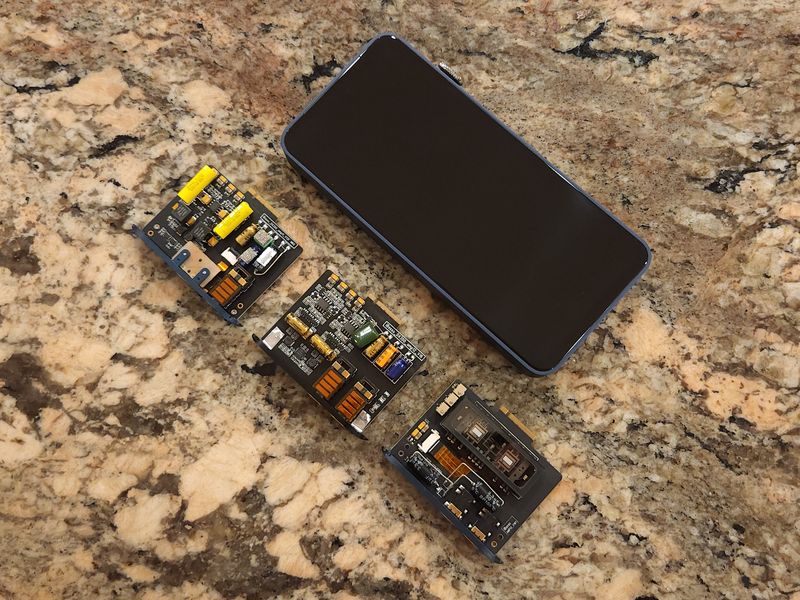
My sound analysis was finalized after the latest fw 2.03 update where I hear a micro-detailed reference quality sound, which still has a natural body, not as lean or as thick when tested with a stock AMP11 mk2s, including wide soundstage expansion and 3D holographic imaging. AMP13 complemented this reference micro-detailed tuning with a layer of smoother and more analog-textured tonality, driven by a single Korg NuTube module.
I will go over the details with a comparison between different amps, DAPs, and even outputs within the same amp (AMP13 has two separate outputs with different modes of operation) in the follow up sections of the review. Modular design gives you the option to expand the sound capability of the DAP, and AMP13 is an additional purchase. But I felt that it made DX320 complete.
With a default AMP11 mk2s, and depending on pair up synergy with your IEMs/headphones and their own corresponding sound signature, you have a more reference performance which is great for those who like to analyze the sound and extract every micro-detail, the type of intimate details that pop out of the darkness of the black background, without coloring the sound too much, yet still remaining relatively natural. With AMP13 you have a more musical, natural, analog performance that gives the sound a more textured tonality with a more organic coloring, yet keeping surprisingly good retrieval of details, especially when using high voltage/current mode output (the middle port).
Mango App vs Mango OS sound
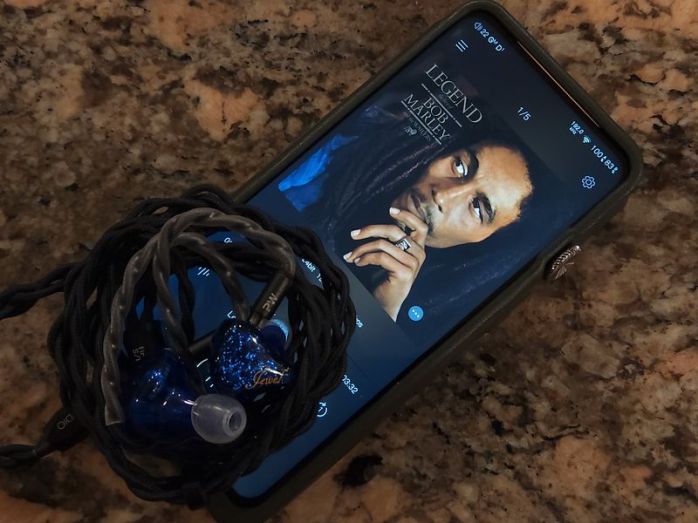
Some might assume since we are dealing with dual OS on the same DAP, the sound will be the same as well. There are definitely some similarities but also differences. While playing the same song at the same volume and with the same filter setting, I found the sound in Mango app under Android OS to have a very big soundstage with a 3D imaging, but I couldn’t imagine that switching to Mango OS will make it even more 3D. The sound is not just left/right wide, it wraps around you, putting you in the center of that 3D space. Another difference I noticed is in mids where under Mango OS mids are more forward, noticeably more than in Android OS. I liked it, but it skewed a bit the balance between mids and the bass to my ears in some of the pair ups. With mids being a bit forward and slightly more revealing, bass gets pushed a bit to the back. For me personally, I preferred Android OS with Mango app for playback. But it is all about the choices and the preferences to decide which one works better for your ears. The same as a choice to download any other audio playback app of your preference.
Digital Filters comparison
Digital filters are part of the DAC (ROHM) design, and DX320 offers you 2 choices. Not as many as other DACs, but you do have a choice. Many people complain it is hard to hear the difference, and they are right. You need to have trained ears, listen very close, and have more revealing balanced tuned monitors to spot the difference.
D1 filter (sharp roll-off) vs D2 filter (slow roll-off) – I don’t hear as much of a drastic difference in tonality, but the main difference I do hear is in speed of the sound. I tried it in a blind test and while not always 100% correct, I was able to guess which filter was selected based on the faster attack of the notes which gave the sound faster pace (PRaT) and a tighter feeling when D1 is selected, and a bit slower laidback musical feeling with D2.
Personally, I preferred D1 filter setting since it sharpened the details and yielded faster transient response of the notes, but this is purely up to a personal preference. Again, you have a choice, pick whichever sounds better to you with your IEMs/headphones.


Pair up.
In this section of my review, I will go over how various earphones and headphones pair up and sound with DX320. In each pair up I noted the gain (High Gain or Middle Gain, and Volume level). These are short analysis notes to give you the basic idea of what to expect. Also, I will cover both AMP11 mk2s and AMP13 (using high voltage/current middle output) pair ups in every example, and will let you know which one I personally preferred, again, just my subjective opinion.
Pair up with Headphones
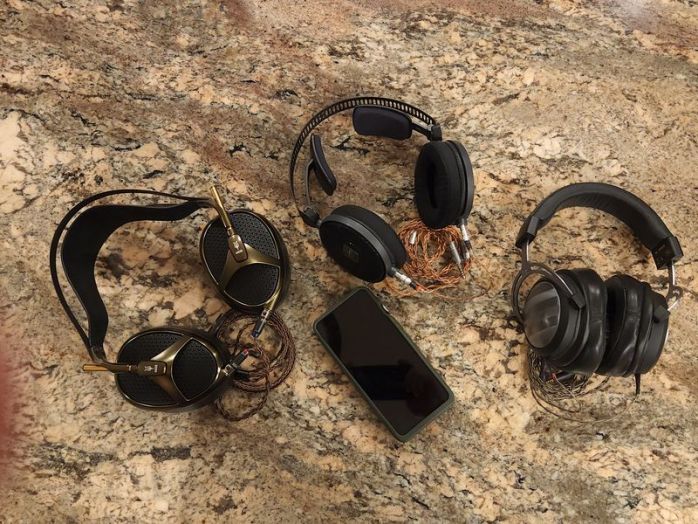
Audio-Technica ATH-R70x
- AMP11 mk2s (HG, V38) – R70x are open back 470ohm headphones, but not every source can make them feel like you are sitting in an open space room surrounded by sound, and that’s how it felt enjoying this pair up. I hear R70x with DX320 to have a very natural organic detailed tonality, bass has a deeper rumble while mid-bass has a bit more polite punch; mids/vocals sound very transparent, effortless, natural, and detailed, and so does treble with a natural airy sparkle. Just like in original pair up with DX300, I was very impressed with vocals in this pair up too.
- AMP13 (HG, V39) – I hear the improvement in mid-bass punch, coming through with a bit more authority now, and mids, while still natural and organic, are more textured and have better retrieval of details. I preferred AMP13 with R70x.
Beyerdynamic T5p 2nd
- AMP11 mk2s (HG, V24) – despite these being closed back, soundstage was wide open and imaging was close to holographic. The sound is very clean, detailed, revealing. It is not bright, just very transparent, detailed, layered. Bass has a deep textured rumble; mid-bass has a more polite punch; mids/vocals are natural, transparent, very detailed, a bit on a leaner side, but not too bright, and treble is crisp and airy. In this pair up, I felt like mids very shining and less colored.
- AMP13 (HG, V26) – I hear more weight in the bass, especially a more rounded mid-bass punch, and mids scaled up with a very natural coloring which gives them a more organic soulful tonality. I preferred AMP13 with T5p 2nd.
MEZE Audio Empyrean
- AMP11 mk2s (HG, V31) – again, not a surprise when it comes to soundstage in this pair up, being nearly 3D holographic. The sound is balanced, fast, very clean, clear, and a bit leaner in tonality. I do hear a deeper sub-bass rumble, fast articulate well-controlled mid-bass punch, very detailed and transparent mids/vocals, and crisp airy treble. A very clean uncolored pair-up.
- AMP13 (HG, V32) – the tonality of mids/vocals got transformed with a natural textured coloring without losing an ounce of detail retrieval. AMP13 pair up with Empyrean in high gain/current output is a must for me.
I found in all my headphone pair ups AMP13 to have a better synergy since AMP11 mk2s has a cleaner reference tonality while AMP13 gives the sound more coloring in mids to give vocals a more natural organic tonality without compromising retrieval of details. Also, AMP13 improved the speed and the punch of mid-bass.
Pair up with IEMs
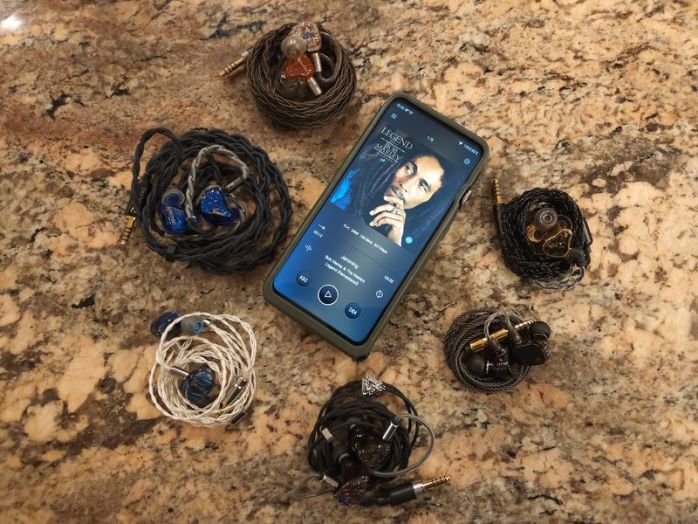
Campfire Audio Solaris 2020
- AMP11 mk2s (MG, V12) – wide soundstage with a good height and depth; balanced sound sig with a little more emphasis on mids, above neutral bass with a decent extension and tight, fast mid-bass punch. Similar to what I heard with DX300, mids/vocals are the shining star of this pair up, being clear, detailed, natural, layered; treble is bright, with extra sparkle, airy, not harsh but it does have extra bite. No hissing was detected.
- AMP13 (MG, V18) – I do hear a little more texture in mids, but the main change here is a smoother tonality of treble. But I hear a little bit of faint waterfall hissing now. I actually preferred the pair up with stock AMP11 mk2s in this case.
Empire Ears Odin
- AMP11 mk2s (MG, V21) – holographic soundstage expansion, deep sub-bass with a tight fast mid-bass punch, above neutral quantity with sub-bass actually being a little more elevated here. Mids are very detailed, layered, revealing, not analytical, but definitely on a leaner and more revealing side, and treble is also crisp and relatively natural. Was surprised to hear the extra depth of sub-bass rumble and naturalness of EST treble. No hissing was detected.
- AMP13 (MG, V28) – the main change I’m hearing is in mids, gaining a little bit of natural body, especially in lower mids. It’s a small but noticeable change. I enjoyed either amp cards with Odin, so it will be up to a personal preference which one you find better.
Oriolus Traillii w/Chiron
- AMP11 mk2s (MG, V24) – holographic soundstage and 3D imaging, very balanced signature with a natural detailed tonality, deep sub-bass rumble, tight articulate mid-bass punch, a bit leaner lower mids, though upper mids are still natural, layered, detailed, the same as a well-defined natural crisp treble. Traillii shines in every pair up, and DX320 wasn’t exception, though the sound with default AMP11 mk2s was a bit leaner. No hissing was detected.
- AMP13 (MG, V29) – bass sounds as tight, just a bit more sub-bass rumble. Lower mids gained some body, making vocals sound more organic and even bringing upper mids presentation a bit forward. I enjoyed the pair up with AMP13 better.
Aroma Jewel w/FT
- AMP11 mk2s (V24) – The soundstage is wide open and expanded in all 3 directions with holographic imaging. Sound signature is balanced as well, while tonality is more neutral with a slightly more mid-forward revealing presentation of the sound. Bass goes deep, with a textured sub-bass rumble and a punchy mid-bass; the bass is tight and articulate. Lower mids are leaner which gives upper mids more transparency, less coloring, making them more revealing but not too bright. Treble is crisp and detailed, not splashy or harsh. No hissing was detected.
- AMP13 (MG, V29) – I hear bass to have a deeper sub-bass rumble and stronger mid-bass punch, it definitely scaled up. Also, mids and vocals have a more natural texture, more natural coloring without compromising retrieval of details. Tbh, I actually enjoyed both pair ups, AMP13 and AMP11 mk2s with Jewel. With AMP13 the sound was more natural, but some of the micro-details were lost, and with AMP11 mk2s the sound was more detailed but less forgiving with some poorly recorded tracks.
FiR Audio XE6
- AMP11 mk2s (MG, V22) – A huge holographic soundstage expansion, with the sound pushed more out of my head. A mildly U-shaped signature with a thunderous deep analog bass that felt like it was coming from nearby floor speakers, smooth natural detailed mids and vocals which are a bit recessed and positioned more out of my head, and crisp detailed treble. The XE6 kinetic bass here feels like it is coming from outside, that is why it felt like I’m in the room with a sub-woofer next to me. Very interesting effect. And, of course, no hissing.
- AMP13 (MG, V25) – I enjoyed the change to the bass, making it more solid since mid-bass punch became tighter and with better control of the notes decay. But the added texture in mids made vocals thicker and a bit congested. So, it will be up to an individual preference which amp module to choose, but I’m leaning more toward AMP11 mk2s here.
iBasso IT07
- AMP11 mk2s (MG, V22) – I hear a holographic soundstage, deep visceral bass with a textured sub-bass rumble, and mid-bass punch packing an extra weight. Mids/vocals are smooth, natural, detailed, especially vocals feel very organic, and I’m also hearing a clear, natural treble sparkle. Very clear, transparent, natural sound with a tight and punchy bass. No hissing.
- AMP13 (MG, V25) – bass punch has improved and lower mids have more body now. While I did enjoy this pair up, I actually preferred the one with stock AMP11 mk2s due to its transparency and less coloring. Interestingly enough, I always find IT07 to pair up better with iBasso sources, like they were used specifically for tuning of these iems.
With IEMs, I enjoyed either amp module. As I mentioned in my Jewel analysis, with AMP13 the sound was more natural, but some of the micro-details were lost, and with AMP11 mk2s the sound was more detailed but less forgiving with some poorly recorded tracks. So, when it comes to IEMs, it will be up to a personal preference which one you like.
Page 5 – Comparison, Wired/wireless connection, and Conclusion.

 Twister6 Reviews
I have the Lotoo Paw 6000, paired mostly with 64 Audio – U12t, also occasionally, Focal Utopia or Audeze LCD-i4. I recently demoed a iBasso dx170, and while it’s a nice unit, the Lotoo Paw 6000–at more than twice the price has much better SQ. I have upgrade-itis, and was thinking of the Lotoo Paw GT or the iBasso DX 320. The iBasso is appealing because of its streaming ability, but I am wondering about it’s well-regarded sound quality versus that of the LPGT? I am also wondering if perhaps the LPGT is due soon for an upgrade and whether I should wait. I would so appreciate your comments and suggestions, including any other DAPs that you think should be in the mix. Thanks!
LikeLike
I’m not aware of LPGT being up for upgrade. Lotoo has a long cycle with every release and they recently teased a new product which is a desktop transportable DAP (very expensive). DX320 would be great and they just announced 10 year Edition X of DX320, beautiful looking liquid metal chassis. It will cost extra, but that DAP is a thing of beauty. LPGT is great, but with DX320 you are getting android and swappable amp cards, including amp13 with NuTube.
LikeLike
Thanks! I really appreciate the super quick, super informative reply.
LikeLike
I have the dx 220 with amp 9. Do you think DX 320 would be a big upgrade from this in terms of sound and is the DX 320 Edition X worth it?
LikeLike
Edition X has just a different chassis material, everything else is the same. So, if you have extra money and want extra bling, why not! Otherwise, you will be fine with a regular DX320. Regarding DX220 w/amp9, I don’t like amp9, my least favorite of their amp modules, it is underpowered and has a high noise floor. DX320 w/amp13 (nutube as well) will be a noticeable improvement. How big? That is a relative subjective opinion. A quieter sound with less noise floor alone is a big deal for me when going from amp9 to amp13. Then, you have later and more advanced Android, faster processor, dual battery architecture, and other advanced features going from dx220 to dx320.
LikeLike
Excellent review as always!!!!
Did you use sei Xe6 Uni or Custom? As it is with the Costum, Dx320 (amp 11mk2)
LikeLike
I used uni, just faster to get it in and out of my ears, but I personally prefer custom XE6 because the sound is more balanced with mids being a little more forward and sound signature being less L-shaped and more W-shaped.
LikeLike
I saw the artists you listen to in your reviews and how does it sound for example Linkin Park on the Dx320 amp11 mk2, and with your Xe6 costum? Can you experience this?
Thanks
LikeLike
Excellent Review!! Based off your review I got the DX320 and happy with it. Off late the upgrade bug has bitten me. Do you think that the SP3000 or M9 Plus would be huge improvment over the DX320 to justify putting down the cash?
All DAPs will be paired with IE600 or Focal Stellia.
LikeLike
I’m not familiar with M9+, and not a big fan of v+shaped tuning of original M9, but heard from others M9+ is tuned more balanced. SP3k will be more neutral, but it a locked android OS, some find it a bit frustrating and slow. Bottom line, nothing going to be a huge improvement. At the flagship level you will find a variation going from dap to dap, like different flavors of premium ice cream, if that makes sense. Now, DX 320 Max Ti is on a whole different level if you get a chance to hear it 🙂
LikeLike
Hi
I own ibasso dx300 with amp12 and want to try out a tube amp module.
How does amp12 compares to amp13 and amp14. I want to drive hifiman sundara and denon ah-d9200. So no heavy loads. Which one should I choose
Thanks in advance Jonathan
LikeLike
https://twister6.com/2022/12/28/ibasso-amp14/2/, I covered some of these comparisons there. And yeah, should be plenty of power to cover your needs. Amp14 is my favorite amp module 😉
LikeLike
Thanks yeah I read the review after writing my post maybe I will buy amp14 to check out. Its really nice to have these amps with different sound flavours
Cheers Jonathan
LikeLike