
Comparison.
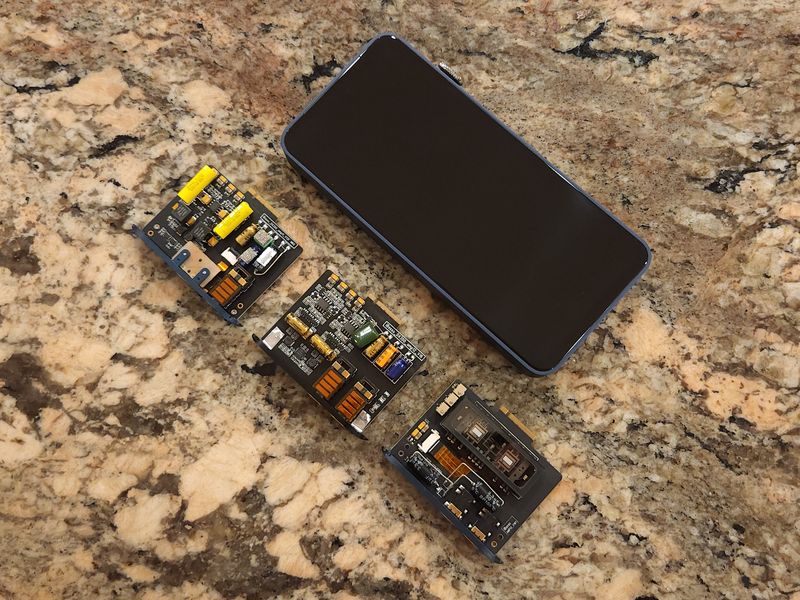
In this test, I was using Jewel, Traillii, and IT07. First, I will go over the comparison between different amp modules used with DX320 as well as comparison between DX320 and DX300 with its stock amp module. Then, I will cover a comparison with other DAPs. Each of these DAPs, besides a difference in tonality and pair up synergy, has their own Pros/Cons when it comes to features, all of which should be taken into consideration depending on your priorities if you need streaming or not, which balanced termination you prefer, how much output power do you need, your battery requirements, etc. Also, please keep in mind, all other DAPs in this comparison are more expensive than DX320.
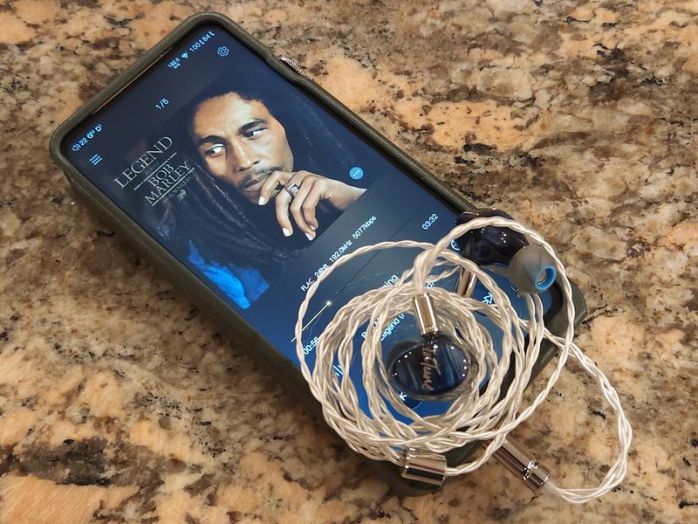
DX320 AMP11 mk2s vs DX300 AMP11 mk2 – DX320 (volume at 24, med gain) vs DX300 (volume at 35, med gain) right away you can hear that DX320 soundstage is wider and imaging is more holographic when it comes to positioning of instruments/vocals, and it is quite noticeable. Tonality wise, DX300 has a little more elevated bass impact with more weight in sub-bass and stronger mid-bass, and DX300 mids are warmer and slightly pulled back. DX320 and DX300 treble response is nearly the same. DX320 bass has the same deep sub-bass extension and mid-bass punch, but it is more balanced with the rest of the frequency range. DX320 mids are a little leaner, less colored, more transparent, and a little more forward, again, making the tuning more balanced across lows, mids, highs. From a technical perspective, warmer tonality of DX300 creates a contrast with DX320 transparency where I find a better layering and separation of the sounds (in DX320).
DX320 AMP13 (high voltage/current, middle) vs AMP13 (high voltage, left) – this is a comparison between two 3.5mm output ports of AMP13 where I hear a noticeable difference in output power with middle port requiring at least 6 less volume clicks. Another difference is in soundstage with middle port having a wider and more holographic expansion. Tonality is not too far off, but depending on IEM or headphones you are using, technical performance will differ based on which output you are using. With the middle one I heard a faster and more articulate bass performance and mids with a better retrieval of details. With left port, bass was softer, not as fast attack and longer decay of the notes. Also, with left port, mids were smoother and a bit more organic. Personally, I preferred middle port in pair up with all my IEMs.
DX320 AMP11 mk2s vs AMP13 – both have a big holographic soundstage which is impressive considering I’m comparing 4.4mm output of mk2s vs 3.5mm output of AMP13. Also, technical performance is not too far off either, a very similar layering and separation of the sounds with plenty of air between the layers. Also, I hear the expanded vertical dynamics in either one. So, where is the difference? You can clearly hear the difference in tonality with AMP11 mk2s being colder and more precise vs AMP13 being smoother warmer and more textured. That added texture of AMP13 is what makes me forget the limitation of having 3.5mm output only (or crackling interference while streaming). AMP11 mk2s is a great amp with a natural revealing tonality, nothing too harsh or digital about its sound. But when you start comparing it to AMP13, relative to NuTube organic texture of AMP13, AMP11 mk2s sounds colder and more precise in how it delivers every note, and I’m hearing this difference mostly in mids. Surprisingly, both amps give bass of Jewel a deep analog textured treatment in sub-bass area.
DX320 AMP11 mk2s vs AMP12 – AMP11 mk2s soundstage is wider and imaging is more holographic; AMP12 is not too far behind, but not a match for AMP11 mk2s or AMP13 when it comes to the soundstage. Tonality wise, I hear AMP12 to be warmer and smoother, approaching AMP13 level, but this warmer tonality still doesn’t have the same level of analog texture as in AMP13. Big advantage of AMP12 is a dedicated LO to unleash the power of ROHM DACs with your external amplifier. But if you want warmer tonality and analog texture, AMP13 is the answer.


Other DAP comparisons
DX320 AMP11 mk2s vs M9 – starting off with a soundstage, DX320 has a bit wider soundstage, but not by a lot, though I still hear an upper hand in the soundstage expansion here. Technical performance is not too far off either, both have a nicely layered and well separated sounds with good vertical dynamics. But the tonality has some noticeable differences. Both have a deep sub-bass extension, but while going back and forth a dozen of times, I can clearly hear DX320 to have a more textured analog rumble while M9 rumble is softer and not articulated in the same analog way. You can miss that with BA IEMs, but in case of pair up with Jewel and its DD bass, it was noticeable. Also, M9 treble has more air and sounds brighter. DX320 treble is airy and revealing, but a little more natural in comparison. And, of course, worth mentioning modular headphone socket (M9) vs modular amp design (DX320) in this comparison.
DX320 AMP11 mk2s vs R8 (turbo mode on) – DX320 soundstage is a bit wider, just a bit, but noticeable enough, and also imaging of DX320 is a bit more holographic, especially the depth and positioning of the vocals/instruments. Technical performance is not too far off, though I do hear a little better separation and layering of the sounds with DX320. Tonality wise, I had to turn R8 Turbo mode on to boost the output voltage to get closer to DX320 performance and the rumble and texture of its bass. With turbo mode on, R8 gets close, though not exactly matching it. Mids of R8 are warmer and a bit thicker while its treble is brighter and splashier in comparison to leaner and more transparent mids of DX320 and more natural treble of DX320. Modular amp design of DX320 is also the advantage.
DX320 AMP11 mk2s vs N8ii (SS, P+, AB) – I had to tweak N8ii settings to match DX320, and you do need to switch on P+ boost to get the same bass performance with a deep analog texture. N8ii bass hits a bit stronger, scaling it up across sub- and mid-bass, but they are not too far off. Also, I hear a lot of similarities in treble, having airy well-defined extension with just enough sparkle to give the sound its natural resolution. Mids tonality varies a bit, with N8ii being a bit smoother and warmer while DX320 being leaner and more transparent. They are also not too far off when it comes to layering and separation of the sounds. The previous DX320 fw releases put its technical performance a bit behind N8ii, while the latest 2.03 scaled it up to match it which makes sense since they both use the same ROHM DACs.
DX320 AMP13 vs SP2000T (Tube mode) – I was looking forward to this comparison since both feature a single NuTube module. First of all, DX320 soundstage is wide and imaging is more holographic, that change is very easy to spot and was the first thing I noticed. Technical performance is also very similar in this comparison, with both exhibiting a decent layering and separation of the sounds and pretty good vertical dynamics. Now, with tonality, I zoomed into mids/vocals right away, and also found similarities of analog tubey texture, but SP2kT vocals are a bit more out of your head while DX320 has a different focus on mids, bringing them closer to you. Treble is very similar, but bass has some variation. DX320 bass is tighter and more articulate plus has a little more rumble in sub-bass. SP2kT bass is a bit softer and more rounded, giving it a slightly more laidback feeling. Also, DX320 gives you a fast open Android performance and a modular design, while SP2kT is a closed Android design, though switching between SS and Tube modes without removing a module is very convenient. And yes, both have some minor EMI/RF interference when streaming with NuTube output.
DX320 AMP13 vs N8ii (tube, P+, AB) – N8ii sound is a little more “tubey” while DX320 sounds more hybrid (combination of SS/tube). Both have a similar soundstage expansion, which is impressive for DX320 considering it is SE output. Technical performance is also not too far, and considering the tonality is smoother and warmer, the layering/separation usually scales down. But the tonality and the texture of the sound has a more analog tubey sound with slightly more textured distortion in N8ii, while DX320 sound is smoother, analog, but sounds a little cleaner in comparison, thus to my ears it is more hybrid while N8ii is more tubey. Also, when streaming, N8ii doesn’t have any RF interference crackle, while DX320 has it due to its modular design. N8ii chassis were designed specifically to isolate NuTubes in a separate compartment, while DX320 was not designed around NuTubes, it was designed with a capability of a modular expansion with NuTube being one of the optional modules.
DX320 AMP13 vs WM1ZM2 (DSEE Ultimate, Vinyl Processor) – While M2 is solid state only, the tuning and the DSP effects I usually enable during the playback brings it closer to Tube sound, thus a reason I wanted to compare it to DX320 with AMP13. Tbh, the difference is not a night’n’day. Both have a similar soundstage expansion and other aspects of technical performance when it comes to dynamics and layering and separation of the sounds. Just keep in mind, M2 has a lot less output power, so relative to IEMs comparison it is close enough. In terms of a tonality, DX320 has a more textured and elevated sub-bass rumble in comparison to a smoother a slightly scaled down sub-bass of M2. Treble is nearly the same, but mids are different, with M2 sounding more “hybrid” rather than analog and textured like DX320 which has a more tube-like smoother tonality in comparison. Another thing to note, while both are running Android 11, DX320 processor is a lot faster and Android performance is noticeably faster as well.

Other Wired/Wireless connections.
In this section of the review, I will go over various wired and wireless connections I tested and verified with DX320.
Streaming
Not much to say here since DX320 has a very fast and solid Wifi connection, as fast as my latest Galaxy S22 phone. Using apps is a pleasure, again, no different than with my smartphone; it’s a smooth experience considering Snapdragon 660, Android 11, and 6GB of RAM for multitasking. Just install Google Play Store and you are all set! Tested with many different hi-res streaming services, no compatibility issues, including running Tidal with a full MQA 16x unfolding.

Coax out
Tested with iFi micro iDSD BL. I used the provided iBasso cable to get connected, works without a problem. I found the volume on DX320 to be fixed, output volume adjustable using micro iDSD. The sound has a typical smooth natural tonality I’m used to with iFi micro iDSD BL dac/amp.

Digital audio usb-c out
Tested with iBasso latest DC06 usb-dac dongle. It works with DX320 without a problem but you do need to install iBasso UAC app to control the volume of DC06, otherwise it will blast your ears off when connecting earphones/headphones at full volume. This is only necessary for DC06, not other dongles with their own physical volume control. DX320 volume wheel doesn’t affect DC06 volume thus need to use UAC app. DC06 is a great sounding usb DAC/amp dongle with a neutral signature and slightly warmer smoother natural tonality and a rather big soundstage expansion. I was happy that iBasso finally introduced a dongle with both 4.4mm and 3.5mm headphone outputs and removable usb-c OTG cable so you can switch to lightning cable for use with iPhone. Also, without doing anything extra, after installing UAC app the DC06 was recognized right away and a message popped up if I want to use UAC app to control its volume.

Line Out
As previously mentioned in my DX300 review, you don’t want to be going into external amplifier with 7.1Vrms output, thus need to switch to low or med gain when LO is selected, low gain probably better.
DX320 LO vs DX300 LO in low gain using Romi Audio BX2 set to volume at 9 o’clock (for internal DAC comparison of these DAPs since BX2 is a very neutral amp) – consistent with comparison between PO of these DAPs, I’m hearing DX320 with a little wider soundstage and more transparent tonality, while DX300 soundstage is narrower in width and has a warmer tonality, and overall, the presentation of DX300 sound in this comparison is thicker.
USB DAC
USB DAC mode needs to be activated in Advanced setting of Mango app. When activated, you have option to change the gain and digital filters. Win10 recognized it right away, no drivers were necessary. When playing the same song from my laptop + DX320 vs directly from DX320, I found the sound to be nearly identical, only slightly warmer playing with laptop connected to DX320. During the playback, volume can be adjusted from both DX320 and laptop. Also, when enabled, you have the option to enable/disable charging mode so you don’t have to drain your source battery charging DX320 during the connection. This is convenient when using smartphone as a source to prevent DX320 draining its battery.
Wireless Bluetooth Rx DAC
This (Bluetooth DAC) mode gets activated from Mango app in Advanced setting, and the pair up connection was fast and effortless with my S22. Volume could be either adjusted from my Galaxy S22 or DX320. Also, I was able to confirm a close to 60ft open range operation. But to my surprise, this connection was only using SBC which I checked under Developer Option on my smartphone.
Wireless Bluetooth Tx
Tested it with Hiby WH2 TWS. I found the pair up with these TWS earphones to be fast and effortless, was able to select LDAC codec in Bluetooth setting of DX320, and it worked about 20ft across the open area, allowing full remote control of playback with WH2. Next, I tried iBasso own CF01 TWS adapter with their IT00 iems. Again, pair up was fast and effortless, connected using aptX, and allowing remote playback control from CF01. With CF01 it worked about 35ft away. Overall, the sound with WH2 and CF01/IT00 was the same as when paired up with my Galaxy S22, but the supported distance was shorter than I expected. 20-35ft is still good, but with my S22 and some other DAPs I can get closer to 50-60ft of distance coverage.


Conclusion.
At the end of my DX300 review, I mentioned about it exceeding my expectations and eagerly awaiting to find out about the next amp module release. I was suspecting it’s going to be NuTube amp (AMP13), but I didn’t expect that it will come together with a new DX320. I’m sure it wasn’t the easy decision to stop the production and to discontinue DX300 when a demand for this DAP was still high. But what impressed me the most was a superfast turn around to implement the all-new flagship level ROHM DACs and step it up to Android 11, a big move in both hardware and software directions. And even though the price of DX320, relative to DX300, went up due to a more expensive set of DACs and new custom components (caps) used in a stock amp (AMP11 mk2s), I still consider this DAP to have very impressive price/performance ratio, even if you factor in additional cost of modular amps.
Some audiophiles prefer non-Android DAPs while others can’t live without streaming. Some want more compact design, while others don’t mind transportable and don’t even care about the size or the weight. There is no single DAP which could be labeled as the best because everybody has different requirements and a different definition of what is the best for them. With the latest DX320 release, iBasso has a solution to tick most of the boxes if you are looking for a fast Android DAP with a dual boot including audio playback-only option, super-sized 6.5” multimedia display, and expansion with a modular design and choices of powerful solid state and NuTube amps covering the sound tuning from natural revealing tonality (default AMP11 mk2s) to a smoother and more textured analog tonality (AMP13). It will be hard to find another DAP like DX320 under $1.9k packing all these features.
Ironically, in my Conclusion of DX300, I said “it will be hard to find another DAP under $1.2k packing all these features”. But as I mentioned above, DX320 stepped it up with a more expensive flagship DAC from ROHM, two of them actually, and more expensive audiophile grade custom components, plus I’m factoring in AMP13 (DX320 is $1.6k, AMP13 is $269). In my opinion, AMP13 together with an updated stock AMP11 mk2s makes DX320 complete. The only thing that can make it better if we can combine SS and NuTube inside the same chassis so you don’t need to physically switch between amp cards. Maybe iBasso can consider it for their DX320 MAX release if they decide to continue with MAX platform. I guess, only time will tell.

 Twister6 Reviews
I have the Lotoo Paw 6000, paired mostly with 64 Audio – U12t, also occasionally, Focal Utopia or Audeze LCD-i4. I recently demoed a iBasso dx170, and while it’s a nice unit, the Lotoo Paw 6000–at more than twice the price has much better SQ. I have upgrade-itis, and was thinking of the Lotoo Paw GT or the iBasso DX 320. The iBasso is appealing because of its streaming ability, but I am wondering about it’s well-regarded sound quality versus that of the LPGT? I am also wondering if perhaps the LPGT is due soon for an upgrade and whether I should wait. I would so appreciate your comments and suggestions, including any other DAPs that you think should be in the mix. Thanks!
LikeLike
I’m not aware of LPGT being up for upgrade. Lotoo has a long cycle with every release and they recently teased a new product which is a desktop transportable DAP (very expensive). DX320 would be great and they just announced 10 year Edition X of DX320, beautiful looking liquid metal chassis. It will cost extra, but that DAP is a thing of beauty. LPGT is great, but with DX320 you are getting android and swappable amp cards, including amp13 with NuTube.
LikeLike
Thanks! I really appreciate the super quick, super informative reply.
LikeLike
I have the dx 220 with amp 9. Do you think DX 320 would be a big upgrade from this in terms of sound and is the DX 320 Edition X worth it?
LikeLike
Edition X has just a different chassis material, everything else is the same. So, if you have extra money and want extra bling, why not! Otherwise, you will be fine with a regular DX320. Regarding DX220 w/amp9, I don’t like amp9, my least favorite of their amp modules, it is underpowered and has a high noise floor. DX320 w/amp13 (nutube as well) will be a noticeable improvement. How big? That is a relative subjective opinion. A quieter sound with less noise floor alone is a big deal for me when going from amp9 to amp13. Then, you have later and more advanced Android, faster processor, dual battery architecture, and other advanced features going from dx220 to dx320.
LikeLike
Excellent review as always!!!!
Did you use sei Xe6 Uni or Custom? As it is with the Costum, Dx320 (amp 11mk2)
LikeLike
I used uni, just faster to get it in and out of my ears, but I personally prefer custom XE6 because the sound is more balanced with mids being a little more forward and sound signature being less L-shaped and more W-shaped.
LikeLike
I saw the artists you listen to in your reviews and how does it sound for example Linkin Park on the Dx320 amp11 mk2, and with your Xe6 costum? Can you experience this?
Thanks
LikeLike
Excellent Review!! Based off your review I got the DX320 and happy with it. Off late the upgrade bug has bitten me. Do you think that the SP3000 or M9 Plus would be huge improvment over the DX320 to justify putting down the cash?
All DAPs will be paired with IE600 or Focal Stellia.
LikeLike
I’m not familiar with M9+, and not a big fan of v+shaped tuning of original M9, but heard from others M9+ is tuned more balanced. SP3k will be more neutral, but it a locked android OS, some find it a bit frustrating and slow. Bottom line, nothing going to be a huge improvement. At the flagship level you will find a variation going from dap to dap, like different flavors of premium ice cream, if that makes sense. Now, DX 320 Max Ti is on a whole different level if you get a chance to hear it 🙂
LikeLike
Hi
I own ibasso dx300 with amp12 and want to try out a tube amp module.
How does amp12 compares to amp13 and amp14. I want to drive hifiman sundara and denon ah-d9200. So no heavy loads. Which one should I choose
Thanks in advance Jonathan
LikeLike
https://twister6.com/2022/12/28/ibasso-amp14/2/, I covered some of these comparisons there. And yeah, should be plenty of power to cover your needs. Amp14 is my favorite amp module 😉
LikeLike
Thanks yeah I read the review after writing my post maybe I will buy amp14 to check out. Its really nice to have these amps with different sound flavours
Cheers Jonathan
LikeLike