
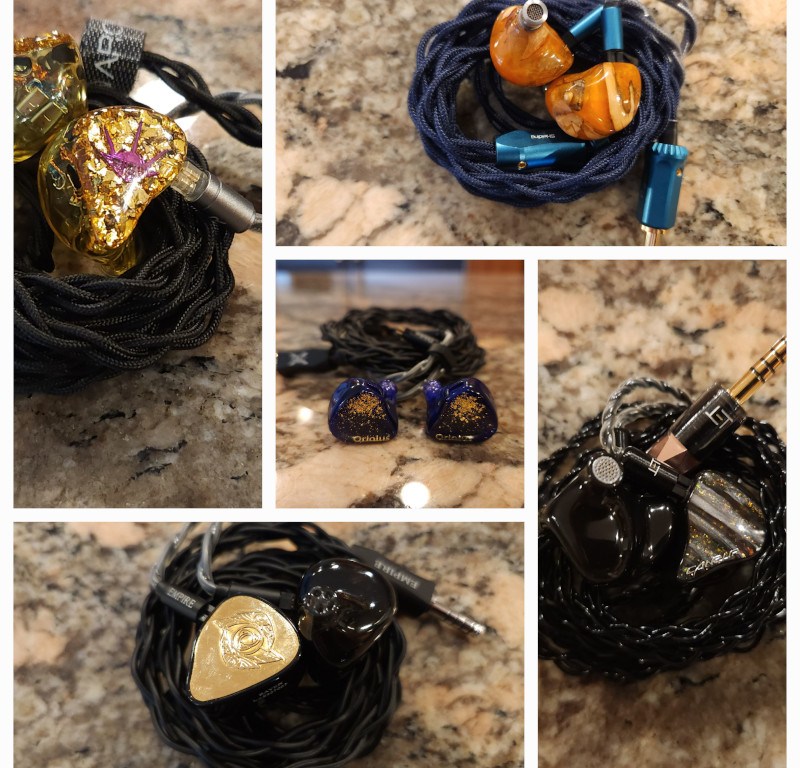
Preamble / Intro.
I spend the whole year waiting for the next CanJam NYC, the annual Head-fi show I have been attending for the last 7 years. But the NYC show is only one of many CanJams which became the international phenomenon spreading across the globe. And a lot of these shows are chosen by manufacturers to reveal their new products, sometimes introduced by their distributors or retailers, such as Musicteck. When I was reading MT’s announcement of audio gear planned to be showcased at the upcoming CanJam SoCal ‘23, I started to drool due to a selection of IEMs I haven’t even heard of. And it got only worse when impressions started to fill up the Watercooler thread on Head-fi during that CanJam weekend.
Since I wasn’t able to attend CanJam SoCal ’23 and probably will not have the patience to wait until CanJam NYC ’24, the only solution to scratch that itch was to… contact Andrew, the man behind Musicteck, and to arrange a brief (just for a few days) audition of all these new goodies. I do realize, this would never substitute the experience of attending the actual show, meeting likeminded audiophiles, catching up with friends, and talking to manufacturers and retailers. But even a very brief auditioning with the ability to capture FR measurements is still a dream-come-true experience I would like to share about with everybody today.
And just to be clear, while I titled this review as CanJam SoCal 2023 Impressions, I didn’t actually attend the show, and these are just my brief impressions, specs, pictures, and FR measurements of a number of new products which I borrowed for a few days from Musicteck.
IEMs.
Canpur CP622B (Canpur CP622B)
Design: 10-driver tribrid with 6BA, 2EST, 2BC
I never heard of this brand until now, and it caught me by surprise, especially since a few people told me that I have to check it out. Also, right before this CanJam show, I noticed MT added Canpur product page on their site, listing quite a few of their IEMs across a wide price range. The ones I received were two of their flagships which I’m going to cover below.
Starting with CP622B, it comes with a nice-looking faceplate design and a slightly bigger shell on the inner side to pack all the drivers under the hood, including 2x bone conduction drivers that require more surface contact. I also noticed Eletech Socrates cable, thinking it was left by mistake, but found out later it comes standard with CP622B model. Surprised they didn’t include Eletech Baroque eartips as well since it was also a good pair up.
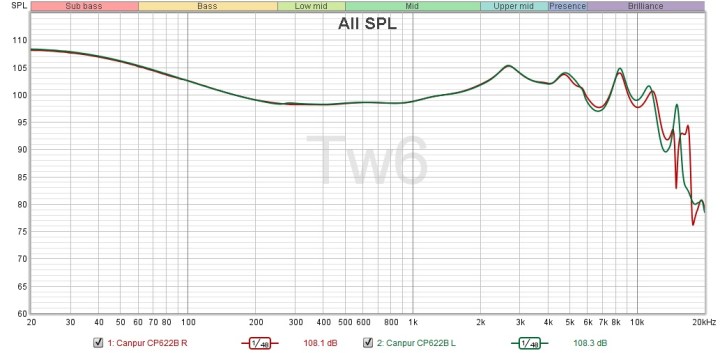
Right away I noticed a huge soundstage, expanded in all 3 directions with 3D holographic imaging. The tuning is balanced with a more revealing tonality. Despite having BA bass, it has a very deep sub-bass rumble and a fast mid-bass punch, beefier in sub-bass region. Then, you have clear, detailed, more revealing, yet still natural mids with more neutral lower mids, and a crystal clear extended airy treble.
As I was listening to CP622B, it reminded me of Annihilator. Both have a very similar bass and mids, just with CP622B having a bit more weight in sub-bass and a touch more body in lower mids. And while they both have a similar airy treble extension, Anni’s treble has more forward presentation which gives the sound a bit higher resolution while CP622B takes the edge off with a more natural resolution.


Canpur CP54E (Canpur CP54E)
Design: 9-driver hybrid with 5BA, 4EST
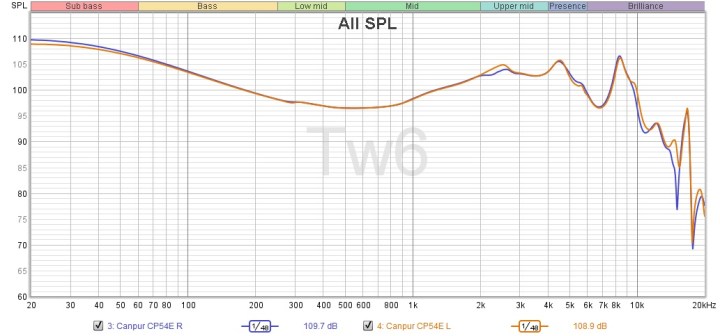
After switching to CP54E, I still felt that both CP622B and CP54E were on a flagship level, just targeting a different audience with a different tuning. If you have noticed, IEM model number assignment is not random here. CP stands for Canpur and numbers represent driver partitioning, including a letter suffix where 2B (2xBCD) and 4E (4xESTs). CP54E comes with its own cable, very comfortable to wear, though the demo unit cable had some issues, so I switched to Socrates while testing this pair of IEMs. Shells are nice looking and more compact than CP622B, obviously since we no longer dealing with BC drivers.
The soundstage of CP54E is still wide, but I found it to have more depth than width, something that was more noticeable after switching from CP622B with its huge holographic soundstage. The tuning is W-shaped and quite balanced. Right away you will notice a more elevated sub-bass rumble with stronger mid-bass punch when comparing to CP622B. The mids have a natural detailed tonality with a decent retrieval of details, a bit leaner lower mids which brings more attention to upper mids in CP54E. The treble is clear and detailed but also has a little less airiness in comparison to CP622B.


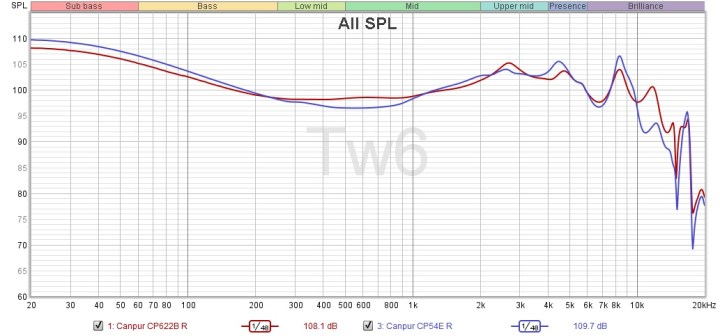
Because I never heard of this manufacturer, it drew a bit more of my attention, including comparison between CP622B and CP54E. In a summary, CP622B has a bigger soundstage expansion, thanks to BC drivers, more clarity and higher resolution in mids, and a very extended airy treble. CP54E has a deeper and a more elevated bass with a natural and still detailed tuning of mids and treble. These two do have a rather complementary tuning.
UM Amber Pearl (UM Amber Pearl IEM)
Design: 15-driver tribrid with 4BA bass, 2BA mids, 2BA upper mids, 4BA treble, 2EST ultra high and one 3rd gen BCD. 4BA bass drivers partitioned into: 2BA open-board 5-125Hz, 2BA solid 125-250Hz
The reference to Amber Pearl came to my attention when I heard about Cayin’s latest N30LE DAP, the regular limited edition version and special limited-edition AP version. The AP version of N30LE was sold bundled together with UM’s new flagship IEM, Amber Pearl. But due to a high demand of people wanting either N30LE AP or UM AP by itself, I think MT end up offering UM AP standalone. I’m sure it is very limited as well, and I was grateful for a chance to audition it.
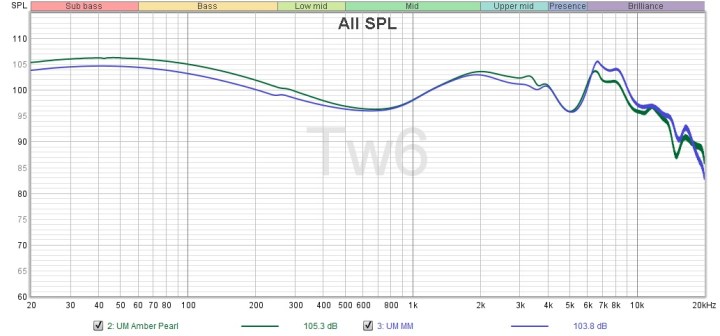
There is no secret, I do enjoy UM Mentor Multiverse IEMs a lot, and once I started reading CanJam SoCal impressions with people referring to AP as MM’s upgrade, that piqued my interest. After spending a few minutes with these in my ears, I quickly came to the same conclusion. With its new BA bass drivers and the addition of 2 EST ultra-high drivers, AP indeed sounds like an upgraded version of MM with a more impactful bass and a more natural treble.
Adding 2 EST drivers is self-explanatory. Then, you still have 4BA drivers covering the bass frequency range, but while MM had “just” 4BA drivers, AP refers to its design as having 2x open-back BA driver covering 5-125Hz sub frequencies and 2x regular BA drivers covering 125-250Hz. AP bass does have a more solid textured sub-bass, adding weight to MM’s low end. But, despite the addition of 2EST drivers, the mid-treble tuning of AP is a bit smoother and more natural to my ears, yet doing that without compromising the retrieval of details in mids. As a matter of fact, mids remained the same between AP and MM, still natural and detailed, but due to a boost in bass (mid-bass), the perception of lower mids in AP gained a bit more body and organic texture.
The talk about BA vs DD bass always turns into a heated discussion in the Watercooler thread on Head-fi. And I can tell you straight up that these bass changes are not going to turn BA bass into DD bass, but it started to point more in that direction and definitely gave AP an improvement in weight, texture, and more authorative impact, being a noticeable improvement over MM to my ears.


UM Prototype
Design: unknown.
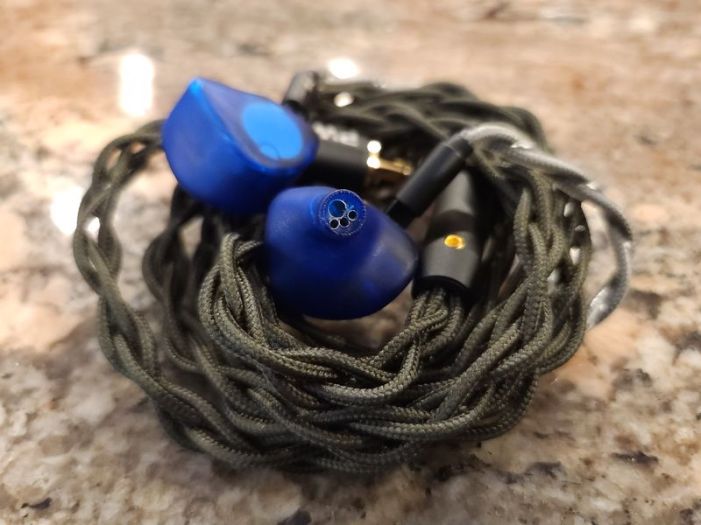
Based on reading CanJam SoCal impressions, this blue shell prototype also generated a healthy buzz at the show, with many trying to guess the driver config or speculating if this is going to be MEXT MK2. I don’t have any details about these IEMs either, but it was clearly visible that nozzle has 4 metal tubes, assuming the partitioning of drivers into 4 groups, and you can see BCD driver across the faceplate. Plus, such powerful bass impact can only spell one thing – DD driver. Maybe there are some BAs as well. I guess will find out later once this IEM will be officially announced with details. Maybe UM wanted to collect some feedback before finalizing the tuning, though in my opinion it sounded pretty mature already.
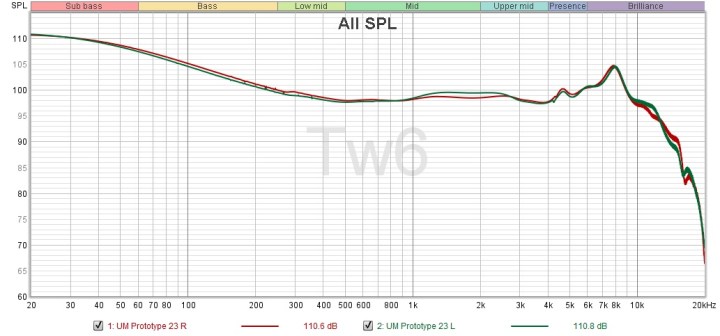
This UM Prototype has an unmistakably L-shaped tuning with a very powerful, blooming, and well controlled bass impact. I don’t hear any spillage into lower mids. And in contrast to its powerful bass, you have a rather clear and natural mids with a good retrieval of details. Treble is smoother tuned, though has a mid-treble peak that adds more clarity and improves the resolution of the mids/vocals. This IEM is definitely tuned for basshead lovers who want to enjoy clear natural vocals without veil, bloat, or muddiness.
Empire Ears Raven (Empire Ears Raven)
Design: 12-driver quadbrid with dual W9+ DD, 5BAs, 4EST, and BCD
Let me start by saying, before starting the sound analysis I plugged and unplug the stock cable multiple times!!! From what I have read so far, only around 5% of the first production batch was affected by this manufacturing issue (glue?) and Jack and Dean already addressed it. I assume everything should be good moving forward. But I still wanted to check the cable first before putting these in my ears.
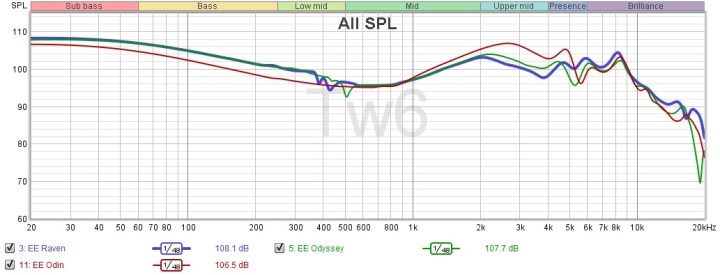
The first thing you notice is a big soundstage expansion with holographic imaging, and a very good layering and separation of the sounds. Raven has a balanced tuning with a rather elevated bass impact, clear detailed mids, and airy extended treble. The bass is articulate, with a deep sub-bass rumble and a powerful punchy mid-bass, but I’m not sure if I would call it a pure L-shaped tuning since it sounded more balanced to my ears. The lower mids are slightly north of neutral and upper mids are clear and detailed. Treble is airy, extended, has a nice sparkle. It’s a good tuning for audiophiles who want more clarity and details without harsh upper frequencies and also demand a powerful visceral bass impact.
I’m sure many will be curious how it compares to their collab release with A&K, Odyssey. I don’t have Odyssey with me anymore, just notes from my mini-review and measurements for comparison. Odyssey had a similar driver config except it had 2EST drivers while Raven was up to 4ESTs, and by memory Raven has more presence in treble, making it more resolving than Odyssey. For those who are curious about the comparison to Odin which has a similar driver config minus BC driver, Raven’s bass is scaled up in quantity while its mids are scaled down, less forward, making Raven’s vocals more relaxed and upper frequencies smoother and more natural in comparison to Odin.


Aroma Fei Wan (Aroma Audio Fei Wan)
Design: 12-driver hybrid with 2x 9.2mm DD, 10BA
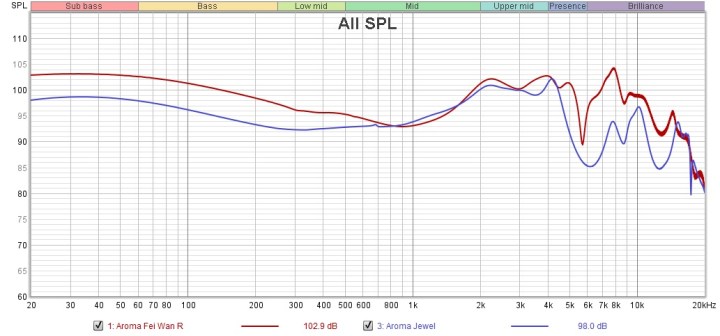
This was another unexpected surprise. Even before putting these in my ears, the first thing I noticed was the new cable which reminded me of PWA, a big step up from Jewel’s original microphonic stock cable. But as soon as I started listening to Fei Wan, I quickly realized, this is not the upgraded Jewel but a whole new IEM. Relative to Jewel, Fei Wan elevated the bass and lifted the treble, creating a more fun V-shaped sound sig in comparison to Jewel’s balanced reference tuning.
The bass is pretty good with a deeper and more textured sub-bass and a bit softer mid-bass impact. Fei Wan will have more weight in bass and fuller body mids, but mids were still clear and detailed, just pushed a little back in their presentation. The treble was crystal clear, had more air, and improved extension. All these changes result in a more fun V-shaped tuning with a decent resolution. But relative to a more balanced reference tuning of Jewel, Fei Wan vocals were not as forward, pushed slightly back. I do wish I would spend more time with these because I noticed people mentioning how Fei Wan sound is sensitive to eartips rolling. But in general, Fei Wan has a complementary fun tuning to Jewel’s more balanced reference tuning.


Page 1 – Canpur, UM, Empire Ears, Aroma.
Page 2 – Oriolus, Timsok, Victory Melody, Nostalgia Audio, Softears, Brise Audio, Cayin.

 Twister6 Reviews
How do you find the Timsokk DD flagship vs more expensive single DD offerings, like IE600, Dark Sky and Final A8000?
LikeLike
I only had Timsok for a short time, don’t have it anymore, and I only heard IE600 for a few minutes back in Feb at Canjam NYC. A8000 is a brighter tuned iems, more emphasis on upper mids/treble so it will have a lot less bass and more revealing/forward upper frequencies. Going by memory of IE600 and looking at IE600 vs TS-316 FR graphs, they certainly “look” similar, but I do recall IE600 being just a bit brighter. But like I said, I’m going by a distant memory since I don’t have a chance for a real time a/b comparison.
LikeLike
Hello,
I’ve never been able to afford to go anywhere and try new gear out, so I appreciate the personal impressions you make.
I use the Dunu Talos as my daily budget iem while saving up for a more expensive set.
I like the vast sound field of the Talos and the way it reproduces instruments. The stage does get a bit bigger when you switch the BAs ‘on’.
In the size of the stage, timbre and bass level enjoyment do you consider the Orilious Szalayi to be a good investment as an upgrade?
Since soundstage and bass is my highest priority (personal taste) is it worth saving up more money to get a bigger level of stage with the Monachaa?
Am I right to assume that the Monachaa has a bigger sound field than the Szalayi?
I appreciate your insight.
LikeLike
Hard to tell since I’m not familiar with Talos at all. Monachaa definitely has a bigger and more holographic soundstage than Szalayi, but if you like your bass impact you would want to look into Szalayi instead of Monachaa. Unfortunately, I don’t have either one with me now to do more testing or the real time a/b comparison. Btw, if you are on the budget, Timsok ts-316 is a great one to consider as well.
LikeLike