
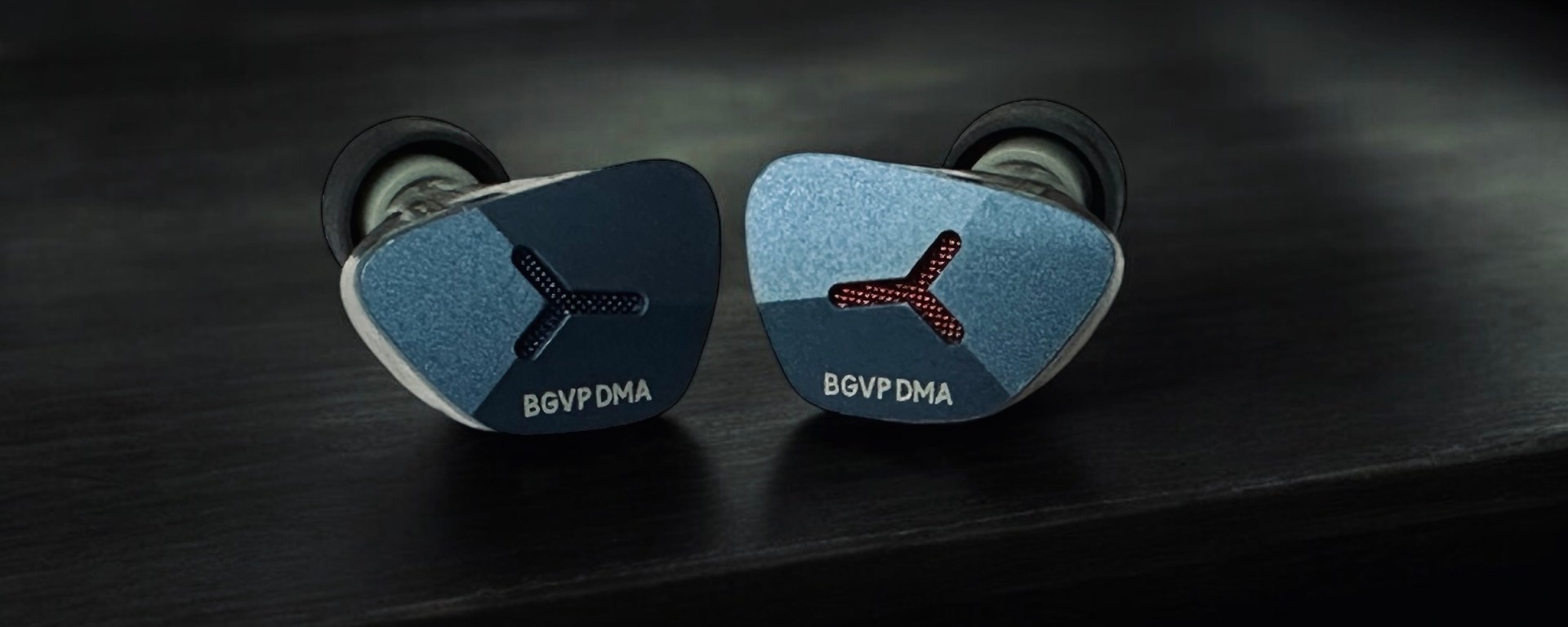
The cheapest BCD tri-brid and one of the nicest sub-$500 offerings!
PROS: Very comfortable and snug fitting semi-custom shells, well tuned exciting sound signature with very good technical performance, gives the feeling of engulfing holographic soundstage owing to the BCD, cheapest bone conduction tri-brid in the market, good stock cable with swappable jacks, good variety in stock ear tips, excellent VFM.
CONS: Heygears shells don’t give a feeling of premium-ness, nothing significant for its asking price otherwise.
About BGVP.
BGVP is based out of Dongguan, China. They manufacture and sell a wide range of products like in-ear monitors, earbuds, cables, cases, etc. They initially came into prominence with successful products like DMG and DM6. Since then they’ve launched a wide range of products with us having reviewed their EST hybrids EST12 and EST8, ArtMagic V12, DM7, DM8, ArtMagic VG4, ArtMagic DH3, NE5, Melody, DM9 and Phantom here on our website.
Official Store – BGVP DMA ($300)

Introduction.
Looks like Bone Conduction tri/quad-brids are quite in demand these days but 99% of them are priced over $1500, which make them inaccessible to the majority who wouldn’t want to spend so much on an IEM. This is where I was highly impressed with BGVP’s Phantom being a well done sub-$1000 BC quad-brid (BGVP are known to price their IEMs competitively) and today we have their new $300 1DD+2BA+2BC tri-brid called DMA which is a new feat in pricing for a BC multi-driver IEM.

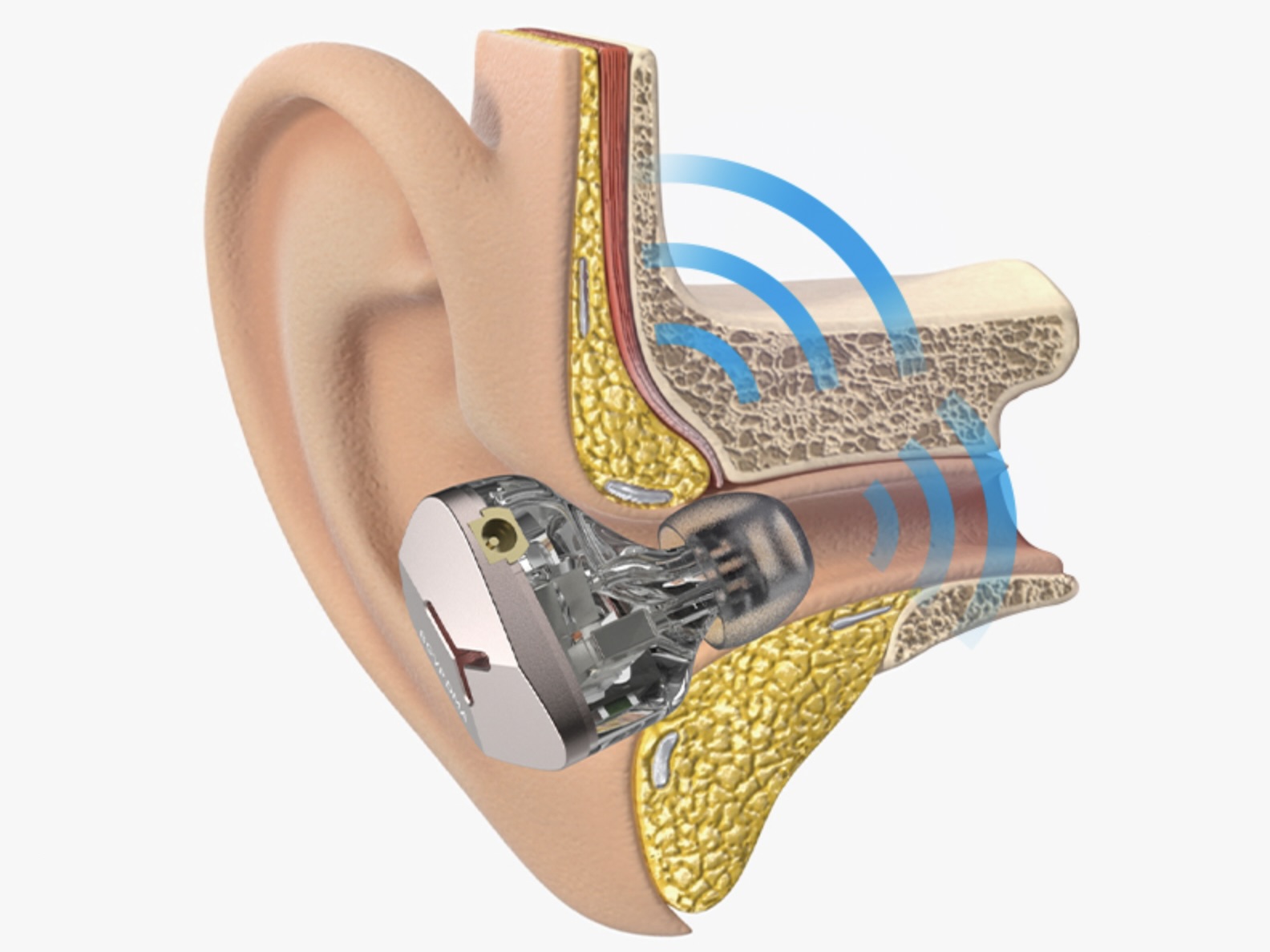
Let’s give you some quick insight into DMA’s BC tech, which uses the same Sonion driver as in their more expensive IEM – Phantom. Most of the BCD IEMs in the past have all used a different type of BCD driver and implemented them differently in their IEMs with a combo of DDs, BAs and EST drivers. Unique Melody used a piezoelectric bone conduction driver in their MEST IEMs that was implemented under the faceplate, Kinera developed their own high output BCD in house that was implemented more like a DD and BGVP instead chose to go with Sonion’s dual BCD driver that is a block shaped driver and bursts the vibrations out its spout-less opening. So, in case of both DMA and Phantom, the driver needs to be implemented at the inner wall of the IEM that faces the concha so that it transmits the vibrations via a vent opening in the inner wall. BGVP have used a 9.2 nickel plated dynamic driver for bass, a Sonion 2300 series BA for midrange, a Knowles RAD for treble and Sonion dual-BCD in support primarily focussing on the lower frequency range and enhancing the perception of space and imaging.
Technical Specifications.
- Drivers: 9.2mm Nickel Plated DD + 1 Sonion BA (2300 series) + 1 Knowles BA (RAD series) + Dual Sonion Bone Conduction Driver
- Impedance: 17Ω
- Frequency Response: 10-40kHz
- Sensitivity: ≥106dB SPL/mW
- Distortion Rate: < 1%
- Rated Power: 179mW
- Cable: 1.2m 6N OCC Silver Plated cable
Included in the box.
- BGVP DMA
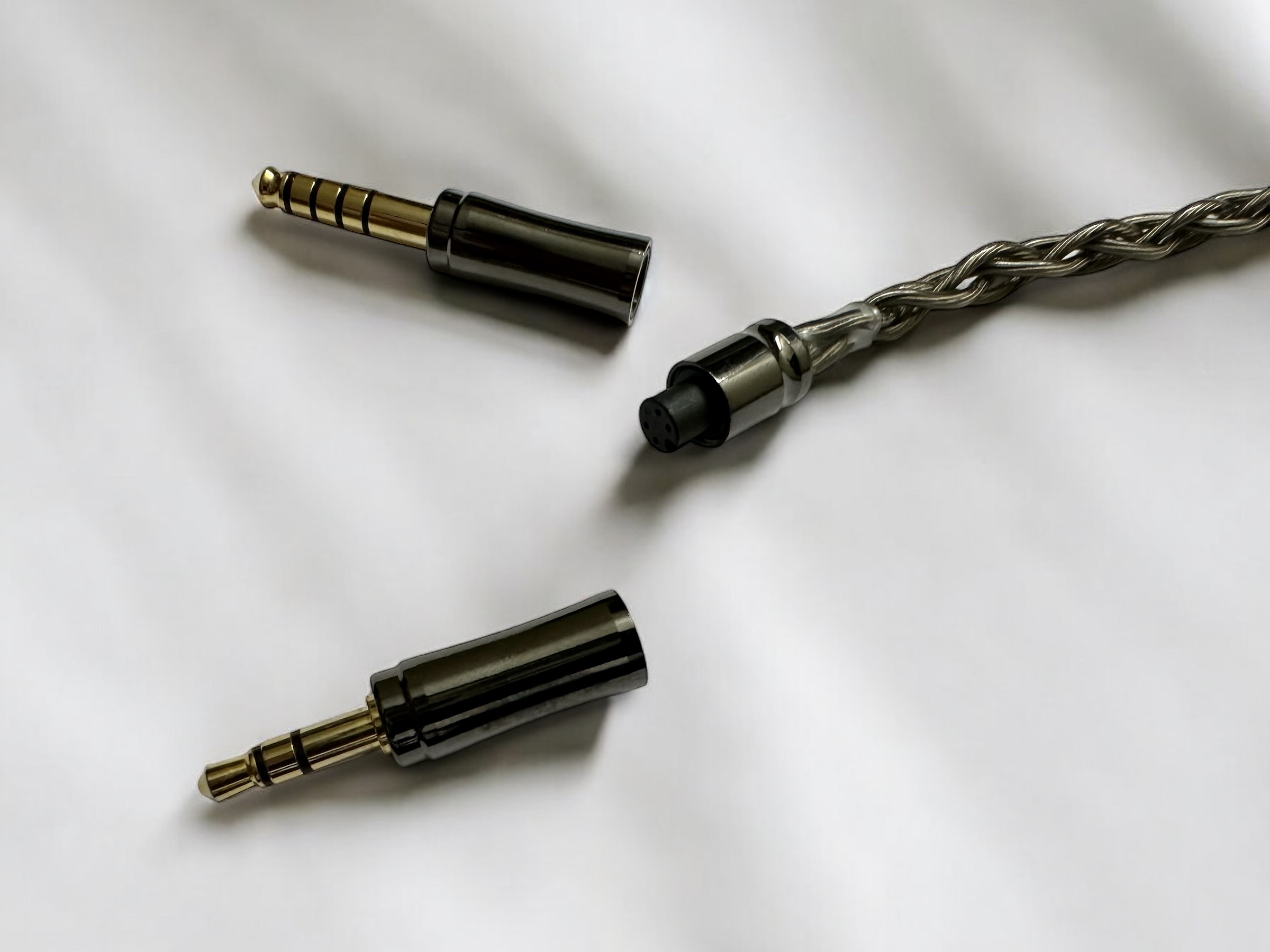
- 4-core high purity 6N single crystal copper silver plated cable with swappable 3.5mm & 4.4mm jacks
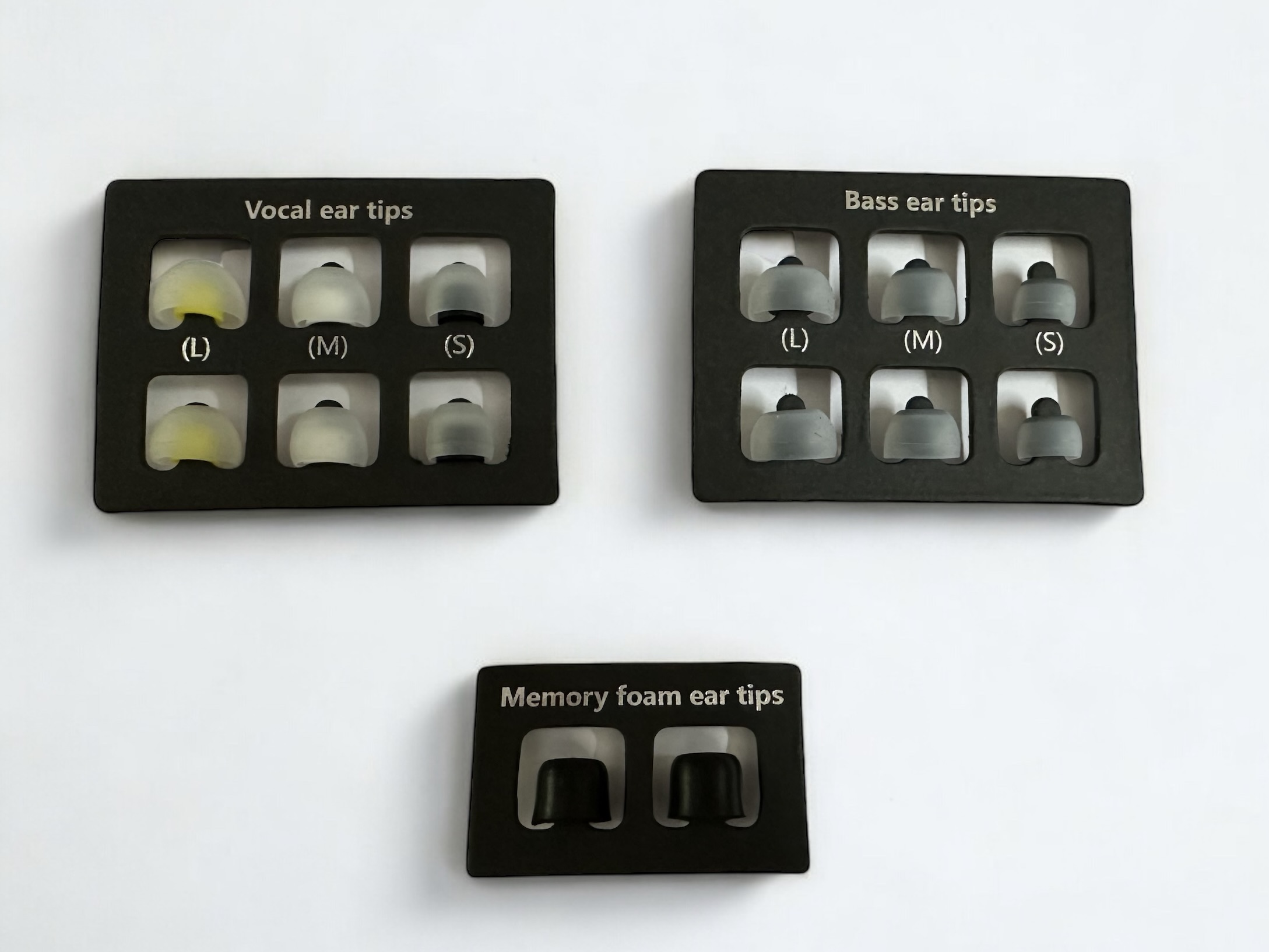
- Silicone ear tips (SML Vocal and SML Bass)
- Memory Foam ear tips – 1 pair
- Carry case
- Cleaning tool
- Warranty card
Build quality.
Looks like BGVP wanted to optimise DMA’s pricing to the absolute in order to offer a Bone Conduction tri-brid for the masses and hence went with Heygears 3D printed shells instead of their usual high quality CNC metal shells or the exquisite dyed wood shells like the Phantom and DM9. Heygears shells are nothing to complain about nor write home about. They are simple and get the job done though not the best looking or highest quality. DMA’s faceplate on the other hand has a very cyberpunk look and is offered in Dark Blue and Silver colour. Besides that it has MMCX sockets, a vent on the inner wall, lipped nozzles to hold the ear tips properly, 3 sound bores and a mesh to protect them from wax.

Cable – DMA’s stock cable is a 4-core 6N single crystal copper silver plated cable with swappable 3.5mm and 4.4mm jacks. The jack, MMCX connectors and y-split are all made of metal and the wires are very supple with minimal downward pull. The swappable jacks are so convenient and I’m so happy to see BGVP trying to offer cables with swappable jacks with most of their IEMs, even their cheaper sub-$200 IEMs.
Fit, Comfort and Isolation.
The shells are quite small in size considering it is a tri-brid and houses 5 drivers (1DD + 2BA + + 2BC). They have a semi-custom shell shape and are an extremely snug and comfortable fit for my ears. You can further tweak the snugness and fit to your preferences using the variety of different stock ear tips. Even though it is a semi-open IEM, noise isolation is fairly good.
Sound Analysis.

Graphs are measured using an IEC60318-4 (IEC711) setup. You can compare all the graphs on my IEM Graph Database here – Animagus Squiglink.
DMA has a well done bass leaning W-shaped signature that sounds natural with a punchy bottom end performance and good sparkle on top to balance it out, leading to a presentation that I imagine will be quite versatile and easy to like for most, along with commendable technical performance for its asking price. Objectively it stands to be seen how much credit can be given to the Sonion BCD but I hear DMA having good punch, dynamism and very precise imaging and depth layering that allows for a very nice, holographic presentation of sound for its asking price.
Let’s go into more detail…

Bass – DMA has impressive boosted bass performance without muddying up the stage or bleeding into the rest of the frequency spectrum. Even though it goes for a 4-5dB mid-bass boost over my own Animagus Preference Target which already has a 7dB sub-bass shelf, it is very well controlled in the centre with very good, almost 3D like depth dynamism to support. The mid-bass never gets in your face even with a 6dB boost over neutral while the sub-bass fills up the background really well when the song demands, like in the new Coldplay song, Feels Like I’m Falling in Love, which has a particularly impressive modern mix that promotes a holographic listening experience. I’d go as far as saying that the bass here is the most well done ‘boosted bass’ kind of bass performance I’ve heard in the sub-$500 lately. How much of that can be contributed to the Sonion BC driver doing its thing isn’t quantifiable because there is no switch to turn it on or off to see the depth of its contributions.
Midrange – DMA has a neutral lower-midrange tuning and about 9dB of ear gain leading to very natural tonality of vocals and instruments as well as a fairly accurate, forward presentation. It would’ve been almost perfect if it didn’t have the 4kHz dip but I mostly hear it taking some bite away from rock guitars and drums minorly, which actually works in the favour of the kind of signature DMA is trying to go for – which is an easy on the ears sound that promotes easy listening at normal to loud levels and a more holographic presentation in return. Generally one tends to feel and hear the music more holographic at louder levels but the brighter IEMs or ones with too much upper-midrange can make that difficult leading to harshness at louder levels. I always recommend everyone to keep their volume levels low and in check but if you really want to listen to something at slightly louder levels for guilty pleasure, it’s advised to go for a tuning that is warmer and smoother on the ears than peaky and bright.
Treble – DMA has sparkly lower-treble that helps balance out the warmth from mid-bass quite well. It’s slightly sparklier than neutral and works fairly well for DMA’s coloured signature by shining a light on the cymbal work and the zing of the acoustic guitars. The sparkle also adds in very tasteful excitement to songs while helping with very good detail retrieval for the otherwise warmer than neutral sound signature. Even though I would’ve liked a bit more upper-treble air for my own preferences (as you can see in my Preference Target below), it has good upper-treble extension if you consider Harman In-Ear Target 2019 as the reference point.
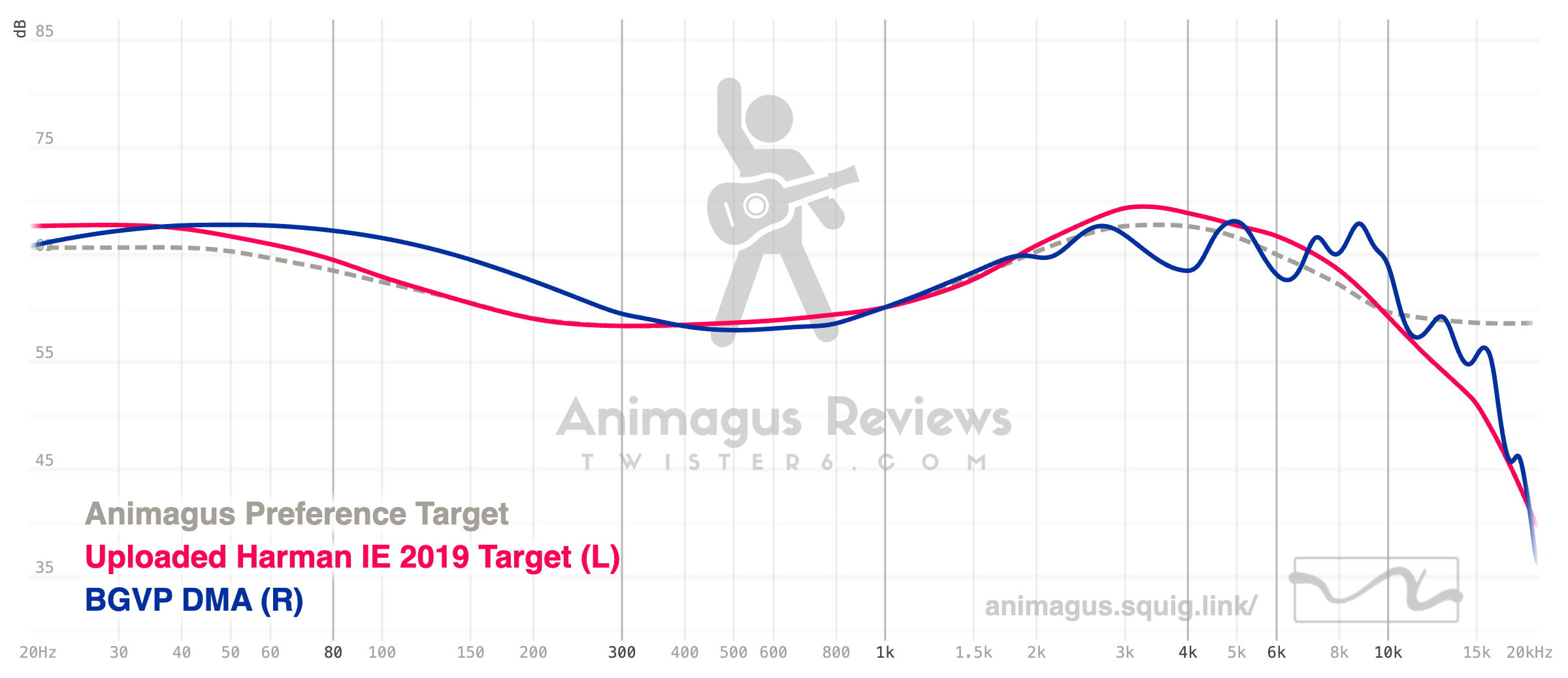
Technical Performance – DMA has very good detail retrieval with a very nice sounstage with impressive depth, one that has the capability of sounding very holographic with the mixes that have good ambience mixed in. It has impressive imaging, good left to right width and really good separation between different panned instruments for its asking price. One can’t know how much of this is being pushed by the Bone Conduction driver exactly but DMA’s technical performance really is quite impressive for its price segment and I think the BC driver is contributing quite a bit to that perception.

Comparisons.
Let’s first compare it to BGVP’s other BC driver IEM in their lineup – the Phantom which is 1DD+2BA+2EST+2BA quad-brid. Even though it’s priced 3 times DMA, I though it’d make a great comparison to see if it really provides that much more in terms of sound.
BGVP Phantom.
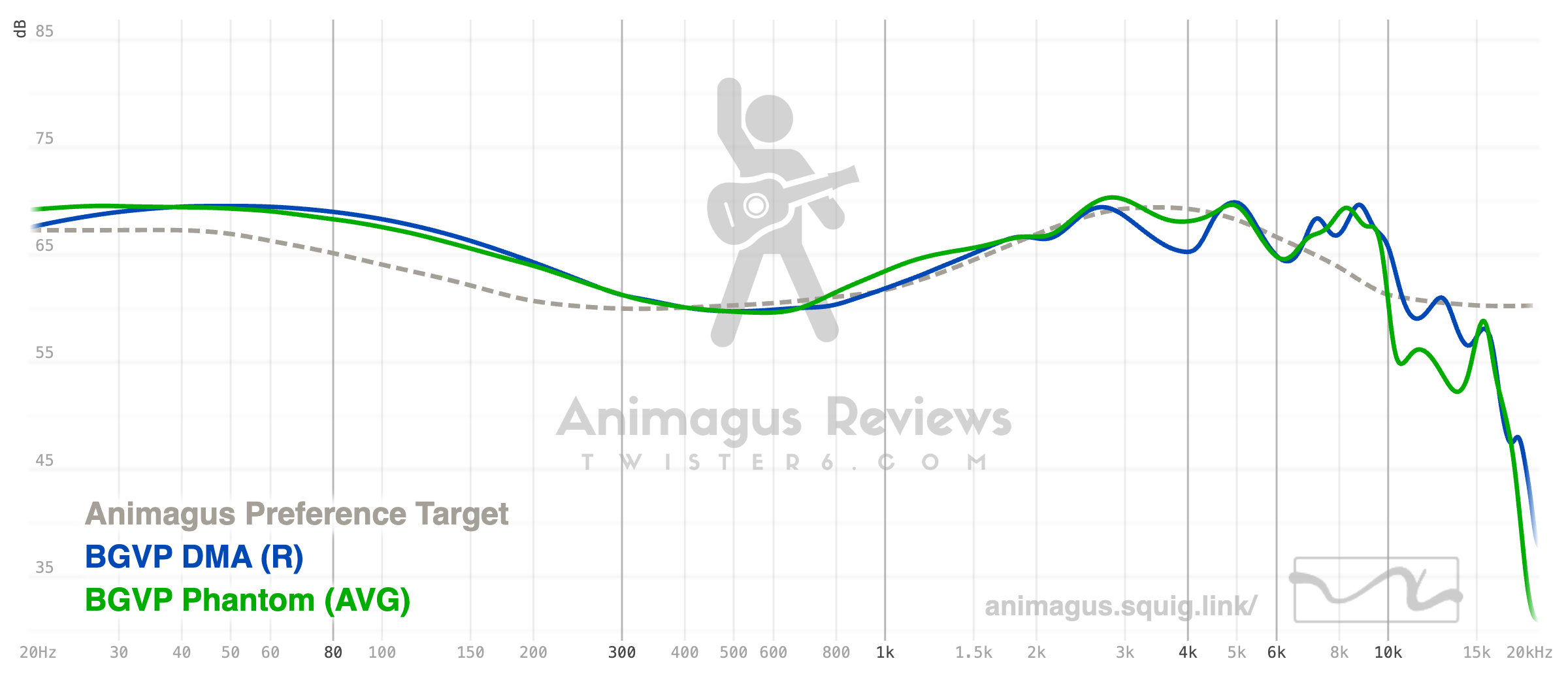
BGVP Phantom (reviewed here) is a quad-brid with 2DD + 2BA + 2EST + 2BCD. There is absolutely no competition when it comes to build quality as Phantom has spectacular looking thermochromic dyed wood shells that change to a lighter colour as soon as it comes in contact with the skin along with well machined lipped metal nozzles that are a definite improvement over the wood nozzles of the DM9. DMA looks mass produced in comparison while the Phantom a boutique high end one. But when it comes to sound, I think I probably prefer the DMA over the Phantom because of its better treble extension. They are mostly tuned in the same ballpark as you can see in the graph above but Phantom has slightly better ear gain without the 4kHz dip and better midrange tonality as a result while the DMA is airier up top. The better sense of airiniess results in DMA’s stage sounding airier and more open along with it giving a clearer image of detail retrieval and depth layering. Phantom does have slightly better midrange tonality.
BGVP NE5.

BGVP’s NE5 (reviewed here) is a tri-brid with 1DD+2BA+2EST and a W-shaped signature but one that goes for a beefier mid-bass boost. Again, I personally prefer DMA’s cleaner tuning in comparison and find it much more vivid and exciting to listen to. It’s cleaner approach to bass boosting makes the bass performance comes across much more technically proficient and with dynamism when the song demands for. NE5 on the other hand feels like has bass going at all times in comparison. NE5 has slightly stronger and more forward definition of instruments but DMA has a more linear approach to upper-midrange and treble transition along with it having slightly more air on top. DMA has better detail retrieval and layering, a wider and deeper soundstage along with much better imaging and a more holographic listening experience. I personally dig the sound aspects of DMA much more than NE5, not just tonally but also for the technical performance but when it comes to build quality, NE5 is significantly superior with its metal shells and swappable metal nozzles.
Yanyin Canon II.
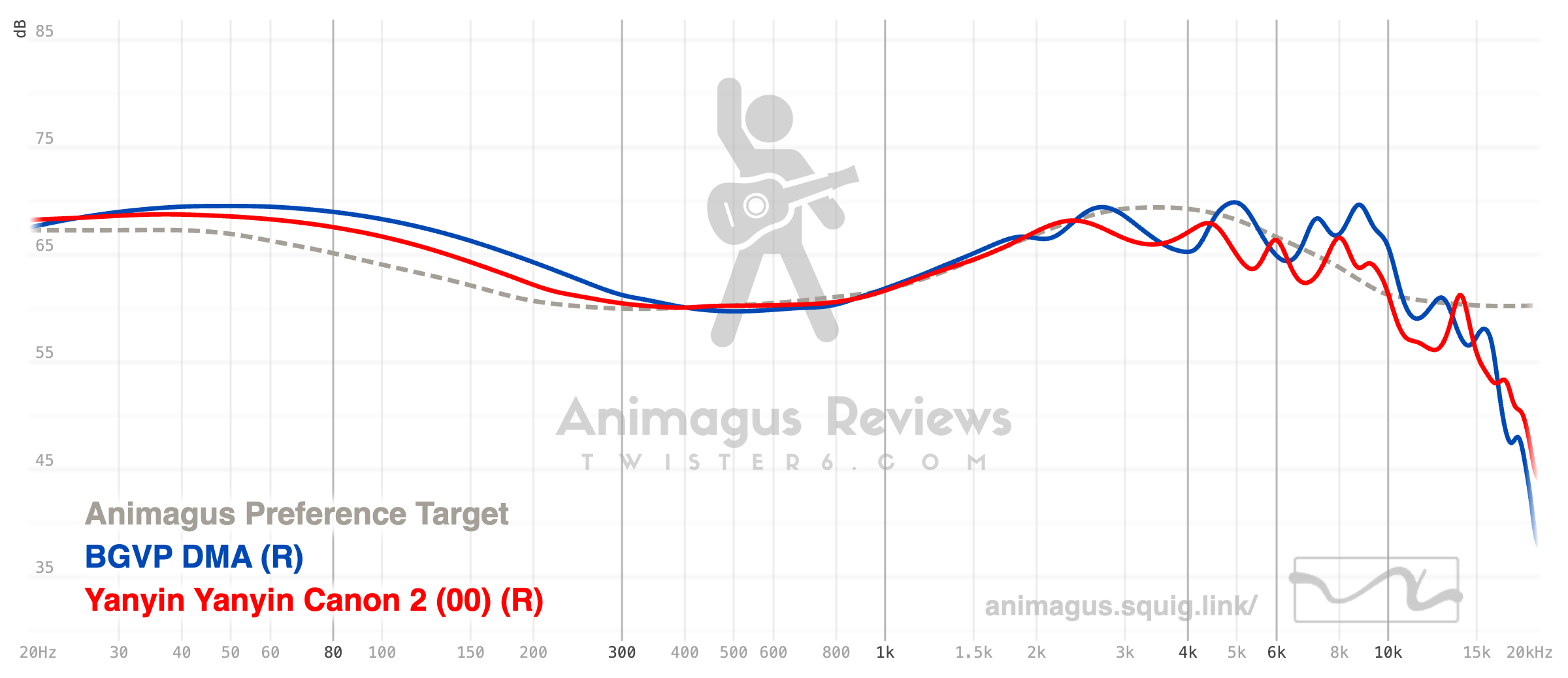
Canon 2 (reviewed here) is a hybrid with 1DD + 4BA and warm leaning W-shaped signature. DMA is a stronger W-shaped signature than the Canon 2 not just in bass but also with a more accurate upper-midrange and sparklier treble. Due to Canon 2’s warmer signature, DMA comes across more vivid and exciting along with having an airier and more open sounding soundstage. DMA also has superior technical performance, not just having a larger and deeper sounding stage but also more precise imagining along with a stronger sense of instrument definition and realism.
These comparisons below have been included based on requests from our readers.
BGVP DM9.
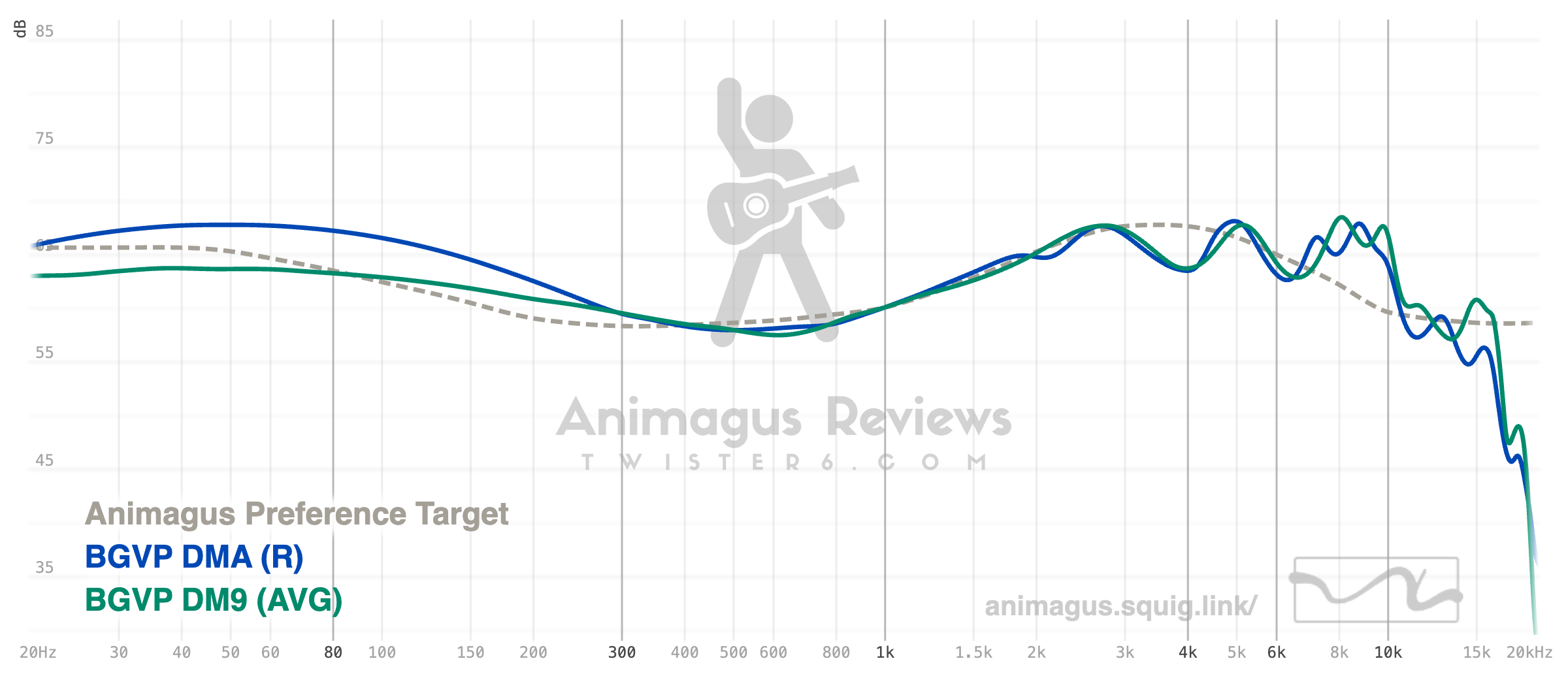
DM9 (reviewed here) is a tri-brid with 1DD + 4BA + 4EST drivers and I quite dug it when I reviewed it last year. It too has Sonion BA (2300 series) + 1 Knowles BA (RAD series) drivers like the DMA, which is mostly why the lower and upper-midrange graph pretty similarly. But it’s the bass and treble variations that bring in so much difference that they sound nothing similar. DM9 is a neutral-bright IEM while the DMA comes across as a W-shaped IEM. DMA has significantly more bass by about 3dB and as a result has much more punch and weight in the bass notes. DM9 on the other hand is airier up top which pushes it as a detail oriented IEM. DM9 does have better micro-detail retrieval but DMA has more holographic imaging and layering along with a more engulfing soundstage, mostly thanks to its Bone Conduction driver.
Oriveti OH700VB.

Oriveti OH700VB (reviewed here) is a hybrid IEM with 1DD+6BA. It has a V-shaped signature with a sub-bass oriented bass boost which results in OH700VB’s bass being more rumble focusses while DMA’s being more punchy and weighty. DMA has stronger, more forward definition of instruments owing to a more neutral ear gain, which results in better tonality as well as clarity of vocals and instruments. Post that, DMA is brighter in lower-treble while OH700VB is airier up top with more audible treble extension. This gives it very different characters, with DMA focussing on making acoustics and cymbals come across more vividly and OH700VB adding the airiness required to balance its warm signature. When it comes to technical performance, even though OH700VB has a very open and airy sounding stage with very good left to right separation, DMA has more vivid and holographic staging, imaging and layering as well as better definition and micro-detail retrieval.
Softears Studio 4.
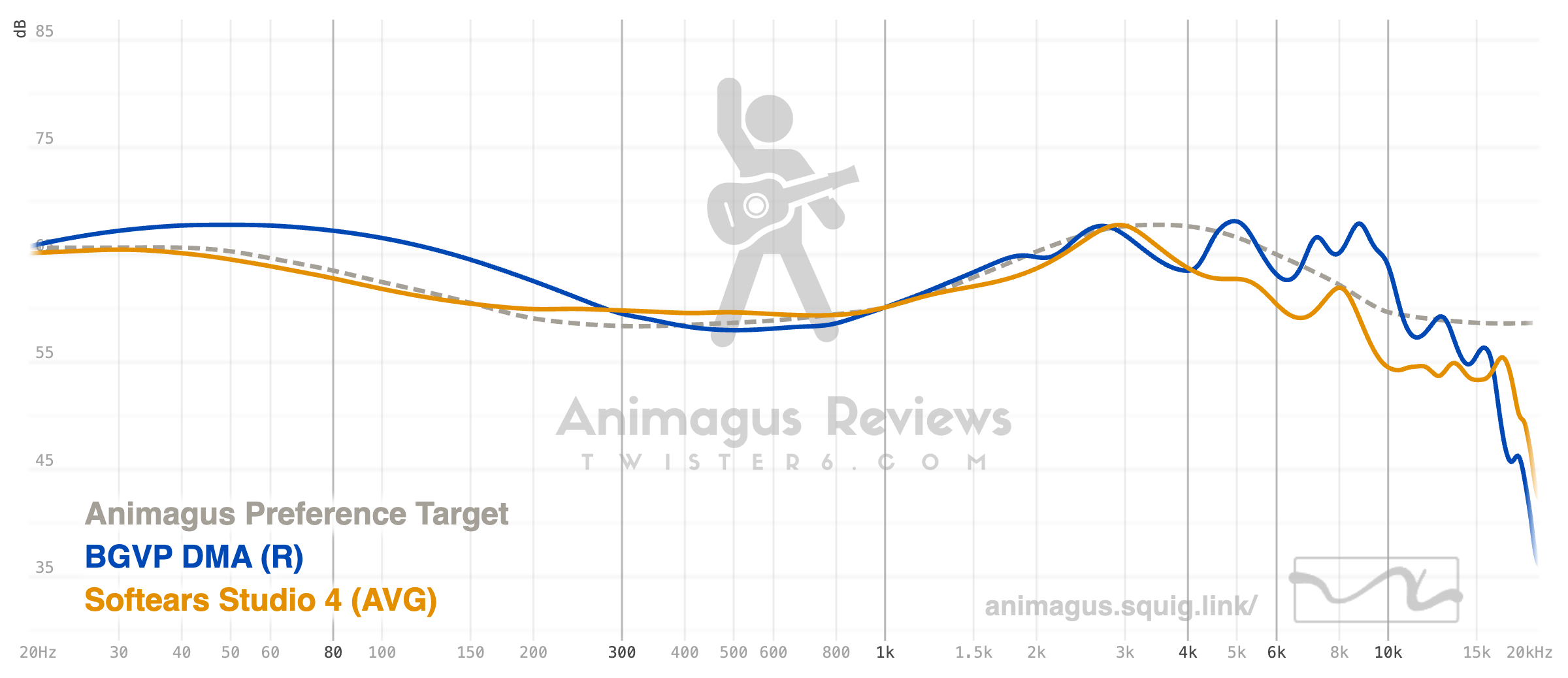
Softears Studio4 (reviewed here) has 4BAs and a warm, sub-bass boosted neutral signature. DMA in comparison comes across as a much more vivid and punch IEM. It not only has more bass quantity but also better bass dynamism. Studio 4 is supposed to be a reference IEM, it’s the DMA that has slightly better ear gain with better forwarness and definition of instruments. DMA is brighter and airier in treble where Studio 4 slopes a little more than required, resulting in a much warmer signature. Even though Studio 4 was tuned to be a reference IEM, it skewed too much towards warmth and it’s DMA tonality that I personally like and prefer, a lot owed to the better ear gain. When it comes to technical performance, DMA is significantly superior with its more open and engulfing soundstage, better imaging as well as depth layering and overall detail retrieval.
Tanchjim Prism.
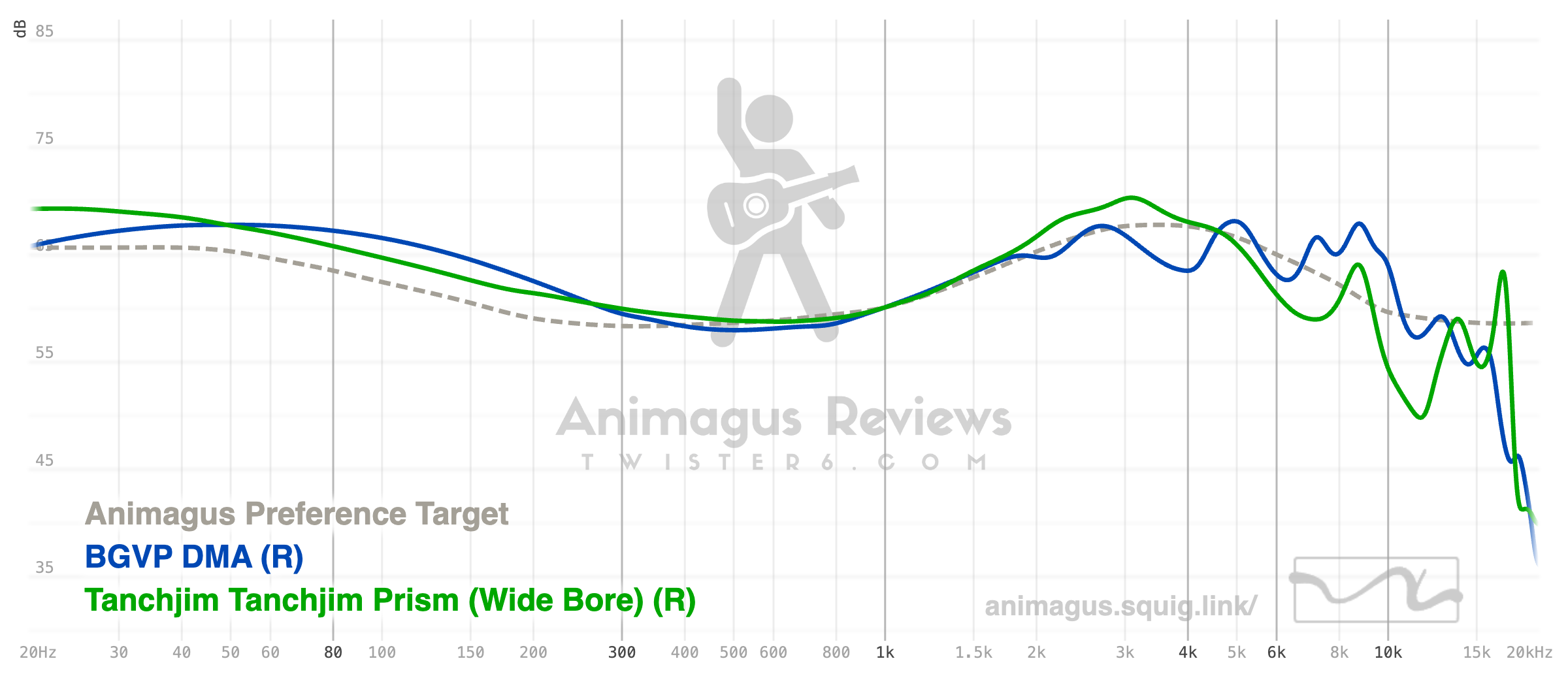
Tanchjim Prism (reviewed here) is a 1DD IEM and even though it might seem like a 1DD IEM is no comparison for a tri-brid, you’d be surprised how much good tuning plays a role in perception. Prism is an energetic W-shaped IEM, but one that is quite a lot of fun. It has more sub-bass rumble, more forward definition of vocals and instruments as well as airier upper-treble which results in it coming across as a very nice vivid and exciting listen but can also lean towards a shouty listen at louder volumes because of the 11dB ear gain peak. Prism has very good L-R separation as well as depth layering, but it starts loosing the battle when you bring in a well tuned Bone Conduction tri-brid that can micro-tune different frequency bands more precisely, along with the holographic quality a Bone Conduction driver tends to bring. DMA has more even treble and slightly less forward upper-midrange, both of which make the DMA come across better balanced tonally and along with the extra mid-bass that balances the lower-treble boosting very well, it comes across a more even and exciting listen even at slightly louder volumes, where the Prism gets shouty. Adding on that, DMA has a more open and deeper sounding stage with vivid imaging and depth layering that makes it a much more technically capable IEM in comparison.
Conclusion.
IMO, DMA is one of the most impressive IEMs to come from BGVP. It not only has impressive driver tech using Sonion and Knowles brand BAs but also the dual Sonion Bone Conduction driver, which is unheard of at the $300 price point, in fact anywhere under BGVP’s own Phantom priced at around $900. DMA has a highly enjoyable W-shaped signature with what can be called a more holographic listening experience in the world of IEMs and their staging, maybe thanks to the Sonion BCD doing its share of the work well. If only they’d put all this tech into one of their highly attractive dyed wood shells instead of the 3D printed HeyGears shell and charged an extra $100 for it, it would’ve been an even more killer proposition intertwining boutique looks with high quality technical performance. But well, this is my wishful thinking as I’m a sucker for well done wood shells.
All in all, DMA is a highly attractive proposition tonally, for its technical performance as well as accessories like the nice stock cable with swappable jack terminations, and with all of this added together, I see DMA punching significantly above its weight class. For all the people who’ve been waiting to try BCD hybrids/tribrids/quadbrids but couldn’t afford them as most of them are priced exorbitantly, try the DMA. This one’s a keeper!
Gear used for testing and review.
- DAPs – iBasso DX300
- Phone – OnePlus 7 Pro + Tanchjim Space Dongle | iBasso DC04 Pro
Artists I like and listen to.
- Rock – Foo Fighters, Linkin Park, Switchfoot, Imagine Dragons, Daughtry, Green Day, MuteMath, X Ambassadors, Dave Matthews Band, Vertical Horizon, Our Lady Peace, Lifehouse, Fall Out Boy, Breaking Benjamin, Muse, ACDC, Audioslave, Rage Against the Machine, Biffy Clyro, I Am Giant, Normandie, Paramore, Slash & Guns N Roses, 3 Doors Down.
- Pop Rock – John Mayer, Coldplay, Paul McCartney, James Bay, Hunter Hayes, Niall Horan, Keith Urban, The Bros Landreth, Bryan Adams.
- Progressive Rock/Metal – Porcupine Tree/Steven Wilson, Karnivool, Tool, Dead Letter Circus, Periphery, Lamb of God.
- Pop/Soft Rock – Ed Sheeran, Adele, Taylor Swift, OneRepublic, The Script, Gavin James, Magic Man, Maroon 5, Bruno Mars, Charlie Puth, Dua Lipa, The Weeknd, Oasis, Panic! At the Disco, TwentyOne Pilots.
- EDM – Chainsmokers, Zedd.

 Twister6 Reviews
One thought on “BGVP DMA”