
Sound Analysis.
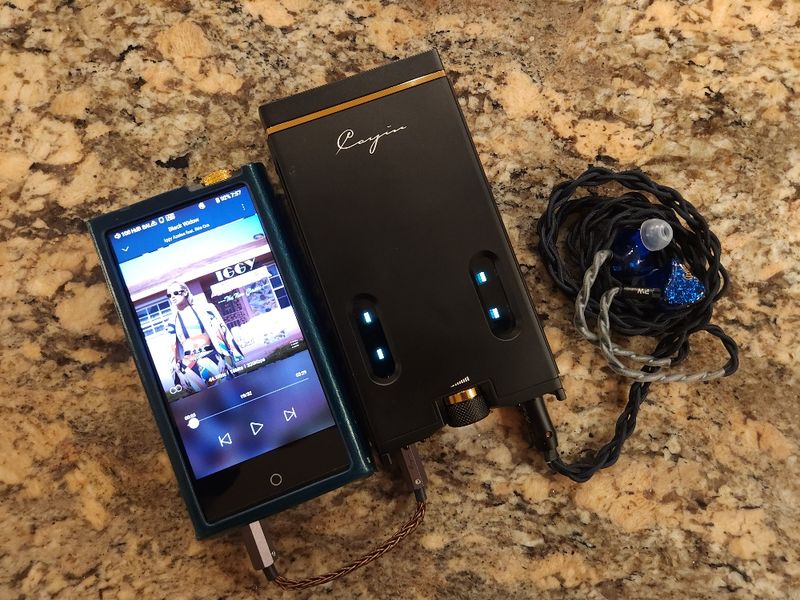
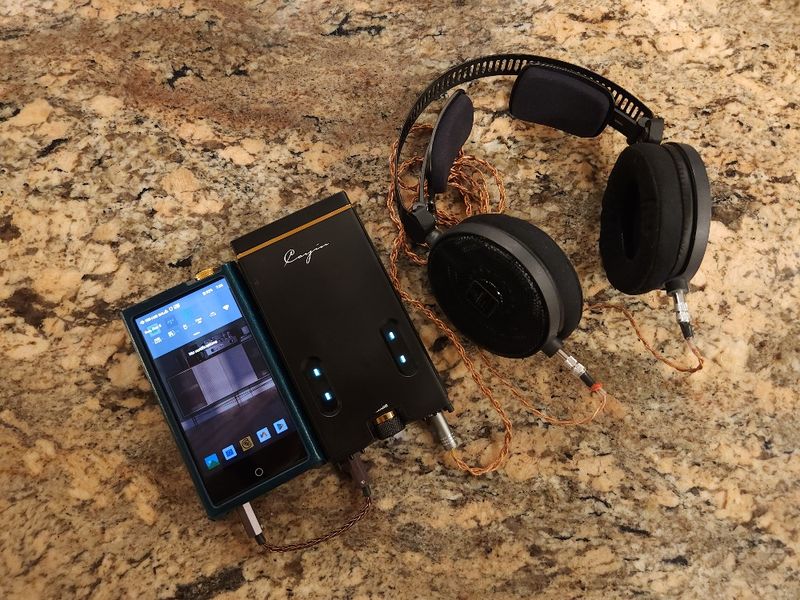
I analyzed C9ii sound with Aroma Jewel and Audio-Technica ATH-R70x while playing a variety of test tracks, such as Agnes Obel’s “The Curse”, Sandro Cavazza’s “So much Better” (Avicii remix), C-Bool’s “Never Go away”, Ed Sheeran “Shape of you”, Alan Walker “Darkside”, Galantis “Hunter”, Iggy Azalea “Black widow”, Indila “Boite en argent”, Dua Lipa “Love Again”, Counting Crows “Big yellow taxi”, Bob Marley “Jamming”, David Elias “Vision of her”, and Michael Jackson “Dirty Diana”. I let C9ii burn in for about 150 hours before starting my sound analysis.
Similar to my DAP reviews, I prefer to describe amplifier sound based on comparisons and pair-ups, but not in the same way as DAPs. People buy amplifiers to replace the internal amp stage of their DAPs with an external one through Line Out connection. In the follow-up sections, I will bring up a lot of pair-up and comparison examples to give you an idea of what C9ii brings to the sound chain.
This sound analysis section usually serves as a summary of my findings in the follow-up sections. And across all my comparisons I found a common improvement of soundstage being more expanded, both in stereo separation and improved 3D imaging. Also, I found the sound of C9ii to have a richer tube texture, warmer resolving tonality with improved micro-details, and noticeably bigger soundstage expansion as I just mentioned. If you would like to, there are plenty of options here to reduce the warmth, add more transparency and less coloration, and make the sound more neutral and resolving, but I preferred its “max” tube coloration with a more natural fuller body sound, thanks to NuTubes, though a solid-state amp also adds some organic coloring, but not to the same extent as tubes.
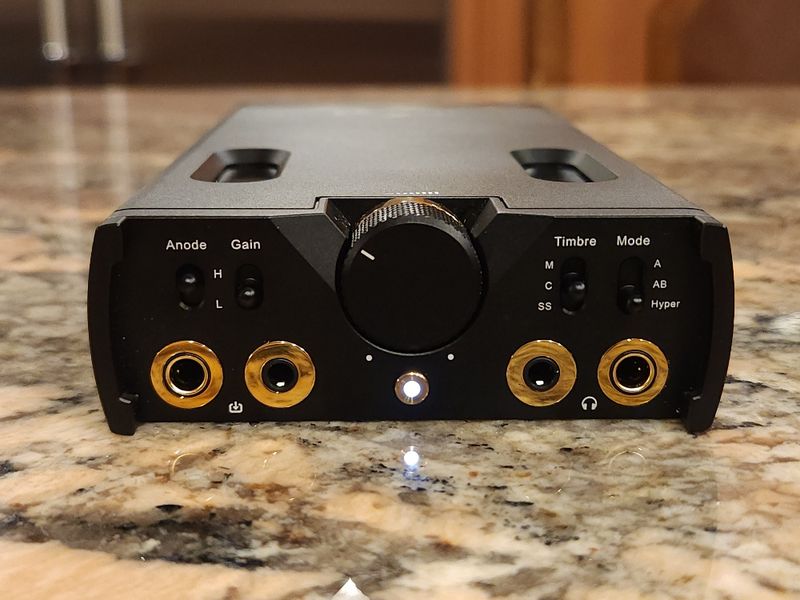
The flexibility of the C9ii design gives you many different sound shaping options. I was already familiar with Classic and Modern sound NuTube tuning from my time with N30LE and N3Ultra. The Modern sound option utilizes a large-loop negative feedback system, similar to the original C9 where you only had one Tube timbre sound mode. The Classic sound option doesn’t have this large-loop negative feedback, with each stage operating independently through local feedback, similar to the N8 DAP design. The Hyper amp model also came from N30LE where I found it to sound like an optimized Class A that works amazing with the Classic timbre option.
Classic/Anode H w/mode Class A vs Class AB vs Hyper – typical of Class A vs AB, I hear a richer, warmer tonality going from AB to A, with slower attack and shorter decay of notes. When switching to Hyper, it retains the same rich, warm tonality, but it gives the sound a faster presentation, closer to AB. In a way, I hear hyper as having Class A tonality with Class AB technical performance.
As already mentioned, C9ii inherited the best tech from N8, N8ii, N30LE, and C9. But on top of that, it adds more sound-shaping features. One of the big ones is the High/Low adjustable Anode (plate) voltage which affects the timbre of vacuum tubes by altering its operation state to give you further sound refinement. Also, I thought it was clever how the intensity of the NuTube light slightly changes when you switch between High/Low Anode (plate) voltage.
Modern/Hyper w/Anode L->H – you can hear more smoothness in sound, including a more laidback presentation. Going back from H->L gives the sound a bit more speed with a touch shorter decay of notes and a bit less fullness.
Classic/Hyper w/Anode L->H – in classic/hyper mode the sound is richer, fuller, and more analog, and once you switch to Anode H there is more warmth added and the attack of notes is longer, creating a more relaxed presentation of the sound. Going back to Anode L doesn’t make sound faster, it is still laidback and rich in tonality, but it gives it more speed, and better articulation, of course, depending on the pair-up synergy or the type of music you are playing.
Also, when switching between SS and Tubes (Classic or Modern), the difference in tonality reminded me of switching between Class AB and Class A. SS timbre gives you a faster and tighter sound, with shorter and faster attack of the notes, as well as less coloring. Tube timbre, especially Classic, gives you a smoother and more analog tonality, also with slightly laidback and less aggressive presentation. The sound with Tubes still packs the punch, especially when you use it in combination with either Class AB or Hyper. As I mentioned already, that is the beauty of C9ii, you have lots of different options to customize your sound.
Furthermore, C9ii also has a separate Negative FeedBack (NFB) operation mode, as part of the discrete headphone amp circuit, which you can independently enable/disable to change the sound characteristics from more neutral and detailed hi-res (w/NFB on) to more full-bodied and textured analog tonality (w/NFB off). One interesting thing to note, when dealing with sensitive IEMs, C9 has a lot more hissing, while C9ii with NFB on and either in Class A or AB has a bit less hissing.
I’m sure some could be wondering about a 3.5mm vs 4.4mm comparison. Here, I found tonality to be the same under consideration of using either SS or Tubes, Class A or Class AB, or Hyper. But two noticeable differences were the soundstage width, with BAL output sounding wider and more holographic, and the other one with BAL output having a deeper blacker background.
Last, but not least, C9ii comes with a Samsung 35E (18650, 3500mAh 8A) battery which I thought would be interesting to replace with C9’s original Sony/Murata VTC6 (18650, 3000mAh 15A) battery. I did a similar experiment when I was testing C9 and heard some sound changes with other batteries. After going back and forth multiple times, I found the sound with Sony batteries to be a little more revealing in mids with a touch more sparkle in treble, while with Samsung sound is a bit smoother in mids with a touch less sparkle. It’s not a big change between these two, but if you listen closer you can hear it. Just please keep in mind, that once you remove the tray and replace the battery, C9ii enters the overprotection mode and will require you to briefly connect the unit to a charger for the amp to turn back on.
Comparison.
I had a chance to borrow N30LE from Musicteck for a few days, and I decided to compare C9ii w/N30LE vs N30LE directly using Jewel iems. After all, N30LE was a very limited-edition release which you can’t get anymore. So, I thought I would start my comparison section by matching and analyzing similar settings between the C9ii amp and the N30LE amp section.
C9ii (LG, Modern, Class AB, Anode High) vs N30LE (HG, Modern, Class AB, P+) – similar imaging between the two while with C9ii I hear a wider soundstage expansion, spreading the sound further apart between L/R. Also, C9ii has more warmth in the mids.
C9ii (LG, Classic, Class AB, Anode High) vs N30LE (HG, Classic, Class AB, P+) – the soundstage is still wider with C9ii and I hear more texture and warmth in mids. Also, I hear the bass with C9ii having more weight (in sub-bass) and tighter and stronger punch in mid-bass.
C9ii (LG, Modern, Class A, Anode High) vs N30LE (HG, Modern, Class A, P+) – the same holographic imaging while C9ii spreads the sound wider in the left/right direction. Also, C9ii has a little smoother and more textured tonality in mids and a bit more weight in bass. N30LE is not bright, but C9ii is just smoother, warmer, and more textured while having a very similar level of detail retrieval.
C9ii (LG, Classic, Class A, Anode High) vs N30LE (HG, Classic, Class A, P+) – Classic gives N30LE a bit more texture and slightly wider soundstage expansion, but I still hear C9ii to be a bit wider in soundstage width and having more body/warmth in mids. Also, the bass with C9ii doesn’t just have a bit more weight but also a tighter punch.
C9ii (LG, Classic, Hyper, Anode High) vs N30LE (HG, Classic, Hyper) – Hyper mode in N30LE brings its sound performance closer to C9ii, but it is not exactly the same. I still hear the C9ii soundstage spread wider, especially noticeable in some percussion sounds and how they almost wrap around and behind you. N30LE Hyper mode gives the bass a similar punch, but C9ii still scales up the weight of the bass, especially down at the sub-bass rumble. With mids, both have a similar analog texture, but C9ii adds more warmth and a bit more body without compromising on the retrieval of details.
If you are after a textured analog tonality, both of these setups can deliver their best with C9ii (Classic, Hyper, Anode High) and N30LE (Classic, Hyper), but C9ii scales it up one level higher with more body/warmth in mids, deeper sub-bass, and even wider soundstage.

Here are a few other comparisons of C9ii with other portable amps using an N30LE source and Jewel iems.
C9ii (LG, Classic, Class Hyper, Anode High) vs iBasso PB5 – Both of these amps yield a very similar big open soundstage expansion with a holographic level of imaging. The difference is in the tonality of mids. PB5 is a warmer tonality amp, while C9ii in addition to warm coloring also adds smoothness, making the sound more analog and textured. I was switching between Class A and Class AB of C9ii, trying to figure out where they sound closer, and Class A of C9ii adds more sweetness to the sound, while Hyper mode gave it a little more speed, and more energy while still keeping it smooth and analog. Both are fine amps, though C9ii has a lot more sound-shaping options, plus an easier way to remove/replace the battery and track the battery capacity. However, PB5 is a bit smaller and lighter.
C9ii (HG, Classic, Hyper, Anode High) vs L&P EA4 (HG, ILA, Class A, +15V) – Both amps offer a lot of sound shaping options, making it a very satisfying experience when you are put in control of finetuning the sound exactly how you want it. I had to play with different combinations to get it to a setting that was closer in sound tuning. Both offer a big, expanded soundstage with holographic imaging. With tonality, I also hear a more analog smooth textured sound. I had to go back and forth many times to capture subtle differences. What I do hear is EA4 offering a little more air up top and between the layers of the sound while C9ii offers more analog sweetness that takes the edge of the sound, perhaps with a bit more tube distortion, I guess. Both are great amps, though there is a price difference with EA4 being $500 higher, but overall, I think it will come done to more portability vs transportability. Despite the C9ii being a little bigger than its C9 predecessor, it is still more portable/transportable, and you can easily replace the batteries on the go. EA4 is transportable/desktop-portable with a bigger footprint and the volume wheel which is a bit easier to bump while moving the amp around.


Page 4 – Pair up with IEMs, Headphones, DAPs, and Conclusion.

 Twister6 Reviews
I am using a Campfire Audio Stellar Horizon with C9II and I can’t underwrite your comments with Solaris. Also no hiss so probably very different of Solaris
LikeLike
Try to listen to first 30sec of something like Agnes Obel “the Curse”. In instrumental songs or with less busy arrangement you will hear a strong waterfall hissing. It’s typical of many Campfire iems, different versions of Andro or Solaris, or other sensitive iems like VE VE10. Of course, people have different ear sensitivity, some might hear it more or less pronounced. In ‘busy’ arrangement tracks with lots of instruments it could get lost as well in comparison to classical, instrumental, vocal tracks. Many of my readers who have tinnitus also can’t hear hissing due to their own hearing “noise floor”. But in general, many (but not all) Campfire iems do hiss with various sources. And if you don’t hear it, then nothing for you to worry about 😉
LikeLike
Also, I don’t have Stellar Horizon, it was reviewed by my other contributor, so maybe they did change something?
LikeLike
Hello,
Is Cayin 9ii comparable to Mass Kobo 475?
Thank you very much for your high quality reviews!
LikeLike
I only had 475 on a short loan over a year ago, so no way to do a/b comparison. But by memory, 475 was a lot more neutral with hardly any coloring. C9ii is all about lots of different sound shaping options to color your sound instead.
LikeLiked by 1 person
Does that mean that no setting in Cayin 9ii can give a neutral sound?
LikeLike
you can get closer using Solid State timbre instead of dual NuTubes, noticeably less coloring. But it will not be identical to 475.
C9ii has a lot of flexibility to adjust the output tonality.
LikeLike