
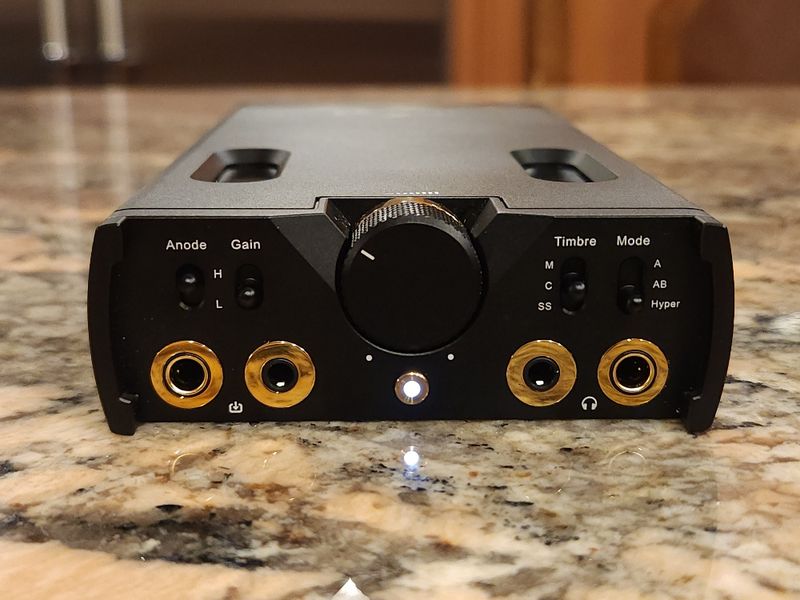
Pair up – IEMs/Headphones.
As already mentioned, I was only able to borrow N30LE for a few days but didn’t get a chance to do a pair-up comparison using N30LE vs N30LE/C9ii. Thus, for my pair-up testing, I decided to compare various IEMs and headphones between being directly connected to N8ii (in different modes) vs N8ii LO connected to C9ii with Anode H, Classic Tube, and Hyper mode. Besides, if you think about it, N30LE was a limited-edition release, priced almost as much as you can get now N8ii + C9ii in recent Black Friday sales.
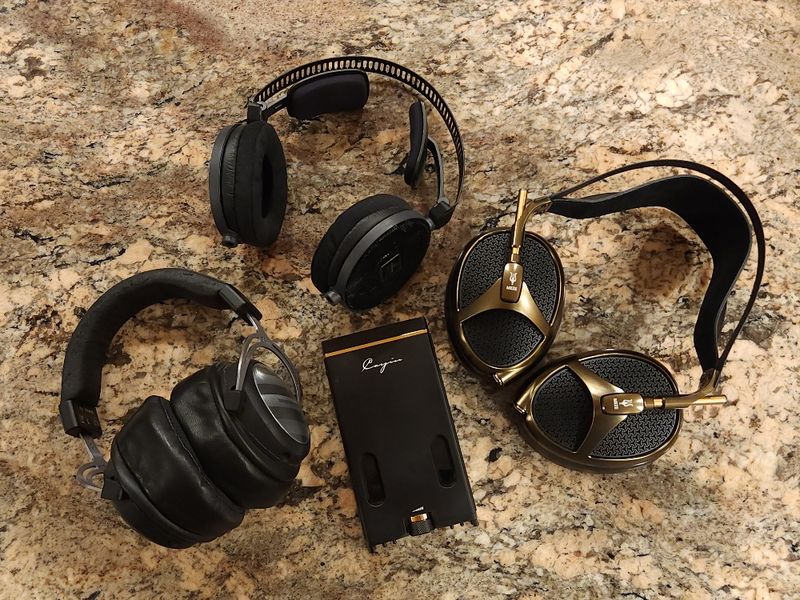
Pair up with Headphones.
Audio-Technica ATH-R70x – R70x are open-back 470ohm headphones and they do need to be pushed harder to drive them to their full potential. N8ii with P/Class A gives R70x a warmer smoother natural tonality with a softer bass response and more intimate sound presentation. When switching N8ii to P+ and Class AB, I hear more punch in the bass, with the tonality remaining natural, but having less coloring and more transparency in mids; overall the sound gains more speed and less coloring. When listening to N8ii LO + C9ii (Anode H, Classic tube, Hyper mode), it sounds like a combination of N8ii P+/Class AB where the sound has a bit more speed, articulation, precision, and P/Class A where you have more analog body in the sound. But with C9ii in Classic tube mode, you get more musicality in mids and more tube-like distortion which gives the vocals a sweet warm tonality. And the Hyper mode gives it more speed, and further improvement in retrieval of details, giving the sound its natural detailed smoothness. Another thing to note, the soundstage expansion with C9ii is a lot more holographic and open, driving R70x to its full open-back potential.
MEZE Audio Empyrean – another pair of open-back cans, and these planar magnetic headphones do sound very open with a more precise 3D holographic imaging with C9ii connected to N8ii vs connected directly to N8ii. Directly from N8ii with P+/Class AB I do hear a deep sub-bass rumble with a little extra weight and a faster articulate mid-bass punch. Mids also have a natural detailed tonality with less coloring. When I switch N8ii to P/Class A, mids gain warmer coloring and the bass loses some of the punch. With N8ii I preferred Empyrean with P+/Class AB. But when adding C9ii (Anode H, Classic tube, Hyper mode) into the equation, similar to other pair-ups I get a faster articulate mid-bass punch, still deep sub-bass rumble, and I gain more analog organic warmth in mids without the sound being veil or muddy. That was one of my favorite transformations, gaining more tubey warmth without compromising the speed or the retrieval of the details when you are in Classic/Hyper mode.
Beyerdynamic T5p 2nd gen – With either C9ii or N8ii, T5p2 has a natural smooth balanced sound with extra velvety bass texture, natural organic mids/vocals, and just enough treble sparkle to maintain natural clarity and resolution. Both give T5p2 a wide soundstage expansion, but C9ii pushes imaging to a more holographic level. But there are still changes that are very consistent with other pair-ups. N8ii with P+/Class AB gives the bass more punch and clear articulation, but also mids have a bit less analog coloring which gives them more clarity. When you switch N8ii to P/Class A, the bass is softer and the mids gain more warmth. Then, once you connect C9ii (Classic/Hyper), you get the best of both worlds and take it to the next level, with punchy articulate bass that still has this velvety texture and more organic analog textured mids with plenty of clarity and still being quite resolving.
Pair up with IEMs.
Aroma Jewel w/FT – The soundstage is wide open and expanded in all 3 directions with close-to holographic imaging when connected directly to N8ii (in P+/Class AB). I also enjoy how Jewel’s mids sound with the P/Class A setting of N8ii, giving them fuller body with warmer textured tonality, and clear detailed treble, but the bass is slower, loses its punch, and the imaging becomes more center-focused. In P+/Class AB the imaging is more holographic, and bass and the overall sound is faster and punchier, but mids become more revealing and lose that analog sweetness. The magic happens once you use C9ii with Classic Tubes in Hyper mode where the sound has more punch, more speed, and better articulation of details, yet it still gives you that organic mid-range sweetness which is very addictive.
UM Mentor Multiverse – Starting with the soundstage expansion, I do hear C9ii being a bit wider and a little more holographic than the direct N8ii connection, but it is not too far off. The sound signature is also not too far between these two, with MM having a balanced W-shaped sound sig with a natural and a bit more revealing detailed tonality. But there are some variations when it comes to treble with either using N8ii directly or adding C9ii into the sound chain. With N8ii being used directly, P+/Class AB gives treble a bit more energy with crisper details. If you want a smoother treble tonality, you will have to switch to P/Class A which relaxes the treble. I thought with C9ii I would go for my usual Anode H, Classic Tube, and Hyper mode, but found it still gives me a bit more energy in treble. Thus, with C9ii I switched to Class A to give me more warmth which fixed that. But to be honest, in this pair-up, I still preferred a direct N8ii with P/Class A setting to give me the most melodic presentation of the sound with MM.
FiR Audio RN6 – Here I found a huge holographic soundstage expansion with either a direct N8ii connection or using a C9ii amp connected to N8ii LO. But with C9ii, it felt like the soundstage was not just wide/tall/deep but wrapping around and behind you. Connected directly to N8ii, RN6 has a balanced signature with a more elevated bass impact which skews the tuning closer to L-shaped. In P/Class A mode the mids were very warm and less detailed, a bit too thick for my taste, even the tuning of RN6 treble didn’t help here with the improvement of detail retrieval. Switching N8ii to P+/Class AB had a noticeable improvement in bass control, being tighter, with shorter decay and mids having improved clarity and retrieval of details, though vocals lost a bit of that analog texture. Switching to C9ii with Class/Hyper mode was a jaw-dropping experience with RN6 where bass was tight and punchy, still very powerful with deep extension and strong impact. But it was the mids where I heard the analog textured sweetness and still excellent retrieval of details with a perfect balance of mids and treble.
Campfire Audio Solaris 2020 – Since this is Campfire Audio iem, the first question will always be, does it hiss? There is hardly any with N8ii, while you will hear it with C9ii. But unlike the original C9 where the hissing with sensitive IEMs like Solaris was very loud, with C9ii when NFB is turned on, it has a slight reduction. But if you want a pitch-black background with your sensitive IEMs, C9ii might not be the best idea, and you should stick with using N8ii directly. The sound of Solaris here has a balanced punchy signature with a brighter more revealing tonality, fast well-controlled bass punch, clear detailed mids, and revealing treble. Similar to MM, with N8ii connected directly, I preferred P/Class A where the tonality of mids had more musicality, and the treble was a bit smoother vs P+/Class AB where the treble was brighter and crisper. C9ii Classic/Hyper mode was a no-go for me because of a crisp over-energetic treble response. Even switching to Class A with C9ii didn’t help treble as much, though it relaxed it just a bit. This is another example of where, depending on your sound preference, I found a direct connection to N8ii with P/Class A mode to give me the more natural upper mids and treble tonality of Solaris.

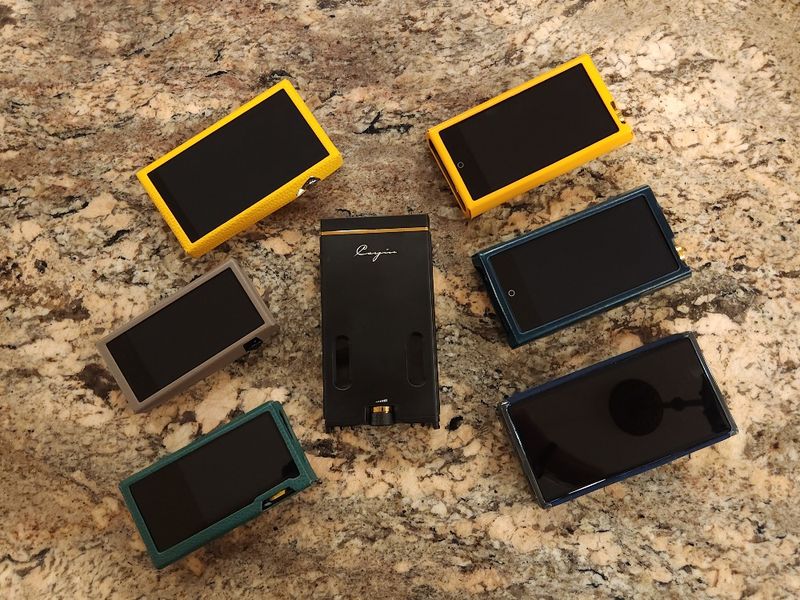
Pair Up – DAPs.
Here I tested various DAPs directly and with C9ii using Jewel to capture the difference in sound which has to do with the difference between DAP’s internal amp vs C9ii external amp. Of course, in many cases, adding the external amp will boost the output power which some of the DAPs are lacking. Plus, the amp section of any DAP will be a contributing factor to a battery drain, so you are saving battery by utilizing only the DAC LO output from your audio player. And, in general, an external amp adds a different coloring to the sound, especially an amp like C9ii where you have so many different sound shaping options which becomes like using multiple amplifier modules in one. In my testing below, I was using C9ii in Classic Tube with Class A setting, to add more coloring impact to the sound. Here are my brief pair-up notes.
Cayin N8ii (P+/Class AB) vs C9ii – with N8ii I hear a balanced sound signature with a clear natural detailed tonality; deep punchy moderate quantity bass, clear detailed mids, and natural sparkly treble. C9ii adds more texture to the sub-bass, keeping the same mid-bass punch. It also adds more organic textured warmth to the mids. I also hear more holographic imaging.
Cayin N7 (DSD512 oversampling, Class A) vs C9ii – with N7 I hear a balanced sound sig with a clear natural smoother tonality. Connecting C9ii from LO of N7, I had to switch DAC oversampling to DSD256 because treble had a bit too much energy for me. The sound w/C9ii gains more clarity and improved layering, while still sounding natural and smooth. The improvement in the soundstage imaging is also quite noticeable.
A&K SP3000T (Hybrid, high current) vs C9ii – tonality is not too far off, though with C9ii the sound is a bit more detailed in the mids. Also, I noticed an improvement in soundstage imaging with C9ii. But in reality, it’s not a night and day difference here, just a different flavor of tube texture.
A&K SP3000M vs C9ii – unlike SP3000T which already has tubes, SP3000M is solid state DAP like the original SP3000, thus this will apply to SP3000 as well. Here, adding C9ii makes a noticeable difference with more texture in the sub-bass and smoother fuller body analog tonality mids. Also, the soundstage imaging has improved.
L&P P6 Pro vs C9ii – P6 Pro has a smooth natural analog tonality with Jewel, to begin with. Adding C9ii gives the sub-bass more rumble, quite noticeably too, smoother texture in the mids, and more expanded soundstage with holographic imaging.
Hiby R8ii (Class A) vs C9ii – with R8ii I hear a clear detailed Jewel tonality with deep punchy bass, natural mids, and crisper treble. Adding C9ii makes Jewel’s bass a bit more laidback, gives its mids smoother textured tonality, and expands the soundstage and imaging a little more.
Conclusion.
Going back to my review of C9, the title of that write-up was a “portable amp with everything but the kitchen sink”. The new C9ii design took it to the next level with even more sound-shaping options, such as:
- Timbre: 3 options (Classic Tube, Modern Tube, Solid-state)
- Amplification Mode: 3 options (Class A, Class AB, Hyper)
- Anode: 2 options (High, Low)
- NFB (Negative Feedback): 2 options (On/Off)
- Input mode: 2 options (Line, Pre)
- Gain: High and Low setting
As a result, C9ii became a “portable amp with everything including the kitchen sink”, giving us even more tools to enhance the sound quality and come up with new ways of improving the pair-up synergy between various DAPs and IEMs/headphones. I know, some have a misconception of thinking that portable amps are just to boost the power of the source when driving demanding headphones. But there is so much more to it when it comes to IEMs as well.
As I mentioned before, the two main audio building blocks of any DAP are the DAC and the amplifier section, and manufacturers have to deal with a limited board space which puts a constraint on the design of the amp part. That is one of the reasons why audiophiles consider external amps to enhance and fine-tune the source. With so many different sound-shaping options, C9ii presents itself like a collection of multiple amps with a solid state and different timbre tube outputs, Class A, AB, or ultimate Hyper amp modes, high/low Anode (plate) voltage setting, NFB option, and Line and Preamp operation. Plus, it packs a high output power and a replaceable battery tray with an easy-release mechanism. At $2.4k, C9ii is pricier than C9, but it also offers more, making it a valuable investment. DAPs come and go, but a portable amp like C9ii should last you a long time to enhance any source you pair it up with.

 Twister6 Reviews
I am using a Campfire Audio Stellar Horizon with C9II and I can’t underwrite your comments with Solaris. Also no hiss so probably very different of Solaris
LikeLike
Try to listen to first 30sec of something like Agnes Obel “the Curse”. In instrumental songs or with less busy arrangement you will hear a strong waterfall hissing. It’s typical of many Campfire iems, different versions of Andro or Solaris, or other sensitive iems like VE VE10. Of course, people have different ear sensitivity, some might hear it more or less pronounced. In ‘busy’ arrangement tracks with lots of instruments it could get lost as well in comparison to classical, instrumental, vocal tracks. Many of my readers who have tinnitus also can’t hear hissing due to their own hearing “noise floor”. But in general, many (but not all) Campfire iems do hiss with various sources. And if you don’t hear it, then nothing for you to worry about 😉
LikeLike
Also, I don’t have Stellar Horizon, it was reviewed by my other contributor, so maybe they did change something?
LikeLike
Hello,
Is Cayin 9ii comparable to Mass Kobo 475?
Thank you very much for your high quality reviews!
LikeLike
I only had 475 on a short loan over a year ago, so no way to do a/b comparison. But by memory, 475 was a lot more neutral with hardly any coloring. C9ii is all about lots of different sound shaping options to color your sound instead.
LikeLiked by 1 person
Does that mean that no setting in Cayin 9ii can give a neutral sound?
LikeLike
you can get closer using Solid State timbre instead of dual NuTubes, noticeably less coloring. But it will not be identical to 475.
C9ii has a lot of flexibility to adjust the output tonality.
LikeLike