

The nicest BGVP yet?
PROS: Attractive dyed wood shells, very comfortable and snug fitting semi-custom shells, well tuned exciting-engaging sound signature with very good technical performance, engulfing soundstage, versatility with tip rolling, very premium stock cable, good variety in stock ear tips, VFM.
CONS: The stock cable doesn’t have swappable jacks like other BGVP IEMs, I would’ve liked a bit more air up top as a personal preference, nothing significant for its asking price otherwise.
About BGVP.
BGVP is based out of Dongguan, China. They manufacture and sell a wide range of products like in-ear monitors, earbuds, cables, cases, etc. They initially came into prominence with successful products like DMG and DM6. Since then they’ve launched a wide range of products with us having reviewed their EST hybrids EST12 and EST8, ArtMagic V12, DM7, DM8, ArtMagic VG4, ArtMagic DH3, NE5, Melody, DM9, Phantom and DMA here on our website.
Links – BGVP Official AE Store ($1099) | MusicTeck USA

Introduction.
The BGVP Phantom captured the attention of audiophiles for its ambitious driver configuration and visually stunning design. As a follow-up to its predecessors, the Phantom SE aims to set a new benchmark in the highly competitive IEM market. But does it live up to its promises? Let’s dive deep.
For people who missed what the BGVP Phantom SE is about, here’re the details –
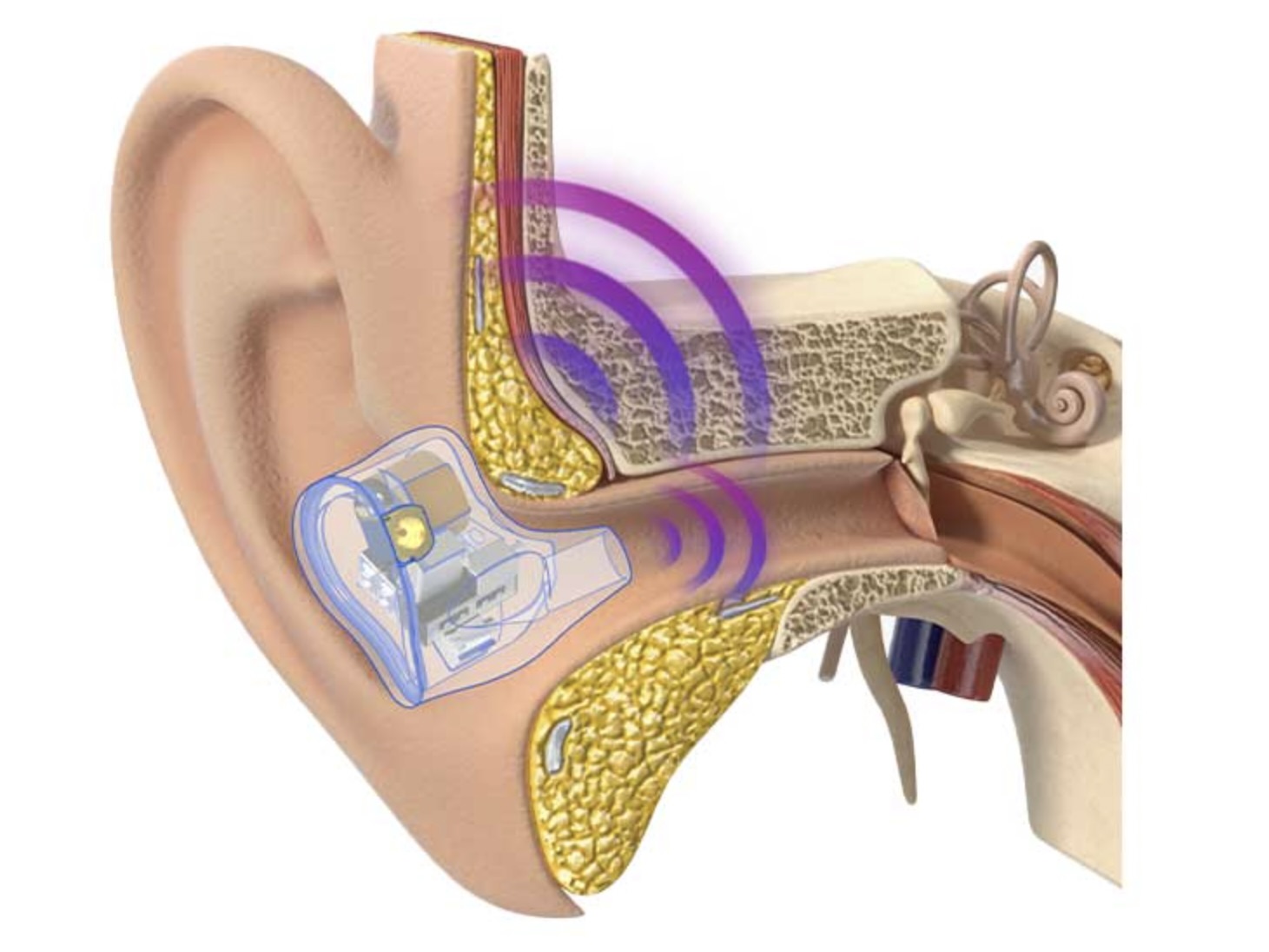
Most of the BCD IEMs in the past have all used a different type of BCD driver and implemented them differently in their IEMs with a combo of DDs, BAs and EST drivers. Unique Melody used a piezoelectric bone conduction driver in their MEST IEMs that was implemented under the faceplate, Kinera developed their own high output BCD in house that was implemented more like a DD and BGVP instead chose to go with Sonion’s dual BCD driver that is a block shaped driver and bursts the vibrations out its spout-less opening. So, in case of Phantom, the driver needs to be implemented at the inner wall of the IEM that faces the concha so that it transmits the vibrations via a vent opening in the inner wall. BGVP used a double layer composite DC diaphragm and Graphene diaphragm dynamic driver for bass, a Sonion 2300 series BA for midrange, a Knowles RAD for treble, dual Sonion EST driver for ultra-highs and the Sonion BCD in support primarily focussing on the lower frequency range and enhancing the perception of space and imaging.
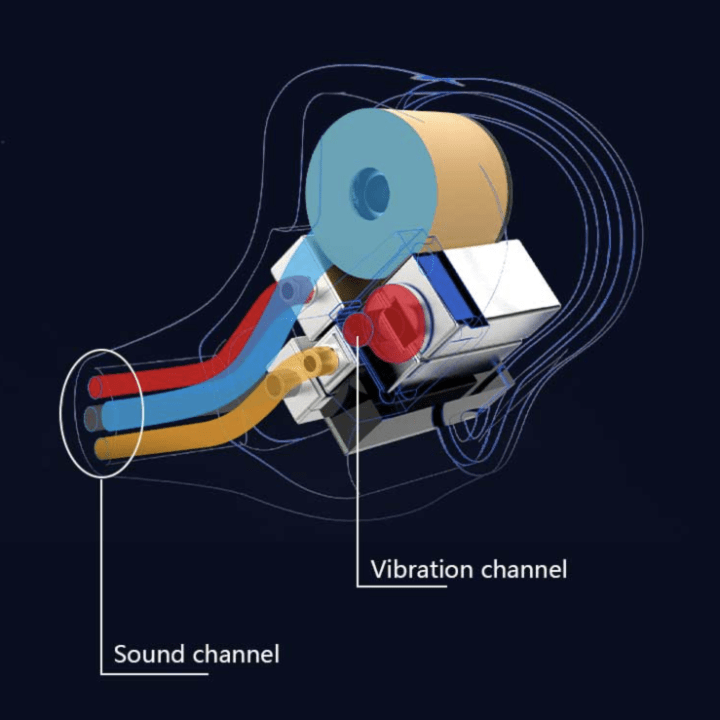
BGVP say that they’ve implemented a 5-way acoustic crossover with all four types of drivers having their own sound tubes to produce sound independently. The independent bone conduction shock hole in the back cavity is attached to the inner side of the shell cavity to ensure that it faces the auricle bone to convey the information in order for the sound field simulation to be more realistic.
Technical Specifications.
- Drivers: 2DD + 2BA + 2EST + 2BCD
- Impedance: 12Ω.
- Sensitivity: 107dB/mW.
- Frequency Response Range: 10Hz-40kHz.
- THD+N: <2%.
- Max Rated Power: 179mW.

Unboxing and Accessories.
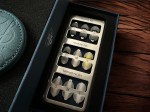
Phantom SE’s unboxing experience is wonderful. The packaging feels premium, with a sleek, drawer-style box that houses a generous array of accessories. Included are multiple sets of silicone and foam ear tips, a sturdy carrying case, and a modular cable with interchangeable 3.5mm and 4.4mm connectors.
Included are –
- BGVP Phantom SE
- Grey Rose Cryo OCC Silver Plated Cable.
- Silicone ear tips (1 Pink bore, SML Vocal, SML Balanced & SML Bass)
- Memory Foam ear tips – 1 pair
- Carry case
- Cleaning tool
- Warranty card


Build Quality and Comfort.
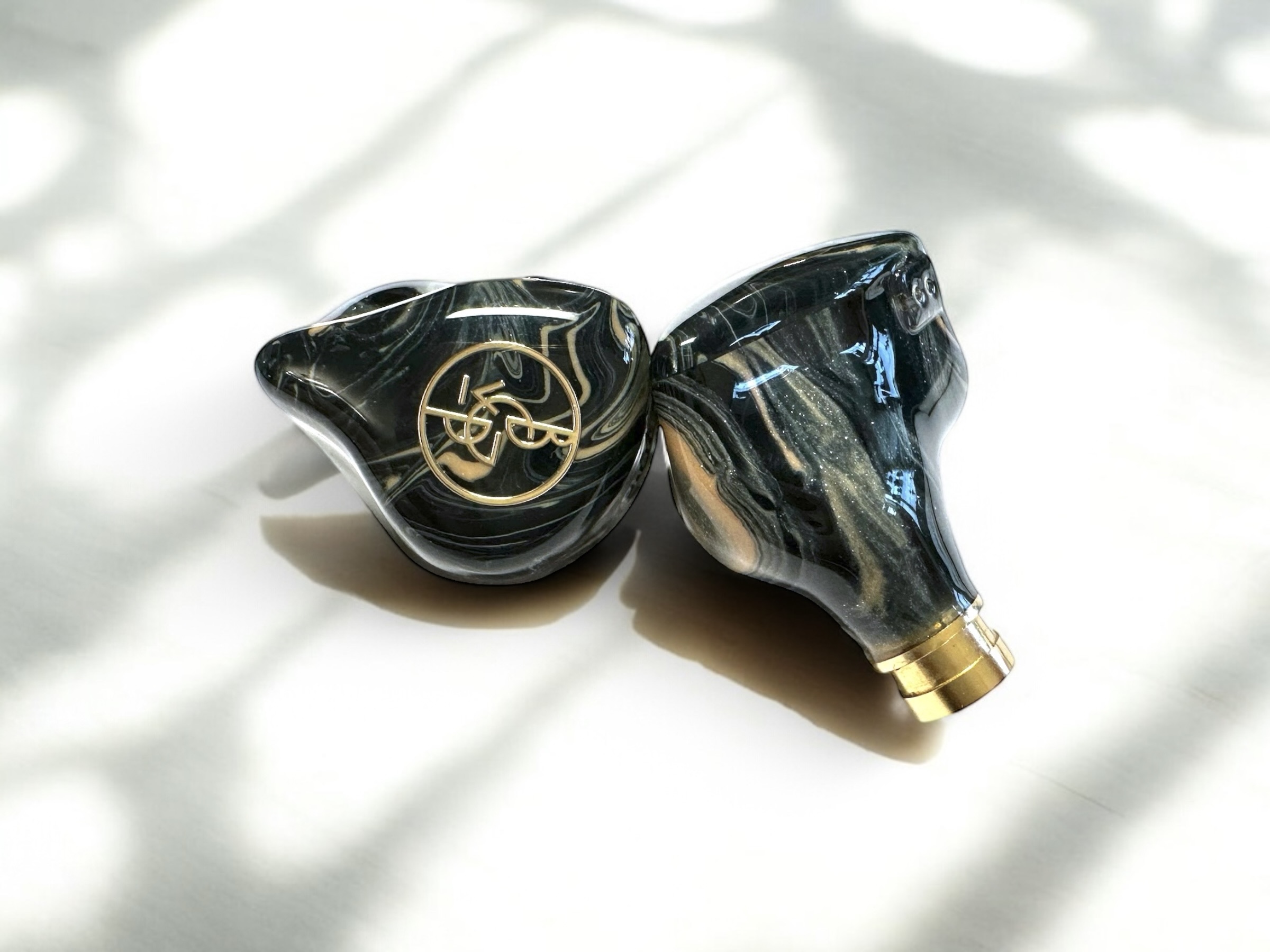
The standout feature of the Phantom SE, like the Phantom, is undoubtedly its thermochromic dyed wood shell, that change to a lighter colour as soon as it comes in contact with the skin (~36 degrees). It may not be everyone’s cup of tea but still very cool as it’s a stock design and BGVP are not asking any extra amount for it, like some other brands tend to do. The finishing on the Phantom is very well executed and it has even gotten a nice gold plated metal nozzle over the DM9 (which was very well finished too) that works perfectly in keeping the ear tips in place as it has a well shaped lip. It looks very premium, something that can compete in a league or two above its price segment in terms of build quality. One hardly comes across such stable wood shells at this price point, which otherwise only high-end manufacturers like Noble Audio and JH Audio offer. The wood shells are carved by 5-axis CNC machines and are dyed to highlight the wood grain, figuring and colours. It is then lacquered with clear coats and polished for high shine. Phantom SE has 2-pin sockets, BGVP logo on the faceplate, a vent on top and inner wall, and 4 sound bores.

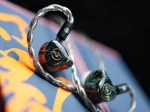
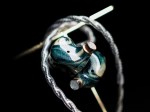
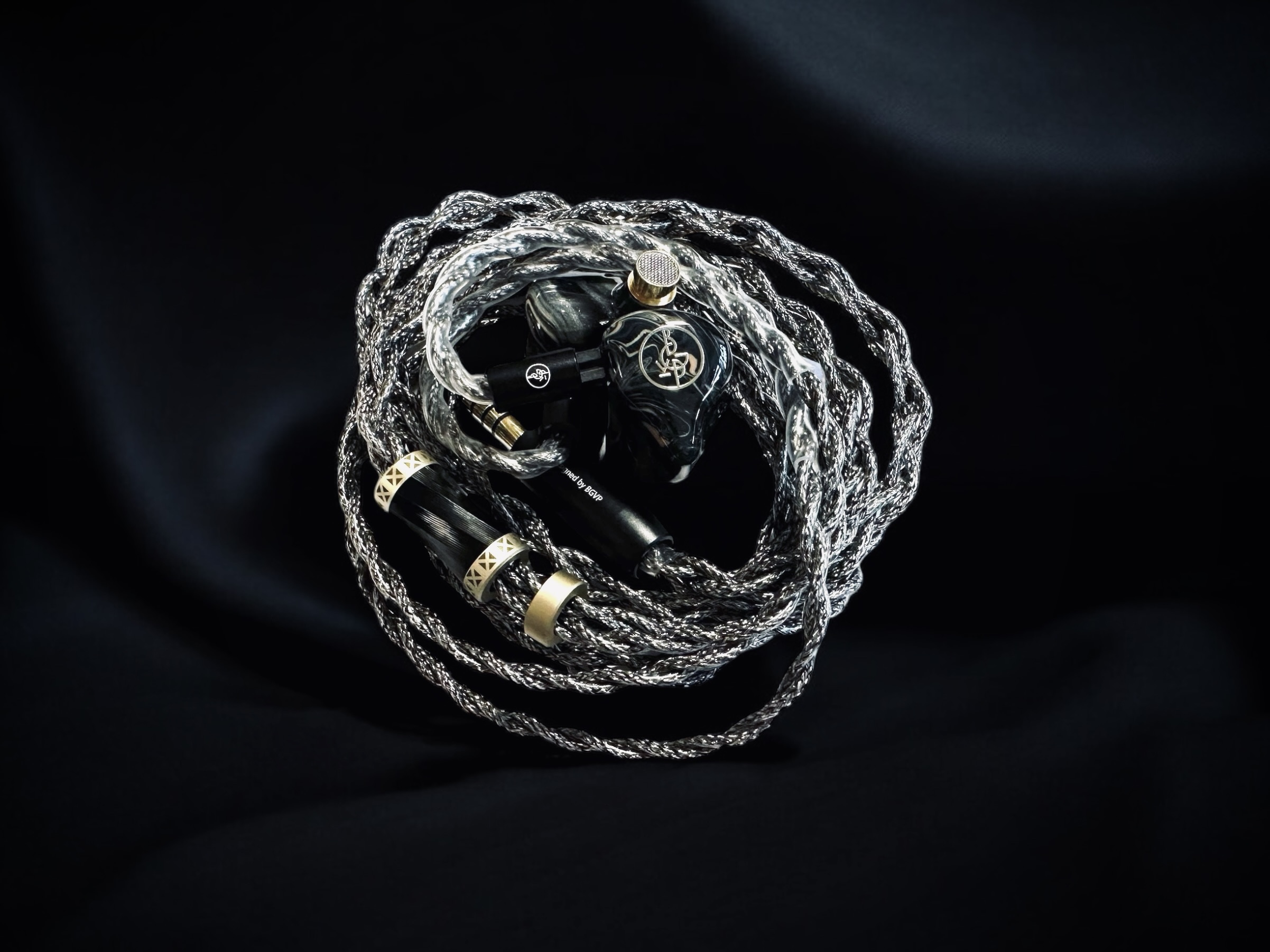
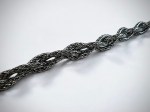
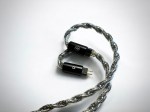
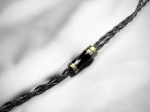
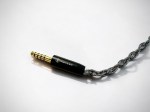
Cable – Phantom SE comes with a very premium cryo silver plated OCC cable which they’ve named ‘Grey Rose’. It’s one of the best cables I’ve seen from BGVP, in fact one of the nicest stock cables that come with an IEM under $1500. The connectors are very well machined, the wire looks great and is very supple and overall design language fits perfectly in line with Phantom SE’s design and colour scheme. BGVP sell this cable separately for $149 (link here) and I highly recommend trying it with other IEMs too. It’s very well done, so much that it’ll now be one of my default recommendations for a premium cable at its price..
Sound Analysis.
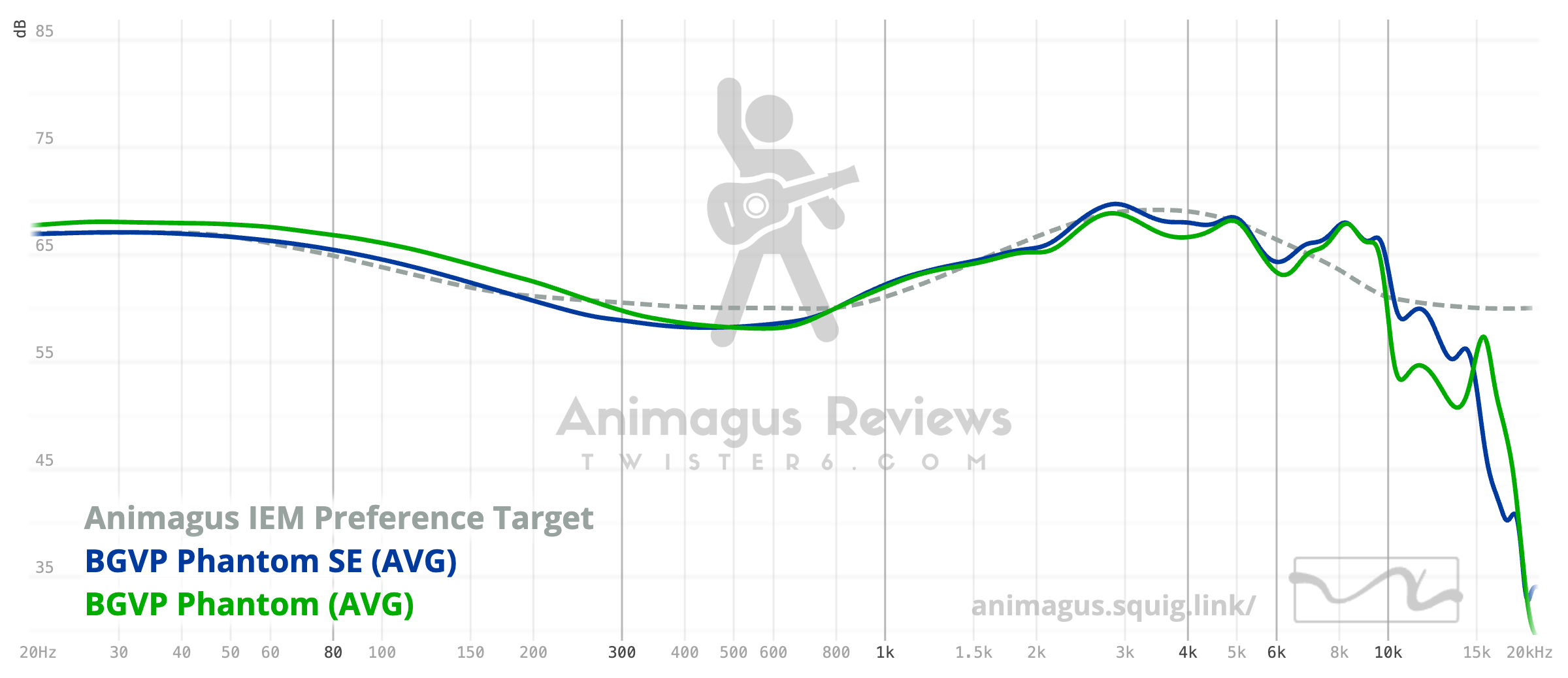
Graphs are measured using an IEC60318-4 (IEC711) setup. You can compare all the graphs on my IEM Graph Database here – Animagus Squiglink.
BGVP Phantom SE’s has an intricate eight-driver quad-brid system just like the original Phantom but where it differs is the amount of bass shelf and mid-treble presence. Even though the differences on the graph between the original and SE are minute, back to back A/B listening shows a more meaningful impact on the overall experience than one would imagine. I don’t know if they’ve changed anything else on the inside, maybe something with the BCD and how it’s implemented, but the differences, though not night and day, are quite perceivable.
Phantom SE has an engaging W-shaped bass boosted, slightly leaner than neutral signature with a forward definition of instruments, good sparkle and very good staging and technical performance that allows for a holographic listen. It is a well done vivid, musical signature that goes for a big presentation of sound with natural instrument tonality without straying into the wonky territory. It is a rather versatile IEM as you can further tweak its signature, slightly changing the effect of the BCD and the amount of bass and treble by using different ear tips. It has the ability to go from a bass boosted, punchy signature to a more neutral, energetic signature (with tips like Azla Sedna Earfit Short), while always maintaining an exciting and engaging character.
It stands to be seen how much credit can be given to the Sonion BCD but I hear Phantom SE having good punch and dynamism, with very precise imaging and depth layering that allows for a very nice, holographic presentation of sound. This holographic presentation is actually heard and enjoyed better with tips that allow a regular fit over tips that have a deeper fit and go deeper into the canal, thereby reducing soundstage boundaries as well as treble extension, just like in the case of U12t (UIEM) vs A12t (CIEM). I’d recommend either using tips like Azla Sedna Short and Standard or not pushing A07 tips too deep for the best experience of this particular quality.
Bass – The dual dynamic drivers are tuned to deliver a bass experience that is both authoritative and textured. Sub-bass reaches deep into the lower registers, with a rumble that’s visceral yet well-controlled. Tracks like Hans Zimmer’s “Time” demonstrate this beautifully, where the sub-bass undercurrent creates an atmospheric foundation without overpowering the other frequencies. The mid-bass is punchy and energetic, lending weight and impact to kick drums and bass guitars. This tuning works well for modern genres like EDM, hip-hop, and rock. While bass lovers will appreciate the dynamic and engaging presentation, those seeking absolute bass head levels of boom and punch might find the bass presentation more a fun take on neutrality.
Midrange – The midrange is handled by two balanced armature drivers, and their tuning focuses on the upper mids. This creates a clear, detailed, and exciting presentation, especially with female vocals and string instruments. Voices like Adele’s come through with emotive depth, retaining its natural warmth and vibrato. The lower-midrange has a bit of a scoop which leads to a slightly leaner than neutral signature which can result in instruments like acoustic guitars, which rely on the body of the lower mids, to feel slightly thin but I personally quite enjoy Phantom SE’s leaner signature as it enhances the perception of depth and space without feeling unnatural. That said, the forward upper mids enhance clarity and articulation and the Phantom SE excels with genres like classical and acoustic, where separation and micro-details in the midrange are crucial. For example, orchestral music sounds wonderful on it as it reveals subtle string textures and resonances beautifully.
Treble – The treble is where the Phantom SE truly shines. The dual electrostatic drivers deliver an airy and refined treble response, packed with micro-details that elevate the listening experience. Cymbals and hi-hats sound crisp and lifelike, without becoming harsh or sibilant, even on brighter tracks. The Phantom SE has a treble response that leans toward the brighter side due to the slightly north of neutral lower to mid-treble boosts, which contributes to its sense of spaciousness and clarity. Instruments in the upper registers, such as violins and flutes, are rendered with excellent detail. The sparkle is present but tastefully restrained, avoiding the pitfalls of excessive sharpness that can lead to listener fatigue. However, the very upper treble (above 15kHz) feels slightly rolled off compared to TOTL W-shaped IEMs like Elysian Annihilator which greatly boost the air region to enhance a sense of space and compensate for age related hearing losses.
Technical Performance – One of Phantom SE’s standout features is its expansive soundstage. The combination of bone conduction drivers and the natural airiness from the electrostatic treble creates a wide, deep, and tall soundstage that envelops the listener. This is particularly noticeable in live recordings where the sense of venue acoustics is captured with remarkable realism. The imaging is precise, allowing instruments and vocals to be placed with pinpoint accuracy. For example, in orchestral tracks like Holst’s “The Planets – Jupiter”, it’s easy to distinguish the positions of violins, horns, and percussion across the stage. The dynamic range of the Phantom SE is commendable, with the ability to handle soft and loud passages effortlessly. Quiet piano notes in Ludovico Einaudi’s “Nuvole Bianche” retain their delicacy, while crescendos hit with impressive impact. Transient response is snappy, particularly in the bass and treble regions, giving the IEM an engaging, energetic character.
Comparisons.
BGVP Phantom SE vs Phantom.
The SE version has an improved tuning balance with better treble extension, air and a more balanced bass shelf. It’s not a night and day difference but the differences lead to the Phantom SE having a larger soundstage and better layering, creating a more spacious presentation. The original Phantom was slightly intimate in comparison, which some listeners may still prefer. IMO, Phantom SE is better in terms of technical performance and overall tuning and I’d recommend new buyers wanting to buy a Phantom to go for the Phantom SE instead.
Custom Art Hybrid 3 Pro.
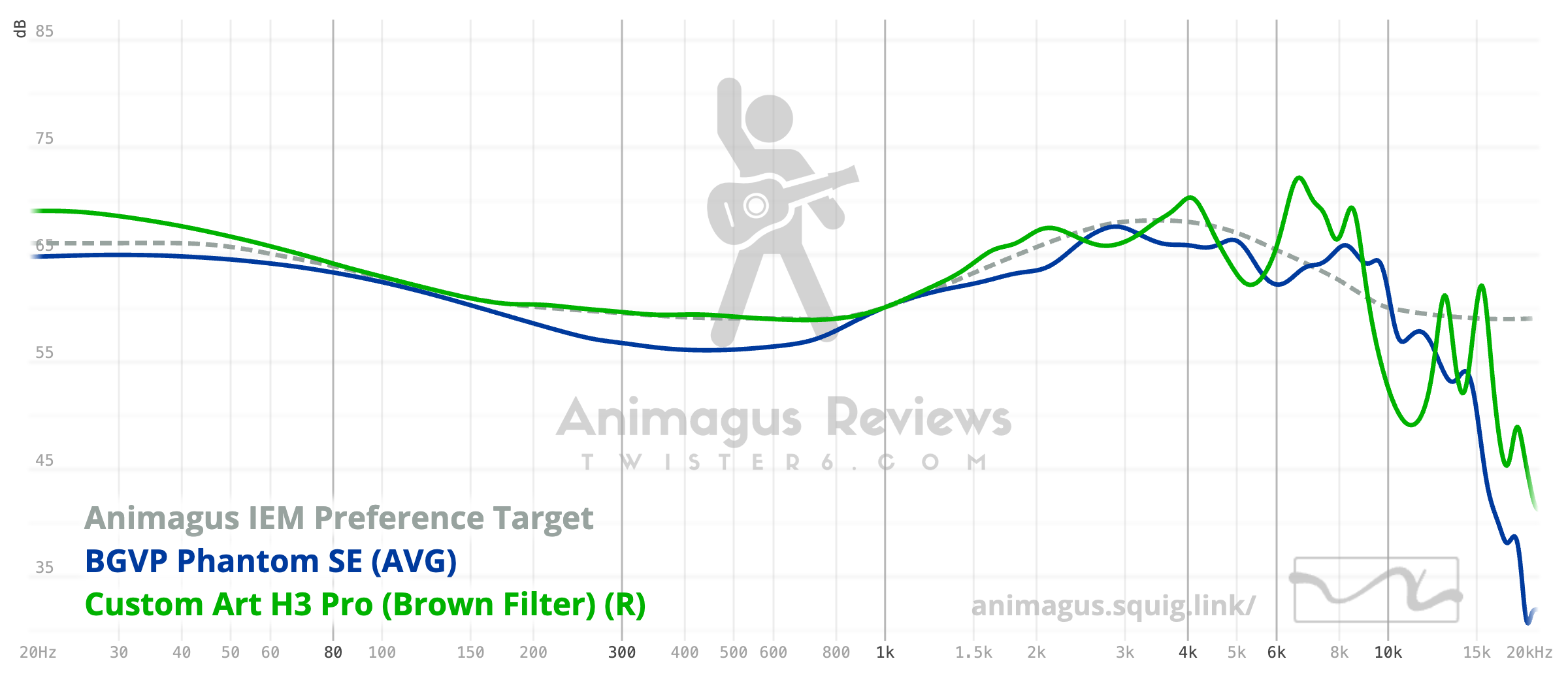
The Hybrid 3 Pro is neutral-bright reference-like monitor. The Hybrid 3 Pro’s bass is fast but lacks the texture and deep sub-bass rumble of the SE’s dynamic drivers. Hybrid 3 Pro delivers a more balanced midrange, making male vocals and instruments sound more neutral while Phantom SE creates a dynamic contrast to enhance the perception of depth in the midrange, which does result in vocals sounding slightly leaner but more exciting and slightly deeper into the stage. Phantom SE has a more even, natural treble response whereas Hybrid 3 Pro is sparklier, sizzlier and slightly airier than neutral. When it comes to technical performance, both are great at micro-detail retrieval but Phantom SE has a bigger, more holographic soundstage with more precise imaging for tracking instrument placement. Both are an excellent choices for monitoring, however, if you want more bass impact and soundstage immersion, the Phantom SE wins.
Custom Art FIBAE 5.

FIBAE 5’s planar bass driver provides a stronger sub-bass and mid-bass response whereas Phantom is more neutral and sounds more natural and along with the Sonion BCD, sounds slightly punchier and slightly more three dimensional. FIBAE 5 has slightly fuller lower-midrange presentation, making vocals sound fuller but sizzlier on top due to its mid-treble boosts. The Phantom SE’s midrange recession is noticeable, making male vocals very slightly thinner in comparison but ends up sounds a bit more natural overall due to a more even ear gain and treble response. Phantom SE’s electrostatic treble is smoother and more natural while keeping the excitement intact, while the FIBAE 5’s treble is sizzlier and airies resulting in a more energetic, vivid presentation. FIBAE 5’s stage is wider but Phantom SE has more precise imaging and a more natural, immersive sense of space. The FIBAE 5 is better for fun, vibrant listening while the Phantom SE is for listeners who enjoy a natural balanced sound, one that is slightly lean in the lower-midrange, but has a big soundstage and an immersive experience.
Elysian Diva 2023.
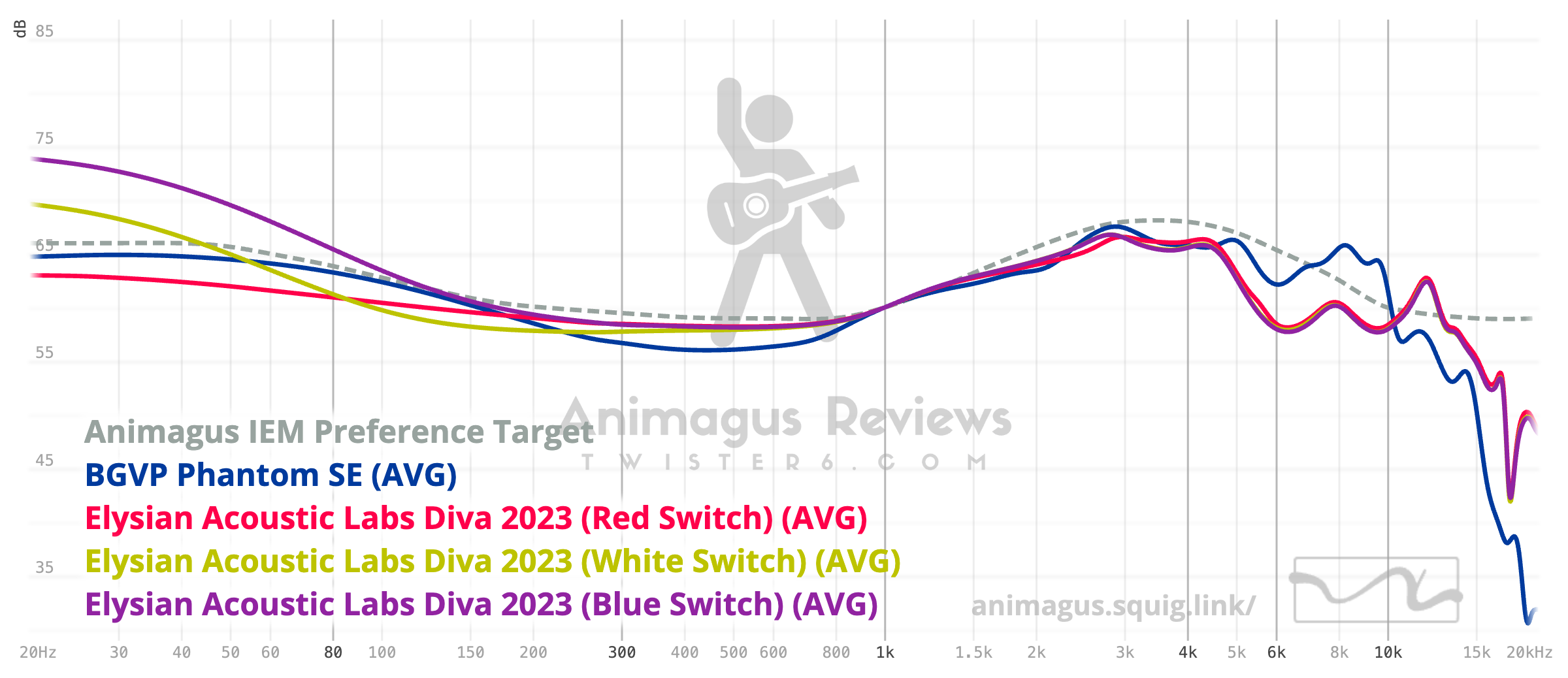
Diva 2023 is W-shaped but has a warmer tuning while Phantom SE is more contrast-y and dynamic. Diva’s bass is more rumbly and punchier owing to the bass switch options, especially in the Blue switch mode, whereas Phantom SE’s bass is quicker and has better technicalities, particular transient presentation and accuracy. Diva’s midrange is warmer and more organic, with vocals sounding warmer and slightly more natural. Phantom SE’s scooped lower mids strays slightly from accuracy but results in a more dynamic contrast and exciting presentation. Diva has smoother, warmer treble, while Phantom SE has better and more even treble balance. Diva does extend slightly better in the upper-treble region but doesn’t come across airy due to its much warmer overall presentation. Diva’s staging is more intimate while the Phantom SE has a bigger stage, better layering and a significantly more immersive and holographic listening experience. Overall Diva 2023 is a warm balanced IEM with good musicality, while Phantom SE is more dynamic, exiting, fun and more technically competent.
Elysian GAEA.
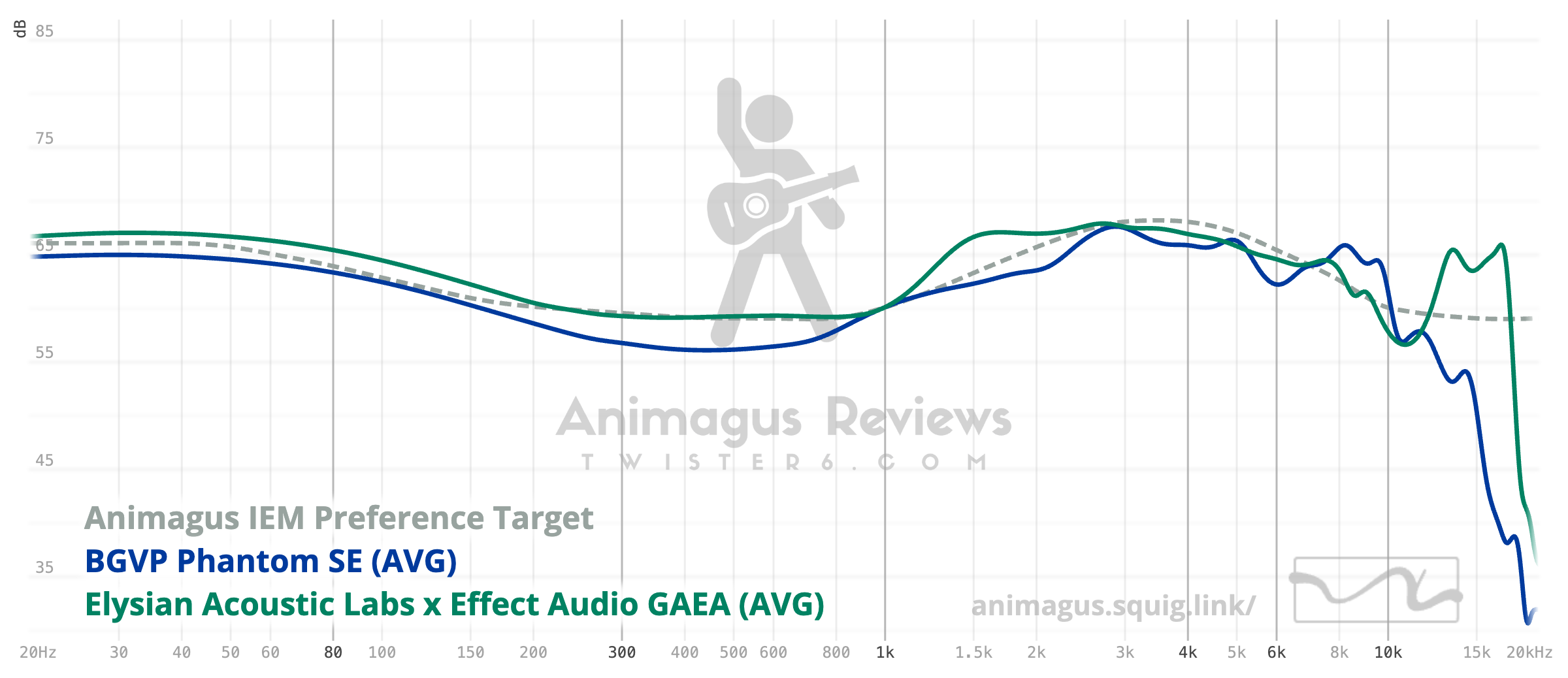
GAEA’s tuning is more aggressive W-shaped, focusing on a dynamic tuning for excitement with boosted treble energy. Phantom SE’s bass is more controlled, whereas GAEA can sound a bit aggressive in the upper bass. GAEA’s midrange is brighter and more forward, but Phantom SE has better layering and separation. GAEA is hyper-detailed, sometimes too sharp, while Phantom SE is smoother but as revealing. GAEA is better for critical detail retrieval, while Phantom SE wins on a natural sound signature with good immersion and staging while being easier on the ears.
Kinera Verdandi.

Verdandi is much warmer and fuller sounding while Phantom SE is more energetic and resolving. Verdandi’s bass is more gooey and bassy, whereas Phantom SE has more throw and is more technically competent with quicker transient presentation while retaining the DD punch and slam. Verdandi, even though has the same lower-midrange dip, has a slightly fuller sounding midrange due it being warmer while Phantom SE has a more dynamic contrast between its upper-midrange and lower-midrange resulting is a deeper sounding stage and vocals being pushed deeper into the stage. Phantom SE has better treble balance, making it better for those who want more air and detail. Verdandi does look better extended post 15kHz on the graph but that difference is hardly audible, to come through properly in listening. Overall, Verdandi is for warm, lush tonality lovers, while the Phantom SE is for those seeking a vivid, exciting IEM with holographic staging.
Conclusion.
With all the updates, an even better looking shell and design, better tuning, premium unboxing experience and the wonderful Grey Rose cable, BGVP Phantom SE is one of the most complete and competent offerings by a brand at the $1100 mark, offering a unique blend of aesthetics, technical innovation and engaging sound. It offers a sound signature that is dynamic, exciting, detailed, and immersive, with standout technicalities that punch above its price. While its tuning has some quirks, mainly a recessed lower midrange, the overall performance is compelling. It’s an IEM that priorities engagement and excitement, making it a strong choice for listeners who value spaciousness and clarity. Its wide-deep soundstage, and detailed imaging are its standout features. For those who value a unique design and enjoy a W-shaped signature with an emphasis on spaciousness, the Phantom SE is definitely worth considering. Highly recommended!
Gear used for testing and review.
- Desktop setup – Universal Audio Apollo X4 + DROP THX AAA 789 Amp
- DAPs – iBasso DX260
- Phone – Apple iPhone 14PM + iBasso DC06 Pro/Tanchjim Space
Artists I like and listen to.
- Rock – Foo Fighters, Linkin Park, Switchfoot, Imagine Dragons, Daughtry, Green Day, MuteMath, X Ambassadors, Dave Matthews Band, Vertical Horizon, Our Lady Peace, Lifehouse, Fall Out Boy, Breaking Benjamin, Muse, ACDC, Audioslave, Rage Against the Machine, Biffy Clyro, I Am Giant, Normandie, Paramore, Slash & Guns N Roses, 3 Doors Down.
- Pop Rock – John Mayer, Coldplay, Paul McCartney, James Bay, Hunter Hayes, Niall Horan, Keith Urban, The Bros Landreth, Bryan Adams.
- Progressive Rock/Metal – Porcupine Tree/Steven Wilson, Karnivool, Tool, Dead Letter Circus, Periphery, Lamb of God.
- Pop/Soft Rock – Ed Sheeran, Adele, Taylor Swift, OneRepublic, The Script, Gavin James, Magic Man, Maroon 5, Bruno Mars, Charlie Puth, Dua Lipa, The Weeknd, Oasis, Panic! At the Disco, TwentyOne Pilots.
- EDM – Chainsmokers, Zedd.

 Twister6 Reviews