
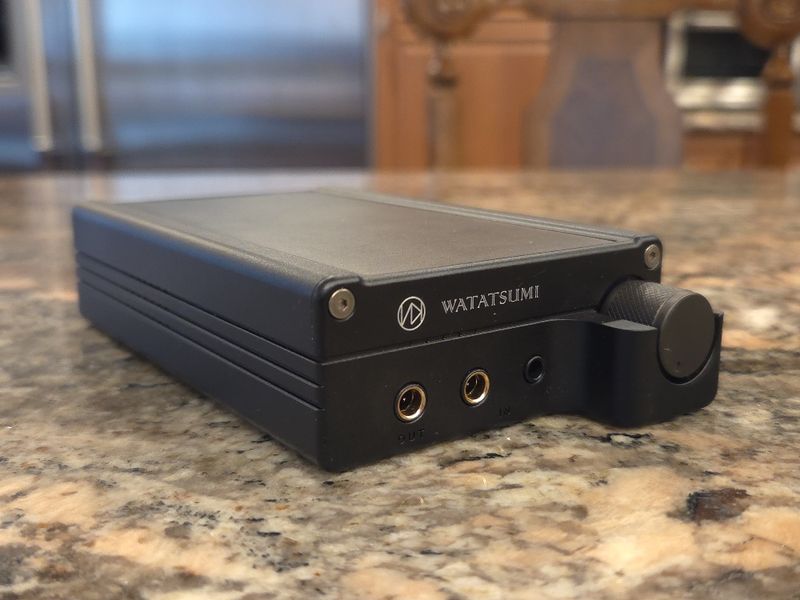
The Power of a Dragon.
The WATATSUMI, TSURANAGI, and TSURANAGI V2 amps were borrowed for a few days from Musicteck for review purposes in exchange for my honest opinion.
Website links: Brise Audio WATATSUMI.
Intro.
The evolution of the Brise Audio amps has an interesting story to tell. Known for the original design of high-quality premium wires, they decided to develop a portable reference amplifier as an evaluation testbed for cable development. That is how the original TSURANAGI (Tsu) was born four years ago, utilizing the YATONO copper-based internal wiring. Later, it evolved into TSURANAGI V2 (Tsu v2), with changes such as a 6 dB reduction in gain from 10.5 dB to 4.5 dB, making it more IEM-friendly by improving the volume curve adjustment. Additionally, the noise level was reduced by almost half, along with improvements in THD going from Tsu to v2.
Then, Brise Audio surprised the audio community with the announcement of FUGAKU, an all-in-one, transportable, compact audio system — a fine-tuned, custom-designed audio chain featuring an amplifier, a cable, and earphones. Its eye-watering price shocked everybody because some assumed it was a pair of earphones, until they realized it’s a whole system that can’t be separated to use with another amp or cable, requiring you to add just a source to drive it. With FUGAKU, Brise Audio fine-tuned the system by mixing and matching their own carefully designed and selected components, although the sound will still be affected by the DAC source.
Both TSURANAGI and FUGAKU put Brise Audio on the map of many audiophiles as an industry power player with a product line that extends beyond just wires and cables. So, where do you go from there, especially in 2025, which marks their 10th anniversary? Enter the Dragon, an almighty, powerful WATATSUMI, a Sea Dragon from Japanese mythology. Starting with the basic structure of TSURANAGI amp, where every block was redesigned, then adding their latest pure silver SHIROGANE wire conductors with large cross-sectional volume of OROCHI, and implementing amp circuit design technology from FUGAKU, gave birth to WATATSUMI.
All Brise Audio demo products at Musicteck are in high demand, so I had to wait for my turn to borrow WATATSUMI (Wata) for a few days to listen to and analyze it. It’s the same story as with TSURANAGI and FUGAKU, where I had the chance to borrow each in the past for a short time to write my brief impressions. So, here we go! Enjoy this detailed mini-review of Brise Audio’s WATATSUMI!
Design and under the hood.
The Wata arrived in a similar-sized box as the Tsu, and in addition to the amp module, product ID, and warranty cards, it includes a 5V/2A USB wall charger and a Type-C charging cable. I was using one of my tiny Anker IQ “nano” wall chargers without any problem, but Brise Audio makes it clear that they prefer a 5V/2A charger. Just in case you have only QC and PD chargers, you don’t need to worry about digging for your old smartphone chargers or buying a new one.


Measuring 125mm x 81mm x 32mm, Wata is very close in size to Tsu, although it is heavier than the 360g Tsu, weighing 521g. With more components, a larger-capacity battery, and a more solidly constructed chassis, CNC-machined from a solid block of aluminum, the weight increase makes sense. A few noticeable external changes included a new titanium volume knob with a guard underneath, compared to the brass knob in Tsu, which had no guards around it. The volume adjustment is smooth, fluid, and continuous without any step-clicks, allowing you to roll the thumb over the top for more precise control. However, it also slows down how quickly you can change the volume, as you are no longer gripping it with two fingers like in Tsu. It’s not a showstopper, just something to be aware of when dealing with different sensitivity IEMs and headphones during your listening session.


Another noticeable change was the removal of the 2.5mm BAL output and the elimination of a DIY-ish toggle switch found in Tsu for selecting the input between 3.5mm SE and 4.4mm BAL. Wata implemented an automatic selection function that detects whether the user has inserted either a 3.5mm or a 4.4mm plug, while also monitoring the 4.4mm output controlled by a relay, which introduces a very short delay when the cables are first connected and playback begins. There are no surprises about the removal of the 2.5mm BAL output, as it feels like a thing of the past. One thing to note is that I wish there were better contrast markings for In and Out port labels, as the ones underneath are carved out of the chassis and not easily visible. The same goes for the volume knob position notch, which is carved out its titanium surface without making it stand out too much.
Once the unit powered up by turning the volume knob from the off position, I noticed four battery indicator LEDs in Wata, compared to three found in Tsu, meaning that you can track the remaining (or charging) battery in 25% increments. Additionally, as previously mentioned, the battery capacity has increased from 2800 mAh to 3100 mAh, allowing for up to 8 hours of operating time. Brise Audio also implemented a shielded case to reduce noise interference and improve heat dissipation of the internal circuitry. A significant amount of attention was paid to heat dissipation, as temperature fluctuations can significantly impact the amplifier’s performance. Then, to stabilize the battery voltage, they also quadrupled the total capacitance of the decoupling filtering caps.
Relative to Tsu, the most significant change to the design resulted from revising its internal amplifier circuits to adopt parts of the FUGAKU design. Except for the reuse of the electronic volume controller from Tsu v2, circuits from the input selector, the filter, the input amplifier, and the voltage op-amp components were reused from FUGAKU. As a result, according to Brise Audio, the noise in Wata has been reduced by a quarter compared to Tsu and by half compared to Tsu v2. This is very impressive, considering the voltage gain of Wata increased to 6 dB, and the output power rose to 2,000 mW (16 ohms), while the noise was reduced and the distortion minimized.

Sound Analysis.
The sound analysis of the Wata was done using various IEMs and headphones, including Jewel and R70x, and SP3000M as a source (driven from LO at 4V), along with SHIROGANE MINI Ultimate IC cable, while playing a selection of test tracks such as Agnes Obel’s “The Curse,” Sandro Cavazza’s “So Much Better” (Avicii remix), C-Bool’s “Never Go Away,” Ed Sheeran’s “Shape of You,” Alan Walker’s “Darkside,” Ariana Grande’s “Break Up With Your Girlfriend,” Galantis’s “Hunter,” Iggy Azalea’s “Black Widow,” Indila’s “Boite en Argent,” Dua Lipa’s “Love Again,” Counting Crows’ “Big Yellow Taxi,” David Elias’s “Vision of Her,” and Michael Jackson’s “Dirty Diana.” The unit already had many hours of burn-in time; thus, caps and other discrete components were properly conditioned.
I prefer to describe the sound of the source by comparing it to other sources while pairing it with different IEMs/headphones, since the source by itself doesn’t have a distinct sound. We perceive its sound through connected IEMs/headphones or by comparing the differences in sound relative to source comparisons using the same pair of IEMs/headphones. This is my subjective opinion on how I perceive the Wata amp.

I usually start my sound analysis by discussing the tonality. Here, once you begin listening to Wata, before your brain starts to register the sound tuning, the first thing that jumps out is the technical performance of this amp. Wata has a very dynamic, multi-layered, multi-dimensional sound, which makes many other sources sound flatter and more compressed in comparison. The background is probably among the blackest I’ve heard, easily reproducing fast dynamic change in sound and helping the listener pick up even the smallest micro-detailed nuances. The noise floor was nearly absent, and no hissing was detected even with sensitive IEMs. Additionally, Wata features a large, expanded soundstage with slightly more width than depth, resulting in a somewhat more oval-shaped expansion; however, imaging is nearly 3D holographic.
As many are aware, the amp is typically positioned next in the audio chain after the DAC’s LO output, and the sound we hear is a result of the synergy between these components. Based on the different DAPs I tried, I found Wata to have a neutral tuning, although it leans more toward a slightly warmer coloring, adding a more natural analog tonality to the sound. Regarding IEMs I’ve tried, especially those with DD drivers, I found Wata to bring out more texture and oomph in the low-end. It enhances the overall presence of the bass with a deeper rumble, tighter and more articulate mid-bass punch, and shorter, better-controlled note decay.
I can also hear more analog warmth in the mids. Due to a more authoritative bass presence, the midrange presentation feels slightly pulled back, at least in my perception. The treble sounds more resolving, more extended, rather than being brighter or more energetic. It will depend on the pair-up synergy, and with some IEMs (Jewel, Traillii Ti, Macbeth, RN6, Maven II, CP622B, VE10, Odin, Raven), it truly nailed the treble renditions to perfection! Still, with a few others (Annihilator 23, Mefisto), the treble felt a bit over-cooked.
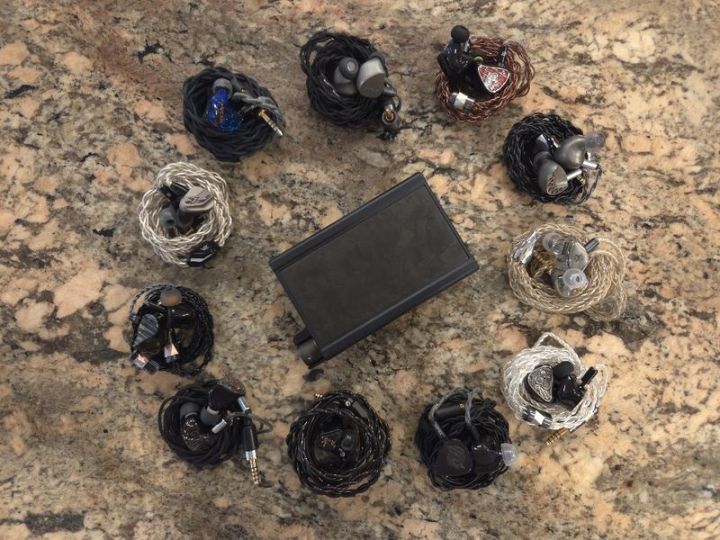
IC Comparison
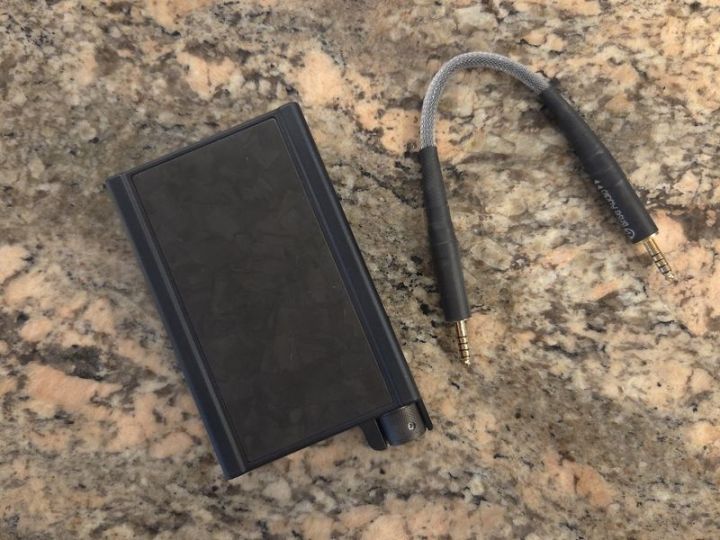
While some people might overlook the impact of the short interconnect (IC) cable, Brise Audio places a strong emphasis on proper IC design, considering both the wire material and proper grounding. Many cable manufacturers make 4.4mm IC cables without connecting the ground, whereas Brise Audio suggests that a common, interconnected ground between the source and the amp is essential. Furthermore, considering that Wata is utilizing the pure silver SHIROGANE (Shiro) wires inside the amp, they developed a special shielded version of it, called the SHIROGANE MINI Ultimate IC. I received it for testing along with the Wata amp, an impressive piece of the thick, short, pre-shaped interconnect cable I was using in my sound analysis. But I was also curious about the effect of other IC cables.
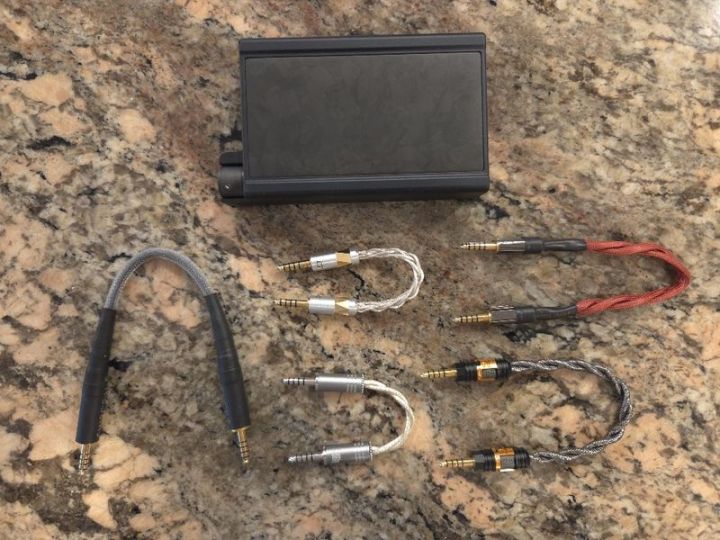
Shiro IC (silver) vs HanSound Kunpeng IC (pure silver, gold-silver alloy, and palladium-plated silver) – both ICs feature a grounded 4.4mm connector. I find that the mids are slightly more revealing with the Kunpeng IC, while being a bit smoother with the Shiro IC.
Shiro IC (silver) vs Eletech Iliad 6W IC (palladium-plated silver, gold-silver alloy) – both ICs have a grounded 4.4mm connector. I hear a little more sparkle in the treble with Iliad IC, while Shiro has a slightly wider soundstage expansion.
Shiro IC (silver) vs Romi Audio Sensation IC (silver) – I hear a blacker background and a slightly tighter sound with Shiro, while the tonality is not too far off.
Shiro IC (silver) vs DHC Symbiote IC (silver) – The DoubleHelix cable has a slightly fuller body in the mids, adding a bit more color to the sound.

 Twister6 Reviews
hello can you please compare this to mass kobo 475 is it worth the upgrade.
LikeLike
Only heard 475 for a few days when I borrowed it for review 2 years ago. No way I can do any meaningful comparison. But from my review and notes of 475 vs Tsu, I preferred Tsu. Here, I also prefer Wata over Tsu and Tsu v2. So, you can draw your conclusion 😉
LikeLike