
Sound Analysis.
The sound analysis of the DX340 w/amp17 was done using various IEMs (Jewel, RN6, Macbeth, Multiverse, VE10, etc.) and headphones (R70x, Empyrean) while playing a selection of test tracks such as Agnes Obel’s “The Curse,” Sandro Cavazza’s “So Much Better” (Avicii remix), C-Bool’s “Never Go Away,” Ed Sheeran’s “Shape of You,” Alan Walker’s “Darkside,” Ariana Grande’s “Break Up With Your Girlfriend,” Galantis’s “Hunter,” Iggy Azalea’s “Black Widow,” Indila’s “Boite en Argent,” Dua Lipa’s “Love Again,” Counting Crows’ “Big Yellow Taxi,” David Elias’s “Vision of Her,” Michael Jackson’s “Dirty Diana,” and SaberZ “Without your love.” I had at least 150 hours of burn-in time before I began my analysis.
I prefer to describe the DAP/source sound by comparing it to other DAPs/sources and pairing it with different IEMs/headphones since the DAP itself doesn’t have a distinct sound. We perceive the sound through connected IEMs/headphones or by comparing the differences in sound relative to source comparisons using the same pair of IEMs/headphones. This is my subjective opinion, based on how I hear it.

Before I dive into the amp17 sound description, let me first revisit and summarize the sound performance of amp15 and amp16, as mentioned in my previous reviews.
AMP15
Based on two of my favorite Harmonic Adjustment “H” Settings of DX340:
H1 (original, no harmonic adjustment applied) – big, expanded soundstage with holographic imaging, more transparent (less colored) neutral sound tuning with improved retrieval of details. The overall presentation of the sound is faster and punchier.
H2 (natural, with a slight adjustment on both the odd and even harmonics) – big, expanded soundstage with slightly more center-focused imaging, adding a little more coloring in mids, which gives the sound a more natural body and smoother tonality. The sound presentation is a bit more relaxed. In this setting, I hear a more pronounced sub-bass rumble, which adds weight to the bass.
I found H1 and H2 to be my favorite settings, with H1 being closer to iBasso’s house tuning, which offers more neutral, resolving, and transparent tonality. H2, on the other hand, provides a tuning enhancement with smoother, natural tonality, a more laid-back sound presentation, and a little more body in mids, accompanied by a deeper sub-bass rumble. I found myself returning to H2 more often due to its more analog midrange texture and the additional texture and weight it provides in the sub-bass.
AMP16 (SS Class AB vs Tube)
The AB mode delivers a clear, detailed, dynamic, and faster sound, while offering a natural, neutral, and balanced tonality with less mid-range coloring. The bass in AB mode features a faster, snappier mid-bass punch and more transparency in the mids. When switching to tubes, you can hear more warmth in the sound, especially a smooth texture in the mids. The sound becomes more relaxed and laid-back with tubes, characterized by a rounded and slower mid-bass punch, as well as a more organic texture in the mids. Despite these changes, the treble sparkle remained remarkably similar in both modes, which helps maintain a similar resolution and detail retrieval without significant compromises.
I was also impressed by the rich black background, especially in AB mode. The soundstage expansion was relatively wide, while the imaging and sound placement varied based on the earphone or headphone pairing, sometimes being more center-focused and at other times more holographic. This remained true in both AB and Tube modes, which I found impressive considering the smoother nature of Tube mode. The AMP16 does not attempt to exaggerate the width of the sound or the sound placement. Instead, I found it to remain close to the original technical performance of each IEM and the headphones I tested it with.
For reference, in AMP16 (Class AB) vs AMP15 (H2), I find AMP16 to have a faster and tighter mid-bass punch than AMP15, which offers more sub-bass rumble and a softer mid-bass punch (AMP15). The sound of AMP16 is quicker and punchier, and has fuller body mids with a bit more coloring than AMP15, which is a bit more laid-back in sound presentation and less colored in mids (AMP15). Regarding soundstage expansion, AMP15 has a slightly wider left/right expansion, whereas AMP16 has more depth and height.

AMP17
As I started listening to amp17, immediately after amp15 and amp16, the first thing that stood out was a noticeably expanded soundstage with a 3D holographic level of imaging, placing you right in the middle of the spherically expanded holographic sound placement. It was slightly more exaggerated, though still felt natural, and it took me a second or two to adjust my brain; afterward, it became just addictive. The background was extremely dark, accentuating the transient response of notes as they came on/off, with the faster speed of sounds emerging from the darkness. Furthermore, the sounds have a very precise layering and separation, as well as expanded dynamics.
The technical performance of amp17 is impressive, offering a faster attack and more precise control of bass notes, as well as more layered and separated sounds in mids, with literally more air between the layers of sound. Additionally, it provides improved retrieval of details and airier treble extension. Amp17 GaN discrete transistor amp is marketed as a new tech with a faster switching speed, and that’s exactly how it sounds when you do an A/B comparison between amp15, amp16, and amp17, sounding faster, tighter, and more precise. I know that the placebo effect sometimes plays a role in how we perceive the sound after reading the “spec” behind it. I came back many times, after taking a break, to listen to amp17, switch to amp15, and then back to amp17, and so on. After a while, you forget about the spec and concentrate on the sound itself, and my opinion hasn’t changed.
When it comes to tonality, it is more neutral, transparent, clean, and detailed, with a slightly colder and less colored midrange, resembling the sound of amp15 more closely than amp16, even in its Class AB mode. Furthermore, the bass of amp17 has a stronger punch with more weight, while its treble performance has more air and better control. The technical performance of amp17 is what makes it stand out as an upgrade to amp15, while its tonality complements amp16’s dual SS/Tubes tuning.
With sensitive IEMs, like VE10, similar to my observations with other iBasso amp modules, I found that the most optimal performance is achieved by keeping the DAC in gain high, which maintains the maximum voltage, and lowering the AMP gain, which reduces the waterfall hiss effect of these types of IEMs, if you can even hear it. I’m not saying that DX340 with amp17 has a noisy background. This is a function of how IEMs with lower impedance and higher sensitivity respond to sources with higher current and driving output power, which can be reduced as the amp gain is lowered.

DC IN (AMP17 Super Gain)
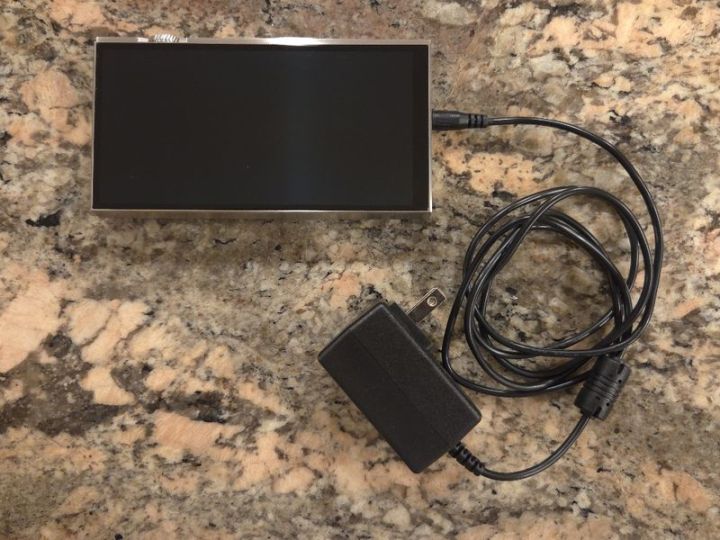
With the external power supply connected and Super Gain enabled, I notice some improvement in sound dynamics and a stronger bass punch with IEMs that utilize DD bass drivers. When I switched to more demanding headphones, such as my R70x (470 ohms, 98dB), I also noticed an improvement in detail retrieval, as if a faint layer of veil were being lifted, driving these open-back cans to their fuller potential. To me personally, with IEM use and without DC In, the output is already powerful enough, and produces a very dynamic expanded sound. With DC In, the improvement effect was more noticeable with demanding headphones rather than the IEMs I used in my testing. For my use, it makes sense since, on the go, when I’m using IEMs, I don’t want to carry an external PD charger battery with a DC-in USB conversion cable. My demanding headphones, such as R70x, are used at the office desk at home, where I don’t mind being connected to a wall AC/DC supply.

 Twister6 Reviews
Do you hear any hiss when using the UM Multiverse Mentor with AMP17 on AMP Low Gain(DAC High Gain)? The hiss is pretty loud and distracting on my unit. I am using the iFi IEMatch 4.4 to reduce the hiss.
LikeLike
yeah, some waterfall hiss. Not very friendly with sensitive IEMs.
LikeLike
Is ifi somehow make sound worse? I also want UM MM
LikeLike
I don’t have 4.4mm balanced ifi match to try, but it is like an impedance adapter which could change the sound in conjunction with the crossover/impedance of the iems.
LikeLiked by 1 person
Hello sir! Thank you for your answer! I am now faced with a choice: buy UM multiverse, or UM Nuit Etoilee with 340/amp17. I can’t listen to Multiverse anywhere (have only sealed box for purchase), but my friend has NE. And I also listened to Fusang (I didn’t like it) and Mest3 (I liked it)). So I’m really confused)) Could you kindly tell me if there is a big difference in the technical side of sound between multiverse and nuit etoile (and also do you prefer – NE or Soleil Sombre?)
LikeLike