
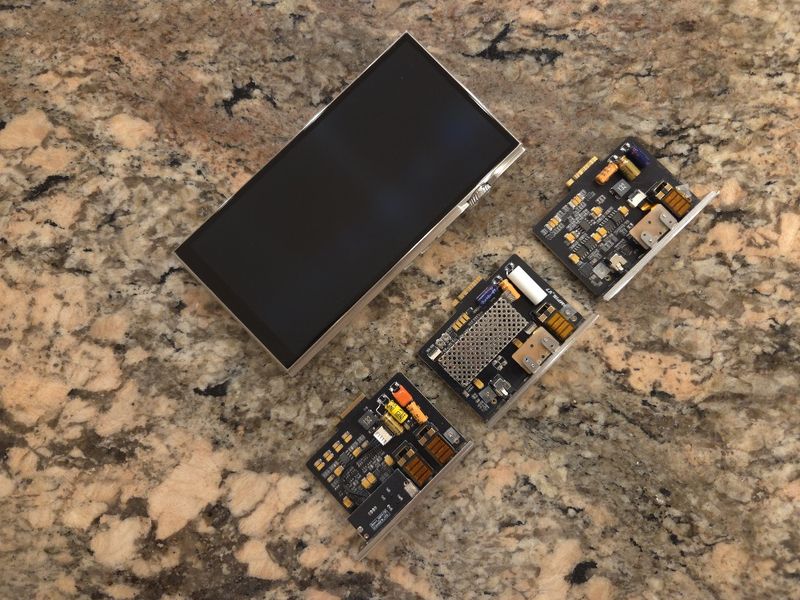
Say goodbye to silicone?
PROs: Fast, punchy, dynamic, layered sound; neutral tonality; enhanced detail retrieval; spherically expanded soundstage with a holographic level of imaging; deep black background; strong technical performance; DC Input with Super Gain that doubles the output power; 4.4mm PO and LO.
CONs: extra cost of a new amp card, no 3.5mm output (if you care about it), waterfall hiss with sensitive IEMs (requires reduction in amp gain).
The product was provided to me free of charge for review purposes in exchange for my honest opinion.
The manufacturer’s website: iBasso. It can be purchased directly or from authorized retailers, such as Bloom Audio.
Intro.
As I previously stated in my DX340 review, iBasso’s announcement of the upcoming AMP cards during the introduction of this DAP was a clever move, adding excitement to the release of this new flagship audio player, even though people still had to wait a while for the new cards to arrive. After all, new modules allow you to upgrade the sound of your DAP at the cost of a new card. Additionally, the new series of iBasso AMP modules features an external 12V DC input option, bypassing the internal analog battery to power up the amp card at a higher voltage, making it even more attractive by bringing it closer to desktop performance.
However, with the numerous new DAP releases flooding the market, you need to be more creative to capture the attention of portable audiophiles. After the default stock amp15, iBasso released the dual-tonality amp16, featuring Solid State (Class AB) and dual Raytheon JAN6418 vacuum tubes. So, how do you top that? By introducing the next amp module using a new type of FETs that utilize Gallium Nitride (GaN) semiconductor material instead of traditional silicon. I wasn’t as familiar with this new tech, so it piqued my interest in how it will translate into the audio performance of the next amp17 module from iBasso. Here is what I found.
Unboxing and Accessories.
Regarding the unboxing experience, it is rather basic here. You get a tin box with an amp17 card, a screwdriver, extra screws, and a warranty card.
One thing I want to note is that you shouldn’t discard the ESD bag and storage box the amp arrived in, as it’s a good idea to use them for storing the card you are replacing with amp17. While I’m using amp17 now, amp15 is taking its place.


Design.
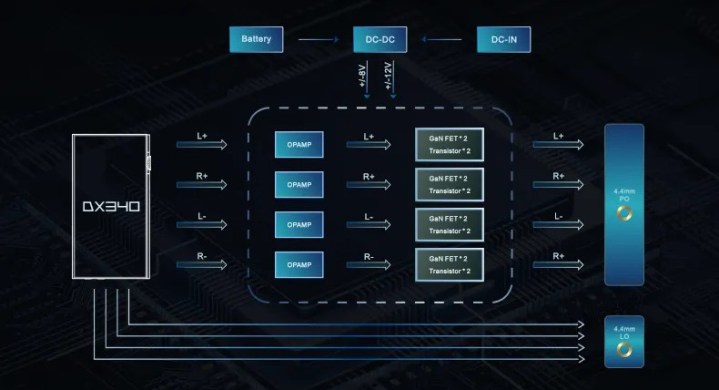
As already mentioned in the intro, the design of amp17’s amp card is based on a new type of FETs that utilize Gallium Nitride (GaN) semiconductor material instead of traditional silicon, offering higher efficiency (lower power loss), faster-switching speeds (due to higher electron mobility), and greater power density (relative to silicon), especially at higher frequencies. Actually, this type of material is not exactly new and has been used in power transistors and LEDs. What’s new here is that amp17 is one of the first devices to utilize it for audio applications in a headphone amp, using a combination of GaN FETs and discrete transistors in its design.
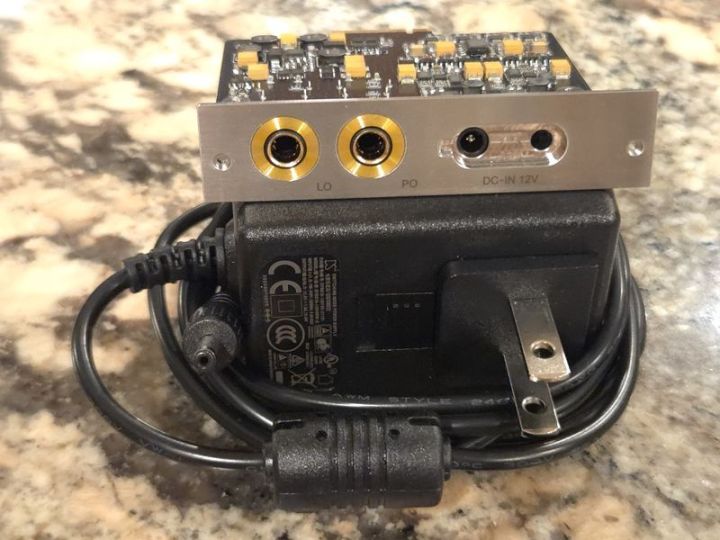
Just like amp15 and amp16, amp17 has an external 12V DC input option that bypasses the internal analog battery and powers the amp card at a higher voltage. With DC-In, the DX340 offers a Super Gain option for 4.4mm PO, increasing its output power from 1,030mW @32 ohms (battery-powered) to 1,900mW @32 ohms (with DC-In external supply). In addition to the 4.4mm BAL PO, amp17 also offers a dedicated clean 4.4mm LO output, which can be adjusted through DAC gain settings with 1.6Vrms (low gain), 2.6Vrms (mid gain), and 3.0Vrms (high gain).
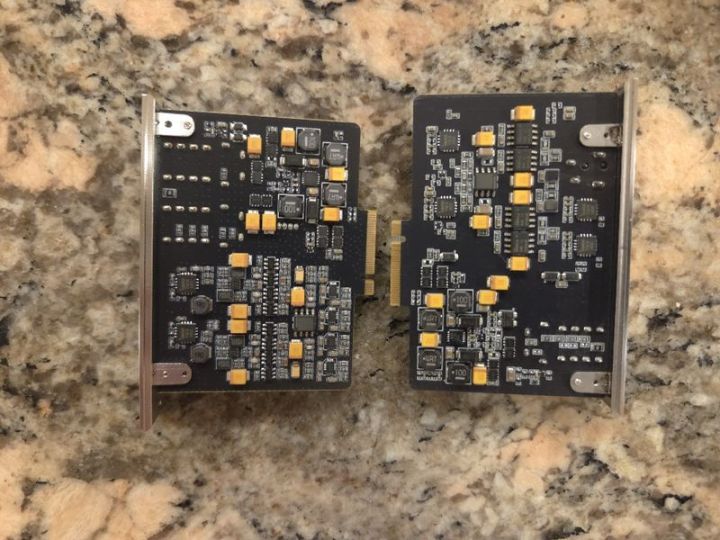
I noticed that the amp17 board was slightly narrower in width compared to the amp15 and amp16 boards. According to iBasso, they designed amp17 to support the DX340, DX320, and DX300, ensuring compatibility with their older modular DAPs. However, for the DX300/320 chassis compatibility, you must swap the faceplate with the dual 4.4mm plates of amp 12 or amp 14.
Regarding the use of DX340, the battery life of amp17, with its 4.4mm balanced output, DAC and Amp set to high gain at normal listening volume, playing local hi-res files with the display mostly off, yielded 10 hours of playback time. It was on a dot for me, decreasing by 10% every hour.
Another thing to note is that you will need to restart the DX340 after replacing each card; otherwise, they will not be recognized. I don’t recall if it was the same before, between amp15 and amp16, or maybe after the latest fw update. However, especially with amp17, I would recommend shutting down the DX340 first before exchanging the card, as amp17 is narrower and there is more room to wiggle when inserting it. Therefore, it’s better to do it when the dap is powered down.


Page 2 – Sound Analysis.
Page 3 – Comparison, External amping, and Conclusion.

 Twister6 Reviews
Do you hear any hiss when using the UM Multiverse Mentor with AMP17 on AMP Low Gain(DAC High Gain)? The hiss is pretty loud and distracting on my unit. I am using the iFi IEMatch 4.4 to reduce the hiss.
LikeLike
yeah, some waterfall hiss. Not very friendly with sensitive IEMs.
LikeLike
Is ifi somehow make sound worse? I also want UM MM
LikeLike
I don’t have 4.4mm balanced ifi match to try, but it is like an impedance adapter which could change the sound in conjunction with the crossover/impedance of the iems.
LikeLiked by 1 person
Hello sir! Thank you for your answer! I am now faced with a choice: buy UM multiverse, or UM Nuit Etoilee with 340/amp17. I can’t listen to Multiverse anywhere (have only sealed box for purchase), but my friend has NE. And I also listened to Fusang (I didn’t like it) and Mest3 (I liked it)). So I’m really confused)) Could you kindly tell me if there is a big difference in the technical side of sound between multiverse and nuit etoile (and also do you prefer – NE or Soleil Sombre?)
LikeLike