
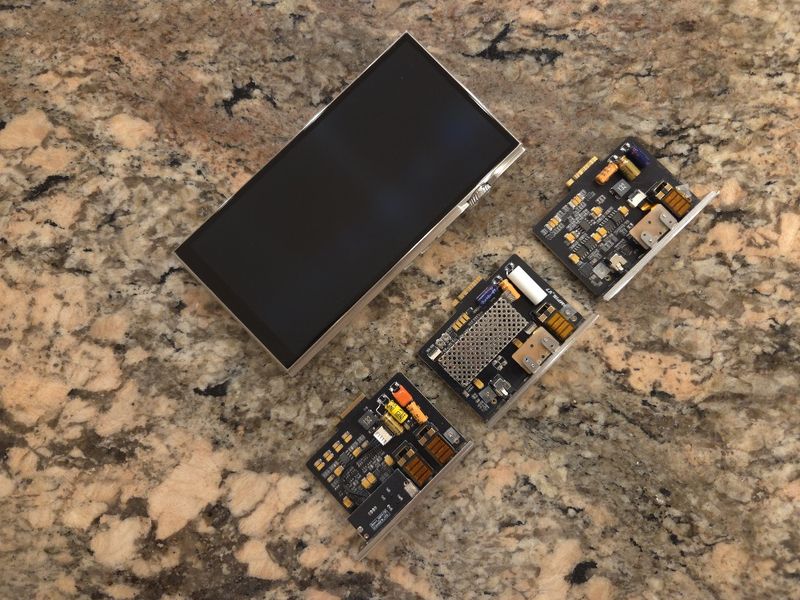
Comparison.
In this testing, I focused on comparing amp17 to amp15 and amp16, as well as external amplification with PB5, staying within the iBasso family since that was the bulk of the questions I received from my users considering an upgrade to amp17.
amp15 (H2) vs amp17 – I hear noticeably better holographic imaging in amp17; the width of the soundstage has expanded as well, but the 3D imaging effect is more pronounced. The background of amp17 is darker, accompanied by a faster transient response of notes on/off, emerging from a blacker background, making amp15 sound slightly more laidback in comparison. There is also a more precise layering and separation of the sounds, with noticeably expanded sound dynamics. In contrast to amp15, amp17 sounds faster, snappier, more articulate, with more precision and better control. The bass notes have a faster attack and more precise control of note decay. The mids have more air between layers, and the treble is also cleaner and tighter. The sound of amp17 is not as laid-back as that of amp15, also losing some of amp15’s analog texture, but it gains more precision, improvement in detail extraction, speed, and dynamics.
amp16 (Class AB) vs amp17 – I hear noticeably better holographic imaging and the expansion of the soundstage in width in amp17; the improvement in 3D imaging effect here is quite noticeable. Additionally, the super black background stands out, with a fast transient response of notes on/off, a similar improvement to what I found over amp15. With amp16 having a fuller body and midrange, even in its solid-state mode, amp17’s mids have a more neutral and cleaner tonality, closer to that of stock amp15. Still, there is an improvement in layering and separation of the sounds, with more precision and air between the sound layers. The treble of amp17 also has more air and control than amp16. Similar to its technical improvement over amp15, amp17 offers more precision, control, speed, and layering in comparison to amp16. The tube mode of amp16 makes its sound even more relaxed and laid-back, pushing it further in the opposite direction of amp17’s performance. Despite their differences, I found amp17 to be an upgrade over amp15; however, these amps have complementary performances.


External amping.
With all these improvements in technical performance, I was eager to see how amp17 would respond to external sound coloring, specifically iBasso’s own PB5, a warm dual NuTube amplifier. I also received a handful of questions about this pair-up from my readers. The amp and DAC of DX340 were set to high gain (HG amp/DAC).
amp17 LO + PB5 – as expected, PB5 NuTubes add a warmer, natural tonality to the DAC (LO) output of DX340, and you can hear more texture in the sound. However, in general, from the LO output of amp17, the changes were similar to those of amp15 LO with PB5, as the Line Out output should bypass the GaN amp components. One bonus of adding PB5 to amp17 is that you will get back a 3.5mm output.
amp17 PO + PB5 – then, I decided to connect the PO of amp17 to PB5, adding back the GaN discrete transistor amp into the audio chain. To my surprise, there was no double-amping saturation effect, even when I had the DX340 at its maximum volume (set to 100) and HG amp/dac. The sound remained clean, precise, layered, well-separated, and still punchy. It sounded like finetuning of the amp17 GaN output with a natural texture of NuTubes. I was pleased that the technical performance of this combo remained very similar to the original output of amp17. Combining the fast, punchy, dynamic, and expanded sound of amp17 with the warm, natural tonality of PB5 NuTubes creates a perfect blend of holographic sound expansion, featuring strong, precise, and tight bass, neutral, natural, and textured mids, and airy, extended, well-controlled treble. This was, by far, my favorite pair-up combination, with the best sound of amp17.

Conclusion.
It is hard to reinvent the wheel when it comes to audio products or to come up with something new and different. Introduction of Korg NuTubes and Raytheon JAN6418 tubes in portable audio players and amplifiers was one of such examples, but then, what’s next? It is similar to IEMs with the implementation of EST and Bone Conduction drivers when they first came out, bringing something new to the table. In the portable audio world, I think GaN FETs could be a new spark to bring something different. Then, implementing it in a modular design makes it even more interesting because you can still switch between various modules of the same DAP to find the best pair-up synergy with your IEMs and headphones.
So, what does this new type of Gallium Nitride FET bring to the audio table? I found the transformation of DX340 tuning with amp17 to be faster, punchier, more dynamic, and still neutral in tonality. The soundstage expansion was big, and imaging reached a holographic level of sound separation and placement. The sound was well-layered, precise, tight, with enhanced detail retrieval, and a deep black background, exhibiting strong technical performance. However, what I found even more pleasing is how you can combine this solid-state amplification with tube-based double-amping, enhancing the strong technical performance of GaN FETs with a textured analog tonality of tubes.
Amp17 brings more tools to the DX340 users, providing them with additional building blocks to complete the desired audio chain exactly as they want it, for either portable use on the go or desktop use with enhanced output, utilizing the DC-In option with an external power supply. At this rate of progress, I can’t wait to see and hear what iBasso will come up with next in their MAX series of flagship DAPs.

 Twister6 Reviews
Do you hear any hiss when using the UM Multiverse Mentor with AMP17 on AMP Low Gain(DAC High Gain)? The hiss is pretty loud and distracting on my unit. I am using the iFi IEMatch 4.4 to reduce the hiss.
LikeLike
yeah, some waterfall hiss. Not very friendly with sensitive IEMs.
LikeLike
Is ifi somehow make sound worse? I also want UM MM
LikeLike
I don’t have 4.4mm balanced ifi match to try, but it is like an impedance adapter which could change the sound in conjunction with the crossover/impedance of the iems.
LikeLiked by 1 person
Hello sir! Thank you for your answer! I am now faced with a choice: buy UM multiverse, or UM Nuit Etoilee with 340/amp17. I can’t listen to Multiverse anywhere (have only sealed box for purchase), but my friend has NE. And I also listened to Fusang (I didn’t like it) and Mest3 (I liked it)). So I’m really confused)) Could you kindly tell me if there is a big difference in the technical side of sound between multiverse and nuit etoile (and also do you prefer – NE or Soleil Sombre?)
LikeLike